<?xml version="1.0" encoding="UTF-8"?>
<rdf:RDF xmlns:rdf="http://www.w3.org/1999/02/22-rdf-syntax-ns#" xmlns:prism="http://prismstandard.org/namespaces/basic/2.0/" xmlns:dc="http://purl.org/dc/elements/1.1/" xmlns:syn="http://purl.org/rss/1.0/modules/syndication/" xmlns:content="http://purl.org/rss/1.0/modules/content/" xmlns="http://purl.org/rss/1.0/">
  <channel rdf:about="http://journals.aps.org/apsos/">
    <title>Recent Articles in APS Open Sci.</title>
    <link>http://journals.aps.org/apsos/</link>
    <description>Recent articles in APS Open Science</description>
    <syn:updatePeriod>hourly</syn:updatePeriod>
    <syn:updateFrequency>1</syn:updateFrequency>
    <syn:updateBase>2026-09-03T06:16:43+00:00</syn:updateBase>
    <dc:creator>rss@aps.org</dc:creator>
    <dc:publisher>assocpub@aps.org</dc:publisher>
    <dc:date>2026-09-03T06:16:43+00:00</dc:date>
    <dc:language>en</dc:language>
    <dc:rights>Copyright © 2026 the American Physical Society. Personal use only, all commercial or other reuse prohibited</dc:rights>
    <prism:copyright>Copyright © 2026 the American Physical Society</prism:copyright>
    <prism:rightsAgent>assocpub@aps.org</prism:rightsAgent>
    <items>
      <rdf:Seq>
        <rdf:li rdf:resource="http://link.aps.org/doi/10.1103/fz2y-fnzp"/>
        <rdf:li rdf:resource="http://link.aps.org/doi/10.1103/1tmj-fftr"/>
        <rdf:li rdf:resource="http://link.aps.org/doi/10.1103/1xgq-h68w"/>
        <rdf:li rdf:resource="http://link.aps.org/doi/10.1103/xjrz-csmx"/>
        <rdf:li rdf:resource="http://link.aps.org/doi/10.1103/4tft-d7gf"/>
        <rdf:li rdf:resource="http://link.aps.org/doi/10.1103/r36h-bzv9"/>
        <rdf:li rdf:resource="http://link.aps.org/doi/10.1103/gv5l-zp57"/>
        <rdf:li rdf:resource="http://link.aps.org/doi/10.1103/72k1-gmwt"/>
        <rdf:li rdf:resource="http://link.aps.org/doi/10.1103/xj56-x619"/>
        <rdf:li rdf:resource="http://link.aps.org/doi/10.1103/15sf-rdsh"/>
        <rdf:li rdf:resource="http://link.aps.org/doi/10.1103/hg15-cjnx"/>
        <rdf:li rdf:resource="http://link.aps.org/doi/10.1103/bxj3-y14s"/>
        <rdf:li rdf:resource="http://link.aps.org/doi/10.1103/hd3s-n7gd"/>
        <rdf:li rdf:resource="http://link.aps.org/doi/10.1103/3jjv-vwmv"/>
        <rdf:li rdf:resource="http://link.aps.org/doi/10.1103/p73j-nq1w"/>
        <rdf:li rdf:resource="http://link.aps.org/doi/10.1103/qtsh-l54f"/>
        <rdf:li rdf:resource="http://link.aps.org/doi/10.1103/t6gz-b6vt"/>
        <rdf:li rdf:resource="http://link.aps.org/doi/10.1103/czsp-gnmy"/>
        <rdf:li rdf:resource="http://link.aps.org/doi/10.1103/t1bf-fxb9"/>
        <rdf:li rdf:resource="http://link.aps.org/doi/10.1103/7srq-cz52"/>
        <rdf:li rdf:resource="http://link.aps.org/doi/10.1103/18rs-b9yt"/>
        <rdf:li rdf:resource="http://link.aps.org/doi/10.1103/b11b-3hm4"/>
        <rdf:li rdf:resource="http://link.aps.org/doi/10.1103/rk2y-2q9j"/>
        <rdf:li rdf:resource="http://link.aps.org/doi/10.1103/kn4q-mv94"/>
        <rdf:li rdf:resource="http://link.aps.org/doi/10.1103/3w6h-688x"/>
        <rdf:li rdf:resource="http://link.aps.org/doi/10.1103/dklm-6g7s"/>
        <rdf:li rdf:resource="http://link.aps.org/doi/10.1103/xwk6-qzzw"/>
        <rdf:li rdf:resource="http://link.aps.org/doi/10.1103/hgxq-8c8h"/>
        <rdf:li rdf:resource="http://link.aps.org/doi/10.1103/5z6j-y33z"/>
        <rdf:li rdf:resource="http://link.aps.org/doi/10.1103/bdxw-7tdf"/>
        <rdf:li rdf:resource="http://link.aps.org/doi/10.1103/xnzv-6975"/>
        <rdf:li rdf:resource="http://link.aps.org/doi/10.1103/qy1b-d59q"/>
        <rdf:li rdf:resource="http://link.aps.org/doi/10.1103/3k95-112h"/>
        <rdf:li rdf:resource="http://link.aps.org/doi/10.1103/gxwm-xbyp"/>
        <rdf:li rdf:resource="http://link.aps.org/doi/10.1103/8n1w-f3b7"/>
        <rdf:li rdf:resource="http://link.aps.org/doi/10.1103/2tp5-1qx4"/>
        <rdf:li rdf:resource="http://link.aps.org/doi/10.1103/3pht-dvg9"/>
        <rdf:li rdf:resource="http://link.aps.org/doi/10.1103/dgj9-5fck"/>
        <rdf:li rdf:resource="http://link.aps.org/doi/10.1103/w9bw-zlvr"/>
        <rdf:li rdf:resource="http://link.aps.org/doi/10.1103/4gvl-w24r"/>
        <rdf:li rdf:resource="http://link.aps.org/doi/10.1103/k8wt-lybx"/>
        <rdf:li rdf:resource="http://link.aps.org/doi/10.1103/1jkc-jrq8"/>
        <rdf:li rdf:resource="http://link.aps.org/doi/10.1103/bkcp-l8t4"/>
        <rdf:li rdf:resource="http://link.aps.org/doi/10.1103/kyjq-2fc4"/>
        <rdf:li rdf:resource="http://link.aps.org/doi/10.1103/xxvz-8rj9"/>
        <rdf:li rdf:resource="http://link.aps.org/doi/10.1103/kdtb-q3ly"/>
        <rdf:li rdf:resource="http://link.aps.org/doi/10.1103/5q9d-3dc7"/>
        <rdf:li rdf:resource="http://link.aps.org/doi/10.1103/dwth-wjtr"/>
        <rdf:li rdf:resource="http://link.aps.org/doi/10.1103/gpk6-xhjk"/>
        <rdf:li rdf:resource="http://link.aps.org/doi/10.1103/h8n4-94g4"/>
        <rdf:li rdf:resource="http://link.aps.org/doi/10.1103/hj46-qw5t"/>
        <rdf:li rdf:resource="http://link.aps.org/doi/10.1103/cqwb-j1xy"/>
        <rdf:li rdf:resource="http://link.aps.org/doi/10.1103/5z99-hgy3"/>
        <rdf:li rdf:resource="http://link.aps.org/doi/10.1103/g9vv-nxh8"/>
        <rdf:li rdf:resource="http://link.aps.org/doi/10.1103/hw5x-jg5w"/>
        <rdf:li rdf:resource="http://link.aps.org/doi/10.1103/ktzw-t6fx"/>
        <rdf:li rdf:resource="http://link.aps.org/doi/10.1103/m8fm-gj1s"/>
        <rdf:li rdf:resource="http://link.aps.org/doi/10.1103/6r84-zzdj"/>
        <rdf:li rdf:resource="http://link.aps.org/doi/10.1103/dr4p-rrpq"/>
        <rdf:li rdf:resource="http://link.aps.org/doi/10.1103/72zd-ky11"/>
        <rdf:li rdf:resource="http://link.aps.org/doi/10.1103/3gr1-mcmm"/>
        <rdf:li rdf:resource="http://link.aps.org/doi/10.1103/5jy4-jz1h"/>
        <rdf:li rdf:resource="http://link.aps.org/doi/10.1103/q87x-559f"/>
        <rdf:li rdf:resource="http://link.aps.org/doi/10.1103/jv9p-dqtr"/>
        <rdf:li rdf:resource="http://link.aps.org/doi/10.1103/xhk9-qt61"/>
        <rdf:li rdf:resource="http://link.aps.org/doi/10.1103/j5p4-jj3d"/>
        <rdf:li rdf:resource="http://link.aps.org/doi/10.1103/1sgn-k3fk"/>
        <rdf:li rdf:resource="http://link.aps.org/doi/10.1103/r63k-rfdq"/>
        <rdf:li rdf:resource="http://link.aps.org/doi/10.1103/kkth-j4wx"/>
        <rdf:li rdf:resource="http://link.aps.org/doi/10.1103/d129-9sdh"/>
        <rdf:li rdf:resource="http://link.aps.org/doi/10.1103/qxpb-4w5y"/>
        <rdf:li rdf:resource="http://link.aps.org/doi/10.1103/5ckx-9yvp"/>
        <rdf:li rdf:resource="http://link.aps.org/doi/10.1103/4yq5-y6wf"/>
        <rdf:li rdf:resource="http://link.aps.org/doi/10.1103/c7g1-yj2y"/>
        <rdf:li rdf:resource="http://link.aps.org/doi/10.1103/hxc6-jdwv"/>
        <rdf:li rdf:resource="http://link.aps.org/doi/10.1103/425p-bt1x"/>
        <rdf:li rdf:resource="http://link.aps.org/doi/10.1103/bfwd-hcm5"/>
        <rdf:li rdf:resource="http://link.aps.org/doi/10.1103/pnh7-f3v9"/>
        <rdf:li rdf:resource="http://link.aps.org/doi/10.1103/kbfb-d5nk"/>
        <rdf:li rdf:resource="http://link.aps.org/doi/10.1103/2cgl-25mj"/>
        <rdf:li rdf:resource="http://link.aps.org/doi/10.1103/fs84-8lgj"/>
        <rdf:li rdf:resource="http://link.aps.org/doi/10.1103/lt23-wws3"/>
        <rdf:li rdf:resource="http://link.aps.org/doi/10.1103/dq8f-rpgl"/>
        <rdf:li rdf:resource="http://link.aps.org/doi/10.1103/cslw-3nqr"/>
        <rdf:li rdf:resource="http://link.aps.org/doi/10.1103/6g5t-hlsr"/>
        <rdf:li rdf:resource="http://link.aps.org/doi/10.1103/v57m-nhhq"/>
        <rdf:li rdf:resource="http://link.aps.org/doi/10.1103/dn56-nw7t"/>
        <rdf:li rdf:resource="http://link.aps.org/doi/10.1103/zddz-992r"/>
        <rdf:li rdf:resource="http://link.aps.org/doi/10.1103/yx84-zxzf"/>
        <rdf:li rdf:resource="http://link.aps.org/doi/10.1103/hh2r-zqdl"/>
        <rdf:li rdf:resource="http://link.aps.org/doi/10.1103/krb8-h3v3"/>
        <rdf:li rdf:resource="http://link.aps.org/doi/10.1103/lfvq-b68c"/>
        <rdf:li rdf:resource="http://link.aps.org/doi/10.1103/p54n-mvb8"/>
        <rdf:li rdf:resource="http://link.aps.org/doi/10.1103/tssz-6mdr"/>
        <rdf:li rdf:resource="http://link.aps.org/doi/10.1103/m3z7-z9t4"/>
        <rdf:li rdf:resource="http://link.aps.org/doi/10.1103/gcz4-wwb3"/>
        <rdf:li rdf:resource="http://link.aps.org/doi/10.1103/75jr-ltct"/>
        <rdf:li rdf:resource="http://link.aps.org/doi/10.1103/f4qc-3ckt"/>
        <rdf:li rdf:resource="http://link.aps.org/doi/10.1103/wx13-wgp7"/>
        <rdf:li rdf:resource="http://link.aps.org/doi/10.1103/jysw-w2mb"/>
      </rdf:Seq>
    </items>
  </channel>
  <item rdf:about="http://link.aps.org/doi/10.1103/fz2y-fnzp">
    <title>Dynamics of reheating in loop quantum cosmology</title>
    <link>http://link.aps.org/doi/10.1103/fz2y-fnzp</link>
    <description>Author(s):  Yogesh, Bao-Fei Li, Mayukh R. Gangopadhyay, and Anzhong Wang&lt;br/&gt;&lt;p&gt;In loop quantum cosmology (LQC), the initial singularity is replaced by a quantum bounce, leading to a universal postbounce evolution characterized by three distinct epochs: bouncing, transition, and slow-roll inflation, before the hot big-bang universe starts. While the generic nature of inflation …&lt;/p&gt;&lt;br/&gt;[APS Open Sci. 1, 000120] Published Wed Sep 02, 2026</description>
    <content:encoded><![CDATA[<p>Author(s):  Yogesh, Bao-Fei Li, Mayukh R. Gangopadhyay, and Anzhong Wang</p><p>In loop quantum cosmology (LQC), the initial singularity is replaced by a quantum bounce, leading to a universal postbounce evolution characterized by three distinct epochs: bouncing, transition, and slow-roll inflation, before the hot big-bang universe starts. While the generic nature of inflation …</p><br/><p>[APS Open Sci. 1, 000120] Published Wed Sep 02, 2026</p>]]></content:encoded>
    <dc:title>Dynamics of reheating in loop quantum cosmology</dc:title>
    <dc:creator> Yogesh, Bao-Fei Li, Mayukh R. Gangopadhyay, and Anzhong Wang</dc:creator>
    <dc:date>2026-09-02T10:00:00+00:00</dc:date>
    <dc:rights>Personal use only, all commercial or other reuse prohibited</dc:rights>
    <dc:source>APS Open Sci. 1, 000120 (2026)</dc:source>
    <dc:type>article</dc:type>
    <dc:identifier>doi:10.1103/fz2y-fnzp</dc:identifier>
    <prism:doi>10.1103/fz2y-fnzp</prism:doi>
    <prism:publicationName>APS Open Science</prism:publicationName>
    <prism:volume>1</prism:volume>
    <prism:publicationDate>2026-09-02T10:00:00+00:00</prism:publicationDate>
    <prism:url>http://link.aps.org/doi/10.1103/fz2y-fnzp</prism:url>
    <prism:startingPage>000120</prism:startingPage>
  </item>
  <item rdf:about="http://link.aps.org/doi/10.1103/1tmj-fftr">
    <title>Effects of monitoring on entanglement dynamics for $(1+1)\mathrm{D}\phantom{\rule{0.16em}{0ex}}{\mathbb{Z}}_{2}$ lattice gauge theory</title>
    <link>http://link.aps.org/doi/10.1103/1tmj-fftr</link>
    <description>Author(s): Nilachal Chakrabarti, Nisa Ara, Neha Nirbhan, Arpan Bhattacharyya, and Indrakshi Raychowdhury&lt;br/&gt;&lt;p&gt;The $(1+1)$-dimensional ${\mathbb{Z}}_{2}$ gauge theory is the simplest model that allows for quantum simulation to probe the fundamental aspects of a gauge theory coupled with dynamical fermions. To reliably benchmark such a system, it is crucial to understand the nonunitary quantum dynamics arisin…&lt;/p&gt;&lt;br/&gt;[APS Open Sci. 1, 000118] Published Tue Sep 01, 2026</description>
    <content:encoded><![CDATA[<p>Author(s): Nilachal Chakrabarti, Nisa Ara, Neha Nirbhan, Arpan Bhattacharyya, and Indrakshi Raychowdhury</p><p>The <math xmlns="http://www.w3.org/1998/Math/MathML"><mrow><mo>(</mo><mn>1</mn><mo>+</mo><mn>1</mn><mo>)</mo></mrow></math>-dimensional <math xmlns="http://www.w3.org/1998/Math/MathML"><msub><mi mathvariant="double-struck">Z</mi><mn>2</mn></msub></math> gauge theory is the simplest model that allows for quantum simulation to probe the fundamental aspects of a gauge theory coupled with dynamical fermions. To reliably benchmark such a system, it is crucial to understand the nonunitary quantum dynamics arising from effective n…</p><br/><p>[APS Open Sci. 1, 000118] Published Tue Sep 01, 2026</p>]]></content:encoded>
    <dc:title>Effects of monitoring on entanglement dynamics for $(1+1)\mathrm{D}\phantom{\rule{0.16em}{0ex}}{\mathbb{Z}}_{2}$ lattice gauge theory</dc:title>
    <dc:creator>Nilachal Chakrabarti, Nisa Ara, Neha Nirbhan, Arpan Bhattacharyya, and Indrakshi Raychowdhury</dc:creator>
    <dc:date>2026-09-01T10:00:00+00:00</dc:date>
    <dc:rights>Personal use only, all commercial or other reuse prohibited</dc:rights>
    <dc:source>APS Open Sci. 1, 000118 (2026)</dc:source>
    <dc:type>article</dc:type>
    <dc:identifier>doi:10.1103/1tmj-fftr</dc:identifier>
    <prism:doi>10.1103/1tmj-fftr</prism:doi>
    <prism:publicationName>APS Open Science</prism:publicationName>
    <prism:volume>1</prism:volume>
    <prism:publicationDate>2026-09-01T10:00:00+00:00</prism:publicationDate>
    <prism:url>http://link.aps.org/doi/10.1103/1tmj-fftr</prism:url>
    <prism:startingPage>000118</prism:startingPage>
  </item>
  <item rdf:about="http://link.aps.org/doi/10.1103/1xgq-h68w">
    <title>Modified light emission from a dipole in lossy and graded-index spherical structures</title>
    <link>http://link.aps.org/doi/10.1103/1xgq-h68w</link>
    <description>Author(s): Farzaneh Adibzadeh, Martijn Wubs, and Nicklas Anttu&lt;br/&gt;&lt;p&gt;Energy transfer and light emission behavior at subwavelength scales are governed by near-field interactions between an emitter and its surrounding refractive-index environment, which can modify emission at the nanoscale and influence the far-field response in devices such as solar cells and light-em…&lt;/p&gt;&lt;br/&gt;[APS Open Sci. 1, 000119] Published Tue Sep 01, 2026</description>
    <content:encoded><![CDATA[<p>Author(s): Farzaneh Adibzadeh, Martijn Wubs, and Nicklas Anttu</p><p>Energy transfer and light emission behavior at subwavelength scales are governed by near-field interactions between an emitter and its surrounding refractive-index environment, which can modify emission at the nanoscale and influence the far-field response in devices such as solar cells and light-em…</p><br/><p>[APS Open Sci. 1, 000119] Published Tue Sep 01, 2026</p>]]></content:encoded>
    <dc:title>Modified light emission from a dipole in lossy and graded-index spherical structures</dc:title>
    <dc:creator>Farzaneh Adibzadeh, Martijn Wubs, and Nicklas Anttu</dc:creator>
    <dc:date>2026-09-01T10:00:00+00:00</dc:date>
    <dc:rights>Personal use only, all commercial or other reuse prohibited</dc:rights>
    <dc:source>APS Open Sci. 1, 000119 (2026)</dc:source>
    <dc:type>article</dc:type>
    <dc:identifier>doi:10.1103/1xgq-h68w</dc:identifier>
    <prism:doi>10.1103/1xgq-h68w</prism:doi>
    <prism:publicationName>APS Open Science</prism:publicationName>
    <prism:volume>1</prism:volume>
    <prism:publicationDate>2026-09-01T10:00:00+00:00</prism:publicationDate>
    <prism:url>http://link.aps.org/doi/10.1103/1xgq-h68w</prism:url>
    <prism:startingPage>000119</prism:startingPage>
  </item>
  <item rdf:about="http://link.aps.org/doi/10.1103/xjrz-csmx">
    <title>Automated design of photonic two-qubit quantum gates and circuits via optimization and pruning</title>
    <link>http://link.aps.org/doi/10.1103/xjrz-csmx</link>
    <description>Author(s): Javier Osca and Jiri Vala&lt;br/&gt;&lt;p&gt;We develop an algorithm to automatically design photonic gates and circuits that is based on a combination of optimization and pruning methods. It starts with a general ansatz for optical circuits with tunable parameters that are then subjected to optimization. The algorithm simplifies the final cir…&lt;/p&gt;&lt;br/&gt;[APS Open Sci. 1, 000115] Published Mon Aug 31, 2026</description>
    <content:encoded><![CDATA[<p>Author(s): Javier Osca and Jiri Vala</p><p>We develop an algorithm to automatically design photonic gates and circuits that is based on a combination of optimization and pruning methods. It starts with a general ansatz for optical circuits with tunable parameters that are then subjected to optimization. The algorithm simplifies the final cir…</p><br/><p>[APS Open Sci. 1, 000115] Published Mon Aug 31, 2026</p>]]></content:encoded>
    <dc:title>Automated design of photonic two-qubit quantum gates and circuits via optimization and pruning</dc:title>
    <dc:creator>Javier Osca and Jiri Vala</dc:creator>
    <dc:date>2026-08-31T10:00:00+00:00</dc:date>
    <dc:rights>Personal use only, all commercial or other reuse prohibited</dc:rights>
    <dc:source>APS Open Sci. 1, 000115 (2026)</dc:source>
    <dc:type>article</dc:type>
    <dc:identifier>doi:10.1103/xjrz-csmx</dc:identifier>
    <prism:doi>10.1103/xjrz-csmx</prism:doi>
    <prism:publicationName>APS Open Science</prism:publicationName>
    <prism:volume>1</prism:volume>
    <prism:publicationDate>2026-08-31T10:00:00+00:00</prism:publicationDate>
    <prism:url>http://link.aps.org/doi/10.1103/xjrz-csmx</prism:url>
    <prism:startingPage>000115</prism:startingPage>
  </item>
  <item rdf:about="http://link.aps.org/doi/10.1103/4tft-d7gf">
    <title>Multimodal discrete diffusion for quantum measurement generation in the one-dimensional transverse-field Ising model</title>
    <link>http://link.aps.org/doi/10.1103/4tft-d7gf</link>
    <description>Author(s): YanHong Li and Ho-Kin Tang&lt;br/&gt;&lt;p&gt;Diffusion-based large language models have recently attracted significant interest as a promising class of nonautoregressive generative models. However, their applications to quantum many-body systems remain largely unexplored. We introduce M-Diffushadow, a multimodal diffusion language model for qu…&lt;/p&gt;&lt;br/&gt;[APS Open Sci. 1, 000116] Published Mon Aug 31, 2026</description>
    <content:encoded><![CDATA[<p>Author(s): YanHong Li and Ho-Kin Tang</p><p>Diffusion-based large language models have recently attracted significant interest as a promising class of nonautoregressive generative models. However, their applications to quantum many-body systems remain largely unexplored. We introduce M-Diffushadow, a multimodal diffusion language model for qu…</p><br/><p>[APS Open Sci. 1, 000116] Published Mon Aug 31, 2026</p>]]></content:encoded>
    <dc:title>Multimodal discrete diffusion for quantum measurement generation in the one-dimensional transverse-field Ising model</dc:title>
    <dc:creator>YanHong Li and Ho-Kin Tang</dc:creator>
    <dc:date>2026-08-31T10:00:00+00:00</dc:date>
    <dc:rights>Personal use only, all commercial or other reuse prohibited</dc:rights>
    <dc:source>APS Open Sci. 1, 000116 (2026)</dc:source>
    <dc:type>article</dc:type>
    <dc:identifier>doi:10.1103/4tft-d7gf</dc:identifier>
    <prism:doi>10.1103/4tft-d7gf</prism:doi>
    <prism:publicationName>APS Open Science</prism:publicationName>
    <prism:volume>1</prism:volume>
    <prism:publicationDate>2026-08-31T10:00:00+00:00</prism:publicationDate>
    <prism:url>http://link.aps.org/doi/10.1103/4tft-d7gf</prism:url>
    <prism:startingPage>000116</prism:startingPage>
  </item>
  <item rdf:about="http://link.aps.org/doi/10.1103/r36h-bzv9">
    <title>Interaction-range-controlled crossover from first-order to continuous melting in two-dimensional diplon crystals</title>
    <link>http://link.aps.org/doi/10.1103/r36h-bzv9</link>
    <description>Author(s): Paulo S. Branicio&lt;br/&gt;&lt;p&gt;Molecular dynamics simulations of two-dimensional (2D) diplon crystals (electrons on helium films) reveal a melting crossover from first order to continuous as film thickness $d$ grows relative to lattice constant $a$. At small $d/a$, hysteresis persists at $N=40\phantom{\rule{0.28em}{0ex}}000$ alon…&lt;/p&gt;&lt;br/&gt;[APS Open Sci. 1, 000117] Published Mon Aug 31, 2026</description>
    <content:encoded><![CDATA[<p>Author(s): Paulo S. Branicio</p><p>Molecular dynamics simulations of two-dimensional (2D) diplon crystals (electrons on helium films) reveal a melting crossover from first order to continuous as film thickness <math xmlns="http://www.w3.org/1998/Math/MathML"><mi>d</mi></math> grows relative to lattice constant <math xmlns="http://www.w3.org/1998/Math/MathML"><mi>a</mi></math>. At small <math xmlns="http://www.w3.org/1998/Math/MathML"><mrow><mi>d</mi><mo>/</mo><mi>a</mi></mrow></math>, hysteresis persists at <math xmlns="http://www.w3.org/1998/Math/MathML"><mrow><mi>N</mi><mo>=</mo><mn>40</mn><mspace width="0.28em"></mspace><mn>000</mn></mrow></math> alongside a strong Binder-cumulant anoma…</p><br/><p>[APS Open Sci. 1, 000117] Published Mon Aug 31, 2026</p>]]></content:encoded>
    <dc:title>Interaction-range-controlled crossover from first-order to continuous melting in two-dimensional diplon crystals</dc:title>
    <dc:creator>Paulo S. Branicio</dc:creator>
    <dc:date>2026-08-31T10:00:00+00:00</dc:date>
    <dc:rights>Personal use only, all commercial or other reuse prohibited</dc:rights>
    <dc:source>APS Open Sci. 1, 000117 (2026)</dc:source>
    <dc:type>article</dc:type>
    <dc:identifier>doi:10.1103/r36h-bzv9</dc:identifier>
    <prism:doi>10.1103/r36h-bzv9</prism:doi>
    <prism:publicationName>APS Open Science</prism:publicationName>
    <prism:volume>1</prism:volume>
    <prism:publicationDate>2026-08-31T10:00:00+00:00</prism:publicationDate>
    <prism:url>http://link.aps.org/doi/10.1103/r36h-bzv9</prism:url>
    <prism:startingPage>000117</prism:startingPage>
  </item>
  <item rdf:about="http://link.aps.org/doi/10.1103/gv5l-zp57">
    <title>Reflection, transmission, and trapping of an ultracold atomic soliton at an attractive contact impurity</title>
    <link>http://link.aps.org/doi/10.1103/gv5l-zp57</link>
    <description>Author(s): A. Isacsson, C. E. Cruz-Roman, and R. Cabrera-Trujillo&lt;br/&gt;&lt;p&gt;Reflection and transmission (tunneling) reveal the wave nature of ultracold matter when scattered from an impurity and are of great importance in atomtronics technology. Using the time-dependent Gross-Pitaevskii equation (GPE), we investigate the trapping, reflection, and transmission of a bright so…&lt;/p&gt;&lt;br/&gt;[APS Open Sci. 1, 000113] Published Fri Aug 28, 2026</description>
    <content:encoded><![CDATA[<p>Author(s): A. Isacsson, C. E. Cruz-Roman, and R. Cabrera-Trujillo</p><p>Reflection and transmission (tunneling) reveal the wave nature of ultracold matter when scattered from an impurity and are of great importance in atomtronics technology. Using the time-dependent Gross-Pitaevskii equation (GPE), we investigate the trapping, reflection, and transmission of a bright so…</p><br/><p>[APS Open Sci. 1, 000113] Published Fri Aug 28, 2026</p>]]></content:encoded>
    <dc:title>Reflection, transmission, and trapping of an ultracold atomic soliton at an attractive contact impurity</dc:title>
    <dc:creator>A. Isacsson, C. E. Cruz-Roman, and R. Cabrera-Trujillo</dc:creator>
    <dc:date>2026-08-28T10:00:00+00:00</dc:date>
    <dc:rights>Personal use only, all commercial or other reuse prohibited</dc:rights>
    <dc:source>APS Open Sci. 1, 000113 (2026)</dc:source>
    <dc:type>article</dc:type>
    <dc:identifier>doi:10.1103/gv5l-zp57</dc:identifier>
    <prism:doi>10.1103/gv5l-zp57</prism:doi>
    <prism:publicationName>APS Open Science</prism:publicationName>
    <prism:volume>1</prism:volume>
    <prism:publicationDate>2026-08-28T10:00:00+00:00</prism:publicationDate>
    <prism:url>http://link.aps.org/doi/10.1103/gv5l-zp57</prism:url>
    <prism:startingPage>000113</prism:startingPage>
  </item>
  <item rdf:about="http://link.aps.org/doi/10.1103/72k1-gmwt">
    <title>Conjecture of classical e-h liquid for understanding the FLASH modality of radiation cancer treatment</title>
    <link>http://link.aps.org/doi/10.1103/72k1-gmwt</link>
    <description>Author(s): Diana Shvydka, Victor Karpov, and Nilendu Gupta&lt;br/&gt;&lt;p&gt;We consider physics behind the FLASH modality of cancer radiation treatment, where extremely short treatment times are achieved with ultrahigh dose rates maintaining the conventional antitumor effectiveness and yet substantially reducing damage to normal tissues (sparing effect). The difference in r…&lt;/p&gt;&lt;br/&gt;[APS Open Sci. 1, 000114] Published Fri Aug 28, 2026</description>
    <content:encoded><![CDATA[<p>Author(s): Diana Shvydka, Victor Karpov, and Nilendu Gupta</p><p>We consider physics behind the FLASH modality of cancer radiation treatment, where extremely short treatment times are achieved with ultrahigh dose rates maintaining the conventional antitumor effectiveness and yet substantially reducing damage to normal tissues (sparing effect). The difference in r…</p><br/><p>[APS Open Sci. 1, 000114] Published Fri Aug 28, 2026</p>]]></content:encoded>
    <dc:title>Conjecture of classical e-h liquid for understanding the FLASH modality of radiation cancer treatment</dc:title>
    <dc:creator>Diana Shvydka, Victor Karpov, and Nilendu Gupta</dc:creator>
    <dc:date>2026-08-28T10:00:00+00:00</dc:date>
    <dc:rights>Personal use only, all commercial or other reuse prohibited</dc:rights>
    <dc:source>APS Open Sci. 1, 000114 (2026)</dc:source>
    <dc:type>article</dc:type>
    <dc:identifier>doi:10.1103/72k1-gmwt</dc:identifier>
    <prism:doi>10.1103/72k1-gmwt</prism:doi>
    <prism:publicationName>APS Open Science</prism:publicationName>
    <prism:volume>1</prism:volume>
    <prism:publicationDate>2026-08-28T10:00:00+00:00</prism:publicationDate>
    <prism:url>http://link.aps.org/doi/10.1103/72k1-gmwt</prism:url>
    <prism:startingPage>000114</prism:startingPage>
  </item>
  <item rdf:about="http://link.aps.org/doi/10.1103/xj56-x619">
    <title>Fibonacci and fully degenerate conical diffraction cascades: Exploring the Poincaré sphere by path interference</title>
    <link>http://link.aps.org/doi/10.1103/xj56-x619</link>
    <description>Author(s): Muhammad Waqar Iqbal, Mayssoune Mina, Sali Mohammadou, Nicolas Marsal, and Germano Montemezzani&lt;br/&gt;&lt;p&gt;Tailoring light beams in terms of intensity, phase, and polarization distribution has recently garnered significant attention. This work considers vector beams obtained by the natural conical diffraction phenomenon, occurring when a focused light beam travels along one of the optic axes of a biaxial…&lt;/p&gt;&lt;br/&gt;[APS Open Sci. 1, 000112] Published Thu Aug 27, 2026</description>
    <content:encoded><![CDATA[<p>Author(s): Muhammad Waqar Iqbal, Mayssoune Mina, Sali Mohammadou, Nicolas Marsal, and Germano Montemezzani</p><p>Tailoring light beams in terms of intensity, phase, and polarization distribution has recently garnered significant attention. This work considers vector beams obtained by the natural conical diffraction phenomenon, occurring when a focused light beam travels along one of the optic axes of a biaxial…</p><br/><p>[APS Open Sci. 1, 000112] Published Thu Aug 27, 2026</p>]]></content:encoded>
    <dc:title>Fibonacci and fully degenerate conical diffraction cascades: Exploring the Poincaré sphere by path interference</dc:title>
    <dc:creator>Muhammad Waqar Iqbal, Mayssoune Mina, Sali Mohammadou, Nicolas Marsal, and Germano Montemezzani</dc:creator>
    <dc:date>2026-08-27T10:00:00+00:00</dc:date>
    <dc:rights>Personal use only, all commercial or other reuse prohibited</dc:rights>
    <dc:source>APS Open Sci. 1, 000112 (2026)</dc:source>
    <dc:type>article</dc:type>
    <dc:identifier>doi:10.1103/xj56-x619</dc:identifier>
    <prism:doi>10.1103/xj56-x619</prism:doi>
    <prism:publicationName>APS Open Science</prism:publicationName>
    <prism:volume>1</prism:volume>
    <prism:publicationDate>2026-08-27T10:00:00+00:00</prism:publicationDate>
    <prism:url>http://link.aps.org/doi/10.1103/xj56-x619</prism:url>
    <prism:startingPage>000112</prism:startingPage>
  </item>
  <item rdf:about="http://link.aps.org/doi/10.1103/15sf-rdsh">
    <title>Semiclassical magnetotransport in Weyl semimetals with skyrmion-induced emergent magnetic fields</title>
    <link>http://link.aps.org/doi/10.1103/15sf-rdsh</link>
    <description>Author(s): Azaz Ahmad and Takami Tohyama&lt;br/&gt;&lt;p&gt;We investigate magnetotransport in a time-reversal symmetry-broken, untilted Weyl semimetal in the simultaneous presence of momentum-space Berry curvature and skyrmion-induced emergent magnetic fields ${\mathbf{B}}_{\mathrm{emer}}$. Using a semiclassical Boltzmann approach incorporating Berry-curvat…&lt;/p&gt;&lt;br/&gt;[APS Open Sci. 1, 000108] Published Wed Aug 26, 2026</description>
    <content:encoded><![CDATA[<p>Author(s): Azaz Ahmad and Takami Tohyama</p><p>We investigate magnetotransport in a time-reversal symmetry-broken, untilted Weyl semimetal in the simultaneous presence of momentum-space Berry curvature and skyrmion-induced emergent magnetic fields <math xmlns="http://www.w3.org/1998/Math/MathML"><msub><mi mathvariant="bold">B</mi><mi>emer</mi></msub></math>. Using a semiclassical Boltzmann approach incorporating Berry-curvature corrections and inter…</p><br/><p>[APS Open Sci. 1, 000108] Published Wed Aug 26, 2026</p>]]></content:encoded>
    <dc:title>Semiclassical magnetotransport in Weyl semimetals with skyrmion-induced emergent magnetic fields</dc:title>
    <dc:creator>Azaz Ahmad and Takami Tohyama</dc:creator>
    <dc:date>2026-08-26T10:00:00+00:00</dc:date>
    <dc:rights>Personal use only, all commercial or other reuse prohibited</dc:rights>
    <dc:source>APS Open Sci. 1, 000108 (2026)</dc:source>
    <dc:type>article</dc:type>
    <dc:identifier>doi:10.1103/15sf-rdsh</dc:identifier>
    <prism:doi>10.1103/15sf-rdsh</prism:doi>
    <prism:publicationName>APS Open Science</prism:publicationName>
    <prism:volume>1</prism:volume>
    <prism:publicationDate>2026-08-26T10:00:00+00:00</prism:publicationDate>
    <prism:url>http://link.aps.org/doi/10.1103/15sf-rdsh</prism:url>
    <prism:startingPage>000108</prism:startingPage>
  </item>
  <item rdf:about="http://link.aps.org/doi/10.1103/hg15-cjnx">
    <title>Reconstructing quantum noise from symmetry-violating generators</title>
    <link>http://link.aps.org/doi/10.1103/hg15-cjnx</link>
    <description>Author(s): Sebastian Raubitzek, Krzysztof Werner, Sebastian Schrittwieser, Kamil Wereszczyński, Krzysztof A. Cyran, and Kevin Mallinger&lt;br/&gt;&lt;p&gt;By systematically introducing small symmetry-violating terms into quantum gates, we examine whether such perturbations can reproduce the tomographic noise patterns observed on actual quantum hardware. This study fits into the broader context of quantum computing and quantum information processing, w…&lt;/p&gt;&lt;br/&gt;[APS Open Sci. 1, 000109] Published Wed Aug 26, 2026</description>
    <content:encoded><![CDATA[<p>Author(s): Sebastian Raubitzek, Krzysztof Werner, Sebastian Schrittwieser, Kamil Wereszczyński, Krzysztof A. Cyran, and Kevin Mallinger</p><p>By systematically introducing small symmetry-violating terms into quantum gates, we examine whether such perturbations can reproduce the tomographic noise patterns observed on actual quantum hardware. This study fits into the broader context of quantum computing and quantum information processing, w…</p><br/><p>[APS Open Sci. 1, 000109] Published Wed Aug 26, 2026</p>]]></content:encoded>
    <dc:title>Reconstructing quantum noise from symmetry-violating generators</dc:title>
    <dc:creator>Sebastian Raubitzek, Krzysztof Werner, Sebastian Schrittwieser, Kamil Wereszczyński, Krzysztof A. Cyran, and Kevin Mallinger</dc:creator>
    <dc:date>2026-08-26T10:00:00+00:00</dc:date>
    <dc:rights>Personal use only, all commercial or other reuse prohibited</dc:rights>
    <dc:source>APS Open Sci. 1, 000109 (2026)</dc:source>
    <dc:type>article</dc:type>
    <dc:identifier>doi:10.1103/hg15-cjnx</dc:identifier>
    <prism:doi>10.1103/hg15-cjnx</prism:doi>
    <prism:publicationName>APS Open Science</prism:publicationName>
    <prism:volume>1</prism:volume>
    <prism:publicationDate>2026-08-26T10:00:00+00:00</prism:publicationDate>
    <prism:url>http://link.aps.org/doi/10.1103/hg15-cjnx</prism:url>
    <prism:startingPage>000109</prism:startingPage>
  </item>
  <item rdf:about="http://link.aps.org/doi/10.1103/bxj3-y14s">
    <title>Beyond-ballistic transport in an open quantum ring</title>
    <link>http://link.aps.org/doi/10.1103/bxj3-y14s</link>
    <description>Author(s): Moumita Patra, Bijay Kumar Agarwalla, and Santanu K. Maiti&lt;br/&gt;&lt;p&gt;In an open quantum ring (OQR), an asymmetric ring-to-electrode configuration, where the upper and lower arms have unequal lengths, generates antiresonances in the junction transmission spectrum around the doubly degenerate eigenenergies of the isolated ring Hamiltonian. The asymmetric OQR also gives…&lt;/p&gt;&lt;br/&gt;[APS Open Sci. 1, 000110] Published Wed Aug 26, 2026</description>
    <content:encoded><![CDATA[<p>Author(s): Moumita Patra, Bijay Kumar Agarwalla, and Santanu K. Maiti</p><p>In an open quantum ring (OQR), an asymmetric ring-to-electrode configuration, where the upper and lower arms have unequal lengths, generates antiresonances in the junction transmission spectrum around the doubly degenerate eigenenergies of the isolated ring Hamiltonian. The asymmetric OQR also gives…</p><br/><p>[APS Open Sci. 1, 000110] Published Wed Aug 26, 2026</p>]]></content:encoded>
    <dc:title>Beyond-ballistic transport in an open quantum ring</dc:title>
    <dc:creator>Moumita Patra, Bijay Kumar Agarwalla, and Santanu K. Maiti</dc:creator>
    <dc:date>2026-08-26T10:00:00+00:00</dc:date>
    <dc:rights>Personal use only, all commercial or other reuse prohibited</dc:rights>
    <dc:source>APS Open Sci. 1, 000110 (2026)</dc:source>
    <dc:type>article</dc:type>
    <dc:identifier>doi:10.1103/bxj3-y14s</dc:identifier>
    <prism:doi>10.1103/bxj3-y14s</prism:doi>
    <prism:publicationName>APS Open Science</prism:publicationName>
    <prism:volume>1</prism:volume>
    <prism:publicationDate>2026-08-26T10:00:00+00:00</prism:publicationDate>
    <prism:url>http://link.aps.org/doi/10.1103/bxj3-y14s</prism:url>
    <prism:startingPage>000110</prism:startingPage>
  </item>
  <item rdf:about="http://link.aps.org/doi/10.1103/hd3s-n7gd">
    <title>Extreme cross-polarization extinction method for quantification of residual crystal anisotropy</title>
    <link>http://link.aps.org/doi/10.1103/hd3s-n7gd</link>
    <description>Author(s): Upasana Baishya and Nirmal K. Viswanathan&lt;br/&gt;&lt;p&gt;The high-extinction cross-polarization measurement of a paraxial laser beam results in a Hermite-Gaussian (${\text{HG}}_{11}$)-like four lobes with a dark-centered cross pattern. The azimuthally spin-separated mode pattern is understood to result from the spin-orbit interaction of light. The perfect…&lt;/p&gt;&lt;br/&gt;[APS Open Sci. 1, 000111] Published Wed Aug 26, 2026</description>
    <content:encoded><![CDATA[<p>Author(s): Upasana Baishya and Nirmal K. Viswanathan</p><p>The high-extinction cross-polarization measurement of a paraxial laser beam results in a Hermite-Gaussian (<math xmlns="http://www.w3.org/1998/Math/MathML"><msub><mtext>HG</mtext><mn>11</mn></msub></math>)-like four lobes with a dark-centered cross pattern. The azimuthally spin-separated mode pattern is understood to result from the spin-orbit interaction of light. The perfect dark region a…</p><br/><p>[APS Open Sci. 1, 000111] Published Wed Aug 26, 2026</p>]]></content:encoded>
    <dc:title>Extreme cross-polarization extinction method for quantification of residual crystal anisotropy</dc:title>
    <dc:creator>Upasana Baishya and Nirmal K. Viswanathan</dc:creator>
    <dc:date>2026-08-26T10:00:00+00:00</dc:date>
    <dc:rights>Personal use only, all commercial or other reuse prohibited</dc:rights>
    <dc:source>APS Open Sci. 1, 000111 (2026)</dc:source>
    <dc:type>article</dc:type>
    <dc:identifier>doi:10.1103/hd3s-n7gd</dc:identifier>
    <prism:doi>10.1103/hd3s-n7gd</prism:doi>
    <prism:publicationName>APS Open Science</prism:publicationName>
    <prism:volume>1</prism:volume>
    <prism:publicationDate>2026-08-26T10:00:00+00:00</prism:publicationDate>
    <prism:url>http://link.aps.org/doi/10.1103/hd3s-n7gd</prism:url>
    <prism:startingPage>000111</prism:startingPage>
  </item>
  <item rdf:about="http://link.aps.org/doi/10.1103/3jjv-vwmv">
    <title>Random acceleration noise on Stern-Gerlach interferometry in a harmonic trap</title>
    <link>http://link.aps.org/doi/10.1103/3jjv-vwmv</link>
    <description>Author(s): Sneha Narasimha Moorthy, Andrew Geraci, Sougato Bose, and Anupam Mazumdar&lt;br/&gt;&lt;p&gt;We analyze decoherence in a one-loop Stern-Gerlach-type matter-wave interferometer for a massive nanoparticle embedded with a nitrogen-vacancy-centered nanodiamond evolving under an effective harmonic-oscillator dynamics in a magnetic-field gradient. We assume that the Stern-Gerlach interferometer i…&lt;/p&gt;&lt;br/&gt;[APS Open Sci. 1, 000106] Published Tue Aug 25, 2026</description>
    <content:encoded><![CDATA[<p>Author(s): Sneha Narasimha Moorthy, Andrew Geraci, Sougato Bose, and Anupam Mazumdar</p><p>We analyze decoherence in a one-loop Stern-Gerlach-type matter-wave interferometer for a massive nanoparticle embedded with a nitrogen-vacancy-centered nanodiamond evolving under an effective harmonic-oscillator dynamics in a magnetic-field gradient. We assume that the Stern-Gerlach interferometer i…</p><br/><p>[APS Open Sci. 1, 000106] Published Tue Aug 25, 2026</p>]]></content:encoded>
    <dc:title>Random acceleration noise on Stern-Gerlach interferometry in a harmonic trap</dc:title>
    <dc:creator>Sneha Narasimha Moorthy, Andrew Geraci, Sougato Bose, and Anupam Mazumdar</dc:creator>
    <dc:date>2026-08-25T10:00:00+00:00</dc:date>
    <dc:rights>Personal use only, all commercial or other reuse prohibited</dc:rights>
    <dc:source>APS Open Sci. 1, 000106 (2026)</dc:source>
    <dc:type>article</dc:type>
    <dc:identifier>doi:10.1103/3jjv-vwmv</dc:identifier>
    <prism:doi>10.1103/3jjv-vwmv</prism:doi>
    <prism:publicationName>APS Open Science</prism:publicationName>
    <prism:volume>1</prism:volume>
    <prism:publicationDate>2026-08-25T10:00:00+00:00</prism:publicationDate>
    <prism:url>http://link.aps.org/doi/10.1103/3jjv-vwmv</prism:url>
    <prism:startingPage>000106</prism:startingPage>
  </item>
  <item rdf:about="http://link.aps.org/doi/10.1103/p73j-nq1w">
    <title>Brain criticality through nonadditive entropic analysis of electroencephalograms</title>
    <link>http://link.aps.org/doi/10.1103/p73j-nq1w</link>
    <description>Author(s): Henrique S. Lima, Constantino Tsallis, and Dimitri M. Abramov&lt;br/&gt;&lt;p&gt;On the grounds of nonadditive entropies—appropriate for complex systems—we investigate the electroencephalogram amplitudes of typical and attention-deficit hyperactivity disorder (ADHD) children. The corresponding probability distributions are $q$-Gaussians, i.e., $ρ(x)∝{e}_{q}^{−β{x}^{2}}≡{[1+(q−1)…&lt;/p&gt;&lt;br/&gt;[APS Open Sci. 1, 000107] Published Tue Aug 25, 2026</description>
    <content:encoded><![CDATA[<p>Author(s): Henrique S. Lima, Constantino Tsallis, and Dimitri M. Abramov</p><p>On the grounds of nonadditive entropies—appropriate for complex systems—we investigate the electroencephalogram amplitudes of typical and attention-deficit hyperactivity disorder (ADHD) children. The corresponding probability distributions are <math xmlns="http://www.w3.org/1998/Math/MathML"><mi>q</mi></math>-Gaussians, i.e., <math xmlns="http://www.w3.org/1998/Math/MathML"><mrow><mi>ρ</mi><mrow><mo>(</mo><mi>x</mi><mo>)</mo></mrow><mo>∝</mo><msubsup><mi>e</mi><mi>q</mi><mrow><mo>−</mo><mi>β</mi><msup><mi>x</mi><mn>2</mn></msup></mrow></msubsup><mo>≡</mo><msup><mrow><mo>[</mo><mn>1</mn><mo>+</mo><mrow><mo>(</mo><mi>q</mi><mo>−</mo><mn>1</mn><mo>)</mo></mrow><mi>β</mi><msup><mi>x</mi><mn>2</mn></msup><mo>]</mo></mrow><mrow><mn>1</mn><mo>/</mo><mo>(</mo><mn>1</mn><mo>−</mo><mi>q</mi><mo>)</mo></mrow></msup></mrow></math>, wher…</p><br/><p>[APS Open Sci. 1, 000107] Published Tue Aug 25, 2026</p>]]></content:encoded>
    <dc:title>Brain criticality through nonadditive entropic analysis of electroencephalograms</dc:title>
    <dc:creator>Henrique S. Lima, Constantino Tsallis, and Dimitri M. Abramov</dc:creator>
    <dc:date>2026-08-25T10:00:00+00:00</dc:date>
    <dc:rights>Personal use only, all commercial or other reuse prohibited</dc:rights>
    <dc:source>APS Open Sci. 1, 000107 (2026)</dc:source>
    <dc:type>article</dc:type>
    <dc:identifier>doi:10.1103/p73j-nq1w</dc:identifier>
    <prism:doi>10.1103/p73j-nq1w</prism:doi>
    <prism:publicationName>APS Open Science</prism:publicationName>
    <prism:volume>1</prism:volume>
    <prism:publicationDate>2026-08-25T10:00:00+00:00</prism:publicationDate>
    <prism:url>http://link.aps.org/doi/10.1103/p73j-nq1w</prism:url>
    <prism:startingPage>000107</prism:startingPage>
  </item>
  <item rdf:about="http://link.aps.org/doi/10.1103/qtsh-l54f">
    <title>Three-dimensional cavity-based graphene superconducting quantum circuits in two-circuit joint-readout architectures</title>
    <link>http://link.aps.org/doi/10.1103/qtsh-l54f</link>
    <description>Author(s): Kuei-Lin Chiu, Avishma J. Lasrado, Cheng-Han Lo, Yen-Chih Chen, Shi-Bo Shi, Yen-Hsiang Lin, and Chung-Ting Ke&lt;br/&gt;&lt;p&gt;We construct a series of graphene-based superconducting quantum circuits and integrate them into three-dimensional (3D) cavities. For a device exhibiting single-qubit behavior, we demonstrate flux-tunable qubit transition, with a relaxation time ${T}_{1}≈48\phantom{\rule{4pt}{0ex}}\mathrm{ns}$ measu…&lt;/p&gt;&lt;br/&gt;[APS Open Sci. 1, 000101] Published Mon Aug 24, 2026</description>
    <content:encoded><![CDATA[<p>Author(s): Kuei-Lin Chiu, Avishma J. Lasrado, Cheng-Han Lo, Yen-Chih Chen, Shi-Bo Shi, Yen-Hsiang Lin, and Chung-Ting Ke</p><p>We construct a series of graphene-based superconducting quantum circuits and integrate them into three-dimensional (3D) cavities. For a device exhibiting single-qubit behavior, we demonstrate flux-tunable qubit transition, with a relaxation time <math xmlns="http://www.w3.org/1998/Math/MathML"><mrow><msub><mi>T</mi><mn>1</mn></msub><mo>≈</mo><mn>48</mn><mspace width="4pt"></mspace><mi>ns</mi></mrow></math> measured in one cooldown at a reduced qubit fr…</p><br/><p>[APS Open Sci. 1, 000101] Published Mon Aug 24, 2026</p>]]></content:encoded>
    <dc:title>Three-dimensional cavity-based graphene superconducting quantum circuits in two-circuit joint-readout architectures</dc:title>
    <dc:creator>Kuei-Lin Chiu, Avishma J. Lasrado, Cheng-Han Lo, Yen-Chih Chen, Shi-Bo Shi, Yen-Hsiang Lin, and Chung-Ting Ke</dc:creator>
    <dc:date>2026-08-24T10:00:00+00:00</dc:date>
    <dc:rights>Personal use only, all commercial or other reuse prohibited</dc:rights>
    <dc:source>APS Open Sci. 1, 000101 (2026)</dc:source>
    <dc:type>article</dc:type>
    <dc:identifier>doi:10.1103/qtsh-l54f</dc:identifier>
    <prism:doi>10.1103/qtsh-l54f</prism:doi>
    <prism:publicationName>APS Open Science</prism:publicationName>
    <prism:volume>1</prism:volume>
    <prism:publicationDate>2026-08-24T10:00:00+00:00</prism:publicationDate>
    <prism:url>http://link.aps.org/doi/10.1103/qtsh-l54f</prism:url>
    <prism:startingPage>000101</prism:startingPage>
  </item>
  <item rdf:about="http://link.aps.org/doi/10.1103/t6gz-b6vt">
    <title>Inaccurate weak measurements classical and quantum</title>
    <link>http://link.aps.org/doi/10.1103/t6gz-b6vt</link>
    <description>Author(s): D. Sokolovski, D. Alonso, and S. Brouard&lt;br/&gt;&lt;p&gt;We consider highly inaccurate measurements made on classical stochastic and quantum systems. In the quantum case, such a “weak” measurement preserves coherence between the system's alternatives. We demonstrate that in both classically and quantally the information about the scenario realized in each…&lt;/p&gt;&lt;br/&gt;[APS Open Sci. 1, 000102] Published Mon Aug 24, 2026</description>
    <content:encoded><![CDATA[<p>Author(s): D. Sokolovski, D. Alonso, and S. Brouard</p><p>We consider highly inaccurate measurements made on classical stochastic and quantum systems. In the quantum case, such a “weak” measurement preserves coherence between the system's alternatives. We demonstrate that in both classically and quantally the information about the scenario realized in each…</p><br/><p>[APS Open Sci. 1, 000102] Published Mon Aug 24, 2026</p>]]></content:encoded>
    <dc:title>Inaccurate weak measurements classical and quantum</dc:title>
    <dc:creator>D. Sokolovski, D. Alonso, and S. Brouard</dc:creator>
    <dc:date>2026-08-24T10:00:00+00:00</dc:date>
    <dc:rights>Personal use only, all commercial or other reuse prohibited</dc:rights>
    <dc:source>APS Open Sci. 1, 000102 (2026)</dc:source>
    <dc:type>article</dc:type>
    <dc:identifier>doi:10.1103/t6gz-b6vt</dc:identifier>
    <prism:doi>10.1103/t6gz-b6vt</prism:doi>
    <prism:publicationName>APS Open Science</prism:publicationName>
    <prism:volume>1</prism:volume>
    <prism:publicationDate>2026-08-24T10:00:00+00:00</prism:publicationDate>
    <prism:url>http://link.aps.org/doi/10.1103/t6gz-b6vt</prism:url>
    <prism:startingPage>000102</prism:startingPage>
  </item>
  <item rdf:about="http://link.aps.org/doi/10.1103/czsp-gnmy">
    <title>Defect detection in magnetic systems using U-Net and statistical measures</title>
    <link>http://link.aps.org/doi/10.1103/czsp-gnmy</link>
    <description>Author(s): Ross Knapman, Atreya Majumdar, Nasim Bazazzadeh, Kübra Nur Kalkan, Katharina Ollefs, Oliver Gutfleisch, and Karin Everschor-Sitte&lt;br/&gt;&lt;p&gt;Local material inhomogeneities can strongly influence magnetization dynamics and macroscopic magnetic properties, yet detecting such defects from magnetic imaging data remains challenging when thermal fluctuations and experimental noise obscure static contrast. Here, we investigate defect detection …&lt;/p&gt;&lt;br/&gt;[APS Open Sci. 1, 000103] Published Mon Aug 24, 2026</description>
    <content:encoded><![CDATA[<p>Author(s): Ross Knapman, Atreya Majumdar, Nasim Bazazzadeh, Kübra Nur Kalkan, Katharina Ollefs, Oliver Gutfleisch, and Karin Everschor-Sitte</p><p>Local material inhomogeneities can strongly influence magnetization dynamics and macroscopic magnetic properties, yet detecting such defects from magnetic imaging data remains challenging when thermal fluctuations and experimental noise obscure static contrast. Here, we investigate defect detection …</p><br/><p>[APS Open Sci. 1, 000103] Published Mon Aug 24, 2026</p>]]></content:encoded>
    <dc:title>Defect detection in magnetic systems using U-Net and statistical measures</dc:title>
    <dc:creator>Ross Knapman, Atreya Majumdar, Nasim Bazazzadeh, Kübra Nur Kalkan, Katharina Ollefs, Oliver Gutfleisch, and Karin Everschor-Sitte</dc:creator>
    <dc:date>2026-08-24T10:00:00+00:00</dc:date>
    <dc:rights>Personal use only, all commercial or other reuse prohibited</dc:rights>
    <dc:source>APS Open Sci. 1, 000103 (2026)</dc:source>
    <dc:type>article</dc:type>
    <dc:identifier>doi:10.1103/czsp-gnmy</dc:identifier>
    <prism:doi>10.1103/czsp-gnmy</prism:doi>
    <prism:publicationName>APS Open Science</prism:publicationName>
    <prism:volume>1</prism:volume>
    <prism:publicationDate>2026-08-24T10:00:00+00:00</prism:publicationDate>
    <prism:url>http://link.aps.org/doi/10.1103/czsp-gnmy</prism:url>
    <prism:startingPage>000103</prism:startingPage>
  </item>
  <item rdf:about="http://link.aps.org/doi/10.1103/t1bf-fxb9">
    <title>Efficient anomaly detection in a quantum network</title>
    <link>http://link.aps.org/doi/10.1103/t1bf-fxb9</link>
    <description>Author(s): Kiran Adhikari and Janis Nötzel&lt;br/&gt;&lt;p&gt;A quantum network enables the execution of advanced protocols, such as distributed quantum computing, quantum metrology, quantum cryptography, and long-distance quantum communication. Anomalous nodes pose significant threats to these protocols, as they are notoriously difficult to detect and can cau…&lt;/p&gt;&lt;br/&gt;[APS Open Sci. 1, 000104] Published Mon Aug 24, 2026</description>
    <content:encoded><![CDATA[<p>Author(s): Kiran Adhikari and Janis Nötzel</p><p>A quantum network enables the execution of advanced protocols, such as distributed quantum computing, quantum metrology, quantum cryptography, and long-distance quantum communication. Anomalous nodes pose significant threats to these protocols, as they are notoriously difficult to detect and can cau…</p><br/><p>[APS Open Sci. 1, 000104] Published Mon Aug 24, 2026</p>]]></content:encoded>
    <dc:title>Efficient anomaly detection in a quantum network</dc:title>
    <dc:creator>Kiran Adhikari and Janis Nötzel</dc:creator>
    <dc:date>2026-08-24T10:00:00+00:00</dc:date>
    <dc:rights>Personal use only, all commercial or other reuse prohibited</dc:rights>
    <dc:source>APS Open Sci. 1, 000104 (2026)</dc:source>
    <dc:type>article</dc:type>
    <dc:identifier>doi:10.1103/t1bf-fxb9</dc:identifier>
    <prism:doi>10.1103/t1bf-fxb9</prism:doi>
    <prism:publicationName>APS Open Science</prism:publicationName>
    <prism:volume>1</prism:volume>
    <prism:publicationDate>2026-08-24T10:00:00+00:00</prism:publicationDate>
    <prism:url>http://link.aps.org/doi/10.1103/t1bf-fxb9</prism:url>
    <prism:startingPage>000104</prism:startingPage>
  </item>
  <item rdf:about="http://link.aps.org/doi/10.1103/7srq-cz52">
    <title>Machine-learning-assisted characterization of labyrinthine pattern transitions</title>
    <link>http://link.aps.org/doi/10.1103/7srq-cz52</link>
    <description>Author(s): Kotaro Shimizu, Vinicius Yu Okubo, Rose Knight, Ziyuan Wang, Joseph Burton, Hae Yong Kim, Gia-Wei Chern, and B. S. Shivaram&lt;br/&gt;&lt;p&gt;Labyrinthine structures are ubiquitous in pattern-forming systems arising from a wide variety of physical, chemical, and biological processes. Yet, their characterization remains challenging due to the lack of long-range order and the resultant complicated morphologies. Here, we present an approach …&lt;/p&gt;&lt;br/&gt;[APS Open Sci. 1, 000105] Published Mon Aug 24, 2026</description>
    <content:encoded><![CDATA[<p>Author(s): Kotaro Shimizu, Vinicius Yu Okubo, Rose Knight, Ziyuan Wang, Joseph Burton, Hae Yong Kim, Gia-Wei Chern, and B. S. Shivaram</p><p>Labyrinthine structures are ubiquitous in pattern-forming systems arising from a wide variety of physical, chemical, and biological processes. Yet, their characterization remains challenging due to the lack of long-range order and the resultant complicated morphologies. Here, we present an approach …</p><br/><p>[APS Open Sci. 1, 000105] Published Mon Aug 24, 2026</p>]]></content:encoded>
    <dc:title>Machine-learning-assisted characterization of labyrinthine pattern transitions</dc:title>
    <dc:creator>Kotaro Shimizu, Vinicius Yu Okubo, Rose Knight, Ziyuan Wang, Joseph Burton, Hae Yong Kim, Gia-Wei Chern, and B. S. Shivaram</dc:creator>
    <dc:date>2026-08-24T10:00:00+00:00</dc:date>
    <dc:rights>Personal use only, all commercial or other reuse prohibited</dc:rights>
    <dc:source>APS Open Sci. 1, 000105 (2026)</dc:source>
    <dc:type>article</dc:type>
    <dc:identifier>doi:10.1103/7srq-cz52</dc:identifier>
    <prism:doi>10.1103/7srq-cz52</prism:doi>
    <prism:publicationName>APS Open Science</prism:publicationName>
    <prism:volume>1</prism:volume>
    <prism:publicationDate>2026-08-24T10:00:00+00:00</prism:publicationDate>
    <prism:url>http://link.aps.org/doi/10.1103/7srq-cz52</prism:url>
    <prism:startingPage>000105</prism:startingPage>
  </item>
  <item rdf:about="http://link.aps.org/doi/10.1103/18rs-b9yt">
    <title>Thermosolutal Marangoni instability of film falling down a flexible substrate</title>
    <link>http://link.aps.org/doi/10.1103/18rs-b9yt</link>
    <description>Author(s): Arghya Samanta&lt;br/&gt;&lt;p&gt;A linear stability analysis is conducted to decipher how the thermal and surfactant Marangoni numbers affect primary instabilities when a two-dimensional incompressible viscous film flows down a uniformly heated flexible substrate under gravity. Since the viscous film is nonisothermal and a soluble …&lt;/p&gt;&lt;br/&gt;[APS Open Sci. 1, 000100] Published Fri Aug 21, 2026</description>
    <content:encoded><![CDATA[<p>Author(s): Arghya Samanta</p><p>A linear stability analysis is conducted to decipher how the thermal and surfactant Marangoni numbers affect primary instabilities when a two-dimensional incompressible viscous film flows down a uniformly heated flexible substrate under gravity. Since the viscous film is nonisothermal and a soluble …</p><br/><p>[APS Open Sci. 1, 000100] Published Fri Aug 21, 2026</p>]]></content:encoded>
    <dc:title>Thermosolutal Marangoni instability of film falling down a flexible substrate</dc:title>
    <dc:creator>Arghya Samanta</dc:creator>
    <dc:date>2026-08-21T10:00:00+00:00</dc:date>
    <dc:rights>Personal use only, all commercial or other reuse prohibited</dc:rights>
    <dc:source>APS Open Sci. 1, 000100 (2026)</dc:source>
    <dc:type>article</dc:type>
    <dc:identifier>doi:10.1103/18rs-b9yt</dc:identifier>
    <prism:doi>10.1103/18rs-b9yt</prism:doi>
    <prism:publicationName>APS Open Science</prism:publicationName>
    <prism:volume>1</prism:volume>
    <prism:publicationDate>2026-08-21T10:00:00+00:00</prism:publicationDate>
    <prism:url>http://link.aps.org/doi/10.1103/18rs-b9yt</prism:url>
    <prism:startingPage>000100</prism:startingPage>
  </item>
  <item rdf:about="http://link.aps.org/doi/10.1103/b11b-3hm4">
    <title>Energy relaxation via quantum thermalization: A superconducting qubit coupled to an interacting many-body two-level system</title>
    <link>http://link.aps.org/doi/10.1103/b11b-3hm4</link>
    <description>Author(s): Xue-Yi Guo&lt;br/&gt;&lt;p&gt;Two-level systems (TLS) are widely recognized as a dominant source of energy relaxation in superconducting qubits, limiting coherence times and device performance. While TLS-induced dissipation is often modeled as independent channels, interacting TLS can form finite many-body environments whose dyn…&lt;/p&gt;&lt;br/&gt;[APS Open Sci. 1, 000099] Published Wed Aug 19, 2026</description>
    <content:encoded><![CDATA[<p>Author(s): Xue-Yi Guo</p><p>Two-level systems (TLS) are widely recognized as a dominant source of energy relaxation in superconducting qubits, limiting coherence times and device performance. While TLS-induced dissipation is often modeled as independent channels, interacting TLS can form finite many-body environments whose dyn…</p><br/><p>[APS Open Sci. 1, 000099] Published Wed Aug 19, 2026</p>]]></content:encoded>
    <dc:title>Energy relaxation via quantum thermalization: A superconducting qubit coupled to an interacting many-body two-level system</dc:title>
    <dc:creator>Xue-Yi Guo</dc:creator>
    <dc:date>2026-08-19T10:00:00+00:00</dc:date>
    <dc:rights>Personal use only, all commercial or other reuse prohibited</dc:rights>
    <dc:source>APS Open Sci. 1, 000099 (2026)</dc:source>
    <dc:type>article</dc:type>
    <dc:identifier>doi:10.1103/b11b-3hm4</dc:identifier>
    <prism:doi>10.1103/b11b-3hm4</prism:doi>
    <prism:publicationName>APS Open Science</prism:publicationName>
    <prism:volume>1</prism:volume>
    <prism:publicationDate>2026-08-19T10:00:00+00:00</prism:publicationDate>
    <prism:url>http://link.aps.org/doi/10.1103/b11b-3hm4</prism:url>
    <prism:startingPage>000099</prism:startingPage>
  </item>
  <item rdf:about="http://link.aps.org/doi/10.1103/rk2y-2q9j">
    <title>Emergent magnetic monopole in artificial polariton spin ice</title>
    <link>http://link.aps.org/doi/10.1103/rk2y-2q9j</link>
    <description>Author(s): Junhui Cao and Alexey Kavokin&lt;br/&gt;&lt;p&gt;Artificial spin ice provides a versatile setting for emergent gauge fields and magnetic monopole excitations. Here, we propose a driven-dissipative polariton realization of artificial spin ice, in which the circular polarization of each link mode plays the role of an Ising degree of freedom, while a…&lt;/p&gt;&lt;br/&gt;[APS Open Sci. 1, 000097] Published Tue Aug 18, 2026</description>
    <content:encoded><![CDATA[<p>Author(s): Junhui Cao and Alexey Kavokin</p><p>Artificial spin ice provides a versatile setting for emergent gauge fields and magnetic monopole excitations. Here, we propose a driven-dissipative polariton realization of artificial spin ice, in which the circular polarization of each link mode plays the role of an Ising degree of freedom, while a…</p><br/><p>[APS Open Sci. 1, 000097] Published Tue Aug 18, 2026</p>]]></content:encoded>
    <dc:title>Emergent magnetic monopole in artificial polariton spin ice</dc:title>
    <dc:creator>Junhui Cao and Alexey Kavokin</dc:creator>
    <dc:date>2026-08-18T10:00:00+00:00</dc:date>
    <dc:rights>Personal use only, all commercial or other reuse prohibited</dc:rights>
    <dc:source>APS Open Sci. 1, 000097 (2026)</dc:source>
    <dc:type>article</dc:type>
    <dc:identifier>doi:10.1103/rk2y-2q9j</dc:identifier>
    <prism:doi>10.1103/rk2y-2q9j</prism:doi>
    <prism:publicationName>APS Open Science</prism:publicationName>
    <prism:volume>1</prism:volume>
    <prism:publicationDate>2026-08-18T10:00:00+00:00</prism:publicationDate>
    <prism:url>http://link.aps.org/doi/10.1103/rk2y-2q9j</prism:url>
    <prism:startingPage>000097</prism:startingPage>
  </item>
  <item rdf:about="http://link.aps.org/doi/10.1103/kn4q-mv94">
    <title>Vacuum pair production in spatially antisymmetric electric fields</title>
    <link>http://link.aps.org/doi/10.1103/kn4q-mv94</link>
    <description>Author(s): Dan-Yang Xu, Mamat Ali Bake, and Orkash Amat&lt;br/&gt;&lt;p&gt;Vacuum electron-positron pair production is investigated using the Dirac-Heisenberg-Wigner formalism in spatially inhomogeneous electric fields. The external field, given by $E(x,t){\mathbf{e}}_{x}$, exhibits a strong positional dependence and a strict spatial antisymmetry—i.e., $E(−x)=−E(x)$. Our r…&lt;/p&gt;&lt;br/&gt;[APS Open Sci. 1, 000098] Published Tue Aug 18, 2026</description>
    <content:encoded><![CDATA[<p>Author(s): Dan-Yang Xu, Mamat Ali Bake, and Orkash Amat</p><p>Vacuum electron-positron pair production is investigated using the Dirac-Heisenberg-Wigner formalism in spatially inhomogeneous electric fields. The external field, given by <math xmlns="http://www.w3.org/1998/Math/MathML"><mrow><mi>E</mi><mrow><mo>(</mo><mi>x</mi><mo>,</mo><mi>t</mi><mo>)</mo></mrow><msub><mi mathvariant="bold">e</mi><mi>x</mi></msub></mrow></math>, exhibits a strong positional dependence and a strict spatial antisymmetry—i.e., <math xmlns="http://www.w3.org/1998/Math/MathML"><mrow><mi>E</mi><mo>(</mo><mo>−</mo><mi>x</mi><mo>)</mo><mo>=</mo><mo>−</mo><mi>E</mi><mo>(</mo><mi>x</mi><mo>)</mo></mrow></math>. Our results demonstrate…</p><br/><p>[APS Open Sci. 1, 000098] Published Tue Aug 18, 2026</p>]]></content:encoded>
    <dc:title>Vacuum pair production in spatially antisymmetric electric fields</dc:title>
    <dc:creator>Dan-Yang Xu, Mamat Ali Bake, and Orkash Amat</dc:creator>
    <dc:date>2026-08-18T10:00:00+00:00</dc:date>
    <dc:rights>Personal use only, all commercial or other reuse prohibited</dc:rights>
    <dc:source>APS Open Sci. 1, 000098 (2026)</dc:source>
    <dc:type>article</dc:type>
    <dc:identifier>doi:10.1103/kn4q-mv94</dc:identifier>
    <prism:doi>10.1103/kn4q-mv94</prism:doi>
    <prism:publicationName>APS Open Science</prism:publicationName>
    <prism:volume>1</prism:volume>
    <prism:publicationDate>2026-08-18T10:00:00+00:00</prism:publicationDate>
    <prism:url>http://link.aps.org/doi/10.1103/kn4q-mv94</prism:url>
    <prism:startingPage>000098</prism:startingPage>
  </item>
  <item rdf:about="http://link.aps.org/doi/10.1103/3w6h-688x">
    <title>Zero point density fluctuations and electron Brownian motion</title>
    <link>http://link.aps.org/doi/10.1103/3w6h-688x</link>
    <description>Author(s): L. H. Ford, G. O. Heymans, and N. F. Svaiter&lt;br/&gt;&lt;p&gt;The fluctuations in the phonon vacuum state can lead to zero point density fluctuations in a material, which in turn lead to local zero point fluctuations of the dielectric properties of the material. We argue that the density fluctuations lead to a fluctuating force on a test charge, such as an ele…&lt;/p&gt;&lt;br/&gt;[APS Open Sci. 1, L000096] Published Mon Aug 17, 2026</description>
    <content:encoded><![CDATA[<p>Author(s): L. H. Ford, G. O. Heymans, and N. F. Svaiter</p><p>The fluctuations in the phonon vacuum state can lead to zero point density fluctuations in a material, which in turn lead to local zero point fluctuations of the dielectric properties of the material. We argue that the density fluctuations lead to a fluctuating force on a test charge, such as an ele…</p><br/><p>[APS Open Sci. 1, L000096] Published Mon Aug 17, 2026</p>]]></content:encoded>
    <dc:title>Zero point density fluctuations and electron Brownian motion</dc:title>
    <dc:creator>L. H. Ford, G. O. Heymans, and N. F. Svaiter</dc:creator>
    <dc:date>2026-08-17T10:00:00+00:00</dc:date>
    <dc:rights>Personal use only, all commercial or other reuse prohibited</dc:rights>
    <dc:source>APS Open Sci. 1, L000096 (2026)</dc:source>
    <dc:type>article</dc:type>
    <dc:identifier>doi:10.1103/3w6h-688x</dc:identifier>
    <prism:doi>10.1103/3w6h-688x</prism:doi>
    <prism:publicationName>APS Open Science</prism:publicationName>
    <prism:volume>1</prism:volume>
    <prism:publicationDate>2026-08-17T10:00:00+00:00</prism:publicationDate>
    <prism:url>http://link.aps.org/doi/10.1103/3w6h-688x</prism:url>
    <prism:startingPage>L000096</prism:startingPage>
  </item>
  <item rdf:about="http://link.aps.org/doi/10.1103/dklm-6g7s">
    <title>Nonlocality in continuous-variable quantum networks</title>
    <link>http://link.aps.org/doi/10.1103/dklm-6g7s</link>
    <description>Author(s): Sudip Chakrabarty, Amit Kundu, and A. S. Majumdar&lt;br/&gt;&lt;p&gt;Quantum networks enable forms of nonlocality beyond the standard Bell scenario, with a multitude of potential applications. Continuous-variable (CV) platforms are particularly attractive for large-scale networks, offering deterministic entanglement generation and favorable prospects for long-distanc…&lt;/p&gt;&lt;br/&gt;[APS Open Sci. 1, 000095] Published Fri Aug 14, 2026</description>
    <content:encoded><![CDATA[<p>Author(s): Sudip Chakrabarty, Amit Kundu, and A. S. Majumdar</p><p>Quantum networks enable forms of nonlocality beyond the standard Bell scenario, with a multitude of potential applications. Continuous-variable (CV) platforms are particularly attractive for large-scale networks, offering deterministic entanglement generation and favorable prospects for long-distanc…</p><br/><p>[APS Open Sci. 1, 000095] Published Fri Aug 14, 2026</p>]]></content:encoded>
    <dc:title>Nonlocality in continuous-variable quantum networks</dc:title>
    <dc:creator>Sudip Chakrabarty, Amit Kundu, and A. S. Majumdar</dc:creator>
    <dc:date>2026-08-14T10:00:00+00:00</dc:date>
    <dc:rights>Personal use only, all commercial or other reuse prohibited</dc:rights>
    <dc:source>APS Open Sci. 1, 000095 (2026)</dc:source>
    <dc:type>article</dc:type>
    <dc:identifier>doi:10.1103/dklm-6g7s</dc:identifier>
    <prism:doi>10.1103/dklm-6g7s</prism:doi>
    <prism:publicationName>APS Open Science</prism:publicationName>
    <prism:volume>1</prism:volume>
    <prism:publicationDate>2026-08-14T10:00:00+00:00</prism:publicationDate>
    <prism:url>http://link.aps.org/doi/10.1103/dklm-6g7s</prism:url>
    <prism:startingPage>000095</prism:startingPage>
  </item>
  <item rdf:about="http://link.aps.org/doi/10.1103/xwk6-qzzw">
    <title>Quantum advantage from negativity of work quasiprobability distributions</title>
    <link>http://link.aps.org/doi/10.1103/xwk6-qzzw</link>
    <description>Author(s): Gianluca Francica&lt;br/&gt;&lt;p&gt;Quantum batteries can be charged by performing a work “instantaneously” in the limit of a large number of cells, achieving a so-called quantum advantage. In general, the work exhibits statistics that can be represented by a quasiprobability in the presence of initial quantum coherence in the energy …&lt;/p&gt;&lt;br/&gt;[APS Open Sci. 1, 000093] Published Thu Aug 13, 2026</description>
    <content:encoded><![CDATA[<p>Author(s): Gianluca Francica</p><p>Quantum batteries can be charged by performing a work “instantaneously” in the limit of a large number of cells, achieving a so-called quantum advantage. In general, the work exhibits statistics that can be represented by a quasiprobability in the presence of initial quantum coherence in the energy …</p><br/><p>[APS Open Sci. 1, 000093] Published Thu Aug 13, 2026</p>]]></content:encoded>
    <dc:title>Quantum advantage from negativity of work quasiprobability distributions</dc:title>
    <dc:creator>Gianluca Francica</dc:creator>
    <dc:date>2026-08-13T10:00:00+00:00</dc:date>
    <dc:rights>Personal use only, all commercial or other reuse prohibited</dc:rights>
    <dc:source>APS Open Sci. 1, 000093 (2026)</dc:source>
    <dc:type>article</dc:type>
    <dc:identifier>doi:10.1103/xwk6-qzzw</dc:identifier>
    <prism:doi>10.1103/xwk6-qzzw</prism:doi>
    <prism:publicationName>APS Open Science</prism:publicationName>
    <prism:volume>1</prism:volume>
    <prism:publicationDate>2026-08-13T10:00:00+00:00</prism:publicationDate>
    <prism:url>http://link.aps.org/doi/10.1103/xwk6-qzzw</prism:url>
    <prism:startingPage>000093</prism:startingPage>
  </item>
  <item rdf:about="http://link.aps.org/doi/10.1103/hgxq-8c8h">
    <title>Scattering phase shift in quantum mechanics on quantum computers: Non-Hermitian systems and imaginary-time simulations</title>
    <link>http://link.aps.org/doi/10.1103/hgxq-8c8h</link>
    <description>Author(s): Peng Guo, Paul LeVan, Frank X. Lee, and Yong Zhao&lt;br/&gt;&lt;p&gt;To overcome the fast oscillatory behavior of correlation functions for extracting scattering phase shift in real-time quantum simulations encountered in the work of Guo &lt;i&gt;et al&lt;/i&gt;. [&lt;a href="http://dx.doi.org/10.1103/ds7x-7bkp"&gt;&lt;span&gt;Phys. Rev. D&lt;/span&gt; &lt;b&gt;113&lt;/b&gt;, 054512 (2026)&lt;/a&gt;], we propose and test two solutions in the present work. One is to simulate Hermitian syste…&lt;/p&gt;&lt;br/&gt;[APS Open Sci. 1, 000094] Published Thu Aug 13, 2026</description>
    <content:encoded><![CDATA[<p>Author(s): Peng Guo, Paul LeVan, Frank X. Lee, and Yong Zhao</p><p>To overcome the fast oscillatory behavior of correlation functions for extracting scattering phase shift in real-time quantum simulations encountered in the work of Guo <i>et al</i>. [<a href="http://dx.doi.org/10.1103/ds7x-7bkp"><span>Phys. Rev. D</span> <b>113</b>, 054512 (2026)</a>], we propose and test two solutions in the present work. One is to simulate Hermitian syste…</p><br/><p>[APS Open Sci. 1, 000094] Published Thu Aug 13, 2026</p>]]></content:encoded>
    <dc:title>Scattering phase shift in quantum mechanics on quantum computers: Non-Hermitian systems and imaginary-time simulations</dc:title>
    <dc:creator>Peng Guo, Paul LeVan, Frank X. Lee, and Yong Zhao</dc:creator>
    <dc:date>2026-08-13T10:00:00+00:00</dc:date>
    <dc:rights>Personal use only, all commercial or other reuse prohibited</dc:rights>
    <dc:source>APS Open Sci. 1, 000094 (2026)</dc:source>
    <dc:type>article</dc:type>
    <dc:identifier>doi:10.1103/hgxq-8c8h</dc:identifier>
    <prism:doi>10.1103/hgxq-8c8h</prism:doi>
    <prism:publicationName>APS Open Science</prism:publicationName>
    <prism:volume>1</prism:volume>
    <prism:publicationDate>2026-08-13T10:00:00+00:00</prism:publicationDate>
    <prism:url>http://link.aps.org/doi/10.1103/hgxq-8c8h</prism:url>
    <prism:startingPage>000094</prism:startingPage>
  </item>
  <item rdf:about="http://link.aps.org/doi/10.1103/5z6j-y33z">
    <title>Simulated-annealing decoder for the XZZX code with greedy-matching initialization</title>
    <link>http://link.aps.org/doi/10.1103/5z6j-y33z</link>
    <description>Author(s): Tatsuya Sakashita&lt;br/&gt;&lt;p&gt;The XZZX code is a variant of the surface code tailored to address biased noise in realistic quantum devices. We propose a simulated annealing (SA) decoder for the XZZX code. Our SA decoder is amenable to parallelization because its Markov chain Monte Carlo updates are simple and local. To initializ…&lt;/p&gt;&lt;br/&gt;[APS Open Sci. 1, 000090] Published Wed Aug 12, 2026</description>
    <content:encoded><![CDATA[<p>Author(s): Tatsuya Sakashita</p><p>The XZZX code is a variant of the surface code tailored to address biased noise in realistic quantum devices. We propose a simulated annealing (SA) decoder for the XZZX code. Our SA decoder is amenable to parallelization because its Markov chain Monte Carlo updates are simple and local. To initializ…</p><br/><p>[APS Open Sci. 1, 000090] Published Wed Aug 12, 2026</p>]]></content:encoded>
    <dc:title>Simulated-annealing decoder for the XZZX code with greedy-matching initialization</dc:title>
    <dc:creator>Tatsuya Sakashita</dc:creator>
    <dc:date>2026-08-12T10:00:00+00:00</dc:date>
    <dc:rights>Personal use only, all commercial or other reuse prohibited</dc:rights>
    <dc:source>APS Open Sci. 1, 000090 (2026)</dc:source>
    <dc:type>article</dc:type>
    <dc:identifier>doi:10.1103/5z6j-y33z</dc:identifier>
    <prism:doi>10.1103/5z6j-y33z</prism:doi>
    <prism:publicationName>APS Open Science</prism:publicationName>
    <prism:volume>1</prism:volume>
    <prism:publicationDate>2026-08-12T10:00:00+00:00</prism:publicationDate>
    <prism:url>http://link.aps.org/doi/10.1103/5z6j-y33z</prism:url>
    <prism:startingPage>000090</prism:startingPage>
  </item>
  <item rdf:about="http://link.aps.org/doi/10.1103/bdxw-7tdf">
    <title>Single-&lt;b&gt;Q&lt;/b&gt; and double-&lt;b&gt;Q&lt;/b&gt; magnetic orders: A theoretical analysis of inelastic neutron scattering in a centrosymmetric structure</title>
    <link>http://link.aps.org/doi/10.1103/bdxw-7tdf</link>
    <description>Author(s): Artem O. Nosenko and Dmitri V. Efremov&lt;br/&gt;&lt;p&gt;Recent discoveries of multi-&lt;b&gt;Q&lt;/b&gt; magnetic structures in centrosymmetric compounds have stimulated growing interest in their microscopic origin and observable properties. Here, we calculate the dynamical magnetic structure factor for a double-&lt;b&gt;Q&lt;/b&gt; magnetic structure and compare it with that of a single-&lt;b&gt;Q&lt;/b&gt; c…&lt;/p&gt;&lt;br/&gt;[APS Open Sci. 1, 000091] Published Wed Aug 12, 2026</description>
    <content:encoded><![CDATA[<p>Author(s): Artem O. Nosenko and Dmitri V. Efremov</p><p>Recent discoveries of multi-<b>Q</b> magnetic structures in centrosymmetric compounds have stimulated growing interest in their microscopic origin and observable properties. Here, we calculate the dynamical magnetic structure factor for a double-<b>Q</b> magnetic structure and compare it with that of a single-<b>Q</b> c…</p><br/><p>[APS Open Sci. 1, 000091] Published Wed Aug 12, 2026</p>]]></content:encoded>
    <dc:title>Single-&lt;b&gt;Q&lt;/b&gt; and double-&lt;b&gt;Q&lt;/b&gt; magnetic orders: A theoretical analysis of inelastic neutron scattering in a centrosymmetric structure</dc:title>
    <dc:creator>Artem O. Nosenko and Dmitri V. Efremov</dc:creator>
    <dc:date>2026-08-12T10:00:00+00:00</dc:date>
    <dc:rights>Personal use only, all commercial or other reuse prohibited</dc:rights>
    <dc:source>APS Open Sci. 1, 000091 (2026)</dc:source>
    <dc:type>article</dc:type>
    <dc:identifier>doi:10.1103/bdxw-7tdf</dc:identifier>
    <prism:doi>10.1103/bdxw-7tdf</prism:doi>
    <prism:publicationName>APS Open Science</prism:publicationName>
    <prism:volume>1</prism:volume>
    <prism:publicationDate>2026-08-12T10:00:00+00:00</prism:publicationDate>
    <prism:url>http://link.aps.org/doi/10.1103/bdxw-7tdf</prism:url>
    <prism:startingPage>000091</prism:startingPage>
  </item>
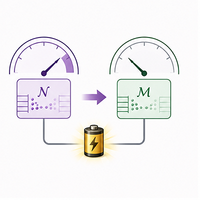
  <item rdf:about="http://link.aps.org/doi/10.1103/xnzv-6975">
    <title>Thermodynamic work capacity of quantum information processing</title>
    <link>http://link.aps.org/doi/10.1103/xnzv-6975</link>
    <description>Author(s): Himanshu Badhani, Dhanuja G.S., and Siddhartha Das&lt;br/&gt;&lt;p&gt;As quantum technologies advance toward miniaturization, understanding the energetic limits of quantum information processing becomes essential. This work establishes an operational characterization of the free energy of quantum processes, providing a unified framework to quantify the optimal work gain or expenditure for manipulating channels, states, and measurements.&lt;/p&gt;&lt;img src="//cdn.journals.aps.org/journals/APSOS/key_images/10.1103/xnzv-6975.png" width="200" height=\"100\"&gt;&lt;br/&gt;[APS Open Sci. 1, 000092] Published Wed Aug 12, 2026</description>
    <content:encoded><![CDATA[<p>Author(s): Himanshu Badhani, Dhanuja G.S., and Siddhartha Das</p><p>As quantum technologies advance toward miniaturization, understanding the energetic limits of quantum information processing becomes essential. This work establishes an operational characterization of the free energy of quantum processes, providing a unified framework to quantify the optimal work gain or expenditure for manipulating channels, states, and measurements.</p><img src="//cdn.journals.aps.org/journals/APSOS/key_images/10.1103/xnzv-6975.png" width="200" height=\"100\"><br/><p>[APS Open Sci. 1, 000092] Published Wed Aug 12, 2026</p>]]></content:encoded>
    <dc:title>Thermodynamic work capacity of quantum information processing</dc:title>
    <dc:creator>Himanshu Badhani, Dhanuja G.S., and Siddhartha Das</dc:creator>
    <dc:date>2026-08-12T10:00:00+00:00</dc:date>
    <dc:rights>Personal use only, all commercial or other reuse prohibited</dc:rights>
    <dc:source>APS Open Sci. 1, 000092 (2026)</dc:source>
    <dc:type>article</dc:type>
    <dc:identifier>doi:10.1103/xnzv-6975</dc:identifier>
    <prism:doi>10.1103/xnzv-6975</prism:doi>
    <prism:publicationName>APS Open Science</prism:publicationName>
    <prism:volume>1</prism:volume>
    <prism:publicationDate>2026-08-12T10:00:00+00:00</prism:publicationDate>
    <prism:url>http://link.aps.org/doi/10.1103/xnzv-6975</prism:url>
    <prism:startingPage>000092</prism:startingPage>
  </item>
  <item rdf:about="http://link.aps.org/doi/10.1103/qy1b-d59q">
    <title>Channel flow around an obstacle in a two-dimensional soft particle system</title>
    <link>http://link.aps.org/doi/10.1103/qy1b-d59q</link>
    <description>Author(s): Bahaa Mazloum, Alexandre Stepanetz, Benjamin Dollet, and Misaki Ozawa&lt;br/&gt;&lt;p&gt;We numerically study confined channel flow around an obstacle using a two-dimensional soft-particle model, inspired by experiments performed in the same geometry. We systematically vary the polydispersity, the external driving force, and the packing fraction of the system. Our simulations capture a …&lt;/p&gt;&lt;br/&gt;[APS Open Sci. 1, 000087] Published Fri Aug 07, 2026</description>
    <content:encoded><![CDATA[<p>Author(s): Bahaa Mazloum, Alexandre Stepanetz, Benjamin Dollet, and Misaki Ozawa</p><p>We numerically study confined channel flow around an obstacle using a two-dimensional soft-particle model, inspired by experiments performed in the same geometry. We systematically vary the polydispersity, the external driving force, and the packing fraction of the system. Our simulations capture a …</p><br/><p>[APS Open Sci. 1, 000087] Published Fri Aug 07, 2026</p>]]></content:encoded>
    <dc:title>Channel flow around an obstacle in a two-dimensional soft particle system</dc:title>
    <dc:creator>Bahaa Mazloum, Alexandre Stepanetz, Benjamin Dollet, and Misaki Ozawa</dc:creator>
    <dc:date>2026-08-07T10:00:00+00:00</dc:date>
    <dc:rights>Personal use only, all commercial or other reuse prohibited</dc:rights>
    <dc:source>APS Open Sci. 1, 000087 (2026)</dc:source>
    <dc:type>article</dc:type>
    <dc:identifier>doi:10.1103/qy1b-d59q</dc:identifier>
    <prism:doi>10.1103/qy1b-d59q</prism:doi>
    <prism:publicationName>APS Open Science</prism:publicationName>
    <prism:volume>1</prism:volume>
    <prism:publicationDate>2026-08-07T10:00:00+00:00</prism:publicationDate>
    <prism:url>http://link.aps.org/doi/10.1103/qy1b-d59q</prism:url>
    <prism:startingPage>000087</prism:startingPage>
  </item>
  <item rdf:about="http://link.aps.org/doi/10.1103/3k95-112h">
    <title>Method for the numerical analysis of hybrid lumped-distributed superconducting quantum circuits</title>
    <link>http://link.aps.org/doi/10.1103/3k95-112h</link>
    <description>Author(s): Simona Zaccaria and Antonio Gnudi&lt;br/&gt;&lt;p&gt;We present a method for the numerical analysis of superconducting quantum circuits combining lumped elements, either linear or nonlinear (i.e., Josephson junctions), and distributed coplanar waveguide (CPW) structures. CPW transmission lines and multiline couplers are directly modeled without discre…&lt;/p&gt;&lt;br/&gt;[APS Open Sci. 1, 000088] Published Fri Aug 07, 2026</description>
    <content:encoded><![CDATA[<p>Author(s): Simona Zaccaria and Antonio Gnudi</p><p>We present a method for the numerical analysis of superconducting quantum circuits combining lumped elements, either linear or nonlinear (i.e., Josephson junctions), and distributed coplanar waveguide (CPW) structures. CPW transmission lines and multiline couplers are directly modeled without discre…</p><br/><p>[APS Open Sci. 1, 000088] Published Fri Aug 07, 2026</p>]]></content:encoded>
    <dc:title>Method for the numerical analysis of hybrid lumped-distributed superconducting quantum circuits</dc:title>
    <dc:creator>Simona Zaccaria and Antonio Gnudi</dc:creator>
    <dc:date>2026-08-07T10:00:00+00:00</dc:date>
    <dc:rights>Personal use only, all commercial or other reuse prohibited</dc:rights>
    <dc:source>APS Open Sci. 1, 000088 (2026)</dc:source>
    <dc:type>article</dc:type>
    <dc:identifier>doi:10.1103/3k95-112h</dc:identifier>
    <prism:doi>10.1103/3k95-112h</prism:doi>
    <prism:publicationName>APS Open Science</prism:publicationName>
    <prism:volume>1</prism:volume>
    <prism:publicationDate>2026-08-07T10:00:00+00:00</prism:publicationDate>
    <prism:url>http://link.aps.org/doi/10.1103/3k95-112h</prism:url>
    <prism:startingPage>000088</prism:startingPage>
  </item>
  <item rdf:about="http://link.aps.org/doi/10.1103/gxwm-xbyp">
    <title>Time-resolved electron momentum spectroscopy with ultrashort electron pulses: Confined probing and effects of vacuum dispersion</title>
    <link>http://link.aps.org/doi/10.1103/gxwm-xbyp</link>
    <description>Author(s): Pieter Hessel Harkema and Lars Bojer Madsen&lt;br/&gt;&lt;p&gt;Previous theoretical studies have shown that attosecond electron dynamics can, in principle, be captured in electron momentum spectroscopy (EMS) using ultrashort electron pulses. By including further analytical considerations on the scattering probability, we here study the effect of the finite tran…&lt;/p&gt;&lt;br/&gt;[APS Open Sci. 1, 000089] Published Fri Aug 07, 2026</description>
    <content:encoded><![CDATA[<p>Author(s): Pieter Hessel Harkema and Lars Bojer Madsen</p><p>Previous theoretical studies have shown that attosecond electron dynamics can, in principle, be captured in electron momentum spectroscopy (EMS) using ultrashort electron pulses. By including further analytical considerations on the scattering probability, we here study the effect of the finite tran…</p><br/><p>[APS Open Sci. 1, 000089] Published Fri Aug 07, 2026</p>]]></content:encoded>
    <dc:title>Time-resolved electron momentum spectroscopy with ultrashort electron pulses: Confined probing and effects of vacuum dispersion</dc:title>
    <dc:creator>Pieter Hessel Harkema and Lars Bojer Madsen</dc:creator>
    <dc:date>2026-08-07T10:00:00+00:00</dc:date>
    <dc:rights>Personal use only, all commercial or other reuse prohibited</dc:rights>
    <dc:source>APS Open Sci. 1, 000089 (2026)</dc:source>
    <dc:type>article</dc:type>
    <dc:identifier>doi:10.1103/gxwm-xbyp</dc:identifier>
    <prism:doi>10.1103/gxwm-xbyp</prism:doi>
    <prism:publicationName>APS Open Science</prism:publicationName>
    <prism:volume>1</prism:volume>
    <prism:publicationDate>2026-08-07T10:00:00+00:00</prism:publicationDate>
    <prism:url>http://link.aps.org/doi/10.1103/gxwm-xbyp</prism:url>
    <prism:startingPage>000089</prism:startingPage>
  </item>
  <item rdf:about="http://link.aps.org/doi/10.1103/8n1w-f3b7">
    <title>Physics-guided ensemble learning of nuclear masses for astrophysical applications</title>
    <link>http://link.aps.org/doi/10.1103/8n1w-f3b7</link>
    <description>Author(s): Srikrishna Agrawal, N. Chandnani, T. Ghosh, N. Paar, G. Saxena, and B. K. Agrawal&lt;br/&gt;&lt;p&gt;The gradient boosting regressor, an ensemble learning technique, is utilized to correct the residuals in nuclear mass excess across six different nuclear mass models. The corrected residuals are substantially reduced and further improved by applying a weighted averaging method, which benefits from p…&lt;/p&gt;&lt;br/&gt;[APS Open Sci. 1, 000085] Published Thu Aug 06, 2026</description>
    <content:encoded><![CDATA[<p>Author(s): Srikrishna Agrawal, N. Chandnani, T. Ghosh, N. Paar, G. Saxena, and B. K. Agrawal</p><p>The gradient boosting regressor, an ensemble learning technique, is utilized to correct the residuals in nuclear mass excess across six different nuclear mass models. The corrected residuals are substantially reduced and further improved by applying a weighted averaging method, which benefits from p…</p><br/><p>[APS Open Sci. 1, 000085] Published Thu Aug 06, 2026</p>]]></content:encoded>
    <dc:title>Physics-guided ensemble learning of nuclear masses for astrophysical applications</dc:title>
    <dc:creator>Srikrishna Agrawal, N. Chandnani, T. Ghosh, N. Paar, G. Saxena, and B. K. Agrawal</dc:creator>
    <dc:date>2026-08-06T10:00:00+00:00</dc:date>
    <dc:rights>Personal use only, all commercial or other reuse prohibited</dc:rights>
    <dc:source>APS Open Sci. 1, 000085 (2026)</dc:source>
    <dc:type>article</dc:type>
    <dc:identifier>doi:10.1103/8n1w-f3b7</dc:identifier>
    <prism:doi>10.1103/8n1w-f3b7</prism:doi>
    <prism:publicationName>APS Open Science</prism:publicationName>
    <prism:volume>1</prism:volume>
    <prism:publicationDate>2026-08-06T10:00:00+00:00</prism:publicationDate>
    <prism:url>http://link.aps.org/doi/10.1103/8n1w-f3b7</prism:url>
    <prism:startingPage>000085</prism:startingPage>
  </item>
  <item rdf:about="http://link.aps.org/doi/10.1103/2tp5-1qx4">
    <title>Benchmark of the Schmiedl-Seifert optimal protocol with reduced dissipated work and fluctuations in optical tweezers</title>
    <link>http://link.aps.org/doi/10.1103/2tp5-1qx4</link>
    <description>Author(s): Thalyta T. Martins, André H. A. Malavazi, Lucas P. Kamizaki, Artyom Petrosyan, Benjamin Besga, Sergio Ciliberto, and Sérgio R. Muniz&lt;br/&gt;&lt;p&gt;Finite-time thermodynamic transformations generally dissipate energy, as required by the second law, so identifying and investigating energetically optimal processes remain relevant for understanding and designing efficient thermal devices. In this context, we present here a systematic experimental …&lt;/p&gt;&lt;br/&gt;[APS Open Sci. 1, 000086] Published Thu Aug 06, 2026</description>
    <content:encoded><![CDATA[<p>Author(s): Thalyta T. Martins, André H. A. Malavazi, Lucas P. Kamizaki, Artyom Petrosyan, Benjamin Besga, Sergio Ciliberto, and Sérgio R. Muniz</p><p>Finite-time thermodynamic transformations generally dissipate energy, as required by the second law, so identifying and investigating energetically optimal processes remain relevant for understanding and designing efficient thermal devices. In this context, we present here a systematic experimental …</p><br/><p>[APS Open Sci. 1, 000086] Published Thu Aug 06, 2026</p>]]></content:encoded>
    <dc:title>Benchmark of the Schmiedl-Seifert optimal protocol with reduced dissipated work and fluctuations in optical tweezers</dc:title>
    <dc:creator>Thalyta T. Martins, André H. A. Malavazi, Lucas P. Kamizaki, Artyom Petrosyan, Benjamin Besga, Sergio Ciliberto, and Sérgio R. Muniz</dc:creator>
    <dc:date>2026-08-06T10:00:00+00:00</dc:date>
    <dc:rights>Personal use only, all commercial or other reuse prohibited</dc:rights>
    <dc:source>APS Open Sci. 1, 000086 (2026)</dc:source>
    <dc:type>article</dc:type>
    <dc:identifier>doi:10.1103/2tp5-1qx4</dc:identifier>
    <prism:doi>10.1103/2tp5-1qx4</prism:doi>
    <prism:publicationName>APS Open Science</prism:publicationName>
    <prism:volume>1</prism:volume>
    <prism:publicationDate>2026-08-06T10:00:00+00:00</prism:publicationDate>
    <prism:url>http://link.aps.org/doi/10.1103/2tp5-1qx4</prism:url>
    <prism:startingPage>000086</prism:startingPage>
  </item>
  <item rdf:about="http://link.aps.org/doi/10.1103/3pht-dvg9">
    <title>Nonlinearities in atomic radio receivers: Harmonic and intermodulation distortion</title>
    <link>http://link.aps.org/doi/10.1103/3pht-dvg9</link>
    <description>Author(s): Luís Felipe Gonçalves, Teng Zhang, Georg Raithel, and David A. Anderson&lt;br/&gt;&lt;p&gt;Rydberg sensors offer a unique approach to radio-frequency (rf) detection, leveraging the high sensitivity and quantum properties of highly excited atomic states to achieve performance levels beyond classical technologies. Nonlinear responses and distortion behavior in Rydberg atom receivers are cri…&lt;/p&gt;&lt;br/&gt;[APS Open Sci. 1, 000083] Published Wed Aug 05, 2026</description>
    <content:encoded><![CDATA[<p>Author(s): Luís Felipe Gonçalves, Teng Zhang, Georg Raithel, and David A. Anderson</p><p>Rydberg sensors offer a unique approach to radio-frequency (rf) detection, leveraging the high sensitivity and quantum properties of highly excited atomic states to achieve performance levels beyond classical technologies. Nonlinear responses and distortion behavior in Rydberg atom receivers are cri…</p><br/><p>[APS Open Sci. 1, 000083] Published Wed Aug 05, 2026</p>]]></content:encoded>
    <dc:title>Nonlinearities in atomic radio receivers: Harmonic and intermodulation distortion</dc:title>
    <dc:creator>Luís Felipe Gonçalves, Teng Zhang, Georg Raithel, and David A. Anderson</dc:creator>
    <dc:date>2026-08-05T10:00:00+00:00</dc:date>
    <dc:rights>Personal use only, all commercial or other reuse prohibited</dc:rights>
    <dc:source>APS Open Sci. 1, 000083 (2026)</dc:source>
    <dc:type>article</dc:type>
    <dc:identifier>doi:10.1103/3pht-dvg9</dc:identifier>
    <prism:doi>10.1103/3pht-dvg9</prism:doi>
    <prism:publicationName>APS Open Science</prism:publicationName>
    <prism:volume>1</prism:volume>
    <prism:publicationDate>2026-08-05T10:00:00+00:00</prism:publicationDate>
    <prism:url>http://link.aps.org/doi/10.1103/3pht-dvg9</prism:url>
    <prism:startingPage>000083</prism:startingPage>
  </item>
  <item rdf:about="http://link.aps.org/doi/10.1103/dgj9-5fck">
    <title>Model-based equitable learning framework for high-dimensional biomedical data</title>
    <link>http://link.aps.org/doi/10.1103/dgj9-5fck</link>
    <description>Author(s): Victoria E. Laoye and Ivo D. Dinov&lt;br/&gt;&lt;p&gt;High-dimensional biomedical studies routinely confront three coupled obstacles: structured population heterogeneity, latent technical confounding, and representational inequity that can degrade inference for under-represented groups. We develop the model-based equitable learning framework (M-ELF), a…&lt;/p&gt;&lt;br/&gt;[APS Open Sci. 1, 000084] Published Wed Aug 05, 2026</description>
    <content:encoded><![CDATA[<p>Author(s): Victoria E. Laoye and Ivo D. Dinov</p><p>High-dimensional biomedical studies routinely confront three coupled obstacles: structured population heterogeneity, latent technical confounding, and representational inequity that can degrade inference for under-represented groups. We develop the model-based equitable learning framework (M-ELF), a…</p><br/><p>[APS Open Sci. 1, 000084] Published Wed Aug 05, 2026</p>]]></content:encoded>
    <dc:title>Model-based equitable learning framework for high-dimensional biomedical data</dc:title>
    <dc:creator>Victoria E. Laoye and Ivo D. Dinov</dc:creator>
    <dc:date>2026-08-05T10:00:00+00:00</dc:date>
    <dc:rights>Personal use only, all commercial or other reuse prohibited</dc:rights>
    <dc:source>APS Open Sci. 1, 000084 (2026)</dc:source>
    <dc:type>article</dc:type>
    <dc:identifier>doi:10.1103/dgj9-5fck</dc:identifier>
    <prism:doi>10.1103/dgj9-5fck</prism:doi>
    <prism:publicationName>APS Open Science</prism:publicationName>
    <prism:volume>1</prism:volume>
    <prism:publicationDate>2026-08-05T10:00:00+00:00</prism:publicationDate>
    <prism:url>http://link.aps.org/doi/10.1103/dgj9-5fck</prism:url>
    <prism:startingPage>000084</prism:startingPage>
  </item>
  <item rdf:about="http://link.aps.org/doi/10.1103/w9bw-zlvr">
    <title>Axion-mediated photon-to-photon transitions in high-finesse dielectric resonators</title>
    <link>http://link.aps.org/doi/10.1103/w9bw-zlvr</link>
    <description>Author(s): Evangelos Almpanis&lt;br/&gt;&lt;p&gt;Axions are hypothetical particles that could address both the strong charge-parity problem in quantum chromodynamics and the enigmatic nature of dark matter. However, if axions exist, their mass remains unknown, and they are expected to interact very weakly with the electromagnetic field, which expl…&lt;/p&gt;&lt;br/&gt;[APS Open Sci. 1, 000078] Published Mon Aug 03, 2026</description>
    <content:encoded><![CDATA[<p>Author(s): Evangelos Almpanis</p><p>Axions are hypothetical particles that could address both the strong charge-parity problem in quantum chromodynamics and the enigmatic nature of dark matter. However, if axions exist, their mass remains unknown, and they are expected to interact very weakly with the electromagnetic field, which expl…</p><br/><p>[APS Open Sci. 1, 000078] Published Mon Aug 03, 2026</p>]]></content:encoded>
    <dc:title>Axion-mediated photon-to-photon transitions in high-finesse dielectric resonators</dc:title>
    <dc:creator>Evangelos Almpanis</dc:creator>
    <dc:date>2026-08-03T10:00:00+00:00</dc:date>
    <dc:rights>Personal use only, all commercial or other reuse prohibited</dc:rights>
    <dc:source>APS Open Sci. 1, 000078 (2026)</dc:source>
    <dc:type>article</dc:type>
    <dc:identifier>doi:10.1103/w9bw-zlvr</dc:identifier>
    <prism:doi>10.1103/w9bw-zlvr</prism:doi>
    <prism:publicationName>APS Open Science</prism:publicationName>
    <prism:volume>1</prism:volume>
    <prism:publicationDate>2026-08-03T10:00:00+00:00</prism:publicationDate>
    <prism:url>http://link.aps.org/doi/10.1103/w9bw-zlvr</prism:url>
    <prism:startingPage>000078</prism:startingPage>
  </item>
  <item rdf:about="http://link.aps.org/doi/10.1103/4gvl-w24r">
    <title>Near-field mechanical fingerprints for terahertz sensing of hidden nanoparticles in complex media</title>
    <link>http://link.aps.org/doi/10.1103/4gvl-w24r</link>
    <description>Author(s): Ricardo Martín Abraham-Ekeroth and Dani Torrent&lt;br/&gt;&lt;p&gt;Terahertz (THz) spectroscopy holds transformative potential for noninvasive sensing, yet characterizing individual nanoparticles in complex biological environments remains challenging due to the far-field diffraction limit. While near-field dipolar theory is well established, its application to char…&lt;/p&gt;&lt;br/&gt;[APS Open Sci. 1, 000080] Published Mon Aug 03, 2026</description>
    <content:encoded><![CDATA[<p>Author(s): Ricardo Martín Abraham-Ekeroth and Dani Torrent</p><p>Terahertz (THz) spectroscopy holds transformative potential for noninvasive sensing, yet characterizing individual nanoparticles in complex biological environments remains challenging due to the far-field diffraction limit. While near-field dipolar theory is well established, its application to char…</p><br/><p>[APS Open Sci. 1, 000080] Published Mon Aug 03, 2026</p>]]></content:encoded>
    <dc:title>Near-field mechanical fingerprints for terahertz sensing of hidden nanoparticles in complex media</dc:title>
    <dc:creator>Ricardo Martín Abraham-Ekeroth and Dani Torrent</dc:creator>
    <dc:date>2026-08-03T10:00:00+00:00</dc:date>
    <dc:rights>Personal use only, all commercial or other reuse prohibited</dc:rights>
    <dc:source>APS Open Sci. 1, 000080 (2026)</dc:source>
    <dc:type>article</dc:type>
    <dc:identifier>doi:10.1103/4gvl-w24r</dc:identifier>
    <prism:doi>10.1103/4gvl-w24r</prism:doi>
    <prism:publicationName>APS Open Science</prism:publicationName>
    <prism:volume>1</prism:volume>
    <prism:publicationDate>2026-08-03T10:00:00+00:00</prism:publicationDate>
    <prism:url>http://link.aps.org/doi/10.1103/4gvl-w24r</prism:url>
    <prism:startingPage>000080</prism:startingPage>
  </item>
  <item rdf:about="http://link.aps.org/doi/10.1103/k8wt-lybx">
    <title>Continuous far-field zone focusing of flexural waves through phase engineering of metagratings</title>
    <link>http://link.aps.org/doi/10.1103/k8wt-lybx</link>
    <description>Author(s): Zhanrui Tan and Jun Mei&lt;br/&gt;&lt;p&gt;Continuous far-field zone focusing of flexural wave is highly desirable for applications such as structural health monitoring, energy harvesting, and advanced sensing. In this work, we propose a metalens design paradigm capable of focusing flexural wave across a continuous zone in the far-field regi…&lt;/p&gt;&lt;br/&gt;[APS Open Sci. 1, 000081] Published Mon Aug 03, 2026</description>
    <content:encoded><![CDATA[<p>Author(s): Zhanrui Tan and Jun Mei</p><p>Continuous far-field zone focusing of flexural wave is highly desirable for applications such as structural health monitoring, energy harvesting, and advanced sensing. In this work, we propose a metalens design paradigm capable of focusing flexural wave across a continuous zone in the far-field regi…</p><br/><p>[APS Open Sci. 1, 000081] Published Mon Aug 03, 2026</p>]]></content:encoded>
    <dc:title>Continuous far-field zone focusing of flexural waves through phase engineering of metagratings</dc:title>
    <dc:creator>Zhanrui Tan and Jun Mei</dc:creator>
    <dc:date>2026-08-03T10:00:00+00:00</dc:date>
    <dc:rights>Personal use only, all commercial or other reuse prohibited</dc:rights>
    <dc:source>APS Open Sci. 1, 000081 (2026)</dc:source>
    <dc:type>article</dc:type>
    <dc:identifier>doi:10.1103/k8wt-lybx</dc:identifier>
    <prism:doi>10.1103/k8wt-lybx</prism:doi>
    <prism:publicationName>APS Open Science</prism:publicationName>
    <prism:volume>1</prism:volume>
    <prism:publicationDate>2026-08-03T10:00:00+00:00</prism:publicationDate>
    <prism:url>http://link.aps.org/doi/10.1103/k8wt-lybx</prism:url>
    <prism:startingPage>000081</prism:startingPage>
  </item>
  <item rdf:about="http://link.aps.org/doi/10.1103/1jkc-jrq8">
    <title>Thermal image velocimetry for rapidly rotating fluid dynamics</title>
    <link>http://link.aps.org/doi/10.1103/1jkc-jrq8</link>
    <description>Author(s): Rémy Monville, Céline Guervilly, Hao Cao, and Jonathan M. Aurnou&lt;br/&gt;&lt;p&gt;Measuring fluid velocities in rapidly rotating, thermally driven flows is challenging because conventional particle-tracking methods can be impractical, especially in planetary fluid dynamics experiments involving curved boundaries. Researchers address this problem with a new thermal image velocimetry (TIV) formulation, which uses dense optical flow to track evolving free-surface temperature patterns instead of suspended particles. The approach provides accurate velocity measurements while circumventing many of the optical constraints of traditional visualization methods, thus, broadening the experimental toolkit for probing the complex dynamics of rotating convective turbulence.&lt;/p&gt;&lt;img src="//cdn.journals.aps.org/journals/APSOS/key_images/10.1103/1jkc-jrq8.png" width="200" height=\"100\"&gt;&lt;br/&gt;[APS Open Sci. 1, 000082] Published Mon Aug 03, 2026</description>
    <content:encoded><![CDATA[<p>Author(s): Rémy Monville, Céline Guervilly, Hao Cao, and Jonathan M. Aurnou</p><p>Measuring fluid velocities in rapidly rotating, thermally driven flows is challenging because conventional particle-tracking methods can be impractical, especially in planetary fluid dynamics experiments involving curved boundaries. Researchers address this problem with a new thermal image velocimetry (TIV) formulation, which uses dense optical flow to track evolving free-surface temperature patterns instead of suspended particles. The approach provides accurate velocity measurements while circumventing many of the optical constraints of traditional visualization methods, thus, broadening the experimental toolkit for probing the complex dynamics of rotating convective turbulence.</p><img src="//cdn.journals.aps.org/journals/APSOS/key_images/10.1103/1jkc-jrq8.png" width="200" height=\"100\"><br/><p>[APS Open Sci. 1, 000082] Published Mon Aug 03, 2026</p>]]></content:encoded>
    <dc:title>Thermal image velocimetry for rapidly rotating fluid dynamics</dc:title>
    <dc:creator>Rémy Monville, Céline Guervilly, Hao Cao, and Jonathan M. Aurnou</dc:creator>
    <dc:date>2026-08-03T10:00:00+00:00</dc:date>
    <dc:rights>Personal use only, all commercial or other reuse prohibited</dc:rights>
    <dc:source>APS Open Sci. 1, 000082 (2026)</dc:source>
    <dc:type>article</dc:type>
    <dc:identifier>doi:10.1103/1jkc-jrq8</dc:identifier>
    <prism:doi>10.1103/1jkc-jrq8</prism:doi>
    <prism:publicationName>APS Open Science</prism:publicationName>
    <prism:volume>1</prism:volume>
    <prism:publicationDate>2026-08-03T10:00:00+00:00</prism:publicationDate>
    <prism:url>http://link.aps.org/doi/10.1103/1jkc-jrq8</prism:url>
    <prism:startingPage>000082</prism:startingPage>
  </item>
  <item rdf:about="http://link.aps.org/doi/10.1103/bkcp-l8t4">
    <title>Spin-aligned butterfly spectral map in non-Hermitian quasicrystals</title>
    <link>http://link.aps.org/doi/10.1103/bkcp-l8t4</link>
    <description>Author(s): Soumya Ranjan Padhi, Souvik Roy, Debashree Chowdhury, and Tapan Mishra&lt;br/&gt;&lt;p&gt;The non-Hermitian spinful Aubry-André-Harper model in the presence of Rashba-type spin-orbit coupling and a spatially varying textured magnetic field is studied. Interestingly, our analysis produces a butterfly spectral map due to the nontrivial extent of localization of the states in the spectrum. …&lt;/p&gt;&lt;br/&gt;[APS Open Sci. 1, L000079] Published Mon Aug 03, 2026</description>
    <content:encoded><![CDATA[<p>Author(s): Soumya Ranjan Padhi, Souvik Roy, Debashree Chowdhury, and Tapan Mishra</p><p>The non-Hermitian spinful Aubry-André-Harper model in the presence of Rashba-type spin-orbit coupling and a spatially varying textured magnetic field is studied. Interestingly, our analysis produces a butterfly spectral map due to the nontrivial extent of localization of the states in the spectrum. …</p><br/><p>[APS Open Sci. 1, L000079] Published Mon Aug 03, 2026</p>]]></content:encoded>
    <dc:title>Spin-aligned butterfly spectral map in non-Hermitian quasicrystals</dc:title>
    <dc:creator>Soumya Ranjan Padhi, Souvik Roy, Debashree Chowdhury, and Tapan Mishra</dc:creator>
    <dc:date>2026-08-03T10:00:00+00:00</dc:date>
    <dc:rights>Personal use only, all commercial or other reuse prohibited</dc:rights>
    <dc:source>APS Open Sci. 1, L000079 (2026)</dc:source>
    <dc:type>article</dc:type>
    <dc:identifier>doi:10.1103/bkcp-l8t4</dc:identifier>
    <prism:doi>10.1103/bkcp-l8t4</prism:doi>
    <prism:publicationName>APS Open Science</prism:publicationName>
    <prism:volume>1</prism:volume>
    <prism:publicationDate>2026-08-03T10:00:00+00:00</prism:publicationDate>
    <prism:url>http://link.aps.org/doi/10.1103/bkcp-l8t4</prism:url>
    <prism:startingPage>L000079</prism:startingPage>
  </item>
  <item rdf:about="http://link.aps.org/doi/10.1103/kyjq-2fc4">
    <title>Classical-limit formula for matrix elements between bound states of distinct one-dimensional potentials</title>
    <link>http://link.aps.org/doi/10.1103/kyjq-2fc4</link>
    <description>Author(s): K. Beloy&lt;br/&gt;&lt;p&gt;A classical-limit formula is derived for matrix elements between bound states of distinct one-dimensional potentials. We leave open the physical interpretation of the potentials, but generally envision them to be Born-Oppenheimer-type potentials with the position variable $x$ identifying with a slow…&lt;/p&gt;&lt;br/&gt;[APS Open Sci. 1, 000077] Published Fri Jul 31, 2026</description>
    <content:encoded><![CDATA[<p>Author(s): K. Beloy</p><p>A classical-limit formula is derived for matrix elements between bound states of distinct one-dimensional potentials. We leave open the physical interpretation of the potentials, but generally envision them to be Born-Oppenheimer-type potentials with the position variable <math xmlns="http://www.w3.org/1998/Math/MathML"><mi>x</mi></math> identifying with a slowly…</p><br/><p>[APS Open Sci. 1, 000077] Published Fri Jul 31, 2026</p>]]></content:encoded>
    <dc:title>Classical-limit formula for matrix elements between bound states of distinct one-dimensional potentials</dc:title>
    <dc:creator>K. Beloy</dc:creator>
    <dc:date>2026-07-31T10:00:00+00:00</dc:date>
    <dc:rights>Personal use only, all commercial or other reuse prohibited</dc:rights>
    <dc:source>APS Open Sci. 1, 000077 (2026)</dc:source>
    <dc:type>article</dc:type>
    <dc:identifier>doi:10.1103/kyjq-2fc4</dc:identifier>
    <prism:doi>10.1103/kyjq-2fc4</prism:doi>
    <prism:publicationName>APS Open Science</prism:publicationName>
    <prism:volume>1</prism:volume>
    <prism:publicationDate>2026-07-31T10:00:00+00:00</prism:publicationDate>
    <prism:url>http://link.aps.org/doi/10.1103/kyjq-2fc4</prism:url>
    <prism:startingPage>000077</prism:startingPage>
  </item>
  <item rdf:about="http://link.aps.org/doi/10.1103/xxvz-8rj9">
    <title>Many-electron characterizations of higher-charge superconductors</title>
    <link>http://link.aps.org/doi/10.1103/xxvz-8rj9</link>
    <description>Author(s): Zi-Hao Dong and Yi Zhang&lt;br/&gt;&lt;p&gt;The theoretical understanding of conventional superconductivity as the phonon-assisted formation and condensation of two-electron Cooper pairs is a significant triumph in condensed matter physics. Here, we propose many-electron characterizations of higher-charge superconductivity with Cooper pairs c…&lt;/p&gt;&lt;br/&gt;[APS Open Sci. 1, L000076] Published Fri Jul 31, 2026</description>
    <content:encoded><![CDATA[<p>Author(s): Zi-Hao Dong and Yi Zhang</p><p>The theoretical understanding of conventional superconductivity as the phonon-assisted formation and condensation of two-electron Cooper pairs is a significant triumph in condensed matter physics. Here, we propose many-electron characterizations of higher-charge superconductivity with Cooper pairs c…</p><br/><p>[APS Open Sci. 1, L000076] Published Fri Jul 31, 2026</p>]]></content:encoded>
    <dc:title>Many-electron characterizations of higher-charge superconductors</dc:title>
    <dc:creator>Zi-Hao Dong and Yi Zhang</dc:creator>
    <dc:date>2026-07-31T10:00:00+00:00</dc:date>
    <dc:rights>Personal use only, all commercial or other reuse prohibited</dc:rights>
    <dc:source>APS Open Sci. 1, L000076 (2026)</dc:source>
    <dc:type>article</dc:type>
    <dc:identifier>doi:10.1103/xxvz-8rj9</dc:identifier>
    <prism:doi>10.1103/xxvz-8rj9</prism:doi>
    <prism:publicationName>APS Open Science</prism:publicationName>
    <prism:volume>1</prism:volume>
    <prism:publicationDate>2026-07-31T10:00:00+00:00</prism:publicationDate>
    <prism:url>http://link.aps.org/doi/10.1103/xxvz-8rj9</prism:url>
    <prism:startingPage>L000076</prism:startingPage>
  </item>
  <item rdf:about="http://link.aps.org/doi/10.1103/kdtb-q3ly">
    <title>Asymmetric antibimerons: Statics and dynamics</title>
    <link>http://link.aps.org/doi/10.1103/kdtb-q3ly</link>
    <description>Author(s): Pavel A. Vorobyev, Daichi Kurebayashi, and Oleg A. Tretiakov&lt;br/&gt;&lt;p&gt;Researchers have theoretically predicted the “asymmetric antibimeron” (AAB)—a novel topological spin texture composed of an antivortex and a crescent-shaped vortex found in in-plane magnetized chiral ferromagnets—offering a promising new platform for high-density spintronic memory and logic devices.&lt;/p&gt;&lt;img src="//cdn.journals.aps.org/journals/APSOS/key_images/10.1103/kdtb-q3ly.png" width="200" height=\"100\"&gt;&lt;br/&gt;[APS Open Sci. 1, 000075] Published Thu Jul 30, 2026</description>
    <content:encoded><![CDATA[<p>Author(s): Pavel A. Vorobyev, Daichi Kurebayashi, and Oleg A. Tretiakov</p><p>Researchers have theoretically predicted the “asymmetric antibimeron” (AAB)—a novel topological spin texture composed of an antivortex and a crescent-shaped vortex found in in-plane magnetized chiral ferromagnets—offering a promising new platform for high-density spintronic memory and logic devices.</p><img src="//cdn.journals.aps.org/journals/APSOS/key_images/10.1103/kdtb-q3ly.png" width="200" height=\"100\"><br/><p>[APS Open Sci. 1, 000075] Published Thu Jul 30, 2026</p>]]></content:encoded>
    <dc:title>Asymmetric antibimerons: Statics and dynamics</dc:title>
    <dc:creator>Pavel A. Vorobyev, Daichi Kurebayashi, and Oleg A. Tretiakov</dc:creator>
    <dc:date>2026-07-30T10:00:00+00:00</dc:date>
    <dc:rights>Personal use only, all commercial or other reuse prohibited</dc:rights>
    <dc:source>APS Open Sci. 1, 000075 (2026)</dc:source>
    <dc:type>article</dc:type>
    <dc:identifier>doi:10.1103/kdtb-q3ly</dc:identifier>
    <prism:doi>10.1103/kdtb-q3ly</prism:doi>
    <prism:publicationName>APS Open Science</prism:publicationName>
    <prism:volume>1</prism:volume>
    <prism:publicationDate>2026-07-30T10:00:00+00:00</prism:publicationDate>
    <prism:url>http://link.aps.org/doi/10.1103/kdtb-q3ly</prism:url>
    <prism:startingPage>000075</prism:startingPage>
  </item>
  <item rdf:about="http://link.aps.org/doi/10.1103/5q9d-3dc7">
    <title>Projective measurements: Topological quantum computing with an arbitrary number of qubits</title>
    <link>http://link.aps.org/doi/10.1103/5q9d-3dc7</link>
    <description>Author(s): Themba Hodge, Philipp Frey, and Stephan Rachel&lt;br/&gt;&lt;p&gt;Topological quantum computing promises intrinsic fault tolerance by encoding quantum information in non-Abelian anyons, where quantum gates are implemented via braiding. While braiding operations are robust against local perturbations, a critical yet often overlooked challenge arises when scaling be…&lt;/p&gt;&lt;br/&gt;[APS Open Sci. 1, 000074] Published Wed Jul 29, 2026</description>
    <content:encoded><![CDATA[<p>Author(s): Themba Hodge, Philipp Frey, and Stephan Rachel</p><p>Topological quantum computing promises intrinsic fault tolerance by encoding quantum information in non-Abelian anyons, where quantum gates are implemented via braiding. While braiding operations are robust against local perturbations, a critical yet often overlooked challenge arises when scaling be…</p><br/><p>[APS Open Sci. 1, 000074] Published Wed Jul 29, 2026</p>]]></content:encoded>
    <dc:title>Projective measurements: Topological quantum computing with an arbitrary number of qubits</dc:title>
    <dc:creator>Themba Hodge, Philipp Frey, and Stephan Rachel</dc:creator>
    <dc:date>2026-07-29T10:00:00+00:00</dc:date>
    <dc:rights>Personal use only, all commercial or other reuse prohibited</dc:rights>
    <dc:source>APS Open Sci. 1, 000074 (2026)</dc:source>
    <dc:type>article</dc:type>
    <dc:identifier>doi:10.1103/5q9d-3dc7</dc:identifier>
    <prism:doi>10.1103/5q9d-3dc7</prism:doi>
    <prism:publicationName>APS Open Science</prism:publicationName>
    <prism:volume>1</prism:volume>
    <prism:publicationDate>2026-07-29T10:00:00+00:00</prism:publicationDate>
    <prism:url>http://link.aps.org/doi/10.1103/5q9d-3dc7</prism:url>
    <prism:startingPage>000074</prism:startingPage>
  </item>
  <item rdf:about="http://link.aps.org/doi/10.1103/dwth-wjtr">
    <title>Extracting photon-number information from superconducting nanowire single-photon detectors traces via mean-derivative projection</title>
    <link>http://link.aps.org/doi/10.1103/dwth-wjtr</link>
    <description>Author(s): I. S. Kuijf, F. B. Baalbergen, L. Seldenthuis, E. P. L. van Nieuwenburg, and M. J. A. de Dood&lt;br/&gt;&lt;p&gt;Photon-number-resolved detection with superconducting nanowire single-photon detectors (SNSPDs) attracts increasing interest, often focusing on the rising edge of the electrical signal as the main source of photon-number-resolving information. It remains unclear whether additional photon-number info…&lt;/p&gt;&lt;br/&gt;[APS Open Sci. 1, 000073] Published Tue Jul 28, 2026</description>
    <content:encoded><![CDATA[<p>Author(s): I. S. Kuijf, F. B. Baalbergen, L. Seldenthuis, E. P. L. van Nieuwenburg, and M. J. A. de Dood</p><p>Photon-number-resolved detection with superconducting nanowire single-photon detectors (SNSPDs) attracts increasing interest, often focusing on the rising edge of the electrical signal as the main source of photon-number-resolving information. It remains unclear whether additional photon-number info…</p><br/><p>[APS Open Sci. 1, 000073] Published Tue Jul 28, 2026</p>]]></content:encoded>
    <dc:title>Extracting photon-number information from superconducting nanowire single-photon detectors traces via mean-derivative projection</dc:title>
    <dc:creator>I. S. Kuijf, F. B. Baalbergen, L. Seldenthuis, E. P. L. van Nieuwenburg, and M. J. A. de Dood</dc:creator>
    <dc:date>2026-07-28T10:00:00+00:00</dc:date>
    <dc:rights>Personal use only, all commercial or other reuse prohibited</dc:rights>
    <dc:source>APS Open Sci. 1, 000073 (2026)</dc:source>
    <dc:type>article</dc:type>
    <dc:identifier>doi:10.1103/dwth-wjtr</dc:identifier>
    <prism:doi>10.1103/dwth-wjtr</prism:doi>
    <prism:publicationName>APS Open Science</prism:publicationName>
    <prism:volume>1</prism:volume>
    <prism:publicationDate>2026-07-28T10:00:00+00:00</prism:publicationDate>
    <prism:url>http://link.aps.org/doi/10.1103/dwth-wjtr</prism:url>
    <prism:startingPage>000073</prism:startingPage>
  </item>
  <item rdf:about="http://link.aps.org/doi/10.1103/gpk6-xhjk">
    <title>Almost universal metrics</title>
    <link>http://link.aps.org/doi/10.1103/gpk6-xhjk</link>
    <description>Author(s): Metin Gürses, Tahsin Çağrı Şişman, and Bayram Tekin&lt;br/&gt;&lt;p&gt;A metric is called &lt;i&gt;universal&lt;/i&gt; if every symmetric conserved rank-two tensor constructed locally from the metric, the curvature, and covariant derivatives of the curvature is proportional to the metric. Such a metric solves arbitrary metric-based higher-curvature field equations after, at most, a chang…&lt;/p&gt;&lt;br/&gt;[APS Open Sci. 1, 000071] Published Mon Jul 27, 2026</description>
    <content:encoded><![CDATA[<p>Author(s): Metin Gürses, Tahsin Çağrı Şişman, and Bayram Tekin</p><p>A metric is called <i>universal</i> if every symmetric conserved rank-two tensor constructed locally from the metric, the curvature, and covariant derivatives of the curvature is proportional to the metric. Such a metric solves arbitrary metric-based higher-curvature field equations after, at most, a chang…</p><br/><p>[APS Open Sci. 1, 000071] Published Mon Jul 27, 2026</p>]]></content:encoded>
    <dc:title>Almost universal metrics</dc:title>
    <dc:creator>Metin Gürses, Tahsin Çağrı Şişman, and Bayram Tekin</dc:creator>
    <dc:date>2026-07-27T10:00:00+00:00</dc:date>
    <dc:rights>Personal use only, all commercial or other reuse prohibited</dc:rights>
    <dc:source>APS Open Sci. 1, 000071 (2026)</dc:source>
    <dc:type>article</dc:type>
    <dc:identifier>doi:10.1103/gpk6-xhjk</dc:identifier>
    <prism:doi>10.1103/gpk6-xhjk</prism:doi>
    <prism:publicationName>APS Open Science</prism:publicationName>
    <prism:volume>1</prism:volume>
    <prism:publicationDate>2026-07-27T10:00:00+00:00</prism:publicationDate>
    <prism:url>http://link.aps.org/doi/10.1103/gpk6-xhjk</prism:url>
    <prism:startingPage>000071</prism:startingPage>
  </item>
  <item rdf:about="http://link.aps.org/doi/10.1103/h8n4-94g4">
    <title>Detecting the three-dimensional Ising model phase transition with a ground-state-trained autoencoder</title>
    <link>http://link.aps.org/doi/10.1103/h8n4-94g4</link>
    <description>Author(s): Ahmed Abuali, David A. Clarke, Morten Hjorth-Jensen, Ioannis Konstantinidis, Claudia Ratti, and Jianyi Yang&lt;br/&gt;&lt;p&gt;We develop a one-class, deep-learning framework to detect the phase transition and recover critical behavior of the three-dimensional (3D) Ising model. A 3D convolutional autoencoder (CAE) is trained on ground-state configurations only, without prior knowledge of the critical temperature, the Hamilt…&lt;/p&gt;&lt;br/&gt;[APS Open Sci. 1, 000072] Published Mon Jul 27, 2026</description>
    <content:encoded><![CDATA[<p>Author(s): Ahmed Abuali, David A. Clarke, Morten Hjorth-Jensen, Ioannis Konstantinidis, Claudia Ratti, and Jianyi Yang</p><p>We develop a one-class, deep-learning framework to detect the phase transition and recover critical behavior of the three-dimensional (3D) Ising model. A 3D convolutional autoencoder (CAE) is trained on ground-state configurations only, without prior knowledge of the critical temperature, the Hamilt…</p><br/><p>[APS Open Sci. 1, 000072] Published Mon Jul 27, 2026</p>]]></content:encoded>
    <dc:title>Detecting the three-dimensional Ising model phase transition with a ground-state-trained autoencoder</dc:title>
    <dc:creator>Ahmed Abuali, David A. Clarke, Morten Hjorth-Jensen, Ioannis Konstantinidis, Claudia Ratti, and Jianyi Yang</dc:creator>
    <dc:date>2026-07-27T10:00:00+00:00</dc:date>
    <dc:rights>Personal use only, all commercial or other reuse prohibited</dc:rights>
    <dc:source>APS Open Sci. 1, 000072 (2026)</dc:source>
    <dc:type>article</dc:type>
    <dc:identifier>doi:10.1103/h8n4-94g4</dc:identifier>
    <prism:doi>10.1103/h8n4-94g4</prism:doi>
    <prism:publicationName>APS Open Science</prism:publicationName>
    <prism:volume>1</prism:volume>
    <prism:publicationDate>2026-07-27T10:00:00+00:00</prism:publicationDate>
    <prism:url>http://link.aps.org/doi/10.1103/h8n4-94g4</prism:url>
    <prism:startingPage>000072</prism:startingPage>
  </item>
  <item rdf:about="http://link.aps.org/doi/10.1103/hj46-qw5t">
    <title>Benchmark study of simulated quantum annealing and asynchronous parallel simulated annealing for quadratic unconstrained binary optimization-based semiprime factorization</title>
    <link>http://link.aps.org/doi/10.1103/hj46-qw5t</link>
    <description>Author(s): Gianbiagio Curato, Manuel Ponzi, Edoardo Chiatello, and Roberto Giorgetti&lt;br/&gt;&lt;p&gt;This study replicates hardware-focused Simulated Quantum Annealing (SQA) factorization benchmarks on standard CPUs, adding a rigorously tuned multi-start classical baseline (A-PSA) to ensure a fair comparison. The authors found that SQA’s advantage is highly situational; classical multi-start methods win out on less rugged landscapes, and SQA only proves superior when the problem’s complexity explicitly demands tunneling-like behavior.&lt;/p&gt;&lt;img src="//cdn.journals.aps.org/journals/APSOS/key_images/10.1103/hj46-qw5t.png" width="200" height=\"100\"&gt;&lt;br/&gt;[APS Open Sci. 1, 000067] Published Tue Jul 21, 2026</description>
    <content:encoded><![CDATA[<p>Author(s): Gianbiagio Curato, Manuel Ponzi, Edoardo Chiatello, and Roberto Giorgetti</p><p>This study replicates hardware-focused Simulated Quantum Annealing (SQA) factorization benchmarks on standard CPUs, adding a rigorously tuned multi-start classical baseline (A-PSA) to ensure a fair comparison. The authors found that SQA’s advantage is highly situational; classical multi-start methods win out on less rugged landscapes, and SQA only proves superior when the problem’s complexity explicitly demands tunneling-like behavior.</p><img src="//cdn.journals.aps.org/journals/APSOS/key_images/10.1103/hj46-qw5t.png" width="200" height=\"100\"><br/><p>[APS Open Sci. 1, 000067] Published Tue Jul 21, 2026</p>]]></content:encoded>
    <dc:title>Benchmark study of simulated quantum annealing and asynchronous parallel simulated annealing for quadratic unconstrained binary optimization-based semiprime factorization</dc:title>
    <dc:creator>Gianbiagio Curato, Manuel Ponzi, Edoardo Chiatello, and Roberto Giorgetti</dc:creator>
    <dc:date>2026-07-21T10:00:00+00:00</dc:date>
    <dc:rights>Personal use only, all commercial or other reuse prohibited</dc:rights>
    <dc:source>APS Open Sci. 1, 000067 (2026)</dc:source>
    <dc:type>article</dc:type>
    <dc:identifier>doi:10.1103/hj46-qw5t</dc:identifier>
    <prism:doi>10.1103/hj46-qw5t</prism:doi>
    <prism:publicationName>APS Open Science</prism:publicationName>
    <prism:volume>1</prism:volume>
    <prism:publicationDate>2026-07-21T10:00:00+00:00</prism:publicationDate>
    <prism:url>http://link.aps.org/doi/10.1103/hj46-qw5t</prism:url>
    <prism:startingPage>000067</prism:startingPage>
  </item>
  <item rdf:about="http://link.aps.org/doi/10.1103/cqwb-j1xy">
    <title>Synchronization with annealed disorder and higher-harmonic interactions in arbitrary dimensions: When two dimensions are special</title>
    <link>http://link.aps.org/doi/10.1103/cqwb-j1xy</link>
    <description>Author(s): Rupak Majumder and Shamik Gupta&lt;br/&gt;&lt;p&gt;The impact of disorder on collective phenomena depends crucially on whether it is quenched or annealed. In synchronization problems, quenched disorder in higher-dimensional Kuramoto models is known to produce unconventional dimensional effects, including a striking odd-even dichotomy: Synchronizatio…&lt;/p&gt;&lt;br/&gt;[APS Open Sci. 1, 000069] Published Tue Jul 21, 2026</description>
    <content:encoded><![CDATA[<p>Author(s): Rupak Majumder and Shamik Gupta</p><p>The impact of disorder on collective phenomena depends crucially on whether it is quenched or annealed. In synchronization problems, quenched disorder in higher-dimensional Kuramoto models is known to produce unconventional dimensional effects, including a striking odd-even dichotomy: Synchronizatio…</p><br/><p>[APS Open Sci. 1, 000069] Published Tue Jul 21, 2026</p>]]></content:encoded>
    <dc:title>Synchronization with annealed disorder and higher-harmonic interactions in arbitrary dimensions: When two dimensions are special</dc:title>
    <dc:creator>Rupak Majumder and Shamik Gupta</dc:creator>
    <dc:date>2026-07-21T10:00:00+00:00</dc:date>
    <dc:rights>Personal use only, all commercial or other reuse prohibited</dc:rights>
    <dc:source>APS Open Sci. 1, 000069 (2026)</dc:source>
    <dc:type>article</dc:type>
    <dc:identifier>doi:10.1103/cqwb-j1xy</dc:identifier>
    <prism:doi>10.1103/cqwb-j1xy</prism:doi>
    <prism:publicationName>APS Open Science</prism:publicationName>
    <prism:volume>1</prism:volume>
    <prism:publicationDate>2026-07-21T10:00:00+00:00</prism:publicationDate>
    <prism:url>http://link.aps.org/doi/10.1103/cqwb-j1xy</prism:url>
    <prism:startingPage>000069</prism:startingPage>
  </item>
  <item rdf:about="http://link.aps.org/doi/10.1103/5z99-hgy3">
    <title>Critical quantum states and hierarchical spectral statistics in a Cantor potential</title>
    <link>http://link.aps.org/doi/10.1103/5z99-hgy3</link>
    <description>Author(s): F. Iwase&lt;br/&gt;&lt;p&gt;We study the spectral statistics and wave-function properties of a one-dimensional quantum system subject to a Cantor-type fractal potential. By analyzing the nearest-neighbor level spacings, inverse participation ratio (IPR), and the scaling behavior of the integrated density of states (IDS), we de…&lt;/p&gt;&lt;br/&gt;[APS Open Sci. 1, 000070] Published Tue Jul 21, 2026</description>
    <content:encoded><![CDATA[<p>Author(s): F. Iwase</p><p>We study the spectral statistics and wave-function properties of a one-dimensional quantum system subject to a Cantor-type fractal potential. By analyzing the nearest-neighbor level spacings, inverse participation ratio (IPR), and the scaling behavior of the integrated density of states (IDS), we de…</p><br/><p>[APS Open Sci. 1, 000070] Published Tue Jul 21, 2026</p>]]></content:encoded>
    <dc:title>Critical quantum states and hierarchical spectral statistics in a Cantor potential</dc:title>
    <dc:creator>F. Iwase</dc:creator>
    <dc:date>2026-07-21T10:00:00+00:00</dc:date>
    <dc:rights>Personal use only, all commercial or other reuse prohibited</dc:rights>
    <dc:source>APS Open Sci. 1, 000070 (2026)</dc:source>
    <dc:type>article</dc:type>
    <dc:identifier>doi:10.1103/5z99-hgy3</dc:identifier>
    <prism:doi>10.1103/5z99-hgy3</prism:doi>
    <prism:publicationName>APS Open Science</prism:publicationName>
    <prism:volume>1</prism:volume>
    <prism:publicationDate>2026-07-21T10:00:00+00:00</prism:publicationDate>
    <prism:url>http://link.aps.org/doi/10.1103/5z99-hgy3</prism:url>
    <prism:startingPage>000070</prism:startingPage>
  </item>
  <item rdf:about="http://link.aps.org/doi/10.1103/g9vv-nxh8">
    <title>Hamiltonian collision dynamics of zero-thickness rods and its ideal-gas equation of state</title>
    <link>http://link.aps.org/doi/10.1103/g9vv-nxh8</link>
    <description>Author(s): Takenobu Nakamura&lt;br/&gt;&lt;p&gt;We examine the mechanical and statistical-mechanical structure of interacting particle systems composed of zero-thickness rigid rods with fixed orientations. Despite strong geometric interactions imposed by nonintersection constraints, such systems are expected to exhibit ideal-gas equilibrium behav…&lt;/p&gt;&lt;br/&gt;[APS Open Sci. 1, 000068] Published Mon Jul 20, 2026</description>
    <content:encoded><![CDATA[<p>Author(s): Takenobu Nakamura</p><p>We examine the mechanical and statistical-mechanical structure of interacting particle systems composed of zero-thickness rigid rods with fixed orientations. Despite strong geometric interactions imposed by nonintersection constraints, such systems are expected to exhibit ideal-gas equilibrium behav…</p><br/><p>[APS Open Sci. 1, 000068] Published Mon Jul 20, 2026</p>]]></content:encoded>
    <dc:title>Hamiltonian collision dynamics of zero-thickness rods and its ideal-gas equation of state</dc:title>
    <dc:creator>Takenobu Nakamura</dc:creator>
    <dc:date>2026-07-20T10:00:00+00:00</dc:date>
    <dc:rights>Personal use only, all commercial or other reuse prohibited</dc:rights>
    <dc:source>APS Open Sci. 1, 000068 (2026)</dc:source>
    <dc:type>article</dc:type>
    <dc:identifier>doi:10.1103/g9vv-nxh8</dc:identifier>
    <prism:doi>10.1103/g9vv-nxh8</prism:doi>
    <prism:publicationName>APS Open Science</prism:publicationName>
    <prism:volume>1</prism:volume>
    <prism:publicationDate>2026-07-20T10:00:00+00:00</prism:publicationDate>
    <prism:url>http://link.aps.org/doi/10.1103/g9vv-nxh8</prism:url>
    <prism:startingPage>000068</prism:startingPage>
  </item>
  <item rdf:about="http://link.aps.org/doi/10.1103/hw5x-jg5w">
    <title>Acoustic waveguides without sound-hard claddings enabled by boundary-selective double-zero-index medium</title>
    <link>http://link.aps.org/doi/10.1103/hw5x-jg5w</link>
    <description>Author(s): Lingzhe Kong and Changqing Xu&lt;br/&gt;&lt;p&gt;Conventional acoustic waveguides rely on sound-hard cladding layers to suppress crosstalk and radiation loss, raising fundamental limitations for integration. Here, we demonstrate that such constraints can be released by exploiting boundary-selective wave transport in a glide-symmetry-induced double…&lt;/p&gt;&lt;br/&gt;[APS Open Sci. 1, 000066] Published Fri Jul 17, 2026</description>
    <content:encoded><![CDATA[<p>Author(s): Lingzhe Kong and Changqing Xu</p><p>Conventional acoustic waveguides rely on sound-hard cladding layers to suppress crosstalk and radiation loss, raising fundamental limitations for integration. Here, we demonstrate that such constraints can be released by exploiting boundary-selective wave transport in a glide-symmetry-induced double…</p><br/><p>[APS Open Sci. 1, 000066] Published Fri Jul 17, 2026</p>]]></content:encoded>
    <dc:title>Acoustic waveguides without sound-hard claddings enabled by boundary-selective double-zero-index medium</dc:title>
    <dc:creator>Lingzhe Kong and Changqing Xu</dc:creator>
    <dc:date>2026-07-17T10:00:00+00:00</dc:date>
    <dc:rights>Personal use only, all commercial or other reuse prohibited</dc:rights>
    <dc:source>APS Open Sci. 1, 000066 (2026)</dc:source>
    <dc:type>article</dc:type>
    <dc:identifier>doi:10.1103/hw5x-jg5w</dc:identifier>
    <prism:doi>10.1103/hw5x-jg5w</prism:doi>
    <prism:publicationName>APS Open Science</prism:publicationName>
    <prism:volume>1</prism:volume>
    <prism:publicationDate>2026-07-17T10:00:00+00:00</prism:publicationDate>
    <prism:url>http://link.aps.org/doi/10.1103/hw5x-jg5w</prism:url>
    <prism:startingPage>000066</prism:startingPage>
  </item>
  <item rdf:about="http://link.aps.org/doi/10.1103/ktzw-t6fx">
    <title>Reducing the computational cost scaling of tensor network algorithms via field-programmable gate array parallelism</title>
    <link>http://link.aps.org/doi/10.1103/ktzw-t6fx</link>
    <description>Author(s): Songtai Lv, Yang Liang, Rui Zhu, Qibin Zheng, and Haiyuan Zou&lt;br/&gt;&lt;p&gt;By implementing a novel quad-tile partitioning strategy on field-programmable gate arrays (FPGAs), researchers have drastically reduced the computational cost scaling of fundamental tensor network algorithms. This highly parallel, hardware-driven approach significantly outperforms traditional CPU computations, opening new pathways for efficient, large-scale simulations of quantum many-body systems.&lt;/p&gt;&lt;img src="//cdn.journals.aps.org/journals/APSOS/key_images/10.1103/ktzw-t6fx.png" width="200" height=\"100\"&gt;&lt;br/&gt;[APS Open Sci. 1, 000064] Published Thu Jul 16, 2026</description>
    <content:encoded><![CDATA[<p>Author(s): Songtai Lv, Yang Liang, Rui Zhu, Qibin Zheng, and Haiyuan Zou</p><p>By implementing a novel quad-tile partitioning strategy on field-programmable gate arrays (FPGAs), researchers have drastically reduced the computational cost scaling of fundamental tensor network algorithms. This highly parallel, hardware-driven approach significantly outperforms traditional CPU computations, opening new pathways for efficient, large-scale simulations of quantum many-body systems.</p><img src="//cdn.journals.aps.org/journals/APSOS/key_images/10.1103/ktzw-t6fx.png" width="200" height=\"100\"><br/><p>[APS Open Sci. 1, 000064] Published Thu Jul 16, 2026</p>]]></content:encoded>
    <dc:title>Reducing the computational cost scaling of tensor network algorithms via field-programmable gate array parallelism</dc:title>
    <dc:creator>Songtai Lv, Yang Liang, Rui Zhu, Qibin Zheng, and Haiyuan Zou</dc:creator>
    <dc:date>2026-07-16T10:00:00+00:00</dc:date>
    <dc:rights>Personal use only, all commercial or other reuse prohibited</dc:rights>
    <dc:source>APS Open Sci. 1, 000064 (2026)</dc:source>
    <dc:type>article</dc:type>
    <dc:identifier>doi:10.1103/ktzw-t6fx</dc:identifier>
    <prism:doi>10.1103/ktzw-t6fx</prism:doi>
    <prism:publicationName>APS Open Science</prism:publicationName>
    <prism:volume>1</prism:volume>
    <prism:publicationDate>2026-07-16T10:00:00+00:00</prism:publicationDate>
    <prism:url>http://link.aps.org/doi/10.1103/ktzw-t6fx</prism:url>
    <prism:startingPage>000064</prism:startingPage>
  </item>
  <item rdf:about="http://link.aps.org/doi/10.1103/m8fm-gj1s">
    <title>Speckle-learned regression for complete characterization of orbital angular momentum superposition states</title>
    <link>http://link.aps.org/doi/10.1103/m8fm-gj1s</link>
    <description>Author(s): Chayanika Sharma, Purnesh Singh Badavath, and Vijay Kumar&lt;br/&gt;&lt;p&gt;Superpositions of orbital angular momentum (OAM) eigenstates form a continuous state space characterized by the complex coefficients of the constituent modes. When such OAM superposition states propagate through a random medium, they produce speckle patterns. The random granular speckle patterns enc…&lt;/p&gt;&lt;br/&gt;[APS Open Sci. 1, 000065] Published Thu Jul 16, 2026</description>
    <content:encoded><![CDATA[<p>Author(s): Chayanika Sharma, Purnesh Singh Badavath, and Vijay Kumar</p><p>Superpositions of orbital angular momentum (OAM) eigenstates form a continuous state space characterized by the complex coefficients of the constituent modes. When such OAM superposition states propagate through a random medium, they produce speckle patterns. The random granular speckle patterns enc…</p><br/><p>[APS Open Sci. 1, 000065] Published Thu Jul 16, 2026</p>]]></content:encoded>
    <dc:title>Speckle-learned regression for complete characterization of orbital angular momentum superposition states</dc:title>
    <dc:creator>Chayanika Sharma, Purnesh Singh Badavath, and Vijay Kumar</dc:creator>
    <dc:date>2026-07-16T10:00:00+00:00</dc:date>
    <dc:rights>Personal use only, all commercial or other reuse prohibited</dc:rights>
    <dc:source>APS Open Sci. 1, 000065 (2026)</dc:source>
    <dc:type>article</dc:type>
    <dc:identifier>doi:10.1103/m8fm-gj1s</dc:identifier>
    <prism:doi>10.1103/m8fm-gj1s</prism:doi>
    <prism:publicationName>APS Open Science</prism:publicationName>
    <prism:volume>1</prism:volume>
    <prism:publicationDate>2026-07-16T10:00:00+00:00</prism:publicationDate>
    <prism:url>http://link.aps.org/doi/10.1103/m8fm-gj1s</prism:url>
    <prism:startingPage>000065</prism:startingPage>
  </item>
  <item rdf:about="http://link.aps.org/doi/10.1103/6r84-zzdj">
    <title>Anti-higher-order Weyl semimetal</title>
    <link>http://link.aps.org/doi/10.1103/6r84-zzdj</link>
    <description>Author(s): Cheng-Ming Miao, Yu-Hao Wan, and Qing-Feng Sun&lt;br/&gt;&lt;p&gt;Researchers have identified a novel three-dimensional topological phase known as an “anti-higher-order Weyl semimetal,” which uniquely reverses the conventional boundary hierarchy. By mathematically enforcing the systematic absence - rather than the presence - of localized states at specific hinge orientations, this discovery establishes anti-topology as a powerful dual counterpart to the traditional topological paradigm.&lt;/p&gt;&lt;img src="//cdn.journals.aps.org/journals/APSOS/key_images/10.1103/6r84-zzdj.png" width="200" height=\"100\"&gt;&lt;br/&gt;[APS Open Sci. 1, L000063] Published Thu Jul 16, 2026</description>
    <content:encoded><![CDATA[<p>Author(s): Cheng-Ming Miao, Yu-Hao Wan, and Qing-Feng Sun</p><p>Researchers have identified a novel three-dimensional topological phase known as an “anti-higher-order Weyl semimetal,” which uniquely reverses the conventional boundary hierarchy. By mathematically enforcing the systematic absence - rather than the presence - of localized states at specific hinge orientations, this discovery establishes anti-topology as a powerful dual counterpart to the traditional topological paradigm.</p><img src="//cdn.journals.aps.org/journals/APSOS/key_images/10.1103/6r84-zzdj.png" width="200" height=\"100\"><br/><p>[APS Open Sci. 1, L000063] Published Thu Jul 16, 2026</p>]]></content:encoded>
    <dc:title>Anti-higher-order Weyl semimetal</dc:title>
    <dc:creator>Cheng-Ming Miao, Yu-Hao Wan, and Qing-Feng Sun</dc:creator>
    <dc:date>2026-07-16T10:00:00+00:00</dc:date>
    <dc:rights>Personal use only, all commercial or other reuse prohibited</dc:rights>
    <dc:source>APS Open Sci. 1, L000063 (2026)</dc:source>
    <dc:type>article</dc:type>
    <dc:identifier>doi:10.1103/6r84-zzdj</dc:identifier>
    <prism:doi>10.1103/6r84-zzdj</prism:doi>
    <prism:publicationName>APS Open Science</prism:publicationName>
    <prism:volume>1</prism:volume>
    <prism:publicationDate>2026-07-16T10:00:00+00:00</prism:publicationDate>
    <prism:url>http://link.aps.org/doi/10.1103/6r84-zzdj</prism:url>
    <prism:startingPage>L000063</prism:startingPage>
  </item>
  <item rdf:about="http://link.aps.org/doi/10.1103/dr4p-rrpq">
    <title>Topology-controlled magnetic domain-wall transport</title>
    <link>http://link.aps.org/doi/10.1103/dr4p-rrpq</link>
    <description>Author(s): Alejandro Lopez-Bezanilla&lt;br/&gt;&lt;p&gt;Cooperative magnetic behavior in nanomagnet networks is governed by the interplay between exchange interactions and topology, offering routes for information transmission without charge flow. We show that a magnetic field can drive deterministic domain-wall propagation in a hierarchical, loop-free n…&lt;/p&gt;&lt;br/&gt;[APS Open Sci. 1, 000062] Published Wed Jul 15, 2026</description>
    <content:encoded><![CDATA[<p>Author(s): Alejandro Lopez-Bezanilla</p><p>Cooperative magnetic behavior in nanomagnet networks is governed by the interplay between exchange interactions and topology, offering routes for information transmission without charge flow. We show that a magnetic field can drive deterministic domain-wall propagation in a hierarchical, loop-free n…</p><br/><p>[APS Open Sci. 1, 000062] Published Wed Jul 15, 2026</p>]]></content:encoded>
    <dc:title>Topology-controlled magnetic domain-wall transport</dc:title>
    <dc:creator>Alejandro Lopez-Bezanilla</dc:creator>
    <dc:date>2026-07-15T10:00:00+00:00</dc:date>
    <dc:rights>Personal use only, all commercial or other reuse prohibited</dc:rights>
    <dc:source>APS Open Sci. 1, 000062 (2026)</dc:source>
    <dc:type>article</dc:type>
    <dc:identifier>doi:10.1103/dr4p-rrpq</dc:identifier>
    <prism:doi>10.1103/dr4p-rrpq</prism:doi>
    <prism:publicationName>APS Open Science</prism:publicationName>
    <prism:volume>1</prism:volume>
    <prism:publicationDate>2026-07-15T10:00:00+00:00</prism:publicationDate>
    <prism:url>http://link.aps.org/doi/10.1103/dr4p-rrpq</prism:url>
    <prism:startingPage>000062</prism:startingPage>
  </item>
  <item rdf:about="http://link.aps.org/doi/10.1103/72zd-ky11">
    <title>Theory of Andreev and shot noise spectroscopy for topological superconductors probed by $s$-wave superconducting tips</title>
    <link>http://link.aps.org/doi/10.1103/72zd-ky11</link>
    <description>Author(s): Jushin Tei, Ryo Hanai, Satoshi Fujimoto, and Takeshi Mizushima&lt;br/&gt;&lt;p&gt;This study establishes superconducting-tip scanning tunneling spectroscopy as a probe of Majorana surface states. Using an s-wave superconducting tip, Andreev and shot-noise signals reveal signatures of Majorana surface states and help identify unconventional pairing symmetries, offering a guiding principle for future STM experiments on topological superconductors.&lt;/p&gt;&lt;img src="//cdn.journals.aps.org/journals/APSOS/key_images/10.1103/72zd-ky11.png" width="200" height=\"100\"&gt;&lt;br/&gt;[APS Open Sci. 1, 000061] Published Tue Jul 14, 2026</description>
    <content:encoded><![CDATA[<p>Author(s): Jushin Tei, Ryo Hanai, Satoshi Fujimoto, and Takeshi Mizushima</p><p>This study establishes superconducting-tip scanning tunneling spectroscopy as a probe of Majorana surface states. Using an s-wave superconducting tip, Andreev and shot-noise signals reveal signatures of Majorana surface states and help identify unconventional pairing symmetries, offering a guiding principle for future STM experiments on topological superconductors.</p><img src="//cdn.journals.aps.org/journals/APSOS/key_images/10.1103/72zd-ky11.png" width="200" height=\"100\"><br/><p>[APS Open Sci. 1, 000061] Published Tue Jul 14, 2026</p>]]></content:encoded>
    <dc:title>Theory of Andreev and shot noise spectroscopy for topological superconductors probed by $s$-wave superconducting tips</dc:title>
    <dc:creator>Jushin Tei, Ryo Hanai, Satoshi Fujimoto, and Takeshi Mizushima</dc:creator>
    <dc:date>2026-07-14T10:00:00+00:00</dc:date>
    <dc:rights>Personal use only, all commercial or other reuse prohibited</dc:rights>
    <dc:source>APS Open Sci. 1, 000061 (2026)</dc:source>
    <dc:type>article</dc:type>
    <dc:identifier>doi:10.1103/72zd-ky11</dc:identifier>
    <prism:doi>10.1103/72zd-ky11</prism:doi>
    <prism:publicationName>APS Open Science</prism:publicationName>
    <prism:volume>1</prism:volume>
    <prism:publicationDate>2026-07-14T10:00:00+00:00</prism:publicationDate>
    <prism:url>http://link.aps.org/doi/10.1103/72zd-ky11</prism:url>
    <prism:startingPage>000061</prism:startingPage>
  </item>
  <item rdf:about="http://link.aps.org/doi/10.1103/3gr1-mcmm">
    <title>Shift of the Bose-Einstein condensation transition in the presence of a second atomic species</title>
    <link>http://link.aps.org/doi/10.1103/3gr1-mcmm</link>
    <description>Author(s): P. M. Gaspar, V. S. Bagnato, and P. C. M. Castilho&lt;br/&gt;&lt;p&gt;Atomic interactions play an important role in the properties of ultracold atomic gases. In single-component bosonic systems, its effect is already present at the critical point for the Bose-Einstein condensate phase transition by shifting it to lower temperatures as a consequence of effective repuls…&lt;/p&gt;&lt;br/&gt;[APS Open Sci. 1, 000060] Published Mon Jul 13, 2026</description>
    <content:encoded><![CDATA[<p>Author(s): P. M. Gaspar, V. S. Bagnato, and P. C. M. Castilho</p><p>Atomic interactions play an important role in the properties of ultracold atomic gases. In single-component bosonic systems, its effect is already present at the critical point for the Bose-Einstein condensate phase transition by shifting it to lower temperatures as a consequence of effective repuls…</p><br/><p>[APS Open Sci. 1, 000060] Published Mon Jul 13, 2026</p>]]></content:encoded>
    <dc:title>Shift of the Bose-Einstein condensation transition in the presence of a second atomic species</dc:title>
    <dc:creator>P. M. Gaspar, V. S. Bagnato, and P. C. M. Castilho</dc:creator>
    <dc:date>2026-07-13T10:00:00+00:00</dc:date>
    <dc:rights>Personal use only, all commercial or other reuse prohibited</dc:rights>
    <dc:source>APS Open Sci. 1, 000060 (2026)</dc:source>
    <dc:type>article</dc:type>
    <dc:identifier>doi:10.1103/3gr1-mcmm</dc:identifier>
    <prism:doi>10.1103/3gr1-mcmm</prism:doi>
    <prism:publicationName>APS Open Science</prism:publicationName>
    <prism:volume>1</prism:volume>
    <prism:publicationDate>2026-07-13T10:00:00+00:00</prism:publicationDate>
    <prism:url>http://link.aps.org/doi/10.1103/3gr1-mcmm</prism:url>
    <prism:startingPage>000060</prism:startingPage>
  </item>
  <item rdf:about="http://link.aps.org/doi/10.1103/5jy4-jz1h">
    <title>Resonance of an object floating within a surface wave field</title>
    <link>http://link.aps.org/doi/10.1103/5jy4-jz1h</link>
    <description>Author(s): Sébastien Kuchly, Wilson Reino, Kyle McKee, Stéphane Perrard, Giuseppe Pucci, and Antonin Eddi&lt;br/&gt;&lt;p&gt;We examine the interaction between floating cylindrical objects and surface waves in the gravity regime. Since the impact of resonance phenomena associated with floating bodies, particularly at laboratory scales, remains underexplored, we focus on the influence of the floats’ resonance frequency on …&lt;/p&gt;&lt;br/&gt;[APS Open Sci. 1, 000059] Published Thu Jul 09, 2026</description>
    <content:encoded><![CDATA[<p>Author(s): Sébastien Kuchly, Wilson Reino, Kyle McKee, Stéphane Perrard, Giuseppe Pucci, and Antonin Eddi</p><p>We examine the interaction between floating cylindrical objects and surface waves in the gravity regime. Since the impact of resonance phenomena associated with floating bodies, particularly at laboratory scales, remains underexplored, we focus on the influence of the floats’ resonance frequency on …</p><br/><p>[APS Open Sci. 1, 000059] Published Thu Jul 09, 2026</p>]]></content:encoded>
    <dc:title>Resonance of an object floating within a surface wave field</dc:title>
    <dc:creator>Sébastien Kuchly, Wilson Reino, Kyle McKee, Stéphane Perrard, Giuseppe Pucci, and Antonin Eddi</dc:creator>
    <dc:date>2026-07-09T10:00:00+00:00</dc:date>
    <dc:rights>Personal use only, all commercial or other reuse prohibited</dc:rights>
    <dc:source>APS Open Sci. 1, 000059 (2026)</dc:source>
    <dc:type>article</dc:type>
    <dc:identifier>doi:10.1103/5jy4-jz1h</dc:identifier>
    <prism:doi>10.1103/5jy4-jz1h</prism:doi>
    <prism:publicationName>APS Open Science</prism:publicationName>
    <prism:volume>1</prism:volume>
    <prism:publicationDate>2026-07-09T10:00:00+00:00</prism:publicationDate>
    <prism:url>http://link.aps.org/doi/10.1103/5jy4-jz1h</prism:url>
    <prism:startingPage>000059</prism:startingPage>
  </item>
  <item rdf:about="http://link.aps.org/doi/10.1103/q87x-559f">
    <title>Morphological regimes and critical scaling of a granular pile under bulk discharge</title>
    <link>http://link.aps.org/doi/10.1103/q87x-559f</link>
    <description>Author(s): Antônio S. M. Macedo, Valdemiro da Paz Brito, José P. de Lima, Marcelo A. F. Gomes, and Eric J. R. Parteli&lt;br/&gt;&lt;p&gt;This work presents an experimental investigation of the morphological regimes of a two-dimensional granular pile subjected to bulk discharge through a small opening in its lower center. The granular material employed is clean stainless steel spheres of diameter $d=3\phantom{\rule{0.16em}{0ex}}\mathr…&lt;/p&gt;&lt;br/&gt;[APS Open Sci. 1, 000058] Published Wed Jul 08, 2026</description>
    <content:encoded><![CDATA[<p>Author(s): Antônio S. M. Macedo, Valdemiro da Paz Brito, José P. de Lima, Marcelo A. F. Gomes, and Eric J. R. Parteli</p><p>This work presents an experimental investigation of the morphological regimes of a two-dimensional granular pile subjected to bulk discharge through a small opening in its lower center. The granular material employed is clean stainless steel spheres of diameter <math xmlns="http://www.w3.org/1998/Math/MathML"><mrow><mi>d</mi><mo>=</mo><mn>3</mn><mspace width="0.16em"></mspace><mi>mm</mi></mrow></math>, which are poured into a transpa…</p><br/><p>[APS Open Sci. 1, 000058] Published Wed Jul 08, 2026</p>]]></content:encoded>
    <dc:title>Morphological regimes and critical scaling of a granular pile under bulk discharge</dc:title>
    <dc:creator>Antônio S. M. Macedo, Valdemiro da Paz Brito, José P. de Lima, Marcelo A. F. Gomes, and Eric J. R. Parteli</dc:creator>
    <dc:date>2026-07-08T10:00:00+00:00</dc:date>
    <dc:rights>Personal use only, all commercial or other reuse prohibited</dc:rights>
    <dc:source>APS Open Sci. 1, 000058 (2026)</dc:source>
    <dc:type>article</dc:type>
    <dc:identifier>doi:10.1103/q87x-559f</dc:identifier>
    <prism:doi>10.1103/q87x-559f</prism:doi>
    <prism:publicationName>APS Open Science</prism:publicationName>
    <prism:volume>1</prism:volume>
    <prism:publicationDate>2026-07-08T10:00:00+00:00</prism:publicationDate>
    <prism:url>http://link.aps.org/doi/10.1103/q87x-559f</prism:url>
    <prism:startingPage>000058</prism:startingPage>
  </item>
  <item rdf:about="http://link.aps.org/doi/10.1103/jv9p-dqtr">
    <title>First- and second-order digital quantum simulation of three-level Jaynes-Cummings dynamics on superconducting quantum processors</title>
    <link>http://link.aps.org/doi/10.1103/jv9p-dqtr</link>
    <description>Author(s): J. Thirunirai Selvam, S. Saravana Veni, and Ria Rushin Joseph&lt;br/&gt;&lt;p&gt;This work presents a digital quantum simulation of a three-level atomic system interacting with a single-mode electromagnetic field based on the Jaynes-Cummings model, implemented on IBM Quantum superconducting processors. A qutrit is encoded using two physical qubits to represent the atomic states,…&lt;/p&gt;&lt;br/&gt;[APS Open Sci. 1, 000056] Published Tue Jul 07, 2026</description>
    <content:encoded><![CDATA[<p>Author(s): J. Thirunirai Selvam, S. Saravana Veni, and Ria Rushin Joseph</p><p>This work presents a digital quantum simulation of a three-level atomic system interacting with a single-mode electromagnetic field based on the Jaynes-Cummings model, implemented on IBM Quantum superconducting processors. A qutrit is encoded using two physical qubits to represent the atomic states,…</p><br/><p>[APS Open Sci. 1, 000056] Published Tue Jul 07, 2026</p>]]></content:encoded>
    <dc:title>First- and second-order digital quantum simulation of three-level Jaynes-Cummings dynamics on superconducting quantum processors</dc:title>
    <dc:creator>J. Thirunirai Selvam, S. Saravana Veni, and Ria Rushin Joseph</dc:creator>
    <dc:date>2026-07-07T10:00:00+00:00</dc:date>
    <dc:rights>Personal use only, all commercial or other reuse prohibited</dc:rights>
    <dc:source>APS Open Sci. 1, 000056 (2026)</dc:source>
    <dc:type>article</dc:type>
    <dc:identifier>doi:10.1103/jv9p-dqtr</dc:identifier>
    <prism:doi>10.1103/jv9p-dqtr</prism:doi>
    <prism:publicationName>APS Open Science</prism:publicationName>
    <prism:volume>1</prism:volume>
    <prism:publicationDate>2026-07-07T10:00:00+00:00</prism:publicationDate>
    <prism:url>http://link.aps.org/doi/10.1103/jv9p-dqtr</prism:url>
    <prism:startingPage>000056</prism:startingPage>
  </item>
  <item rdf:about="http://link.aps.org/doi/10.1103/xhk9-qt61">
    <title>Dual magnetic and electric dipole symmetry: Pseudoangular momentum in parity space and the electric Landé $g$ factor</title>
    <link>http://link.aps.org/doi/10.1103/xhk9-qt61</link>
    <description>Author(s): Michael E. Tobar&lt;br/&gt;&lt;p&gt;Electric dipole moments (EDMs) are sensitive probes of fundamental symmetries and central to searches for physics beyond the standard model. We present a symmetry-based, Zeeman-analog operator framework that places magnetic and electric dipole physics on parallel footing under electromagnetic dualit…&lt;/p&gt;&lt;br/&gt;[APS Open Sci. 1, 000057] Published Tue Jul 07, 2026</description>
    <content:encoded><![CDATA[<p>Author(s): Michael E. Tobar</p><p>Electric dipole moments (EDMs) are sensitive probes of fundamental symmetries and central to searches for physics beyond the standard model. We present a symmetry-based, Zeeman-analog operator framework that places magnetic and electric dipole physics on parallel footing under electromagnetic dualit…</p><br/><p>[APS Open Sci. 1, 000057] Published Tue Jul 07, 2026</p>]]></content:encoded>
    <dc:title>Dual magnetic and electric dipole symmetry: Pseudoangular momentum in parity space and the electric Landé $g$ factor</dc:title>
    <dc:creator>Michael E. Tobar</dc:creator>
    <dc:date>2026-07-07T10:00:00+00:00</dc:date>
    <dc:rights>Personal use only, all commercial or other reuse prohibited</dc:rights>
    <dc:source>APS Open Sci. 1, 000057 (2026)</dc:source>
    <dc:type>article</dc:type>
    <dc:identifier>doi:10.1103/xhk9-qt61</dc:identifier>
    <prism:doi>10.1103/xhk9-qt61</prism:doi>
    <prism:publicationName>APS Open Science</prism:publicationName>
    <prism:volume>1</prism:volume>
    <prism:publicationDate>2026-07-07T10:00:00+00:00</prism:publicationDate>
    <prism:url>http://link.aps.org/doi/10.1103/xhk9-qt61</prism:url>
    <prism:startingPage>000057</prism:startingPage>
  </item>
  <item rdf:about="http://link.aps.org/doi/10.1103/j5p4-jj3d">
    <title>Kinetic route to helicity-constrained decay</title>
    <link>http://link.aps.org/doi/10.1103/j5p4-jj3d</link>
    <description>Author(s): Dion Li&lt;br/&gt;&lt;p&gt;Through two-dimensional, three-velocity-component particle-in-cell simulations of freely decaying subion turbulence, intermittent localized regions with $\mathbf{E}·\mathbf{B}≠0$ are found, in the early electron-scale interaction phase, to be statistically associated with decreases in $|{H}_{{V}_{s}…&lt;/p&gt;&lt;br/&gt;[APS Open Sci. 1, 000055] Published Mon Jul 06, 2026</description>
    <content:encoded><![CDATA[<p>Author(s): Dion Li</p><p>Through two-dimensional, three-velocity-component particle-in-cell simulations of freely decaying subion turbulence, intermittent localized regions with <math xmlns="http://www.w3.org/1998/Math/MathML"><mrow><mi mathvariant="bold">E</mi><mo>·</mo><mi mathvariant="bold">B</mi><mo>≠</mo><mn>0</mn></mrow></math> are found, in the early electron-scale interaction phase, to be statistically associated with decreases in <math xmlns="http://www.w3.org/1998/Math/MathML"><mrow><mrow><mo>|</mo></mrow><msub><mi>H</mi><msub><mi>V</mi><mi>s</mi></msub></msub><mrow><mo>|</mo></mrow></mrow></math>, the fixed-gauge structure-i…</p><br/><p>[APS Open Sci. 1, 000055] Published Mon Jul 06, 2026</p>]]></content:encoded>
    <dc:title>Kinetic route to helicity-constrained decay</dc:title>
    <dc:creator>Dion Li</dc:creator>
    <dc:date>2026-07-06T10:00:00+00:00</dc:date>
    <dc:rights>Personal use only, all commercial or other reuse prohibited</dc:rights>
    <dc:source>APS Open Sci. 1, 000055 (2026)</dc:source>
    <dc:type>article</dc:type>
    <dc:identifier>doi:10.1103/j5p4-jj3d</dc:identifier>
    <prism:doi>10.1103/j5p4-jj3d</prism:doi>
    <prism:publicationName>APS Open Science</prism:publicationName>
    <prism:volume>1</prism:volume>
    <prism:publicationDate>2026-07-06T10:00:00+00:00</prism:publicationDate>
    <prism:url>http://link.aps.org/doi/10.1103/j5p4-jj3d</prism:url>
    <prism:startingPage>000055</prism:startingPage>
  </item>
  <item rdf:about="http://link.aps.org/doi/10.1103/1sgn-k3fk">
    <title>Adaptive behaviors neutralize bistable explosive transitions in higher-order contagion</title>
    <link>http://link.aps.org/doi/10.1103/1sgn-k3fk</link>
    <description>Author(s): Marco Mancastroppa, Márton Karsai, and Alain Barrat&lt;br/&gt;&lt;p&gt;When individuals perceive an infection risk and adapt their behavior, it fundamentally alters higher-order contagion dynamics on networks. A new study reveals that risk-based adaptation neutralizes the effects of nonlinear group interactions that normally cause explosive, discontinuous epidemic phase transitions. This suppression effectively reverts the complex higher-order contagion back to a standard pairwise one, with a continuous transition.&lt;/p&gt;&lt;img src="//cdn.journals.aps.org/journals/APSOS/key_images/10.1103/1sgn-k3fk.png" width="200" height=\"100\"&gt;&lt;br/&gt;[APS Open Sci. 1, L000054] Published Wed Jul 01, 2026</description>
    <content:encoded><![CDATA[<p>Author(s): Marco Mancastroppa, Márton Karsai, and Alain Barrat</p><p>When individuals perceive an infection risk and adapt their behavior, it fundamentally alters higher-order contagion dynamics on networks. A new study reveals that risk-based adaptation neutralizes the effects of nonlinear group interactions that normally cause explosive, discontinuous epidemic phase transitions. This suppression effectively reverts the complex higher-order contagion back to a standard pairwise one, with a continuous transition.</p><img src="//cdn.journals.aps.org/journals/APSOS/key_images/10.1103/1sgn-k3fk.png" width="200" height=\"100\"><br/><p>[APS Open Sci. 1, L000054] Published Wed Jul 01, 2026</p>]]></content:encoded>
    <dc:title>Adaptive behaviors neutralize bistable explosive transitions in higher-order contagion</dc:title>
    <dc:creator>Marco Mancastroppa, Márton Karsai, and Alain Barrat</dc:creator>
    <dc:date>2026-07-01T10:00:00+00:00</dc:date>
    <dc:rights>Personal use only, all commercial or other reuse prohibited</dc:rights>
    <dc:source>APS Open Sci. 1, L000054 (2026)</dc:source>
    <dc:type>article</dc:type>
    <dc:identifier>doi:10.1103/1sgn-k3fk</dc:identifier>
    <prism:doi>10.1103/1sgn-k3fk</prism:doi>
    <prism:publicationName>APS Open Science</prism:publicationName>
    <prism:volume>1</prism:volume>
    <prism:publicationDate>2026-07-01T10:00:00+00:00</prism:publicationDate>
    <prism:url>http://link.aps.org/doi/10.1103/1sgn-k3fk</prism:url>
    <prism:startingPage>L000054</prism:startingPage>
  </item>
  <item rdf:about="http://link.aps.org/doi/10.1103/r63k-rfdq">
    <title>Machine-learning prediction of superconductivity from high-temperature resistivity in Fe-based compounds</title>
    <link>http://link.aps.org/doi/10.1103/r63k-rfdq</link>
    <description>Author(s): Yuchen Wu, Yiwen Liu, Wanyue Lin, Zohar Nussinov, and Sheng Ran&lt;br/&gt;&lt;p&gt;Unconventional superconductivity remains one of the central unsolved problems in quantum materials, and revealing its connection to the normal state is widely believed to be key to uncovering the pairing mechanism. Previous efforts have largely focused on the temperature range immediately above the …&lt;/p&gt;&lt;br/&gt;[APS Open Sci. 1, 000053] Published Fri Jun 26, 2026</description>
    <content:encoded><![CDATA[<p>Author(s): Yuchen Wu, Yiwen Liu, Wanyue Lin, Zohar Nussinov, and Sheng Ran</p><p>Unconventional superconductivity remains one of the central unsolved problems in quantum materials, and revealing its connection to the normal state is widely believed to be key to uncovering the pairing mechanism. Previous efforts have largely focused on the temperature range immediately above the …</p><br/><p>[APS Open Sci. 1, 000053] Published Fri Jun 26, 2026</p>]]></content:encoded>
    <dc:title>Machine-learning prediction of superconductivity from high-temperature resistivity in Fe-based compounds</dc:title>
    <dc:creator>Yuchen Wu, Yiwen Liu, Wanyue Lin, Zohar Nussinov, and Sheng Ran</dc:creator>
    <dc:date>2026-06-26T10:00:00+00:00</dc:date>
    <dc:rights>Personal use only, all commercial or other reuse prohibited</dc:rights>
    <dc:source>APS Open Sci. 1, 000053 (2026)</dc:source>
    <dc:type>article</dc:type>
    <dc:identifier>doi:10.1103/r63k-rfdq</dc:identifier>
    <prism:doi>10.1103/r63k-rfdq</prism:doi>
    <prism:publicationName>APS Open Science</prism:publicationName>
    <prism:volume>1</prism:volume>
    <prism:publicationDate>2026-06-26T10:00:00+00:00</prism:publicationDate>
    <prism:url>http://link.aps.org/doi/10.1103/r63k-rfdq</prism:url>
    <prism:startingPage>000053</prism:startingPage>
  </item>
  <item rdf:about="http://link.aps.org/doi/10.1103/kkth-j4wx">
    <title>Tunable massive and acoustic plasmons in two-dimensional plasmonic crystals</title>
    <link>http://link.aps.org/doi/10.1103/kkth-j4wx</link>
    <description>Author(s): I. V. Gorbenko, P. A. Gusikhin, V. Yu. Kachorovskii, and V. M. Muravev&lt;br/&gt;&lt;p&gt;We theoretically investigate dispersion of plasma waves propagating in a lateral plasmonic crystal based on a two-dimensional electron system with grating gates. Two specific configurations are analyzed: a system with single grating gate having ungated gaps and a double-grating-gate structure. We ca…&lt;/p&gt;&lt;br/&gt;[APS Open Sci. 1, 000052] Published Thu Jun 25, 2026</description>
    <content:encoded><![CDATA[<p>Author(s): I. V. Gorbenko, P. A. Gusikhin, V. Yu. Kachorovskii, and V. M. Muravev</p><p>We theoretically investigate dispersion of plasma waves propagating in a lateral plasmonic crystal based on a two-dimensional electron system with grating gates. Two specific configurations are analyzed: a system with single grating gate having ungated gaps and a double-grating-gate structure. We ca…</p><br/><p>[APS Open Sci. 1, 000052] Published Thu Jun 25, 2026</p>]]></content:encoded>
    <dc:title>Tunable massive and acoustic plasmons in two-dimensional plasmonic crystals</dc:title>
    <dc:creator>I. V. Gorbenko, P. A. Gusikhin, V. Yu. Kachorovskii, and V. M. Muravev</dc:creator>
    <dc:date>2026-06-25T10:00:00+00:00</dc:date>
    <dc:rights>Personal use only, all commercial or other reuse prohibited</dc:rights>
    <dc:source>APS Open Sci. 1, 000052 (2026)</dc:source>
    <dc:type>article</dc:type>
    <dc:identifier>doi:10.1103/kkth-j4wx</dc:identifier>
    <prism:doi>10.1103/kkth-j4wx</prism:doi>
    <prism:publicationName>APS Open Science</prism:publicationName>
    <prism:volume>1</prism:volume>
    <prism:publicationDate>2026-06-25T10:00:00+00:00</prism:publicationDate>
    <prism:url>http://link.aps.org/doi/10.1103/kkth-j4wx</prism:url>
    <prism:startingPage>000052</prism:startingPage>
  </item>
  <item rdf:about="http://link.aps.org/doi/10.1103/d129-9sdh">
    <title>Atomic free-spin-precession magnetometer for biomagnetic measurements in Earth-range magnetic fields</title>
    <link>http://link.aps.org/doi/10.1103/d129-9sdh</link>
    <description>Author(s): Philipp Neufeld, Janine Riedrich-Möller, Tino Fuchs, and Dmitry Budker&lt;br/&gt;&lt;p&gt;We present an implementation of an atomic magnetometer based on free spin precession of optically pumped $^{87}\mathrm{Rb}$ atoms. The design features a microfabricated vapor cell with an effective volume of $7.1\phantom{\rule{0.16em}{0ex}}{\mathrm{mm}}^{3}$ containing isotopically enriched $^{87}\m…&lt;/p&gt;&lt;br/&gt;[APS Open Sci. 1, 000050] Published Wed Jun 24, 2026</description>
    <content:encoded><![CDATA[<p>Author(s): Philipp Neufeld, Janine Riedrich-Möller, Tino Fuchs, and Dmitry Budker</p><p>We present an implementation of an atomic magnetometer based on free spin precession of optically pumped <math xmlns="http://www.w3.org/1998/Math/MathML"><mmultiscripts><mi>Rb</mi><mprescripts></mprescripts><none></none><mn>87</mn></mmultiscripts></math> atoms. The design features a microfabricated vapor cell with an effective volume of <math xmlns="http://www.w3.org/1998/Math/MathML"><mrow><mn>7.1</mn><mspace width="0.16em"></mspace><msup><mrow><mi>mm</mi></mrow><mn>3</mn></msup></mrow></math> containing isotopically enriched <math xmlns="http://www.w3.org/1998/Math/MathML"><mmultiscripts><mi>Rb</mi><mprescripts></mprescripts><none></none><mn>87</mn></mmultiscripts></math> and nitrogen buffer gas. The magnetometer is designed to oper…</p><br/><p>[APS Open Sci. 1, 000050] Published Wed Jun 24, 2026</p>]]></content:encoded>
    <dc:title>Atomic free-spin-precession magnetometer for biomagnetic measurements in Earth-range magnetic fields</dc:title>
    <dc:creator>Philipp Neufeld, Janine Riedrich-Möller, Tino Fuchs, and Dmitry Budker</dc:creator>
    <dc:date>2026-06-24T10:00:00+00:00</dc:date>
    <dc:rights>Personal use only, all commercial or other reuse prohibited</dc:rights>
    <dc:source>APS Open Sci. 1, 000050 (2026)</dc:source>
    <dc:type>article</dc:type>
    <dc:identifier>doi:10.1103/d129-9sdh</dc:identifier>
    <prism:doi>10.1103/d129-9sdh</prism:doi>
    <prism:publicationName>APS Open Science</prism:publicationName>
    <prism:volume>1</prism:volume>
    <prism:publicationDate>2026-06-24T10:00:00+00:00</prism:publicationDate>
    <prism:url>http://link.aps.org/doi/10.1103/d129-9sdh</prism:url>
    <prism:startingPage>000050</prism:startingPage>
  </item>
  <item rdf:about="http://link.aps.org/doi/10.1103/qxpb-4w5y">
    <title>Physics-informed neural network analysis of laser-driven solitary waves in a carbon slab target</title>
    <link>http://link.aps.org/doi/10.1103/qxpb-4w5y</link>
    <description>Author(s): Katsuya Kondo, Ryutaro Matsui, and Kenji Imadera&lt;br/&gt;&lt;p&gt;Solitary waves are important phenomena for particle acceleration and energy transport in both astrophysical and laboratory laser plasmas. To investigate their characteristics, we introduce a physics-informed neural network (PINN)-based method to infer the governing partial differential equation that…&lt;/p&gt;&lt;br/&gt;[APS Open Sci. 1, 000051] Published Wed Jun 24, 2026</description>
    <content:encoded><![CDATA[<p>Author(s): Katsuya Kondo, Ryutaro Matsui, and Kenji Imadera</p><p>Solitary waves are important phenomena for particle acceleration and energy transport in both astrophysical and laboratory laser plasmas. To investigate their characteristics, we introduce a physics-informed neural network (PINN)-based method to infer the governing partial differential equation that…</p><br/><p>[APS Open Sci. 1, 000051] Published Wed Jun 24, 2026</p>]]></content:encoded>
    <dc:title>Physics-informed neural network analysis of laser-driven solitary waves in a carbon slab target</dc:title>
    <dc:creator>Katsuya Kondo, Ryutaro Matsui, and Kenji Imadera</dc:creator>
    <dc:date>2026-06-24T10:00:00+00:00</dc:date>
    <dc:rights>Personal use only, all commercial or other reuse prohibited</dc:rights>
    <dc:source>APS Open Sci. 1, 000051 (2026)</dc:source>
    <dc:type>article</dc:type>
    <dc:identifier>doi:10.1103/qxpb-4w5y</dc:identifier>
    <prism:doi>10.1103/qxpb-4w5y</prism:doi>
    <prism:publicationName>APS Open Science</prism:publicationName>
    <prism:volume>1</prism:volume>
    <prism:publicationDate>2026-06-24T10:00:00+00:00</prism:publicationDate>
    <prism:url>http://link.aps.org/doi/10.1103/qxpb-4w5y</prism:url>
    <prism:startingPage>000051</prism:startingPage>
  </item>
  <item rdf:about="http://link.aps.org/doi/10.1103/5ckx-9yvp">
    <title>Magnetoresistance in the helical itinerant magnets MnSi and ${\mathrm{Mn}}_{1\text{−}x}{\mathrm{Co}}_{x}\mathrm{Si}$</title>
    <link>http://link.aps.org/doi/10.1103/5ckx-9yvp</link>
    <description>Author(s): A. E. Petrova, S. Yu. Gavrilkin, V. A. Stepanov, D. Menzel, and S. M. Stishov&lt;br/&gt;&lt;p&gt;We studied the longitudinal and transverse magnetoresistance of helical magnets, MnSi and ${\mathrm{Mn}}_{1−x}{\mathrm{Co}}_{x}\mathrm{Si}$, at temperatures between 1.8 and 100 K and in magnetic fields up to 9 T. The helical and conical phases of MnSi show a negative response to low applied magnetic…&lt;/p&gt;&lt;br/&gt;[APS Open Sci. 1, 000048] Published Tue Jun 23, 2026</description>
    <content:encoded><![CDATA[<p>Author(s): A. E. Petrova, S. Yu. Gavrilkin, V. A. Stepanov, D. Menzel, and S. M. Stishov</p><p>We studied the longitudinal and transverse magnetoresistance of helical magnets, MnSi and <math xmlns="http://www.w3.org/1998/Math/MathML"><mrow><msub><mi>Mn</mi><mrow><mn>1</mn><mo>−</mo><mi>x</mi></mrow></msub><msub><mi>Co</mi><mi>x</mi></msub><mi>Si</mi></mrow></math>, at temperatures between 1.8 and 100 K and in magnetic fields up to 9 T. The helical and conical phases of MnSi show a negative response to low applied magnetic fields at 1.8 and 4 K, which is obviou…</p><br/><p>[APS Open Sci. 1, 000048] Published Tue Jun 23, 2026</p>]]></content:encoded>
    <dc:title>Magnetoresistance in the helical itinerant magnets MnSi and ${\mathrm{Mn}}_{1\text{−}x}{\mathrm{Co}}_{x}\mathrm{Si}$</dc:title>
    <dc:creator>A. E. Petrova, S. Yu. Gavrilkin, V. A. Stepanov, D. Menzel, and S. M. Stishov</dc:creator>
    <dc:date>2026-06-23T10:00:00+00:00</dc:date>
    <dc:rights>Personal use only, all commercial or other reuse prohibited</dc:rights>
    <dc:source>APS Open Sci. 1, 000048 (2026)</dc:source>
    <dc:type>article</dc:type>
    <dc:identifier>doi:10.1103/5ckx-9yvp</dc:identifier>
    <prism:doi>10.1103/5ckx-9yvp</prism:doi>
    <prism:publicationName>APS Open Science</prism:publicationName>
    <prism:volume>1</prism:volume>
    <prism:publicationDate>2026-06-23T10:00:00+00:00</prism:publicationDate>
    <prism:url>http://link.aps.org/doi/10.1103/5ckx-9yvp</prism:url>
    <prism:startingPage>000048</prism:startingPage>
  </item>
  <item rdf:about="http://link.aps.org/doi/10.1103/4yq5-y6wf">
    <title>Regularization from superpositions of time evolutions</title>
    <link>http://link.aps.org/doi/10.1103/4yq5-y6wf</link>
    <description>Author(s): Yakir Aharonov, Eliahu Cohen, and Tomer Shushi&lt;br/&gt;&lt;p&gt;Short-time approximations and path integrals may be dominated by high-energy or large-field contributions, especially for singular interactions, motivating regulators that suppress such contributions while remaining removable. We show that smooth regulators of this kind can arise as conditional maps…&lt;/p&gt;&lt;br/&gt;[APS Open Sci. 1, 000049] Published Tue Jun 23, 2026</description>
    <content:encoded><![CDATA[<p>Author(s): Yakir Aharonov, Eliahu Cohen, and Tomer Shushi</p><p>Short-time approximations and path integrals may be dominated by high-energy or large-field contributions, especially for singular interactions, motivating regulators that suppress such contributions while remaining removable. We show that smooth regulators of this kind can arise as conditional maps…</p><br/><p>[APS Open Sci. 1, 000049] Published Tue Jun 23, 2026</p>]]></content:encoded>
    <dc:title>Regularization from superpositions of time evolutions</dc:title>
    <dc:creator>Yakir Aharonov, Eliahu Cohen, and Tomer Shushi</dc:creator>
    <dc:date>2026-06-23T10:00:00+00:00</dc:date>
    <dc:rights>Personal use only, all commercial or other reuse prohibited</dc:rights>
    <dc:source>APS Open Sci. 1, 000049 (2026)</dc:source>
    <dc:type>article</dc:type>
    <dc:identifier>doi:10.1103/4yq5-y6wf</dc:identifier>
    <prism:doi>10.1103/4yq5-y6wf</prism:doi>
    <prism:publicationName>APS Open Science</prism:publicationName>
    <prism:volume>1</prism:volume>
    <prism:publicationDate>2026-06-23T10:00:00+00:00</prism:publicationDate>
    <prism:url>http://link.aps.org/doi/10.1103/4yq5-y6wf</prism:url>
    <prism:startingPage>000049</prism:startingPage>
  </item>
  <item rdf:about="http://link.aps.org/doi/10.1103/c7g1-yj2y">
    <title>Machine learning approach to tomographic pattern generation and classification of quantum states of light</title>
    <link>http://link.aps.org/doi/10.1103/c7g1-yj2y</link>
    <description>Author(s): Soumyabrata Paul, H. S. Subramania, S. Ramanan, V. Balakrishnan, and S. Lakshmibala&lt;br/&gt;&lt;p&gt;Optical tomograms can be envisaged as patterns. The Wasserstein generative adversarial network (WGAN) algorithm provides a platform to train the machine to compare patterns corresponding to input and generated tomograms. Using a deep-learning framework with two convolutional neural networks and WGAN…&lt;/p&gt;&lt;br/&gt;[APS Open Sci. 1, 000044] Published Mon Jun 22, 2026</description>
    <content:encoded><![CDATA[<p>Author(s): Soumyabrata Paul, H. S. Subramania, S. Ramanan, V. Balakrishnan, and S. Lakshmibala</p><p>Optical tomograms can be envisaged as patterns. The Wasserstein generative adversarial network (WGAN) algorithm provides a platform to train the machine to compare patterns corresponding to input and generated tomograms. Using a deep-learning framework with two convolutional neural networks and WGAN…</p><br/><p>[APS Open Sci. 1, 000044] Published Mon Jun 22, 2026</p>]]></content:encoded>
    <dc:title>Machine learning approach to tomographic pattern generation and classification of quantum states of light</dc:title>
    <dc:creator>Soumyabrata Paul, H. S. Subramania, S. Ramanan, V. Balakrishnan, and S. Lakshmibala</dc:creator>
    <dc:date>2026-06-22T10:00:00+00:00</dc:date>
    <dc:rights>Personal use only, all commercial or other reuse prohibited</dc:rights>
    <dc:source>APS Open Sci. 1, 000044 (2026)</dc:source>
    <dc:type>article</dc:type>
    <dc:identifier>doi:10.1103/c7g1-yj2y</dc:identifier>
    <prism:doi>10.1103/c7g1-yj2y</prism:doi>
    <prism:publicationName>APS Open Science</prism:publicationName>
    <prism:volume>1</prism:volume>
    <prism:publicationDate>2026-06-22T10:00:00+00:00</prism:publicationDate>
    <prism:url>http://link.aps.org/doi/10.1103/c7g1-yj2y</prism:url>
    <prism:startingPage>000044</prism:startingPage>
  </item>
  <item rdf:about="http://link.aps.org/doi/10.1103/hxc6-jdwv">
    <title>Teleportation-based quantum state tomography</title>
    <link>http://link.aps.org/doi/10.1103/hxc6-jdwv</link>
    <description>Author(s): Gustavo Rigolin&lt;br/&gt;&lt;p&gt;We explicitly show that the quantum teleportation protocol can be employed to completely reconstruct arbitrary two- and three-qubit density matrices. We also extend the present analysis to $n$-qubit density matrices. The only quantum resources needed to implement the teleportation-based quantum stat…&lt;/p&gt;&lt;br/&gt;[APS Open Sci. 1, 000046] Published Mon Jun 22, 2026</description>
    <content:encoded><![CDATA[<p>Author(s): Gustavo Rigolin</p><p>We explicitly show that the quantum teleportation protocol can be employed to completely reconstruct arbitrary two- and three-qubit density matrices. We also extend the present analysis to <math xmlns="http://www.w3.org/1998/Math/MathML"><mi>n</mi></math>-qubit density matrices. The only quantum resources needed to implement the teleportation-based quantum state …</p><br/><p>[APS Open Sci. 1, 000046] Published Mon Jun 22, 2026</p>]]></content:encoded>
    <dc:title>Teleportation-based quantum state tomography</dc:title>
    <dc:creator>Gustavo Rigolin</dc:creator>
    <dc:date>2026-06-22T10:00:00+00:00</dc:date>
    <dc:rights>Personal use only, all commercial or other reuse prohibited</dc:rights>
    <dc:source>APS Open Sci. 1, 000046 (2026)</dc:source>
    <dc:type>article</dc:type>
    <dc:identifier>doi:10.1103/hxc6-jdwv</dc:identifier>
    <prism:doi>10.1103/hxc6-jdwv</prism:doi>
    <prism:publicationName>APS Open Science</prism:publicationName>
    <prism:volume>1</prism:volume>
    <prism:publicationDate>2026-06-22T10:00:00+00:00</prism:publicationDate>
    <prism:url>http://link.aps.org/doi/10.1103/hxc6-jdwv</prism:url>
    <prism:startingPage>000046</prism:startingPage>
  </item>
  <item rdf:about="http://link.aps.org/doi/10.1103/425p-bt1x">
    <title>Half-ice, half-fire-driven ultranarrow phase crossover in one-dimensional decorated $q$-state Potts ferrimagnets: An AI-co-led exploration</title>
    <link>http://link.aps.org/doi/10.1103/425p-bt1x</link>
    <description>Author(s): Weiguo Yin&lt;br/&gt;&lt;p&gt;OpenAI’s reasoning model &lt;span class="monospace"&gt;o3-mini-high&lt;/span&gt; was used to carry out an exact analytic study of one-dimensional ferrimagnetic site- and bond-decorated $q$-state Potts models. We demonstrate that the finite-temperature ultranarrow phase crossover (UNPC), driven by a hidden “half-ice, half-fire” state recently…&lt;/p&gt;&lt;br/&gt;[APS Open Sci. 1, 000047] Published Mon Jun 22, 2026</description>
    <content:encoded><![CDATA[<p>Author(s): Weiguo Yin</p><p>OpenAI’s reasoning model <span class="monospace">o3-mini-high</span> was used to carry out an exact analytic study of one-dimensional ferrimagnetic site- and bond-decorated <math xmlns="http://www.w3.org/1998/Math/MathML"><mi>q</mi></math>-state Potts models. We demonstrate that the finite-temperature ultranarrow phase crossover (UNPC), driven by a hidden “half-ice, half-fire” state recently d…</p><br/><p>[APS Open Sci. 1, 000047] Published Mon Jun 22, 2026</p>]]></content:encoded>
    <dc:title>Half-ice, half-fire-driven ultranarrow phase crossover in one-dimensional decorated $q$-state Potts ferrimagnets: An AI-co-led exploration</dc:title>
    <dc:creator>Weiguo Yin</dc:creator>
    <dc:date>2026-06-22T10:00:00+00:00</dc:date>
    <dc:rights>Personal use only, all commercial or other reuse prohibited</dc:rights>
    <dc:source>APS Open Sci. 1, 000047 (2026)</dc:source>
    <dc:type>article</dc:type>
    <dc:identifier>doi:10.1103/425p-bt1x</dc:identifier>
    <prism:doi>10.1103/425p-bt1x</prism:doi>
    <prism:publicationName>APS Open Science</prism:publicationName>
    <prism:volume>1</prism:volume>
    <prism:publicationDate>2026-06-22T10:00:00+00:00</prism:publicationDate>
    <prism:url>http://link.aps.org/doi/10.1103/425p-bt1x</prism:url>
    <prism:startingPage>000047</prism:startingPage>
  </item>
  <item rdf:about="http://link.aps.org/doi/10.1103/bfwd-hcm5">
    <title>Altermagnet-superconductor heterostructure: A scalable platform for braiding of Majorana modes</title>
    <link>http://link.aps.org/doi/10.1103/bfwd-hcm5</link>
    <description>Author(s): Themba Hodge, Eric Mascot, and Stephan Rachel&lt;br/&gt;&lt;p&gt;Topological quantum computation, featuring qubits built out of anyonic excitations known as Majorana zero modes (MZMs), have long presented an exciting route toward scalable quantum computation. Recently, the advent of altermagnetic materials has presented a pathway toward localized MZMs on the boun…&lt;/p&gt;&lt;br/&gt;[APS Open Sci. 1, L000045] Published Mon Jun 22, 2026</description>
    <content:encoded><![CDATA[<p>Author(s): Themba Hodge, Eric Mascot, and Stephan Rachel</p><p>Topological quantum computation, featuring qubits built out of anyonic excitations known as Majorana zero modes (MZMs), have long presented an exciting route toward scalable quantum computation. Recently, the advent of altermagnetic materials has presented a pathway toward localized MZMs on the boun…</p><br/><p>[APS Open Sci. 1, L000045] Published Mon Jun 22, 2026</p>]]></content:encoded>
    <dc:title>Altermagnet-superconductor heterostructure: A scalable platform for braiding of Majorana modes</dc:title>
    <dc:creator>Themba Hodge, Eric Mascot, and Stephan Rachel</dc:creator>
    <dc:date>2026-06-22T10:00:00+00:00</dc:date>
    <dc:rights>Personal use only, all commercial or other reuse prohibited</dc:rights>
    <dc:source>APS Open Sci. 1, L000045 (2026)</dc:source>
    <dc:type>article</dc:type>
    <dc:identifier>doi:10.1103/bfwd-hcm5</dc:identifier>
    <prism:doi>10.1103/bfwd-hcm5</prism:doi>
    <prism:publicationName>APS Open Science</prism:publicationName>
    <prism:volume>1</prism:volume>
    <prism:publicationDate>2026-06-22T10:00:00+00:00</prism:publicationDate>
    <prism:url>http://link.aps.org/doi/10.1103/bfwd-hcm5</prism:url>
    <prism:startingPage>L000045</prism:startingPage>
  </item>
  <item rdf:about="http://link.aps.org/doi/10.1103/pnh7-f3v9">
    <title>Quasiparticle projection method for dynamically unstable Bose-Einstein condensates</title>
    <link>http://link.aps.org/doi/10.1103/pnh7-f3v9</link>
    <description>Author(s): Asier Izquierdo, Maria Arazo, Sofía Martínez-Garaot, and Michele Modugno&lt;br/&gt;&lt;p&gt;We present a general formalism for performing a time-dependent Bogoliubov analysis of a dynamically unstable Bose-Einstein condensate, which extends the quasiparticle projection method of Morgan &lt;i&gt;et al.&lt;/i&gt; [&lt;a href="http://dx.doi.org/10.1103/PhysRevA.57.3818"&gt;&lt;span&gt;Phys. Rev. A&lt;/span&gt; &lt;b&gt;57&lt;/b&gt;, 3818 (1998)&lt;/a&gt;] to cases with a complex spectrum. By introducing the proper left ei…&lt;/p&gt;&lt;br/&gt;[APS Open Sci. 1, 000043] Published Thu Jun 18, 2026</description>
    <content:encoded><![CDATA[<p>Author(s): Asier Izquierdo, Maria Arazo, Sofía Martínez-Garaot, and Michele Modugno</p><p>We present a general formalism for performing a time-dependent Bogoliubov analysis of a dynamically unstable Bose-Einstein condensate, which extends the quasiparticle projection method of Morgan <i>et al.</i> [<a href="http://dx.doi.org/10.1103/PhysRevA.57.3818"><span>Phys. Rev. A</span> <b>57</b>, 3818 (1998)</a>] to cases with a complex spectrum. By introducing the proper left ei…</p><br/><p>[APS Open Sci. 1, 000043] Published Thu Jun 18, 2026</p>]]></content:encoded>
    <dc:title>Quasiparticle projection method for dynamically unstable Bose-Einstein condensates</dc:title>
    <dc:creator>Asier Izquierdo, Maria Arazo, Sofía Martínez-Garaot, and Michele Modugno</dc:creator>
    <dc:date>2026-06-18T10:00:00+00:00</dc:date>
    <dc:rights>Personal use only, all commercial or other reuse prohibited</dc:rights>
    <dc:source>APS Open Sci. 1, 000043 (2026)</dc:source>
    <dc:type>article</dc:type>
    <dc:identifier>doi:10.1103/pnh7-f3v9</dc:identifier>
    <prism:doi>10.1103/pnh7-f3v9</prism:doi>
    <prism:publicationName>APS Open Science</prism:publicationName>
    <prism:volume>1</prism:volume>
    <prism:publicationDate>2026-06-18T10:00:00+00:00</prism:publicationDate>
    <prism:url>http://link.aps.org/doi/10.1103/pnh7-f3v9</prism:url>
    <prism:startingPage>000043</prism:startingPage>
  </item>
  <item rdf:about="http://link.aps.org/doi/10.1103/kbfb-d5nk">
    <title>Power in numbers: Emergent thermodynamic and kinetic cooperativity from biomolecular condensate growth</title>
    <link>http://link.aps.org/doi/10.1103/kbfb-d5nk</link>
    <description>Author(s): Caleb Huang and B. Montgomery Pettitt&lt;br/&gt;&lt;p&gt;New all-atom simulations reveal that as biomolecular condensates grow, they cross a distinct size threshold that triggers cooperative behaviors, which decreases their solubility and significantly slows their molecular exchange. This emergent complexity demonstrates that these cellular droplets behave less like simple Newtonian fluids and more like structured, viscoelastic networks with unique core-shell dynamics.&lt;/p&gt;&lt;img src="//cdn.journals.aps.org/journals/APSOS/key_images/10.1103/kbfb-d5nk.png" width="200" height=\"100\"&gt;&lt;br/&gt;[APS Open Sci. 1, 000042] Published Wed Jun 17, 2026</description>
    <content:encoded><![CDATA[<p>Author(s): Caleb Huang and B. Montgomery Pettitt</p><p>New all-atom simulations reveal that as biomolecular condensates grow, they cross a distinct size threshold that triggers cooperative behaviors, which decreases their solubility and significantly slows their molecular exchange. This emergent complexity demonstrates that these cellular droplets behave less like simple Newtonian fluids and more like structured, viscoelastic networks with unique core-shell dynamics.</p><img src="//cdn.journals.aps.org/journals/APSOS/key_images/10.1103/kbfb-d5nk.png" width="200" height=\"100\"><br/><p>[APS Open Sci. 1, 000042] Published Wed Jun 17, 2026</p>]]></content:encoded>
    <dc:title>Power in numbers: Emergent thermodynamic and kinetic cooperativity from biomolecular condensate growth</dc:title>
    <dc:creator>Caleb Huang and B. Montgomery Pettitt</dc:creator>
    <dc:date>2026-06-17T10:00:00+00:00</dc:date>
    <dc:rights>Personal use only, all commercial or other reuse prohibited</dc:rights>
    <dc:source>APS Open Sci. 1, 000042 (2026)</dc:source>
    <dc:type>article</dc:type>
    <dc:identifier>doi:10.1103/kbfb-d5nk</dc:identifier>
    <prism:doi>10.1103/kbfb-d5nk</prism:doi>
    <prism:publicationName>APS Open Science</prism:publicationName>
    <prism:volume>1</prism:volume>
    <prism:publicationDate>2026-06-17T10:00:00+00:00</prism:publicationDate>
    <prism:url>http://link.aps.org/doi/10.1103/kbfb-d5nk</prism:url>
    <prism:startingPage>000042</prism:startingPage>
  </item>
  <item rdf:about="http://link.aps.org/doi/10.1103/2cgl-25mj">
    <title>Heralded entanglement transfer from entangled atomic pair to free electrons</title>
    <link>http://link.aps.org/doi/10.1103/2cgl-25mj</link>
    <description>Author(s): Du Ran, Reuven Ianconescu, Shuai Liu, Ya-dong Li, Ji-Yuan Bai, Ze-Long He, Zhi-Cheng Shi, Yan Xia, and Avraham Gover&lt;br/&gt;&lt;p&gt;Entangled free electrons constitute a key missing resource for quantum electron optics, with direct relevance to nonclassical electron probes, collective radiation, and quantum-enhanced electron-matter spectroscopy. We propose a heralded protocol for generating Bell pairs of spatially separated free…&lt;/p&gt;&lt;br/&gt;[APS Open Sci. 1, 000041] Published Tue Jun 16, 2026</description>
    <content:encoded><![CDATA[<p>Author(s): Du Ran, Reuven Ianconescu, Shuai Liu, Ya-dong Li, Ji-Yuan Bai, Ze-Long He, Zhi-Cheng Shi, Yan Xia, and Avraham Gover</p><p>Entangled free electrons constitute a key missing resource for quantum electron optics, with direct relevance to nonclassical electron probes, collective radiation, and quantum-enhanced electron-matter spectroscopy. We propose a heralded protocol for generating Bell pairs of spatially separated free…</p><br/><p>[APS Open Sci. 1, 000041] Published Tue Jun 16, 2026</p>]]></content:encoded>
    <dc:title>Heralded entanglement transfer from entangled atomic pair to free electrons</dc:title>
    <dc:creator>Du Ran, Reuven Ianconescu, Shuai Liu, Ya-dong Li, Ji-Yuan Bai, Ze-Long He, Zhi-Cheng Shi, Yan Xia, and Avraham Gover</dc:creator>
    <dc:date>2026-06-16T10:00:00+00:00</dc:date>
    <dc:rights>Personal use only, all commercial or other reuse prohibited</dc:rights>
    <dc:source>APS Open Sci. 1, 000041 (2026)</dc:source>
    <dc:type>article</dc:type>
    <dc:identifier>doi:10.1103/2cgl-25mj</dc:identifier>
    <prism:doi>10.1103/2cgl-25mj</prism:doi>
    <prism:publicationName>APS Open Science</prism:publicationName>
    <prism:volume>1</prism:volume>
    <prism:publicationDate>2026-06-16T10:00:00+00:00</prism:publicationDate>
    <prism:url>http://link.aps.org/doi/10.1103/2cgl-25mj</prism:url>
    <prism:startingPage>000041</prism:startingPage>
  </item>
  <item rdf:about="http://link.aps.org/doi/10.1103/fs84-8lgj">
    <title>Low-temperature structural instabilities of the halide double perovskite ${\mathrm{Cs}}_{2}{\mathrm{AgBiBr}}_{6}$ investigated via x-ray diffraction and infrared phonons</title>
    <link>http://link.aps.org/doi/10.1103/fs84-8lgj</link>
    <description>Author(s): Collin Tower, Fereidoon S. Razavi, Jeremy Dion, Maureen Reedyk, Jürgen Nuss, and Reinhard K. Kremer&lt;br/&gt;&lt;p&gt;The halide double perovskite ${\mathrm{Cs}}_{2}{\mathrm{AgBiBr}}_{6}$ has been proposed as a potential replacement for organic halide perovskites for photovoltaic applications. Further investigation of its dielectric response, optical properties, and structural stability is thus warranted. ${\mathrm…&lt;/p&gt;&lt;br/&gt;[APS Open Sci. 1, 000040] Published Wed Jun 10, 2026</description>
    <content:encoded><![CDATA[<p>Author(s): Collin Tower, Fereidoon S. Razavi, Jeremy Dion, Maureen Reedyk, Jürgen Nuss, and Reinhard K. Kremer</p><p>The halide double perovskite <math xmlns="http://www.w3.org/1998/Math/MathML"><mrow><msub><mi>Cs</mi><mn>2</mn></msub><msub><mi>AgBiBr</mi><mn>6</mn></msub></mrow></math> has been proposed as a potential replacement for organic halide perovskites for photovoltaic applications. Further investigation of its dielectric response, optical properties, and structural stability is thus warranted. <math xmlns="http://www.w3.org/1998/Math/MathML"><mrow><msub><mi>Cs</mi><mn>2</mn></msub><msub><mi>AgBiBr</mi><mn>6</mn></msub></mrow></math> exhibits a well-documented s…</p><br/><p>[APS Open Sci. 1, 000040] Published Wed Jun 10, 2026</p>]]></content:encoded>
    <dc:title>Low-temperature structural instabilities of the halide double perovskite ${\mathrm{Cs}}_{2}{\mathrm{AgBiBr}}_{6}$ investigated via x-ray diffraction and infrared phonons</dc:title>
    <dc:creator>Collin Tower, Fereidoon S. Razavi, Jeremy Dion, Maureen Reedyk, Jürgen Nuss, and Reinhard K. Kremer</dc:creator>
    <dc:date>2026-06-10T10:00:00+00:00</dc:date>
    <dc:rights>Personal use only, all commercial or other reuse prohibited</dc:rights>
    <dc:source>APS Open Sci. 1, 000040 (2026)</dc:source>
    <dc:type>article</dc:type>
    <dc:identifier>doi:10.1103/fs84-8lgj</dc:identifier>
    <prism:doi>10.1103/fs84-8lgj</prism:doi>
    <prism:publicationName>APS Open Science</prism:publicationName>
    <prism:volume>1</prism:volume>
    <prism:publicationDate>2026-06-10T10:00:00+00:00</prism:publicationDate>
    <prism:url>http://link.aps.org/doi/10.1103/fs84-8lgj</prism:url>
    <prism:startingPage>000040</prism:startingPage>
  </item>
  <item rdf:about="http://link.aps.org/doi/10.1103/lt23-wws3">
    <title>Investigating the relationship between the Weyl semimetal phase and the three-dimensional quantum Hall phase in ${\mathrm{ZrTe}}_{5}$</title>
    <link>http://link.aps.org/doi/10.1103/lt23-wws3</link>
    <description>Author(s): Jiahao Chen, Yu Cao, Hong Du, Yuanze Li, Ruidan Zhong, and Tian Liang&lt;br/&gt;&lt;p&gt;The material ${\mathrm{ZrTe}}_{5}$ exhibits distinct topological phases, including a Weyl semimetal (WSM) phase, characterized by a chiral anomaly and in-plane Hall effect, and a three-dimensional quantum Hall (3D QH) phase. The relationship between these phases remains poorly understood. This work …&lt;/p&gt;&lt;br/&gt;[APS Open Sci. 1, 000038] Published Tue Jun 09, 2026</description>
    <content:encoded><![CDATA[<p>Author(s): Jiahao Chen, Yu Cao, Hong Du, Yuanze Li, Ruidan Zhong, and Tian Liang</p><p>The material <math xmlns="http://www.w3.org/1998/Math/MathML"><msub><mi>ZrTe</mi><mn>5</mn></msub></math> exhibits distinct topological phases, including a Weyl semimetal (WSM) phase, characterized by a chiral anomaly and in-plane Hall effect, and a three-dimensional quantum Hall (3D QH) phase. The relationship between these phases remains poorly understood. This work systematically e…</p><br/><p>[APS Open Sci. 1, 000038] Published Tue Jun 09, 2026</p>]]></content:encoded>
    <dc:title>Investigating the relationship between the Weyl semimetal phase and the three-dimensional quantum Hall phase in ${\mathrm{ZrTe}}_{5}$</dc:title>
    <dc:creator>Jiahao Chen, Yu Cao, Hong Du, Yuanze Li, Ruidan Zhong, and Tian Liang</dc:creator>
    <dc:date>2026-06-09T10:00:00+00:00</dc:date>
    <dc:rights>Personal use only, all commercial or other reuse prohibited</dc:rights>
    <dc:source>APS Open Sci. 1, 000038 (2026)</dc:source>
    <dc:type>article</dc:type>
    <dc:identifier>doi:10.1103/lt23-wws3</dc:identifier>
    <prism:doi>10.1103/lt23-wws3</prism:doi>
    <prism:publicationName>APS Open Science</prism:publicationName>
    <prism:volume>1</prism:volume>
    <prism:publicationDate>2026-06-09T10:00:00+00:00</prism:publicationDate>
    <prism:url>http://link.aps.org/doi/10.1103/lt23-wws3</prism:url>
    <prism:startingPage>000038</prism:startingPage>
  </item>
  <item rdf:about="http://link.aps.org/doi/10.1103/dq8f-rpgl">
    <title>Objective state reduction from microscopic irreversibility</title>
    <link>http://link.aps.org/doi/10.1103/dq8f-rpgl</link>
    <description>Author(s): Julio Gea-Banacloche&lt;br/&gt;&lt;p&gt;A realistic model of a projective quantum measurement is presented that provides a physical justification for the collapse postulate without invoking the macroscopic nature of a detector. The analysis adopts a minimally realist interpretation of the formalism, in which objective reality is ascribed …&lt;/p&gt;&lt;br/&gt;[APS Open Sci. 1, 000039] Published Tue Jun 09, 2026</description>
    <content:encoded><![CDATA[<p>Author(s): Julio Gea-Banacloche</p><p>A realistic model of a projective quantum measurement is presented that provides a physical justification for the collapse postulate without invoking the macroscopic nature of a detector. The analysis adopts a minimally realist interpretation of the formalism, in which objective reality is ascribed …</p><br/><p>[APS Open Sci. 1, 000039] Published Tue Jun 09, 2026</p>]]></content:encoded>
    <dc:title>Objective state reduction from microscopic irreversibility</dc:title>
    <dc:creator>Julio Gea-Banacloche</dc:creator>
    <dc:date>2026-06-09T10:00:00+00:00</dc:date>
    <dc:rights>Personal use only, all commercial or other reuse prohibited</dc:rights>
    <dc:source>APS Open Sci. 1, 000039 (2026)</dc:source>
    <dc:type>article</dc:type>
    <dc:identifier>doi:10.1103/dq8f-rpgl</dc:identifier>
    <prism:doi>10.1103/dq8f-rpgl</prism:doi>
    <prism:publicationName>APS Open Science</prism:publicationName>
    <prism:volume>1</prism:volume>
    <prism:publicationDate>2026-06-09T10:00:00+00:00</prism:publicationDate>
    <prism:url>http://link.aps.org/doi/10.1103/dq8f-rpgl</prism:url>
    <prism:startingPage>000039</prism:startingPage>
  </item>
  <item rdf:about="http://link.aps.org/doi/10.1103/cslw-3nqr">
    <title>Generation as compositeness: A subconstituent interpretation of the $B$-lattice flavor hierarchy</title>
    <link>http://link.aps.org/doi/10.1103/cslw-3nqr</link>
    <description>Author(s): Vernon Barger&lt;br/&gt;&lt;p&gt;We interpret the $B$-lattice flavor framework as a compositeness hierarchy: all three fermion generations are elementary chiral fields, but third-generation Yukawa couplings are undressed ($Q=0$), while lighter generations acquire their Yukawa couplings through chains of spin-0 subconstituents (“hop…&lt;/p&gt;&lt;br/&gt;[APS Open Sci. 1, 000037] Published Thu Jun 04, 2026</description>
    <content:encoded><![CDATA[<p>Author(s): Vernon Barger</p><p>We interpret the <math xmlns="http://www.w3.org/1998/Math/MathML"><mi>B</mi></math>-lattice flavor framework as a compositeness hierarchy: all three fermion generations are elementary chiral fields, but third-generation Yukawa couplings are undressed (<math xmlns="http://www.w3.org/1998/Math/MathML"><mrow><mi>Q</mi><mo>=</mo><mn>0</mn></mrow></math>), while lighter generations acquire their Yukawa couplings through chains of spin-0 subconstituents (“hops”) …</p><br/><p>[APS Open Sci. 1, 000037] Published Thu Jun 04, 2026</p>]]></content:encoded>
    <dc:title>Generation as compositeness: A subconstituent interpretation of the $B$-lattice flavor hierarchy</dc:title>
    <dc:creator>Vernon Barger</dc:creator>
    <dc:date>2026-06-04T10:00:00+00:00</dc:date>
    <dc:rights>Personal use only, all commercial or other reuse prohibited</dc:rights>
    <dc:source>APS Open Sci. 1, 000037 (2026)</dc:source>
    <dc:type>article</dc:type>
    <dc:identifier>doi:10.1103/cslw-3nqr</dc:identifier>
    <prism:doi>10.1103/cslw-3nqr</prism:doi>
    <prism:publicationName>APS Open Science</prism:publicationName>
    <prism:volume>1</prism:volume>
    <prism:publicationDate>2026-06-04T10:00:00+00:00</prism:publicationDate>
    <prism:url>http://link.aps.org/doi/10.1103/cslw-3nqr</prism:url>
    <prism:startingPage>000037</prism:startingPage>
  </item>
  <item rdf:about="http://link.aps.org/doi/10.1103/6g5t-hlsr">
    <title>Entanglement in the symmetric subspace: Mapping multipartite to bipartite states</title>
    <link>http://link.aps.org/doi/10.1103/6g5t-hlsr</link>
    <description>Author(s): Carlo Marconi and Satoya Imai&lt;br/&gt;&lt;p&gt;We propose a technique to investigate multipartite entanglement in the symmetric subspace. Our approach is to map an $N$-qubit symmetric state onto a bipartite symmetric state of higher local dimension. We show that this mapping preserves separability and allows to characterize the entanglement of t…&lt;/p&gt;&lt;br/&gt;[APS Open Sci. 1, 000036] Published Wed Jun 03, 2026</description>
    <content:encoded><![CDATA[<p>Author(s): Carlo Marconi and Satoya Imai</p><p>We propose a technique to investigate multipartite entanglement in the symmetric subspace. Our approach is to map an <math xmlns="http://www.w3.org/1998/Math/MathML"><mi>N</mi></math>-qubit symmetric state onto a bipartite symmetric state of higher local dimension. We show that this mapping preserves separability and allows to characterize the entanglement of the…</p><br/><p>[APS Open Sci. 1, 000036] Published Wed Jun 03, 2026</p>]]></content:encoded>
    <dc:title>Entanglement in the symmetric subspace: Mapping multipartite to bipartite states</dc:title>
    <dc:creator>Carlo Marconi and Satoya Imai</dc:creator>
    <dc:date>2026-06-03T10:00:00+00:00</dc:date>
    <dc:rights>Personal use only, all commercial or other reuse prohibited</dc:rights>
    <dc:source>APS Open Sci. 1, 000036 (2026)</dc:source>
    <dc:type>article</dc:type>
    <dc:identifier>doi:10.1103/6g5t-hlsr</dc:identifier>
    <prism:doi>10.1103/6g5t-hlsr</prism:doi>
    <prism:publicationName>APS Open Science</prism:publicationName>
    <prism:volume>1</prism:volume>
    <prism:publicationDate>2026-06-03T10:00:00+00:00</prism:publicationDate>
    <prism:url>http://link.aps.org/doi/10.1103/6g5t-hlsr</prism:url>
    <prism:startingPage>000036</prism:startingPage>
  </item>
  <item rdf:about="http://link.aps.org/doi/10.1103/v57m-nhhq">
    <title>Toward manifest relationality in transformers via symmetry reduction</title>
    <link>http://link.aps.org/doi/10.1103/v57m-nhhq</link>
    <description>Author(s): J. François and L. Ravera&lt;br/&gt;&lt;p&gt;Transformer models contain substantial internal redundancy arising from coordinate-dependent representations and continuous symmetries, in model space and in head space, respectively. While recent approaches address this by explicitly breaking symmetry, we propose a complementary framework based on …&lt;/p&gt;&lt;br/&gt;[APS Open Sci. 1, 000034] Published Tue Jun 02, 2026</description>
    <content:encoded><![CDATA[<p>Author(s): J. François and L. Ravera</p><p>Transformer models contain substantial internal redundancy arising from coordinate-dependent representations and continuous symmetries, in model space and in head space, respectively. While recent approaches address this by explicitly breaking symmetry, we propose a complementary framework based on …</p><br/><p>[APS Open Sci. 1, 000034] Published Tue Jun 02, 2026</p>]]></content:encoded>
    <dc:title>Toward manifest relationality in transformers via symmetry reduction</dc:title>
    <dc:creator>J. François and L. Ravera</dc:creator>
    <dc:date>2026-06-02T10:00:00+00:00</dc:date>
    <dc:rights>Personal use only, all commercial or other reuse prohibited</dc:rights>
    <dc:source>APS Open Sci. 1, 000034 (2026)</dc:source>
    <dc:type>article</dc:type>
    <dc:identifier>doi:10.1103/v57m-nhhq</dc:identifier>
    <prism:doi>10.1103/v57m-nhhq</prism:doi>
    <prism:publicationName>APS Open Science</prism:publicationName>
    <prism:volume>1</prism:volume>
    <prism:publicationDate>2026-06-02T10:00:00+00:00</prism:publicationDate>
    <prism:url>http://link.aps.org/doi/10.1103/v57m-nhhq</prism:url>
    <prism:startingPage>000034</prism:startingPage>
  </item>
  <item rdf:about="http://link.aps.org/doi/10.1103/dn56-nw7t">
    <title>Is nucleon spin thermalized in intermediate-energy heavy-ion collisions?</title>
    <link>http://link.aps.org/doi/10.1103/dn56-nw7t</link>
    <description>Author(s): Jun Xu&lt;br/&gt;&lt;p&gt;Despite the success of the spin-thermalized assumption in explaining hyperon spin polarizations in relativistic heavy-ion collisions, challenges begin to arise especially at lower collision energies. The present study compares the nucleon spin polarization during the collision process and at the fre…&lt;/p&gt;&lt;br/&gt;[APS Open Sci. 1, L000035] Published Tue Jun 02, 2026</description>
    <content:encoded><![CDATA[<p>Author(s): Jun Xu</p><p>Despite the success of the spin-thermalized assumption in explaining hyperon spin polarizations in relativistic heavy-ion collisions, challenges begin to arise especially at lower collision energies. The present study compares the nucleon spin polarization during the collision process and at the fre…</p><br/><p>[APS Open Sci. 1, L000035] Published Tue Jun 02, 2026</p>]]></content:encoded>
    <dc:title>Is nucleon spin thermalized in intermediate-energy heavy-ion collisions?</dc:title>
    <dc:creator>Jun Xu</dc:creator>
    <dc:date>2026-06-02T10:00:00+00:00</dc:date>
    <dc:rights>Personal use only, all commercial or other reuse prohibited</dc:rights>
    <dc:source>APS Open Sci. 1, L000035 (2026)</dc:source>
    <dc:type>article</dc:type>
    <dc:identifier>doi:10.1103/dn56-nw7t</dc:identifier>
    <prism:doi>10.1103/dn56-nw7t</prism:doi>
    <prism:publicationName>APS Open Science</prism:publicationName>
    <prism:volume>1</prism:volume>
    <prism:publicationDate>2026-06-02T10:00:00+00:00</prism:publicationDate>
    <prism:url>http://link.aps.org/doi/10.1103/dn56-nw7t</prism:url>
    <prism:startingPage>L000035</prism:startingPage>
  </item>
  <item rdf:about="http://link.aps.org/doi/10.1103/zddz-992r">
    <title>Superfluid transition temperature of bond bipolarons with Coulomb interaction</title>
    <link>http://link.aps.org/doi/10.1103/zddz-992r</link>
    <description>Author(s): Chao Zhang&lt;br/&gt;&lt;p&gt;Using numerically exact diagrammatic Monte Carlo simulations in the two-electron (single-bipolaron) sector, we explore the impact of long-range Coulomb repulsion on the dilute-limit Berezinskii-Kosterlitz-Thouless transition temperature ${T}_{c}$ of bipolarons on a two-dimensional square lattice. We…&lt;/p&gt;&lt;br/&gt;[APS Open Sci. 1, 000033] Published Mon Jun 01, 2026</description>
    <content:encoded><![CDATA[<p>Author(s): Chao Zhang</p><p>Using numerically exact diagrammatic Monte Carlo simulations in the two-electron (single-bipolaron) sector, we explore the impact of long-range Coulomb repulsion on the dilute-limit Berezinskii-Kosterlitz-Thouless transition temperature <math xmlns="http://www.w3.org/1998/Math/MathML"><msub><mi>T</mi><mi>c</mi></msub></math> of bipolarons on a two-dimensional square lattice. We study …</p><br/><p>[APS Open Sci. 1, 000033] Published Mon Jun 01, 2026</p>]]></content:encoded>
    <dc:title>Superfluid transition temperature of bond bipolarons with Coulomb interaction</dc:title>
    <dc:creator>Chao Zhang</dc:creator>
    <dc:date>2026-06-01T10:00:00+00:00</dc:date>
    <dc:rights>Personal use only, all commercial or other reuse prohibited</dc:rights>
    <dc:source>APS Open Sci. 1, 000033 (2026)</dc:source>
    <dc:type>article</dc:type>
    <dc:identifier>doi:10.1103/zddz-992r</dc:identifier>
    <prism:doi>10.1103/zddz-992r</prism:doi>
    <prism:publicationName>APS Open Science</prism:publicationName>
    <prism:volume>1</prism:volume>
    <prism:publicationDate>2026-06-01T10:00:00+00:00</prism:publicationDate>
    <prism:url>http://link.aps.org/doi/10.1103/zddz-992r</prism:url>
    <prism:startingPage>000033</prism:startingPage>
  </item>
  <item rdf:about="http://link.aps.org/doi/10.1103/yx84-zxzf">
    <title>Transport properties of ${{\mathrm{Ti}}_{3}{\mathrm{C}}_{2}\mathrm{T}}_{x}$ MXene thin films under parallel and perpendicular magnetic fields</title>
    <link>http://link.aps.org/doi/10.1103/yx84-zxzf</link>
    <description>Author(s): Rashed Aljasmi, Sophia Tangui, Simon Hurand, Sophie Morisset, Stéphane Célérier, and Vincent Mauchamp&lt;br/&gt;&lt;p&gt;The magnetoconductance of ${\mathrm{Ti}}_{3}{\mathrm{C}}_{2}{\mathrm{T}}_{x}$ MXene thin films under both perpendicular and parallel magnetic fields is systematically investigated to elucidate how finite thickness impacts weak localization (WL). In thicker films ($∼700\phantom{\rule{0.16em}{0ex}}\ma…&lt;/p&gt;&lt;br/&gt;[APS Open Sci. 1, 000031] Published Fri May 29, 2026</description>
    <content:encoded><![CDATA[<p>Author(s): Rashed Aljasmi, Sophia Tangui, Simon Hurand, Sophie Morisset, Stéphane Célérier, and Vincent Mauchamp</p><p>The magnetoconductance of <math xmlns="http://www.w3.org/1998/Math/MathML"><mrow><msub><mi>Ti</mi><mn>3</mn></msub><msub><mi mathvariant="normal">C</mi><mn>2</mn></msub><msub><mi mathvariant="normal">T</mi><mi>x</mi></msub></mrow></math> MXene thin films under both perpendicular and parallel magnetic fields is systematically investigated to elucidate how finite thickness impacts weak localization (WL). In thicker films (<math xmlns="http://www.w3.org/1998/Math/MathML"><mrow><mo>∼</mo><mn>700</mn><mspace width="0.16em"></mspace><mi>nm</mi></mrow></math>), the magnetoconductance is nearly orientation independent, indicating a …</p><br/><p>[APS Open Sci. 1, 000031] Published Fri May 29, 2026</p>]]></content:encoded>
    <dc:title>Transport properties of ${{\mathrm{Ti}}_{3}{\mathrm{C}}_{2}\mathrm{T}}_{x}$ MXene thin films under parallel and perpendicular magnetic fields</dc:title>
    <dc:creator>Rashed Aljasmi, Sophia Tangui, Simon Hurand, Sophie Morisset, Stéphane Célérier, and Vincent Mauchamp</dc:creator>
    <dc:date>2026-05-29T10:00:00+00:00</dc:date>
    <dc:rights>Personal use only, all commercial or other reuse prohibited</dc:rights>
    <dc:source>APS Open Sci. 1, 000031 (2026)</dc:source>
    <dc:type>article</dc:type>
    <dc:identifier>doi:10.1103/yx84-zxzf</dc:identifier>
    <prism:doi>10.1103/yx84-zxzf</prism:doi>
    <prism:publicationName>APS Open Science</prism:publicationName>
    <prism:volume>1</prism:volume>
    <prism:publicationDate>2026-05-29T10:00:00+00:00</prism:publicationDate>
    <prism:url>http://link.aps.org/doi/10.1103/yx84-zxzf</prism:url>
    <prism:startingPage>000031</prism:startingPage>
  </item>
  <item rdf:about="http://link.aps.org/doi/10.1103/hh2r-zqdl">
    <title>Helical quantum two-body problem and its wave packet dynamics</title>
    <link>http://link.aps.org/doi/10.1103/hh2r-zqdl</link>
    <description>Author(s): Peter Schmelcher&lt;br/&gt;&lt;p&gt;We explore the helical quantum two-body problem, i.e., two repulsively Coulomb interacting particles confined to move along a helix. The effective potential possesses a tunable number of potential wells superimposed on the repulsive Coulomb interaction that can be varied by changing the ratio of the…&lt;/p&gt;&lt;br/&gt;[APS Open Sci. 1, 000032] Published Fri May 29, 2026</description>
    <content:encoded><![CDATA[<p>Author(s): Peter Schmelcher</p><p>We explore the helical quantum two-body problem, i.e., two repulsively Coulomb interacting particles confined to move along a helix. The effective potential possesses a tunable number of potential wells superimposed on the repulsive Coulomb interaction that can be varied by changing the ratio of the…</p><br/><p>[APS Open Sci. 1, 000032] Published Fri May 29, 2026</p>]]></content:encoded>
    <dc:title>Helical quantum two-body problem and its wave packet dynamics</dc:title>
    <dc:creator>Peter Schmelcher</dc:creator>
    <dc:date>2026-05-29T10:00:00+00:00</dc:date>
    <dc:rights>Personal use only, all commercial or other reuse prohibited</dc:rights>
    <dc:source>APS Open Sci. 1, 000032 (2026)</dc:source>
    <dc:type>article</dc:type>
    <dc:identifier>doi:10.1103/hh2r-zqdl</dc:identifier>
    <prism:doi>10.1103/hh2r-zqdl</prism:doi>
    <prism:publicationName>APS Open Science</prism:publicationName>
    <prism:volume>1</prism:volume>
    <prism:publicationDate>2026-05-29T10:00:00+00:00</prism:publicationDate>
    <prism:url>http://link.aps.org/doi/10.1103/hh2r-zqdl</prism:url>
    <prism:startingPage>000032</prism:startingPage>
  </item>
  <item rdf:about="http://link.aps.org/doi/10.1103/krb8-h3v3">
    <title>Terraforming Mars: Mass, forcing, and industrial throughput constraints</title>
    <link>http://link.aps.org/doi/10.1103/krb8-h3v3</link>
    <description>Author(s): Slava G. Turyshev&lt;br/&gt;&lt;p&gt;Terraforming Mars can be evaluated with system-level constraints linking target pressure and composition to volatile inventory, target temperature to radiative control, climate agents to throughput and power, and persistence to collapse, escape, and geochemical sinks. We use transparent order-of-mag…&lt;/p&gt;&lt;br/&gt;[APS Open Sci. 1, 000029] Published Thu May 28, 2026</description>
    <content:encoded><![CDATA[<p>Author(s): Slava G. Turyshev</p><p>Terraforming Mars can be evaluated with system-level constraints linking target pressure and composition to volatile inventory, target temperature to radiative control, climate agents to throughput and power, and persistence to collapse, escape, and geochemical sinks. We use transparent order-of-mag…</p><br/><p>[APS Open Sci. 1, 000029] Published Thu May 28, 2026</p>]]></content:encoded>
    <dc:title>Terraforming Mars: Mass, forcing, and industrial throughput constraints</dc:title>
    <dc:creator>Slava G. Turyshev</dc:creator>
    <dc:date>2026-05-28T10:00:00+00:00</dc:date>
    <dc:rights>Personal use only, all commercial or other reuse prohibited</dc:rights>
    <dc:source>APS Open Sci. 1, 000029 (2026)</dc:source>
    <dc:type>article</dc:type>
    <dc:identifier>doi:10.1103/krb8-h3v3</dc:identifier>
    <prism:doi>10.1103/krb8-h3v3</prism:doi>
    <prism:publicationName>APS Open Science</prism:publicationName>
    <prism:volume>1</prism:volume>
    <prism:publicationDate>2026-05-28T10:00:00+00:00</prism:publicationDate>
    <prism:url>http://link.aps.org/doi/10.1103/krb8-h3v3</prism:url>
    <prism:startingPage>000029</prism:startingPage>
  </item>
  <item rdf:about="http://link.aps.org/doi/10.1103/lfvq-b68c">
    <title>Discontinuous transition to synchrony in the Kuramoto-Sakaguchi model with a uniform distribution of frequencies</title>
    <link>http://link.aps.org/doi/10.1103/lfvq-b68c</link>
    <description>Author(s): A. Pikovsky&lt;br/&gt;&lt;p&gt;The transition to synchrony in the Kuramoto model of globally coupled phase oscillators with a uniform distribution of natural frequencies is discontinuous. We extend the theory of this transition to the Kuramoto-Sakaguchi model, taking into account a phase shift in coupling. In the thermodynamic li…&lt;/p&gt;&lt;br/&gt;[APS Open Sci. 1, 000030] Published Thu May 28, 2026</description>
    <content:encoded><![CDATA[<p>Author(s): A. Pikovsky</p><p>The transition to synchrony in the Kuramoto model of globally coupled phase oscillators with a uniform distribution of natural frequencies is discontinuous. We extend the theory of this transition to the Kuramoto-Sakaguchi model, taking into account a phase shift in coupling. In the thermodynamic li…</p><br/><p>[APS Open Sci. 1, 000030] Published Thu May 28, 2026</p>]]></content:encoded>
    <dc:title>Discontinuous transition to synchrony in the Kuramoto-Sakaguchi model with a uniform distribution of frequencies</dc:title>
    <dc:creator>A. Pikovsky</dc:creator>
    <dc:date>2026-05-28T10:00:00+00:00</dc:date>
    <dc:rights>Personal use only, all commercial or other reuse prohibited</dc:rights>
    <dc:source>APS Open Sci. 1, 000030 (2026)</dc:source>
    <dc:type>article</dc:type>
    <dc:identifier>doi:10.1103/lfvq-b68c</dc:identifier>
    <prism:doi>10.1103/lfvq-b68c</prism:doi>
    <prism:publicationName>APS Open Science</prism:publicationName>
    <prism:volume>1</prism:volume>
    <prism:publicationDate>2026-05-28T10:00:00+00:00</prism:publicationDate>
    <prism:url>http://link.aps.org/doi/10.1103/lfvq-b68c</prism:url>
    <prism:startingPage>000030</prism:startingPage>
  </item>
  <item rdf:about="http://link.aps.org/doi/10.1103/p54n-mvb8">
    <title>Interaction-enhanced altermagnet in the Hatsugai-Kohmoto model</title>
    <link>http://link.aps.org/doi/10.1103/p54n-mvb8</link>
    <description>Author(s): Ádám Bácsi and Balázs Dóra&lt;br/&gt;&lt;p&gt;We investigate the interplay between altermagnetic band structures and electronic correlations by focusing on the ${d}_{{x}^{2}−{y}^{2}}$ altermagnetic generalization of the Hatsugai-Kohmoto model. We find that with increasing interaction, a many-body Lifshitz transition takes place when doubly occu…&lt;/p&gt;&lt;br/&gt;[APS Open Sci. 1, 000025] Published Tue May 26, 2026</description>
    <content:encoded><![CDATA[<p>Author(s): Ádám Bácsi and Balázs Dóra</p><p>We investigate the interplay between altermagnetic band structures and electronic correlations by focusing on the <math xmlns="http://www.w3.org/1998/Math/MathML"><msub><mi>d</mi><mrow><msup><mi>x</mi><mn>2</mn></msup><mo>−</mo><msup><mi>y</mi><mn>2</mn></msup></mrow></msub></math> altermagnetic generalization of the Hatsugai-Kohmoto model. We find that with increasing interaction, a many-body Lifshitz transition takes place when doubly occupied regions disa…</p><br/><p>[APS Open Sci. 1, 000025] Published Tue May 26, 2026</p>]]></content:encoded>
    <dc:title>Interaction-enhanced altermagnet in the Hatsugai-Kohmoto model</dc:title>
    <dc:creator>Ádám Bácsi and Balázs Dóra</dc:creator>
    <dc:date>2026-05-26T10:00:00+00:00</dc:date>
    <dc:rights>Personal use only, all commercial or other reuse prohibited</dc:rights>
    <dc:source>APS Open Sci. 1, 000025 (2026)</dc:source>
    <dc:type>article</dc:type>
    <dc:identifier>doi:10.1103/p54n-mvb8</dc:identifier>
    <prism:doi>10.1103/p54n-mvb8</prism:doi>
    <prism:publicationName>APS Open Science</prism:publicationName>
    <prism:volume>1</prism:volume>
    <prism:publicationDate>2026-05-26T10:00:00+00:00</prism:publicationDate>
    <prism:url>http://link.aps.org/doi/10.1103/p54n-mvb8</prism:url>
    <prism:startingPage>000025</prism:startingPage>
  </item>
  <item rdf:about="http://link.aps.org/doi/10.1103/tssz-6mdr">
    <title>Tripartite entanglement generation in atom-coupled dual microresonator system</title>
    <link>http://link.aps.org/doi/10.1103/tssz-6mdr</link>
    <description>Author(s): Abhishek Mandal, Joy Ghosh, Maruthi Manoj Brundavanam, and Shailendra K. Varshney&lt;br/&gt;&lt;p&gt;Hybrid light-matter systems provide a powerful route to distributing quantum correlations across scalable architectures. Here, we investigate tripartite entanglement in a driven-dissipative system composed of two evanescently coupled optical resonators, one of which interacts with a two-level atom b…&lt;/p&gt;&lt;br/&gt;[APS Open Sci. 1, 000026] Published Tue May 26, 2026</description>
    <content:encoded><![CDATA[<p>Author(s): Abhishek Mandal, Joy Ghosh, Maruthi Manoj Brundavanam, and Shailendra K. Varshney</p><p>Hybrid light-matter systems provide a powerful route to distributing quantum correlations across scalable architectures. Here, we investigate tripartite entanglement in a driven-dissipative system composed of two evanescently coupled optical resonators, one of which interacts with a two-level atom b…</p><br/><p>[APS Open Sci. 1, 000026] Published Tue May 26, 2026</p>]]></content:encoded>
    <dc:title>Tripartite entanglement generation in atom-coupled dual microresonator system</dc:title>
    <dc:creator>Abhishek Mandal, Joy Ghosh, Maruthi Manoj Brundavanam, and Shailendra K. Varshney</dc:creator>
    <dc:date>2026-05-26T10:00:00+00:00</dc:date>
    <dc:rights>Personal use only, all commercial or other reuse prohibited</dc:rights>
    <dc:source>APS Open Sci. 1, 000026 (2026)</dc:source>
    <dc:type>article</dc:type>
    <dc:identifier>doi:10.1103/tssz-6mdr</dc:identifier>
    <prism:doi>10.1103/tssz-6mdr</prism:doi>
    <prism:publicationName>APS Open Science</prism:publicationName>
    <prism:volume>1</prism:volume>
    <prism:publicationDate>2026-05-26T10:00:00+00:00</prism:publicationDate>
    <prism:url>http://link.aps.org/doi/10.1103/tssz-6mdr</prism:url>
    <prism:startingPage>000026</prism:startingPage>
  </item>
  <item rdf:about="http://link.aps.org/doi/10.1103/m3z7-z9t4">
    <title>Remote magnon-magnon entanglement enhanced by squeezed-field interference</title>
    <link>http://link.aps.org/doi/10.1103/m3z7-z9t4</link>
    <description>Author(s): Yuan Gong, Yan-Xue Cheng, Wei Xiong, and Jiaojiao Chen&lt;br/&gt;&lt;p&gt;Cavity magnonics, owing to its strong magnon-photon coupling and excellent tunability, has attracted significant interest in quantum information science. However, achieving strong and robust macroscopic entanglement remains a long-standing challenge due to the inherently linear nature of the beam-sp…&lt;/p&gt;&lt;br/&gt;[APS Open Sci. 1, 000027] Published Tue May 26, 2026</description>
    <content:encoded><![CDATA[<p>Author(s): Yuan Gong, Yan-Xue Cheng, Wei Xiong, and Jiaojiao Chen</p><p>Cavity magnonics, owing to its strong magnon-photon coupling and excellent tunability, has attracted significant interest in quantum information science. However, achieving strong and robust macroscopic entanglement remains a long-standing challenge due to the inherently linear nature of the beam-sp…</p><br/><p>[APS Open Sci. 1, 000027] Published Tue May 26, 2026</p>]]></content:encoded>
    <dc:title>Remote magnon-magnon entanglement enhanced by squeezed-field interference</dc:title>
    <dc:creator>Yuan Gong, Yan-Xue Cheng, Wei Xiong, and Jiaojiao Chen</dc:creator>
    <dc:date>2026-05-26T10:00:00+00:00</dc:date>
    <dc:rights>Personal use only, all commercial or other reuse prohibited</dc:rights>
    <dc:source>APS Open Sci. 1, 000027 (2026)</dc:source>
    <dc:type>article</dc:type>
    <dc:identifier>doi:10.1103/m3z7-z9t4</dc:identifier>
    <prism:doi>10.1103/m3z7-z9t4</prism:doi>
    <prism:publicationName>APS Open Science</prism:publicationName>
    <prism:volume>1</prism:volume>
    <prism:publicationDate>2026-05-26T10:00:00+00:00</prism:publicationDate>
    <prism:url>http://link.aps.org/doi/10.1103/m3z7-z9t4</prism:url>
    <prism:startingPage>000027</prism:startingPage>
  </item>
  <item rdf:about="http://link.aps.org/doi/10.1103/gcz4-wwb3">
    <title>Group adaptation drives opinion dynamics in higher-order networks</title>
    <link>http://link.aps.org/doi/10.1103/gcz4-wwb3</link>
    <description>Author(s): Cosimo Agostinelli, Marco Mancastroppa, and Alain Barrat&lt;br/&gt;&lt;p&gt;In modern interconnected societies, opinions and beliefs can quickly spread across large populations, giving rise to collective behaviors such as the adoption of social norms or polarization. The interest in these phenomena led to the formulation of many models aiming at reproducing relevant emergen…&lt;/p&gt;&lt;br/&gt;[APS Open Sci. 1, 000028] Published Tue May 26, 2026</description>
    <content:encoded><![CDATA[<p>Author(s): Cosimo Agostinelli, Marco Mancastroppa, and Alain Barrat</p><p>In modern interconnected societies, opinions and beliefs can quickly spread across large populations, giving rise to collective behaviors such as the adoption of social norms or polarization. The interest in these phenomena led to the formulation of many models aiming at reproducing relevant emergen…</p><br/><p>[APS Open Sci. 1, 000028] Published Tue May 26, 2026</p>]]></content:encoded>
    <dc:title>Group adaptation drives opinion dynamics in higher-order networks</dc:title>
    <dc:creator>Cosimo Agostinelli, Marco Mancastroppa, and Alain Barrat</dc:creator>
    <dc:date>2026-05-26T10:00:00+00:00</dc:date>
    <dc:rights>Personal use only, all commercial or other reuse prohibited</dc:rights>
    <dc:source>APS Open Sci. 1, 000028 (2026)</dc:source>
    <dc:type>article</dc:type>
    <dc:identifier>doi:10.1103/gcz4-wwb3</dc:identifier>
    <prism:doi>10.1103/gcz4-wwb3</prism:doi>
    <prism:publicationName>APS Open Science</prism:publicationName>
    <prism:volume>1</prism:volume>
    <prism:publicationDate>2026-05-26T10:00:00+00:00</prism:publicationDate>
    <prism:url>http://link.aps.org/doi/10.1103/gcz4-wwb3</prism:url>
    <prism:startingPage>000028</prism:startingPage>
  </item>
  <item rdf:about="http://link.aps.org/doi/10.1103/75jr-ltct">
    <title>Emergence of quantum Darwinism and pointer states for noncommuting evolutions</title>
    <link>http://link.aps.org/doi/10.1103/75jr-ltct</link>
    <description>Author(s): Diana A. Chisholm, G. Massimo Palma, and Luca Innocenti&lt;br/&gt;&lt;p&gt;Quantum systems achieve objectivity by redundantly encoding information about themselves into the surrounding environment, through a mechanism known as quantum Darwinism. When this happens, observers measure the environment and infer the system to be in one of its pointer states. We study the emerge…&lt;/p&gt;&lt;br/&gt;[APS Open Sci. 1, 000024] Published Fri May 22, 2026</description>
    <content:encoded><![CDATA[<p>Author(s): Diana A. Chisholm, G. Massimo Palma, and Luca Innocenti</p><p>Quantum systems achieve objectivity by redundantly encoding information about themselves into the surrounding environment, through a mechanism known as quantum Darwinism. When this happens, observers measure the environment and infer the system to be in one of its pointer states. We study the emerge…</p><br/><p>[APS Open Sci. 1, 000024] Published Fri May 22, 2026</p>]]></content:encoded>
    <dc:title>Emergence of quantum Darwinism and pointer states for noncommuting evolutions</dc:title>
    <dc:creator>Diana A. Chisholm, G. Massimo Palma, and Luca Innocenti</dc:creator>
    <dc:date>2026-05-22T10:00:00+00:00</dc:date>
    <dc:rights>Personal use only, all commercial or other reuse prohibited</dc:rights>
    <dc:source>APS Open Sci. 1, 000024 (2026)</dc:source>
    <dc:type>article</dc:type>
    <dc:identifier>doi:10.1103/75jr-ltct</dc:identifier>
    <prism:doi>10.1103/75jr-ltct</prism:doi>
    <prism:publicationName>APS Open Science</prism:publicationName>
    <prism:volume>1</prism:volume>
    <prism:publicationDate>2026-05-22T10:00:00+00:00</prism:publicationDate>
    <prism:url>http://link.aps.org/doi/10.1103/75jr-ltct</prism:url>
    <prism:startingPage>000024</prism:startingPage>
  </item>
  <item rdf:about="http://link.aps.org/doi/10.1103/f4qc-3ckt">
    <title>Twisted light generates robust many-body states for practical quantum computing</title>
    <link>http://link.aps.org/doi/10.1103/f4qc-3ckt</link>
    <description>Author(s): F. J. Rodríguez, L. Quiroga, and N. F. Johnson&lt;br/&gt;&lt;p&gt;Twisted light carries orbital angular momentum (OAM) and can drive excitations of confined, interacting electrons that are dark to uniform dipolar probes. Here, we show how this “beyond-Kohn's-theorem” optical channel can become a concrete control primitive for quantum computing. Correlation sectors…&lt;/p&gt;&lt;br/&gt;[APS Open Sci. 1, 000023] Published Tue May 19, 2026</description>
    <content:encoded><![CDATA[<p>Author(s): F. J. Rodríguez, L. Quiroga, and N. F. Johnson</p><p>Twisted light carries orbital angular momentum (OAM) and can drive excitations of confined, interacting electrons that are dark to uniform dipolar probes. Here, we show how this “beyond-Kohn's-theorem” optical channel can become a concrete control primitive for quantum computing. Correlation sectors…</p><br/><p>[APS Open Sci. 1, 000023] Published Tue May 19, 2026</p>]]></content:encoded>
    <dc:title>Twisted light generates robust many-body states for practical quantum computing</dc:title>
    <dc:creator>F. J. Rodríguez, L. Quiroga, and N. F. Johnson</dc:creator>
    <dc:date>2026-05-19T10:00:00+00:00</dc:date>
    <dc:rights>Personal use only, all commercial or other reuse prohibited</dc:rights>
    <dc:source>APS Open Sci. 1, 000023 (2026)</dc:source>
    <dc:type>article</dc:type>
    <dc:identifier>doi:10.1103/f4qc-3ckt</dc:identifier>
    <prism:doi>10.1103/f4qc-3ckt</prism:doi>
    <prism:publicationName>APS Open Science</prism:publicationName>
    <prism:volume>1</prism:volume>
    <prism:publicationDate>2026-05-19T10:00:00+00:00</prism:publicationDate>
    <prism:url>http://link.aps.org/doi/10.1103/f4qc-3ckt</prism:url>
    <prism:startingPage>000023</prism:startingPage>
  </item>
  <item rdf:about="http://link.aps.org/doi/10.1103/wx13-wgp7">
    <title>Quantitative imaging of spin and orbital magnetic moments in subsurface ultrathin layer with soft x-ray dichroic spectroptychography</title>
    <link>http://link.aps.org/doi/10.1103/wx13-wgp7</link>
    <description>Author(s): Yoko Takeo, Shoya Sakamoto, Noboru Furuya, Kai Sakurai, Kyota Yoshinaga, Jordan T. O’Neal, Akihiro Suzuki, Hidekazu Mimura, Iwao Matsuda, Yoshihisa Harada, Haruhiko Ohashi, Shinji Miwa, and Takashi Kimura&lt;br/&gt;&lt;p&gt;Quantitative evaluation of magnetic moment distributions in microstructures with high spatial resolution is essential to advance the development of next-generation spintronic devices. In this study, we successfully imaged the magnetic domain structure of micropatterned subnanometer thin films by com…&lt;/p&gt;&lt;br/&gt;[APS Open Sci. 1, L000022] Published Tue May 19, 2026</description>
    <content:encoded><![CDATA[<p>Author(s): Yoko Takeo, Shoya Sakamoto, Noboru Furuya, Kai Sakurai, Kyota Yoshinaga, Jordan T. O’Neal, Akihiro Suzuki, Hidekazu Mimura, Iwao Matsuda, Yoshihisa Harada, Haruhiko Ohashi, Shinji Miwa, and Takashi Kimura</p><p>Quantitative evaluation of magnetic moment distributions in microstructures with high spatial resolution is essential to advance the development of next-generation spintronic devices. In this study, we successfully imaged the magnetic domain structure of micropatterned subnanometer thin films by com…</p><br/><p>[APS Open Sci. 1, L000022] Published Tue May 19, 2026</p>]]></content:encoded>
    <dc:title>Quantitative imaging of spin and orbital magnetic moments in subsurface ultrathin layer with soft x-ray dichroic spectroptychography</dc:title>
    <dc:creator>Yoko Takeo, Shoya Sakamoto, Noboru Furuya, Kai Sakurai, Kyota Yoshinaga, Jordan T. O’Neal, Akihiro Suzuki, Hidekazu Mimura, Iwao Matsuda, Yoshihisa Harada, Haruhiko Ohashi, Shinji Miwa, and Takashi Kimura</dc:creator>
    <dc:date>2026-05-19T10:00:00+00:00</dc:date>
    <dc:rights>Personal use only, all commercial or other reuse prohibited</dc:rights>
    <dc:source>APS Open Sci. 1, L000022 (2026)</dc:source>
    <dc:type>article</dc:type>
    <dc:identifier>doi:10.1103/wx13-wgp7</dc:identifier>
    <prism:doi>10.1103/wx13-wgp7</prism:doi>
    <prism:publicationName>APS Open Science</prism:publicationName>
    <prism:volume>1</prism:volume>
    <prism:publicationDate>2026-05-19T10:00:00+00:00</prism:publicationDate>
    <prism:url>http://link.aps.org/doi/10.1103/wx13-wgp7</prism:url>
    <prism:startingPage>L000022</prism:startingPage>
  </item>
  <item rdf:about="http://link.aps.org/doi/10.1103/jysw-w2mb">
    <title>Ergodicity breaking in active run-and-tumble particles in a double-well potential</title>
    <link>http://link.aps.org/doi/10.1103/jysw-w2mb</link>
    <description>Author(s): Urna Basu, Satya N. Majumdar, and Alberto Rosso&lt;br/&gt;&lt;p&gt;We investigate the dynamics of a run-and-tumble particle in a double-well potential and demonstrate that, in stark contrast to Brownian particles, active dynamics can lead to strong ergodicity breaking. When the barrier height exceeds a critical threshold, the long-time position distribution depends…&lt;/p&gt;&lt;br/&gt;[APS Open Sci. 1, 000021] Published Mon May 18, 2026</description>
    <content:encoded><![CDATA[<p>Author(s): Urna Basu, Satya N. Majumdar, and Alberto Rosso</p><p>We investigate the dynamics of a run-and-tumble particle in a double-well potential and demonstrate that, in stark contrast to Brownian particles, active dynamics can lead to strong ergodicity breaking. When the barrier height exceeds a critical threshold, the long-time position distribution depends…</p><br/><p>[APS Open Sci. 1, 000021] Published Mon May 18, 2026</p>]]></content:encoded>
    <dc:title>Ergodicity breaking in active run-and-tumble particles in a double-well potential</dc:title>
    <dc:creator>Urna Basu, Satya N. Majumdar, and Alberto Rosso</dc:creator>
    <dc:date>2026-05-18T10:00:00+00:00</dc:date>
    <dc:rights>Personal use only, all commercial or other reuse prohibited</dc:rights>
    <dc:source>APS Open Sci. 1, 000021 (2026)</dc:source>
    <dc:type>article</dc:type>
    <dc:identifier>doi:10.1103/jysw-w2mb</dc:identifier>
    <prism:doi>10.1103/jysw-w2mb</prism:doi>
    <prism:publicationName>APS Open Science</prism:publicationName>
    <prism:volume>1</prism:volume>
    <prism:publicationDate>2026-05-18T10:00:00+00:00</prism:publicationDate>
    <prism:url>http://link.aps.org/doi/10.1103/jysw-w2mb</prism:url>
    <prism:startingPage>000021</prism:startingPage>
  </item>
</rdf:RDF>