<?xml version="1.0" encoding="UTF-8"?>
<rdf:RDF xmlns:rdf="http://www.w3.org/1999/02/22-rdf-syntax-ns#" xmlns:prism="http://prismstandard.org/namespaces/basic/2.0/" xmlns:dc="http://purl.org/dc/elements/1.1/" xmlns:syn="http://purl.org/rss/1.0/modules/syndication/" xmlns:content="http://purl.org/rss/1.0/modules/content/" xmlns="http://purl.org/rss/1.0/">
  <channel rdf:about="http://publish.aps.org/">
    <title>Physical Review: Atomic and molecular processes in strong laser fields</title>
    <link>http://publish.aps.org/</link>
    <description>Atomic and molecular processes in strong laser fields articles published in Physical Review Journals</description>
    <syn:updatePeriod>hourly</syn:updatePeriod>
    <syn:updateFrequency>1</syn:updateFrequency>
    <syn:updateBase>2012-02-09T11:06:08-05:00</syn:updateBase>
    <dc:creator>rss@aps.org</dc:creator>
    <dc:publisher>assocpub@aps.org</dc:publisher>
    <dc:date>2012-02-09T11:06:08-05:00</dc:date>
    <dc:language>en</dc:language>
    <dc:rights>Copyright © 2012 the American Physical Society. Personal use only, all commercial or other reuse prohibited</dc:rights>
    <prism:copyright>Copyright © 2012 the American Physical Society</prism:copyright>
    <prism:rightsAgent>assocpub@aps.org</prism:rightsAgent>
    <items>
      <rdf:Seq>
        <rdf:li rdf:resource="http://link.aps.org/doi/10.1103/PhysRevA.85.023808"/>
        <rdf:li rdf:resource="http://link.aps.org/doi/10.1103/PhysRevLett.108.063001"/>
        <rdf:li rdf:resource="http://link.aps.org/doi/10.1103/PhysRevB.85.075307"/>
        <rdf:li rdf:resource="http://link.aps.org/doi/10.1103/PhysRevA.85.023402"/>
        <rdf:li rdf:resource="http://link.aps.org/doi/10.1103/PhysRevB.85.045134"/>
        <rdf:li rdf:resource="http://link.aps.org/doi/10.1103/PhysRevA.85.013423"/>
        <rdf:li rdf:resource="http://link.aps.org/doi/10.1103/PhysRevA.85.013420"/>
        <rdf:li rdf:resource="http://link.aps.org/doi/10.1103/PhysRevA.85.013419"/>
        <rdf:li rdf:resource="http://link.aps.org/doi/10.1103/PhysRevA.85.013416"/>
        <rdf:li rdf:resource="http://link.aps.org/doi/10.1103/PhysRevA.85.013417"/>
        <rdf:li rdf:resource="http://link.aps.org/doi/10.1103/PhysRevA.85.013418"/>
        <rdf:li rdf:resource="http://link.aps.org/doi/10.1103/PhysRevA.85.012520"/>
        <rdf:li rdf:resource="http://link.aps.org/doi/10.1103/PhysRevLett.108.043004"/>
        <rdf:li rdf:resource="http://link.aps.org/doi/10.1103/PhysRevA.85.013415"/>
        <rdf:li rdf:resource="http://link.aps.org/doi/10.1103/PhysRevLett.108.043002"/>
        <rdf:li rdf:resource="http://link.aps.org/doi/10.1103/PhysRevLett.108.033903"/>
        <rdf:li rdf:resource="http://link.aps.org/doi/10.1103/PhysRevA.85.011403"/>
        <rdf:li rdf:resource="http://link.aps.org/doi/10.1103/PhysRevLett.108.033003"/>
        <rdf:li rdf:resource="http://link.aps.org/doi/10.1103/PhysRevLett.108.033002"/>
        <rdf:li rdf:resource="http://link.aps.org/doi/10.1103/PhysRevE.85.016204"/>
        <rdf:li rdf:resource="http://link.aps.org/doi/10.1103/PhysRevLett.108.033201"/>
        <rdf:li rdf:resource="http://link.aps.org/doi/10.1103/PhysRevA.85.013414"/>
        <rdf:li rdf:resource="http://link.aps.org/doi/10.1103/PhysRevA.85.013413"/>
        <rdf:li rdf:resource="http://link.aps.org/doi/10.1103/PhysRevA.85.013411"/>
        <rdf:li rdf:resource="http://link.aps.org/doi/10.1103/PhysRevLett.108.024802"/>
        <rdf:li rdf:resource="http://link.aps.org/doi/10.1103/PhysRevA.85.011402"/>
        <rdf:li rdf:resource="http://link.aps.org/doi/10.1103/PhysRevA.85.013409"/>
        <rdf:li rdf:resource="http://link.aps.org/doi/10.1103/PhysRevLett.108.023201"/>
        <rdf:li rdf:resource="http://link.aps.org/doi/10.1103/PhysRevA.85.013406"/>
        <rdf:li rdf:resource="http://link.aps.org/doi/10.1103/PhysRevA.85.013405"/>
      </rdf:Seq>
    </items>
  </channel>
  <item rdf:about="http://link.aps.org/doi/10.1103/PhysRevA.85.023808">
    <title>Proposal for isolated-attosecond-pulse generation in the multicycle regime through modulation of the carrier wave</title>
    <link>http://link.aps.org/doi/10.1103/PhysRevA.85.023808</link>
    <description>Author(s): Yang Xiang, Yueping Niu, and Shangqing Gong&lt;br/&gt;&lt;p&gt;An intuitive physical mechanism for isolated-attosecond-pulse generation in a multicycle pulse regime is proposed. We suggest that the continuum spectra of the high-order harmonics can be controlled through the modulation of carrier wave, while keeping the multicycle envelope unchanged approximately...&lt;/p&gt;&lt;br/&gt;[Phys. Rev. A 85, 023808] Published Thu Feb 09, 2012</description>
    <content:encoded><![CDATA[<p>Author(s): Yang Xiang, Yueping Niu, and Shangqing Gong</p><p> An intuitive physical mechanism for isolated-attosecond-pulse generation in a multicycle pulse regime is proposed. We suggest that the continuum spectra of the high-order harmonics can be controlled through the modulation of carrier wave, while keeping the multicycle envelope unchanged approximately...</p><p>[Phys. Rev. A 85, 023808] Published Thu Feb 09, 2012</p>]]></content:encoded>
    <dc:title>Proposal for isolated-attosecond-pulse generation in the multicycle regime through modulation of the carrier wave</dc:title>
    <dc:creator>Yang Xiang, Yueping Niu, and Shangqing Gong</dc:creator>
    <dc:date>2012-02-09T10:00:00-05:00</dc:date>
    <dc:rights>Personal use only, all commercial or other reuse prohibited</dc:rights>
    <dc:identifier>doi:10.1103/PhysRevA.85.023808</dc:identifier>
    <dc:source>Phys. Rev. A 85, 023808 (2012)</dc:source>
    <dc:type>article</dc:type>
    <prism:publicationName>Physical Review A</prism:publicationName>
    <prism:volume>85</prism:volume>
    <prism:number>2</prism:number>
    <prism:publicationDate>2012-02-09T10:00:00-05:00</prism:publicationDate>
    <prism:doi>10.1103/PhysRevA.85.023808</prism:doi>
    <prism:url>http://link.aps.org/doi/10.1103/PhysRevA.85.023808</prism:url>
    <prism:startingPage>023808</prism:startingPage>
    <dc:subject>Quantum optics, physics of lasers, nonlinear optics, classical optics</dc:subject>
    <prism:section>Quantum optics, physics of lasers, nonlinear optics, classical optics</prism:section>
  </item>
  <item rdf:about="http://link.aps.org/doi/10.1103/PhysRevLett.108.063001">
    <title>Mechanism of Delayed Double Ionization in a Strong Laser Field</title>
    <link>http://link.aps.org/doi/10.1103/PhysRevLett.108.063001</link>
    <description>Author(s): F. Mauger, A. Kamor, C. Chandre, and T. Uzer&lt;br/&gt;&lt;p&gt;When intense laser pulses release electrons nonsequentially, the time delay between the last recollision and the subsequent ionization may last longer than what is expected from a direct impact scenario [recollision excitation with subsequent ionization (RESI)]. We show that the resulting delayed io...&lt;/p&gt;&lt;br/&gt;[Phys. Rev. Lett. 108, 063001] Published Tue Feb 07, 2012</description>
    <content:encoded><![CDATA[<p>Author(s): F. Mauger, A. Kamor, C. Chandre, and T. Uzer</p><p> When intense laser pulses release electrons nonsequentially, the time delay between the last recollision and the subsequent ionization may last longer than what is expected from a direct impact scenario [recollision excitation with subsequent ionization (RESI)]. We show that the resulting delayed io...</p><p>[Phys. Rev. Lett. 108, 063001] Published Tue Feb 07, 2012</p>]]></content:encoded>
    <dc:title>Mechanism of Delayed Double Ionization in a Strong Laser Field</dc:title>
    <dc:creator>F. Mauger, A. Kamor, C. Chandre, and T. Uzer</dc:creator>
    <dc:date>2012-02-07T10:00:00-05:00</dc:date>
    <dc:rights>Personal use only, all commercial or other reuse prohibited</dc:rights>
    <dc:identifier>doi:10.1103/PhysRevLett.108.063001</dc:identifier>
    <dc:source>Phys. Rev. Lett. 108, 063001 (2012)</dc:source>
    <dc:type>article</dc:type>
    <prism:publicationName>Physical Review Letters</prism:publicationName>
    <prism:volume>108</prism:volume>
    <prism:number>6</prism:number>
    <prism:publicationDate>2012-02-07T10:00:00-05:00</prism:publicationDate>
    <prism:doi>10.1103/PhysRevLett.108.063001</prism:doi>
    <prism:url>http://link.aps.org/doi/10.1103/PhysRevLett.108.063001</prism:url>
    <prism:startingPage>063001</prism:startingPage>
    <dc:subject>Atomic, Molecular, and Optical Physics</dc:subject>
    <prism:section>Atomic, Molecular, and Optical Physics</prism:section>
  </item>
  <item rdf:about="http://link.aps.org/doi/10.1103/PhysRevB.85.075307">
    <title>Ionization of coherent excitons by strong terahertz fields</title>
    <link>http://link.aps.org/doi/10.1103/PhysRevB.85.075307</link>
    <description>Author(s): B. Ewers, N. S. Köster, R. Woscholski, M. Koch, S. Chatterjee, G. Khitrova, H. M. Gibbs, A. C. Klettke, M. Kira, and S. W. Koch&lt;br/&gt;&lt;p&gt;The interaction of coherent excitons with intense, single-cycle terahertz (THz) pulses is investigated. A significant bleaching of the 1&lt;span&gt;&lt;span style="font-style: italic;"&gt;s&lt;/span&gt;&lt;/span&gt;-exciton resonance develops into a splitting of the absorption peak and the emergence of pronounced wings with increasing THz field strength. A quantum-mechanical ...&lt;/p&gt;&lt;br/&gt;[Phys. Rev. B 85, 075307] Published Mon Feb 06, 2012</description>
    <content:encoded><![CDATA[<p>Author(s): B. Ewers, N. S. Köster, R. Woscholski, M. Koch, S. Chatterjee, G. Khitrova, H. M. Gibbs, A. C. Klettke, M. Kira, and S. W. Koch</p><p> The interaction of coherent excitons with intense, single-cycle terahertz (THz) pulses is investigated. A significant bleaching of the 1<span><span style="font-style: italic;">s</span></span>-exciton resonance develops into a splitting of the absorption peak and the emergence of pronounced wings with increasing THz field strength. A quantum-mechanical ...</p><p>[Phys. Rev. B 85, 075307] Published Mon Feb 06, 2012</p>]]></content:encoded>
    <dc:title>Ionization of coherent excitons by strong terahertz fields</dc:title>
    <dc:creator>B. Ewers, N. S. Köster, R. Woscholski, M. Koch, S. Chatterjee, G. Khitrova, H. M. Gibbs, A. C. Klettke, M. Kira, and S. W. Koch</dc:creator>
    <dc:date>2012-02-06T10:00:00-05:00</dc:date>
    <dc:rights>Personal use only, all commercial or other reuse prohibited</dc:rights>
    <dc:identifier>doi:10.1103/PhysRevB.85.075307</dc:identifier>
    <dc:source>Phys. Rev. B 85, 075307 (2012)</dc:source>
    <dc:type>article</dc:type>
    <prism:publicationName>Physical Review B</prism:publicationName>
    <prism:volume>85</prism:volume>
    <prism:number>7</prism:number>
    <prism:publicationDate>2012-02-06T10:00:00-05:00</prism:publicationDate>
    <prism:doi>10.1103/PhysRevB.85.075307</prism:doi>
    <prism:url>http://link.aps.org/doi/10.1103/PhysRevB.85.075307</prism:url>
    <prism:startingPage>075307</prism:startingPage>
    <dc:subject>Semiconductors II: surfaces, interfaces, microstructures, and related topics</dc:subject>
    <prism:section>Semiconductors II: surfaces, interfaces, microstructures, and related topics</prism:section>
  </item>
  <item rdf:about="http://link.aps.org/doi/10.1103/PhysRevA.85.023402">
    <title>Frequency-domain theory of nonsequential double ionization in intense laser fields based on nonperturbative QED</title>
    <link>http://link.aps.org/doi/10.1103/PhysRevA.85.023402</link>
    <description>Author(s): Bingbing Wang, Yingchun Guo, Jing Chen, Zong-Chao Yan, and Panming Fu&lt;br/&gt;&lt;p&gt;We study nonsequential double ionization (NSDI) processes of an atom by applying the frequency-domain theory based on the nonperturbative quantum electrodynamics. We obtain the transition formulas that describe the NSDI processes caused by the collision ionization (CI) and the collision-excitation i...&lt;/p&gt;&lt;br/&gt;[Phys. Rev. A 85, 023402] Published Thu Feb 02, 2012</description>
    <content:encoded><![CDATA[<p>Author(s): Bingbing Wang, Yingchun Guo, Jing Chen, Zong-Chao Yan, and Panming Fu</p><p> We study nonsequential double ionization (NSDI) processes of an atom by applying the frequency-domain theory based on the nonperturbative quantum electrodynamics. We obtain the transition formulas that describe the NSDI processes caused by the collision ionization (CI) and the collision-excitation i...</p><p>[Phys. Rev. A 85, 023402] Published Thu Feb 02, 2012</p>]]></content:encoded>
    <dc:title>Frequency-domain theory of nonsequential double ionization in intense laser fields based on nonperturbative QED</dc:title>
    <dc:creator>Bingbing Wang, Yingchun Guo, Jing Chen, Zong-Chao Yan, and Panming Fu</dc:creator>
    <dc:date>2012-02-02T10:00:00-05:00</dc:date>
    <dc:rights>Personal use only, all commercial or other reuse prohibited</dc:rights>
    <dc:identifier>doi:10.1103/PhysRevA.85.023402</dc:identifier>
    <dc:source>Phys. Rev. A 85, 023402 (2012)</dc:source>
    <dc:type>article</dc:type>
    <prism:publicationName>Physical Review A</prism:publicationName>
    <prism:volume>85</prism:volume>
    <prism:number>2</prism:number>
    <prism:publicationDate>2012-02-02T10:00:00-05:00</prism:publicationDate>
    <prism:doi>10.1103/PhysRevA.85.023402</prism:doi>
    <prism:url>http://link.aps.org/doi/10.1103/PhysRevA.85.023402</prism:url>
    <prism:startingPage>023402</prism:startingPage>
    <dc:subject>Atomic and molecular processes in external fields, including interactions with strong fields and short pulses</dc:subject>
    <prism:section>Atomic and molecular processes in external fields, including interactions with strong fields and short pulses</prism:section>
  </item>
  <item rdf:about="http://link.aps.org/doi/10.1103/PhysRevB.85.045134">
    <title>Time-dependent density functional theory for strong electromagnetic fields in crystalline solids</title>
    <link>http://link.aps.org/doi/10.1103/PhysRevB.85.045134</link>
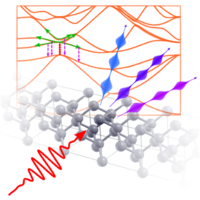
    <description>Author(s): K. Yabana, T. Sugiyama, Y. Shinohara, T. Otobe, and G. F. Bertsch&lt;br/&gt;&lt;p&gt;We apply the coupled dynamics of time-dependent density functional theory and Maxwell equations to the interaction of intense laser pulses with crystalline silicon. As a function of electromagnetic field intensity, we see several regions in the response. At the lowest intensities, the pulse is refle...&lt;/p&gt;&lt;br/&gt;[Phys. Rev. B 85, 045134] Published Tue Jan 31, 2012</description>
    <content:encoded><![CDATA[<p>Author(s): K. Yabana, T. Sugiyama, Y. Shinohara, T. Otobe, and G. F. Bertsch</p><p> We apply the coupled dynamics of time-dependent density functional theory and Maxwell equations to the interaction of intense laser pulses with crystalline silicon. As a function of electromagnetic field intensity, we see several regions in the response. At the lowest intensities, the pulse is refle...</p><p>[Phys. Rev. B 85, 045134] Published Tue Jan 31, 2012</p>]]></content:encoded>
    <dc:title>Time-dependent density functional theory for strong electromagnetic fields in crystalline solids</dc:title>
    <dc:creator>K. Yabana, T. Sugiyama, Y. Shinohara, T. Otobe, and G. F. Bertsch</dc:creator>
    <dc:date>2012-01-31T10:00:00-05:00</dc:date>
    <dc:rights>Personal use only, all commercial or other reuse prohibited</dc:rights>
    <dc:identifier>doi:10.1103/PhysRevB.85.045134</dc:identifier>
    <dc:source>Phys. Rev. B 85, 045134 (2012)</dc:source>
    <dc:type>article</dc:type>
    <prism:publicationName>Physical Review B</prism:publicationName>
    <prism:volume>85</prism:volume>
    <prism:number>4</prism:number>
    <prism:publicationDate>2012-01-31T10:00:00-05:00</prism:publicationDate>
    <prism:doi>10.1103/PhysRevB.85.045134</prism:doi>
    <prism:url>http://link.aps.org/doi/10.1103/PhysRevB.85.045134</prism:url>
    <prism:startingPage>045134</prism:startingPage>
    <dc:subject>Electronic structure and strongly correlated systems</dc:subject>
    <prism:section>Electronic structure and strongly correlated systems</prism:section>
  </item>
  <item rdf:about="http://link.aps.org/doi/10.1103/PhysRevA.85.013423">
    <title>Exploring above-threshold ionization of hydrogen in an intense x-ray laser field through nonperturbative calculations</title>
    <link>http://link.aps.org/doi/10.1103/PhysRevA.85.013423</link>
    <description>Author(s): M. Dondera and H. Bachau&lt;br/&gt;&lt;p&gt;This paper addresses the problem of above-threshold ionization (ATI) of hydrogen interacting with a short and intense x-ray electromagnetic field. We consider the weakly relativistic regime where the speed of the photoelectron stays well below the velocity of the light &lt;span&gt;&lt;span style="font-style: italic;"&gt;c&lt;/span&gt;&lt;/span&gt;. We solve the time-dependent...&lt;/p&gt;&lt;br/&gt;[Phys. Rev. A 85, 013423] Published Tue Jan 31, 2012</description>
    <content:encoded><![CDATA[<p>Author(s): M. Dondera and H. Bachau</p><p> This paper addresses the problem of above-threshold ionization (ATI) of hydrogen interacting with a short and intense x-ray electromagnetic field. We consider the weakly relativistic regime where the speed of the photoelectron stays well below the velocity of the light <span><span style="font-style: italic;">c</span></span>. We solve the time-dependent...</p><p>[Phys. Rev. A 85, 013423] Published Tue Jan 31, 2012</p>]]></content:encoded>
    <dc:title>Exploring above-threshold ionization of hydrogen in an intense x-ray laser field through nonperturbative calculations</dc:title>
    <dc:creator>M. Dondera and H. Bachau</dc:creator>
    <dc:date>2012-01-31T10:00:00-05:00</dc:date>
    <dc:rights>Personal use only, all commercial or other reuse prohibited</dc:rights>
    <dc:identifier>doi:10.1103/PhysRevA.85.013423</dc:identifier>
    <dc:source>Phys. Rev. A 85, 013423 (2012)</dc:source>
    <dc:type>article</dc:type>
    <prism:publicationName>Physical Review A</prism:publicationName>
    <prism:volume>85</prism:volume>
    <prism:number>1</prism:number>
    <prism:publicationDate>2012-01-31T10:00:00-05:00</prism:publicationDate>
    <prism:doi>10.1103/PhysRevA.85.013423</prism:doi>
    <prism:url>http://link.aps.org/doi/10.1103/PhysRevA.85.013423</prism:url>
    <prism:startingPage>013423</prism:startingPage>
    <dc:subject>Atomic and molecular processes in external fields, including interactions with strong fields and short pulses</dc:subject>
    <prism:section>Atomic and molecular processes in external fields, including interactions with strong fields and short pulses</prism:section>
  </item>
  <item rdf:about="http://link.aps.org/doi/10.1103/PhysRevA.85.013420">
    <title>One-photon double ionization of helium: A heuristic formula for the cross section</title>
    <link>http://link.aps.org/doi/10.1103/PhysRevA.85.013420</link>
    <description>Author(s): Morten Førre&lt;br/&gt;&lt;p&gt;Without a formal derivation, we propose a formula for the total and single-differential cross sections in the problem of one-photon double ionization of an atom. The formula is benchmarked against accurate experimental data for the total cross section of helium. Furthermore, a direct comparison with...&lt;/p&gt;&lt;br/&gt;[Phys. Rev. A 85, 013420] Published Tue Jan 31, 2012</description>
    <content:encoded><![CDATA[<p>Author(s): Morten Førre</p><p> Without a formal derivation, we propose a formula for the total and single-differential cross sections in the problem of one-photon double ionization of an atom. The formula is benchmarked against accurate experimental data for the total cross section of helium. Furthermore, a direct comparison with...</p><p>[Phys. Rev. A 85, 013420] Published Tue Jan 31, 2012</p>]]></content:encoded>
    <dc:title>One-photon double ionization of helium: A heuristic formula for the cross section</dc:title>
    <dc:creator>Morten Førre</dc:creator>
    <dc:date>2012-01-31T10:00:00-05:00</dc:date>
    <dc:rights>Personal use only, all commercial or other reuse prohibited</dc:rights>
    <dc:identifier>doi:10.1103/PhysRevA.85.013420</dc:identifier>
    <dc:source>Phys. Rev. A 85, 013420 (2012)</dc:source>
    <dc:type>article</dc:type>
    <prism:publicationName>Physical Review A</prism:publicationName>
    <prism:volume>85</prism:volume>
    <prism:number>1</prism:number>
    <prism:publicationDate>2012-01-31T10:00:00-05:00</prism:publicationDate>
    <prism:doi>10.1103/PhysRevA.85.013420</prism:doi>
    <prism:url>http://link.aps.org/doi/10.1103/PhysRevA.85.013420</prism:url>
    <prism:startingPage>013420</prism:startingPage>
    <dc:subject>Atomic and molecular processes in external fields, including interactions with strong fields and short pulses</dc:subject>
    <prism:section>Atomic and molecular processes in external fields, including interactions with strong fields and short pulses</prism:section>
  </item>
  <item rdf:about="http://link.aps.org/doi/10.1103/PhysRevA.85.013419">
    <title>Wave functions associated with time-dependent, complex-scaled Hamiltonians evaluated on a complex time grid</title>
    <link>http://link.aps.org/doi/10.1103/PhysRevA.85.013419</link>
    <description>Author(s): Jakob Bengtsson, Eva Lindroth, and Sølve Selstø&lt;br/&gt;&lt;p&gt;We solve the time-dependent Schrödinger equation with the method of uniform complex scaling and investigate the possibility to evaluate the solution on a complex time grid. With this approach it is possible to calculate properties that relate directly to the continuum part of the complex scaled wave...&lt;/p&gt;&lt;br/&gt;[Phys. Rev. A 85, 013419] Published Mon Jan 30, 2012</description>
    <content:encoded><![CDATA[<p>Author(s): Jakob Bengtsson, Eva Lindroth, and Sølve Selstø</p><p> We solve the time-dependent Schrödinger equation with the method of uniform complex scaling and investigate the possibility to evaluate the solution on a complex time grid. With this approach it is possible to calculate properties that relate directly to the continuum part of the complex scaled wave...</p><p>[Phys. Rev. A 85, 013419] Published Mon Jan 30, 2012</p>]]></content:encoded>
    <dc:title>Wave functions associated with time-dependent, complex-scaled Hamiltonians evaluated on a complex time grid</dc:title>
    <dc:creator>Jakob Bengtsson, Eva Lindroth, and Sølve Selstø</dc:creator>
    <dc:date>2012-01-30T10:00:00-05:00</dc:date>
    <dc:rights>Personal use only, all commercial or other reuse prohibited</dc:rights>
    <dc:identifier>doi:10.1103/PhysRevA.85.013419</dc:identifier>
    <dc:source>Phys. Rev. A 85, 013419 (2012)</dc:source>
    <dc:type>article</dc:type>
    <prism:publicationName>Physical Review A</prism:publicationName>
    <prism:volume>85</prism:volume>
    <prism:number>1</prism:number>
    <prism:publicationDate>2012-01-30T10:00:00-05:00</prism:publicationDate>
    <prism:doi>10.1103/PhysRevA.85.013419</prism:doi>
    <prism:url>http://link.aps.org/doi/10.1103/PhysRevA.85.013419</prism:url>
    <prism:startingPage>013419</prism:startingPage>
    <dc:subject>Atomic and molecular processes in external fields, including interactions with strong fields and short pulses</dc:subject>
    <prism:section>Atomic and molecular processes in external fields, including interactions with strong fields and short pulses</prism:section>
  </item>
  <item rdf:about="http://link.aps.org/doi/10.1103/PhysRevA.85.013416">
    <title>Generation of a broadband xuv continuum in high-order-harmonic generation by spatially inhomogeneous fields</title>
    <link>http://link.aps.org/doi/10.1103/PhysRevA.85.013416</link>
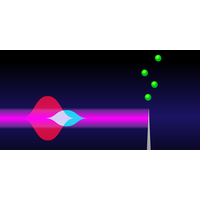
    <description>Author(s): I. Yavuz, E. A. Bleda, Z. Altun, and T. Topcu&lt;br/&gt;&lt;p&gt;We address an efficient scheme to generate a broadband extreme-ultraviolet (xuv) continuum from high-order harmonic generation emerging from the concept of plasmonic field enhancement in the vicinity of metallic nanostructures [ Kim &lt;span style="font-style: italic;"&gt;et al.&lt;/span&gt; &lt;a href="http://dx.doi.org/10.1038/nature07012"&gt; Nature (London) &lt;span style="font-weight: bold;"&gt;453&lt;/span&gt; 757 (2008)&lt;/a&gt;]. Based on the numerical sol...&lt;/p&gt;&lt;br/&gt;[Phys. Rev. A 85, 013416] Published Fri Jan 27, 2012</description>
    <content:encoded><![CDATA[<p>Author(s): I. Yavuz, E. A. Bleda, Z. Altun, and T. Topcu</p><p> We address an efficient scheme to generate a broadband extreme-ultraviolet (xuv) continuum from high-order harmonic generation emerging from the concept of plasmonic field enhancement in the vicinity of metallic nanostructures [ Kim <span style="font-style: italic;">et al.</span> <a href="http://dx.doi.org/10.1038/nature07012"> Nature (London) <span style="font-weight: bold;">453</span> 757 (2008)</a>]. Based on the numerical sol...</p><p>[Phys. Rev. A 85, 013416] Published Fri Jan 27, 2012</p>]]></content:encoded>
    <dc:title>Generation of a broadband xuv continuum in high-order-harmonic generation by spatially inhomogeneous fields</dc:title>
    <dc:creator>I. Yavuz, E. A. Bleda, Z. Altun, and T. Topcu</dc:creator>
    <dc:date>2012-01-27T10:00:00-05:00</dc:date>
    <dc:rights>Personal use only, all commercial or other reuse prohibited</dc:rights>
    <dc:identifier>doi:10.1103/PhysRevA.85.013416</dc:identifier>
    <dc:source>Phys. Rev. A 85, 013416 (2012)</dc:source>
    <dc:type>article</dc:type>
    <prism:publicationName>Physical Review A</prism:publicationName>
    <prism:volume>85</prism:volume>
    <prism:number>1</prism:number>
    <prism:publicationDate>2012-01-27T10:00:00-05:00</prism:publicationDate>
    <prism:doi>10.1103/PhysRevA.85.013416</prism:doi>
    <prism:url>http://link.aps.org/doi/10.1103/PhysRevA.85.013416</prism:url>
    <prism:startingPage>013416</prism:startingPage>
    <dc:subject>Atomic and molecular processes in external fields, including interactions with strong fields and short pulses</dc:subject>
    <prism:section>Atomic and molecular processes in external fields, including interactions with strong fields and short pulses</prism:section>
  </item>
  <item rdf:about="http://link.aps.org/doi/10.1103/PhysRevA.85.013417">
    <title>Nonadiabatic atomic ionization by intense subcycle laser pulses</title>
    <link>http://link.aps.org/doi/10.1103/PhysRevA.85.013417</link>
    <description>Author(s): Jian Zheng, Enming Qiu, Yingchun Yang, and Qiang Lin&lt;br/&gt;&lt;p&gt;The atomic photoionization by a subcycle linearly polarized laser pulse is studied with numerical solutions of the time-dependent Schrödinger equation for a hydrogenlike atom. In this regime, the presumption for the adiabatic ionization theories that atoms are ionized directly from an initial bound ...&lt;/p&gt;&lt;br/&gt;[Phys. Rev. A 85, 013417] Published Fri Jan 27, 2012</description>
    <content:encoded><![CDATA[<p>Author(s): Jian Zheng, Enming Qiu, Yingchun Yang, and Qiang Lin</p><p> The atomic photoionization by a subcycle linearly polarized laser pulse is studied with numerical solutions of the time-dependent Schrödinger equation for a hydrogenlike atom. In this regime, the presumption for the adiabatic ionization theories that atoms are ionized directly from an initial bound ...</p><p>[Phys. Rev. A 85, 013417] Published Fri Jan 27, 2012</p>]]></content:encoded>
    <dc:title>Nonadiabatic atomic ionization by intense subcycle laser pulses</dc:title>
    <dc:creator>Jian Zheng, Enming Qiu, Yingchun Yang, and Qiang Lin</dc:creator>
    <dc:date>2012-01-27T10:00:00-05:00</dc:date>
    <dc:rights>Personal use only, all commercial or other reuse prohibited</dc:rights>
    <dc:identifier>doi:10.1103/PhysRevA.85.013417</dc:identifier>
    <dc:source>Phys. Rev. A 85, 013417 (2012)</dc:source>
    <dc:type>article</dc:type>
    <prism:publicationName>Physical Review A</prism:publicationName>
    <prism:volume>85</prism:volume>
    <prism:number>1</prism:number>
    <prism:publicationDate>2012-01-27T10:00:00-05:00</prism:publicationDate>
    <prism:doi>10.1103/PhysRevA.85.013417</prism:doi>
    <prism:url>http://link.aps.org/doi/10.1103/PhysRevA.85.013417</prism:url>
    <prism:startingPage>013417</prism:startingPage>
    <dc:subject>Atomic and molecular processes in external fields, including interactions with strong fields and short pulses</dc:subject>
    <prism:section>Atomic and molecular processes in external fields, including interactions with strong fields and short pulses</prism:section>
  </item>
  <item rdf:about="http://link.aps.org/doi/10.1103/PhysRevA.85.013418">
    <title>Control of the polarization of isolated attosecond pulses in atoms with nonvanishing angular quantum number</title>
    <link>http://link.aps.org/doi/10.1103/PhysRevA.85.013418</link>
    <description>Author(s): Candong Liu and Mauro Nisoli&lt;br/&gt;&lt;p&gt;High-order harmonic generation in the model hydrogenlike system He&lt;span&gt;&lt;sup&gt;+&lt;/sup&gt;&lt;/span&gt; prepared in an initial 2&lt;span&gt;&lt;span style="font-style: italic;"&gt;p&lt;/span&gt;&lt;sub&gt;0&lt;/sub&gt;&lt;/span&gt; state with nonvanishing angular quantum number is investigated by numerically solving the fully three-dimensional time-dependent Schrödinger equation. It is found that isolated attosecond pulses with ellip...&lt;/p&gt;&lt;br/&gt;[Phys. Rev. A 85, 013418] Published Fri Jan 27, 2012</description>
    <content:encoded><![CDATA[<p>Author(s): Candong Liu and Mauro Nisoli</p><p> High-order harmonic generation in the model hydrogenlike system He<span><sup>+</sup></span> prepared in an initial 2<span><span style="font-style: italic;">p</span><sub>0</sub></span> state with nonvanishing angular quantum number is investigated by numerically solving the fully three-dimensional time-dependent Schrödinger equation. It is found that isolated attosecond pulses with ellip...</p><p>[Phys. Rev. A 85, 013418] Published Fri Jan 27, 2012</p>]]></content:encoded>
    <dc:title>Control of the polarization of isolated attosecond pulses in atoms with nonvanishing angular quantum number</dc:title>
    <dc:creator>Candong Liu and Mauro Nisoli</dc:creator>
    <dc:date>2012-01-27T10:00:00-05:00</dc:date>
    <dc:rights>Personal use only, all commercial or other reuse prohibited</dc:rights>
    <dc:identifier>doi:10.1103/PhysRevA.85.013418</dc:identifier>
    <dc:source>Phys. Rev. A 85, 013418 (2012)</dc:source>
    <dc:type>article</dc:type>
    <prism:publicationName>Physical Review A</prism:publicationName>
    <prism:volume>85</prism:volume>
    <prism:number>1</prism:number>
    <prism:publicationDate>2012-01-27T10:00:00-05:00</prism:publicationDate>
    <prism:doi>10.1103/PhysRevA.85.013418</prism:doi>
    <prism:url>http://link.aps.org/doi/10.1103/PhysRevA.85.013418</prism:url>
    <prism:startingPage>013418</prism:startingPage>
    <dc:subject>Atomic and molecular processes in external fields, including interactions with strong fields and short pulses</dc:subject>
    <prism:section>Atomic and molecular processes in external fields, including interactions with strong fields and short pulses</prism:section>
  </item>
  <item rdf:about="http://link.aps.org/doi/10.1103/PhysRevA.85.012520">
    <title>Strong-field adiabatic passage in the continuum: Electromagnetically induced transparency and stimulated Raman adiabatic passage</title>
    <link>http://link.aps.org/doi/10.1103/PhysRevA.85.012520</link>
    <description>Author(s): A. Eilam and M. Shapiro&lt;br/&gt;&lt;p&gt;We present a fully quantum-mechanical theory of the mutual light-matter effects when two laser pulses interact with three discrete states coupled to a (quasi)continuum. Our formulation uses a single set of equations to describe the time dependence of the discrete and continuum populations, as well a...&lt;/p&gt;&lt;br/&gt;[Phys. Rev. A 85, 012520] Published Fri Jan 27, 2012</description>
    <content:encoded><![CDATA[<p>Author(s): A. Eilam and M. Shapiro</p><p> We present a fully quantum-mechanical theory of the mutual light-matter effects when two laser pulses interact with three discrete states coupled to a (quasi)continuum. Our formulation uses a single set of equations to describe the time dependence of the discrete and continuum populations, as well a...</p><p>[Phys. Rev. A 85, 012520] Published Fri Jan 27, 2012</p>]]></content:encoded>
    <dc:title>Strong-field adiabatic passage in the continuum: Electromagnetically induced transparency and stimulated Raman adiabatic passage</dc:title>
    <dc:creator>A. Eilam and M. Shapiro</dc:creator>
    <dc:date>2012-01-27T10:00:00-05:00</dc:date>
    <dc:rights>Personal use only, all commercial or other reuse prohibited</dc:rights>
    <dc:identifier>doi:10.1103/PhysRevA.85.012520</dc:identifier>
    <dc:source>Phys. Rev. A 85, 012520 (2012)</dc:source>
    <dc:type>article</dc:type>
    <prism:publicationName>Physical Review A</prism:publicationName>
    <prism:volume>85</prism:volume>
    <prism:number>1</prism:number>
    <prism:publicationDate>2012-01-27T10:00:00-05:00</prism:publicationDate>
    <prism:doi>10.1103/PhysRevA.85.012520</prism:doi>
    <prism:url>http://link.aps.org/doi/10.1103/PhysRevA.85.012520</prism:url>
    <prism:startingPage>012520</prism:startingPage>
    <dc:subject>Atomic and molecular structure and dynamics</dc:subject>
    <prism:section>Atomic and molecular structure and dynamics</prism:section>
  </item>
  <item rdf:about="http://link.aps.org/doi/10.1103/PhysRevLett.108.043004">
    <title>Molecular Imaging Using High-Order Harmonic Generation and Above-Threshold Ionization</title>
    <link>http://link.aps.org/doi/10.1103/PhysRevLett.108.043004</link>
    <description>Author(s): Elmar V. van der Zwan and Manfred Lein&lt;br/&gt;&lt;p&gt;Accurate molecular imaging via high-order harmonic generation relies on comparing harmonic emission from a laser-irradiated molecule and an adequate reference system. However, an ideal reference atom with the same ionization properties as the molecule is not always available. We show that for suitab...&lt;/p&gt;&lt;br/&gt;[Phys. Rev. Lett. 108, 043004] Published Wed Jan 25, 2012</description>
    <content:encoded><![CDATA[<p>Author(s): Elmar V. van der Zwan and Manfred Lein</p><p> Accurate molecular imaging via high-order harmonic generation relies on comparing harmonic emission from a laser-irradiated molecule and an adequate reference system. However, an ideal reference atom with the same ionization properties as the molecule is not always available. We show that for suitab...</p><p>[Phys. Rev. Lett. 108, 043004] Published Wed Jan 25, 2012</p>]]></content:encoded>
    <dc:title>Molecular Imaging Using High-Order Harmonic Generation and Above-Threshold Ionization</dc:title>
    <dc:creator>Elmar V. van der Zwan and Manfred Lein</dc:creator>
    <dc:date>2012-01-25T10:00:00-05:00</dc:date>
    <dc:rights>Personal use only, all commercial or other reuse prohibited</dc:rights>
    <dc:identifier>doi:10.1103/PhysRevLett.108.043004</dc:identifier>
    <dc:source>Phys. Rev. Lett. 108, 043004 (2012)</dc:source>
    <dc:type>article</dc:type>
    <prism:publicationName>Physical Review Letters</prism:publicationName>
    <prism:volume>108</prism:volume>
    <prism:number>4</prism:number>
    <prism:publicationDate>2012-01-25T10:00:00-05:00</prism:publicationDate>
    <prism:doi>10.1103/PhysRevLett.108.043004</prism:doi>
    <prism:url>http://link.aps.org/doi/10.1103/PhysRevLett.108.043004</prism:url>
    <prism:startingPage>043004</prism:startingPage>
    <dc:subject>Atomic, Molecular, and Optical Physics</dc:subject>
    <prism:section>Atomic, Molecular, and Optical Physics</prism:section>
  </item>
  <item rdf:about="http://link.aps.org/doi/10.1103/PhysRevA.85.013415">
    <title>Theory of attosecond absorption spectroscopy in krypton</title>
    <link>http://link.aps.org/doi/10.1103/PhysRevA.85.013415</link>
    <description>Author(s): J. C. Baggesen, E. Lindroth, and L. B. Madsen&lt;br/&gt;&lt;p&gt;A theory for time-domain attosecond pump–attosecond probe photoabsorption spectroscopy is formulated and related to the atomic response. The theory is illustrated through a study of attosecond absorption spectroscopy in krypton. The atomic parameters entering the formulation such as energies and Aug...&lt;/p&gt;&lt;br/&gt;[Phys. Rev. A 85, 013415] Published Wed Jan 25, 2012</description>
    <content:encoded><![CDATA[<p>Author(s): J. C. Baggesen, E. Lindroth, and L. B. Madsen</p><p> A theory for time-domain attosecond pump–attosecond probe photoabsorption spectroscopy is formulated and related to the atomic response. The theory is illustrated through a study of attosecond absorption spectroscopy in krypton. The atomic parameters entering the formulation such as energies and Aug...</p><p>[Phys. Rev. A 85, 013415] Published Wed Jan 25, 2012</p>]]></content:encoded>
    <dc:title>Theory of attosecond absorption spectroscopy in krypton</dc:title>
    <dc:creator>J. C. Baggesen, E. Lindroth, and L. B. Madsen</dc:creator>
    <dc:date>2012-01-25T10:00:00-05:00</dc:date>
    <dc:rights>Personal use only, all commercial or other reuse prohibited</dc:rights>
    <dc:identifier>doi:10.1103/PhysRevA.85.013415</dc:identifier>
    <dc:source>Phys. Rev. A 85, 013415 (2012)</dc:source>
    <dc:type>article</dc:type>
    <prism:publicationName>Physical Review A</prism:publicationName>
    <prism:volume>85</prism:volume>
    <prism:number>1</prism:number>
    <prism:publicationDate>2012-01-25T10:00:00-05:00</prism:publicationDate>
    <prism:doi>10.1103/PhysRevA.85.013415</prism:doi>
    <prism:url>http://link.aps.org/doi/10.1103/PhysRevA.85.013415</prism:url>
    <prism:startingPage>013415</prism:startingPage>
    <dc:subject>Atomic and molecular processes in external fields, including interactions with strong fields and short pulses</dc:subject>
    <prism:section>Atomic and molecular processes in external fields, including interactions with strong fields and short pulses</prism:section>
  </item>
  <item rdf:about="http://link.aps.org/doi/10.1103/PhysRevLett.108.043002">
    <title>Coulomb Asymmetry in Strong Field Multielectron Ionization of Diatomic Molecules</title>
    <link>http://link.aps.org/doi/10.1103/PhysRevLett.108.043002</link>
    <description>Author(s): J. Wu, M. Meckel, S. Voss, H. Sann, M. Kunitski, L. Ph. H. Schmidt, A. Czasch, H. Kim, T. Jahnke, and R. Dörner&lt;br/&gt;&lt;p&gt;We measure the angular distribution of an electron emitted by a strong elliptically polarized two-color laser field from exploding doubly charged molecular nitrogen. This angular distribution is vastly different for emission of the electron from the up-field core of the molecule as compared to that ...&lt;/p&gt;&lt;br/&gt;[Phys. Rev. Lett. 108, 043002] Published Tue Jan 24, 2012</description>
    <content:encoded><![CDATA[<p>Author(s): J. Wu, M. Meckel, S. Voss, H. Sann, M. Kunitski, L. Ph. H. Schmidt, A. Czasch, H. Kim, T. Jahnke, and R. Dörner</p><p> We measure the angular distribution of an electron emitted by a strong elliptically polarized two-color laser field from exploding doubly charged molecular nitrogen. This angular distribution is vastly different for emission of the electron from the up-field core of the molecule as compared to that ...</p><p>[Phys. Rev. Lett. 108, 043002] Published Tue Jan 24, 2012</p>]]></content:encoded>
    <dc:title>Coulomb Asymmetry in Strong Field Multielectron Ionization of Diatomic Molecules</dc:title>
    <dc:creator>J. Wu, M. Meckel, S. Voss, H. Sann, M. Kunitski, L. Ph. H. Schmidt, A. Czasch, H. Kim, T. Jahnke, and R. Dörner</dc:creator>
    <dc:date>2012-01-24T10:00:00-05:00</dc:date>
    <dc:rights>Personal use only, all commercial or other reuse prohibited</dc:rights>
    <dc:identifier>doi:10.1103/PhysRevLett.108.043002</dc:identifier>
    <dc:source>Phys. Rev. Lett. 108, 043002 (2012)</dc:source>
    <dc:type>article</dc:type>
    <prism:publicationName>Physical Review Letters</prism:publicationName>
    <prism:volume>108</prism:volume>
    <prism:number>4</prism:number>
    <prism:publicationDate>2012-01-24T10:00:00-05:00</prism:publicationDate>
    <prism:doi>10.1103/PhysRevLett.108.043002</prism:doi>
    <prism:url>http://link.aps.org/doi/10.1103/PhysRevLett.108.043002</prism:url>
    <prism:startingPage>043002</prism:startingPage>
    <dc:subject>Atomic, Molecular, and Optical Physics</dc:subject>
    <prism:section>Atomic, Molecular, and Optical Physics</prism:section>
  </item>
  <item rdf:about="http://link.aps.org/doi/10.1103/PhysRevLett.108.033903">
    <title>All-Optical Measurement of High-Harmonic Amplitudes and Phases in Aligned Molecules</title>
    <link>http://link.aps.org/doi/10.1103/PhysRevLett.108.033903</link>
    <description>Author(s): A. Rupenyan, J. B. Bertrand, D. M. Villeneuve, and H. J. Wörner&lt;br/&gt;&lt;p&gt;We report a new all-optical approach to measuring the phase and amplitude of high-harmonic emission from aligned molecules. We combine the transient grating technique with a continuous rotation of the molecular alignment axis and develop an analytical model that enables the simultaneous determinatio...&lt;/p&gt;&lt;br/&gt;[Phys. Rev. Lett. 108, 033903] Published Fri Jan 20, 2012</description>
    <content:encoded><![CDATA[<p>Author(s): A. Rupenyan, J. B. Bertrand, D. M. Villeneuve, and H. J. Wörner</p><p> We report a new all-optical approach to measuring the phase and amplitude of high-harmonic emission from aligned molecules. We combine the transient grating technique with a continuous rotation of the molecular alignment axis and develop an analytical model that enables the simultaneous determinatio...</p><p>[Phys. Rev. Lett. 108, 033903] Published Fri Jan 20, 2012</p>]]></content:encoded>
    <dc:title>All-Optical Measurement of High-Harmonic Amplitudes and Phases in Aligned Molecules</dc:title>
    <dc:creator>A. Rupenyan, J. B. Bertrand, D. M. Villeneuve, and H. J. Wörner</dc:creator>
    <dc:date>2012-01-20T10:00:00-05:00</dc:date>
    <dc:rights>Personal use only, all commercial or other reuse prohibited</dc:rights>
    <dc:identifier>doi:10.1103/PhysRevLett.108.033903</dc:identifier>
    <dc:source>Phys. Rev. Lett. 108, 033903 (2012)</dc:source>
    <dc:type>article</dc:type>
    <prism:publicationName>Physical Review Letters</prism:publicationName>
    <prism:volume>108</prism:volume>
    <prism:number>3</prism:number>
    <prism:publicationDate>2012-01-20T10:00:00-05:00</prism:publicationDate>
    <prism:doi>10.1103/PhysRevLett.108.033903</prism:doi>
    <prism:url>http://link.aps.org/doi/10.1103/PhysRevLett.108.033903</prism:url>
    <prism:startingPage>033903</prism:startingPage>
    <dc:subject>Nonlinear Dynamics, Fluid Dynamics, Classical Optics, etc.</dc:subject>
    <prism:section>Nonlinear Dynamics, Fluid Dynamics, Classical Optics, etc.</prism:section>
  </item>
  <item rdf:about="http://link.aps.org/doi/10.1103/PhysRevA.85.011403">
    <title>Low-energy peak structure in strong-field ionization by midinfrared laser pulses: Two-dimensional focusing by the atomic potential</title>
    <link>http://link.aps.org/doi/10.1103/PhysRevA.85.011403</link>
    <description>Author(s): Christoph Lemell, Konstantinos I. Dimitriou, Xiao-Min Tong, Stefan Nagele, Daniil V. Kartashov, Joachim Burgdörfer, and Stefanie Gräfe&lt;br/&gt;&lt;p&gt;We analyze the formation of the low-energy structure (LES) in above-threshold ionization spectra in strong-field ionization by midinfrared laser pulses by using both quasiclassical and quantum approaches. We show this structure to be largely classical in origin, resulting from a two-dimensional focu...&lt;/p&gt;&lt;br/&gt;&lt;img src="http://publish.aps.org/images/icons/rapid30x30.gif" width="30" height="30" alt="Rapid Communication"/&gt; &lt;br/&gt;[Phys. Rev. A 85, 011403] Published Fri Jan 20, 2012</description>
    <content:encoded><![CDATA[<p>Author(s): Christoph Lemell, Konstantinos I. Dimitriou, Xiao-Min Tong, Stefan Nagele, Daniil V. Kartashov, Joachim Burgdörfer, and Stefanie Gräfe</p><p><img src="http://publish.aps.org/images/icons/rapid30x30.gif" width="30" height="30" alt="Rapid Communication"/>  We analyze the formation of the low-energy structure (LES) in above-threshold ionization spectra in strong-field ionization by midinfrared laser pulses by using both quasiclassical and quantum approaches. We show this structure to be largely classical in origin, resulting from a two-dimensional focu...</p><p>[Phys. Rev. A 85, 011403] Published Fri Jan 20, 2012</p>]]></content:encoded>
    <dc:title>Low-energy peak structure in strong-field ionization by midinfrared laser pulses: Two-dimensional focusing by the atomic potential</dc:title>
    <dc:creator>Christoph Lemell, Konstantinos I. Dimitriou, Xiao-Min Tong, Stefan Nagele, Daniil V. Kartashov, Joachim Burgdörfer, and Stefanie Gräfe</dc:creator>
    <dc:date>2012-01-20T10:00:00-05:00</dc:date>
    <dc:rights>Personal use only, all commercial or other reuse prohibited</dc:rights>
    <dc:identifier>doi:10.1103/PhysRevA.85.011403</dc:identifier>
    <dc:source>Phys. Rev. A 85, 011403 (2012)</dc:source>
    <dc:type>article</dc:type>
    <prism:publicationName>Physical Review A</prism:publicationName>
    <prism:volume>85</prism:volume>
    <prism:number>1</prism:number>
    <prism:publicationDate>2012-01-20T10:00:00-05:00</prism:publicationDate>
    <prism:doi>10.1103/PhysRevA.85.011403</prism:doi>
    <prism:url>http://link.aps.org/doi/10.1103/PhysRevA.85.011403</prism:url>
    <prism:startingPage>011403</prism:startingPage>
    <dc:subject>Atomic and molecular processes in external fields, including interactions with strong fields and short pulses</dc:subject>
    <prism:section>Atomic and molecular processes in external fields, including interactions with strong fields and short pulses</prism:section>
  </item>
  <item rdf:about="http://link.aps.org/doi/10.1103/PhysRevLett.108.033003">
    <title>Competition of Resonant and Nonresonant Paths in Resonance-Enhanced Two-Photon Single Ionization of He by an Ultrashort Extreme-Ultraviolet Pulse</title>
    <link>http://link.aps.org/doi/10.1103/PhysRevLett.108.033003</link>
    <description>Author(s): Kenichi L. Ishikawa and Kiyoshi Ueda&lt;br/&gt;&lt;p&gt;We theoretically study the pulse-width dependence of the photoelectron angular distribution (PAD) from the resonance-enhanced two-photon single ionization of He by femtosecond (&lt;span&gt;≲20  fs&lt;/span&gt;) extreme-ultraviolet pulses, based on the time-dependent perturbation theory and simulations with the full time-dep...&lt;/p&gt;&lt;br/&gt;[Phys. Rev. Lett. 108, 033003] Published Thu Jan 19, 2012</description>
    <content:encoded><![CDATA[<p>Author(s): Kenichi L. Ishikawa and Kiyoshi Ueda</p><p> We theoretically study the pulse-width dependence of the photoelectron angular distribution (PAD) from the resonance-enhanced two-photon single ionization of He by femtosecond (<span>≲20  fs</span>) extreme-ultraviolet pulses, based on the time-dependent perturbation theory and simulations with the full time-dep...</p><p>[Phys. Rev. Lett. 108, 033003] Published Thu Jan 19, 2012</p>]]></content:encoded>
    <dc:title>Competition of Resonant and Nonresonant Paths in Resonance-Enhanced Two-Photon Single Ionization of He by an Ultrashort Extreme-Ultraviolet Pulse</dc:title>
    <dc:creator>Kenichi L. Ishikawa and Kiyoshi Ueda</dc:creator>
    <dc:date>2012-01-19T10:00:00-05:00</dc:date>
    <dc:rights>Personal use only, all commercial or other reuse prohibited</dc:rights>
    <dc:identifier>doi:10.1103/PhysRevLett.108.033003</dc:identifier>
    <dc:source>Phys. Rev. Lett. 108, 033003 (2012)</dc:source>
    <dc:type>article</dc:type>
    <prism:publicationName>Physical Review Letters</prism:publicationName>
    <prism:volume>108</prism:volume>
    <prism:number>3</prism:number>
    <prism:publicationDate>2012-01-19T10:00:00-05:00</prism:publicationDate>
    <prism:doi>10.1103/PhysRevLett.108.033003</prism:doi>
    <prism:url>http://link.aps.org/doi/10.1103/PhysRevLett.108.033003</prism:url>
    <prism:startingPage>033003</prism:startingPage>
    <dc:subject>Atomic, Molecular, and Optical Physics</dc:subject>
    <prism:section>Atomic, Molecular, and Optical Physics</prism:section>
  </item>
  <item rdf:about="http://link.aps.org/doi/10.1103/PhysRevLett.108.033002">
    <title>Inelastic Scattering of Broadband Electron Wave Packets Driven by an Intense Midinfrared Laser Field</title>
    <link>http://link.aps.org/doi/10.1103/PhysRevLett.108.033002</link>
    <description>Author(s): A. D. DiChiara, E. Sistrunk, C. I. Blaga, U. B. Szafruga, P. Agostini, and L. F. DiMauro&lt;br/&gt;&lt;p&gt;Intense, 100 fs laser pulses at 3.2 and &lt;span&gt;3.6  &lt;span style="font-style: italic;"&gt;μ&lt;/span&gt;m&lt;/span&gt; are used to generate, by multiphoton ionization, broadband wave packets with up to 400 eV of kinetic energy and charge states up to &lt;span&gt;Xe&lt;sup&gt;+6&lt;/sup&gt;&lt;/span&gt;. The multiple ionization pathways are well described by a white electron wave packet and field-free inelastic cross...&lt;/p&gt;&lt;br/&gt;[Phys. Rev. Lett. 108, 033002] Published Wed Jan 18, 2012</description>
    <content:encoded><![CDATA[<p>Author(s): A. D. DiChiara, E. Sistrunk, C. I. Blaga, U. B. Szafruga, P. Agostini, and L. F. DiMauro</p><p> Intense, 100 fs laser pulses at 3.2 and <span>3.6  <span style="font-style: italic;">μ</span>m</span> are used to generate, by multiphoton ionization, broadband wave packets with up to 400 eV of kinetic energy and charge states up to <span>Xe<sup>+6</sup></span>. The multiple ionization pathways are well described by a white electron wave packet and field-free inelastic cross...</p><p>[Phys. Rev. Lett. 108, 033002] Published Wed Jan 18, 2012</p>]]></content:encoded>
    <dc:title>Inelastic Scattering of Broadband Electron Wave Packets Driven by an Intense Midinfrared Laser Field</dc:title>
    <dc:creator>A. D. DiChiara, E. Sistrunk, C. I. Blaga, U. B. Szafruga, P. Agostini, and L. F. DiMauro</dc:creator>
    <dc:date>2012-01-18T10:00:00-05:00</dc:date>
    <dc:rights>Personal use only, all commercial or other reuse prohibited</dc:rights>
    <dc:identifier>doi:10.1103/PhysRevLett.108.033002</dc:identifier>
    <dc:source>Phys. Rev. Lett. 108, 033002 (2012)</dc:source>
    <dc:type>article</dc:type>
    <prism:publicationName>Physical Review Letters</prism:publicationName>
    <prism:volume>108</prism:volume>
    <prism:number>3</prism:number>
    <prism:publicationDate>2012-01-18T10:00:00-05:00</prism:publicationDate>
    <prism:doi>10.1103/PhysRevLett.108.033002</prism:doi>
    <prism:url>http://link.aps.org/doi/10.1103/PhysRevLett.108.033002</prism:url>
    <prism:startingPage>033002</prism:startingPage>
    <dc:subject>Atomic, Molecular, and Optical Physics</dc:subject>
    <prism:section>Atomic, Molecular, and Optical Physics</prism:section>
  </item>
  <item rdf:about="http://link.aps.org/doi/10.1103/PhysRevE.85.016204">
    <title>Annular billiard dynamics in a circularly polarized strong laser field</title>
    <link>http://link.aps.org/doi/10.1103/PhysRevE.85.016204</link>
    <description>Author(s): A. Kamor, F. Mauger, C. Chandre, and T. Uzer&lt;br/&gt;&lt;p&gt;We analyze the dynamics of a valence electron of the buckminsterfullerene molecule (&lt;span&gt;C&lt;sub&gt;60&lt;/sub&gt;&lt;/span&gt;) subjected to a circularly polarized laser field by modeling it with the motion of a classical particle in an annular billiard. We show that the phase space of the billiard model gives rise to three distinct traj...&lt;/p&gt;&lt;br/&gt;[Phys. Rev. E 85, 016204] Published Tue Jan 17, 2012</description>
    <content:encoded><![CDATA[<p>Author(s): A. Kamor, F. Mauger, C. Chandre, and T. Uzer</p><p> We analyze the dynamics of a valence electron of the buckminsterfullerene molecule (<span>C<sub>60</sub></span>) subjected to a circularly polarized laser field by modeling it with the motion of a classical particle in an annular billiard. We show that the phase space of the billiard model gives rise to three distinct traj...</p><p>[Phys. Rev. E 85, 016204] Published Tue Jan 17, 2012</p>]]></content:encoded>
    <dc:title>Annular billiard dynamics in a circularly polarized strong laser field</dc:title>
    <dc:creator>A. Kamor, F. Mauger, C. Chandre, and T. Uzer</dc:creator>
    <dc:date>2012-01-17T10:00:00-05:00</dc:date>
    <dc:rights>Personal use only, all commercial or other reuse prohibited</dc:rights>
    <dc:identifier>doi:10.1103/PhysRevE.85.016204</dc:identifier>
    <dc:source>Phys. Rev. E 85, 016204 (2012)</dc:source>
    <dc:type>article</dc:type>
    <prism:publicationName>Physical Review E</prism:publicationName>
    <prism:volume>85</prism:volume>
    <prism:number>1</prism:number>
    <prism:publicationDate>2012-01-17T10:00:00-05:00</prism:publicationDate>
    <prism:doi>10.1103/PhysRevE.85.016204</prism:doi>
    <prism:url>http://link.aps.org/doi/10.1103/PhysRevE.85.016204</prism:url>
    <prism:startingPage>016204</prism:startingPage>
    <dc:subject>Chaos and pattern formation</dc:subject>
    <prism:section>Chaos and pattern formation</prism:section>
  </item>
  <item rdf:about="http://link.aps.org/doi/10.1103/PhysRevLett.108.033201">
    <title>Electron-Energy Bunching in Laser-Driven Soft Recollisions</title>
    <link>http://link.aps.org/doi/10.1103/PhysRevLett.108.033201</link>
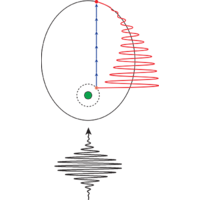
    <description>Author(s): Alexander Kästner, Ulf Saalmann, and Jan M. Rost&lt;br/&gt;&lt;p&gt;We introduce soft recollisions in laser-matter interaction. They are characterized by the electron missing the ion upon recollision in contrast with the well-known head-on collisions responsible for high-harmonic generation or above-threshold ionization. We demonstrate analytically that soft recolli...&lt;/p&gt;&lt;br/&gt;[Phys. Rev. Lett. 108, 033201] Published Tue Jan 17, 2012</description>
    <content:encoded><![CDATA[<p>Author(s): Alexander Kästner, Ulf Saalmann, and Jan M. Rost</p><p> We introduce soft recollisions in laser-matter interaction. They are characterized by the electron missing the ion upon recollision in contrast with the well-known head-on collisions responsible for high-harmonic generation or above-threshold ionization. We demonstrate analytically that soft recolli...</p><p>[Phys. Rev. Lett. 108, 033201] Published Tue Jan 17, 2012</p>]]></content:encoded>
    <dc:title>Electron-Energy Bunching in Laser-Driven Soft Recollisions</dc:title>
    <dc:creator>Alexander Kästner, Ulf Saalmann, and Jan M. Rost</dc:creator>
    <dc:date>2012-01-17T10:00:00-05:00</dc:date>
    <dc:rights>Personal use only, all commercial or other reuse prohibited</dc:rights>
    <dc:identifier>doi:10.1103/PhysRevLett.108.033201</dc:identifier>
    <dc:source>Phys. Rev. Lett. 108, 033201 (2012)</dc:source>
    <dc:type>article</dc:type>
    <prism:publicationName>Physical Review Letters</prism:publicationName>
    <prism:volume>108</prism:volume>
    <prism:number>3</prism:number>
    <prism:publicationDate>2012-01-17T10:00:00-05:00</prism:publicationDate>
    <prism:doi>10.1103/PhysRevLett.108.033201</prism:doi>
    <prism:url>http://link.aps.org/doi/10.1103/PhysRevLett.108.033201</prism:url>
    <prism:startingPage>033201</prism:startingPage>
    <dc:subject>Atomic, Molecular, and Optical Physics</dc:subject>
    <prism:section>Atomic, Molecular, and Optical Physics</prism:section>
  </item>
  <item rdf:about="http://link.aps.org/doi/10.1103/PhysRevA.85.013414">
    <title>Photoelectron angular distributions of low-order above-threshold ionization of Xe in the multiphoton regime</title>
    <link>http://link.aps.org/doi/10.1103/PhysRevA.85.013414</link>
    <description>Author(s): Min Li, Yunquan Liu, Hong Liu, Yudong Yang, Jialei Yuan, Xianrong Liu, Yongkai Deng, Chengyin Wu, and Qihuang Gong&lt;br/&gt;&lt;p&gt;We present high-resolution two-dimensional momentum distributions and energy-angular distributions of photoelectrons from xenon atoms, ionized by an 800-nm, 25-fs linearly polarized laser at intensities of (1.8–4.4) × 10&lt;span&gt;&lt;sup&gt;13&lt;/sup&gt;&lt;/span&gt; W/cm&lt;span&gt;&lt;sup&gt;2&lt;/sup&gt;&lt;/span&gt;. The angular distributions of low-energy photoelectrons exhibit pronoun...&lt;/p&gt;&lt;br/&gt;[Phys. Rev. A 85, 013414] Published Fri Jan 13, 2012</description>
    <content:encoded><![CDATA[<p>Author(s): Min Li, Yunquan Liu, Hong Liu, Yudong Yang, Jialei Yuan, Xianrong Liu, Yongkai Deng, Chengyin Wu, and Qihuang Gong</p><p> We present high-resolution two-dimensional momentum distributions and energy-angular distributions of photoelectrons from xenon atoms, ionized by an 800-nm, 25-fs linearly polarized laser at intensities of (1.8–4.4) × 10<span><sup>13</sup></span> W/cm<span><sup>2</sup></span>. The angular distributions of low-energy photoelectrons exhibit pronoun...</p><p>[Phys. Rev. A 85, 013414] Published Fri Jan 13, 2012</p>]]></content:encoded>
    <dc:title>Photoelectron angular distributions of low-order above-threshold ionization of Xe in the multiphoton regime</dc:title>
    <dc:creator>Min Li, Yunquan Liu, Hong Liu, Yudong Yang, Jialei Yuan, Xianrong Liu, Yongkai Deng, Chengyin Wu, and Qihuang Gong</dc:creator>
    <dc:date>2012-01-13T10:00:00-05:00</dc:date>
    <dc:rights>Personal use only, all commercial or other reuse prohibited</dc:rights>
    <dc:identifier>doi:10.1103/PhysRevA.85.013414</dc:identifier>
    <dc:source>Phys. Rev. A 85, 013414 (2012)</dc:source>
    <dc:type>article</dc:type>
    <prism:publicationName>Physical Review A</prism:publicationName>
    <prism:volume>85</prism:volume>
    <prism:number>1</prism:number>
    <prism:publicationDate>2012-01-13T10:00:00-05:00</prism:publicationDate>
    <prism:doi>10.1103/PhysRevA.85.013414</prism:doi>
    <prism:url>http://link.aps.org/doi/10.1103/PhysRevA.85.013414</prism:url>
    <prism:startingPage>013414</prism:startingPage>
    <dc:subject>Atomic and molecular processes in external fields, including interactions with strong fields and short pulses</dc:subject>
    <prism:section>Atomic and molecular processes in external fields, including interactions with strong fields and short pulses</prism:section>
  </item>
  <item rdf:about="http://link.aps.org/doi/10.1103/PhysRevA.85.013413">
    <title>Molecular above-threshold-ionization angular distributions with attosecond bichromatic intense XUV laser pulses</title>
    <link>http://link.aps.org/doi/10.1103/PhysRevA.85.013413</link>
    <description>Author(s): Kai-Jun Yuan and André D. Bandrauk&lt;br/&gt;&lt;p&gt;Angular distributions of molecular above-threshold ionization (MATI) in bichromatic attosecond extreme ultraviolet (XUV) linear polarization laser pulses have been theoretically investigated. Multiphoton ionization in a prealigned molecular ion H&lt;span&gt;&lt;sub&gt;2&lt;/sub&gt;&lt;/span&gt;&lt;span&gt;&lt;sup&gt;+&lt;/sup&gt;&lt;/span&gt; produces clear MATI spectra which show a forward-ba...&lt;/p&gt;&lt;br/&gt;[Phys. Rev. A 85, 013413] Published Fri Jan 13, 2012</description>
    <content:encoded><![CDATA[<p>Author(s): Kai-Jun Yuan and André D. Bandrauk</p><p> Angular distributions of molecular above-threshold ionization (MATI) in bichromatic attosecond extreme ultraviolet (XUV) linear polarization laser pulses have been theoretically investigated. Multiphoton ionization in a prealigned molecular ion H<span><sub>2</sub></span><span><sup>+</sup></span> produces clear MATI spectra which show a forward-ba...</p><p>[Phys. Rev. A 85, 013413] Published Fri Jan 13, 2012</p>]]></content:encoded>
    <dc:title>Molecular above-threshold-ionization angular distributions with attosecond bichromatic intense XUV laser pulses</dc:title>
    <dc:creator>Kai-Jun Yuan and André D. Bandrauk</dc:creator>
    <dc:date>2012-01-13T10:00:00-05:00</dc:date>
    <dc:rights>Personal use only, all commercial or other reuse prohibited</dc:rights>
    <dc:identifier>doi:10.1103/PhysRevA.85.013413</dc:identifier>
    <dc:source>Phys. Rev. A 85, 013413 (2012)</dc:source>
    <dc:type>article</dc:type>
    <prism:publicationName>Physical Review A</prism:publicationName>
    <prism:volume>85</prism:volume>
    <prism:number>1</prism:number>
    <prism:publicationDate>2012-01-13T10:00:00-05:00</prism:publicationDate>
    <prism:doi>10.1103/PhysRevA.85.013413</prism:doi>
    <prism:url>http://link.aps.org/doi/10.1103/PhysRevA.85.013413</prism:url>
    <prism:startingPage>013413</prism:startingPage>
    <dc:subject>Atomic and molecular processes in external fields, including interactions with strong fields and short pulses</dc:subject>
    <prism:section>Atomic and molecular processes in external fields, including interactions with strong fields and short pulses</prism:section>
  </item>
  <item rdf:about="http://link.aps.org/doi/10.1103/PhysRevA.85.013411">
    <title>Femtosecond transparency in the extreme-ultraviolet region</title>
    <link>http://link.aps.org/doi/10.1103/PhysRevA.85.013411</link>
    <description>Author(s): Michal Tarana and Chris H. Greene&lt;br/&gt;&lt;p&gt;Electromagnetically-induced-transparency-like behavior in the extreme-ultraviolet region is studied theoretically, including the effect of intense 800 nm laser dressing of He 2&lt;span style="font-style: italic;"&gt;s&lt;/span&gt;2&lt;span style="font-style: italic;"&gt;p&lt;/span&gt;(&lt;span&gt;&lt;sup&gt;1&lt;/sup&gt; &lt;span style="font-style: italic;"&gt;P&lt;/span&gt;&lt;sup&gt;&lt;span style="font-style: italic;"&gt;o&lt;/span&gt;&lt;/sup&gt;&lt;/span&gt;) and 2&lt;span style="font-style: italic;"&gt;p&lt;/span&gt;&lt;span&gt;&lt;sup&gt;2&lt;/sup&gt;&lt;/span&gt;&lt;span&gt;(&lt;sup&gt;1&lt;/sup&gt; &lt;span style="font-style: italic;"&gt;S&lt;/span&gt;&lt;sup&gt;&lt;span style="font-style: italic;"&gt;e&lt;/span&gt;&lt;/sup&gt;)&lt;/span&gt; autoionizing states. We present an &lt;span style="font-style: italic;"&gt;ab initio&lt;/span&gt; solution of the time-dependent Schrödinger equation in ...&lt;/p&gt;&lt;br/&gt;[Phys. Rev. A 85, 013411] Published Thu Jan 12, 2012</description>
    <content:encoded><![CDATA[<p>Author(s): Michal Tarana and Chris H. Greene</p><p> Electromagnetically-induced-transparency-like behavior in the extreme-ultraviolet region is studied theoretically, including the effect of intense 800 nm laser dressing of He 2<span style="font-style: italic;">s</span>2<span style="font-style: italic;">p</span>(<span><sup>1</sup> <span style="font-style: italic;">P</span><sup><span style="font-style: italic;">o</span></sup></span>) and 2<span style="font-style: italic;">p</span><span><sup>2</sup></span><span>(<sup>1</sup> <span style="font-style: italic;">S</span><sup><span style="font-style: italic;">e</span></sup>)</span> autoionizing states. We present an <span style="font-style: italic;">ab initio</span> solution of the time-dependent Schrödinger equation in ...</p><p>[Phys. Rev. A 85, 013411] Published Thu Jan 12, 2012</p>]]></content:encoded>
    <dc:title>Femtosecond transparency in the extreme-ultraviolet region</dc:title>
    <dc:creator>Michal Tarana and Chris H. Greene</dc:creator>
    <dc:date>2012-01-12T10:00:00-05:00</dc:date>
    <dc:rights>Personal use only, all commercial or other reuse prohibited</dc:rights>
    <dc:identifier>doi:10.1103/PhysRevA.85.013411</dc:identifier>
    <dc:source>Phys. Rev. A 85, 013411 (2012)</dc:source>
    <dc:type>article</dc:type>
    <prism:publicationName>Physical Review A</prism:publicationName>
    <prism:volume>85</prism:volume>
    <prism:number>1</prism:number>
    <prism:publicationDate>2012-01-12T10:00:00-05:00</prism:publicationDate>
    <prism:doi>10.1103/PhysRevA.85.013411</prism:doi>
    <prism:url>http://link.aps.org/doi/10.1103/PhysRevA.85.013411</prism:url>
    <prism:startingPage>013411</prism:startingPage>
    <dc:subject>Atomic and molecular processes in external fields, including interactions with strong fields and short pulses</dc:subject>
    <prism:section>Atomic and molecular processes in external fields, including interactions with strong fields and short pulses</prism:section>
  </item>
  <item rdf:about="http://link.aps.org/doi/10.1103/PhysRevLett.108.024802">
    <title>Evidence of High Harmonics from Echo-Enabled Harmonic Generation for Seeding X-Ray Free Electron Lasers</title>
    <link>http://link.aps.org/doi/10.1103/PhysRevLett.108.024802</link>
    <description>Author(s): D. Xiang, E. Colby, M. Dunning, S. Gilevich, C. Hast, K. Jobe, D. McCormick, J. Nelson, T. O. Raubenheimer, K. Soong, G. Stupakov, Z. Szalata, D. Walz, S. Weathersby, and M. Woodley&lt;br/&gt;&lt;p&gt;Echo-enabled harmonic generation free electron lasers hold great promise for the generation of fully coherent radiation in x-ray wavelengths. Here we report the first evidence of high harmonics from the echo-enabled harmonic generation technique in the realistic scenario where the laser energy modul...&lt;/p&gt;&lt;br/&gt;[Phys. Rev. Lett. 108, 024802] Published Wed Jan 11, 2012</description>
    <content:encoded><![CDATA[<p>Author(s): D. Xiang, E. Colby, M. Dunning, S. Gilevich, C. Hast, K. Jobe, D. McCormick, J. Nelson, T. O. Raubenheimer, K. Soong, G. Stupakov, Z. Szalata, D. Walz, S. Weathersby, and M. Woodley</p><p> Echo-enabled harmonic generation free electron lasers hold great promise for the generation of fully coherent radiation in x-ray wavelengths. Here we report the first evidence of high harmonics from the echo-enabled harmonic generation technique in the realistic scenario where the laser energy modul...</p><p>[Phys. Rev. Lett. 108, 024802] Published Wed Jan 11, 2012</p>]]></content:encoded>
    <dc:title>Evidence of High Harmonics from Echo-Enabled Harmonic Generation for Seeding X-Ray Free Electron Lasers</dc:title>
    <dc:creator>D. Xiang, E. Colby, M. Dunning, S. Gilevich, C. Hast, K. Jobe, D. McCormick, J. Nelson, T. O. Raubenheimer, K. Soong, G. Stupakov, Z. Szalata, D. Walz, S. Weathersby, and M. Woodley</dc:creator>
    <dc:date>2012-01-11T10:00:00-05:00</dc:date>
    <dc:rights>Personal use only, all commercial or other reuse prohibited</dc:rights>
    <dc:identifier>doi:10.1103/PhysRevLett.108.024802</dc:identifier>
    <dc:source>Phys. Rev. Lett. 108, 024802 (2012)</dc:source>
    <dc:type>article</dc:type>
    <prism:publicationName>Physical Review Letters</prism:publicationName>
    <prism:volume>108</prism:volume>
    <prism:number>2</prism:number>
    <prism:publicationDate>2012-01-11T10:00:00-05:00</prism:publicationDate>
    <prism:doi>10.1103/PhysRevLett.108.024802</prism:doi>
    <prism:url>http://link.aps.org/doi/10.1103/PhysRevLett.108.024802</prism:url>
    <prism:startingPage>024802</prism:startingPage>
    <dc:subject>Plasma and Beam Physics</dc:subject>
    <prism:section>Plasma and Beam Physics</prism:section>
  </item>
  <item rdf:about="http://link.aps.org/doi/10.1103/PhysRevA.85.011402">
    <title>Routes to formation of highly excited neutral atoms in the breakup of strongly driven H_{2}</title>
    <link>http://link.aps.org/doi/10.1103/PhysRevA.85.011402</link>
    <description>Author(s): A. Emmanouilidou, C. Lazarou, A. Staudte, and U. Eichmann&lt;br/&gt;&lt;p&gt;We present a theoretical quasiclassical treatment of the formation, during Coulomb explosion, of highly excited neutral H atoms (&lt;span&gt;H&lt;sup&gt;*&lt;/sup&gt;&lt;/span&gt;) for strongly driven &lt;span&gt;H&lt;sub&gt;2&lt;/sub&gt;&lt;/span&gt;. This process, where after the laser field is turned off, one electron escapes to the continuum while the other occupies a Rydberg state, was re...&lt;/p&gt;&lt;br/&gt;&lt;img src="http://publish.aps.org/images/icons/rapid30x30.gif" width="30" height="30" alt="Rapid Communication"/&gt; &lt;br/&gt;[Phys. Rev. A 85, 011402] Published Wed Jan 11, 2012</description>
    <content:encoded><![CDATA[<p>Author(s): A. Emmanouilidou, C. Lazarou, A. Staudte, and U. Eichmann</p><p><img src="http://publish.aps.org/images/icons/rapid30x30.gif" width="30" height="30" alt="Rapid Communication"/>  We present a theoretical quasiclassical treatment of the formation, during Coulomb explosion, of highly excited neutral H atoms (<span>H<sup>*</sup></span>) for strongly driven <span>H<sub>2</sub></span>. This process, where after the laser field is turned off, one electron escapes to the continuum while the other occupies a Rydberg state, was re...</p><p>[Phys. Rev. A 85, 011402] Published Wed Jan 11, 2012</p>]]></content:encoded>
    <dc:title>Routes to formation of highly excited neutral atoms in the breakup of strongly driven H_{2}</dc:title>
    <dc:creator>A. Emmanouilidou, C. Lazarou, A. Staudte, and U. Eichmann</dc:creator>
    <dc:date>2012-01-11T10:00:00-05:00</dc:date>
    <dc:rights>Personal use only, all commercial or other reuse prohibited</dc:rights>
    <dc:identifier>doi:10.1103/PhysRevA.85.011402</dc:identifier>
    <dc:source>Phys. Rev. A 85, 011402 (2012)</dc:source>
    <dc:type>article</dc:type>
    <prism:publicationName>Physical Review A</prism:publicationName>
    <prism:volume>85</prism:volume>
    <prism:number>1</prism:number>
    <prism:publicationDate>2012-01-11T10:00:00-05:00</prism:publicationDate>
    <prism:doi>10.1103/PhysRevA.85.011402</prism:doi>
    <prism:url>http://link.aps.org/doi/10.1103/PhysRevA.85.011402</prism:url>
    <prism:startingPage>011402</prism:startingPage>
    <dc:subject>Atomic and molecular processes in external fields, including interactions with strong fields and short pulses</dc:subject>
    <prism:section>Atomic and molecular processes in external fields, including interactions with strong fields and short pulses</prism:section>
  </item>
  <item rdf:about="http://link.aps.org/doi/10.1103/PhysRevA.85.013409">
    <title>Photoabsorption of attosecond XUV light pulses by two strongly laser-coupled autoionizing states</title>
    <link>http://link.aps.org/doi/10.1103/PhysRevA.85.013409</link>
    <description>Author(s): Wei-Chun Chu and C. D. Lin&lt;br/&gt;&lt;p&gt;We study theoretically the photoabsorption spectra of an attosecond extreme ultraviolet (XUV) pulse by a laser-dressed atomic system. A weak XUV excites an autoionizing state which is strongly coupled to another autoionizing state by a laser. The theory was applied to explain two recent experiments ...&lt;/p&gt;&lt;br/&gt;[Phys. Rev. A 85, 013409] Published Wed Jan 11, 2012</description>
    <content:encoded><![CDATA[<p>Author(s): Wei-Chun Chu and C. D. Lin</p><p> We study theoretically the photoabsorption spectra of an attosecond extreme ultraviolet (XUV) pulse by a laser-dressed atomic system. A weak XUV excites an autoionizing state which is strongly coupled to another autoionizing state by a laser. The theory was applied to explain two recent experiments ...</p><p>[Phys. Rev. A 85, 013409] Published Wed Jan 11, 2012</p>]]></content:encoded>
    <dc:title>Photoabsorption of attosecond XUV light pulses by two strongly laser-coupled autoionizing states</dc:title>
    <dc:creator>Wei-Chun Chu and C. D. Lin</dc:creator>
    <dc:date>2012-01-11T10:00:00-05:00</dc:date>
    <dc:rights>Personal use only, all commercial or other reuse prohibited</dc:rights>
    <dc:identifier>doi:10.1103/PhysRevA.85.013409</dc:identifier>
    <dc:source>Phys. Rev. A 85, 013409 (2012)</dc:source>
    <dc:type>article</dc:type>
    <prism:publicationName>Physical Review A</prism:publicationName>
    <prism:volume>85</prism:volume>
    <prism:number>1</prism:number>
    <prism:publicationDate>2012-01-11T10:00:00-05:00</prism:publicationDate>
    <prism:doi>10.1103/PhysRevA.85.013409</prism:doi>
    <prism:url>http://link.aps.org/doi/10.1103/PhysRevA.85.013409</prism:url>
    <prism:startingPage>013409</prism:startingPage>
    <dc:subject>Atomic and molecular processes in external fields, including interactions with strong fields and short pulses</dc:subject>
    <prism:section>Atomic and molecular processes in external fields, including interactions with strong fields and short pulses</prism:section>
  </item>
  <item rdf:about="http://link.aps.org/doi/10.1103/PhysRevLett.108.023201">
    <title>Subfemtosecond K-Shell Excitation with a Few-Cycle Infrared Laser Field</title>
    <link>http://link.aps.org/doi/10.1103/PhysRevLett.108.023201</link>
    <description>Author(s): Gilad Marcus, Wolfram Helml, Xun Gu, Yunpei Deng, Robert Hartmann, Takayoshi Kobayashi, Lothar Strueder, Reinhard Kienberger, and Ferenc Krausz&lt;br/&gt;&lt;p&gt;Subfemtosecond bursts of extreme ultraviolet radiation, facilitated by a process known as high-order harmonic generation, are a key ingredient for attosecond metrology, providing a tool to precisely initiate and probe ultrafast dynamics in the microcosms of atoms, molecules, and solids. These ultras...&lt;/p&gt;&lt;br/&gt;[Phys. Rev. Lett. 108, 023201] Published Tue Jan 10, 2012</description>
    <content:encoded><![CDATA[<p>Author(s): Gilad Marcus, Wolfram Helml, Xun Gu, Yunpei Deng, Robert Hartmann, Takayoshi Kobayashi, Lothar Strueder, Reinhard Kienberger, and Ferenc Krausz</p><p> Subfemtosecond bursts of extreme ultraviolet radiation, facilitated by a process known as high-order harmonic generation, are a key ingredient for attosecond metrology, providing a tool to precisely initiate and probe ultrafast dynamics in the microcosms of atoms, molecules, and solids. These ultras...</p><p>[Phys. Rev. Lett. 108, 023201] Published Tue Jan 10, 2012</p>]]></content:encoded>
    <dc:title>Subfemtosecond K-Shell Excitation with a Few-Cycle Infrared Laser Field</dc:title>
    <dc:creator>Gilad Marcus, Wolfram Helml, Xun Gu, Yunpei Deng, Robert Hartmann, Takayoshi Kobayashi, Lothar Strueder, Reinhard Kienberger, and Ferenc Krausz</dc:creator>
    <dc:date>2012-01-10T10:00:00-05:00</dc:date>
    <dc:rights>Personal use only, all commercial or other reuse prohibited</dc:rights>
    <dc:identifier>doi:10.1103/PhysRevLett.108.023201</dc:identifier>
    <dc:source>Phys. Rev. Lett. 108, 023201 (2012)</dc:source>
    <dc:type>article</dc:type>
    <prism:publicationName>Physical Review Letters</prism:publicationName>
    <prism:volume>108</prism:volume>
    <prism:number>2</prism:number>
    <prism:publicationDate>2012-01-10T10:00:00-05:00</prism:publicationDate>
    <prism:doi>10.1103/PhysRevLett.108.023201</prism:doi>
    <prism:url>http://link.aps.org/doi/10.1103/PhysRevLett.108.023201</prism:url>
    <prism:startingPage>023201</prism:startingPage>
    <dc:subject>Atomic, Molecular, and Optical Physics</dc:subject>
    <prism:section>Atomic, Molecular, and Optical Physics</prism:section>
  </item>
  <item rdf:about="http://link.aps.org/doi/10.1103/PhysRevA.85.013406">
    <title>Time-dependent calculations of double photoionization of the aligned H_{2} molecule</title>
    <link>http://link.aps.org/doi/10.1103/PhysRevA.85.013406</link>
    <description>Author(s): I. A. Ivanov and A. S. Kheifets&lt;br/&gt;&lt;p&gt;We perform time-dependent calculations of single-photon two-electron ionization of the aligned H&lt;span&gt;&lt;sub&gt;2&lt;/sub&gt;&lt;/span&gt; molecule by an xuv pulse. Solution of the time-dependent Schrödinger equation is sought in spherical coordinates on a radial grid by time propagation using the Arnoldi-Lanczos method. From these calcula...&lt;/p&gt;&lt;br/&gt;[Phys. Rev. A 85, 013406] Published Tue Jan 10, 2012</description>
    <content:encoded><![CDATA[<p>Author(s): I. A. Ivanov and A. S. Kheifets</p><p> We perform time-dependent calculations of single-photon two-electron ionization of the aligned H<span><sub>2</sub></span> molecule by an xuv pulse. Solution of the time-dependent Schrödinger equation is sought in spherical coordinates on a radial grid by time propagation using the Arnoldi-Lanczos method. From these calcula...</p><p>[Phys. Rev. A 85, 013406] Published Tue Jan 10, 2012</p>]]></content:encoded>
    <dc:title>Time-dependent calculations of double photoionization of the aligned H_{2} molecule</dc:title>
    <dc:creator>I. A. Ivanov and A. S. Kheifets</dc:creator>
    <dc:date>2012-01-10T10:00:00-05:00</dc:date>
    <dc:rights>Personal use only, all commercial or other reuse prohibited</dc:rights>
    <dc:identifier>doi:10.1103/PhysRevA.85.013406</dc:identifier>
    <dc:source>Phys. Rev. A 85, 013406 (2012)</dc:source>
    <dc:type>article</dc:type>
    <prism:publicationName>Physical Review A</prism:publicationName>
    <prism:volume>85</prism:volume>
    <prism:number>1</prism:number>
    <prism:publicationDate>2012-01-10T10:00:00-05:00</prism:publicationDate>
    <prism:doi>10.1103/PhysRevA.85.013406</prism:doi>
    <prism:url>http://link.aps.org/doi/10.1103/PhysRevA.85.013406</prism:url>
    <prism:startingPage>013406</prism:startingPage>
    <dc:subject>Atomic and molecular processes in external fields, including interactions with strong fields and short pulses</dc:subject>
    <prism:section>Atomic and molecular processes in external fields, including interactions with strong fields and short pulses</prism:section>
  </item>
  <item rdf:about="http://link.aps.org/doi/10.1103/PhysRevA.85.013405">
    <title>Intensity dependence of multiple orbital contributions and shape resonance in high-order harmonic generation of aligned N_{2} molecules</title>
    <link>http://link.aps.org/doi/10.1103/PhysRevA.85.013405</link>
    <description>Author(s): Cheng Jin, Julien B. Bertrand, R. R. Lucchese, H. J. Wörner, Paul B. Corkum, D. M. Villeneuve, Anh-Thu Le, and C. D. Lin&lt;br/&gt;&lt;p&gt;We report measurements and theoretical simulations of high-order harmonic generation (HHG) in aligned N&lt;span&gt;&lt;sub&gt;2&lt;/sub&gt;&lt;/span&gt; molecules using a 1200-nm intense laser field when the generating pulse is perpendicular to the aligning one. With increasing laser intensity, the minimum in the HHG spectra first shifts its posi...&lt;/p&gt;&lt;br/&gt;[Phys. Rev. A 85, 013405] Published Mon Jan 09, 2012</description>
    <content:encoded><![CDATA[<p>Author(s): Cheng Jin, Julien B. Bertrand, R. R. Lucchese, H. J. Wörner, Paul B. Corkum, D. M. Villeneuve, Anh-Thu Le, and C. D. Lin</p><p> We report measurements and theoretical simulations of high-order harmonic generation (HHG) in aligned N<span><sub>2</sub></span> molecules using a 1200-nm intense laser field when the generating pulse is perpendicular to the aligning one. With increasing laser intensity, the minimum in the HHG spectra first shifts its posi...</p><p>[Phys. Rev. A 85, 013405] Published Mon Jan 09, 2012</p>]]></content:encoded>
    <dc:title>Intensity dependence of multiple orbital contributions and shape resonance in high-order harmonic generation of aligned N_{2} molecules</dc:title>
    <dc:creator>Cheng Jin, Julien B. Bertrand, R. R. Lucchese, H. J. Wörner, Paul B. Corkum, D. M. Villeneuve, Anh-Thu Le, and C. D. Lin</dc:creator>
    <dc:date>2012-01-09T10:00:00-05:00</dc:date>
    <dc:rights>Personal use only, all commercial or other reuse prohibited</dc:rights>
    <dc:identifier>doi:10.1103/PhysRevA.85.013405</dc:identifier>
    <dc:source>Phys. Rev. A 85, 013405 (2012)</dc:source>
    <dc:type>article</dc:type>
    <prism:publicationName>Physical Review A</prism:publicationName>
    <prism:volume>85</prism:volume>
    <prism:number>1</prism:number>
    <prism:publicationDate>2012-01-09T10:00:00-05:00</prism:publicationDate>
    <prism:doi>10.1103/PhysRevA.85.013405</prism:doi>
    <prism:url>http://link.aps.org/doi/10.1103/PhysRevA.85.013405</prism:url>
    <prism:startingPage>013405</prism:startingPage>
    <dc:subject>Atomic and molecular processes in external fields, including interactions with strong fields and short pulses</dc:subject>
    <prism:section>Atomic and molecular processes in external fields, including interactions with strong fields and short pulses</prism:section>
  </item>
</rdf:RDF>