<?xml version="1.0" encoding="UTF-8"?>
<rdf:RDF xmlns:rdf="http://www.w3.org/1999/02/22-rdf-syntax-ns#" xmlns:prism="http://prismstandard.org/namespaces/basic/2.0/" xmlns:dc="http://purl.org/dc/elements/1.1/" xmlns:syn="http://purl.org/rss/1.0/modules/syndication/" xmlns:content="http://purl.org/rss/1.0/modules/content/" xmlns="http://purl.org/rss/1.0/">
  <channel rdf:about="http://journals.aps.org/">
    <title>Physical Review: Photonic crystals</title>
    <link>http://journals.aps.org/</link>
    <description>Photonic crystals articles published in Physical Review Journals</description>
    <syn:updatePeriod>hourly</syn:updatePeriod>
    <syn:updateFrequency>1</syn:updateFrequency>
    <syn:updateBase>2017-03-02T14:24:53-05:00</syn:updateBase>
    <dc:creator>rss@aps.org</dc:creator>
    <dc:publisher>assocpub@aps.org</dc:publisher>
    <dc:date>2017-03-02T14:24:53-05:00</dc:date>
    <dc:language>en</dc:language>
    <dc:rights>Copyright © 2017 the American Physical Society. Personal use only, all commercial or other reuse prohibited</dc:rights>
    <prism:copyright>Copyright © 2017 the American Physical Society</prism:copyright>
    <prism:rightsAgent>assocpub@aps.org</prism:rightsAgent>
    <items>
      <rdf:Seq>
        <rdf:li rdf:resource="http://link.aps.org/doi/10.1103/PhysRevA.92.043814"/>
        <rdf:li rdf:resource="http://link.aps.org/doi/10.1103/PhysRevA.92.043812"/>
        <rdf:li rdf:resource="http://link.aps.org/doi/10.1103/PhysRevB.92.155117"/>
        <rdf:li rdf:resource="http://link.aps.org/doi/10.1103/PhysRevLett.115.153901"/>
        <rdf:li rdf:resource="http://link.aps.org/doi/10.1103/PhysRevLett.115.143602"/>
        <rdf:li rdf:resource="http://link.aps.org/doi/10.1103/PhysRevA.92.033821"/>
        <rdf:li rdf:resource="http://link.aps.org/doi/10.1103/RevModPhys.87.347"/>
        <rdf:li rdf:resource="http://link.aps.org/doi/10.1103/PhysRevA.91.023811"/>
        <rdf:li rdf:resource="http://link.aps.org/doi/10.1103/PhysRevApplied.3.014006"/>
        <rdf:li rdf:resource="http://link.aps.org/doi/10.1103/PhysRevB.91.045123"/>
        <rdf:li rdf:resource="http://link.aps.org/doi/10.1103/PhysRevA.91.013828"/>
        <rdf:li rdf:resource="http://link.aps.org/doi/10.1103/PhysRevB.91.020201"/>
        <rdf:li rdf:resource="http://link.aps.org/doi/10.1103/PhysRevB.91.035411"/>
        <rdf:li rdf:resource="http://link.aps.org/doi/10.1103/PhysRevLett.113.263902"/>
        <rdf:li rdf:resource="http://link.aps.org/doi/10.1103/PhysRevX.4.041014"/>
        <rdf:li rdf:resource="http://link.aps.org/doi/10.1103/PhysRevB.90.155436"/>
        <rdf:li rdf:resource="http://link.aps.org/doi/10.1103/PhysRevLett.113.163901"/>
        <rdf:li rdf:resource="http://link.aps.org/doi/10.1103/PhysRevA.90.043806"/>
        <rdf:li rdf:resource="http://link.aps.org/doi/10.1103/PhysRevB.90.155303"/>
        <rdf:li rdf:resource="http://link.aps.org/doi/10.1103/PhysRevLett.113.143603"/>
        <rdf:li rdf:resource="http://link.aps.org/doi/10.1103/PhysRevLett.113.143601"/>
        <rdf:li rdf:resource="http://link.aps.org/doi/10.1103/PhysRevB.90.115310"/>
        <rdf:li rdf:resource="http://link.aps.org/doi/10.1103/PhysRevE.90.032505"/>
        <rdf:li rdf:resource="http://link.aps.org/doi/10.1103/PhysRevB.90.115140"/>
        <rdf:li rdf:resource="http://link.aps.org/doi/10.1103/PhysRevB.88.125138"/>
        <rdf:li rdf:resource="http://link.aps.org/doi/10.1103/PhysRevA.88.033844"/>
        <rdf:li rdf:resource="http://link.aps.org/doi/10.1103/PhysRevB.88.125133"/>
        <rdf:li rdf:resource="http://link.aps.org/doi/10.1103/PhysRevB.88.125418"/>
        <rdf:li rdf:resource="http://link.aps.org/doi/10.1103/PhysRevB.88.115110"/>
        <rdf:li rdf:resource="http://link.aps.org/doi/10.1103/PhysRevE.88.031201"/>
        <rdf:li rdf:resource="http://link.aps.org/doi/10.1103/PhysRevA.88.035802"/>
        <rdf:li rdf:resource="http://link.aps.org/doi/10.1103/PhysRevLett.111.033902"/>
        <rdf:li rdf:resource="http://link.aps.org/doi/10.1103/PhysRevA.88.013819"/>
        <rdf:li rdf:resource="http://link.aps.org/doi/10.1103/PhysRevLett.111.023603"/>
        <rdf:li rdf:resource="http://link.aps.org/doi/10.1103/PhysRevB.88.035416"/>
        <rdf:li rdf:resource="http://link.aps.org/doi/10.1103/PhysRevB.87.245134"/>
        <rdf:li rdf:resource="http://link.aps.org/doi/10.1103/PhysRevA.87.063841"/>
        <rdf:li rdf:resource="http://link.aps.org/doi/10.1103/PhysRevA.87.063828"/>
        <rdf:li rdf:resource="http://link.aps.org/doi/10.1103/PhysRevE.87.062504"/>
        <rdf:li rdf:resource="http://link.aps.org/doi/10.1103/PhysRevA.87.063803"/>
        <rdf:li rdf:resource="http://link.aps.org/doi/10.1103/PhysRevB.87.195138"/>
        <rdf:li rdf:resource="http://link.aps.org/doi/10.1103/PhysRevA.87.053827"/>
        <rdf:li rdf:resource="http://link.aps.org/doi/10.1103/PhysRevLett.110.193901"/>
        <rdf:li rdf:resource="http://link.aps.org/doi/10.1103/PhysRevA.87.053804"/>
        <rdf:li rdf:resource="http://link.aps.org/doi/10.1103/PhysRevA.87.041804"/>
        <rdf:li rdf:resource="http://link.aps.org/doi/10.1103/PhysRevB.87.155314"/>
        <rdf:li rdf:resource="http://link.aps.org/doi/10.1103/PhysRevB.87.165438"/>
        <rdf:li rdf:resource="http://link.aps.org/doi/10.1103/PhysRevB.87.165138"/>
        <rdf:li rdf:resource="http://link.aps.org/doi/10.1103/PhysRevA.87.041803"/>
        <rdf:li rdf:resource="http://link.aps.org/doi/10.1103/PhysRevA.87.043815"/>
        <rdf:li rdf:resource="http://link.aps.org/doi/10.1103/PhysRevA.87.041802"/>
        <rdf:li rdf:resource="http://link.aps.org/doi/10.1103/PhysRevA.87.043807"/>
        <rdf:li rdf:resource="http://link.aps.org/doi/10.1103/PhysRevLett.110.143903"/>
        <rdf:li rdf:resource="http://link.aps.org/doi/10.1103/PhysRevLett.110.143902"/>
        <rdf:li rdf:resource="http://link.aps.org/doi/10.1103/PhysRevE.87.032506"/>
        <rdf:li rdf:resource="http://link.aps.org/doi/10.1103/PhysRevLett.110.123601"/>
        <rdf:li rdf:resource="http://link.aps.org/doi/10.1103/PhysRevB.87.115125"/>
        <rdf:li rdf:resource="http://link.aps.org/doi/10.1103/PhysRevB.87.125131"/>
        <rdf:li rdf:resource="http://link.aps.org/doi/10.1103/PhysRevA.87.033818"/>
        <rdf:li rdf:resource="http://link.aps.org/doi/10.1103/PhysRevB.87.125118"/>
        <rdf:li rdf:resource="http://link.aps.org/doi/10.1103/PhysRevA.87.033805"/>
        <rdf:li rdf:resource="http://link.aps.org/doi/10.1103/PhysRevA.87.035803"/>
        <rdf:li rdf:resource="http://link.aps.org/doi/10.1103/PhysRevB.87.125306"/>
        <rdf:li rdf:resource="http://link.aps.org/doi/10.1103/PhysRevB.87.125107"/>
        <rdf:li rdf:resource="http://link.aps.org/doi/10.1103/PhysRevB.87.115401"/>
        <rdf:li rdf:resource="http://link.aps.org/doi/10.1103/PhysRevB.87.085135"/>
        <rdf:li rdf:resource="http://link.aps.org/doi/10.1103/PhysRevLett.110.093901"/>
        <rdf:li rdf:resource="http://link.aps.org/doi/10.1103/RevModPhys.85.299"/>
        <rdf:li rdf:resource="http://link.aps.org/doi/10.1103/PhysRevE.87.022705"/>
        <rdf:li rdf:resource="http://link.aps.org/doi/10.1103/PhysRevA.87.022312"/>
        <rdf:li rdf:resource="http://link.aps.org/doi/10.1103/PhysRevSTAB.16.022002"/>
        <rdf:li rdf:resource="http://link.aps.org/doi/10.1103/PhysRevB.87.079903"/>
        <rdf:li rdf:resource="http://link.aps.org/doi/10.1103/PhysRevLett.110.053902"/>
        <rdf:li rdf:resource="http://link.aps.org/doi/10.1103/PhysRevSTAB.16.012005"/>
        <rdf:li rdf:resource="http://link.aps.org/doi/10.1103/PhysRevA.87.013428"/>
        <rdf:li rdf:resource="http://link.aps.org/doi/10.1103/PhysRevB.86.235110"/>
        <rdf:li rdf:resource="http://link.aps.org/doi/10.1103/PhysRevB.86.155154"/>
        <rdf:li rdf:resource="http://link.aps.org/doi/10.1103/PhysRevA.86.043837"/>
        <rdf:li rdf:resource="http://link.aps.org/doi/10.1103/PhysRevB.86.155153"/>
        <rdf:li rdf:resource="http://link.aps.org/doi/10.1103/PhysRevB.86.165432"/>
        <rdf:li rdf:resource="http://link.aps.org/doi/10.1103/PhysRevLett.109.163902"/>
        <rdf:li rdf:resource="http://link.aps.org/doi/10.1103/PhysRevLett.109.164801"/>
        <rdf:li rdf:resource="http://link.aps.org/doi/10.1103/RevModPhys.84.1419"/>
        <rdf:li rdf:resource="http://link.aps.org/doi/10.1103/PhysRevB.86.125452"/>
        <rdf:li rdf:resource="http://link.aps.org/doi/10.1103/PhysRevLett.109.096401"/>
        <rdf:li rdf:resource="http://link.aps.org/doi/10.1103/PhysRevA.85.063818"/>
        <rdf:li rdf:resource="http://link.aps.org/doi/10.1103/PhysRevLett.108.253901"/>
        <rdf:li rdf:resource="http://link.aps.org/doi/10.1103/PhysRevLett.108.243901"/>
        <rdf:li rdf:resource="http://link.aps.org/doi/10.1103/PhysRevLett.108.233902"/>
        <rdf:li rdf:resource="http://link.aps.org/doi/10.1103/PhysRevB.85.245407"/>
        <rdf:li rdf:resource="http://link.aps.org/doi/10.1103/PhysRevA.85.063802"/>
        <rdf:li rdf:resource="http://link.aps.org/doi/10.1103/PhysRevLett.108.227402"/>
        <rdf:li rdf:resource="http://link.aps.org/doi/10.1103/PhysRevA.85.052328"/>
        <rdf:li rdf:resource="http://link.aps.org/doi/10.1103/PhysRevA.85.053836"/>
        <rdf:li rdf:resource="http://link.aps.org/doi/10.1103/PhysRevA.85.053827"/>
        <rdf:li rdf:resource="http://link.aps.org/doi/10.1103/PhysRevLett.108.213901"/>
        <rdf:li rdf:resource="http://link.aps.org/doi/10.1103/PhysRevE.85.057601"/>
        <rdf:li rdf:resource="http://link.aps.org/doi/10.1103/PhysRevB.85.205130"/>
        <rdf:li rdf:resource="http://link.aps.org/doi/10.1103/PhysRevA.85.053821"/>
        <rdf:li rdf:resource="http://link.aps.org/doi/10.1103/PhysRevE.85.057201"/>
      </rdf:Seq>
    </items>
  </channel>
  <item rdf:about="http://link.aps.org/doi/10.1103/PhysRevA.92.043814">
    <title>Fano resonances and band structure of two-dimensional photonic structures</title>
    <link>http://link.aps.org/doi/10.1103/PhysRevA.92.043814</link>
    <description>Author(s): Peter Markoš&lt;br/&gt;We show that the frequency spectrum of two-dimensional photonic crystals is strongly influenced by Fano resonances which can be excited already in the linear array of dielectric cylinders. To support this claim, we calculate the transmission of an electromagnetic wave through a linear array of diele…&lt;br/&gt;[Phys. Rev. A 92, 043814] Published Mon Oct 12, 2015</description>
    <content:encoded><![CDATA[<p>Author(s): Peter Markoš</p><p>We show that the frequency spectrum of two-dimensional photonic crystals is strongly influenced by Fano resonances which can be excited already in the linear array of dielectric cylinders. To support this claim, we calculate the transmission of an electromagnetic wave through a linear array of diele…</p><br/><p>[Phys. Rev. A 92, 043814] Published Mon Oct 12, 2015</p>]]></content:encoded>
    <dc:title>Fano resonances and band structure of two-dimensional photonic structures</dc:title>
    <dc:creator>Peter Markoš</dc:creator>
    <dc:date>2015-10-12T10:00:00-04:00</dc:date>
    <dc:rights>Personal use only, all commercial or other reuse prohibited</dc:rights>
    <dc:source>Phys. Rev. A 92, 043814 (2015)</dc:source>
    <dc:type>article</dc:type>
    <dc:identifier>doi:10.1103/PhysRevA.92.043814</dc:identifier>
    <prism:doi>10.1103/PhysRevA.92.043814</prism:doi>
    <prism:publicationName>Physical Review A</prism:publicationName>
    <prism:volume>92</prism:volume>
    <prism:number>4</prism:number>
    <prism:publicationDate>2015-10-12T10:00:00+00:00</prism:publicationDate>
    <prism:url>http://link.aps.org/doi/10.1103/PhysRevA.92.043814</prism:url>
    <prism:startingPage>043814</prism:startingPage>
  </item>
  <item rdf:about="http://link.aps.org/doi/10.1103/PhysRevA.92.043812">
    <title>Remote macroscopic entanglement on a photonic crystal architecture</title>
    <link>http://link.aps.org/doi/10.1103/PhysRevA.92.043812</link>
    <description>Author(s): H. Flayac, M. Minkov, and V. Savona&lt;br/&gt;The outstanding progress in nanostructure fabrication and cooling technologies allows what was unthinkable a few decades ago: bringing single-mode mechanical vibrations to the quantum regime. The coupling between photon and phonon excitations is a natural source of nonclassical states of light and m…&lt;br/&gt;[Phys. Rev. A 92, 043812] Published Mon Oct 12, 2015</description>
    <content:encoded><![CDATA[<p>Author(s): H. Flayac, M. Minkov, and V. Savona</p><p>The outstanding progress in nanostructure fabrication and cooling technologies allows what was unthinkable a few decades ago: bringing single-mode mechanical vibrations to the quantum regime. The coupling between photon and phonon excitations is a natural source of nonclassical states of light and m…</p><br/><p>[Phys. Rev. A 92, 043812] Published Mon Oct 12, 2015</p>]]></content:encoded>
    <dc:title>Remote macroscopic entanglement on a photonic crystal architecture</dc:title>
    <dc:creator>H. Flayac, M. Minkov, and V. Savona</dc:creator>
    <dc:date>2015-10-12T10:00:00-04:00</dc:date>
    <dc:rights>Personal use only, all commercial or other reuse prohibited</dc:rights>
    <dc:source>Phys. Rev. A 92, 043812 (2015)</dc:source>
    <dc:type>article</dc:type>
    <dc:identifier>doi:10.1103/PhysRevA.92.043812</dc:identifier>
    <prism:doi>10.1103/PhysRevA.92.043812</prism:doi>
    <prism:publicationName>Physical Review A</prism:publicationName>
    <prism:volume>92</prism:volume>
    <prism:number>4</prism:number>
    <prism:publicationDate>2015-10-12T10:00:00+00:00</prism:publicationDate>
    <prism:url>http://link.aps.org/doi/10.1103/PhysRevA.92.043812</prism:url>
    <prism:startingPage>043812</prism:startingPage>
  </item>
  <item rdf:about="http://link.aps.org/doi/10.1103/PhysRevB.92.155117">
    <title>Giant field enhancement in photonic resonant lattices</title>
    <link>http://link.aps.org/doi/10.1103/PhysRevB.92.155117</link>
    <description>Author(s): V. Mocella and S. Romano&lt;br/&gt;A giant field enhancement factor, defined as the ratio between the intensity of the resonant and the incident fields, is achievable in a photonic crystal (PhC) slab realized in a low contrast dielectric medium. The key point is the careful control of some parameters, first among all the slab thickne…&lt;br/&gt;[Phys. Rev. B 92, 155117] Published Mon Oct 12, 2015</description>
    <content:encoded><![CDATA[<p>Author(s): V. Mocella and S. Romano</p><p>A giant field enhancement factor, defined as the ratio between the intensity of the resonant and the incident fields, is achievable in a photonic crystal (PhC) slab realized in a low contrast dielectric medium. The key point is the careful control of some parameters, first among all the slab thickne…</p><br/><p>[Phys. Rev. B 92, 155117] Published Mon Oct 12, 2015</p>]]></content:encoded>
    <dc:title>Giant field enhancement in photonic resonant lattices</dc:title>
    <dc:creator>V. Mocella and S. Romano</dc:creator>
    <dc:date>2015-10-12T10:00:00-04:00</dc:date>
    <dc:rights>Personal use only, all commercial or other reuse prohibited</dc:rights>
    <dc:source>Phys. Rev. B 92, 155117 (2015)</dc:source>
    <dc:type>article</dc:type>
    <dc:identifier>doi:10.1103/PhysRevB.92.155117</dc:identifier>
    <prism:doi>10.1103/PhysRevB.92.155117</prism:doi>
    <prism:publicationName>Physical Review B</prism:publicationName>
    <prism:volume>92</prism:volume>
    <prism:number>15</prism:number>
    <prism:publicationDate>2015-10-12T10:00:00+00:00</prism:publicationDate>
    <prism:url>http://link.aps.org/doi/10.1103/PhysRevB.92.155117</prism:url>
    <prism:startingPage>155117</prism:startingPage>
  </item>
  <item rdf:about="http://link.aps.org/doi/10.1103/PhysRevLett.115.153901">
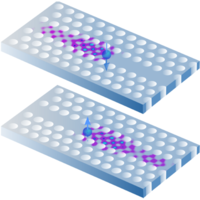
    <title>Polarization Engineering in Photonic Crystal Waveguides for Spin-Photon Entanglers</title>
    <link>http://link.aps.org/doi/10.1103/PhysRevLett.115.153901</link>
    <description>Author(s): A. B. Young, A. C. T. Thijssen, D. M. Beggs, P. Androvitsaneas, L. Kuipers, J. G. Rarity, S. Hughes, and R. Oulton&lt;br/&gt;&lt;p&gt;Entangled states of spin orientation and directional photons could be created by carefully placing of a quantum dot in a photonic crystal waveguide.&lt;/p&gt;&lt;img src="//d22izw7byeupn1.cloudfront.net/journals/PRL/key_images/10.1103/PhysRevLett.115.153901.png" width="200" height=\"100\"&gt;&lt;br/&gt;[Phys. Rev. Lett. 115, 153901] Published Tue Oct 06, 2015</description>
    <content:encoded><![CDATA[<p>Author(s): A. B. Young, A. C. T. Thijssen, D. M. Beggs, P. Androvitsaneas, L. Kuipers, J. G. Rarity, S. Hughes, and R. Oulton</p><p>Entangled states of spin orientation and directional photons could be created by carefully placing of a quantum dot in a photonic crystal waveguide.</p><img src="//d22izw7byeupn1.cloudfront.net/journals/PRL/key_images/10.1103/PhysRevLett.115.153901.png" width="200" height=\"100\"><br/><p>[Phys. Rev. Lett. 115, 153901] Published Tue Oct 06, 2015</p>]]></content:encoded>
    <dc:title>Polarization Engineering in Photonic Crystal Waveguides for Spin-Photon Entanglers</dc:title>
    <dc:creator>A. B. Young, A. C. T. Thijssen, D. M. Beggs, P. Androvitsaneas, L. Kuipers, J. G. Rarity, S. Hughes, and R. Oulton</dc:creator>
    <dc:date>2015-10-06T10:00:00-04:00</dc:date>
    <dc:rights>Personal use only, all commercial or other reuse prohibited</dc:rights>
    <dc:source>Phys. Rev. Lett. 115, 153901 (2015)</dc:source>
    <dc:type>article</dc:type>
    <dc:identifier>doi:10.1103/PhysRevLett.115.153901</dc:identifier>
    <prism:doi>10.1103/PhysRevLett.115.153901</prism:doi>
    <prism:publicationName>Physical Review Letters</prism:publicationName>
    <prism:volume>115</prism:volume>
    <prism:number>15</prism:number>
    <prism:publicationDate>2015-10-06T10:00:00+00:00</prism:publicationDate>
    <prism:url>http://link.aps.org/doi/10.1103/PhysRevLett.115.153901</prism:url>
    <prism:startingPage>153901</prism:startingPage>
  </item>
  <item rdf:about="http://link.aps.org/doi/10.1103/PhysRevLett.115.143602">
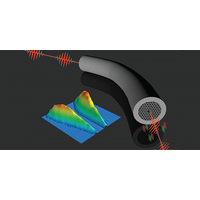
    <title>Raman-Free, Noble-Gas-Filled Photonic-Crystal Fiber Source for Ultrafast, Very Bright Twin-Beam Squeezed Vacuum</title>
    <link>http://link.aps.org/doi/10.1103/PhysRevLett.115.143602</link>
    <description>Author(s): Martin A. Finger, Timur Sh. Iskhakov, Nicolas Y. Joly, Maria V. Chekhova, and Philip St. J. Russell&lt;br/&gt;&lt;p&gt;An optical-fiber scheme generates a bright “twin beam”—a pair of quantum-correlated beams that could be used in high-precision metrology.&lt;/p&gt;&lt;img src="//d22izw7byeupn1.cloudfront.net/journals/PRL/key_images/10.1103/PhysRevLett.115.143602.png" width="200" height=\"100\"&gt;&lt;br/&gt;[Phys. Rev. Lett. 115, 143602] Published Wed Sep 30, 2015</description>
    <content:encoded><![CDATA[<p>Author(s): Martin A. Finger, Timur Sh. Iskhakov, Nicolas Y. Joly, Maria V. Chekhova, and Philip St. J. Russell</p><p>An optical-fiber scheme generates a bright “twin beam”—a pair of quantum-correlated beams that could be used in high-precision metrology.</p><img src="//d22izw7byeupn1.cloudfront.net/journals/PRL/key_images/10.1103/PhysRevLett.115.143602.png" width="200" height=\"100\"><br/><p>[Phys. Rev. Lett. 115, 143602] Published Wed Sep 30, 2015</p>]]></content:encoded>
    <dc:title>Raman-Free, Noble-Gas-Filled Photonic-Crystal Fiber Source for Ultrafast, Very Bright Twin-Beam Squeezed Vacuum</dc:title>
    <dc:creator>Martin A. Finger, Timur Sh. Iskhakov, Nicolas Y. Joly, Maria V. Chekhova, and Philip St. J. Russell</dc:creator>
    <dc:date>2015-09-30T10:00:00-04:00</dc:date>
    <dc:rights>Personal use only, all commercial or other reuse prohibited</dc:rights>
    <dc:source>Phys. Rev. Lett. 115, 143602 (2015)</dc:source>
    <dc:type>article</dc:type>
    <dc:identifier>doi:10.1103/PhysRevLett.115.143602</dc:identifier>
    <prism:doi>10.1103/PhysRevLett.115.143602</prism:doi>
    <prism:publicationName>Physical Review Letters</prism:publicationName>
    <prism:volume>115</prism:volume>
    <prism:number>14</prism:number>
    <prism:publicationDate>2015-09-30T10:00:00+00:00</prism:publicationDate>
    <prism:url>http://link.aps.org/doi/10.1103/PhysRevLett.115.143602</prism:url>
    <prism:startingPage>143602</prism:startingPage>
  </item>
  <item rdf:about="http://link.aps.org/doi/10.1103/PhysRevA.92.033821">
    <title>Supercontinuum generation in the vacuum ultraviolet through dispersive-wave and soliton-plasma interaction in a noble-gas-filled hollow-core photonic crystal fiber</title>
    <link>http://link.aps.org/doi/10.1103/PhysRevA.92.033821</link>
    <description>Author(s): A. Ermolov, K. F. Mak, M. H. Frosz, J. C. Travers, and P. St. J. Russell&lt;br/&gt;We report on the generation of a three-octave-wide supercontinuum extending from the vacuum ultraviolet (VUV) to the near infrared, spanning at least 113–1000 nm (i.e., 11−1.2eV ), in He-filled hollow-core kagome-style photonic crystal fiber. Numerical simulations confirm that the main mechanism is …&lt;br/&gt;[Phys. Rev. A 92, 033821] Published Mon Sep 14, 2015</description>
    <content:encoded><![CDATA[<p>Author(s): A. Ermolov, K. F. Mak, M. H. Frosz, J. C. Travers, and P. St. J. Russell</p><p>We report on the generation of a three-octave-wide supercontinuum extending from the vacuum ultraviolet (VUV) to the near infrared, spanning at least 113–1000 nm (i.e., <span class="aps-inline-formula"><math xmlns="http://www.w3.org/1998/Math/MathML"><mrow><mn>11</mn><mo>−</mo><mn>1.2</mn><mi>eV</mi></mrow></math></span> ), in He-filled hollow-core kagome-style photonic crystal fiber. Numerical simulations confirm that the main mechanism is …</p><br/><p>[Phys. Rev. A 92, 033821] Published Mon Sep 14, 2015</p>]]></content:encoded>
    <dc:title>Supercontinuum generation in the vacuum ultraviolet through dispersive-wave and soliton-plasma interaction in a noble-gas-filled hollow-core photonic crystal fiber</dc:title>
    <dc:creator>A. Ermolov, K. F. Mak, M. H. Frosz, J. C. Travers, and P. St. J. Russell</dc:creator>
    <dc:date>2015-09-14T10:00:00-04:00</dc:date>
    <dc:rights>Personal use only, all commercial or other reuse prohibited</dc:rights>
    <dc:source>Phys. Rev. A 92, 033821 (2015)</dc:source>
    <dc:type>article</dc:type>
    <dc:identifier>doi:10.1103/PhysRevA.92.033821</dc:identifier>
    <prism:doi>10.1103/PhysRevA.92.033821</prism:doi>
    <prism:publicationName>Physical Review A</prism:publicationName>
    <prism:volume>92</prism:volume>
    <prism:number>3</prism:number>
    <prism:publicationDate>2015-09-14T10:00:00+00:00</prism:publicationDate>
    <prism:url>http://link.aps.org/doi/10.1103/PhysRevA.92.033821</prism:url>
    <prism:startingPage>033821</prism:startingPage>
  </item>
  <item rdf:about="http://link.aps.org/doi/10.1103/RevModPhys.87.347">
    <title>Interfacing single photons and single quantum dots with photonic nanostructures</title>
    <link>http://link.aps.org/doi/10.1103/RevModPhys.87.347</link>
    <description>Author(s): Peter Lodahl, Sahand Mahmoodian, and Søren Stobbe&lt;br/&gt;&lt;p&gt;Quantum dots embedded in photonics nanostructures provide unprecedented control over the interaction between light and matter. This review gives an overview of the theoretical principles involved, as well as applications ranging from high-precision quantum electrodynamics experiments to quantum-information processing.&lt;/p&gt;&lt;img src="//d22izw7byeupn1.cloudfront.net/journals/RMP/key_images/10.1103/RevModPhys.87.347.png" width="200" height=\"100\"&gt;&lt;br/&gt;[Rev. Mod. Phys. 87, 347] Published Mon May 11, 2015</description>
    <content:encoded><![CDATA[<p>Author(s): Peter Lodahl, Sahand Mahmoodian, and Søren Stobbe</p><p>Quantum dots embedded in photonics nanostructures provide unprecedented control over the interaction between light and matter. This review gives an overview of the theoretical principles involved, as well as applications ranging from high-precision quantum electrodynamics experiments to quantum-information processing.</p><img src="//d22izw7byeupn1.cloudfront.net/journals/RMP/key_images/10.1103/RevModPhys.87.347.png" width="200" height=\"100\"><br/><p>[Rev. Mod. Phys. 87, 347] Published Mon May 11, 2015</p>]]></content:encoded>
    <dc:title>Interfacing single photons and single quantum dots with photonic nanostructures</dc:title>
    <dc:creator>Peter Lodahl, Sahand Mahmoodian, and Søren Stobbe</dc:creator>
    <dc:date>2015-05-11T10:00:00-04:00</dc:date>
    <dc:rights>Personal use only, all commercial or other reuse prohibited</dc:rights>
    <dc:source>Rev. Mod. Phys. 87, 347 (2015)</dc:source>
    <dc:type>article</dc:type>
    <dc:identifier>doi:10.1103/RevModPhys.87.347</dc:identifier>
    <prism:doi>10.1103/RevModPhys.87.347</prism:doi>
    <prism:publicationName>Reviews of Modern Physics</prism:publicationName>
    <prism:volume>87</prism:volume>
    <prism:number>2</prism:number>
    <prism:publicationDate>2015-05-11T10:00:00+00:00</prism:publicationDate>
    <prism:url>http://link.aps.org/doi/10.1103/RevModPhys.87.347</prism:url>
    <prism:startingPage>347</prism:startingPage>
    <prism:endingPage>400</prism:endingPage>
  </item>
  <item rdf:about="http://link.aps.org/doi/10.1103/PhysRevA.91.023811">
    <title>Photonic crystals with topological defects</title>
    <link>http://link.aps.org/doi/10.1103/PhysRevA.91.023811</link>
    <description>Author(s): Seng Fatt Liew, Sebastian Knitter, Wen Xiong, and Hui Cao&lt;br/&gt;We introduce topological defects to a square lattice of elliptical cylinders. Despite the broken translational symmetry, the long-range positional order of the cylinders leads to a residual photonic band gap in the local density of optical states. However, the band-edge modes are strongly modified b…&lt;br/&gt;[Phys. Rev. A 91, 023811] Published Fri Feb 06, 2015</description>
    <content:encoded><![CDATA[<p>Author(s): Seng Fatt Liew, Sebastian Knitter, Wen Xiong, and Hui Cao</p><p>We introduce topological defects to a square lattice of elliptical cylinders. Despite the broken translational symmetry, the long-range positional order of the cylinders leads to a residual photonic band gap in the local density of optical states. However, the band-edge modes are strongly modified b…</p><br/><p>[Phys. Rev. A 91, 023811] Published Fri Feb 06, 2015</p>]]></content:encoded>
    <dc:title>Photonic crystals with topological defects</dc:title>
    <dc:creator>Seng Fatt Liew, Sebastian Knitter, Wen Xiong, and Hui Cao</dc:creator>
    <dc:date>2015-02-06T10:00:00-05:00</dc:date>
    <dc:rights>Personal use only, all commercial or other reuse prohibited</dc:rights>
    <dc:source>Phys. Rev. A 91, 023811 (2015)</dc:source>
    <dc:type>article</dc:type>
    <dc:identifier>doi:10.1103/PhysRevA.91.023811</dc:identifier>
    <prism:doi>10.1103/PhysRevA.91.023811</prism:doi>
    <prism:publicationName>Physical Review A</prism:publicationName>
    <prism:volume>91</prism:volume>
    <prism:number>2</prism:number>
    <prism:publicationDate>2015-02-06T10:00:00+00:00</prism:publicationDate>
    <prism:url>http://link.aps.org/doi/10.1103/PhysRevA.91.023811</prism:url>
    <prism:startingPage>023811</prism:startingPage>
  </item>
  <item rdf:about="http://link.aps.org/doi/10.1103/PhysRevApplied.3.014006">
    <title>Localized Guided-Mode and Cavity-Mode Double Resonance in Photonic Crystal Nanocavities</title>
    <link>http://link.aps.org/doi/10.1103/PhysRevApplied.3.014006</link>
    <description>Author(s): X. Liu, T. Shimada, R. Miura, S. Iwamoto, Y. Arakawa, and Y. K. Kato&lt;br/&gt;&lt;p&gt;Improving photoluminescence or nonlinear wavelength conversion is an important goal in engineering a wide variety of systems in optics, photonics, and nanoscience. To this end, it is challenging to design doubly resonant nanocavities that match a specific pair of wavelengths, as cavity modes are usually not independently tunable. The authors demonstrate flexible tuning of double resonances, and utilize guided-mode resonances localized at defects in photonic crystals to increase photoluminescence intensity by a factor of 2400.&lt;/p&gt;&lt;img src="//d22izw7byeupn1.cloudfront.net/journals/PRAPPLIED/key_images/10.1103/PhysRevApplied.3.014006.png" width="200" height=\"100\"&gt;&lt;br/&gt;[Phys. Rev. Applied 3, 014006] Published Wed Jan 21, 2015</description>
    <content:encoded><![CDATA[<p>Author(s): X. Liu, T. Shimada, R. Miura, S. Iwamoto, Y. Arakawa, and Y. K. Kato</p><p>Improving photoluminescence or nonlinear wavelength conversion is an important goal in engineering a wide variety of systems in optics, photonics, and nanoscience. To this end, it is challenging to design doubly resonant nanocavities that match a specific pair of wavelengths, as cavity modes are usually not independently tunable. The authors demonstrate flexible tuning of double resonances, and utilize guided-mode resonances localized at defects in photonic crystals to increase photoluminescence intensity by a factor of 2400.</p><img src="//d22izw7byeupn1.cloudfront.net/journals/PRAPPLIED/key_images/10.1103/PhysRevApplied.3.014006.png" width="200" height=\"100\"><br/><p>[Phys. Rev. Applied 3, 014006] Published Wed Jan 21, 2015</p>]]></content:encoded>
    <dc:title>Localized Guided-Mode and Cavity-Mode Double Resonance in Photonic Crystal Nanocavities</dc:title>
    <dc:creator>X. Liu, T. Shimada, R. Miura, S. Iwamoto, Y. Arakawa, and Y. K. Kato</dc:creator>
    <dc:date>2015-01-21T10:00:00-05:00</dc:date>
    <dc:rights>Personal use only, all commercial or other reuse prohibited</dc:rights>
    <dc:source>Phys. Rev. Applied 3, 014006 (2015)</dc:source>
    <dc:type>article</dc:type>
    <dc:identifier>doi:10.1103/PhysRevApplied.3.014006</dc:identifier>
    <prism:doi>10.1103/PhysRevApplied.3.014006</prism:doi>
    <prism:publicationName>Physical Review Applied</prism:publicationName>
    <prism:volume>3</prism:volume>
    <prism:number>1</prism:number>
    <prism:publicationDate>2015-01-21T10:00:00+00:00</prism:publicationDate>
    <prism:url>http://link.aps.org/doi/10.1103/PhysRevApplied.3.014006</prism:url>
    <prism:startingPage>014006</prism:startingPage>
  </item>
  <item rdf:about="http://link.aps.org/doi/10.1103/PhysRevB.91.045123">
    <title>Nanophotonic hybridization of narrow atomic cesium resonances and photonic stop gaps of opaline nanostructures</title>
    <link>http://link.aps.org/doi/10.1103/PhysRevB.91.045123</link>
    <description>Author(s): Philip J. Harding, Pepijn W. H. Pinkse, Allard P. Mosk, and Willem L. Vos&lt;br/&gt;We study a hybrid system consisting of a narrow-band atomic optical resonance and the long-range periodic order of an opaline photonic nanostructure. To this end, we have infiltrated atomic cesium vapor in a thin silica opal photonic crystal. With increasing temperature, the frequencies of the opal'…&lt;br/&gt;[Phys. Rev. B 91, 045123] Published Tue Jan 20, 2015</description>
    <content:encoded><![CDATA[<p>Author(s): Philip J. Harding, Pepijn W. H. Pinkse, Allard P. Mosk, and Willem L. Vos</p><p>We study a hybrid system consisting of a narrow-band atomic optical resonance and the long-range periodic order of an opaline photonic nanostructure. To this end, we have infiltrated atomic cesium vapor in a thin silica opal photonic crystal. With increasing temperature, the frequencies of the opal'…</p><br/><p>[Phys. Rev. B 91, 045123] Published Tue Jan 20, 2015</p>]]></content:encoded>
    <dc:title>Nanophotonic hybridization of narrow atomic cesium resonances and photonic stop gaps of opaline nanostructures</dc:title>
    <dc:creator>Philip J. Harding, Pepijn W. H. Pinkse, Allard P. Mosk, and Willem L. Vos</dc:creator>
    <dc:date>2015-01-20T10:00:00-05:00</dc:date>
    <dc:rights>Personal use only, all commercial or other reuse prohibited</dc:rights>
    <dc:source>Phys. Rev. B 91, 045123 (2015)</dc:source>
    <dc:type>article</dc:type>
    <dc:identifier>doi:10.1103/PhysRevB.91.045123</dc:identifier>
    <prism:doi>10.1103/PhysRevB.91.045123</prism:doi>
    <prism:publicationName>Physical Review B</prism:publicationName>
    <prism:volume>91</prism:volume>
    <prism:number>4</prism:number>
    <prism:publicationDate>2015-01-20T10:00:00+00:00</prism:publicationDate>
    <prism:url>http://link.aps.org/doi/10.1103/PhysRevB.91.045123</prism:url>
    <prism:startingPage>045123</prism:startingPage>
  </item>
  <item rdf:about="http://link.aps.org/doi/10.1103/PhysRevA.91.013828">
    <title>Temporal dissipative solitons in a three-level atomic medium confined in a photonic-band-gap fiber</title>
    <link>http://link.aps.org/doi/10.1103/PhysRevA.91.013828</link>
    <description>Author(s): M. Facão, S. Rodrigues, and M. I. Carvalho&lt;br/&gt;We obtained a propagation equation for an optical pulse at an electromagnetically induced transparency window guided on a gas-filled hollow-core photonic crystal fiber. This equation admits dissipative solitons whose analytical expression was also obtained. Depending on the parameter region, they ma…&lt;br/&gt;[Phys. Rev. A 91, 013828] Published Tue Jan 20, 2015</description>
    <content:encoded><![CDATA[<p>Author(s): M. Facão, S. Rodrigues, and M. I. Carvalho</p><p>We obtained a propagation equation for an optical pulse at an electromagnetically induced transparency window guided on a gas-filled hollow-core photonic crystal fiber. This equation admits dissipative solitons whose analytical expression was also obtained. Depending on the parameter region, they ma…</p><br/><p>[Phys. Rev. A 91, 013828] Published Tue Jan 20, 2015</p>]]></content:encoded>
    <dc:title>Temporal dissipative solitons in a three-level atomic medium confined in a photonic-band-gap fiber</dc:title>
    <dc:creator>M. Facão, S. Rodrigues, and M. I. Carvalho</dc:creator>
    <dc:date>2015-01-20T10:00:00-05:00</dc:date>
    <dc:rights>Personal use only, all commercial or other reuse prohibited</dc:rights>
    <dc:source>Phys. Rev. A 91, 013828 (2015)</dc:source>
    <dc:type>article</dc:type>
    <dc:identifier>doi:10.1103/PhysRevA.91.013828</dc:identifier>
    <prism:doi>10.1103/PhysRevA.91.013828</prism:doi>
    <prism:publicationName>Physical Review A</prism:publicationName>
    <prism:volume>91</prism:volume>
    <prism:number>1</prism:number>
    <prism:publicationDate>2015-01-20T10:00:00+00:00</prism:publicationDate>
    <prism:url>http://link.aps.org/doi/10.1103/PhysRevA.91.013828</prism:url>
    <prism:startingPage>013828</prism:startingPage>
  </item>
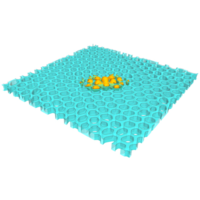
  <item rdf:about="http://link.aps.org/doi/10.1103/PhysRevB.91.020201">
    <title>High-Q optical cavities in hyperuniform disordered materials</title>
    <link>http://link.aps.org/doi/10.1103/PhysRevB.91.020201</link>
    <description>Author(s): Timothy Amoah and Marian Florescu&lt;br/&gt;&lt;p&gt;Hyperuniform disordered materials are a class of photonic solids with a constrained randomness that have short-range order and long-range statistical isotropy. In these materials, calculations suggest a new type of high-Q localization mechanism in optical cavities, that has no analogue in periodic or quasi-periodic photonic crystals.&lt;/p&gt;&lt;img src="//d22izw7byeupn1.cloudfront.net/journals/PRB/key_images/10.1103/PhysRevB.91.020201.png" width="200" height=\"100\"&gt;&lt;br/&gt;[Phys. Rev. B 91, 020201(R)] Published Tue Jan 20, 2015</description>
    <content:encoded><![CDATA[<p>Author(s): Timothy Amoah and Marian Florescu</p><p>Hyperuniform disordered materials are a class of photonic solids with a constrained randomness that have short-range order and long-range statistical isotropy. In these materials, calculations suggest a new type of high-Q localization mechanism in optical cavities, that has no analogue in periodic or quasi-periodic photonic crystals.</p><img src="//d22izw7byeupn1.cloudfront.net/journals/PRB/key_images/10.1103/PhysRevB.91.020201.png" width="200" height=\"100\"><br/><p>[Phys. Rev. B 91, 020201(R)] Published Tue Jan 20, 2015</p>]]></content:encoded>
    <dc:title>High-Q optical cavities in hyperuniform disordered materials</dc:title>
    <dc:creator>Timothy Amoah and Marian Florescu</dc:creator>
    <dc:date>2015-01-20T10:00:00-05:00</dc:date>
    <dc:rights>Personal use only, all commercial or other reuse prohibited</dc:rights>
    <dc:source>Phys. Rev. B 91, 020201(R) (2015)</dc:source>
    <dc:type>article</dc:type>
    <dc:identifier>doi:10.1103/PhysRevB.91.020201</dc:identifier>
    <prism:doi>10.1103/PhysRevB.91.020201</prism:doi>
    <prism:publicationName>Physical Review B</prism:publicationName>
    <prism:volume>91</prism:volume>
    <prism:number>2</prism:number>
    <prism:publicationDate>2015-01-20T10:00:00+00:00</prism:publicationDate>
    <prism:url>http://link.aps.org/doi/10.1103/PhysRevB.91.020201</prism:url>
    <prism:startingPage>020201</prism:startingPage>
  </item>
  <item rdf:about="http://link.aps.org/doi/10.1103/PhysRevB.91.035411">
    <title>Spectral properties of superconducting microwave photonic crystals modeling Dirac billiards</title>
    <link>http://link.aps.org/doi/10.1103/PhysRevB.91.035411</link>
    <description>Author(s): B. Dietz, T. Klaus, M. Miski-Oglu, and A. Richter&lt;br/&gt;We determined experimentally the eigenvalues of two rectangular quantum billiards that contain circular scatterers forming a triangular grid, so-called Dirac billiards. For this we performed measurements of unprecedented accuracy using superconducting macroscopic-size microwave billiards that enclos…&lt;br/&gt;[Phys. Rev. B 91, 035411] Published Mon Jan 12, 2015</description>
    <content:encoded><![CDATA[<p>Author(s): B. Dietz, T. Klaus, M. Miski-Oglu, and A. Richter</p><p>We determined experimentally the eigenvalues of two rectangular quantum billiards that contain circular scatterers forming a triangular grid, so-called Dirac billiards. For this we performed measurements of unprecedented accuracy using superconducting macroscopic-size microwave billiards that enclos…</p><br/><p>[Phys. Rev. B 91, 035411] Published Mon Jan 12, 2015</p>]]></content:encoded>
    <dc:title>Spectral properties of superconducting microwave photonic crystals modeling Dirac billiards</dc:title>
    <dc:creator>B. Dietz, T. Klaus, M. Miski-Oglu, and A. Richter</dc:creator>
    <dc:date>2015-01-12T10:00:00-05:00</dc:date>
    <dc:rights>Personal use only, all commercial or other reuse prohibited</dc:rights>
    <dc:source>Phys. Rev. B 91, 035411 (2015)</dc:source>
    <dc:type>article</dc:type>
    <dc:identifier>doi:10.1103/PhysRevB.91.035411</dc:identifier>
    <prism:doi>10.1103/PhysRevB.91.035411</prism:doi>
    <prism:publicationName>Physical Review B</prism:publicationName>
    <prism:volume>91</prism:volume>
    <prism:number>3</prism:number>
    <prism:publicationDate>2015-01-12T10:00:00+00:00</prism:publicationDate>
    <prism:url>http://link.aps.org/doi/10.1103/PhysRevB.91.035411</prism:url>
    <prism:startingPage>035411</prism:startingPage>
  </item>
  <item rdf:about="http://link.aps.org/doi/10.1103/PhysRevLett.113.263902">
    <title>Hybrid Coupling Mechanism in a System Supporting High Order Diffraction, Plasmonic, and Cavity Resonances</title>
    <link>http://link.aps.org/doi/10.1103/PhysRevLett.113.263902</link>
    <description>Author(s): Abraham Vázquez-Guardado, Alireza Safaei, Sushrut Modak, Daniel Franklin, and Debashis Chanda&lt;br/&gt;The interactions between plasmonic and photonic modes of a cavity-coupled plasmonic crystal are studied in diffraction and diffractionless regimes, which lead us to the understanding of coherent interactions between electron plasma, higher order cavity, and diffraction modes. The strong interaction …&lt;br/&gt;[Phys. Rev. Lett. 113, 263902] Published Mon Dec 29, 2014</description>
    <content:encoded><![CDATA[<p>Author(s): Abraham Vázquez-Guardado, Alireza Safaei, Sushrut Modak, Daniel Franklin, and Debashis Chanda</p><p>The interactions between plasmonic and photonic modes of a cavity-coupled plasmonic crystal are studied in diffraction and diffractionless regimes, which lead us to the understanding of coherent interactions between electron plasma, higher order cavity, and diffraction modes. The strong interaction …</p><br/><p>[Phys. Rev. Lett. 113, 263902] Published Mon Dec 29, 2014</p>]]></content:encoded>
    <dc:title>Hybrid Coupling Mechanism in a System Supporting High Order Diffraction, Plasmonic, and Cavity Resonances</dc:title>
    <dc:creator>Abraham Vázquez-Guardado, Alireza Safaei, Sushrut Modak, Daniel Franklin, and Debashis Chanda</dc:creator>
    <dc:date>2014-12-29T10:00:00-05:00</dc:date>
    <dc:rights>Personal use only, all commercial or other reuse prohibited</dc:rights>
    <dc:source>Phys. Rev. Lett. 113, 263902 (2014)</dc:source>
    <dc:type>article</dc:type>
    <dc:identifier>doi:10.1103/PhysRevLett.113.263902</dc:identifier>
    <prism:doi>10.1103/PhysRevLett.113.263902</prism:doi>
    <prism:publicationName>Physical Review Letters</prism:publicationName>
    <prism:volume>113</prism:volume>
    <prism:number>26</prism:number>
    <prism:publicationDate>2014-12-29T10:00:00+00:00</prism:publicationDate>
    <prism:url>http://link.aps.org/doi/10.1103/PhysRevLett.113.263902</prism:url>
    <prism:startingPage>263902</prism:startingPage>
  </item>
  <item rdf:about="http://link.aps.org/doi/10.1103/PhysRevX.4.041014">
    <title>Photonic Hypercrystals</title>
    <link>http://link.aps.org/doi/10.1103/PhysRevX.4.041014</link>
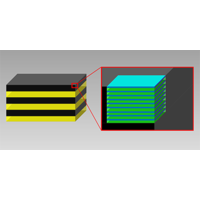
    <description>Author(s): Evgenii E. Narimanov&lt;br/&gt;&lt;p&gt;A design for a photonic crystal made with so-called hyperbolic metamaterials could provide unprecedented control of light waves confined to the surface.&lt;/p&gt;&lt;img src="//d22izw7byeupn1.cloudfront.net/journals/PRX/key_images/10.1103/PhysRevX.4.041014.png" width="200" height=\"100\"&gt;&lt;br/&gt;[Phys. Rev. X 4, 041014] Published Mon Oct 27, 2014</description>
    <content:encoded><![CDATA[<p>Author(s): Evgenii E. Narimanov</p><p>A design for a photonic crystal made with so-called hyperbolic metamaterials could provide unprecedented control of light waves confined to the surface.</p><img src="//d22izw7byeupn1.cloudfront.net/journals/PRX/key_images/10.1103/PhysRevX.4.041014.png" width="200" height=\"100\"><br/><p>[Phys. Rev. X 4, 041014] Published Mon Oct 27, 2014</p>]]></content:encoded>
    <dc:title>Photonic Hypercrystals</dc:title>
    <dc:creator>Evgenii E. Narimanov</dc:creator>
    <dc:date>2014-10-27T10:00:00-04:00</dc:date>
    <dc:rights>Personal use only, all commercial or other reuse prohibited</dc:rights>
    <dc:source>Phys. Rev. X 4, 041014 (2014)</dc:source>
    <dc:type>article</dc:type>
    <dc:identifier>doi:10.1103/PhysRevX.4.041014</dc:identifier>
    <prism:doi>10.1103/PhysRevX.4.041014</prism:doi>
    <prism:publicationName>Physical Review X</prism:publicationName>
    <prism:volume>4</prism:volume>
    <prism:number>4</prism:number>
    <prism:publicationDate>2014-10-27T10:00:00+00:00</prism:publicationDate>
    <prism:url>http://link.aps.org/doi/10.1103/PhysRevX.4.041014</prism:url>
    <prism:startingPage>041014</prism:startingPage>
  </item>
  <item rdf:about="http://link.aps.org/doi/10.1103/PhysRevB.90.155436">
    <title>Long-distance radiative coupling between quantum dots in photonic crystal dimers</title>
    <link>http://link.aps.org/doi/10.1103/PhysRevB.90.155436</link>
    <description>Author(s): J. P. Vasco, P. S. S. Guimarães, and D. Gerace&lt;br/&gt;We study the mutual interaction between two identical quantum dots coupled to the normal modes of two-site photonic crystal molecules in a planar waveguide geometry, i.e., photonic crystal dimers. We find that the radiative coupling between the two quantum emitters is maximized when they are in reso…&lt;br/&gt;[Phys. Rev. B 90, 155436] Published Tue Oct 21, 2014</description>
    <content:encoded><![CDATA[<p>Author(s): J. P. Vasco, P. S. S. Guimarães, and D. Gerace</p><p>We study the mutual interaction between two identical quantum dots coupled to the normal modes of two-site photonic crystal molecules in a planar waveguide geometry, i.e., photonic crystal dimers. We find that the radiative coupling between the two quantum emitters is maximized when they are in reso…</p><br/><p>[Phys. Rev. B 90, 155436] Published Tue Oct 21, 2014</p>]]></content:encoded>
    <dc:title>Long-distance radiative coupling between quantum dots in photonic crystal dimers</dc:title>
    <dc:creator>J. P. Vasco, P. S. S. Guimarães, and D. Gerace</dc:creator>
    <dc:date>2014-10-21T10:00:00-04:00</dc:date>
    <dc:rights>Personal use only, all commercial or other reuse prohibited</dc:rights>
    <dc:source>Phys. Rev. B 90, 155436 (2014)</dc:source>
    <dc:type>article</dc:type>
    <dc:identifier>doi:10.1103/PhysRevB.90.155436</dc:identifier>
    <prism:doi>10.1103/PhysRevB.90.155436</prism:doi>
    <prism:publicationName>Physical Review B</prism:publicationName>
    <prism:volume>90</prism:volume>
    <prism:number>15</prism:number>
    <prism:publicationDate>2014-10-21T10:00:00+00:00</prism:publicationDate>
    <prism:url>http://link.aps.org/doi/10.1103/PhysRevB.90.155436</prism:url>
    <prism:startingPage>155436</prism:startingPage>
  </item>
  <item rdf:about="http://link.aps.org/doi/10.1103/PhysRevLett.113.163901">
    <title>Photonic Crystal Fano Laser: Terahertz Modulation and Ultrashort Pulse Generation</title>
    <link>http://link.aps.org/doi/10.1103/PhysRevLett.113.163901</link>
    <description>Author(s): J. Mork, Y. Chen, and M. Heuck&lt;br/&gt;We suggest and analyze a laser with a mirror realized by Fano interference between a waveguide and a nanocavity. For small-amplitude modulation of the nanocavity resonance, the laser can be modulated at frequencies exceeding 1 THz, not being limited by carrier dynamics as for conventional lasers. Fo…&lt;br/&gt;[Phys. Rev. Lett. 113, 163901] Published Wed Oct 15, 2014</description>
    <content:encoded><![CDATA[<p>Author(s): J. Mork, Y. Chen, and M. Heuck</p><p>We suggest and analyze a laser with a mirror realized by Fano interference between a waveguide and a nanocavity. For small-amplitude modulation of the nanocavity resonance, the laser can be modulated at frequencies exceeding 1 THz, not being limited by carrier dynamics as for conventional lasers. Fo…</p><br/><p>[Phys. Rev. Lett. 113, 163901] Published Wed Oct 15, 2014</p>]]></content:encoded>
    <dc:title>Photonic Crystal Fano Laser: Terahertz Modulation and Ultrashort Pulse Generation</dc:title>
    <dc:creator>J. Mork, Y. Chen, and M. Heuck</dc:creator>
    <dc:date>2014-10-15T10:00:00-04:00</dc:date>
    <dc:rights>Personal use only, all commercial or other reuse prohibited</dc:rights>
    <dc:source>Phys. Rev. Lett. 113, 163901 (2014)</dc:source>
    <dc:type>article</dc:type>
    <dc:identifier>doi:10.1103/PhysRevLett.113.163901</dc:identifier>
    <prism:doi>10.1103/PhysRevLett.113.163901</prism:doi>
    <prism:publicationName>Physical Review Letters</prism:publicationName>
    <prism:volume>113</prism:volume>
    <prism:number>16</prism:number>
    <prism:publicationDate>2014-10-15T10:00:00+00:00</prism:publicationDate>
    <prism:url>http://link.aps.org/doi/10.1103/PhysRevLett.113.163901</prism:url>
    <prism:startingPage>163901</prism:startingPage>
  </item>
  <item rdf:about="http://link.aps.org/doi/10.1103/PhysRevA.90.043806">
    <title>Lattice mapping for many-body open quantum systems and its application to atoms in photonic crystals</title>
    <link>http://link.aps.org/doi/10.1103/PhysRevA.90.043806</link>
    <description>Author(s): Inés de Vega&lt;br/&gt;We present a derivation that maps the original problem of a many-body open quantum system (OQS) coupled to a harmonic oscillator reservoir into that of a many-body OQS coupled to a lattice of harmonic oscillators. The present method is particularly suitable to analyze the dynamics of atoms arranged …&lt;br/&gt;[Phys. Rev. A 90, 043806] Published Tue Oct 07, 2014</description>
    <content:encoded><![CDATA[<p>Author(s): Inés de Vega</p><p>We present a derivation that maps the original problem of a many-body open quantum system (OQS) coupled to a harmonic oscillator reservoir into that of a many-body OQS coupled to a lattice of harmonic oscillators. The present method is particularly suitable to analyze the dynamics of atoms arranged …</p><br/><p>[Phys. Rev. A 90, 043806] Published Tue Oct 07, 2014</p>]]></content:encoded>
    <dc:title>Lattice mapping for many-body open quantum systems and its application to atoms in photonic crystals</dc:title>
    <dc:creator>Inés de Vega</dc:creator>
    <dc:date>2014-10-07T10:00:00-04:00</dc:date>
    <dc:rights>Personal use only, all commercial or other reuse prohibited</dc:rights>
    <dc:source>Phys. Rev. A 90, 043806 (2014)</dc:source>
    <dc:type>article</dc:type>
    <dc:identifier>doi:10.1103/PhysRevA.90.043806</dc:identifier>
    <prism:doi>10.1103/PhysRevA.90.043806</prism:doi>
    <prism:publicationName>Physical Review A</prism:publicationName>
    <prism:volume>90</prism:volume>
    <prism:number>4</prism:number>
    <prism:publicationDate>2014-10-07T10:00:00+00:00</prism:publicationDate>
    <prism:url>http://link.aps.org/doi/10.1103/PhysRevA.90.043806</prism:url>
    <prism:startingPage>043806</prism:startingPage>
  </item>
  <item rdf:about="http://link.aps.org/doi/10.1103/PhysRevB.90.155303">
    <title>Efficient out-coupling of high-purity single photons from a coherent quantum dot in a photonic-crystal cavity</title>
    <link>http://link.aps.org/doi/10.1103/PhysRevB.90.155303</link>
    <description>Author(s): K. H. Madsen, S. Ates, J. Liu, A. Javadi, S. M. Albrecht, I. Yeo, S. Stobbe, and P. Lodahl&lt;br/&gt;We demonstrate a single-photon collection efficiency of (44.3±2.1)% from a quantum dot in a low-Q mode of a photonic-crystal cavity with a single-photon purity of g^{(2)}(0)=(4±5)% recorded above the saturation power. The high efficiency is directly confirmed by detecting up to 962±46 kilocounts per…&lt;br/&gt;[Phys. Rev. B 90, 155303] Published Mon Oct 06, 2014</description>
    <content:encoded><![CDATA[<p>Author(s): K. H. Madsen, S. Ates, J. Liu, A. Javadi, S. M. Albrecht, I. Yeo, S. Stobbe, and P. Lodahl</p><p>We demonstrate a single-photon collection efficiency of <span class="aps-inline-formula"><math xmlns="http://www.w3.org/1998/Math/MathML"><mrow><mo>(</mo><mn>44.3</mn><mo>±</mo><mn>2.1</mn><mo>)</mo><mo>%</mo></mrow></math></span> from a quantum dot in a low-<i>Q</i> mode of a photonic-crystal cavity with a single-photon purity of <span class="aps-inline-formula"><math xmlns="http://www.w3.org/1998/Math/MathML"><mrow><msup><mi>g</mi><mrow><mo>(</mo><mn>2</mn><mo>)</mo></mrow></msup><mrow><mo>(</mo><mn>0</mn><mo>)</mo></mrow><mo>=</mo><mrow><mo>(</mo><mn>4</mn><mo>±</mo><mn>5</mn><mo>)</mo></mrow><mo>%</mo></mrow></math></span> recorded above the saturation power. The high efficiency is directly confirmed by detecting up to <span class="aps-inline-formula"><math xmlns="http://www.w3.org/1998/Math/MathML"><mrow><mn>962</mn><mo>±</mo><mn>46</mn></mrow></math></span> kilocounts per se…</p><br/><p>[Phys. Rev. B 90, 155303] Published Mon Oct 06, 2014</p>]]></content:encoded>
    <dc:title>Efficient out-coupling of high-purity single photons from a coherent quantum dot in a photonic-crystal cavity</dc:title>
    <dc:creator>K. H. Madsen, S. Ates, J. Liu, A. Javadi, S. M. Albrecht, I. Yeo, S. Stobbe, and P. Lodahl</dc:creator>
    <dc:date>2014-10-06T10:00:00-04:00</dc:date>
    <dc:rights>Personal use only, all commercial or other reuse prohibited</dc:rights>
    <dc:source>Phys. Rev. B 90, 155303 (2014)</dc:source>
    <dc:type>article</dc:type>
    <dc:identifier>doi:10.1103/PhysRevB.90.155303</dc:identifier>
    <prism:doi>10.1103/PhysRevB.90.155303</prism:doi>
    <prism:publicationName>Physical Review B</prism:publicationName>
    <prism:volume>90</prism:volume>
    <prism:number>15</prism:number>
    <prism:publicationDate>2014-10-06T10:00:00+00:00</prism:publicationDate>
    <prism:url>http://link.aps.org/doi/10.1103/PhysRevB.90.155303</prism:url>
    <prism:startingPage>155303</prism:startingPage>
  </item>
  <item rdf:about="http://link.aps.org/doi/10.1103/PhysRevLett.113.143603">
    <title>Heralded Preparation and Readout of Entangled Phonons in a Photonic Crystal Cavity</title>
    <link>http://link.aps.org/doi/10.1103/PhysRevLett.113.143603</link>
    <description>Author(s): Hugo Flayac and Vincenzo Savona&lt;br/&gt;We propose a realistic protocol for the preparation and readout of mechanical Bell states in an optomechanical system. The proposal relies on parameters characterizing a photonic crystal cavity mode, coupled to two localized flexural modes of the structure, but equally applies to other optomechanica…&lt;br/&gt;[Phys. Rev. Lett. 113, 143603] Published Tue Sep 30, 2014</description>
    <content:encoded><![CDATA[<p>Author(s): Hugo Flayac and Vincenzo Savona</p><p>We propose a realistic protocol for the preparation and readout of mechanical Bell states in an optomechanical system. The proposal relies on parameters characterizing a photonic crystal cavity mode, coupled to two localized flexural modes of the structure, but equally applies to other optomechanica…</p><br/><p>[Phys. Rev. Lett. 113, 143603] Published Tue Sep 30, 2014</p>]]></content:encoded>
    <dc:title>Heralded Preparation and Readout of Entangled Phonons in a Photonic Crystal Cavity</dc:title>
    <dc:creator>Hugo Flayac and Vincenzo Savona</dc:creator>
    <dc:date>2014-09-30T10:00:00-04:00</dc:date>
    <dc:rights>Personal use only, all commercial or other reuse prohibited</dc:rights>
    <dc:source>Phys. Rev. Lett. 113, 143603 (2014)</dc:source>
    <dc:type>article</dc:type>
    <dc:identifier>doi:10.1103/PhysRevLett.113.143603</dc:identifier>
    <prism:doi>10.1103/PhysRevLett.113.143603</prism:doi>
    <prism:publicationName>Physical Review Letters</prism:publicationName>
    <prism:volume>113</prism:volume>
    <prism:number>14</prism:number>
    <prism:publicationDate>2014-09-30T10:00:00+00:00</prism:publicationDate>
    <prism:url>http://link.aps.org/doi/10.1103/PhysRevLett.113.143603</prism:url>
    <prism:startingPage>143603</prism:startingPage>
  </item>
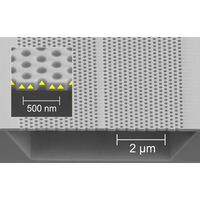
  <item rdf:about="http://link.aps.org/doi/10.1103/PhysRevLett.113.143601">
    <title>Cavity Quantum Electrodynamics on a Nanofiber Using a Composite Photonic Crystal Cavity</title>
    <link>http://link.aps.org/doi/10.1103/PhysRevLett.113.143601</link>
    <description>Author(s): Ramachandrarao Yalla, Mark Sadgrove, Kali P. Nayak, and Kohzo Hakuta&lt;br/&gt;&lt;p&gt;Spontaneous emission from a cavity made of an optical nanofiber and a nanostructured grating is demonstrated, which would allow single quantum emitters to be easily integrated into an optical network.&lt;/p&gt;&lt;img src="//d22izw7byeupn1.cloudfront.net/journals/PRL/key_images/10.1103/PhysRevLett.113.143601.png" width="200" height=\"100\"&gt;&lt;br/&gt;[Phys. Rev. Lett. 113, 143601] Published Mon Sep 29, 2014</description>
    <content:encoded><![CDATA[<p>Author(s): Ramachandrarao Yalla, Mark Sadgrove, Kali P. Nayak, and Kohzo Hakuta</p><p>Spontaneous emission from a cavity made of an optical nanofiber and a nanostructured grating is demonstrated, which would allow single quantum emitters to be easily integrated into an optical network.</p><img src="//d22izw7byeupn1.cloudfront.net/journals/PRL/key_images/10.1103/PhysRevLett.113.143601.png" width="200" height=\"100\"><br/><p>[Phys. Rev. Lett. 113, 143601] Published Mon Sep 29, 2014</p>]]></content:encoded>
    <dc:title>Cavity Quantum Electrodynamics on a Nanofiber Using a Composite Photonic Crystal Cavity</dc:title>
    <dc:creator>Ramachandrarao Yalla, Mark Sadgrove, Kali P. Nayak, and Kohzo Hakuta</dc:creator>
    <dc:date>2014-09-29T10:00:00-04:00</dc:date>
    <dc:rights>Personal use only, all commercial or other reuse prohibited</dc:rights>
    <dc:source>Phys. Rev. Lett. 113, 143601 (2014)</dc:source>
    <dc:type>article</dc:type>
    <dc:identifier>doi:10.1103/PhysRevLett.113.143601</dc:identifier>
    <prism:doi>10.1103/PhysRevLett.113.143601</prism:doi>
    <prism:publicationName>Physical Review Letters</prism:publicationName>
    <prism:volume>113</prism:volume>
    <prism:number>14</prism:number>
    <prism:publicationDate>2014-09-29T10:00:00+00:00</prism:publicationDate>
    <prism:url>http://link.aps.org/doi/10.1103/PhysRevLett.113.143601</prism:url>
    <prism:startingPage>143601</prism:startingPage>
  </item>
  <item rdf:about="http://link.aps.org/doi/10.1103/PhysRevB.90.115310">
    <title>Highly directed emission from self-assembled quantum dots into guided modes in disordered photonic-crystal waveguides</title>
    <link>http://link.aps.org/doi/10.1103/PhysRevB.90.115310</link>
    <description>Author(s): T. Reichert, S. Lichtmannecker, G. Reithmaier, M. Zeitlmair, J. Wembacher, A. Rauscher, M. Bichler, K. Müller, M. Kaniber, and J. J. Finley&lt;br/&gt;We explore the dynamics and directionality of spontaneous emission from self-assembled In(Ga)As quantum dots into transverse-electric–polarized guided modes in GaAs two-dimensional photonic-crystal waveguides. The local group velocity of the guided waveguide mode is probed, with values as low as ∼1.…&lt;br/&gt;[Phys. Rev. B 90, 115310] Published Wed Sep 24, 2014</description>
    <content:encoded><![CDATA[<p>Author(s): T. Reichert, S. Lichtmannecker, G. Reithmaier, M. Zeitlmair, J. Wembacher, A. Rauscher, M. Bichler, K. Müller, M. Kaniber, and J. J. Finley</p><p>We explore the dynamics and directionality of spontaneous emission from self-assembled In(Ga)As quantum dots into transverse-electric–polarized guided modes in GaAs two-dimensional photonic-crystal waveguides. The local group velocity of the guided waveguide mode is probed, with values as low as <span class="aps-inline-formula"><math xmlns="http://www.w3.org/1998/Math/MathML"><mrow><mo>∼</mo><mn>1.…</mn></mrow></math></span></p><br/><p>[Phys. Rev. B 90, 115310] Published Wed Sep 24, 2014</p>]]></content:encoded>
    <dc:title>Highly directed emission from self-assembled quantum dots into guided modes in disordered photonic-crystal waveguides</dc:title>
    <dc:creator>T. Reichert, S. Lichtmannecker, G. Reithmaier, M. Zeitlmair, J. Wembacher, A. Rauscher, M. Bichler, K. Müller, M. Kaniber, and J. J. Finley</dc:creator>
    <dc:date>2014-09-24T10:00:00-04:00</dc:date>
    <dc:rights>Personal use only, all commercial or other reuse prohibited</dc:rights>
    <dc:source>Phys. Rev. B 90, 115310 (2014)</dc:source>
    <dc:type>article</dc:type>
    <dc:identifier>doi:10.1103/PhysRevB.90.115310</dc:identifier>
    <prism:doi>10.1103/PhysRevB.90.115310</prism:doi>
    <prism:publicationName>Physical Review B</prism:publicationName>
    <prism:volume>90</prism:volume>
    <prism:number>11</prism:number>
    <prism:publicationDate>2014-09-24T10:00:00+00:00</prism:publicationDate>
    <prism:url>http://link.aps.org/doi/10.1103/PhysRevB.90.115310</prism:url>
    <prism:startingPage>115310</prism:startingPage>
  </item>
  <item rdf:about="http://link.aps.org/doi/10.1103/PhysRevE.90.032505">
    <title>Photonic defect modes in a cholesteric liquid crystal with a resonant nanocomposite layer and a twist defect</title>
    <link>http://link.aps.org/doi/10.1103/PhysRevE.90.032505</link>
    <description>Author(s): Stepan Ya. Vetrov, Maxim V. Pyatnov, and Ivan V. Timofeev&lt;br/&gt;We have studied spectral properties of a cholesteric liquid crystal with a combined defect consisting of a nanocomposite layer and a twist. The nanocomposite layer is made of metallic nanoballs dispersed in a transparent matrix and featuring effective resonant permittivity. A solution has been found…&lt;br/&gt;[Phys. Rev. E 90, 032505] Published Wed Sep 24, 2014</description>
    <content:encoded><![CDATA[<p>Author(s): Stepan Ya. Vetrov, Maxim V. Pyatnov, and Ivan V. Timofeev</p><p>We have studied spectral properties of a cholesteric liquid crystal with a combined defect consisting of a nanocomposite layer and a twist. The nanocomposite layer is made of metallic nanoballs dispersed in a transparent matrix and featuring effective resonant permittivity. A solution has been found…</p><br/><p>[Phys. Rev. E 90, 032505] Published Wed Sep 24, 2014</p>]]></content:encoded>
    <dc:title>Photonic defect modes in a cholesteric liquid crystal with a resonant nanocomposite layer and a twist defect</dc:title>
    <dc:creator>Stepan Ya. Vetrov, Maxim V. Pyatnov, and Ivan V. Timofeev</dc:creator>
    <dc:date>2014-09-24T10:00:00-04:00</dc:date>
    <dc:rights>Personal use only, all commercial or other reuse prohibited</dc:rights>
    <dc:source>Phys. Rev. E 90, 032505 (2014)</dc:source>
    <dc:type>article</dc:type>
    <dc:identifier>doi:10.1103/PhysRevE.90.032505</dc:identifier>
    <prism:doi>10.1103/PhysRevE.90.032505</prism:doi>
    <prism:publicationName>Physical Review E</prism:publicationName>
    <prism:volume>90</prism:volume>
    <prism:number>3</prism:number>
    <prism:publicationDate>2014-09-24T10:00:00+00:00</prism:publicationDate>
    <prism:url>http://link.aps.org/doi/10.1103/PhysRevE.90.032505</prism:url>
    <prism:startingPage>032505</prism:startingPage>
  </item>
  <item rdf:about="http://link.aps.org/doi/10.1103/PhysRevB.90.115140">
    <title>Design of a three-dimensional photonic band gap cavity in a diamondlike inverse woodpile photonic crystal</title>
    <link>http://link.aps.org/doi/10.1103/PhysRevB.90.115140</link>
    <description>Author(s): Léon A. Woldering, Allard P. Mosk, and Willem L. Vos&lt;br/&gt;We theoretically investigate the design of cavities in a three-dimensional (3D) inverse woodpile photonic crystal. This class of cubic diamondlike crystals has a very broad photonic band gap and consists of two perpendicular arrays of pores with a rectangular structure. The point defect that acts as…&lt;br/&gt;[Phys. Rev. B 90, 115140] Published Tue Sep 23, 2014</description>
    <content:encoded><![CDATA[<p>Author(s): Léon A. Woldering, Allard P. Mosk, and Willem L. Vos</p><p>We theoretically investigate the design of cavities in a three-dimensional (3D) inverse woodpile photonic crystal. This class of cubic diamondlike crystals has a very broad photonic band gap and consists of two perpendicular arrays of pores with a rectangular structure. The point defect that acts as…</p><br/><p>[Phys. Rev. B 90, 115140] Published Tue Sep 23, 2014</p>]]></content:encoded>
    <dc:title>Design of a three-dimensional photonic band gap cavity in a diamondlike inverse woodpile photonic crystal</dc:title>
    <dc:creator>Léon A. Woldering, Allard P. Mosk, and Willem L. Vos</dc:creator>
    <dc:date>2014-09-23T10:00:00-04:00</dc:date>
    <dc:rights>Personal use only, all commercial or other reuse prohibited</dc:rights>
    <dc:source>Phys. Rev. B 90, 115140 (2014)</dc:source>
    <dc:type>article</dc:type>
    <dc:identifier>doi:10.1103/PhysRevB.90.115140</dc:identifier>
    <prism:doi>10.1103/PhysRevB.90.115140</prism:doi>
    <prism:publicationName>Physical Review B</prism:publicationName>
    <prism:volume>90</prism:volume>
    <prism:number>11</prism:number>
    <prism:publicationDate>2014-09-23T10:00:00+00:00</prism:publicationDate>
    <prism:url>http://link.aps.org/doi/10.1103/PhysRevB.90.115140</prism:url>
    <prism:startingPage>115140</prism:startingPage>
  </item>
  <item rdf:about="http://link.aps.org/doi/10.1103/PhysRevB.88.125138">
    <title>Homogenization limit in a graded photonic crystal</title>
    <link>http://link.aps.org/doi/10.1103/PhysRevB.88.125138</link>
    <description>Author(s): Eric Cassan, Jean Dellinger, Xavier Le Roux, K. Van Do, Frédérique de Fornel, and Benoît Cluzel&lt;br/&gt;The transition between the long-wavelength and the short-wavelength regimes of light propagation in two-dimensional graded photonic crystal is investigated using a hyperspectral near-field scanning microscope. The experiments show an invariant quantity of only 1.78 times the lattice period as the cr…&lt;br/&gt;[Phys. Rev. B 88, 125138] Published Fri Sep 27, 2013</description>
    <content:encoded><![CDATA[<p>Author(s): Eric Cassan, Jean Dellinger, Xavier Le Roux, K. Van Do, Frédérique de Fornel, and Benoît Cluzel</p><p>The transition between the long-wavelength and the short-wavelength regimes of light propagation in two-dimensional graded photonic crystal is investigated using a hyperspectral near-field scanning microscope. The experiments show an invariant quantity of only 1.78 times the lattice period as the cr…</p><br/><p>[Phys. Rev. B 88, 125138] Published Fri Sep 27, 2013</p>]]></content:encoded>
    <dc:title>Homogenization limit in a graded photonic crystal</dc:title>
    <dc:creator>Eric Cassan, Jean Dellinger, Xavier Le Roux, K. Van Do, Frédérique de Fornel, and Benoît Cluzel</dc:creator>
    <dc:date>2013-09-27T10:00:00-04:00</dc:date>
    <dc:rights>Personal use only, all commercial or other reuse prohibited</dc:rights>
    <dc:source>Phys. Rev. B 88, 125138 (2013)</dc:source>
    <dc:type>article</dc:type>
    <dc:identifier>doi:10.1103/PhysRevB.88.125138</dc:identifier>
    <prism:doi>10.1103/PhysRevB.88.125138</prism:doi>
    <prism:publicationName>Physical Review B</prism:publicationName>
    <prism:volume>88</prism:volume>
    <prism:number>12</prism:number>
    <prism:publicationDate>2013-09-27T10:00:00+00:00</prism:publicationDate>
    <prism:url>http://link.aps.org/doi/10.1103/PhysRevB.88.125138</prism:url>
    <prism:startingPage>125138</prism:startingPage>
  </item>
  <item rdf:about="http://link.aps.org/doi/10.1103/PhysRevA.88.033844">
    <title>Photonic band gap in an imperfect atomic diamond lattice: Penetration depth and effects of finite size and vacancies</title>
    <link>http://link.aps.org/doi/10.1103/PhysRevA.88.033844</link>
    <description>Author(s): Mauro Antezza and Yvan Castin&lt;br/&gt;We study the effects of finite size and of vacancies on the photonic band gap recently predicted for an atomic diamond lattice. Close to a J_{g}=0→J_{e}=1 atomic transition, and for atomic lattices containing up to N≈3×10^{4} atoms, we show how the density of states can be affected by both the shape…&lt;br/&gt;[Phys. Rev. A 88, 033844] Published Wed Sep 25, 2013</description>
    <content:encoded><![CDATA[<p>Author(s): Mauro Antezza and Yvan Castin</p><p>We study the effects of finite size and of vacancies on the photonic band gap recently predicted for an atomic diamond lattice. Close to a <span class="aps-inline-formula"><math xmlns="http://www.w3.org/1998/Math/MathML" display="inline"><mrow><msub><mi>J</mi><mi>g</mi></msub><mo>=</mo><mn>0</mn><mo>→</mo><msub><mi>J</mi><mi>e</mi></msub><mo>=</mo><mn>1</mn></mrow></math></span> atomic transition, and for atomic lattices containing up to <span class="aps-inline-formula"><math xmlns="http://www.w3.org/1998/Math/MathML" display="inline"><mrow><mi>N</mi><mo>≈</mo><mn>3</mn><mo>×</mo><msup><mn>10</mn><mn>4</mn></msup></mrow></math></span> atoms, we show how the density of states can be affected by both the shape of the s…</p><br/><p>[Phys. Rev. A 88, 033844] Published Wed Sep 25, 2013</p>]]></content:encoded>
    <dc:title>Photonic band gap in an imperfect atomic diamond lattice: Penetration depth and effects of finite size and vacancies</dc:title>
    <dc:creator>Mauro Antezza and Yvan Castin</dc:creator>
    <dc:date>2013-09-25T10:00:00-04:00</dc:date>
    <dc:rights>Personal use only, all commercial or other reuse prohibited</dc:rights>
    <dc:source>Phys. Rev. A 88, 033844 (2013)</dc:source>
    <dc:type>article</dc:type>
    <dc:identifier>doi:10.1103/PhysRevA.88.033844</dc:identifier>
    <prism:doi>10.1103/PhysRevA.88.033844</prism:doi>
    <prism:publicationName>Physical Review A</prism:publicationName>
    <prism:volume>88</prism:volume>
    <prism:number>3</prism:number>
    <prism:publicationDate>2013-09-25T10:00:00+00:00</prism:publicationDate>
    <prism:url>http://link.aps.org/doi/10.1103/PhysRevA.88.033844</prism:url>
    <prism:startingPage>033844</prism:startingPage>
  </item>
  <item rdf:about="http://link.aps.org/doi/10.1103/PhysRevB.88.125133">
    <title>Nonreciprocal photonic surface states in periodic structures of magnetized plasma nanospheres</title>
    <link>http://link.aps.org/doi/10.1103/PhysRevB.88.125133</link>
    <description>Author(s): A. Christofi and N. Stefanou&lt;br/&gt;We report on the occurrence and properties of photonic surface states in periodic structures of magnetized plasma nanospheres by means of rigorous calculations using the full-electrodynamic layer-multiple-scattering method, properly extended to treat gyrotropic spheres with arbitrarily oriented gyra…&lt;br/&gt;[Phys. Rev. B 88, 125133] Published Mon Sep 23, 2013</description>
    <content:encoded><![CDATA[<p>Author(s): A. Christofi and N. Stefanou</p><p>We report on the occurrence and properties of photonic surface states in periodic structures of magnetized plasma nanospheres by means of rigorous calculations using the full-electrodynamic layer-multiple-scattering method, properly extended to treat gyrotropic spheres with arbitrarily oriented gyra…</p><br/><p>[Phys. Rev. B 88, 125133] Published Mon Sep 23, 2013</p>]]></content:encoded>
    <dc:title>Nonreciprocal photonic surface states in periodic structures of magnetized plasma nanospheres</dc:title>
    <dc:creator>A. Christofi and N. Stefanou</dc:creator>
    <dc:date>2013-09-23T10:00:00-04:00</dc:date>
    <dc:rights>Personal use only, all commercial or other reuse prohibited</dc:rights>
    <dc:source>Phys. Rev. B 88, 125133 (2013)</dc:source>
    <dc:type>article</dc:type>
    <dc:identifier>doi:10.1103/PhysRevB.88.125133</dc:identifier>
    <prism:doi>10.1103/PhysRevB.88.125133</prism:doi>
    <prism:publicationName>Physical Review B</prism:publicationName>
    <prism:volume>88</prism:volume>
    <prism:number>12</prism:number>
    <prism:publicationDate>2013-09-23T10:00:00+00:00</prism:publicationDate>
    <prism:url>http://link.aps.org/doi/10.1103/PhysRevB.88.125133</prism:url>
    <prism:startingPage>125133</prism:startingPage>
  </item>
  <item rdf:about="http://link.aps.org/doi/10.1103/PhysRevB.88.125418">
    <title>Noninvasive manipulation of the optical response of opal photonic crystals</title>
    <link>http://link.aps.org/doi/10.1103/PhysRevB.88.125418</link>
    <description>Author(s): Sergei G. Romanov, Alois Regensburger, Alexander V. Korovin, Alexandra S. Romanova, and Ulf Peschel&lt;br/&gt;The efficient manipulation with optical spectra of colloidal photonic crystals was achieved using the metal mirror positioned either immediately or at a distance from the crystal surface. If the mirror is close to the surface, the changes are mostly quantitative and relate to the improved light conf…&lt;br/&gt;[Phys. Rev. B 88, 125418] Published Fri Sep 13, 2013</description>
    <content:encoded><![CDATA[<p>Author(s): Sergei G. Romanov, Alois Regensburger, Alexander V. Korovin, Alexandra S. Romanova, and Ulf Peschel</p><p>The efficient manipulation with optical spectra of colloidal photonic crystals was achieved using the metal mirror positioned either immediately or at a distance from the crystal surface. If the mirror is close to the surface, the changes are mostly quantitative and relate to the improved light conf…</p><br/><p>[Phys. Rev. B 88, 125418] Published Fri Sep 13, 2013</p>]]></content:encoded>
    <dc:title>Noninvasive manipulation of the optical response of opal photonic crystals</dc:title>
    <dc:creator>Sergei G. Romanov, Alois Regensburger, Alexander V. Korovin, Alexandra S. Romanova, and Ulf Peschel</dc:creator>
    <dc:date>2013-09-13T10:00:00-04:00</dc:date>
    <dc:rights>Personal use only, all commercial or other reuse prohibited</dc:rights>
    <dc:source>Phys. Rev. B 88, 125418 (2013)</dc:source>
    <dc:type>article</dc:type>
    <dc:identifier>doi:10.1103/PhysRevB.88.125418</dc:identifier>
    <prism:doi>10.1103/PhysRevB.88.125418</prism:doi>
    <prism:publicationName>Physical Review B</prism:publicationName>
    <prism:volume>88</prism:volume>
    <prism:number>12</prism:number>
    <prism:publicationDate>2013-09-13T10:00:00+00:00</prism:publicationDate>
    <prism:url>http://link.aps.org/doi/10.1103/PhysRevB.88.125418</prism:url>
    <prism:startingPage>125418</prism:startingPage>
  </item>
  <item rdf:about="http://link.aps.org/doi/10.1103/PhysRevB.88.115110">
    <title>Photonic crystal carpet: Manipulating wave fronts in the near field at 1.55 μm</title>
    <link>http://link.aps.org/doi/10.1103/PhysRevB.88.115110</link>
    <description>Author(s): G. Scherrer, M. Hofman, W. Śmigaj, M. Kadic, T.-M. Chang, X. Mélique, D. Lippens, O. Vanbésien, B. Cluzel, F. de Fornel, S. Guenneau, and B. Gralak&lt;br/&gt;Ground-plane cloaks, which transform a curved mirror into a flat one, and recently reported at wavelengths ranging from the optical to the visible spectrum, bring the realm of optical illusion a step closer to reality. However, all carpet-cloaking experiments have thus far been carried out in the fa…&lt;br/&gt;[Phys. Rev. B 88, 115110] Published Fri Sep 06, 2013</description>
    <content:encoded><![CDATA[<p>Author(s): G. Scherrer, M. Hofman, W. Śmigaj, M. Kadic, T.-M. Chang, X. Mélique, D. Lippens, O. Vanbésien, B. Cluzel, F. de Fornel, S. Guenneau, and B. Gralak</p><p>Ground-plane cloaks, which transform a curved mirror into a flat one, and recently reported at wavelengths ranging from the optical to the visible spectrum, bring the realm of optical illusion a step closer to reality. However, all carpet-cloaking experiments have thus far been carried out in the fa…</p><br/><p>[Phys. Rev. B 88, 115110] Published Fri Sep 06, 2013</p>]]></content:encoded>
    <dc:title>Photonic crystal carpet: Manipulating wave fronts in the near field at 1.55 μm</dc:title>
    <dc:creator>G. Scherrer, M. Hofman, W. Śmigaj, M. Kadic, T.-M. Chang, X. Mélique, D. Lippens, O. Vanbésien, B. Cluzel, F. de Fornel, S. Guenneau, and B. Gralak</dc:creator>
    <dc:date>2013-09-06T10:00:00-04:00</dc:date>
    <dc:rights>Personal use only, all commercial or other reuse prohibited</dc:rights>
    <dc:source>Phys. Rev. B 88, 115110 (2013)</dc:source>
    <dc:type>article</dc:type>
    <dc:identifier>doi:10.1103/PhysRevB.88.115110</dc:identifier>
    <prism:doi>10.1103/PhysRevB.88.115110</prism:doi>
    <prism:publicationName>Physical Review B</prism:publicationName>
    <prism:volume>88</prism:volume>
    <prism:number>11</prism:number>
    <prism:publicationDate>2013-09-06T10:00:00+00:00</prism:publicationDate>
    <prism:url>http://link.aps.org/doi/10.1103/PhysRevB.88.115110</prism:url>
    <prism:startingPage>115110</prism:startingPage>
  </item>
  <item rdf:about="http://link.aps.org/doi/10.1103/PhysRevE.88.031201">
    <title>Multiple flat photonic bands with finite Chern numbers</title>
    <link>http://link.aps.org/doi/10.1103/PhysRevE.88.031201</link>
    <description>Author(s): S. T. Chui, Shiyang Liu, and Zhifang Lin&lt;br/&gt;We show both analytically and numerically that there is an infinite number of flat bands with different Chern numbers in a two-dimensional magnetic photonic crystal at nearly the same frequency determined by the condition that the effective magnetic permeability μ_{eff}≈−1. This opens the door to ex…&lt;br/&gt;[Phys. Rev. E 88, 031201(R)] Published Thu Sep 05, 2013</description>
    <content:encoded><![CDATA[<p>Author(s): S. T. Chui, Shiyang Liu, and Zhifang Lin</p><p>We show both analytically and numerically that there is an infinite number of flat bands with different Chern numbers in a two-dimensional magnetic photonic crystal at nearly the same frequency determined by the condition that the effective magnetic permeability <span class="aps-inline-formula"><math xmlns="http://www.w3.org/1998/Math/MathML" display="inline"><mrow><msub><mi>μ</mi><mtext>eff</mtext></msub><mo>≈</mo><mo>−</mo><mn>1</mn></mrow></math></span>. This opens the door to explo…</p><br/><p>[Phys. Rev. E 88, 031201(R)] Published Thu Sep 05, 2013</p>]]></content:encoded>
    <dc:title>Multiple flat photonic bands with finite Chern numbers</dc:title>
    <dc:creator>S. T. Chui, Shiyang Liu, and Zhifang Lin</dc:creator>
    <dc:date>2013-09-05T10:00:00-04:00</dc:date>
    <dc:rights>Personal use only, all commercial or other reuse prohibited</dc:rights>
    <dc:source>Phys. Rev. E 88, 031201(R) (2013)</dc:source>
    <dc:type>article</dc:type>
    <dc:identifier>doi:10.1103/PhysRevE.88.031201</dc:identifier>
    <prism:doi>10.1103/PhysRevE.88.031201</prism:doi>
    <prism:publicationName>Physical Review E</prism:publicationName>
    <prism:volume>88</prism:volume>
    <prism:number>3</prism:number>
    <prism:publicationDate>2013-09-05T10:00:00+00:00</prism:publicationDate>
    <prism:url>http://link.aps.org/doi/10.1103/PhysRevE.88.031201</prism:url>
    <prism:startingPage>031201</prism:startingPage>
  </item>
  <item rdf:about="http://link.aps.org/doi/10.1103/PhysRevA.88.035802">
    <title>Drift of dark cavity solitons in a photonic-crystal fiber resonator</title>
    <link>http://link.aps.org/doi/10.1103/PhysRevA.88.035802</link>
    <description>Author(s): M. Tlidi, L. Bahloul, L. Cherbi, A. Hariz, and S. Coulibaly&lt;br/&gt;We consider a photonic crystal fiber resonator pumped by a coherent injected beam. We show that temporal cavity solitons exhibit a motion with a constant velocity. This regular drift is induced by a broken reflection symmetry mediated by a third-order dispersion. We focus the analysis on dark tempor…&lt;br/&gt;[Phys. Rev. A 88, 035802] Published Wed Sep 04, 2013</description>
    <content:encoded><![CDATA[<p>Author(s): M. Tlidi, L. Bahloul, L. Cherbi, A. Hariz, and S. Coulibaly</p><p>We consider a photonic crystal fiber resonator pumped by a coherent injected beam. We show that temporal cavity solitons exhibit a motion with a constant velocity. This regular drift is induced by a broken reflection symmetry mediated by a third-order dispersion. We focus the analysis on dark tempor…</p><br/><p>[Phys. Rev. A 88, 035802] Published Wed Sep 04, 2013</p>]]></content:encoded>
    <dc:title>Drift of dark cavity solitons in a photonic-crystal fiber resonator</dc:title>
    <dc:creator>M. Tlidi, L. Bahloul, L. Cherbi, A. Hariz, and S. Coulibaly</dc:creator>
    <dc:date>2013-09-04T10:00:00-04:00</dc:date>
    <dc:rights>Personal use only, all commercial or other reuse prohibited</dc:rights>
    <dc:source>Phys. Rev. A 88, 035802 (2013)</dc:source>
    <dc:type>article</dc:type>
    <dc:identifier>doi:10.1103/PhysRevA.88.035802</dc:identifier>
    <prism:doi>10.1103/PhysRevA.88.035802</prism:doi>
    <prism:publicationName>Physical Review A</prism:publicationName>
    <prism:volume>88</prism:volume>
    <prism:number>3</prism:number>
    <prism:publicationDate>2013-09-04T10:00:00+00:00</prism:publicationDate>
    <prism:url>http://link.aps.org/doi/10.1103/PhysRevA.88.035802</prism:url>
    <prism:startingPage>035802</prism:startingPage>
  </item>
  <item rdf:about="http://link.aps.org/doi/10.1103/PhysRevLett.111.033902">
    <title>PHz-wide Supercontinua of Nondispersing Subcycle Pulses Generated by Extreme Modulational Instability</title>
    <link>http://link.aps.org/doi/10.1103/PhysRevLett.111.033902</link>
    <description>Author(s): F. Tani, J. C. Travers, and P. St. J. Russell&lt;br/&gt;Modulational instability (MI) of 500 fs, 5  μJ pulses, propagating in gas-filled hollow-core kagome photonic crystal fiber, is studied numerically and experimentally. By tuning the pressure and launched energy, we control the duration of the pulses emerging as a consequence of MI and hence are able …&lt;br/&gt;[Phys. Rev. Lett. 111, 033902] Published Fri Jul 19, 2013</description>
    <content:encoded><![CDATA[<p>Author(s): F. Tani, J. C. Travers, and P. St. J. Russell</p><p>Modulational instability (MI) of 500 fs, <span class="aps-inline-formula"><math xmlns="http://www.w3.org/1998/Math/MathML" display="inline"><mn>5</mn><mtext> </mtext><mtext> </mtext><mi>μ</mi><mi mathvariant="normal">J</mi></math></span> pulses, propagating in gas-filled hollow-core kagome photonic crystal fiber, is studied numerically and experimentally. By tuning the pressure and launched energy, we control the duration of the pulses emerging as a consequence of MI and hence are able …</p><br/><p>[Phys. Rev. Lett. 111, 033902] Published Fri Jul 19, 2013</p>]]></content:encoded>
    <dc:title>PHz-wide Supercontinua of Nondispersing Subcycle Pulses Generated by Extreme Modulational Instability</dc:title>
    <dc:creator>F. Tani, J. C. Travers, and P. St. J. Russell</dc:creator>
    <dc:date>2013-07-19T10:00:00-04:00</dc:date>
    <dc:rights>Personal use only, all commercial or other reuse prohibited</dc:rights>
    <dc:source>Phys. Rev. Lett. 111, 033902 (2013)</dc:source>
    <dc:type>article</dc:type>
    <dc:identifier>doi:10.1103/PhysRevLett.111.033902</dc:identifier>
    <prism:doi>10.1103/PhysRevLett.111.033902</prism:doi>
    <prism:publicationName>Physical Review Letters</prism:publicationName>
    <prism:volume>111</prism:volume>
    <prism:number>3</prism:number>
    <prism:publicationDate>2013-07-19T10:00:00+00:00</prism:publicationDate>
    <prism:url>http://link.aps.org/doi/10.1103/PhysRevLett.111.033902</prism:url>
    <prism:startingPage>033902</prism:startingPage>
  </item>
  <item rdf:about="http://link.aps.org/doi/10.1103/PhysRevA.88.013819">
    <title>High-efficiency cross-phase modulation in a gas-filled waveguide</title>
    <link>http://link.aps.org/doi/10.1103/PhysRevA.88.013819</link>
    <description>Author(s): C. Perrella, P. S. Light, J. D. Anstie, F. Benabid, T. M. Stace, A. G. White, and A. N. Luiten&lt;br/&gt;Strong cross-Kerr nonlinearities have been long sought after for quantum information applications. Recent work has shown that they are intrinsically unreliable in traveling-wave configurations: cavity configurations avoid this, but require knowledge of both the nonlinearity and the loss. Here we pre…&lt;br/&gt;[Phys. Rev. A 88, 013819] Published Mon Jul 15, 2013</description>
    <content:encoded><![CDATA[<p>Author(s): C. Perrella, P. S. Light, J. D. Anstie, F. Benabid, T. M. Stace, A. G. White, and A. N. Luiten</p><p>Strong cross-Kerr nonlinearities have been long sought after for quantum information applications. Recent work has shown that they are intrinsically unreliable in traveling-wave configurations: cavity configurations avoid this, but require knowledge of both the nonlinearity and the loss. Here we pre…</p><br/><p>[Phys. Rev. A 88, 013819] Published Mon Jul 15, 2013</p>]]></content:encoded>
    <dc:title>High-efficiency cross-phase modulation in a gas-filled waveguide</dc:title>
    <dc:creator>C. Perrella, P. S. Light, J. D. Anstie, F. Benabid, T. M. Stace, A. G. White, and A. N. Luiten</dc:creator>
    <dc:date>2013-07-15T10:00:00-04:00</dc:date>
    <dc:rights>Personal use only, all commercial or other reuse prohibited</dc:rights>
    <dc:source>Phys. Rev. A 88, 013819 (2013)</dc:source>
    <dc:type>article</dc:type>
    <dc:identifier>doi:10.1103/PhysRevA.88.013819</dc:identifier>
    <prism:doi>10.1103/PhysRevA.88.013819</prism:doi>
    <prism:publicationName>Physical Review A</prism:publicationName>
    <prism:volume>88</prism:volume>
    <prism:number>1</prism:number>
    <prism:publicationDate>2013-07-15T10:00:00+00:00</prism:publicationDate>
    <prism:url>http://link.aps.org/doi/10.1103/PhysRevA.88.013819</prism:url>
    <prism:startingPage>013819</prism:startingPage>
  </item>
  <item rdf:about="http://link.aps.org/doi/10.1103/PhysRevLett.111.023603">
    <title>Compact Engineering of Path-Entangled Sources from a Monolithic Quadratic Nonlinear Photonic Crystal</title>
    <link>http://link.aps.org/doi/10.1103/PhysRevLett.111.023603</link>
    <description>Author(s): H. Jin, P. Xu, X. W. Luo, H. Y. Leng, Y. X. Gong, W. J. Yu, M. L. Zhong, G. Zhao, and S. N. Zhu&lt;br/&gt;An integrated realization of photonic entangled states becomes an inevitable tendency toward integrated quantum optics. Here we report the compact engineering of steerable photonic path-entangled states from a monolithic quadratic nonlinear photonic crystal. The crystal acts as a coherent beam split…&lt;br/&gt;[Phys. Rev. Lett. 111, 023603] Published Fri Jul 12, 2013</description>
    <content:encoded><![CDATA[<p>Author(s): H. Jin, P. Xu, X. W. Luo, H. Y. Leng, Y. X. Gong, W. J. Yu, M. L. Zhong, G. Zhao, and S. N. Zhu</p><p>An integrated realization of photonic entangled states becomes an inevitable tendency toward integrated quantum optics. Here we report the compact engineering of steerable photonic path-entangled states from a monolithic quadratic nonlinear photonic crystal. The crystal acts as a coherent beam split…</p><br/><p>[Phys. Rev. Lett. 111, 023603] Published Fri Jul 12, 2013</p>]]></content:encoded>
    <dc:title>Compact Engineering of Path-Entangled Sources from a Monolithic Quadratic Nonlinear Photonic Crystal</dc:title>
    <dc:creator>H. Jin, P. Xu, X. W. Luo, H. Y. Leng, Y. X. Gong, W. J. Yu, M. L. Zhong, G. Zhao, and S. N. Zhu</dc:creator>
    <dc:date>2013-07-12T10:00:00-04:00</dc:date>
    <dc:rights>Personal use only, all commercial or other reuse prohibited</dc:rights>
    <dc:source>Phys. Rev. Lett. 111, 023603 (2013)</dc:source>
    <dc:type>article</dc:type>
    <dc:identifier>doi:10.1103/PhysRevLett.111.023603</dc:identifier>
    <prism:doi>10.1103/PhysRevLett.111.023603</prism:doi>
    <prism:publicationName>Physical Review Letters</prism:publicationName>
    <prism:volume>111</prism:volume>
    <prism:number>2</prism:number>
    <prism:publicationDate>2013-07-12T10:00:00+00:00</prism:publicationDate>
    <prism:url>http://link.aps.org/doi/10.1103/PhysRevLett.111.023603</prism:url>
    <prism:startingPage>023603</prism:startingPage>
  </item>
  <item rdf:about="http://link.aps.org/doi/10.1103/PhysRevB.88.035416">
    <title>Coupling of single quantum dots to photonic crystal cavities investigated by low-temperature scanning near-field optical microscopy</title>
    <link>http://link.aps.org/doi/10.1103/PhysRevB.88.035416</link>
    <description>Author(s): Matthias Skacel, Francesco Pagliano, Thang Hoang, Leonardo Midolo, Sartoon Fattahpoor, Lianhe Li, Edmund H. Linfield, and Andrea Fiore&lt;br/&gt;We report a study of single quantum dots inside photonic crystal cavities with a low-temperature scanning near-field optical microscope. The spatial maps of single excitonic lines from the quantum dot show the clear signature of coupling to the cavity modes for small detunings. We also show that the…&lt;br/&gt;[Phys. Rev. B 88, 035416] Published Wed Jul 10, 2013</description>
    <content:encoded><![CDATA[<p>Author(s): Matthias Skacel, Francesco Pagliano, Thang Hoang, Leonardo Midolo, Sartoon Fattahpoor, Lianhe Li, Edmund H. Linfield, and Andrea Fiore</p><p>We report a study of single quantum dots inside photonic crystal cavities with a low-temperature scanning near-field optical microscope. The spatial maps of single excitonic lines from the quantum dot show the clear signature of coupling to the cavity modes for small detunings. We also show that the…</p><br/><p>[Phys. Rev. B 88, 035416] Published Wed Jul 10, 2013</p>]]></content:encoded>
    <dc:title>Coupling of single quantum dots to photonic crystal cavities investigated by low-temperature scanning near-field optical microscopy</dc:title>
    <dc:creator>Matthias Skacel, Francesco Pagliano, Thang Hoang, Leonardo Midolo, Sartoon Fattahpoor, Lianhe Li, Edmund H. Linfield, and Andrea Fiore</dc:creator>
    <dc:date>2013-07-10T10:00:00-04:00</dc:date>
    <dc:rights>Personal use only, all commercial or other reuse prohibited</dc:rights>
    <dc:source>Phys. Rev. B 88, 035416 (2013)</dc:source>
    <dc:type>article</dc:type>
    <dc:identifier>doi:10.1103/PhysRevB.88.035416</dc:identifier>
    <prism:doi>10.1103/PhysRevB.88.035416</prism:doi>
    <prism:publicationName>Physical Review B</prism:publicationName>
    <prism:volume>88</prism:volume>
    <prism:number>3</prism:number>
    <prism:publicationDate>2013-07-10T10:00:00+00:00</prism:publicationDate>
    <prism:url>http://link.aps.org/doi/10.1103/PhysRevB.88.035416</prism:url>
    <prism:startingPage>035416</prism:startingPage>
  </item>
  <item rdf:about="http://link.aps.org/doi/10.1103/PhysRevB.87.245134">
    <title>Ballistic charge transport in graphene and light propagation in periodic dielectric structures with metamaterials: A comparative study</title>
    <link>http://link.aps.org/doi/10.1103/PhysRevB.87.245134</link>
    <description>Author(s): Yury P. Bliokh, Valentin Freilikher, and Franco Nori&lt;br/&gt;We explore the optical properties of periodic layered media containing left-handed metamaterials. This study is based on several analogies between the propagation of light in metamaterials and charge transport in graphene. We derive the conditions when these two problems become equivalent, i.e., the…&lt;br/&gt;[Phys. Rev. B 87, 245134] Published Fri Jun 28, 2013</description>
    <content:encoded><![CDATA[<p>Author(s): Yury P. Bliokh, Valentin Freilikher, and Franco Nori</p><p>We explore the optical properties of periodic layered media containing left-handed metamaterials. This study is based on several analogies between the propagation of light in metamaterials and charge transport in graphene. We derive the conditions when these two problems become equivalent, i.e., the…</p><br/><p>[Phys. Rev. B 87, 245134] Published Fri Jun 28, 2013</p>]]></content:encoded>
    <dc:title>Ballistic charge transport in graphene and light propagation in periodic dielectric structures with metamaterials: A comparative study</dc:title>
    <dc:creator>Yury P. Bliokh, Valentin Freilikher, and Franco Nori</dc:creator>
    <dc:date>2013-06-28T10:00:00-04:00</dc:date>
    <dc:rights>Personal use only, all commercial or other reuse prohibited</dc:rights>
    <dc:source>Phys. Rev. B 87, 245134 (2013)</dc:source>
    <dc:type>article</dc:type>
    <dc:identifier>doi:10.1103/PhysRevB.87.245134</dc:identifier>
    <prism:doi>10.1103/PhysRevB.87.245134</prism:doi>
    <prism:publicationName>Physical Review B</prism:publicationName>
    <prism:volume>87</prism:volume>
    <prism:number>24</prism:number>
    <prism:publicationDate>2013-06-28T10:00:00+00:00</prism:publicationDate>
    <prism:url>http://link.aps.org/doi/10.1103/PhysRevB.87.245134</prism:url>
    <prism:startingPage>245134</prism:startingPage>
  </item>
  <item rdf:about="http://link.aps.org/doi/10.1103/PhysRevA.87.063841">
    <title>Photon-aided and photon-inhibited tunneling of photons</title>
    <link>http://link.aps.org/doi/10.1103/PhysRevA.87.063841</link>
    <description>Author(s): Xuele Liu and G. S. Agarwal&lt;br/&gt;In light of the interest in the transport of single photons in arrays of waveguides, fiber couplers, photonic crystals, etc., we consider the quantum mechanical process of the tunneling of photons through evanescently or otherwise coupled structures. We specifically examine the issue of tunneling be…&lt;br/&gt;[Phys. Rev. A 87, 063841] Published Mon Jun 24, 2013</description>
    <content:encoded><![CDATA[<p>Author(s): Xuele Liu and G. S. Agarwal</p><p>In light of the interest in the transport of single photons in arrays of waveguides, fiber couplers, photonic crystals, etc., we consider the quantum mechanical process of the tunneling of photons through evanescently or otherwise coupled structures. We specifically examine the issue of tunneling be…</p><br/><p>[Phys. Rev. A 87, 063841] Published Mon Jun 24, 2013</p>]]></content:encoded>
    <dc:title>Photon-aided and photon-inhibited tunneling of photons</dc:title>
    <dc:creator>Xuele Liu and G. S. Agarwal</dc:creator>
    <dc:date>2013-06-24T10:00:00-04:00</dc:date>
    <dc:rights>Personal use only, all commercial or other reuse prohibited</dc:rights>
    <dc:source>Phys. Rev. A 87, 063841 (2013)</dc:source>
    <dc:type>article</dc:type>
    <dc:identifier>doi:10.1103/PhysRevA.87.063841</dc:identifier>
    <prism:doi>10.1103/PhysRevA.87.063841</prism:doi>
    <prism:publicationName>Physical Review A</prism:publicationName>
    <prism:volume>87</prism:volume>
    <prism:number>6</prism:number>
    <prism:publicationDate>2013-06-24T10:00:00+00:00</prism:publicationDate>
    <prism:url>http://link.aps.org/doi/10.1103/PhysRevA.87.063841</prism:url>
    <prism:startingPage>063841</prism:startingPage>
  </item>
  <item rdf:about="http://link.aps.org/doi/10.1103/PhysRevA.87.063828">
    <title>Fourier coupled-wave diffraction theory of periodic structures and crystals</title>
    <link>http://link.aps.org/doi/10.1103/PhysRevA.87.063828</link>
    <description>Author(s): Xian-Rong Huang, Ru-Wen Peng, Marcelo G. Hönnicke, and Thomas Gog&lt;br/&gt;The dynamical theory of x-ray diffraction and the coupled-wave theory for modeling diffraction of light from periodic structures are two equivalent theories but with incompatibilities, as they were developed independently along two parallel directions in history. Here we reformulate the two theories…&lt;br/&gt;[Phys. Rev. A 87, 063828] Published Tue Jun 18, 2013</description>
    <content:encoded><![CDATA[<p>Author(s): Xian-Rong Huang, Ru-Wen Peng, Marcelo G. Hönnicke, and Thomas Gog</p><p>The dynamical theory of x-ray diffraction and the coupled-wave theory for modeling diffraction of light from periodic structures are two equivalent theories but with incompatibilities, as they were developed independently along two parallel directions in history. Here we reformulate the two theories…</p><br/><p>[Phys. Rev. A 87, 063828] Published Tue Jun 18, 2013</p>]]></content:encoded>
    <dc:title>Fourier coupled-wave diffraction theory of periodic structures and crystals</dc:title>
    <dc:creator>Xian-Rong Huang, Ru-Wen Peng, Marcelo G. Hönnicke, and Thomas Gog</dc:creator>
    <dc:date>2013-06-18T10:00:00-04:00</dc:date>
    <dc:rights>Personal use only, all commercial or other reuse prohibited</dc:rights>
    <dc:source>Phys. Rev. A 87, 063828 (2013)</dc:source>
    <dc:type>article</dc:type>
    <dc:identifier>doi:10.1103/PhysRevA.87.063828</dc:identifier>
    <prism:doi>10.1103/PhysRevA.87.063828</prism:doi>
    <prism:publicationName>Physical Review A</prism:publicationName>
    <prism:volume>87</prism:volume>
    <prism:number>6</prism:number>
    <prism:publicationDate>2013-06-18T10:00:00+00:00</prism:publicationDate>
    <prism:url>http://link.aps.org/doi/10.1103/PhysRevA.87.063828</prism:url>
    <prism:startingPage>063828</prism:startingPage>
  </item>
  <item rdf:about="http://link.aps.org/doi/10.1103/PhysRevE.87.062504">
    <title>Spontaneous emission from radiative chiral nematic liquid crystals at the photonic band-gap edge: An investigation into the role of the density of photon states near resonance</title>
    <link>http://link.aps.org/doi/10.1103/PhysRevE.87.062504</link>
    <description>Author(s): Th. K. Mavrogordatos, S. M. Morris, S. M. Wood, H. J. Coles, and T. D. Wilkinson&lt;br/&gt;In this article, we investigate the spontaneous emission properties of radiating molecules embedded in a chiral nematic liquid crystal, under the assumption that the electronic transition frequency is close to the photonic edge mode of the structure, i.e., at resonance. We take into account the tran…&lt;br/&gt;[Phys. Rev. E 87, 062504] Published Mon Jun 17, 2013</description>
    <content:encoded><![CDATA[<p>Author(s): Th. K. Mavrogordatos, S. M. Morris, S. M. Wood, H. J. Coles, and T. D. Wilkinson</p><p>In this article, we investigate the spontaneous emission properties of radiating molecules embedded in a chiral nematic liquid crystal, under the assumption that the electronic transition frequency is close to the photonic edge mode of the structure, i.e., at resonance. We take into account the tran…</p><br/><p>[Phys. Rev. E 87, 062504] Published Mon Jun 17, 2013</p>]]></content:encoded>
    <dc:title>Spontaneous emission from radiative chiral nematic liquid crystals at the photonic band-gap edge: An investigation into the role of the density of photon states near resonance</dc:title>
    <dc:creator>Th. K. Mavrogordatos, S. M. Morris, S. M. Wood, H. J. Coles, and T. D. Wilkinson</dc:creator>
    <dc:date>2013-06-17T10:00:00-04:00</dc:date>
    <dc:rights>Personal use only, all commercial or other reuse prohibited</dc:rights>
    <dc:source>Phys. Rev. E 87, 062504 (2013)</dc:source>
    <dc:type>article</dc:type>
    <dc:identifier>doi:10.1103/PhysRevE.87.062504</dc:identifier>
    <prism:doi>10.1103/PhysRevE.87.062504</prism:doi>
    <prism:publicationName>Physical Review E</prism:publicationName>
    <prism:volume>87</prism:volume>
    <prism:number>6</prism:number>
    <prism:publicationDate>2013-06-17T10:00:00+00:00</prism:publicationDate>
    <prism:url>http://link.aps.org/doi/10.1103/PhysRevE.87.062504</prism:url>
    <prism:startingPage>062504</prism:startingPage>
  </item>
  <item rdf:about="http://link.aps.org/doi/10.1103/PhysRevA.87.063803">
    <title>Accelerating solitons in gas-filled hollow-core photonic crystal fibers</title>
    <link>http://link.aps.org/doi/10.1103/PhysRevA.87.063803</link>
    <description>Author(s): M. Facão, M. I. Carvalho, and P. Almeida&lt;br/&gt;We found the self-similar solitary solutions of a recently proposed model for the propagation of pulses in gas-filled hollow-core photonic crystal fibers that includes a plasma induced nonlinearity. As anticipated for a simpler model and using a perturbation analysis, there are indeed stationary sol…&lt;br/&gt;[Phys. Rev. A 87, 063803] Published Mon Jun 03, 2013</description>
    <content:encoded><![CDATA[<p>Author(s): M. Facão, M. I. Carvalho, and P. Almeida</p><p>We found the self-similar solitary solutions of a recently proposed model for the propagation of pulses in gas-filled hollow-core photonic crystal fibers that includes a plasma induced nonlinearity. As anticipated for a simpler model and using a perturbation analysis, there are indeed stationary sol…</p><br/><p>[Phys. Rev. A 87, 063803] Published Mon Jun 03, 2013</p>]]></content:encoded>
    <dc:title>Accelerating solitons in gas-filled hollow-core photonic crystal fibers</dc:title>
    <dc:creator>M. Facão, M. I. Carvalho, and P. Almeida</dc:creator>
    <dc:date>2013-06-03T10:00:00-04:00</dc:date>
    <dc:rights>Personal use only, all commercial or other reuse prohibited</dc:rights>
    <dc:source>Phys. Rev. A 87, 063803 (2013)</dc:source>
    <dc:type>article</dc:type>
    <dc:identifier>doi:10.1103/PhysRevA.87.063803</dc:identifier>
    <prism:doi>10.1103/PhysRevA.87.063803</prism:doi>
    <prism:publicationName>Physical Review A</prism:publicationName>
    <prism:volume>87</prism:volume>
    <prism:number>6</prism:number>
    <prism:publicationDate>2013-06-03T10:00:00+00:00</prism:publicationDate>
    <prism:url>http://link.aps.org/doi/10.1103/PhysRevA.87.063803</prism:url>
    <prism:startingPage>063803</prism:startingPage>
  </item>
  <item rdf:about="http://link.aps.org/doi/10.1103/PhysRevB.87.195138">
    <title>&lt;i&gt;Ab initio&lt;/i&gt; determination of local coupling interaction in arbitrary nanostructures: Application to photonic crystal slabs and cavities</title>
    <link>http://link.aps.org/doi/10.1103/PhysRevB.87.195138</link>
    <description>Author(s): Gengyan Chen, Yi-Cong Yu, Xiao-Lu Zhuo, Yong-Gang Huang, Haoxiang Jiang, Jing-Feng Liu, Chong-Jun Jin, and Xue-Hua Wang&lt;br/&gt;We develop a local coupling theory to simultaneously treat the weak and strong interaction between a quantum emitter and photons in arbitrary nanostructures. The local coupling strength proportional to the projected local density of states (PLDOS) for photons is determined by a flexible and efficien…&lt;br/&gt;[Phys. Rev. B 87, 195138] Published Tue May 28, 2013</description>
    <content:encoded><![CDATA[<p>Author(s): Gengyan Chen, Yi-Cong Yu, Xiao-Lu Zhuo, Yong-Gang Huang, Haoxiang Jiang, Jing-Feng Liu, Chong-Jun Jin, and Xue-Hua Wang</p><p>We develop a local coupling theory to simultaneously treat the weak and strong interaction between a quantum emitter and photons in arbitrary nanostructures. The local coupling strength proportional to the projected local density of states (PLDOS) for photons is determined by a flexible and efficien…</p><br/><p>[Phys. Rev. B 87, 195138] Published Tue May 28, 2013</p>]]></content:encoded>
    <dc:title>&lt;i&gt;Ab initio&lt;/i&gt; determination of local coupling interaction in arbitrary nanostructures: Application to photonic crystal slabs and cavities</dc:title>
    <dc:creator>Gengyan Chen, Yi-Cong Yu, Xiao-Lu Zhuo, Yong-Gang Huang, Haoxiang Jiang, Jing-Feng Liu, Chong-Jun Jin, and Xue-Hua Wang</dc:creator>
    <dc:date>2013-05-28T10:00:00-04:00</dc:date>
    <dc:rights>Personal use only, all commercial or other reuse prohibited</dc:rights>
    <dc:source>Phys. Rev. B 87, 195138 (2013)</dc:source>
    <dc:type>article</dc:type>
    <dc:identifier>doi:10.1103/PhysRevB.87.195138</dc:identifier>
    <prism:doi>10.1103/PhysRevB.87.195138</prism:doi>
    <prism:publicationName>Physical Review B</prism:publicationName>
    <prism:volume>87</prism:volume>
    <prism:number>19</prism:number>
    <prism:publicationDate>2013-05-28T10:00:00+00:00</prism:publicationDate>
    <prism:url>http://link.aps.org/doi/10.1103/PhysRevB.87.195138</prism:url>
    <prism:startingPage>195138</prism:startingPage>
  </item>
  <item rdf:about="http://link.aps.org/doi/10.1103/PhysRevA.87.053827">
    <title>Beam propagation in two-dimensional media with spatial dispersion</title>
    <link>http://link.aps.org/doi/10.1103/PhysRevA.87.053827</link>
    <description>Author(s): Zhiping Dai, Yi Xu, Qi Guo, and Sien Chi&lt;br/&gt;We theoretically investigate the propagation of a paraxial beam in two-dimensional media with spatial dispersion. Based on the spatial dispersion theory and the (1+1)-dimensional paraxial wave equation, we get an expression which determines the diffraction of the beam. By fitting the dispersion surf…&lt;br/&gt;[Phys. Rev. A 87, 053827] Published Wed May 22, 2013</description>
    <content:encoded><![CDATA[<p>Author(s): Zhiping Dai, Yi Xu, Qi Guo, and Sien Chi</p><p>We theoretically investigate the propagation of a paraxial beam in two-dimensional media with spatial dispersion. Based on the spatial dispersion theory and the (<span class="aps-inline-formula"><math xmlns="http://www.w3.org/1998/Math/MathML" display="inline"><mrow><mn>1</mn><mo>+</mo><mn>1</mn></mrow></math></span>)-dimensional paraxial wave equation, we get an expression which determines the diffraction of the beam. By fitting the dispersion surf…</p><br/><p>[Phys. Rev. A 87, 053827] Published Wed May 22, 2013</p>]]></content:encoded>
    <dc:title>Beam propagation in two-dimensional media with spatial dispersion</dc:title>
    <dc:creator>Zhiping Dai, Yi Xu, Qi Guo, and Sien Chi</dc:creator>
    <dc:date>2013-05-22T10:00:00-04:00</dc:date>
    <dc:rights>Personal use only, all commercial or other reuse prohibited</dc:rights>
    <dc:source>Phys. Rev. A 87, 053827 (2013)</dc:source>
    <dc:type>article</dc:type>
    <dc:identifier>doi:10.1103/PhysRevA.87.053827</dc:identifier>
    <prism:doi>10.1103/PhysRevA.87.053827</prism:doi>
    <prism:publicationName>Physical Review A</prism:publicationName>
    <prism:volume>87</prism:volume>
    <prism:number>5</prism:number>
    <prism:publicationDate>2013-05-22T10:00:00+00:00</prism:publicationDate>
    <prism:url>http://link.aps.org/doi/10.1103/PhysRevA.87.053827</prism:url>
    <prism:startingPage>053827</prism:startingPage>
  </item>
  <item rdf:about="http://link.aps.org/doi/10.1103/PhysRevLett.110.193901">
    <title>Diametrically Driven Self-Accelerating Pulses in a Photonic Crystal Fiber</title>
    <link>http://link.aps.org/doi/10.1103/PhysRevLett.110.193901</link>
    <description>Author(s): Sascha Batz and Ulf Peschel&lt;br/&gt;We predict the existence of a new class of self-accelerating, exponentially localized pulses consisting of two interacting frequency components propagating at opposite group velocity dispersion. Compared to previous approaches no external force is required and accelerations of both signs can be real…&lt;br/&gt;[Phys. Rev. Lett. 110, 193901] Published Wed May 08, 2013</description>
    <content:encoded><![CDATA[<p>Author(s): Sascha Batz and Ulf Peschel</p><p>We predict the existence of a new class of self-accelerating, exponentially localized pulses consisting of two interacting frequency components propagating at opposite group velocity dispersion. Compared to previous approaches no external force is required and accelerations of both signs can be real…</p><br/><p>[Phys. Rev. Lett. 110, 193901] Published Wed May 08, 2013</p>]]></content:encoded>
    <dc:title>Diametrically Driven Self-Accelerating Pulses in a Photonic Crystal Fiber</dc:title>
    <dc:creator>Sascha Batz and Ulf Peschel</dc:creator>
    <dc:date>2013-05-08T10:00:00-04:00</dc:date>
    <dc:rights>Personal use only, all commercial or other reuse prohibited</dc:rights>
    <dc:source>Phys. Rev. Lett. 110, 193901 (2013)</dc:source>
    <dc:type>article</dc:type>
    <dc:identifier>doi:10.1103/PhysRevLett.110.193901</dc:identifier>
    <prism:doi>10.1103/PhysRevLett.110.193901</prism:doi>
    <prism:publicationName>Physical Review Letters</prism:publicationName>
    <prism:volume>110</prism:volume>
    <prism:number>19</prism:number>
    <prism:publicationDate>2013-05-08T10:00:00+00:00</prism:publicationDate>
    <prism:url>http://link.aps.org/doi/10.1103/PhysRevLett.110.193901</prism:url>
    <prism:startingPage>193901</prism:startingPage>
  </item>
  <item rdf:about="http://link.aps.org/doi/10.1103/PhysRevA.87.053804">
    <title>One-way Rayleigh-Wood anomalies and tunable narrowband transmission in photonic crystal gratings with broken structural symmetry</title>
    <link>http://link.aps.org/doi/10.1103/PhysRevA.87.053804</link>
    <description>Author(s): Andriy E. Serebryannikov and Ekmel Ozbay&lt;br/&gt;In photonic crystal (PC) gratings whose structural symmetry is broken owing to one-side corrugations, the Rayleigh-Wood anomalies can appear in a one-way manner. In the combination with the vanishing coupling to the lowest Floquet-Bloch mode at the upper band edge, these anomalies lead to the appear…&lt;br/&gt;[Phys. Rev. A 87, 053804] Published Fri May 03, 2013</description>
    <content:encoded><![CDATA[<p>Author(s): Andriy E. Serebryannikov and Ekmel Ozbay</p><p>In photonic crystal (PC) gratings whose structural symmetry is broken owing to one-side corrugations, the Rayleigh-Wood anomalies can appear in a one-way manner. In the combination with the vanishing coupling to the lowest Floquet-Bloch mode at the upper band edge, these anomalies lead to the appear…</p><br/><p>[Phys. Rev. A 87, 053804] Published Fri May 03, 2013</p>]]></content:encoded>
    <dc:title>One-way Rayleigh-Wood anomalies and tunable narrowband transmission in photonic crystal gratings with broken structural symmetry</dc:title>
    <dc:creator>Andriy E. Serebryannikov and Ekmel Ozbay</dc:creator>
    <dc:date>2013-05-03T10:00:00-04:00</dc:date>
    <dc:rights>Personal use only, all commercial or other reuse prohibited</dc:rights>
    <dc:source>Phys. Rev. A 87, 053804 (2013)</dc:source>
    <dc:type>article</dc:type>
    <dc:identifier>doi:10.1103/PhysRevA.87.053804</dc:identifier>
    <prism:doi>10.1103/PhysRevA.87.053804</prism:doi>
    <prism:publicationName>Physical Review A</prism:publicationName>
    <prism:volume>87</prism:volume>
    <prism:number>5</prism:number>
    <prism:publicationDate>2013-05-03T10:00:00+00:00</prism:publicationDate>
    <prism:url>http://link.aps.org/doi/10.1103/PhysRevA.87.053804</prism:url>
    <prism:startingPage>053804</prism:startingPage>
  </item>
  <item rdf:about="http://link.aps.org/doi/10.1103/PhysRevA.87.041804">
    <title>Self-pulsing nanocavity laser</title>
    <link>http://link.aps.org/doi/10.1103/PhysRevA.87.041804</link>
    <description>Author(s): A. M. Yacomotti, S. Haddadi, and S. Barbay&lt;br/&gt;We propose a scheme to achieve controllable self-pulsing operation in a semiconductor photonic-crystal nanolaser. The scheme is based on coupling two asymmetric nanocavities and pumping only one of them. As a result, either periodic or chaotic subnanosecond Q-switched pulses can emerge. A coupled-mo…&lt;br/&gt;[Phys. Rev. A 87, 041804(R)] Published Tue Apr 30, 2013</description>
    <content:encoded><![CDATA[<p>Author(s): A. M. Yacomotti, S. Haddadi, and S. Barbay</p><p>We propose a scheme to achieve controllable self-pulsing operation in a semiconductor photonic-crystal nanolaser. The scheme is based on coupling two asymmetric nanocavities and pumping only one of them. As a result, either periodic or chaotic subnanosecond <span class="aps-inline-formula"><math xmlns="http://www.w3.org/1998/Math/MathML" display="inline"><mi>Q</mi></math></span>-switched pulses can emerge. A coupled-mo…</p><br/><p>[Phys. Rev. A 87, 041804(R)] Published Tue Apr 30, 2013</p>]]></content:encoded>
    <dc:title>Self-pulsing nanocavity laser</dc:title>
    <dc:creator>A. M. Yacomotti, S. Haddadi, and S. Barbay</dc:creator>
    <dc:date>2013-04-30T10:00:00-04:00</dc:date>
    <dc:rights>Personal use only, all commercial or other reuse prohibited</dc:rights>
    <dc:source>Phys. Rev. A 87, 041804(R) (2013)</dc:source>
    <dc:type>article</dc:type>
    <dc:identifier>doi:10.1103/PhysRevA.87.041804</dc:identifier>
    <prism:doi>10.1103/PhysRevA.87.041804</prism:doi>
    <prism:publicationName>Physical Review A</prism:publicationName>
    <prism:volume>87</prism:volume>
    <prism:number>4</prism:number>
    <prism:publicationDate>2013-04-30T10:00:00+00:00</prism:publicationDate>
    <prism:url>http://link.aps.org/doi/10.1103/PhysRevA.87.041804</prism:url>
    <prism:startingPage>041804</prism:startingPage>
  </item>
  <item rdf:about="http://link.aps.org/doi/10.1103/PhysRevB.87.155314">
    <title>Imaging of high-Q cavity optical modes by electron energy-loss microscopy</title>
    <link>http://link.aps.org/doi/10.1103/PhysRevB.87.155314</link>
    <description>Author(s): N. Le Thomas, D. T. L. Alexander, M. Cantoni, W. Sigle, R. Houdré, and C. Hébert&lt;br/&gt;We show a technique that images the intensity distribution and local state of polarization of the optical field of high-quality factor optical modes confined in dielectric planar photonic crystal nanocavities. Based on energy-loss spectroscopy of swift electrons, the technique gives a spatial resolu…&lt;br/&gt;[Phys. Rev. B 87, 155314] Published Mon Apr 29, 2013</description>
    <content:encoded><![CDATA[<p>Author(s): N. Le Thomas, D. T. L. Alexander, M. Cantoni, W. Sigle, R. Houdré, and C. Hébert</p><p>We show a technique that images the intensity distribution and local state of polarization of the optical field of high-quality factor optical modes confined in dielectric planar photonic crystal nanocavities. Based on energy-loss spectroscopy of swift electrons, the technique gives a spatial resolu…</p><br/><p>[Phys. Rev. B 87, 155314] Published Mon Apr 29, 2013</p>]]></content:encoded>
    <dc:title>Imaging of high-Q cavity optical modes by electron energy-loss microscopy</dc:title>
    <dc:creator>N. Le Thomas, D. T. L. Alexander, M. Cantoni, W. Sigle, R. Houdré, and C. Hébert</dc:creator>
    <dc:date>2013-04-29T10:00:00-04:00</dc:date>
    <dc:rights>Personal use only, all commercial or other reuse prohibited</dc:rights>
    <dc:source>Phys. Rev. B 87, 155314 (2013)</dc:source>
    <dc:type>article</dc:type>
    <dc:identifier>doi:10.1103/PhysRevB.87.155314</dc:identifier>
    <prism:doi>10.1103/PhysRevB.87.155314</prism:doi>
    <prism:publicationName>Physical Review B</prism:publicationName>
    <prism:volume>87</prism:volume>
    <prism:number>15</prism:number>
    <prism:publicationDate>2013-04-29T10:00:00+00:00</prism:publicationDate>
    <prism:url>http://link.aps.org/doi/10.1103/PhysRevB.87.155314</prism:url>
    <prism:startingPage>155314</prism:startingPage>
  </item>
  <item rdf:about="http://link.aps.org/doi/10.1103/PhysRevB.87.165438">
    <title>Fast measurement of photonic stop bands by back focal plane imaging</title>
    <link>http://link.aps.org/doi/10.1103/PhysRevB.87.165438</link>
    <description>Author(s): Rebecca Wagner and Frank Cichos&lt;br/&gt;Back focal plane imaging microscopy of the autofluorescence of a colloidal photonic crystal at fixed wavelength is used to visualize photonic stop bands. Emission angles of up to 74^{∘} against the crystals surface normal are detected. Structure and orientation of the crystal lattice, quality of the…&lt;br/&gt;[Phys. Rev. B 87, 165438] Published Mon Apr 29, 2013</description>
    <content:encoded><![CDATA[<p>Author(s): Rebecca Wagner and Frank Cichos</p><p>Back focal plane imaging microscopy of the autofluorescence of a colloidal photonic crystal at fixed wavelength is used to visualize photonic stop bands. Emission angles of up to <span class="aps-inline-formula"><math xmlns="http://www.w3.org/1998/Math/MathML" display="inline"><msup><mn>74</mn><mo>∘</mo></msup></math></span> against the crystals surface normal are detected. Structure and orientation of the crystal lattice, quality of the or…</p><br/><p>[Phys. Rev. B 87, 165438] Published Mon Apr 29, 2013</p>]]></content:encoded>
    <dc:title>Fast measurement of photonic stop bands by back focal plane imaging</dc:title>
    <dc:creator>Rebecca Wagner and Frank Cichos</dc:creator>
    <dc:date>2013-04-29T10:00:00-04:00</dc:date>
    <dc:rights>Personal use only, all commercial or other reuse prohibited</dc:rights>
    <dc:source>Phys. Rev. B 87, 165438 (2013)</dc:source>
    <dc:type>article</dc:type>
    <dc:identifier>doi:10.1103/PhysRevB.87.165438</dc:identifier>
    <prism:doi>10.1103/PhysRevB.87.165438</prism:doi>
    <prism:publicationName>Physical Review B</prism:publicationName>
    <prism:volume>87</prism:volume>
    <prism:number>16</prism:number>
    <prism:publicationDate>2013-04-29T10:00:00+00:00</prism:publicationDate>
    <prism:url>http://link.aps.org/doi/10.1103/PhysRevB.87.165438</prism:url>
    <prism:startingPage>165438</prism:startingPage>
  </item>
  <item rdf:about="http://link.aps.org/doi/10.1103/PhysRevB.87.165138">
    <title>Adiabatic transfer scheme of light between strongly coupled photonic crystal nanocavities</title>
    <link>http://link.aps.org/doi/10.1103/PhysRevB.87.165138</link>
    <description>Author(s): Ryotaro Konoike, Yoshiya Sato, Yoshinori Tanaka, Takashi Asano, and Susumu Noda&lt;br/&gt;Ultra-high-quality factor photonic crystal nanocavities are attracting much attention because they can confine light into an ultra-small region and enable strong interaction between light and matter. One important step toward the realization of quantum information processing with cavity quantum elec…&lt;br/&gt;[Phys. Rev. B 87, 165138] Published Mon Apr 29, 2013</description>
    <content:encoded><![CDATA[<p>Author(s): Ryotaro Konoike, Yoshiya Sato, Yoshinori Tanaka, Takashi Asano, and Susumu Noda</p><p>Ultra-high-quality factor photonic crystal nanocavities are attracting much attention because they can confine light into an ultra-small region and enable strong interaction between light and matter. One important step toward the realization of quantum information processing with cavity quantum elec…</p><br/><p>[Phys. Rev. B 87, 165138] Published Mon Apr 29, 2013</p>]]></content:encoded>
    <dc:title>Adiabatic transfer scheme of light between strongly coupled photonic crystal nanocavities</dc:title>
    <dc:creator>Ryotaro Konoike, Yoshiya Sato, Yoshinori Tanaka, Takashi Asano, and Susumu Noda</dc:creator>
    <dc:date>2013-04-29T10:00:00-04:00</dc:date>
    <dc:rights>Personal use only, all commercial or other reuse prohibited</dc:rights>
    <dc:source>Phys. Rev. B 87, 165138 (2013)</dc:source>
    <dc:type>article</dc:type>
    <dc:identifier>doi:10.1103/PhysRevB.87.165138</dc:identifier>
    <prism:doi>10.1103/PhysRevB.87.165138</prism:doi>
    <prism:publicationName>Physical Review B</prism:publicationName>
    <prism:volume>87</prism:volume>
    <prism:number>16</prism:number>
    <prism:publicationDate>2013-04-29T10:00:00+00:00</prism:publicationDate>
    <prism:url>http://link.aps.org/doi/10.1103/PhysRevB.87.165138</prism:url>
    <prism:startingPage>165138</prism:startingPage>
  </item>
  <item rdf:about="http://link.aps.org/doi/10.1103/PhysRevA.87.041803">
    <title>Diamond lattice photonic crystals from rolled-up membranes</title>
    <link>http://link.aps.org/doi/10.1103/PhysRevA.87.041803</link>
    <description>Author(s): Matthew R. Jorgensen, Silvia Giudicatti, and Oliver G. Schmidt&lt;br/&gt;A method is suggested for the fabrication of three-dimensional photonic crystals operating in the visible by rolling patterned prestressed membranes. A variety of architectures accessible using this fabrication scheme, including 〈111〉 and 〈100〉 diamond structures, were theoretically examined and opt…&lt;br/&gt;[Phys. Rev. A 87, 041803(R)] Published Thu Apr 18, 2013</description>
    <content:encoded><![CDATA[<p>Author(s): Matthew R. Jorgensen, Silvia Giudicatti, and Oliver G. Schmidt</p><p>A method is suggested for the fabrication of three-dimensional photonic crystals operating in the visible by rolling patterned prestressed membranes. A variety of architectures accessible using this fabrication scheme, including <span class="aps-inline-formula"><math xmlns="http://www.w3.org/1998/Math/MathML" display="inline"><mrow><mo>〈</mo><mn>111</mn><mo>〉</mo></mrow></math></span> and <span class="aps-inline-formula"><math xmlns="http://www.w3.org/1998/Math/MathML" display="inline"><mrow><mo>〈</mo><mn>100</mn><mo>〉</mo></mrow></math></span> diamond structures, were theoretically examined and opt…</p><br/><p>[Phys. Rev. A 87, 041803(R)] Published Thu Apr 18, 2013</p>]]></content:encoded>
    <dc:title>Diamond lattice photonic crystals from rolled-up membranes</dc:title>
    <dc:creator>Matthew R. Jorgensen, Silvia Giudicatti, and Oliver G. Schmidt</dc:creator>
    <dc:date>2013-04-18T10:00:00-04:00</dc:date>
    <dc:rights>Personal use only, all commercial or other reuse prohibited</dc:rights>
    <dc:source>Phys. Rev. A 87, 041803(R) (2013)</dc:source>
    <dc:type>article</dc:type>
    <dc:identifier>doi:10.1103/PhysRevA.87.041803</dc:identifier>
    <prism:doi>10.1103/PhysRevA.87.041803</prism:doi>
    <prism:publicationName>Physical Review A</prism:publicationName>
    <prism:volume>87</prism:volume>
    <prism:number>4</prism:number>
    <prism:publicationDate>2013-04-18T10:00:00+00:00</prism:publicationDate>
    <prism:url>http://link.aps.org/doi/10.1103/PhysRevA.87.041803</prism:url>
    <prism:startingPage>041803</prism:startingPage>
  </item>
  <item rdf:about="http://link.aps.org/doi/10.1103/PhysRevA.87.043815">
    <title>Rapidly reconfigurable optically induced photonic crystals in hot rubidium vapor</title>
    <link>http://link.aps.org/doi/10.1103/PhysRevA.87.043815</link>
    <description>Author(s): Bethany Little, David J. Starling, John C. Howell, Raphael D. Cohen, David Shwa, and Nadav Katz&lt;br/&gt;Through periodic index modulation, we create two different types of photonic structures in a heated rubidium vapor for controlled reflection, transmission, and diffraction of light. The modulation is achieved through the use of the ac Stark effect resulting from a standing-wave control field. The pe…&lt;br/&gt;[Phys. Rev. A 87, 043815] Published Mon Apr 15, 2013</description>
    <content:encoded><![CDATA[<p>Author(s): Bethany Little, David J. Starling, John C. Howell, Raphael D. Cohen, David Shwa, and Nadav Katz</p><p>Through periodic index modulation, we create two different types of photonic structures in a heated rubidium vapor for controlled reflection, transmission, and diffraction of light. The modulation is achieved through the use of the ac Stark effect resulting from a standing-wave control field. The pe…</p><br/><p>[Phys. Rev. A 87, 043815] Published Mon Apr 15, 2013</p>]]></content:encoded>
    <dc:title>Rapidly reconfigurable optically induced photonic crystals in hot rubidium vapor</dc:title>
    <dc:creator>Bethany Little, David J. Starling, John C. Howell, Raphael D. Cohen, David Shwa, and Nadav Katz</dc:creator>
    <dc:date>2013-04-15T10:00:00-04:00</dc:date>
    <dc:rights>Personal use only, all commercial or other reuse prohibited</dc:rights>
    <dc:source>Phys. Rev. A 87, 043815 (2013)</dc:source>
    <dc:type>article</dc:type>
    <dc:identifier>doi:10.1103/PhysRevA.87.043815</dc:identifier>
    <prism:doi>10.1103/PhysRevA.87.043815</prism:doi>
    <prism:publicationName>Physical Review A</prism:publicationName>
    <prism:volume>87</prism:volume>
    <prism:number>4</prism:number>
    <prism:publicationDate>2013-04-15T10:00:00+00:00</prism:publicationDate>
    <prism:url>http://link.aps.org/doi/10.1103/PhysRevA.87.043815</prism:url>
    <prism:startingPage>043815</prism:startingPage>
  </item>
  <item rdf:about="http://link.aps.org/doi/10.1103/PhysRevA.87.041802">
    <title>Time-domain mapping of nonlinear pulse propagation in photonic-crystal slow-light waveguides</title>
    <link>http://link.aps.org/doi/10.1103/PhysRevA.87.041802</link>
    <description>Author(s): F. Raineri, T. J. Karle, V. Roppo, P. Monnier, and R. Raj&lt;br/&gt;We perform an experimental time-domain mapping of nonlinear pulse propagation through a two-dimensional photonic-crystal waveguide. Our optical gating method allows for the complete reconstruction of the peculiar propagation behavior in this highly dispersive structure. Temporal soliton formation is…&lt;br/&gt;[Phys. Rev. A 87, 041802(R)] Published Fri Apr 12, 2013</description>
    <content:encoded><![CDATA[<p>Author(s): F. Raineri, T. J. Karle, V. Roppo, P. Monnier, and R. Raj</p><p>We perform an experimental time-domain mapping of nonlinear pulse propagation through a two-dimensional photonic-crystal waveguide. Our optical gating method allows for the complete reconstruction of the peculiar propagation behavior in this highly dispersive structure. Temporal soliton formation is…</p><br/><p>[Phys. Rev. A 87, 041802(R)] Published Fri Apr 12, 2013</p>]]></content:encoded>
    <dc:title>Time-domain mapping of nonlinear pulse propagation in photonic-crystal slow-light waveguides</dc:title>
    <dc:creator>F. Raineri, T. J. Karle, V. Roppo, P. Monnier, and R. Raj</dc:creator>
    <dc:date>2013-04-12T10:00:00-04:00</dc:date>
    <dc:rights>Personal use only, all commercial or other reuse prohibited</dc:rights>
    <dc:source>Phys. Rev. A 87, 041802(R) (2013)</dc:source>
    <dc:type>article</dc:type>
    <dc:identifier>doi:10.1103/PhysRevA.87.041802</dc:identifier>
    <prism:doi>10.1103/PhysRevA.87.041802</prism:doi>
    <prism:publicationName>Physical Review A</prism:publicationName>
    <prism:volume>87</prism:volume>
    <prism:number>4</prism:number>
    <prism:publicationDate>2013-04-12T10:00:00+00:00</prism:publicationDate>
    <prism:url>http://link.aps.org/doi/10.1103/PhysRevA.87.041802</prism:url>
    <prism:startingPage>041802</prism:startingPage>
  </item>
  <item rdf:about="http://link.aps.org/doi/10.1103/PhysRevA.87.043807">
    <title>Soliton-radiation trapping in gas-filled photonic crystal fibers</title>
    <link>http://link.aps.org/doi/10.1103/PhysRevA.87.043807</link>
    <description>Author(s): Mohammed F. Saleh and Fabio Biancalana&lt;br/&gt;We propose an optical trapping technique in which a fundamental soliton traps an ultrashort small amplitude radiation in a symmetric hollow-core photonic crystal fiber filled with a noble gas, preventing its dispersion. The system is Raman- and plasma-free. Trapping is due to the cross phase modulat…&lt;br/&gt;[Phys. Rev. A 87, 043807] Published Mon Apr 08, 2013</description>
    <content:encoded><![CDATA[<p>Author(s): Mohammed F. Saleh and Fabio Biancalana</p><p>We propose an optical trapping technique in which a fundamental soliton traps an ultrashort small amplitude radiation in a symmetric hollow-core photonic crystal fiber filled with a noble gas, preventing its dispersion. The system is Raman- and plasma-free. Trapping is due to the cross phase modulat…</p><br/><p>[Phys. Rev. A 87, 043807] Published Mon Apr 08, 2013</p>]]></content:encoded>
    <dc:title>Soliton-radiation trapping in gas-filled photonic crystal fibers</dc:title>
    <dc:creator>Mohammed F. Saleh and Fabio Biancalana</dc:creator>
    <dc:date>2013-04-08T10:00:00-04:00</dc:date>
    <dc:rights>Personal use only, all commercial or other reuse prohibited</dc:rights>
    <dc:source>Phys. Rev. A 87, 043807 (2013)</dc:source>
    <dc:type>article</dc:type>
    <dc:identifier>doi:10.1103/PhysRevA.87.043807</dc:identifier>
    <prism:doi>10.1103/PhysRevA.87.043807</prism:doi>
    <prism:publicationName>Physical Review A</prism:publicationName>
    <prism:volume>87</prism:volume>
    <prism:number>4</prism:number>
    <prism:publicationDate>2013-04-08T10:00:00+00:00</prism:publicationDate>
    <prism:url>http://link.aps.org/doi/10.1103/PhysRevA.87.043807</prism:url>
    <prism:startingPage>043807</prism:startingPage>
  </item>
  <item rdf:about="http://link.aps.org/doi/10.1103/PhysRevLett.110.143903">
    <title>Optical Activity in Twisted Solid-Core Photonic Crystal Fibers</title>
    <link>http://link.aps.org/doi/10.1103/PhysRevLett.110.143903</link>
    <description>Author(s): X. M. Xi, T. Weiss, G. K. L. Wong, F. Biancalana, S. M. Barnett, M. J. Padgett, and P. St. J. Russell&lt;br/&gt;In this Letter we show that, in spectral regions where there are no orbital cladding resonances to cause transmission loss, the core mode of a continuously twisted photonic crystal fiber (PCF) exhibits optical activity, and that the magnitude of the associated circular birefringence increases linear…&lt;br/&gt;[Phys. Rev. Lett. 110, 143903] Published Thu Apr 04, 2013</description>
    <content:encoded><![CDATA[<p>Author(s): X. M. Xi, T. Weiss, G. K. L. Wong, F. Biancalana, S. M. Barnett, M. J. Padgett, and P. St. J. Russell</p><p>In this Letter we show that, in spectral regions where there are no orbital cladding resonances to cause transmission loss, the core mode of a continuously twisted photonic crystal fiber (PCF) exhibits optical activity, and that the magnitude of the associated circular birefringence increases linear…</p><br/><p>[Phys. Rev. Lett. 110, 143903] Published Thu Apr 04, 2013</p>]]></content:encoded>
    <dc:title>Optical Activity in Twisted Solid-Core Photonic Crystal Fibers</dc:title>
    <dc:creator>X. M. Xi, T. Weiss, G. K. L. Wong, F. Biancalana, S. M. Barnett, M. J. Padgett, and P. St. J. Russell</dc:creator>
    <dc:date>2013-04-04T10:00:00-04:00</dc:date>
    <dc:rights>Personal use only, all commercial or other reuse prohibited</dc:rights>
    <dc:source>Phys. Rev. Lett. 110, 143903 (2013)</dc:source>
    <dc:type>article</dc:type>
    <dc:identifier>doi:10.1103/PhysRevLett.110.143903</dc:identifier>
    <prism:doi>10.1103/PhysRevLett.110.143903</prism:doi>
    <prism:publicationName>Physical Review Letters</prism:publicationName>
    <prism:volume>110</prism:volume>
    <prism:number>14</prism:number>
    <prism:publicationDate>2013-04-04T10:00:00+00:00</prism:publicationDate>
    <prism:url>http://link.aps.org/doi/10.1103/PhysRevLett.110.143903</prism:url>
    <prism:startingPage>143903</prism:startingPage>
  </item>
  <item rdf:about="http://link.aps.org/doi/10.1103/PhysRevLett.110.143902">
    <title>Spectral Analog of the Gouy Phase Shift</title>
    <link>http://link.aps.org/doi/10.1103/PhysRevLett.110.143902</link>
    <description>Author(s): Esben Ravn Andresen, Christophe Finot, Dan Oron, and Hervé Rigneault&lt;br/&gt;We demonstrate the existence of the spectral phase shift a pulse experiences when it is subjected to spectral focusing. This π/2 phase shift is the spectral analog of the Gouy phase shift a 2D beam experiences when it crosses its focal plane. This spectral Gouy phase shift is measured using spectral…&lt;br/&gt;[Phys. Rev. Lett. 110, 143902] Published Wed Apr 03, 2013</description>
    <content:encoded><![CDATA[<p>Author(s): Esben Ravn Andresen, Christophe Finot, Dan Oron, and Hervé Rigneault</p><p>We demonstrate the existence of the spectral phase shift a pulse experiences when it is subjected to spectral focusing. This <span class="aps-inline-formula"><math xmlns="http://www.w3.org/1998/Math/MathML" display="inline"><mfrac><mi>π</mi><mn>2</mn></mfrac></math></span> phase shift is the spectral analog of the Gouy phase shift a 2D beam experiences when it crosses its focal plane. This spectral Gouy phase shift is measured using spectral …</p><br/><p>[Phys. Rev. Lett. 110, 143902] Published Wed Apr 03, 2013</p>]]></content:encoded>
    <dc:title>Spectral Analog of the Gouy Phase Shift</dc:title>
    <dc:creator>Esben Ravn Andresen, Christophe Finot, Dan Oron, and Hervé Rigneault</dc:creator>
    <dc:date>2013-04-03T10:00:00-04:00</dc:date>
    <dc:rights>Personal use only, all commercial or other reuse prohibited</dc:rights>
    <dc:source>Phys. Rev. Lett. 110, 143902 (2013)</dc:source>
    <dc:type>article</dc:type>
    <dc:identifier>doi:10.1103/PhysRevLett.110.143902</dc:identifier>
    <prism:doi>10.1103/PhysRevLett.110.143902</prism:doi>
    <prism:publicationName>Physical Review Letters</prism:publicationName>
    <prism:volume>110</prism:volume>
    <prism:number>14</prism:number>
    <prism:publicationDate>2013-04-03T10:00:00+00:00</prism:publicationDate>
    <prism:url>http://link.aps.org/doi/10.1103/PhysRevLett.110.143902</prism:url>
    <prism:startingPage>143902</prism:startingPage>
  </item>
  <item rdf:about="http://link.aps.org/doi/10.1103/PhysRevE.87.032506">
    <title>Description of optical properties of cholesteric photonic liquid crystals based on Maxwell equations and Kramers-Kronig relations</title>
    <link>http://link.aps.org/doi/10.1103/PhysRevE.87.032506</link>
    <description>Author(s): P. V. Dolganov, G. S. Ksyonz, V. E. Dmitrienko, and V. K. Dolganov&lt;br/&gt;Transmission spectra and rotation of the plane of polarization of light were measured on perfect samples of cholesteric liquid crystal. We found peculiarities of the spectral dependence of rotation of the plane of polarization related to Pendellösung oscillations that were predicted theoretically bu…&lt;br/&gt;[Phys. Rev. E 87, 032506] Published Fri Mar 29, 2013</description>
    <content:encoded><![CDATA[<p>Author(s): P. V. Dolganov, G. S. Ksyonz, V. E. Dmitrienko, and V. K. Dolganov</p><p>Transmission spectra and rotation of the plane of polarization of light were measured on perfect samples of cholesteric liquid crystal. We found peculiarities of the spectral dependence of rotation of the plane of polarization related to Pendellösung oscillations that were predicted theoretically bu…</p><br/><p>[Phys. Rev. E 87, 032506] Published Fri Mar 29, 2013</p>]]></content:encoded>
    <dc:title>Description of optical properties of cholesteric photonic liquid crystals based on Maxwell equations and Kramers-Kronig relations</dc:title>
    <dc:creator>P. V. Dolganov, G. S. Ksyonz, V. E. Dmitrienko, and V. K. Dolganov</dc:creator>
    <dc:date>2013-03-29T10:00:00-04:00</dc:date>
    <dc:rights>Personal use only, all commercial or other reuse prohibited</dc:rights>
    <dc:source>Phys. Rev. E 87, 032506 (2013)</dc:source>
    <dc:type>article</dc:type>
    <dc:identifier>doi:10.1103/PhysRevE.87.032506</dc:identifier>
    <prism:doi>10.1103/PhysRevE.87.032506</prism:doi>
    <prism:publicationName>Physical Review E</prism:publicationName>
    <prism:volume>87</prism:volume>
    <prism:number>3</prism:number>
    <prism:publicationDate>2013-03-29T10:00:00+00:00</prism:publicationDate>
    <prism:url>http://link.aps.org/doi/10.1103/PhysRevE.87.032506</prism:url>
    <prism:startingPage>032506</prism:startingPage>
  </item>
  <item rdf:about="http://link.aps.org/doi/10.1103/PhysRevLett.110.123601">
    <title>Observation of Backaction and Self-Induced Trapping in a Planar Hollow Photonic Crystal Cavity</title>
    <link>http://link.aps.org/doi/10.1103/PhysRevLett.110.123601</link>
    <description>Author(s): Nicolas Descharmes, Ulagalandha Perumal Dharanipathy, Zhaolu Diao, Mario Tonin, and Romuald Houdré&lt;br/&gt;The optomechanical coupling between a resonant optical field and a nanoparticle through trapping forces is demonstrated. Resonant optical trapping, when achieved in a hollow photonic crystal cavity is accompanied by cavity backaction effects that result from two mechanisms. First, the effect of the …&lt;br/&gt;[Phys. Rev. Lett. 110, 123601] Published Wed Mar 20, 2013</description>
    <content:encoded><![CDATA[<p>Author(s): Nicolas Descharmes, Ulagalandha Perumal Dharanipathy, Zhaolu Diao, Mario Tonin, and Romuald Houdré</p><p>The optomechanical coupling between a resonant optical field and a nanoparticle through trapping forces is demonstrated. Resonant optical trapping, when achieved in a hollow photonic crystal cavity is accompanied by cavity backaction effects that result from two mechanisms. First, the effect of the …</p><br/><p>[Phys. Rev. Lett. 110, 123601] Published Wed Mar 20, 2013</p>]]></content:encoded>
    <dc:title>Observation of Backaction and Self-Induced Trapping in a Planar Hollow Photonic Crystal Cavity</dc:title>
    <dc:creator>Nicolas Descharmes, Ulagalandha Perumal Dharanipathy, Zhaolu Diao, Mario Tonin, and Romuald Houdré</dc:creator>
    <dc:date>2013-03-20T10:00:00-04:00</dc:date>
    <dc:rights>Personal use only, all commercial or other reuse prohibited</dc:rights>
    <dc:source>Phys. Rev. Lett. 110, 123601 (2013)</dc:source>
    <dc:type>article</dc:type>
    <dc:identifier>doi:10.1103/PhysRevLett.110.123601</dc:identifier>
    <prism:doi>10.1103/PhysRevLett.110.123601</prism:doi>
    <prism:publicationName>Physical Review Letters</prism:publicationName>
    <prism:volume>110</prism:volume>
    <prism:number>12</prism:number>
    <prism:publicationDate>2013-03-20T10:00:00+00:00</prism:publicationDate>
    <prism:url>http://link.aps.org/doi/10.1103/PhysRevLett.110.123601</prism:url>
    <prism:startingPage>123601</prism:startingPage>
  </item>
  <item rdf:about="http://link.aps.org/doi/10.1103/PhysRevB.87.115125">
    <title>Nonreciprocal optical response of helical periodic structures of plasma spheres in a static magnetic field</title>
    <link>http://link.aps.org/doi/10.1103/PhysRevB.87.115125</link>
    <description>Author(s): A. Christofi and N. Stefanou&lt;br/&gt;A detailed and rigorous theoretical investigation of the optical properties of a generic three-dimensional chiral structure of plasma spheres, without and under the action of an external static uniform magnetic field, is presented. Corresponding photonic band diagrams in conjunction with relevant tr…&lt;br/&gt;[Phys. Rev. B 87, 115125] Published Wed Mar 20, 2013</description>
    <content:encoded><![CDATA[<p>Author(s): A. Christofi and N. Stefanou</p><p>A detailed and rigorous theoretical investigation of the optical properties of a generic three-dimensional chiral structure of plasma spheres, without and under the action of an external static uniform magnetic field, is presented. Corresponding photonic band diagrams in conjunction with relevant tr…</p><br/><p>[Phys. Rev. B 87, 115125] Published Wed Mar 20, 2013</p>]]></content:encoded>
    <dc:title>Nonreciprocal optical response of helical periodic structures of plasma spheres in a static magnetic field</dc:title>
    <dc:creator>A. Christofi and N. Stefanou</dc:creator>
    <dc:date>2013-03-20T10:00:00-04:00</dc:date>
    <dc:rights>Personal use only, all commercial or other reuse prohibited</dc:rights>
    <dc:source>Phys. Rev. B 87, 115125 (2013)</dc:source>
    <dc:type>article</dc:type>
    <dc:identifier>doi:10.1103/PhysRevB.87.115125</dc:identifier>
    <prism:doi>10.1103/PhysRevB.87.115125</prism:doi>
    <prism:publicationName>Physical Review B</prism:publicationName>
    <prism:volume>87</prism:volume>
    <prism:number>11</prism:number>
    <prism:publicationDate>2013-03-20T10:00:00+00:00</prism:publicationDate>
    <prism:url>http://link.aps.org/doi/10.1103/PhysRevB.87.115125</prism:url>
    <prism:startingPage>115125</prism:startingPage>
  </item>
  <item rdf:about="http://link.aps.org/doi/10.1103/PhysRevB.87.125131">
    <title>Dimensionality effects on the optical diffraction from opal-based photonic structures</title>
    <link>http://link.aps.org/doi/10.1103/PhysRevB.87.125131</link>
    <description>Author(s): M. V. Rybin, I. S. Sinev, A. K. Samusev, K. B. Samusev, E. Yu. Trofimova, D. A. Kurdyukov, V. G. Golubev, and M. F. Limonov&lt;br/&gt;We present a comprehensive experimental and theoretical study of visible light diffraction from opal-based photonic structures of different dimensions. We also developed new methodological approaches to collection, processing, and interpretation of experimental diffraction data. The key idea is to a…&lt;br/&gt;[Phys. Rev. B 87, 125131] Published Tue Mar 19, 2013</description>
    <content:encoded><![CDATA[<p>Author(s): M. V. Rybin, I. S. Sinev, A. K. Samusev, K. B. Samusev, E. Yu. Trofimova, D. A. Kurdyukov, V. G. Golubev, and M. F. Limonov</p><p>We present a comprehensive experimental and theoretical study of visible light diffraction from opal-based photonic structures of different dimensions. We also developed new methodological approaches to collection, processing, and interpretation of experimental diffraction data. The key idea is to a…</p><br/><p>[Phys. Rev. B 87, 125131] Published Tue Mar 19, 2013</p>]]></content:encoded>
    <dc:title>Dimensionality effects on the optical diffraction from opal-based photonic structures</dc:title>
    <dc:creator>M. V. Rybin, I. S. Sinev, A. K. Samusev, K. B. Samusev, E. Yu. Trofimova, D. A. Kurdyukov, V. G. Golubev, and M. F. Limonov</dc:creator>
    <dc:date>2013-03-19T10:00:00-04:00</dc:date>
    <dc:rights>Personal use only, all commercial or other reuse prohibited</dc:rights>
    <dc:source>Phys. Rev. B 87, 125131 (2013)</dc:source>
    <dc:type>article</dc:type>
    <dc:identifier>doi:10.1103/PhysRevB.87.125131</dc:identifier>
    <prism:doi>10.1103/PhysRevB.87.125131</prism:doi>
    <prism:publicationName>Physical Review B</prism:publicationName>
    <prism:volume>87</prism:volume>
    <prism:number>12</prism:number>
    <prism:publicationDate>2013-03-19T10:00:00+00:00</prism:publicationDate>
    <prism:url>http://link.aps.org/doi/10.1103/PhysRevB.87.125131</prism:url>
    <prism:startingPage>125131</prism:startingPage>
  </item>
  <item rdf:about="http://link.aps.org/doi/10.1103/PhysRevA.87.033818">
    <title>Effect of counter-rotating terms on the spontaneous emission in an anisotropic photonic crystal</title>
    <link>http://link.aps.org/doi/10.1103/PhysRevA.87.033818</link>
    <description>Author(s): Shuai Yang, M. Al-Amri, Shi-Yao Zhu, and M. Suhail Zubairy&lt;br/&gt;The spontaneous emission of a two-level atom in a anisotropic photonic crystal is investigated without making use of the rotating wave approximation (RWA). Similar to the RWA case, there exist two characteristic atomic transition frequencies which separate the radiation field from the localized and …&lt;br/&gt;[Phys. Rev. A 87, 033818] Published Fri Mar 15, 2013</description>
    <content:encoded><![CDATA[<p>Author(s): Shuai Yang, M. Al-Amri, Shi-Yao Zhu, and M. Suhail Zubairy</p><p>The spontaneous emission of a two-level atom in a anisotropic photonic crystal is investigated without making use of the rotating wave approximation (RWA). Similar to the RWA case, there exist two characteristic atomic transition frequencies which separate the radiation field from the localized and …</p><br/><p>[Phys. Rev. A 87, 033818] Published Fri Mar 15, 2013</p>]]></content:encoded>
    <dc:title>Effect of counter-rotating terms on the spontaneous emission in an anisotropic photonic crystal</dc:title>
    <dc:creator>Shuai Yang, M. Al-Amri, Shi-Yao Zhu, and M. Suhail Zubairy</dc:creator>
    <dc:date>2013-03-15T10:00:00-04:00</dc:date>
    <dc:rights>Personal use only, all commercial or other reuse prohibited</dc:rights>
    <dc:source>Phys. Rev. A 87, 033818 (2013)</dc:source>
    <dc:type>article</dc:type>
    <dc:identifier>doi:10.1103/PhysRevA.87.033818</dc:identifier>
    <prism:doi>10.1103/PhysRevA.87.033818</prism:doi>
    <prism:publicationName>Physical Review A</prism:publicationName>
    <prism:volume>87</prism:volume>
    <prism:number>3</prism:number>
    <prism:publicationDate>2013-03-15T10:00:00+00:00</prism:publicationDate>
    <prism:url>http://link.aps.org/doi/10.1103/PhysRevA.87.033818</prism:url>
    <prism:startingPage>033818</prism:startingPage>
  </item>
  <item rdf:about="http://link.aps.org/doi/10.1103/PhysRevB.87.125118">
    <title>Linear systems approach to describing and classifying Fano resonances</title>
    <link>http://link.aps.org/doi/10.1103/PhysRevB.87.125118</link>
    <description>Author(s): I. Avrutsky, R. Gibson, J. Sears, G. Khitrova, H. M. Gibbs, and J. Hendrickson&lt;br/&gt;We show that a generalized asymmetric resonant line shape derived elsewhere from rigorous electromagnetic calculations [Gallinet and Martin, Phys. Rev. B 83, 235427 (2011)] and from the two-oscillators model [Joe  et al., Phys. Scr. 74, 259 (2006)] can also be obtained using a very general assumptio…&lt;br/&gt;[Phys. Rev. B 87, 125118] Published Wed Mar 13, 2013</description>
    <content:encoded><![CDATA[<p>Author(s): I. Avrutsky, R. Gibson, J. Sears, G. Khitrova, H. M. Gibbs, and J. Hendrickson</p><p>We show that a generalized asymmetric resonant line shape derived elsewhere from rigorous electromagnetic calculations [Gallinet and Martin, <a href="http://dx.doi.org/10.1103/PhysRevB.83.235427"><span>Phys. Rev. B</span> <b>83</b>, 235427 (2011)</a>] and from the two-oscillators model [Joe  <i>et al.</i>, <a href="http://dx.doi.org/10.1088/0031-8949/74/2/020"><span>Phys. Scr.</span> <b>74</b>, 259 (2006)</a>] can also be obtained using a very general assumptio…</p><br/><p>[Phys. Rev. B 87, 125118] Published Wed Mar 13, 2013</p>]]></content:encoded>
    <dc:title>Linear systems approach to describing and classifying Fano resonances</dc:title>
    <dc:creator>I. Avrutsky, R. Gibson, J. Sears, G. Khitrova, H. M. Gibbs, and J. Hendrickson</dc:creator>
    <dc:date>2013-03-13T10:00:00-04:00</dc:date>
    <dc:rights>Personal use only, all commercial or other reuse prohibited</dc:rights>
    <dc:source>Phys. Rev. B 87, 125118 (2013)</dc:source>
    <dc:type>article</dc:type>
    <dc:identifier>doi:10.1103/PhysRevB.87.125118</dc:identifier>
    <prism:doi>10.1103/PhysRevB.87.125118</prism:doi>
    <prism:publicationName>Physical Review B</prism:publicationName>
    <prism:volume>87</prism:volume>
    <prism:number>12</prism:number>
    <prism:publicationDate>2013-03-13T10:00:00+00:00</prism:publicationDate>
    <prism:url>http://link.aps.org/doi/10.1103/PhysRevB.87.125118</prism:url>
    <prism:startingPage>125118</prism:startingPage>
  </item>
  <item rdf:about="http://link.aps.org/doi/10.1103/PhysRevA.87.033805">
    <title>Spatial filtering by chirped photonic crystals</title>
    <link>http://link.aps.org/doi/10.1103/PhysRevA.87.033805</link>
    <description>Author(s): V. Purlys, L. Maigyte, D. Gailevičius, M. Peckus, M. Malinauskas, and K. Staliunas&lt;br/&gt;We show, theoretically and experimentally, that chirped photonic crystals (where the longitudinal modulation period varies along the propagation direction) can provide a substantial spatial (angular) filtering of light beams. The chirped photonic crystals, in gapless configuration, were recorded in …&lt;br/&gt;[Phys. Rev. A 87, 033805] Published Mon Mar 11, 2013</description>
    <content:encoded><![CDATA[<p>Author(s): V. Purlys, L. Maigyte, D. Gailevičius, M. Peckus, M. Malinauskas, and K. Staliunas</p><p>We show, theoretically and experimentally, that chirped photonic crystals (where the longitudinal modulation period varies along the propagation direction) can provide a substantial spatial (angular) filtering of light beams. The chirped photonic crystals, in gapless configuration, were recorded in …</p><br/><p>[Phys. Rev. A 87, 033805] Published Mon Mar 11, 2013</p>]]></content:encoded>
    <dc:title>Spatial filtering by chirped photonic crystals</dc:title>
    <dc:creator>V. Purlys, L. Maigyte, D. Gailevičius, M. Peckus, M. Malinauskas, and K. Staliunas</dc:creator>
    <dc:date>2013-03-11T10:00:00-04:00</dc:date>
    <dc:rights>Personal use only, all commercial or other reuse prohibited</dc:rights>
    <dc:source>Phys. Rev. A 87, 033805 (2013)</dc:source>
    <dc:type>article</dc:type>
    <dc:identifier>doi:10.1103/PhysRevA.87.033805</dc:identifier>
    <prism:doi>10.1103/PhysRevA.87.033805</prism:doi>
    <prism:publicationName>Physical Review A</prism:publicationName>
    <prism:volume>87</prism:volume>
    <prism:number>3</prism:number>
    <prism:publicationDate>2013-03-11T10:00:00+00:00</prism:publicationDate>
    <prism:url>http://link.aps.org/doi/10.1103/PhysRevA.87.033805</prism:url>
    <prism:startingPage>033805</prism:startingPage>
  </item>
  <item rdf:about="http://link.aps.org/doi/10.1103/PhysRevA.87.035803">
    <title>Truncated thermalization of incoherent optical waves through supercontinuum generation in photonic crystal fibers</title>
    <link>http://link.aps.org/doi/10.1103/PhysRevA.87.035803</link>
    <description>Author(s): Benoit Barviau, Josselin Garnier, Gang Xu, Bertrand Kibler, Guy Millot, and Antonio Picozzi&lt;br/&gt;We revisit the process of optical wave thermalization through supercontinuum generation in photonic crystal fibers. We report theoretically and numerically a phenomenon of `truncated thermalization': The incoherent optical wave exhibits an irreversible evolution toward a Rayleigh-Jeans thermodynamic…&lt;br/&gt;[Phys. Rev. A 87, 035803] Published Mon Mar 11, 2013</description>
    <content:encoded><![CDATA[<p>Author(s): Benoit Barviau, Josselin Garnier, Gang Xu, Bertrand Kibler, Guy Millot, and Antonio Picozzi</p><p>We revisit the process of optical wave thermalization through supercontinuum generation in photonic crystal fibers. We report theoretically and numerically a phenomenon of `truncated thermalization': The incoherent optical wave exhibits an irreversible evolution toward a Rayleigh-Jeans thermodynamic…</p><br/><p>[Phys. Rev. A 87, 035803] Published Mon Mar 11, 2013</p>]]></content:encoded>
    <dc:title>Truncated thermalization of incoherent optical waves through supercontinuum generation in photonic crystal fibers</dc:title>
    <dc:creator>Benoit Barviau, Josselin Garnier, Gang Xu, Bertrand Kibler, Guy Millot, and Antonio Picozzi</dc:creator>
    <dc:date>2013-03-11T10:00:00-04:00</dc:date>
    <dc:rights>Personal use only, all commercial or other reuse prohibited</dc:rights>
    <dc:source>Phys. Rev. A 87, 035803 (2013)</dc:source>
    <dc:type>article</dc:type>
    <dc:identifier>doi:10.1103/PhysRevA.87.035803</dc:identifier>
    <prism:doi>10.1103/PhysRevA.87.035803</prism:doi>
    <prism:publicationName>Physical Review A</prism:publicationName>
    <prism:volume>87</prism:volume>
    <prism:number>3</prism:number>
    <prism:publicationDate>2013-03-11T10:00:00+00:00</prism:publicationDate>
    <prism:url>http://link.aps.org/doi/10.1103/PhysRevA.87.035803</prism:url>
    <prism:startingPage>035803</prism:startingPage>
  </item>
  <item rdf:about="http://link.aps.org/doi/10.1103/PhysRevB.87.125306">
    <title>Radiative coupling of quantum dots in photonic crystal structures</title>
    <link>http://link.aps.org/doi/10.1103/PhysRevB.87.125306</link>
    <description>Author(s): Momchil Minkov and Vincenzo Savona&lt;br/&gt;We derive a general formalism to model the polariton states resulting from the radiation-matter interaction between an arbitrary number of excitonic transitions in semiconductor quantum dots and photon modes in a photonic crystal structure in which the quantum dots are embedded. The Maxwell equation…&lt;br/&gt;[Phys. Rev. B 87, 125306] Published Mon Mar 11, 2013</description>
    <content:encoded><![CDATA[<p>Author(s): Momchil Minkov and Vincenzo Savona</p><p>We derive a general formalism to model the polariton states resulting from the radiation-matter interaction between an arbitrary number of excitonic transitions in semiconductor quantum dots and photon modes in a photonic crystal structure in which the quantum dots are embedded. The Maxwell equation…</p><br/><p>[Phys. Rev. B 87, 125306] Published Mon Mar 11, 2013</p>]]></content:encoded>
    <dc:title>Radiative coupling of quantum dots in photonic crystal structures</dc:title>
    <dc:creator>Momchil Minkov and Vincenzo Savona</dc:creator>
    <dc:date>2013-03-11T10:00:00-04:00</dc:date>
    <dc:rights>Personal use only, all commercial or other reuse prohibited</dc:rights>
    <dc:source>Phys. Rev. B 87, 125306 (2013)</dc:source>
    <dc:type>article</dc:type>
    <dc:identifier>doi:10.1103/PhysRevB.87.125306</dc:identifier>
    <prism:doi>10.1103/PhysRevB.87.125306</prism:doi>
    <prism:publicationName>Physical Review B</prism:publicationName>
    <prism:volume>87</prism:volume>
    <prism:number>12</prism:number>
    <prism:publicationDate>2013-03-11T10:00:00+00:00</prism:publicationDate>
    <prism:url>http://link.aps.org/doi/10.1103/PhysRevB.87.125306</prism:url>
    <prism:startingPage>125306</prism:startingPage>
  </item>
  <item rdf:about="http://link.aps.org/doi/10.1103/PhysRevB.87.125107">
    <title>Zero phase delay induced by wavefront modulation in photonic crystals</title>
    <link>http://link.aps.org/doi/10.1103/PhysRevB.87.125107</link>
    <description>Author(s): Guoyan Dong, Ji Zhou, and Luzhong Cai&lt;br/&gt;A new mechanism for the generation of efficient zero phase delay of electromagnetic wave propagation based on wavefront modulation is investigated in this paper. Both numerical simulations and experiments have demonstrated the zero phase delay behaviors of wave propagation in a two-dimensional trian…&lt;br/&gt;[Phys. Rev. B 87, 125107] Published Wed Mar 06, 2013</description>
    <content:encoded><![CDATA[<p>Author(s): Guoyan Dong, Ji Zhou, and Luzhong Cai</p><p>A new mechanism for the generation of efficient zero phase delay of electromagnetic wave propagation based on wavefront modulation is investigated in this paper. Both numerical simulations and experiments have demonstrated the zero phase delay behaviors of wave propagation in a two-dimensional trian…</p><br/><p>[Phys. Rev. B 87, 125107] Published Wed Mar 06, 2013</p>]]></content:encoded>
    <dc:title>Zero phase delay induced by wavefront modulation in photonic crystals</dc:title>
    <dc:creator>Guoyan Dong, Ji Zhou, and Luzhong Cai</dc:creator>
    <dc:date>2013-03-06T10:00:00-05:00</dc:date>
    <dc:rights>Personal use only, all commercial or other reuse prohibited</dc:rights>
    <dc:source>Phys. Rev. B 87, 125107 (2013)</dc:source>
    <dc:type>article</dc:type>
    <dc:identifier>doi:10.1103/PhysRevB.87.125107</dc:identifier>
    <prism:doi>10.1103/PhysRevB.87.125107</prism:doi>
    <prism:publicationName>Physical Review B</prism:publicationName>
    <prism:volume>87</prism:volume>
    <prism:number>12</prism:number>
    <prism:publicationDate>2013-03-06T10:00:00+00:00</prism:publicationDate>
    <prism:url>http://link.aps.org/doi/10.1103/PhysRevB.87.125107</prism:url>
    <prism:startingPage>125107</prism:startingPage>
  </item>
  <item rdf:about="http://link.aps.org/doi/10.1103/PhysRevB.87.115401">
    <title>Dual capacitive-inductive nature of periodic graphene patches: Transmission characteristics at low-terahertz frequencies</title>
    <link>http://link.aps.org/doi/10.1103/PhysRevB.87.115401</link>
    <description>Author(s): Yashwanth R. Padooru, Alexander B. Yakovlev, Chandra S. R. Kaipa, George W. Hanson, Francisco Medina, and Francisco Mesa&lt;br/&gt;We report on the dual nature (capacitive and inductive) of the surface impedance of periodic graphene patches at low-terahertz frequencies. The transmission spectra of a graphene-dielectric stack shows that patterned graphene exhibits both the low-frequency (capacitive) passband of metal patch array…&lt;br/&gt;[Phys. Rev. B 87, 115401] Published Mon Mar 04, 2013</description>
    <content:encoded><![CDATA[<p>Author(s): Yashwanth R. Padooru, Alexander B. Yakovlev, Chandra S. R. Kaipa, George W. Hanson, Francisco Medina, and Francisco Mesa</p><p>We report on the dual nature (capacitive and inductive) of the surface impedance of periodic graphene patches at low-terahertz frequencies. The transmission spectra of a graphene-dielectric stack shows that patterned graphene exhibits both the low-frequency (capacitive) passband of metal patch array…</p><br/><p>[Phys. Rev. B 87, 115401] Published Mon Mar 04, 2013</p>]]></content:encoded>
    <dc:title>Dual capacitive-inductive nature of periodic graphene patches: Transmission characteristics at low-terahertz frequencies</dc:title>
    <dc:creator>Yashwanth R. Padooru, Alexander B. Yakovlev, Chandra S. R. Kaipa, George W. Hanson, Francisco Medina, and Francisco Mesa</dc:creator>
    <dc:date>2013-03-04T10:00:00-05:00</dc:date>
    <dc:rights>Personal use only, all commercial or other reuse prohibited</dc:rights>
    <dc:source>Phys. Rev. B 87, 115401 (2013)</dc:source>
    <dc:type>article</dc:type>
    <dc:identifier>doi:10.1103/PhysRevB.87.115401</dc:identifier>
    <prism:doi>10.1103/PhysRevB.87.115401</prism:doi>
    <prism:publicationName>Physical Review B</prism:publicationName>
    <prism:volume>87</prism:volume>
    <prism:number>11</prism:number>
    <prism:publicationDate>2013-03-04T10:00:00+00:00</prism:publicationDate>
    <prism:url>http://link.aps.org/doi/10.1103/PhysRevB.87.115401</prism:url>
    <prism:startingPage>115401</prism:startingPage>
  </item>
  <item rdf:about="http://link.aps.org/doi/10.1103/PhysRevB.87.085135">
    <title>Field localization and enhancement near the Dirac point of a finite defectless photonic crystal</title>
    <link>http://link.aps.org/doi/10.1103/PhysRevB.87.085135</link>
    <description>Author(s): Giuseppe D’Aguanno, Nadia Mattiucci, Claudio Conti, and Mark J. Bloemer&lt;br/&gt;We use a rigorous electromagnetic approach to show the existence of strongly localized modes in the stop band of a linear, two-dimensional, finite photonic crystal near its Dirac point. At normal incidence, the crystal exhibits a Dirac point with 100% transmission. At angles slightly off the normal,…&lt;br/&gt;[Phys. Rev. B 87, 085135] Published Tue Feb 26, 2013</description>
    <content:encoded><![CDATA[<p>Author(s): Giuseppe D’Aguanno, Nadia Mattiucci, Claudio Conti, and Mark J. Bloemer</p><p>We use a rigorous electromagnetic approach to show the existence of strongly localized modes in the stop band of a linear, two-dimensional, finite photonic crystal near its Dirac point. At normal incidence, the crystal exhibits a Dirac point with 100<span class="aps-inline-formula"><math xmlns="http://www.w3.org/1998/Math/MathML" display="inline"><mo>%</mo></math></span> transmission. At angles slightly off the normal,…</p><br/><p>[Phys. Rev. B 87, 085135] Published Tue Feb 26, 2013</p>]]></content:encoded>
    <dc:title>Field localization and enhancement near the Dirac point of a finite defectless photonic crystal</dc:title>
    <dc:creator>Giuseppe D’Aguanno, Nadia Mattiucci, Claudio Conti, and Mark J. Bloemer</dc:creator>
    <dc:date>2013-02-26T10:00:00-05:00</dc:date>
    <dc:rights>Personal use only, all commercial or other reuse prohibited</dc:rights>
    <dc:source>Phys. Rev. B 87, 085135 (2013)</dc:source>
    <dc:type>article</dc:type>
    <dc:identifier>doi:10.1103/PhysRevB.87.085135</dc:identifier>
    <prism:doi>10.1103/PhysRevB.87.085135</prism:doi>
    <prism:publicationName>Physical Review B</prism:publicationName>
    <prism:volume>87</prism:volume>
    <prism:number>8</prism:number>
    <prism:publicationDate>2013-02-26T10:00:00+00:00</prism:publicationDate>
    <prism:url>http://link.aps.org/doi/10.1103/PhysRevB.87.085135</prism:url>
    <prism:startingPage>085135</prism:startingPage>
  </item>
  <item rdf:about="http://link.aps.org/doi/10.1103/PhysRevLett.110.093901">
    <title>Optical Diode Made from a Moving Photonic Crystal</title>
    <link>http://link.aps.org/doi/10.1103/PhysRevLett.110.093901</link>
    <description>Author(s): Da-Wei Wang, Hai-Tao Zhou, Miao-Jun Guo, Jun-Xiang Zhang, Jörg Evers, and Shi-Yao Zhu&lt;br/&gt;Optical diodes controlling the flow of light are of principal significance for optical information processing. They transmit light from an input to an output, but not in the reverse direction. This breaking of time reversal symmetry is conventionally achieved via Faraday or nonlinear effects. For ap…&lt;br/&gt;[Phys. Rev. Lett. 110, 093901] Published Mon Feb 25, 2013</description>
    <content:encoded><![CDATA[<p>Author(s): Da-Wei Wang, Hai-Tao Zhou, Miao-Jun Guo, Jun-Xiang Zhang, Jörg Evers, and Shi-Yao Zhu</p><p>Optical diodes controlling the flow of light are of principal significance for optical information processing. They transmit light from an input to an output, but not in the reverse direction. This breaking of time reversal symmetry is conventionally achieved via Faraday or nonlinear effects. For ap…</p><br/><p>[Phys. Rev. Lett. 110, 093901] Published Mon Feb 25, 2013</p>]]></content:encoded>
    <dc:title>Optical Diode Made from a Moving Photonic Crystal</dc:title>
    <dc:creator>Da-Wei Wang, Hai-Tao Zhou, Miao-Jun Guo, Jun-Xiang Zhang, Jörg Evers, and Shi-Yao Zhu</dc:creator>
    <dc:date>2013-02-25T10:00:00-05:00</dc:date>
    <dc:rights>Personal use only, all commercial or other reuse prohibited</dc:rights>
    <dc:source>Phys. Rev. Lett. 110, 093901 (2013)</dc:source>
    <dc:type>article</dc:type>
    <dc:identifier>doi:10.1103/PhysRevLett.110.093901</dc:identifier>
    <prism:doi>10.1103/PhysRevLett.110.093901</prism:doi>
    <prism:publicationName>Physical Review Letters</prism:publicationName>
    <prism:volume>110</prism:volume>
    <prism:number>9</prism:number>
    <prism:publicationDate>2013-02-25T10:00:00+00:00</prism:publicationDate>
    <prism:url>http://link.aps.org/doi/10.1103/PhysRevLett.110.093901</prism:url>
    <prism:startingPage>093901</prism:startingPage>
  </item>
  <item rdf:about="http://link.aps.org/doi/10.1103/RevModPhys.85.299">
    <title>Quantum fluids of light</title>
    <link>http://link.aps.org/doi/10.1103/RevModPhys.85.299</link>
    <description>Author(s): Iacopo Carusotto and Cristiano Ciuti&lt;br/&gt;This article reviews recent theoretical and experimental advances in the fundamental understanding and active control of quantum fluids of light in nonlinear optical systems. In the presence of effective photon-photon interactions induced by the optical nonlinearity of the medium, a many-photon syst…&lt;br/&gt;[Rev. Mod. Phys. 85, 299] Published Thu Feb 21, 2013</description>
    <content:encoded><![CDATA[<p>Author(s): Iacopo Carusotto and Cristiano Ciuti</p><p>This article reviews recent theoretical and experimental advances in the fundamental understanding and active control of quantum fluids of light in nonlinear optical systems. In the presence of effective photon-photon interactions induced by the optical nonlinearity of the medium, a many-photon syst…</p><br/><p>[Rev. Mod. Phys. 85, 299] Published Thu Feb 21, 2013</p>]]></content:encoded>
    <dc:title>Quantum fluids of light</dc:title>
    <dc:creator>Iacopo Carusotto and Cristiano Ciuti</dc:creator>
    <dc:date>2013-02-21T10:00:00-05:00</dc:date>
    <dc:rights>Personal use only, all commercial or other reuse prohibited</dc:rights>
    <dc:source>Rev. Mod. Phys. 85, 299 (2013)</dc:source>
    <dc:type>article</dc:type>
    <dc:identifier>doi:10.1103/RevModPhys.85.299</dc:identifier>
    <prism:doi>10.1103/RevModPhys.85.299</prism:doi>
    <prism:publicationName>Reviews of Modern Physics</prism:publicationName>
    <prism:volume>85</prism:volume>
    <prism:number>1</prism:number>
    <prism:publicationDate>2013-02-21T10:00:00+00:00</prism:publicationDate>
    <prism:url>http://link.aps.org/doi/10.1103/RevModPhys.85.299</prism:url>
    <prism:startingPage>299</prism:startingPage>
    <prism:endingPage>366</prism:endingPage>
  </item>
  <item rdf:about="http://link.aps.org/doi/10.1103/PhysRevE.87.022705">
    <title>Finite element modeling of the radiative properties of &lt;i&gt;Morpho&lt;/i&gt; butterfly wing scales</title>
    <link>http://link.aps.org/doi/10.1103/PhysRevE.87.022705</link>
    <description>Author(s): A. Mejdoubi, C. Andraud, S. Berthier, J. Lafait, J. Boulenguez, and E. Richalot&lt;br/&gt;With the aim of furthering the explanation of iridescence in Morpho butterflies, we developed an optical model based on the finite-element (FE) method, taking more accurately into account the exact morphology of the wing, origin of iridescence. We modeled the photonic structure of a basal scale of t…&lt;br/&gt;[Phys. Rev. E 87, 022705] Published Wed Feb 13, 2013</description>
    <content:encoded><![CDATA[<p>Author(s): A. Mejdoubi, C. Andraud, S. Berthier, J. Lafait, J. Boulenguez, and E. Richalot</p><p>With the aim of furthering the explanation of iridescence in <i>Morpho</i> butterflies, we developed an optical model based on the finite-element (FE) method, taking more accurately into account the exact morphology of the wing, origin of iridescence. We modeled the photonic structure of a basal scale of t…</p><br/><p>[Phys. Rev. E 87, 022705] Published Wed Feb 13, 2013</p>]]></content:encoded>
    <dc:title>Finite element modeling of the radiative properties of &lt;i&gt;Morpho&lt;/i&gt; butterfly wing scales</dc:title>
    <dc:creator>A. Mejdoubi, C. Andraud, S. Berthier, J. Lafait, J. Boulenguez, and E. Richalot</dc:creator>
    <dc:date>2013-02-13T10:00:00-05:00</dc:date>
    <dc:rights>Personal use only, all commercial or other reuse prohibited</dc:rights>
    <dc:source>Phys. Rev. E 87, 022705 (2013)</dc:source>
    <dc:type>article</dc:type>
    <dc:identifier>doi:10.1103/PhysRevE.87.022705</dc:identifier>
    <prism:doi>10.1103/PhysRevE.87.022705</prism:doi>
    <prism:publicationName>Physical Review E</prism:publicationName>
    <prism:volume>87</prism:volume>
    <prism:number>2</prism:number>
    <prism:publicationDate>2013-02-13T10:00:00+00:00</prism:publicationDate>
    <prism:url>http://link.aps.org/doi/10.1103/PhysRevE.87.022705</prism:url>
    <prism:startingPage>022705</prism:startingPage>
  </item>
  <item rdf:about="http://link.aps.org/doi/10.1103/PhysRevA.87.022312">
    <title>Preservation of quantum correlation between separated nitrogen-vacancy centers embedded in photonic-crystal cavities</title>
    <link>http://link.aps.org/doi/10.1103/PhysRevA.87.022312</link>
    <description>Author(s): W. L. Yang, Jun-Hong An, Chengjie Zhang, M. Feng, and C. H. Oh&lt;br/&gt;We investigate the non-Markovian dynamics of quantum correlation between two initially entangled nitrogen-vacancy centers (NVCs) embedded in photonic-crystal cavities (PCCs). We find that a finite quantum correlation is preserved even asymptotically when the transition frequency of the NVC is within…&lt;br/&gt;[Phys. Rev. A 87, 022312] Published Wed Feb 13, 2013</description>
    <content:encoded><![CDATA[<p>Author(s): W. L. Yang, Jun-Hong An, Chengjie Zhang, M. Feng, and C. H. Oh</p><p>We investigate the non-Markovian dynamics of quantum correlation between two initially entangled nitrogen-vacancy centers (NVCs) embedded in photonic-crystal cavities (PCCs). We find that a finite quantum correlation is preserved even asymptotically when the transition frequency of the NVC is within…</p><br/><p>[Phys. Rev. A 87, 022312] Published Wed Feb 13, 2013</p>]]></content:encoded>
    <dc:title>Preservation of quantum correlation between separated nitrogen-vacancy centers embedded in photonic-crystal cavities</dc:title>
    <dc:creator>W. L. Yang, Jun-Hong An, Chengjie Zhang, M. Feng, and C. H. Oh</dc:creator>
    <dc:date>2013-02-13T10:00:00-05:00</dc:date>
    <dc:rights>Personal use only, all commercial or other reuse prohibited</dc:rights>
    <dc:source>Phys. Rev. A 87, 022312 (2013)</dc:source>
    <dc:type>article</dc:type>
    <dc:identifier>doi:10.1103/PhysRevA.87.022312</dc:identifier>
    <prism:doi>10.1103/PhysRevA.87.022312</prism:doi>
    <prism:publicationName>Physical Review A</prism:publicationName>
    <prism:volume>87</prism:volume>
    <prism:number>2</prism:number>
    <prism:publicationDate>2013-02-13T10:00:00+00:00</prism:publicationDate>
    <prism:url>http://link.aps.org/doi/10.1103/PhysRevA.87.022312</prism:url>
    <prism:startingPage>022312</prism:startingPage>
  </item>
  <item rdf:about="http://link.aps.org/doi/10.1103/PhysRevSTAB.16.022002">
    <title>Calculation of wakefields in a 17 GHz beam-driven photonic band-gap accelerator structure</title>
    <link>http://link.aps.org/doi/10.1103/PhysRevSTAB.16.022002</link>
    <description>Author(s): Min Hu, Brian J. Munroe, Michael A. Shapiro, and Richard J. Temkin&lt;br/&gt;We present the theoretical analysis and computer simulation of the wakefields in a 17 GHz photonic band-gap (PBG) structure for accelerator applications. Using the commercial code CST Particle Studio, the fundamental accelerating mode and dipole modes are excited by passing an 18 MeV electron beam t…&lt;br/&gt;[Phys. Rev. ST Accel. Beams 16, 022002] Published Mon Feb 11, 2013</description>
    <content:encoded><![CDATA[<p>Author(s): Min Hu, Brian J. Munroe, Michael A. Shapiro, and Richard J. Temkin</p><p>We present the theoretical analysis and computer simulation of the wakefields in a 17 GHz photonic band-gap (PBG) structure for accelerator applications. Using the commercial code <span class="sc">CST Particle Studio</span>, the fundamental accelerating mode and dipole modes are excited by passing an 18 MeV electron beam t…</p><br/><p>[Phys. Rev. ST Accel. Beams 16, 022002] Published Mon Feb 11, 2013</p>]]></content:encoded>
    <dc:title>Calculation of wakefields in a 17 GHz beam-driven photonic band-gap accelerator structure</dc:title>
    <dc:creator>Min Hu, Brian J. Munroe, Michael A. Shapiro, and Richard J. Temkin</dc:creator>
    <dc:date>2013-02-11T10:00:00-05:00</dc:date>
    <dc:rights>Personal use only, all commercial or other reuse prohibited</dc:rights>
    <dc:source>Phys. Rev. ST Accel. Beams 16, 022002 (2013)</dc:source>
    <dc:type>article</dc:type>
    <dc:identifier>doi:10.1103/PhysRevSTAB.16.022002</dc:identifier>
    <prism:doi>10.1103/PhysRevSTAB.16.022002</prism:doi>
    <prism:publicationName>Physical Review Special Topics - Accelerators and Beams</prism:publicationName>
    <prism:volume>16</prism:volume>
    <prism:number>2</prism:number>
    <prism:publicationDate>2013-02-11T10:00:00+00:00</prism:publicationDate>
    <prism:url>http://link.aps.org/doi/10.1103/PhysRevSTAB.16.022002</prism:url>
    <prism:startingPage>022002</prism:startingPage>
  </item>
  <item rdf:about="http://link.aps.org/doi/10.1103/PhysRevB.87.079903">
    <title>Publisher's Note: Dipole-dipole interaction between a quantum dot and a graphene nanodisk [Phys. Rev. B &lt;b&gt;86&lt;/b&gt;, 125452 (2012)]</title>
    <link>http://link.aps.org/doi/10.1103/PhysRevB.87.079903</link>
    <description>Author(s): Joel D. Cox, Mahi R. Singh, Godfrey Gumbs, Miguel A. Anton, and Fernando Carreno&lt;br/&gt;[Phys. Rev. B 87, 079903] Published Mon Feb 04, 2013</description>
    <content:encoded><![CDATA[<p>Author(s): Joel D. Cox, Mahi R. Singh, Godfrey Gumbs, Miguel A. Anton, and Fernando Carreno</p><p>[Phys. Rev. B 87, 079903] Published Mon Feb 04, 2013</p>]]></content:encoded>
    <dc:title>Publisher's Note: Dipole-dipole interaction between a quantum dot and a graphene nanodisk [Phys. Rev. B &lt;b&gt;86&lt;/b&gt;, 125452 (2012)]</dc:title>
    <dc:creator>Joel D. Cox, Mahi R. Singh, Godfrey Gumbs, Miguel A. Anton, and Fernando Carreno</dc:creator>
    <dc:date>2013-02-04T10:00:00-05:00</dc:date>
    <dc:rights>Personal use only, all commercial or other reuse prohibited</dc:rights>
    <dc:source>Phys. Rev. B 87, 079903 (2013)</dc:source>
    <dc:type>article</dc:type>
    <dc:identifier>doi:10.1103/PhysRevB.87.079903</dc:identifier>
    <prism:doi>10.1103/PhysRevB.87.079903</prism:doi>
    <prism:publicationName>Physical Review B</prism:publicationName>
    <prism:volume>87</prism:volume>
    <prism:number>7</prism:number>
    <prism:publicationDate>2013-02-04T10:00:00+00:00</prism:publicationDate>
    <prism:url>http://link.aps.org/doi/10.1103/PhysRevB.87.079903</prism:url>
    <prism:startingPage>079903</prism:startingPage>
  </item>
  <item rdf:about="http://link.aps.org/doi/10.1103/PhysRevLett.110.053902">
    <title>Ultrafast Slow-Light Tuning Beyond the Carrier Lifetime Using Photonic Crystal Waveguides</title>
    <link>http://link.aps.org/doi/10.1103/PhysRevLett.110.053902</link>
    <description>Author(s): K. Kondo, M. Shinkawa, Y. Hamachi, Y. Saito, Y. Arita, and T. Baba&lt;br/&gt;We demonstrate ultrafast delay tuning of a slow-light pulse with a response time &amp;lt;10  ps. This is achieved using two types of slow light: dispersion-compensated slow light for the signal pulse, and low-dispersion slow light to enhance nonlinear effects of the control pulse. These two types of slow light are generated simultaneously in Si lattice-shifted photonic crystal waveguides, arising from flat and straight photonic bands, respectively. The control pulse blueshifts the signal pulse spectrum, through dynamic tuning caused by the plasma effect of two-photon-absorption-induced carriers. This changes the delay by up to 10 ps only when the two pulses overlap within the waveguide and enables ultrafast tuning that is not limited by the carrier lifetime. Using this, we succeeded in tuning the delay of one target pulse within a pulse train with 12 ps intervals.&lt;br/&gt;[Phys. Rev. Lett. 110, 053902] Published Wed Jan 30, 2013</description>
    <content:encoded><![CDATA[<p>Author(s): K. Kondo, M. Shinkawa, Y. Hamachi, Y. Saito, Y. Arita, and T. Baba</p><p>We demonstrate ultrafast delay tuning of a slow-light pulse with a response time <span class="aps-inline-formula"><math xmlns="http://www.w3.org/1998/Math/MathML" display="inline"><mo>&lt;</mo><mn>10</mn><mtext> </mtext><mtext> </mtext><mi>ps</mi></math></span>. This is achieved using two types of slow light: dispersion-compensated slow light for the signal pulse, and low-dispersion slow light to enhance nonlinear effects of the control pulse. These two types of slo…</p><br/><p>[Phys. Rev. Lett. 110, 053902] Published Wed Jan 30, 2013</p>]]></content:encoded>
    <dc:title>Ultrafast Slow-Light Tuning Beyond the Carrier Lifetime Using Photonic Crystal Waveguides</dc:title>
    <dc:creator>K. Kondo, M. Shinkawa, Y. Hamachi, Y. Saito, Y. Arita, and T. Baba</dc:creator>
    <dc:date>2013-01-30T10:00:00-05:00</dc:date>
    <dc:rights>Personal use only, all commercial or other reuse prohibited</dc:rights>
    <dc:source>Phys. Rev. Lett. 110, 053902 (2013)</dc:source>
    <dc:type>article</dc:type>
    <dc:identifier>doi:10.1103/PhysRevLett.110.053902</dc:identifier>
    <prism:doi>10.1103/PhysRevLett.110.053902</prism:doi>
    <prism:publicationName>Physical Review Letters</prism:publicationName>
    <prism:volume>110</prism:volume>
    <prism:number>5</prism:number>
    <prism:publicationDate>2013-01-30T10:00:00+00:00</prism:publicationDate>
    <prism:url>http://link.aps.org/doi/10.1103/PhysRevLett.110.053902</prism:url>
    <prism:startingPage>053902</prism:startingPage>
  </item>
  <item rdf:about="http://link.aps.org/doi/10.1103/PhysRevSTAB.16.012005">
    <title>High power breakdown testing of a photonic band-gap accelerator structure with elliptical rods</title>
    <link>http://link.aps.org/doi/10.1103/PhysRevSTAB.16.012005</link>
    <description>Author(s): Brian J. Munroe, Alan M. Cook, Michael A. Shapiro, Richard J. Temkin, Valery A. Dolgashev, Lisa L. Laurent, James R. Lewandowski, A. Dian Yeremian, Sami G. Tantawi, and Roark A. Marsh&lt;br/&gt;An improved single-cell photonic band-gap (PBG) structure with an inner row of elliptical rods (PBG-E) was tested with high power at a 60 Hz repetition rate at X-band (11.424 GHz), achieving a gradient of 128  MV/m at a breakdown probability of 3.6×10^{−3} per pulse per meter at a pulse length of 15…&lt;br/&gt;[Phys. Rev. ST Accel. Beams 16, 012005] Published Tue Jan 29, 2013</description>
    <content:encoded><![CDATA[<p>Author(s): Brian J. Munroe, Alan M. Cook, Michael A. Shapiro, Richard J. Temkin, Valery A. Dolgashev, Lisa L. Laurent, James R. Lewandowski, A. Dian Yeremian, Sami G. Tantawi, and Roark A. Marsh</p><p>An improved single-cell photonic band-gap (PBG) structure with an inner row of elliptical rods (PBG-E) was tested with high power at a 60 Hz repetition rate at X-band (11.424 GHz), achieving a gradient of <span class="aps-inline-formula"><math xmlns="http://www.w3.org/1998/Math/MathML" display="inline"><mn>128</mn><mtext> </mtext><mtext> </mtext><mi>MV</mi><mo>/</mo><mi mathvariant="normal">m</mi></math></span> at a breakdown probability of <span class="aps-inline-formula"><math xmlns="http://www.w3.org/1998/Math/MathML" display="inline"><mn>3.6</mn><mo>×</mo><msup><mn>10</mn><mrow><mo>−</mo><mn>3</mn></mrow></msup></math></span> per pulse per meter at a pulse length of 150 n…</p><br/><p>[Phys. Rev. ST Accel. Beams 16, 012005] Published Tue Jan 29, 2013</p>]]></content:encoded>
    <dc:title>High power breakdown testing of a photonic band-gap accelerator structure with elliptical rods</dc:title>
    <dc:creator>Brian J. Munroe, Alan M. Cook, Michael A. Shapiro, Richard J. Temkin, Valery A. Dolgashev, Lisa L. Laurent, James R. Lewandowski, A. Dian Yeremian, Sami G. Tantawi, and Roark A. Marsh</dc:creator>
    <dc:date>2013-01-29T10:00:00-05:00</dc:date>
    <dc:rights>Personal use only, all commercial or other reuse prohibited</dc:rights>
    <dc:source>Phys. Rev. ST Accel. Beams 16, 012005 (2013)</dc:source>
    <dc:type>article</dc:type>
    <dc:identifier>doi:10.1103/PhysRevSTAB.16.012005</dc:identifier>
    <prism:doi>10.1103/PhysRevSTAB.16.012005</prism:doi>
    <prism:publicationName>Physical Review Special Topics - Accelerators and Beams</prism:publicationName>
    <prism:volume>16</prism:volume>
    <prism:number>1</prism:number>
    <prism:publicationDate>2013-01-29T10:00:00+00:00</prism:publicationDate>
    <prism:url>http://link.aps.org/doi/10.1103/PhysRevSTAB.16.012005</prism:url>
    <prism:startingPage>012005</prism:startingPage>
  </item>
  <item rdf:about="http://link.aps.org/doi/10.1103/PhysRevA.87.013428">
    <title>Quantum dynamics in photonic crystals</title>
    <link>http://link.aps.org/doi/10.1103/PhysRevA.87.013428</link>
    <description>Author(s): Javier Prior, Inés de Vega, Alex W. Chin, Susana F. Huelga, and Martin B. Plenio&lt;br/&gt;Employing a recently developed method that is numerically accurate within a model space simulating the real-time dynamics of few-body systems interacting with macroscopic environmental quantum fields, we analyze the full dynamics of an atomic system coupled to a continuum light field with a gapped s…&lt;br/&gt;[Phys. Rev. A 87, 013428] Published Thu Jan 24, 2013</description>
    <content:encoded><![CDATA[<p>Author(s): Javier Prior, Inés de Vega, Alex W. Chin, Susana F. Huelga, and Martin B. Plenio</p><p>Employing a recently developed method that is numerically accurate within a model space simulating the real-time dynamics of few-body systems interacting with macroscopic environmental quantum fields, we analyze the full dynamics of an atomic system coupled to a continuum light field with a gapped s…</p><br/><p>[Phys. Rev. A 87, 013428] Published Thu Jan 24, 2013</p>]]></content:encoded>
    <dc:title>Quantum dynamics in photonic crystals</dc:title>
    <dc:creator>Javier Prior, Inés de Vega, Alex W. Chin, Susana F. Huelga, and Martin B. Plenio</dc:creator>
    <dc:date>2013-01-24T10:00:00-05:00</dc:date>
    <dc:rights>Personal use only, all commercial or other reuse prohibited</dc:rights>
    <dc:source>Phys. Rev. A 87, 013428 (2013)</dc:source>
    <dc:type>article</dc:type>
    <dc:identifier>doi:10.1103/PhysRevA.87.013428</dc:identifier>
    <prism:doi>10.1103/PhysRevA.87.013428</prism:doi>
    <prism:publicationName>Physical Review A</prism:publicationName>
    <prism:volume>87</prism:volume>
    <prism:number>1</prism:number>
    <prism:publicationDate>2013-01-24T10:00:00+00:00</prism:publicationDate>
    <prism:url>http://link.aps.org/doi/10.1103/PhysRevA.87.013428</prism:url>
    <prism:startingPage>013428</prism:startingPage>
  </item>
  <item rdf:about="http://link.aps.org/doi/10.1103/PhysRevB.86.235110">
    <title>Light wave states in quasiperiodic metallic structures</title>
    <link>http://link.aps.org/doi/10.1103/PhysRevB.86.235110</link>
    <description>Author(s): Kang Wang&lt;br/&gt;We investigate the light wave states in the octagonal and decagonal quasiperiodic metallic structures by considering their respective approximants at different orders. The mechanisms underlying the light wave behaviors are studied in relation to various structure parameters and configurations. We sh…&lt;br/&gt;[Phys. Rev. B 86, 235110] Published Mon Dec 10, 2012</description>
    <content:encoded><![CDATA[<p>Author(s): Kang Wang</p><p>We investigate the light wave states in the octagonal and decagonal quasiperiodic metallic structures by considering their respective approximants at different orders. The mechanisms underlying the light wave behaviors are studied in relation to various structure parameters and configurations. We sh…</p><br/><p>[Phys. Rev. B 86, 235110] Published Mon Dec 10, 2012</p>]]></content:encoded>
    <dc:title>Light wave states in quasiperiodic metallic structures</dc:title>
    <dc:creator>Kang Wang</dc:creator>
    <dc:date>2012-12-10T10:00:00-05:00</dc:date>
    <dc:rights>Personal use only, all commercial or other reuse prohibited</dc:rights>
    <dc:source>Phys. Rev. B 86, 235110 (2012)</dc:source>
    <dc:type>article</dc:type>
    <dc:identifier>doi:10.1103/PhysRevB.86.235110</dc:identifier>
    <prism:doi>10.1103/PhysRevB.86.235110</prism:doi>
    <prism:publicationName>Physical Review B</prism:publicationName>
    <prism:volume>86</prism:volume>
    <prism:number>23</prism:number>
    <prism:publicationDate>2012-12-10T10:00:00+00:00</prism:publicationDate>
    <prism:url>http://link.aps.org/doi/10.1103/PhysRevB.86.235110</prism:url>
    <prism:startingPage>235110</prism:startingPage>
  </item>
  <item rdf:about="http://link.aps.org/doi/10.1103/PhysRevB.86.155154">
    <title>Measurement of a band-edge tail in the density of states of a photonic-crystal waveguide</title>
    <link>http://link.aps.org/doi/10.1103/PhysRevB.86.155154</link>
    <description>Author(s): S. R. Huisman, G. Ctistis, S. Stobbe, A. P. Mosk, J. L. Herek, A. Lagendijk, P. Lodahl, W. L. Vos, and P. W. H. Pinkse&lt;br/&gt;We investigate light transport near the band edge of slow-light photonic-crystal waveguides using phase-sensitive near-field microscopy. We obtain and interpret high-resolution band structures, allowing the retrieval of the optical density of states for a one-dimensional periodic system with weak in…&lt;br/&gt;[Phys. Rev. B 86, 155154] Published Fri Oct 26, 2012</description>
    <content:encoded><![CDATA[<p>Author(s): S. R. Huisman, G. Ctistis, S. Stobbe, A. P. Mosk, J. L. Herek, A. Lagendijk, P. Lodahl, W. L. Vos, and P. W. H. Pinkse</p><p>We investigate light transport near the band edge of slow-light photonic-crystal waveguides using phase-sensitive near-field microscopy. We obtain and interpret high-resolution band structures, allowing the retrieval of the optical density of states for a one-dimensional periodic system with weak in…</p><br/><p>[Phys. Rev. B 86, 155154] Published Fri Oct 26, 2012</p>]]></content:encoded>
    <dc:title>Measurement of a band-edge tail in the density of states of a photonic-crystal waveguide</dc:title>
    <dc:creator>S. R. Huisman, G. Ctistis, S. Stobbe, A. P. Mosk, J. L. Herek, A. Lagendijk, P. Lodahl, W. L. Vos, and P. W. H. Pinkse</dc:creator>
    <dc:date>2012-10-26T10:00:00-04:00</dc:date>
    <dc:rights>Personal use only, all commercial or other reuse prohibited</dc:rights>
    <dc:source>Phys. Rev. B 86, 155154 (2012)</dc:source>
    <dc:type>article</dc:type>
    <dc:identifier>doi:10.1103/PhysRevB.86.155154</dc:identifier>
    <prism:doi>10.1103/PhysRevB.86.155154</prism:doi>
    <prism:publicationName>Physical Review B</prism:publicationName>
    <prism:volume>86</prism:volume>
    <prism:number>15</prism:number>
    <prism:publicationDate>2012-10-26T10:00:00+00:00</prism:publicationDate>
    <prism:url>http://link.aps.org/doi/10.1103/PhysRevB.86.155154</prism:url>
    <prism:startingPage>155154</prism:startingPage>
  </item>
  <item rdf:about="http://link.aps.org/doi/10.1103/PhysRevA.86.043837">
    <title>Two-photon correlation of broadband-amplified spontaneous four-wave mixing</title>
    <link>http://link.aps.org/doi/10.1103/PhysRevA.86.043837</link>
    <description>Author(s): Rafi Z. Vered, Michael Rosenbluh, and Avi Pe'er&lt;br/&gt;We measure the time-energy correlation of broadband, spontaneously seeded four-wave mixing (FWM), and demonstrate time-frequency coupling effects; specifically, we observe a power-dependent splitting of the correlation in both energy and time. By pumping a photonic crystal fiber with narrowband pico…&lt;br/&gt;[Phys. Rev. A 86, 043837] Published Fri Oct 26, 2012</description>
    <content:encoded><![CDATA[<p>Author(s): Rafi Z. Vered, Michael Rosenbluh, and Avi Pe'er</p><p>We measure the time-energy correlation of broadband, spontaneously seeded four-wave mixing (FWM), and demonstrate time-frequency coupling effects; specifically, we observe a power-dependent splitting of the correlation in both energy and time. By pumping a photonic crystal fiber with narrowband pico…</p><br/><p>[Phys. Rev. A 86, 043837] Published Fri Oct 26, 2012</p>]]></content:encoded>
    <dc:title>Two-photon correlation of broadband-amplified spontaneous four-wave mixing</dc:title>
    <dc:creator>Rafi Z. Vered, Michael Rosenbluh, and Avi Pe'er</dc:creator>
    <dc:date>2012-10-26T10:00:00-04:00</dc:date>
    <dc:rights>Personal use only, all commercial or other reuse prohibited</dc:rights>
    <dc:source>Phys. Rev. A 86, 043837 (2012)</dc:source>
    <dc:type>article</dc:type>
    <dc:identifier>doi:10.1103/PhysRevA.86.043837</dc:identifier>
    <prism:doi>10.1103/PhysRevA.86.043837</prism:doi>
    <prism:publicationName>Physical Review A</prism:publicationName>
    <prism:volume>86</prism:volume>
    <prism:number>4</prism:number>
    <prism:publicationDate>2012-10-26T10:00:00+00:00</prism:publicationDate>
    <prism:url>http://link.aps.org/doi/10.1103/PhysRevA.86.043837</prism:url>
    <prism:startingPage>043837</prism:startingPage>
  </item>
  <item rdf:about="http://link.aps.org/doi/10.1103/PhysRevB.86.155153">
    <title>Measuring the spatial extent of individual localized photonic states</title>
    <link>http://link.aps.org/doi/10.1103/PhysRevB.86.155153</link>
    <description>Author(s): Marko Spasenović, Daryl M. Beggs, Philippe Lalanne, Thomas F. Krauss, and L. Kuipers&lt;br/&gt;We measure the spatial extent of individual photonic states that are localized by residual disorder in a slow-light photonic crystal waveguide. The size of the states is measured by locally perturbing them individually through an electromagnetic interaction with a near-field probe. We identify local…&lt;br/&gt;[Phys. Rev. B 86, 155153] Published Fri Oct 26, 2012</description>
    <content:encoded><![CDATA[<p>Author(s): Marko Spasenović, Daryl M. Beggs, Philippe Lalanne, Thomas F. Krauss, and L. Kuipers</p><p>We measure the spatial extent of individual photonic states that are localized by residual disorder in a slow-light photonic crystal waveguide. The size of the states is measured by locally perturbing them individually through an electromagnetic interaction with a near-field probe. We identify local…</p><br/><p>[Phys. Rev. B 86, 155153] Published Fri Oct 26, 2012</p>]]></content:encoded>
    <dc:title>Measuring the spatial extent of individual localized photonic states</dc:title>
    <dc:creator>Marko Spasenović, Daryl M. Beggs, Philippe Lalanne, Thomas F. Krauss, and L. Kuipers</dc:creator>
    <dc:date>2012-10-26T10:00:00-04:00</dc:date>
    <dc:rights>Personal use only, all commercial or other reuse prohibited</dc:rights>
    <dc:source>Phys. Rev. B 86, 155153 (2012)</dc:source>
    <dc:type>article</dc:type>
    <dc:identifier>doi:10.1103/PhysRevB.86.155153</dc:identifier>
    <prism:doi>10.1103/PhysRevB.86.155153</prism:doi>
    <prism:publicationName>Physical Review B</prism:publicationName>
    <prism:volume>86</prism:volume>
    <prism:number>15</prism:number>
    <prism:publicationDate>2012-10-26T10:00:00+00:00</prism:publicationDate>
    <prism:url>http://link.aps.org/doi/10.1103/PhysRevB.86.155153</prism:url>
    <prism:startingPage>155153</prism:startingPage>
  </item>
  <item rdf:about="http://link.aps.org/doi/10.1103/PhysRevB.86.165432">
    <title>Measurement and modelization of silica opal reflection properties: Optical determination of the silica index</title>
    <link>http://link.aps.org/doi/10.1103/PhysRevB.86.165432</link>
    <description>Author(s): Amaury Avoine, Phan Ngoc Hong, Hugo Frederich, Jean-Marc Frigerio, Laurent Coolen, Catherine Schwob, Pham Thu Nga, Bruno Gallas, and Agnès Maître&lt;br/&gt;Self-assembled artificial opals (in particular silica opals) constitute a model system to study the optical properties of three-dimensional photonic crystals. The silica optical index is a key parameter to correctly describe an opal but is difficult to measure at the submicrometer scale and usually …&lt;br/&gt;[Phys. Rev. B 86, 165432] Published Fri Oct 19, 2012</description>
    <content:encoded><![CDATA[<p>Author(s): Amaury Avoine, Phan Ngoc Hong, Hugo Frederich, Jean-Marc Frigerio, Laurent Coolen, Catherine Schwob, Pham Thu Nga, Bruno Gallas, and Agnès Maître</p><p>Self-assembled artificial opals (in particular silica opals) constitute a model system to study the optical properties of three-dimensional photonic crystals. The silica optical index is a key parameter to correctly describe an opal but is difficult to measure at the submicrometer scale and usually …</p><br/><p>[Phys. Rev. B 86, 165432] Published Fri Oct 19, 2012</p>]]></content:encoded>
    <dc:title>Measurement and modelization of silica opal reflection properties: Optical determination of the silica index</dc:title>
    <dc:creator>Amaury Avoine, Phan Ngoc Hong, Hugo Frederich, Jean-Marc Frigerio, Laurent Coolen, Catherine Schwob, Pham Thu Nga, Bruno Gallas, and Agnès Maître</dc:creator>
    <dc:date>2012-10-19T10:00:00-04:00</dc:date>
    <dc:rights>Personal use only, all commercial or other reuse prohibited</dc:rights>
    <dc:source>Phys. Rev. B 86, 165432 (2012)</dc:source>
    <dc:type>article</dc:type>
    <dc:identifier>doi:10.1103/PhysRevB.86.165432</dc:identifier>
    <prism:doi>10.1103/PhysRevB.86.165432</prism:doi>
    <prism:publicationName>Physical Review B</prism:publicationName>
    <prism:volume>86</prism:volume>
    <prism:number>16</prism:number>
    <prism:publicationDate>2012-10-19T10:00:00+00:00</prism:publicationDate>
    <prism:url>http://link.aps.org/doi/10.1103/PhysRevB.86.165432</prism:url>
    <prism:startingPage>165432</prism:startingPage>
  </item>
  <item rdf:about="http://link.aps.org/doi/10.1103/PhysRevLett.109.163902">
    <title>Temporal Gap Solitons and All-Optical Control of Group Delay in Line-Defect Waveguides</title>
    <link>http://link.aps.org/doi/10.1103/PhysRevLett.109.163902</link>
    <description>Author(s): S. Malaguti, G. Bellanca, S. Combrié, A. de Rossi, and S. Trillo&lt;br/&gt;We show that a model based on anticrossing between highly group velocity-mismatched gap-guided and index-guided modes describes gap soliton propagation in photonic crystal waveguides. Such nonlinear solutions can be exploited for exploring new regimes such as all-optical control of group velocity (d…&lt;br/&gt;[Phys. Rev. Lett. 109, 163902] Published Thu Oct 18, 2012</description>
    <content:encoded><![CDATA[<p>Author(s): S. Malaguti, G. Bellanca, S. Combrié, A. de Rossi, and S. Trillo</p><p>We show that a model based on anticrossing between highly group velocity-mismatched gap-guided and index-guided modes describes gap soliton propagation in photonic crystal waveguides. Such nonlinear solutions can be exploited for exploring new regimes such as all-optical control of group velocity (d…</p><br/><p>[Phys. Rev. Lett. 109, 163902] Published Thu Oct 18, 2012</p>]]></content:encoded>
    <dc:title>Temporal Gap Solitons and All-Optical Control of Group Delay in Line-Defect Waveguides</dc:title>
    <dc:creator>S. Malaguti, G. Bellanca, S. Combrié, A. de Rossi, and S. Trillo</dc:creator>
    <dc:date>2012-10-18T10:00:00-04:00</dc:date>
    <dc:rights>Personal use only, all commercial or other reuse prohibited</dc:rights>
    <dc:source>Phys. Rev. Lett. 109, 163902 (2012)</dc:source>
    <dc:type>article</dc:type>
    <dc:identifier>doi:10.1103/PhysRevLett.109.163902</dc:identifier>
    <prism:doi>10.1103/PhysRevLett.109.163902</prism:doi>
    <prism:publicationName>Physical Review Letters</prism:publicationName>
    <prism:volume>109</prism:volume>
    <prism:number>16</prism:number>
    <prism:publicationDate>2012-10-18T10:00:00+00:00</prism:publicationDate>
    <prism:url>http://link.aps.org/doi/10.1103/PhysRevLett.109.163902</prism:url>
    <prism:startingPage>163902</prism:startingPage>
  </item>
  <item rdf:about="http://link.aps.org/doi/10.1103/PhysRevLett.109.164801">
    <title>First High Power Test Results for 2.1 GHz Superconducting Photonic Band Gap Accelerator Cavities</title>
    <link>http://link.aps.org/doi/10.1103/PhysRevLett.109.164801</link>
    <description>Author(s): Evgenya I. Simakov, W. Brian Haynes, Michael A. Madrid, Frank P. Romero, Tsuyoshi Tajima, Walter M. Tuzel, Chase H. Boulware, and Terry L. Grimm&lt;br/&gt;We report the results of the recent high power testing of superconducting radio frequency photonic band gap (PBG) accelerator cells. Tests of the two single-cell 2.1 GHz cavities were performed at both 4 and 2 K. An accelerating gradient of 15  MV/m and an unloaded quality factor Q_{0} of 4×10^{9} w…&lt;br/&gt;[Phys. Rev. Lett. 109, 164801] Published Wed Oct 17, 2012</description>
    <content:encoded><![CDATA[<p>Author(s): Evgenya I. Simakov, W. Brian Haynes, Michael A. Madrid, Frank P. Romero, Tsuyoshi Tajima, Walter M. Tuzel, Chase H. Boulware, and Terry L. Grimm</p><p>We report the results of the recent high power testing of superconducting radio frequency photonic band gap (PBG) accelerator cells. Tests of the two single-cell 2.1 GHz cavities were performed at both 4 and 2 K. An accelerating gradient of <span class="aps-inline-formula"><math xmlns="http://www.w3.org/1998/Math/MathML" display="inline"><mn>15</mn><mtext> </mtext><mtext> </mtext><mi>MV</mi><mo>/</mo><mi mathvariant="normal">m</mi></math></span> and an unloaded quality factor <span class="aps-inline-formula"><math xmlns="http://www.w3.org/1998/Math/MathML" display="inline"><msub><mi>Q</mi><mn>0</mn></msub></math></span> of <span class="aps-inline-formula"><math xmlns="http://www.w3.org/1998/Math/MathML" display="inline"><mn>4</mn><mo>×</mo><msup><mn>10</mn><mn>9</mn></msup></math></span> were ac…</p><br/><p>[Phys. Rev. Lett. 109, 164801] Published Wed Oct 17, 2012</p>]]></content:encoded>
    <dc:title>First High Power Test Results for 2.1 GHz Superconducting Photonic Band Gap Accelerator Cavities</dc:title>
    <dc:creator>Evgenya I. Simakov, W. Brian Haynes, Michael A. Madrid, Frank P. Romero, Tsuyoshi Tajima, Walter M. Tuzel, Chase H. Boulware, and Terry L. Grimm</dc:creator>
    <dc:date>2012-10-17T10:00:00-04:00</dc:date>
    <dc:rights>Personal use only, all commercial or other reuse prohibited</dc:rights>
    <dc:source>Phys. Rev. Lett. 109, 164801 (2012)</dc:source>
    <dc:type>article</dc:type>
    <dc:identifier>doi:10.1103/PhysRevLett.109.164801</dc:identifier>
    <prism:doi>10.1103/PhysRevLett.109.164801</prism:doi>
    <prism:publicationName>Physical Review Letters</prism:publicationName>
    <prism:volume>109</prism:volume>
    <prism:number>16</prism:number>
    <prism:publicationDate>2012-10-17T10:00:00+00:00</prism:publicationDate>
    <prism:url>http://link.aps.org/doi/10.1103/PhysRevLett.109.164801</prism:url>
    <prism:startingPage>164801</prism:startingPage>
  </item>
  <item rdf:about="http://link.aps.org/doi/10.1103/RevModPhys.84.1419">
    <title>Maximally localized Wannier functions: Theory and applications</title>
    <link>http://link.aps.org/doi/10.1103/RevModPhys.84.1419</link>
    <description>Author(s): Nicola Marzari, Arash A. Mostofi, Jonathan R. Yates, Ivo Souza, and David Vanderbilt&lt;br/&gt;The electronic ground state of a periodic system is usually described in terms of extended Bloch orbitals, but an alternative representation in terms of localized “Wannier functions” was introduced by Gregory Wannier in 1937. The connection between the Bloch and Wannier representations is realized b…&lt;br/&gt;[Rev. Mod. Phys. 84, 1419] Published Wed Oct 10, 2012</description>
    <content:encoded><![CDATA[<p>Author(s): Nicola Marzari, Arash A. Mostofi, Jonathan R. Yates, Ivo Souza, and David Vanderbilt</p><p>The electronic ground state of a periodic system is usually described in terms of extended Bloch orbitals, but an alternative representation in terms of localized “Wannier functions” was introduced by Gregory Wannier in 1937. The connection between the Bloch and Wannier representations is realized b…</p><br/><p>[Rev. Mod. Phys. 84, 1419] Published Wed Oct 10, 2012</p>]]></content:encoded>
    <dc:title>Maximally localized Wannier functions: Theory and applications</dc:title>
    <dc:creator>Nicola Marzari, Arash A. Mostofi, Jonathan R. Yates, Ivo Souza, and David Vanderbilt</dc:creator>
    <dc:date>2012-10-10T10:00:00-04:00</dc:date>
    <dc:rights>Personal use only, all commercial or other reuse prohibited</dc:rights>
    <dc:source>Rev. Mod. Phys. 84, 1419 (2012)</dc:source>
    <dc:type>article</dc:type>
    <dc:identifier>doi:10.1103/RevModPhys.84.1419</dc:identifier>
    <prism:doi>10.1103/RevModPhys.84.1419</prism:doi>
    <prism:publicationName>Reviews of Modern Physics</prism:publicationName>
    <prism:volume>84</prism:volume>
    <prism:number>4</prism:number>
    <prism:publicationDate>2012-10-10T10:00:00+00:00</prism:publicationDate>
    <prism:url>http://link.aps.org/doi/10.1103/RevModPhys.84.1419</prism:url>
    <prism:startingPage>1419</prism:startingPage>
    <prism:endingPage>1475</prism:endingPage>
  </item>
  <item rdf:about="http://link.aps.org/doi/10.1103/PhysRevB.86.125452">
    <title>Dipole-dipole interaction between a quantum dot and a graphene nanodisk</title>
    <link>http://link.aps.org/doi/10.1103/PhysRevB.86.125452</link>
    <description>Author(s): Joel D. Cox, Mahi R. Singh, Godfrey Gumbs, Miguel A. Anton, and Fernando Carreno&lt;br/&gt;We study theoretically the dipole-dipole interaction and energy transfer in a hybrid system consisting of a quantum dot and graphene nanodisk embedded in a nonlinear photonic crystal. In our model, a probe laser field is applied to measure the energy transfer between the quantum dot and graphene nan…&lt;br/&gt;[Phys. Rev. B 86, 125452] Published Fri Sep 28, 2012</description>
    <content:encoded><![CDATA[<p>Author(s): Joel D. Cox, Mahi R. Singh, Godfrey Gumbs, Miguel A. Anton, and Fernando Carreno</p><p>We study theoretically the dipole-dipole interaction and energy transfer in a hybrid system consisting of a quantum dot and graphene nanodisk embedded in a nonlinear photonic crystal. In our model, a probe laser field is applied to measure the energy transfer between the quantum dot and graphene nan…</p><br/><p>[Phys. Rev. B 86, 125452] Published Fri Sep 28, 2012</p>]]></content:encoded>
    <dc:title>Dipole-dipole interaction between a quantum dot and a graphene nanodisk</dc:title>
    <dc:creator>Joel D. Cox, Mahi R. Singh, Godfrey Gumbs, Miguel A. Anton, and Fernando Carreno</dc:creator>
    <dc:date>2012-09-28T10:00:00-04:00</dc:date>
    <dc:rights>Personal use only, all commercial or other reuse prohibited</dc:rights>
    <dc:source>Phys. Rev. B 86, 125452 (2012)</dc:source>
    <dc:type>article</dc:type>
    <dc:identifier>doi:10.1103/PhysRevB.86.125452</dc:identifier>
    <prism:doi>10.1103/PhysRevB.86.125452</prism:doi>
    <prism:publicationName>Physical Review B</prism:publicationName>
    <prism:volume>86</prism:volume>
    <prism:number>12</prism:number>
    <prism:publicationDate>2012-09-28T10:00:00+00:00</prism:publicationDate>
    <prism:url>http://link.aps.org/doi/10.1103/PhysRevB.86.125452</prism:url>
    <prism:startingPage>125452</prism:startingPage>
  </item>
  <item rdf:about="http://link.aps.org/doi/10.1103/PhysRevLett.109.096401">
    <title>Long-Range, Photon-Mediated Exciton Hybridization in an All-Organic, One-Dimensional Photonic Crystal</title>
    <link>http://link.aps.org/doi/10.1103/PhysRevLett.109.096401</link>
    <description>Author(s): Grant H. Lodden and Russell J. Holmes&lt;br/&gt;We demonstrate an all-organic, one-dimensional photonic crystal tuned to the regime of strong exciton-photon coupling. The structure consists of a high index of refraction light-absorbing active layer periodically distributed in a low index of refraction nonabsorbing background medium. The strongly …&lt;br/&gt;[Phys. Rev. Lett. 109, 096401] Published Mon Aug 27, 2012</description>
    <content:encoded><![CDATA[<p>Author(s): Grant H. Lodden and Russell J. Holmes</p><p>We demonstrate an all-organic, one-dimensional photonic crystal tuned to the regime of strong exciton-photon coupling. The structure consists of a high index of refraction light-absorbing active layer periodically distributed in a low index of refraction nonabsorbing background medium. The strongly …</p><br/><p>[Phys. Rev. Lett. 109, 096401] Published Mon Aug 27, 2012</p>]]></content:encoded>
    <dc:title>Long-Range, Photon-Mediated Exciton Hybridization in an All-Organic, One-Dimensional Photonic Crystal</dc:title>
    <dc:creator>Grant H. Lodden and Russell J. Holmes</dc:creator>
    <dc:date>2012-08-27T10:00:00-04:00</dc:date>
    <dc:rights>Personal use only, all commercial or other reuse prohibited</dc:rights>
    <dc:source>Phys. Rev. Lett. 109, 096401 (2012)</dc:source>
    <dc:type>article</dc:type>
    <dc:identifier>doi:10.1103/PhysRevLett.109.096401</dc:identifier>
    <prism:doi>10.1103/PhysRevLett.109.096401</prism:doi>
    <prism:publicationName>Physical Review Letters</prism:publicationName>
    <prism:volume>109</prism:volume>
    <prism:number>9</prism:number>
    <prism:publicationDate>2012-08-27T10:00:00+00:00</prism:publicationDate>
    <prism:url>http://link.aps.org/doi/10.1103/PhysRevLett.109.096401</prism:url>
    <prism:startingPage>096401</prism:startingPage>
  </item>
  <item rdf:about="http://link.aps.org/doi/10.1103/PhysRevA.85.063818">
    <title>Fano resonances for localized intrinsic defects in finite-sized photonic crystals</title>
    <link>http://link.aps.org/doi/10.1103/PhysRevA.85.063818</link>
    <description>Author(s): S. Nojima, M. Usuki, M. Yawata, and M. Nakahata&lt;br/&gt;Fano resonance spectroscopy (FRS) is used to investigate the photonic resonance properties of the defect states in two-dimensional finite-sized photonic crystals (PCs). This study examines the scattering cross-section spectra by changing the direction of the incident light continuously. The present …&lt;br/&gt;[Phys. Rev. A 85, 063818] Published Mon Jun 18, 2012</description>
    <content:encoded><![CDATA[<p>Author(s): S. Nojima, M. Usuki, M. Yawata, and M. Nakahata</p><p>Fano resonance spectroscopy (FRS) is used to investigate the photonic resonance properties of the defect states in two-dimensional finite-sized photonic crystals (PCs). This study examines the scattering cross-section spectra by changing the direction of the incident light continuously. The present …</p><br/><p>[Phys. Rev. A 85, 063818] Published Mon Jun 18, 2012</p>]]></content:encoded>
    <dc:title>Fano resonances for localized intrinsic defects in finite-sized photonic crystals</dc:title>
    <dc:creator>S. Nojima, M. Usuki, M. Yawata, and M. Nakahata</dc:creator>
    <dc:date>2012-06-18T10:00:00-04:00</dc:date>
    <dc:rights>Personal use only, all commercial or other reuse prohibited</dc:rights>
    <dc:source>Phys. Rev. A 85, 063818 (2012)</dc:source>
    <dc:type>article</dc:type>
    <dc:identifier>doi:10.1103/PhysRevA.85.063818</dc:identifier>
    <prism:doi>10.1103/PhysRevA.85.063818</prism:doi>
    <prism:publicationName>Physical Review A</prism:publicationName>
    <prism:volume>85</prism:volume>
    <prism:number>6</prism:number>
    <prism:publicationDate>2012-06-18T10:00:00+00:00</prism:publicationDate>
    <prism:url>http://link.aps.org/doi/10.1103/PhysRevA.85.063818</prism:url>
    <prism:startingPage>063818</prism:startingPage>
  </item>
  <item rdf:about="http://link.aps.org/doi/10.1103/PhysRevLett.108.253901">
    <title>Negative-Frequency Resonant Radiation</title>
    <link>http://link.aps.org/doi/10.1103/PhysRevLett.108.253901</link>
    <description>Author(s): E. Rubino, J. McLenaghan, S. C. Kehr, F. Belgiorno, D. Townsend, S. Rohr, C. E. Kuklewicz, U. Leonhardt, F. König, and D. Faccio&lt;br/&gt;Optical solitons or solitonlike states shed light to blueshifted frequencies through a resonant emission process. We predict a mechanism by which a second propagating mode is generated. This mode, called negative resonant radiation, originates from the coupling of the soliton mode to the negative-fr…&lt;br/&gt;[Phys. Rev. Lett. 108, 253901] Published Mon Jun 18, 2012</description>
    <content:encoded><![CDATA[<p>Author(s): E. Rubino, J. McLenaghan, S. C. Kehr, F. Belgiorno, D. Townsend, S. Rohr, C. E. Kuklewicz, U. Leonhardt, F. König, and D. Faccio</p><p>Optical solitons or solitonlike states shed light to blueshifted frequencies through a resonant emission process. We predict a mechanism by which a second propagating mode is generated. This mode, called negative resonant radiation, originates from the coupling of the soliton mode to the negative-fr…</p><br/><p>[Phys. Rev. Lett. 108, 253901] Published Mon Jun 18, 2012</p>]]></content:encoded>
    <dc:title>Negative-Frequency Resonant Radiation</dc:title>
    <dc:creator>E. Rubino, J. McLenaghan, S. C. Kehr, F. Belgiorno, D. Townsend, S. Rohr, C. E. Kuklewicz, U. Leonhardt, F. König, and D. Faccio</dc:creator>
    <dc:date>2012-06-18T10:00:00-04:00</dc:date>
    <dc:rights>Personal use only, all commercial or other reuse prohibited</dc:rights>
    <dc:source>Phys. Rev. Lett. 108, 253901 (2012)</dc:source>
    <dc:type>article</dc:type>
    <dc:identifier>doi:10.1103/PhysRevLett.108.253901</dc:identifier>
    <prism:doi>10.1103/PhysRevLett.108.253901</prism:doi>
    <prism:publicationName>Physical Review Letters</prism:publicationName>
    <prism:volume>108</prism:volume>
    <prism:number>25</prism:number>
    <prism:publicationDate>2012-06-18T10:00:00+00:00</prism:publicationDate>
    <prism:url>http://link.aps.org/doi/10.1103/PhysRevLett.108.253901</prism:url>
    <prism:startingPage>253901</prism:startingPage>
  </item>
  <item rdf:about="http://link.aps.org/doi/10.1103/PhysRevLett.108.243901">
    <title>Waveguiding at the Edge of a Three-Dimensional Photonic Crystal</title>
    <link>http://link.aps.org/doi/10.1103/PhysRevLett.108.243901</link>
    <description>Author(s): Ling Lu (陆凌), John D. Joannopoulos, and Marin Soljačić&lt;br/&gt;We find that electromagnetic waves can be guided at the edge of a three-dimensional photonic crystal in air. When the waveguide is defined by the intersection of two surface planes, the edge modes are associated with the corresponding surface bands. A simple cell counting approach is presented to de…&lt;br/&gt;[Phys. Rev. Lett. 108, 243901] Published Tue Jun 12, 2012</description>
    <content:encoded><![CDATA[<p>Author(s): Ling Lu (陆凌), John D. Joannopoulos, and Marin Soljačić</p><p>We find that electromagnetic waves can be guided at the edge of a three-dimensional photonic crystal in air. When the waveguide is defined by the intersection of two surface planes, the edge modes are associated with the corresponding surface bands. A simple cell counting approach is presented to de…</p><br/><p>[Phys. Rev. Lett. 108, 243901] Published Tue Jun 12, 2012</p>]]></content:encoded>
    <dc:title>Waveguiding at the Edge of a Three-Dimensional Photonic Crystal</dc:title>
    <dc:creator>Ling Lu (陆凌), John D. Joannopoulos, and Marin Soljačić</dc:creator>
    <dc:date>2012-06-12T10:00:00-04:00</dc:date>
    <dc:rights>Personal use only, all commercial or other reuse prohibited</dc:rights>
    <dc:source>Phys. Rev. Lett. 108, 243901 (2012)</dc:source>
    <dc:type>article</dc:type>
    <dc:identifier>doi:10.1103/PhysRevLett.108.243901</dc:identifier>
    <prism:doi>10.1103/PhysRevLett.108.243901</prism:doi>
    <prism:publicationName>Physical Review Letters</prism:publicationName>
    <prism:volume>108</prism:volume>
    <prism:number>24</prism:number>
    <prism:publicationDate>2012-06-12T10:00:00+00:00</prism:publicationDate>
    <prism:url>http://link.aps.org/doi/10.1103/PhysRevLett.108.243901</prism:url>
    <prism:startingPage>243901</prism:startingPage>
  </item>
  <item rdf:about="http://link.aps.org/doi/10.1103/PhysRevLett.108.233902">
    <title>Twisting Light by Nonlinear Photonic Crystals</title>
    <link>http://link.aps.org/doi/10.1103/PhysRevLett.108.233902</link>
    <description>Author(s): Noa Voloch Bloch, Keren Shemer, Asia Shapira, Roy Shiloh, Irit Juwiler, and Ady Arie&lt;br/&gt;We report the observation of nonlinear interactions in quadratic nonlinear crystals having a geometrically twisted susceptibility pattern. The quasi-angular-momentum of these crystals is imprinted on the interacting photons during the nonlinear process so that the total angular momentum is conserved…&lt;br/&gt;[Phys. Rev. Lett. 108, 233902] Published Fri Jun 08, 2012</description>
    <content:encoded><![CDATA[<p>Author(s): Noa Voloch Bloch, Keren Shemer, Asia Shapira, Roy Shiloh, Irit Juwiler, and Ady Arie</p><p>We report the observation of nonlinear interactions in quadratic nonlinear crystals having a geometrically twisted susceptibility pattern. The <i>quasi-angular-momentum</i> of these crystals is imprinted on the interacting photons during the nonlinear process so that the total angular momentum is conserved…</p><br/><p>[Phys. Rev. Lett. 108, 233902] Published Fri Jun 08, 2012</p>]]></content:encoded>
    <dc:title>Twisting Light by Nonlinear Photonic Crystals</dc:title>
    <dc:creator>Noa Voloch Bloch, Keren Shemer, Asia Shapira, Roy Shiloh, Irit Juwiler, and Ady Arie</dc:creator>
    <dc:date>2012-06-08T10:00:00-04:00</dc:date>
    <dc:rights>Personal use only, all commercial or other reuse prohibited</dc:rights>
    <dc:source>Phys. Rev. Lett. 108, 233902 (2012)</dc:source>
    <dc:type>article</dc:type>
    <dc:identifier>doi:10.1103/PhysRevLett.108.233902</dc:identifier>
    <prism:doi>10.1103/PhysRevLett.108.233902</prism:doi>
    <prism:publicationName>Physical Review Letters</prism:publicationName>
    <prism:volume>108</prism:volume>
    <prism:number>23</prism:number>
    <prism:publicationDate>2012-06-08T10:00:00+00:00</prism:publicationDate>
    <prism:url>http://link.aps.org/doi/10.1103/PhysRevLett.108.233902</prism:url>
    <prism:startingPage>233902</prism:startingPage>
  </item>
  <item rdf:about="http://link.aps.org/doi/10.1103/PhysRevB.85.245407">
    <title>Enhanced transmission with a graphene-dielectric microstructure at low-terahertz frequencies</title>
    <link>http://link.aps.org/doi/10.1103/PhysRevB.85.245407</link>
    <description>Author(s): Chandra S. R. Kaipa, Alexander B. Yakovlev, George W. Hanson, Yashwanth R. Padooru, Francisco Medina, and Francisco Mesa&lt;br/&gt;Here, we report on the transmissivity of electromagnetic waves through a stack of monolayer graphene sheets separated by dielectric slabs at low-terahertz frequencies. It is observed that the multilayer structure possesses band-gap properties and supports a series of bandpass and band-stop regions, …&lt;br/&gt;[Phys. Rev. B 85, 245407] Published Tue Jun 05, 2012</description>
    <content:encoded><![CDATA[<p>Author(s): Chandra S. R. Kaipa, Alexander B. Yakovlev, George W. Hanson, Yashwanth R. Padooru, Francisco Medina, and Francisco Mesa</p><p>Here, we report on the transmissivity of electromagnetic waves through a stack of monolayer graphene sheets separated by dielectric slabs at low-terahertz frequencies. It is observed that the multilayer structure possesses band-gap properties and supports a series of bandpass and band-stop regions, …</p><br/><p>[Phys. Rev. B 85, 245407] Published Tue Jun 05, 2012</p>]]></content:encoded>
    <dc:title>Enhanced transmission with a graphene-dielectric microstructure at low-terahertz frequencies</dc:title>
    <dc:creator>Chandra S. R. Kaipa, Alexander B. Yakovlev, George W. Hanson, Yashwanth R. Padooru, Francisco Medina, and Francisco Mesa</dc:creator>
    <dc:date>2012-06-05T10:00:00-04:00</dc:date>
    <dc:rights>Personal use only, all commercial or other reuse prohibited</dc:rights>
    <dc:source>Phys. Rev. B 85, 245407 (2012)</dc:source>
    <dc:type>article</dc:type>
    <dc:identifier>doi:10.1103/PhysRevB.85.245407</dc:identifier>
    <prism:doi>10.1103/PhysRevB.85.245407</prism:doi>
    <prism:publicationName>Physical Review B</prism:publicationName>
    <prism:volume>85</prism:volume>
    <prism:number>24</prism:number>
    <prism:publicationDate>2012-06-05T10:00:00+00:00</prism:publicationDate>
    <prism:url>http://link.aps.org/doi/10.1103/PhysRevB.85.245407</prism:url>
    <prism:startingPage>245407</prism:startingPage>
  </item>
  <item rdf:about="http://link.aps.org/doi/10.1103/PhysRevA.85.063802">
    <title>Finite-superposition solutions for surface states in a type of photonic superlattice</title>
    <link>http://link.aps.org/doi/10.1103/PhysRevA.85.063802</link>
    <description>Author(s): Qiongtao Xie and Chaohong Lee&lt;br/&gt;We develop an efficient method to derive a class of surface states in photonic superlattices. In a kind of infinite bichromatic superlattice satisfying some specific conditions, we obtain a finite portion of their in-gap states, which are superpositions of finite numbers of their unstable Bloch wave…&lt;br/&gt;[Phys. Rev. A 85, 063802] Published Mon Jun 04, 2012</description>
    <content:encoded><![CDATA[<p>Author(s): Qiongtao Xie and Chaohong Lee</p><p>We develop an efficient method to derive a class of surface states in photonic superlattices. In a kind of infinite bichromatic superlattice satisfying some specific conditions, we obtain a finite portion of their in-gap states, which are superpositions of finite numbers of their unstable Bloch wave…</p><br/><p>[Phys. Rev. A 85, 063802] Published Mon Jun 04, 2012</p>]]></content:encoded>
    <dc:title>Finite-superposition solutions for surface states in a type of photonic superlattice</dc:title>
    <dc:creator>Qiongtao Xie and Chaohong Lee</dc:creator>
    <dc:date>2012-06-04T10:00:00-04:00</dc:date>
    <dc:rights>Personal use only, all commercial or other reuse prohibited</dc:rights>
    <dc:source>Phys. Rev. A 85, 063802 (2012)</dc:source>
    <dc:type>article</dc:type>
    <dc:identifier>doi:10.1103/PhysRevA.85.063802</dc:identifier>
    <prism:doi>10.1103/PhysRevA.85.063802</prism:doi>
    <prism:publicationName>Physical Review A</prism:publicationName>
    <prism:volume>85</prism:volume>
    <prism:number>6</prism:number>
    <prism:publicationDate>2012-06-04T10:00:00+00:00</prism:publicationDate>
    <prism:url>http://link.aps.org/doi/10.1103/PhysRevA.85.063802</prism:url>
    <prism:startingPage>063802</prism:startingPage>
  </item>
  <item rdf:about="http://link.aps.org/doi/10.1103/PhysRevLett.108.227402">
    <title>Low-Photon-Number Optical Switching with a Single Quantum Dot Coupled to a Photonic Crystal Cavity</title>
    <link>http://link.aps.org/doi/10.1103/PhysRevLett.108.227402</link>
    <description>Author(s): Ranojoy Bose, Deepak Sridharan, Hyochul Kim, Glenn S. Solomon, and Edo Waks&lt;br/&gt;We demonstrate fast nonlinear optical switching between two laser pulses with as few as 140 photons of pulse energy by utilizing strong coupling between a single quantum dot (QD) and a photonic crystal cavity. The cavity-QD coupling is modified by a detuned pump pulse, resulting in a modulation of t…&lt;br/&gt;[Phys. Rev. Lett. 108, 227402] Published Wed May 30, 2012</description>
    <content:encoded><![CDATA[<p>Author(s): Ranojoy Bose, Deepak Sridharan, Hyochul Kim, Glenn S. Solomon, and Edo Waks</p><p>We demonstrate fast nonlinear optical switching between two laser pulses with as few as 140 photons of pulse energy by utilizing strong coupling between a single quantum dot (QD) and a photonic crystal cavity. The cavity-QD coupling is modified by a detuned pump pulse, resulting in a modulation of t…</p><br/><p>[Phys. Rev. Lett. 108, 227402] Published Wed May 30, 2012</p>]]></content:encoded>
    <dc:title>Low-Photon-Number Optical Switching with a Single Quantum Dot Coupled to a Photonic Crystal Cavity</dc:title>
    <dc:creator>Ranojoy Bose, Deepak Sridharan, Hyochul Kim, Glenn S. Solomon, and Edo Waks</dc:creator>
    <dc:date>2012-05-30T10:00:00-04:00</dc:date>
    <dc:rights>Personal use only, all commercial or other reuse prohibited</dc:rights>
    <dc:source>Phys. Rev. Lett. 108, 227402 (2012)</dc:source>
    <dc:type>article</dc:type>
    <dc:identifier>doi:10.1103/PhysRevLett.108.227402</dc:identifier>
    <prism:doi>10.1103/PhysRevLett.108.227402</prism:doi>
    <prism:publicationName>Physical Review Letters</prism:publicationName>
    <prism:volume>108</prism:volume>
    <prism:number>22</prism:number>
    <prism:publicationDate>2012-05-30T10:00:00+00:00</prism:publicationDate>
    <prism:url>http://link.aps.org/doi/10.1103/PhysRevLett.108.227402</prism:url>
    <prism:startingPage>227402</prism:startingPage>
  </item>
  <item rdf:about="http://link.aps.org/doi/10.1103/PhysRevA.85.052328">
    <title>Generation of six-partite continuous-variable entanglement using a nonlinear photonic crystal by frequency conversions</title>
    <link>http://link.aps.org/doi/10.1103/PhysRevA.85.052328</link>
    <description>Author(s): Yi Gu, Guangqiang He, and Xufei Wu&lt;br/&gt;We theoretically show that six-partite continuous-variable entanglement can be generated by nonlinear optical processes conducted in a designed photonic crystal-like periodically poled lithium niobat (PPLN). The processes consist of a nonlinear parametric down-conversion and four sum-frequency proce…&lt;br/&gt;[Phys. Rev. A 85, 052328] Published Tue May 29, 2012</description>
    <content:encoded><![CDATA[<p>Author(s): Yi Gu, Guangqiang He, and Xufei Wu</p><p>We theoretically show that six-partite continuous-variable entanglement can be generated by nonlinear optical processes conducted in a designed photonic crystal-like periodically poled lithium niobat (PPLN). The processes consist of a nonlinear parametric down-conversion and four sum-frequency proce…</p><br/><p>[Phys. Rev. A 85, 052328] Published Tue May 29, 2012</p>]]></content:encoded>
    <dc:title>Generation of six-partite continuous-variable entanglement using a nonlinear photonic crystal by frequency conversions</dc:title>
    <dc:creator>Yi Gu, Guangqiang He, and Xufei Wu</dc:creator>
    <dc:date>2012-05-29T10:00:00-04:00</dc:date>
    <dc:rights>Personal use only, all commercial or other reuse prohibited</dc:rights>
    <dc:source>Phys. Rev. A 85, 052328 (2012)</dc:source>
    <dc:type>article</dc:type>
    <dc:identifier>doi:10.1103/PhysRevA.85.052328</dc:identifier>
    <prism:doi>10.1103/PhysRevA.85.052328</prism:doi>
    <prism:publicationName>Physical Review A</prism:publicationName>
    <prism:volume>85</prism:volume>
    <prism:number>5</prism:number>
    <prism:publicationDate>2012-05-29T10:00:00+00:00</prism:publicationDate>
    <prism:url>http://link.aps.org/doi/10.1103/PhysRevA.85.052328</prism:url>
    <prism:startingPage>052328</prism:startingPage>
  </item>
  <item rdf:about="http://link.aps.org/doi/10.1103/PhysRevA.85.053836">
    <title>Electron rest mass and energy levels of atoms in the photonic crystal medium</title>
    <link>http://link.aps.org/doi/10.1103/PhysRevA.85.053836</link>
    <description>Author(s): Renat Kh. Gainutdinov, Marat A. Khamadeev, and Myakzyum Kh. Salakhov&lt;br/&gt;Photonic crystals are periodic systems that consist of dielectrics with different refractive indices. They are designed to act on photons in contrast to semiconductor crystals whose periodicity affects the motion of electrons. Here we consider the interaction of an atomic electron with its own radia…&lt;br/&gt;[Phys. Rev. A 85, 053836] Published Tue May 29, 2012</description>
    <content:encoded><![CDATA[<p>Author(s): Renat Kh. Gainutdinov, Marat A. Khamadeev, and Myakzyum Kh. Salakhov</p><p>Photonic crystals are periodic systems that consist of dielectrics with different refractive indices. They are designed to act on photons in contrast to semiconductor crystals whose periodicity affects the motion of electrons. Here we consider the interaction of an atomic electron with its own radia…</p><br/><p>[Phys. Rev. A 85, 053836] Published Tue May 29, 2012</p>]]></content:encoded>
    <dc:title>Electron rest mass and energy levels of atoms in the photonic crystal medium</dc:title>
    <dc:creator>Renat Kh. Gainutdinov, Marat A. Khamadeev, and Myakzyum Kh. Salakhov</dc:creator>
    <dc:date>2012-05-29T10:00:00-04:00</dc:date>
    <dc:rights>Personal use only, all commercial or other reuse prohibited</dc:rights>
    <dc:source>Phys. Rev. A 85, 053836 (2012)</dc:source>
    <dc:type>article</dc:type>
    <dc:identifier>doi:10.1103/PhysRevA.85.053836</dc:identifier>
    <prism:doi>10.1103/PhysRevA.85.053836</prism:doi>
    <prism:publicationName>Physical Review A</prism:publicationName>
    <prism:volume>85</prism:volume>
    <prism:number>5</prism:number>
    <prism:publicationDate>2012-05-29T10:00:00+00:00</prism:publicationDate>
    <prism:url>http://link.aps.org/doi/10.1103/PhysRevA.85.053836</prism:url>
    <prism:startingPage>053836</prism:startingPage>
  </item>
  <item rdf:about="http://link.aps.org/doi/10.1103/PhysRevA.85.053827">
    <title>Dipole-dipole interaction in a photonic crystal nanocavity</title>
    <link>http://link.aps.org/doi/10.1103/PhysRevA.85.053827</link>
    <description>Author(s): Yong-Gang Huang, Gengyan Chen, Chong-Jun Jin, W. M. Liu, and Xue-Hua Wang&lt;br/&gt;We put forward a general classical approach to obtain the quantum dipole-dipole interaction (DDI) between two two-level “atoms” in arbitrary nanostructures, in which the transfer rate of the DDI is analytically expressed as the difference between the two classical dipoles’ total radiation power and …&lt;br/&gt;[Phys. Rev. A 85, 053827] Published Tue May 22, 2012</description>
    <content:encoded><![CDATA[<p>Author(s): Yong-Gang Huang, Gengyan Chen, Chong-Jun Jin, W. M. Liu, and Xue-Hua Wang</p><p>We put forward a general classical approach to obtain the quantum dipole-dipole interaction (DDI) between two two-level “atoms” in arbitrary nanostructures, in which the transfer rate of the DDI is analytically expressed as the difference between the two classical dipoles’ total radiation power and …</p><br/><p>[Phys. Rev. A 85, 053827] Published Tue May 22, 2012</p>]]></content:encoded>
    <dc:title>Dipole-dipole interaction in a photonic crystal nanocavity</dc:title>
    <dc:creator>Yong-Gang Huang, Gengyan Chen, Chong-Jun Jin, W. M. Liu, and Xue-Hua Wang</dc:creator>
    <dc:date>2012-05-22T10:00:00-04:00</dc:date>
    <dc:rights>Personal use only, all commercial or other reuse prohibited</dc:rights>
    <dc:source>Phys. Rev. A 85, 053827 (2012)</dc:source>
    <dc:type>article</dc:type>
    <dc:identifier>doi:10.1103/PhysRevA.85.053827</dc:identifier>
    <prism:doi>10.1103/PhysRevA.85.053827</prism:doi>
    <prism:publicationName>Physical Review A</prism:publicationName>
    <prism:volume>85</prism:volume>
    <prism:number>5</prism:number>
    <prism:publicationDate>2012-05-22T10:00:00+00:00</prism:publicationDate>
    <prism:url>http://link.aps.org/doi/10.1103/PhysRevA.85.053827</prism:url>
    <prism:startingPage>053827</prism:startingPage>
  </item>
  <item rdf:about="http://link.aps.org/doi/10.1103/PhysRevLett.108.213901">
    <title>Ultrafast Tunable Optical Delay Line Based on Indirect Photonic Transitions</title>
    <link>http://link.aps.org/doi/10.1103/PhysRevLett.108.213901</link>
    <description>Author(s): Daryl M. Beggs, Isabella H. Rey, Tobias Kampfrath, Nir Rotenberg, L. Kuipers, and Thomas F. Krauss&lt;br/&gt;We introduce the concept of an indirect photonic transition and demonstrate its use in a dynamic delay line to alter the group velocity of an optical pulse. Operating on an ultrafast time scale, we show continuously tunable delays of up to 20 ps, using a slow light photonic crystal waveguide only 30…&lt;br/&gt;[Phys. Rev. Lett. 108, 213901] Published Mon May 21, 2012</description>
    <content:encoded><![CDATA[<p>Author(s): Daryl M. Beggs, Isabella H. Rey, Tobias Kampfrath, Nir Rotenberg, L. Kuipers, and Thomas F. Krauss</p><p>We introduce the concept of an indirect photonic transition and demonstrate its use in a dynamic delay line to alter the group velocity of an optical pulse. Operating on an ultrafast time scale, we show continuously tunable delays of up to 20 ps, using a slow light photonic crystal waveguide only <span class="aps-inline-formula"><math xmlns="http://www.w3.org/1998/Math/MathML" display="inline"><mn>30…</mn></math></span></p><br/><p>[Phys. Rev. Lett. 108, 213901] Published Mon May 21, 2012</p>]]></content:encoded>
    <dc:title>Ultrafast Tunable Optical Delay Line Based on Indirect Photonic Transitions</dc:title>
    <dc:creator>Daryl M. Beggs, Isabella H. Rey, Tobias Kampfrath, Nir Rotenberg, L. Kuipers, and Thomas F. Krauss</dc:creator>
    <dc:date>2012-05-21T10:00:00-04:00</dc:date>
    <dc:rights>Personal use only, all commercial or other reuse prohibited</dc:rights>
    <dc:source>Phys. Rev. Lett. 108, 213901 (2012)</dc:source>
    <dc:type>article</dc:type>
    <dc:identifier>doi:10.1103/PhysRevLett.108.213901</dc:identifier>
    <prism:doi>10.1103/PhysRevLett.108.213901</prism:doi>
    <prism:publicationName>Physical Review Letters</prism:publicationName>
    <prism:volume>108</prism:volume>
    <prism:number>21</prism:number>
    <prism:publicationDate>2012-05-21T10:00:00+00:00</prism:publicationDate>
    <prism:url>http://link.aps.org/doi/10.1103/PhysRevLett.108.213901</prism:url>
    <prism:startingPage>213901</prism:startingPage>
  </item>
  <item rdf:about="http://link.aps.org/doi/10.1103/PhysRevE.85.057601">
    <title>Matter-wave solitons with the minimum number of particles in two-dimensional quasiperiodic potentials</title>
    <link>http://link.aps.org/doi/10.1103/PhysRevE.85.057601</link>
    <description>Author(s): Gennadiy Burlak and Boris A. Malomed&lt;br/&gt;We report results of systematic numerical studies of two-dimensional matter-wave soliton families supported by an external potential, in a vicinity of the junction between stable and unstable branches of the families, where the norm of the solution attains a minimum, facilitating the creation of the…&lt;br/&gt;[Phys. Rev. E 85, 057601] Published Fri May 18, 2012</description>
    <content:encoded><![CDATA[<p>Author(s): Gennadiy Burlak and Boris A. Malomed</p><p>We report results of systematic numerical studies of two-dimensional matter-wave soliton families supported by an external potential, in a vicinity of the junction between stable and unstable branches of the families, where the norm of the solution attains a minimum, facilitating the creation of the…</p><br/><p>[Phys. Rev. E 85, 057601] Published Fri May 18, 2012</p>]]></content:encoded>
    <dc:title>Matter-wave solitons with the minimum number of particles in two-dimensional quasiperiodic potentials</dc:title>
    <dc:creator>Gennadiy Burlak and Boris A. Malomed</dc:creator>
    <dc:date>2012-05-18T10:00:00-04:00</dc:date>
    <dc:rights>Personal use only, all commercial or other reuse prohibited</dc:rights>
    <dc:source>Phys. Rev. E 85, 057601 (2012)</dc:source>
    <dc:type>article</dc:type>
    <dc:identifier>doi:10.1103/PhysRevE.85.057601</dc:identifier>
    <prism:doi>10.1103/PhysRevE.85.057601</prism:doi>
    <prism:publicationName>Physical Review E</prism:publicationName>
    <prism:volume>85</prism:volume>
    <prism:number>5</prism:number>
    <prism:publicationDate>2012-05-18T10:00:00+00:00</prism:publicationDate>
    <prism:url>http://link.aps.org/doi/10.1103/PhysRevE.85.057601</prism:url>
    <prism:startingPage>057601</prism:startingPage>
  </item>
  <item rdf:about="http://link.aps.org/doi/10.1103/PhysRevB.85.205130">
    <title>Interplay of surface resonances in one-dimensional plasmonic magnetophotonic crystal slabs</title>
    <link>http://link.aps.org/doi/10.1103/PhysRevB.85.205130</link>
    <description>Author(s): A. V. Baryshev, K. Kawasaki, P. B. Lim, and M. Inoue&lt;br/&gt;Responses from one-dimensional magnetophotonic crystals terminated by gold layers have been studied experimentally. Such a plasmonic magnetophotonic crystal slab supported an optical resonance (optical Tamm state) originating from the periodicity of the magnetophotonic crystal and a surface plasmon …&lt;br/&gt;[Phys. Rev. B 85, 205130] Published Fri May 18, 2012</description>
    <content:encoded><![CDATA[<p>Author(s): A. V. Baryshev, K. Kawasaki, P. B. Lim, and M. Inoue</p><p>Responses from one-dimensional magnetophotonic crystals terminated by gold layers have been studied experimentally. Such a plasmonic magnetophotonic crystal slab supported an optical resonance (optical Tamm state) originating from the periodicity of the magnetophotonic crystal and a surface plasmon …</p><br/><p>[Phys. Rev. B 85, 205130] Published Fri May 18, 2012</p>]]></content:encoded>
    <dc:title>Interplay of surface resonances in one-dimensional plasmonic magnetophotonic crystal slabs</dc:title>
    <dc:creator>A. V. Baryshev, K. Kawasaki, P. B. Lim, and M. Inoue</dc:creator>
    <dc:date>2012-05-18T10:00:00-04:00</dc:date>
    <dc:rights>Personal use only, all commercial or other reuse prohibited</dc:rights>
    <dc:source>Phys. Rev. B 85, 205130 (2012)</dc:source>
    <dc:type>article</dc:type>
    <dc:identifier>doi:10.1103/PhysRevB.85.205130</dc:identifier>
    <prism:doi>10.1103/PhysRevB.85.205130</prism:doi>
    <prism:publicationName>Physical Review B</prism:publicationName>
    <prism:volume>85</prism:volume>
    <prism:number>20</prism:number>
    <prism:publicationDate>2012-05-18T10:00:00+00:00</prism:publicationDate>
    <prism:url>http://link.aps.org/doi/10.1103/PhysRevB.85.205130</prism:url>
    <prism:startingPage>205130</prism:startingPage>
  </item>
  <item rdf:about="http://link.aps.org/doi/10.1103/PhysRevA.85.053821">
    <title>Two-component solitons with a spatially modulated linear coupling: Inverted photonic crystals and fused couplers</title>
    <link>http://link.aps.org/doi/10.1103/PhysRevA.85.053821</link>
    <description>Author(s): Yongyao Li, Wei Pang, Shenhe Fu, and Boris A. Malomed&lt;br/&gt;We study two-component solitons and their symmetry-breaking bifurcations (SBBs) in linearly coupled photonic systems with a spatially inhomogeneous strength of the coupling. One system models an inverted virtual photonic crystal, built by periodically doping the host medium with atoms implementing t…&lt;br/&gt;[Phys. Rev. A 85, 053821] Published Fri May 18, 2012</description>
    <content:encoded><![CDATA[<p>Author(s): Yongyao Li, Wei Pang, Shenhe Fu, and Boris A. Malomed</p><p>We study two-component solitons and their symmetry-breaking bifurcations (SBBs) in linearly coupled photonic systems with a spatially inhomogeneous strength of the coupling. One system models an <i>inverted</i> virtual photonic crystal, built by periodically doping the host medium with atoms implementing t…</p><br/><p>[Phys. Rev. A 85, 053821] Published Fri May 18, 2012</p>]]></content:encoded>
    <dc:title>Two-component solitons with a spatially modulated linear coupling: Inverted photonic crystals and fused couplers</dc:title>
    <dc:creator>Yongyao Li, Wei Pang, Shenhe Fu, and Boris A. Malomed</dc:creator>
    <dc:date>2012-05-18T10:00:00-04:00</dc:date>
    <dc:rights>Personal use only, all commercial or other reuse prohibited</dc:rights>
    <dc:source>Phys. Rev. A 85, 053821 (2012)</dc:source>
    <dc:type>article</dc:type>
    <dc:identifier>doi:10.1103/PhysRevA.85.053821</dc:identifier>
    <prism:doi>10.1103/PhysRevA.85.053821</prism:doi>
    <prism:publicationName>Physical Review A</prism:publicationName>
    <prism:volume>85</prism:volume>
    <prism:number>5</prism:number>
    <prism:publicationDate>2012-05-18T10:00:00+00:00</prism:publicationDate>
    <prism:url>http://link.aps.org/doi/10.1103/PhysRevA.85.053821</prism:url>
    <prism:startingPage>053821</prism:startingPage>
  </item>
  <item rdf:about="http://link.aps.org/doi/10.1103/PhysRevE.85.057201">
    <title>Wave-packet spreading dynamics under a noninstantaneous nonlinearity: Self-trapping, defocusing, and focusing</title>
    <link>http://link.aps.org/doi/10.1103/PhysRevE.85.057201</link>
    <description>Author(s): Marcelo L. Lyra and Rodrigo P. A. Lima&lt;br/&gt;Special localized wave modes show up in several physical scenarios including BEC in optical lattices, nonlinear photonic crystals, and systems with strong electron-phonon interaction. These result from an underlying nonlinear contribution to the wave equation that is usually assumed to be instantane…&lt;br/&gt;[Phys. Rev. E 85, 057201] Published Mon May 14, 2012</description>
    <content:encoded><![CDATA[<p>Author(s): Marcelo L. Lyra and Rodrigo P. A. Lima</p><p>Special localized wave modes show up in several physical scenarios including BEC in optical lattices, nonlinear photonic crystals, and systems with strong electron-phonon interaction. These result from an underlying nonlinear contribution to the wave equation that is usually assumed to be instantane…</p><br/><p>[Phys. Rev. E 85, 057201] Published Mon May 14, 2012</p>]]></content:encoded>
    <dc:title>Wave-packet spreading dynamics under a noninstantaneous nonlinearity: Self-trapping, defocusing, and focusing</dc:title>
    <dc:creator>Marcelo L. Lyra and Rodrigo P. A. Lima</dc:creator>
    <dc:date>2012-05-14T10:00:00-04:00</dc:date>
    <dc:rights>Personal use only, all commercial or other reuse prohibited</dc:rights>
    <dc:source>Phys. Rev. E 85, 057201 (2012)</dc:source>
    <dc:type>article</dc:type>
    <dc:identifier>doi:10.1103/PhysRevE.85.057201</dc:identifier>
    <prism:doi>10.1103/PhysRevE.85.057201</prism:doi>
    <prism:publicationName>Physical Review E</prism:publicationName>
    <prism:volume>85</prism:volume>
    <prism:number>5</prism:number>
    <prism:publicationDate>2012-05-14T10:00:00+00:00</prism:publicationDate>
    <prism:url>http://link.aps.org/doi/10.1103/PhysRevE.85.057201</prism:url>
    <prism:startingPage>057201</prism:startingPage>
  </item>
</rdf:RDF>