<?xml version="1.0" encoding="UTF-8"?>
<rdf:RDF xmlns:rdf="http://www.w3.org/1999/02/22-rdf-syntax-ns#" xmlns:prism="http://prismstandard.org/namespaces/basic/2.0/" xmlns:dc="http://purl.org/dc/elements/1.1/" xmlns:syn="http://purl.org/rss/1.0/modules/syndication/" xmlns:content="http://purl.org/rss/1.0/modules/content/" xmlns="http://purl.org/rss/1.0/">
  <channel rdf:about="http://publish.aps.org/">
    <title>Physical Review: Graphene</title>
    <link>http://publish.aps.org/</link>
    <description>Graphene articles published in Physical Review Journals</description>
    <syn:updatePeriod>hourly</syn:updatePeriod>
    <syn:updateFrequency>1</syn:updateFrequency>
    <syn:updateBase>2012-02-09T21:06:12-05:00</syn:updateBase>
    <dc:creator>rss@aps.org</dc:creator>
    <dc:publisher>assocpub@aps.org</dc:publisher>
    <dc:date>2012-02-09T21:06:12-05:00</dc:date>
    <dc:language>en</dc:language>
    <dc:rights>Copyright © 2012 the American Physical Society. Personal use only, all commercial or other reuse prohibited</dc:rights>
    <prism:copyright>Copyright © 2012 the American Physical Society</prism:copyright>
    <prism:rightsAgent>assocpub@aps.org</prism:rightsAgent>
    <items>
      <rdf:Seq>
        <rdf:li rdf:resource="http://link.aps.org/doi/10.1103/PhysRevLett.108.066804"/>
        <rdf:li rdf:resource="http://link.aps.org/doi/10.1103/PhysRevLett.108.066402"/>
        <rdf:li rdf:resource="http://link.aps.org/doi/10.1103/PhysRevLett.108.065501"/>
        <rdf:li rdf:resource="http://link.aps.org/doi/10.1103/PhysRevB.85.085406"/>
        <rdf:li rdf:resource="http://link.aps.org/doi/10.1103/PhysRevB.85.085404"/>
        <rdf:li rdf:resource="http://link.aps.org/doi/10.1103/PhysRevLett.108.056802"/>
        <rdf:li rdf:resource="http://link.aps.org/doi/10.1103/PhysRevLett.108.056801"/>
        <rdf:li rdf:resource="http://link.aps.org/doi/10.1103/PhysRevLett.108.047401"/>
        <rdf:li rdf:resource="http://link.aps.org/doi/10.1103/PhysRevB.85.033410"/>
        <rdf:li rdf:resource="http://link.aps.org/doi/10.1103/PhysRevB.85.035444"/>
        <rdf:li rdf:resource="http://link.aps.org/doi/10.1103/PhysRevB.85.035445"/>
        <rdf:li rdf:resource="http://link.aps.org/doi/10.1103/PhysRevB.85.035443"/>
        <rdf:li rdf:resource="http://link.aps.org/doi/10.1103/PhysRevA.85.015807"/>
        <rdf:li rdf:resource="http://link.aps.org/doi/10.1103/PhysRevB.85.035440"/>
        <rdf:li rdf:resource="http://link.aps.org/doi/10.1103/PhysRevB.85.033407"/>
        <rdf:li rdf:resource="http://link.aps.org/doi/10.1103/PhysRevLett.108.046801"/>
        <rdf:li rdf:resource="http://link.aps.org/doi/10.1103/PhysRevB.85.035436"/>
        <rdf:li rdf:resource="http://link.aps.org/doi/10.1103/PhysRevB.85.035433"/>
        <rdf:li rdf:resource="http://link.aps.org/doi/10.1103/PhysRevB.85.045121"/>
        <rdf:li rdf:resource="http://link.aps.org/doi/10.1103/PhysRevB.85.035431"/>
        <rdf:li rdf:resource="http://link.aps.org/doi/10.1103/PhysRevX.2.011004"/>
        <rdf:li rdf:resource="http://link.aps.org/doi/10.1103/PhysRevB.85.035429"/>
        <rdf:li rdf:resource="http://link.aps.org/doi/10.1103/PhysRevX.2.011003"/>
        <rdf:li rdf:resource="http://link.aps.org/doi/10.1103/PhysRevB.85.045426"/>
        <rdf:li rdf:resource="http://link.aps.org/doi/10.1103/PhysRevX.2.011002"/>
        <rdf:li rdf:resource="http://link.aps.org/doi/10.1103/PhysRevB.85.045422"/>
        <rdf:li rdf:resource="http://link.aps.org/doi/10.1103/PhysRevB.85.035422"/>
        <rdf:li rdf:resource="http://link.aps.org/doi/10.1103/PhysRevB.85.033405"/>
        <rdf:li rdf:resource="http://link.aps.org/doi/10.1103/PhysRevB.85.033402"/>
        <rdf:li rdf:resource="http://link.aps.org/doi/10.1103/PhysRevB.85.041404"/>
      </rdf:Seq>
    </items>
  </channel>
  <item rdf:about="http://link.aps.org/doi/10.1103/PhysRevLett.108.066804">
    <title>Ir(111) Surface State with Giant Rashba Splitting Persists under Graphene in Air</title>
    <link>http://link.aps.org/doi/10.1103/PhysRevLett.108.066804</link>
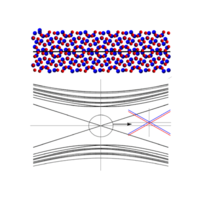
    <description>Author(s): A. Varykhalov, D. Marchenko, M. R. Scholz, E. D. L. Rienks, T. K. Kim, G. Bihlmayer, J. Sánchez-Barriga, and O. Rader&lt;br/&gt;&lt;p&gt;We reveal a giant Rashba effect (&lt;span&gt;&lt;span style="font-style: italic;"&gt;α&lt;/span&gt;&lt;sub&gt;&lt;span style="font-style: italic;"&gt;R&lt;/span&gt;&lt;/sub&gt;≈1.3  eV &lt;span style="font-style: italic;"&gt;Å&lt;/span&gt;&lt;/span&gt;) on a surface state of Ir(111) by angle-resolved photoemission and by density functional theory. It is demonstrated that the existence of the surface state, its spin polarization, and the size of its Rashba-type spin-orbit splitting remain unaffected whe...&lt;/p&gt;&lt;br/&gt;[Phys. Rev. Lett. 108, 066804] Published Thu Feb 09, 2012</description>
    <content:encoded><![CDATA[<p>Author(s): A. Varykhalov, D. Marchenko, M. R. Scholz, E. D. L. Rienks, T. K. Kim, G. Bihlmayer, J. Sánchez-Barriga, and O. Rader</p><p> We reveal a giant Rashba effect (<span><span style="font-style: italic;">α</span><sub><span style="font-style: italic;">R</span></sub>≈1.3  eV <span style="font-style: italic;">Å</span></span>) on a surface state of Ir(111) by angle-resolved photoemission and by density functional theory. It is demonstrated that the existence of the surface state, its spin polarization, and the size of its Rashba-type spin-orbit splitting remain unaffected whe...</p><p>[Phys. Rev. Lett. 108, 066804] Published Thu Feb 09, 2012</p>]]></content:encoded>
    <dc:title>Ir(111) Surface State with Giant Rashba Splitting Persists under Graphene in Air</dc:title>
    <dc:creator>A. Varykhalov, D. Marchenko, M. R. Scholz, E. D. L. Rienks, T. K. Kim, G. Bihlmayer, J. Sánchez-Barriga, and O. Rader</dc:creator>
    <dc:date>2012-02-09T10:00:00-05:00</dc:date>
    <dc:rights>Personal use only, all commercial or other reuse prohibited</dc:rights>
    <dc:identifier>doi:10.1103/PhysRevLett.108.066804</dc:identifier>
    <dc:source>Phys. Rev. Lett. 108, 066804 (2012)</dc:source>
    <dc:type>article</dc:type>
    <prism:publicationName>Physical Review Letters</prism:publicationName>
    <prism:volume>108</prism:volume>
    <prism:number>6</prism:number>
    <prism:publicationDate>2012-02-09T10:00:00-05:00</prism:publicationDate>
    <prism:doi>10.1103/PhysRevLett.108.066804</prism:doi>
    <prism:url>http://link.aps.org/doi/10.1103/PhysRevLett.108.066804</prism:url>
    <prism:startingPage>066804</prism:startingPage>
    <dc:subject>Condensed Matter: Electronic Properties, etc.</dc:subject>
    <prism:section>Condensed Matter: Electronic Properties, etc.</prism:section>
  </item>
  <item rdf:about="http://link.aps.org/doi/10.1103/PhysRevLett.108.066402">
    <title>Metal-to-Insulator Transition and Electron-Hole Puddle Formation in Disordered Graphene Nanoribbons</title>
    <link>http://link.aps.org/doi/10.1103/PhysRevLett.108.066402</link>
    <description>Author(s): Gerald Schubert and Holger Fehske&lt;br/&gt;&lt;p&gt;The experimentally observed metal-to-insulator transition in hydrogenated graphene is numerically confirmed for actual sized graphene samples and realistic impurity concentrations. The eigenstates of our tight-binding model with substitutional disorder corroborate the formation of electron-hole pudd...&lt;/p&gt;&lt;br/&gt;[Phys. Rev. Lett. 108, 066402] Published Thu Feb 09, 2012</description>
    <content:encoded><![CDATA[<p>Author(s): Gerald Schubert and Holger Fehske</p><p> The experimentally observed metal-to-insulator transition in hydrogenated graphene is numerically confirmed for actual sized graphene samples and realistic impurity concentrations. The eigenstates of our tight-binding model with substitutional disorder corroborate the formation of electron-hole pudd...</p><p>[Phys. Rev. Lett. 108, 066402] Published Thu Feb 09, 2012</p>]]></content:encoded>
    <dc:title>Metal-to-Insulator Transition and Electron-Hole Puddle Formation in Disordered Graphene Nanoribbons</dc:title>
    <dc:creator>Gerald Schubert and Holger Fehske</dc:creator>
    <dc:date>2012-02-09T10:00:00-05:00</dc:date>
    <dc:rights>Personal use only, all commercial or other reuse prohibited</dc:rights>
    <dc:identifier>doi:10.1103/PhysRevLett.108.066402</dc:identifier>
    <dc:source>Phys. Rev. Lett. 108, 066402 (2012)</dc:source>
    <dc:type>article</dc:type>
    <prism:publicationName>Physical Review Letters</prism:publicationName>
    <prism:volume>108</prism:volume>
    <prism:number>6</prism:number>
    <prism:publicationDate>2012-02-09T10:00:00-05:00</prism:publicationDate>
    <prism:doi>10.1103/PhysRevLett.108.066402</prism:doi>
    <prism:url>http://link.aps.org/doi/10.1103/PhysRevLett.108.066402</prism:url>
    <prism:startingPage>066402</prism:startingPage>
    <dc:subject>Condensed Matter: Electronic Properties, etc.</dc:subject>
    <prism:section>Condensed Matter: Electronic Properties, etc.</prism:section>
  </item>
  <item rdf:about="http://link.aps.org/doi/10.1103/PhysRevLett.108.065501">
    <title>Crystal Structure of Cold Compressed Graphite</title>
    <link>http://link.aps.org/doi/10.1103/PhysRevLett.108.065501</link>
    <description>Author(s): Maximilian Amsler, José A. Flores-Livas, Lauri Lehtovaara, Felix Balima, S. Alireza Ghasemi, Denis Machon, Stéphane Pailhès, Alexander Willand, Damien Caliste, Silvana Botti, Alfonso San Miguel, Stefan Goedecker, and Miguel A. L. Marques&lt;br/&gt;&lt;p&gt;Through a systematic structural search we found an allotrope of carbon with &lt;span style="font-style: italic;"&gt;Cmmm&lt;/span&gt; symmetry which we predict to be more stable than graphite for pressures above 10 GPa. This material, which we refer to as &lt;span&gt;&lt;span style="font-style: italic;"&gt;Z&lt;/span&gt;&lt;/span&gt;-carbon, is formed by pure &lt;span&gt;&lt;span style="font-style: italic;"&gt;s&lt;/span&gt;&lt;span style="font-style: italic;"&gt;p&lt;/span&gt;&lt;sup&gt;3&lt;/sup&gt;&lt;/span&gt; bonds and it provides an explanation to several features in exper...&lt;/p&gt;&lt;br/&gt;[Phys. Rev. Lett. 108, 065501] Published Tue Feb 07, 2012</description>
    <content:encoded><![CDATA[<p>Author(s): Maximilian Amsler, José A. Flores-Livas, Lauri Lehtovaara, Felix Balima, S. Alireza Ghasemi, Denis Machon, Stéphane Pailhès, Alexander Willand, Damien Caliste, Silvana Botti, Alfonso San Miguel, Stefan Goedecker, and Miguel A. L. Marques</p><p> Through a systematic structural search we found an allotrope of carbon with <span style="font-style: italic;">Cmmm</span> symmetry which we predict to be more stable than graphite for pressures above 10 GPa. This material, which we refer to as <span><span style="font-style: italic;">Z</span></span>-carbon, is formed by pure <span><span style="font-style: italic;">s</span><span style="font-style: italic;">p</span><sup>3</sup></span> bonds and it provides an explanation to several features in exper...</p><p>[Phys. Rev. Lett. 108, 065501] Published Tue Feb 07, 2012</p>]]></content:encoded>
    <dc:title>Crystal Structure of Cold Compressed Graphite</dc:title>
    <dc:creator>Maximilian Amsler, José A. Flores-Livas, Lauri Lehtovaara, Felix Balima, S. Alireza Ghasemi, Denis Machon, Stéphane Pailhès, Alexander Willand, Damien Caliste, Silvana Botti, Alfonso San Miguel, Stefan Goedecker, and Miguel A. L. Marques</dc:creator>
    <dc:date>2012-02-07T10:00:00-05:00</dc:date>
    <dc:rights>Personal use only, all commercial or other reuse prohibited</dc:rights>
    <dc:identifier>doi:10.1103/PhysRevLett.108.065501</dc:identifier>
    <dc:source>Phys. Rev. Lett. 108, 065501 (2012)</dc:source>
    <dc:type>article</dc:type>
    <prism:publicationName>Physical Review Letters</prism:publicationName>
    <prism:volume>108</prism:volume>
    <prism:number>6</prism:number>
    <prism:publicationDate>2012-02-07T10:00:00-05:00</prism:publicationDate>
    <prism:doi>10.1103/PhysRevLett.108.065501</prism:doi>
    <prism:url>http://link.aps.org/doi/10.1103/PhysRevLett.108.065501</prism:url>
    <prism:startingPage>065501</prism:startingPage>
    <dc:subject>Condensed Matter: Structure, etc.</dc:subject>
    <prism:section>Condensed Matter: Structure, etc.</prism:section>
  </item>
  <item rdf:about="http://link.aps.org/doi/10.1103/PhysRevB.85.085406">
    <title>Spin-dependent Klein tunneling in graphene: Role of Rashba spin-orbit coupling</title>
    <link>http://link.aps.org/doi/10.1103/PhysRevB.85.085406</link>
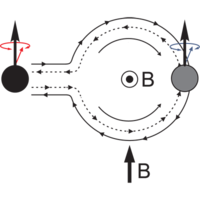
    <description>Author(s): Ming-Hao Liu (劉明豪), Jan Bundesmann, and Klaus Richter&lt;br/&gt;&lt;p&gt;Within an effective Dirac theory the low-energy dispersions of monolayer graphene in the presence of Rashba spin-orbit coupling and spin-degenerate bilayer graphene are described by formally identical expressions. We explore implications of this correspondence for transport by choosing chiral tunnel...&lt;/p&gt;&lt;br/&gt;[Phys. Rev. B 85, 085406] Published Fri Feb 03, 2012</description>
    <content:encoded><![CDATA[<p>Author(s): Ming-Hao Liu (劉明豪), Jan Bundesmann, and Klaus Richter</p><p> Within an effective Dirac theory the low-energy dispersions of monolayer graphene in the presence of Rashba spin-orbit coupling and spin-degenerate bilayer graphene are described by formally identical expressions. We explore implications of this correspondence for transport by choosing chiral tunnel...</p><p>[Phys. Rev. B 85, 085406] Published Fri Feb 03, 2012</p>]]></content:encoded>
    <dc:title>Spin-dependent Klein tunneling in graphene: Role of Rashba spin-orbit coupling</dc:title>
    <dc:creator>Ming-Hao Liu (劉明豪), Jan Bundesmann, and Klaus Richter</dc:creator>
    <dc:date>2012-02-03T10:00:00-05:00</dc:date>
    <dc:rights>Personal use only, all commercial or other reuse prohibited</dc:rights>
    <dc:identifier>doi:10.1103/PhysRevB.85.085406</dc:identifier>
    <dc:source>Phys. Rev. B 85, 085406 (2012)</dc:source>
    <dc:type>article</dc:type>
    <prism:publicationName>Physical Review B</prism:publicationName>
    <prism:volume>85</prism:volume>
    <prism:number>8</prism:number>
    <prism:publicationDate>2012-02-03T10:00:00-05:00</prism:publicationDate>
    <prism:doi>10.1103/PhysRevB.85.085406</prism:doi>
    <prism:url>http://link.aps.org/doi/10.1103/PhysRevB.85.085406</prism:url>
    <prism:startingPage>085406</prism:startingPage>
    <dc:subject>Surface physics, nanoscale physics, low-dimensional systems</dc:subject>
    <prism:section>Surface physics, nanoscale physics, low-dimensional systems</prism:section>
  </item>
  <item rdf:about="http://link.aps.org/doi/10.1103/PhysRevB.85.085404">
    <title>Adsorption of oxygen-containing functional groups on free and supported graphene using point contact</title>
    <link>http://link.aps.org/doi/10.1103/PhysRevB.85.085404</link>
    <description>Author(s): Qian Wang, D. X. Ye, Y. Kawazoe, and P. Jena&lt;br/&gt;&lt;p&gt;First-principles electronic structure calculations based on spin-polarized density functional theory were carried out to study the adsorption of oxygen-containing functional groups -OH, -CHO, and -COOH on a two-dimensional (2D) infinite graphene sheet without edge states and defects. We find that th...&lt;/p&gt;&lt;br/&gt;[Phys. Rev. B 85, 085404] Published Fri Feb 03, 2012</description>
    <content:encoded><![CDATA[<p>Author(s): Qian Wang, D. X. Ye, Y. Kawazoe, and P. Jena</p><p> First-principles electronic structure calculations based on spin-polarized density functional theory were carried out to study the adsorption of oxygen-containing functional groups -OH, -CHO, and -COOH on a two-dimensional (2D) infinite graphene sheet without edge states and defects. We find that th...</p><p>[Phys. Rev. B 85, 085404] Published Fri Feb 03, 2012</p>]]></content:encoded>
    <dc:title>Adsorption of oxygen-containing functional groups on free and supported graphene using point contact</dc:title>
    <dc:creator>Qian Wang, D. X. Ye, Y. Kawazoe, and P. Jena</dc:creator>
    <dc:date>2012-02-03T10:00:00-05:00</dc:date>
    <dc:rights>Personal use only, all commercial or other reuse prohibited</dc:rights>
    <dc:identifier>doi:10.1103/PhysRevB.85.085404</dc:identifier>
    <dc:source>Phys. Rev. B 85, 085404 (2012)</dc:source>
    <dc:type>article</dc:type>
    <prism:publicationName>Physical Review B</prism:publicationName>
    <prism:volume>85</prism:volume>
    <prism:number>8</prism:number>
    <prism:publicationDate>2012-02-03T10:00:00-05:00</prism:publicationDate>
    <prism:doi>10.1103/PhysRevB.85.085404</prism:doi>
    <prism:url>http://link.aps.org/doi/10.1103/PhysRevB.85.085404</prism:url>
    <prism:startingPage>085404</prism:startingPage>
    <dc:subject>Surface physics, nanoscale physics, low-dimensional systems</dc:subject>
    <prism:section>Surface physics, nanoscale physics, low-dimensional systems</prism:section>
  </item>
  <item rdf:about="http://link.aps.org/doi/10.1103/PhysRevLett.108.056802">
    <title>Electrically Tunable Quantum Anomalous Hall Effect in Graphene Decorated by 5d Transition-Metal Adatoms</title>
    <link>http://link.aps.org/doi/10.1103/PhysRevLett.108.056802</link>
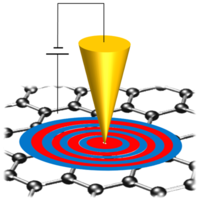
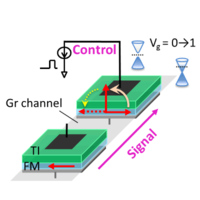
    <description>Author(s): Hongbin Zhang, Cesar Lazo, Stefan Blügel, Stefan Heinze, and Yuriy Mokrousov&lt;br/&gt;&lt;p&gt;Based on first-principles calculations, we predict that &lt;span&gt;5&lt;span style="font-style: italic;"&gt;d&lt;/span&gt;&lt;/span&gt; transition metals on graphene present a unique class of hybrid systems exhibiting topological transport effects that can be manipulated effectively by external electric fields. The origin of this phenomenon lies in the exceptional magnetic p...&lt;/p&gt;&lt;br/&gt;[Phys. Rev. Lett. 108, 056802] Published Wed Feb 01, 2012</description>
    <content:encoded><![CDATA[<p>Author(s): Hongbin Zhang, Cesar Lazo, Stefan Blügel, Stefan Heinze, and Yuriy Mokrousov</p><p> Based on first-principles calculations, we predict that <span>5<span style="font-style: italic;">d</span></span> transition metals on graphene present a unique class of hybrid systems exhibiting topological transport effects that can be manipulated effectively by external electric fields. The origin of this phenomenon lies in the exceptional magnetic p...</p><p>[Phys. Rev. Lett. 108, 056802] Published Wed Feb 01, 2012</p>]]></content:encoded>
    <dc:title>Electrically Tunable Quantum Anomalous Hall Effect in Graphene Decorated by 5d Transition-Metal Adatoms</dc:title>
    <dc:creator>Hongbin Zhang, Cesar Lazo, Stefan Blügel, Stefan Heinze, and Yuriy Mokrousov</dc:creator>
    <dc:date>2012-02-01T10:00:00-05:00</dc:date>
    <dc:rights>Personal use only, all commercial or other reuse prohibited</dc:rights>
    <dc:identifier>doi:10.1103/PhysRevLett.108.056802</dc:identifier>
    <dc:source>Phys. Rev. Lett. 108, 056802 (2012)</dc:source>
    <dc:type>article</dc:type>
    <prism:publicationName>Physical Review Letters</prism:publicationName>
    <prism:volume>108</prism:volume>
    <prism:number>5</prism:number>
    <prism:publicationDate>2012-02-01T10:00:00-05:00</prism:publicationDate>
    <prism:doi>10.1103/PhysRevLett.108.056802</prism:doi>
    <prism:url>http://link.aps.org/doi/10.1103/PhysRevLett.108.056802</prism:url>
    <prism:startingPage>056802</prism:startingPage>
    <dc:subject>Condensed Matter: Electronic Properties, etc.</dc:subject>
    <prism:section>Condensed Matter: Electronic Properties, etc.</prism:section>
  </item>
  <item rdf:about="http://link.aps.org/doi/10.1103/PhysRevLett.108.056801">
    <title>Time-Resolved Two-Photon Photoemission of Unoccupied Electronic States of Periodically Rippled Graphene on Ru(0001)</title>
    <link>http://link.aps.org/doi/10.1103/PhysRevLett.108.056801</link>
    <description>Author(s): N. Armbrust, J. Güdde, P. Jakob, and U. Höfer&lt;br/&gt;&lt;p&gt;The unoccupied electronic states of epitaxially grown graphene on Ru(0001) have been explored by time- and angle-resolved two-photon photoemission. We identify a Ru derived resonance and a Ru/graphene interface state at 0.91 and 2.58 eV above the Fermi level, as well as three image-potential derived...&lt;/p&gt;&lt;br/&gt;[Phys. Rev. Lett. 108, 056801] Published Tue Jan 31, 2012</description>
    <content:encoded><![CDATA[<p>Author(s): N. Armbrust, J. Güdde, P. Jakob, and U. Höfer</p><p> The unoccupied electronic states of epitaxially grown graphene on Ru(0001) have been explored by time- and angle-resolved two-photon photoemission. We identify a Ru derived resonance and a Ru/graphene interface state at 0.91 and 2.58 eV above the Fermi level, as well as three image-potential derived...</p><p>[Phys. Rev. Lett. 108, 056801] Published Tue Jan 31, 2012</p>]]></content:encoded>
    <dc:title>Time-Resolved Two-Photon Photoemission of Unoccupied Electronic States of Periodically Rippled Graphene on Ru(0001)</dc:title>
    <dc:creator>N. Armbrust, J. Güdde, P. Jakob, and U. Höfer</dc:creator>
    <dc:date>2012-01-31T10:00:00-05:00</dc:date>
    <dc:rights>Personal use only, all commercial or other reuse prohibited</dc:rights>
    <dc:identifier>doi:10.1103/PhysRevLett.108.056801</dc:identifier>
    <dc:source>Phys. Rev. Lett. 108, 056801 (2012)</dc:source>
    <dc:type>article</dc:type>
    <prism:publicationName>Physical Review Letters</prism:publicationName>
    <prism:volume>108</prism:volume>
    <prism:number>5</prism:number>
    <prism:publicationDate>2012-01-31T10:00:00-05:00</prism:publicationDate>
    <prism:doi>10.1103/PhysRevLett.108.056801</prism:doi>
    <prism:url>http://link.aps.org/doi/10.1103/PhysRevLett.108.056801</prism:url>
    <prism:startingPage>056801</prism:startingPage>
    <dc:subject>Condensed Matter: Electronic Properties, etc.</dc:subject>
    <prism:section>Condensed Matter: Electronic Properties, etc.</prism:section>
  </item>
  <item rdf:about="http://link.aps.org/doi/10.1103/PhysRevLett.108.047401">
    <title>Complete Optical Absorption in Periodically Patterned Graphene</title>
    <link>http://link.aps.org/doi/10.1103/PhysRevLett.108.047401</link>
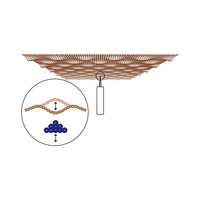
    <description>Author(s): Sukosin Thongrattanasiri, Frank H. L. Koppens, and F. Javier García de Abajo&lt;br/&gt;&lt;p&gt;We demonstrate that 100% light absorption can take place in a single patterned sheet of doped graphene. General analysis shows that a planar array of small particles with losses exhibits full absorption under critical-coupling conditions provided the cross section of each individual particle is comp...&lt;/p&gt;&lt;br/&gt;&lt;img src="http://publish.aps.org/images/icons/physics_viewpoint.gif" alt="Selected for a Focus in Physics"/&gt; &lt;img src="http://publish.aps.org/images/icons/prlsugg30x30.gif" width="30" height="30" alt="PRL Editors' Suggestion"/&gt; &lt;br/&gt;[Phys. Rev. Lett. 108, 047401] Published Fri Jan 27, 2012</description>
    <content:encoded><![CDATA[<p>Author(s): Sukosin Thongrattanasiri, Frank H. L. Koppens, and F. Javier García de Abajo</p><p><img src="http://publish.aps.org/images/icons/physics_viewpoint.gif" alt="Selected for a Focus in Physics"/> <img src="http://publish.aps.org/images/icons/prlsugg30x30.gif" width="30" height="30" alt="PRL Editors' Suggestion"/>  We demonstrate that 100% light absorption can take place in a single patterned sheet of doped graphene. General analysis shows that a planar array of small particles with losses exhibits full absorption under critical-coupling conditions provided the cross section of each individual particle is comp...</p><p>[Phys. Rev. Lett. 108, 047401] Published Fri Jan 27, 2012</p>]]></content:encoded>
    <dc:title>Complete Optical Absorption in Periodically Patterned Graphene</dc:title>
    <dc:creator>Sukosin Thongrattanasiri, Frank H. L. Koppens, and F. Javier García de Abajo</dc:creator>
    <dc:date>2012-01-27T10:00:00-05:00</dc:date>
    <dc:rights>Personal use only, all commercial or other reuse prohibited</dc:rights>
    <dc:identifier>doi:10.1103/PhysRevLett.108.047401</dc:identifier>
    <dc:source>Phys. Rev. Lett. 108, 047401 (2012)</dc:source>
    <dc:type>article</dc:type>
    <prism:publicationName>Physical Review Letters</prism:publicationName>
    <prism:volume>108</prism:volume>
    <prism:number>4</prism:number>
    <prism:publicationDate>2012-01-27T10:00:00-05:00</prism:publicationDate>
    <prism:doi>10.1103/PhysRevLett.108.047401</prism:doi>
    <prism:url>http://link.aps.org/doi/10.1103/PhysRevLett.108.047401</prism:url>
    <prism:startingPage>047401</prism:startingPage>
    <dc:subject>Condensed Matter: Electronic Properties, etc.</dc:subject>
    <prism:section>Condensed Matter: Electronic Properties, etc.</prism:section>
  </item>
  <item rdf:about="http://link.aps.org/doi/10.1103/PhysRevB.85.033410">
    <title>Orthorhombic carbon allotrope of compressed graphite: Ab initio calculations</title>
    <link>http://link.aps.org/doi/10.1103/PhysRevB.85.033410</link>
    <description>Author(s): Jian-Tao Wang, Changfeng Chen, and Yoshiyuki Kawazoe&lt;br/&gt;&lt;p&gt;We identify by &lt;span style="font-style: italic;"&gt;ab initio&lt;/span&gt; calculations an orthorhombic carbon (&lt;span&gt;&lt;span style="font-style: italic;"&gt;O&lt;/span&gt;&lt;/span&gt;-carbon) in &lt;span&gt;&lt;span style="font-style: italic;"&gt;P&lt;/span&gt;&lt;span style="font-style: italic;"&gt;b&lt;/span&gt;&lt;span style="font-style: italic;"&gt;a&lt;/span&gt;&lt;span style="font-style: italic;"&gt;m&lt;/span&gt;&lt;/span&gt; (&lt;span&gt;&lt;span style="font-style: italic;"&gt;D&lt;/span&gt;&lt;sub&gt;2&lt;span style="font-style: italic;"&gt;h&lt;/span&gt;&lt;/sub&gt;&lt;sup&gt;9&lt;/sup&gt;&lt;/span&gt;) symmetry for compressed graphite in AA stacking, which is formed via a distinct one-layer by one-layer slip and buckling mechanism along the [210] direction. It is dynamically stable and energetically more favorab...&lt;/p&gt;&lt;br/&gt;[Phys. Rev. B 85, 033410] Published Fri Jan 27, 2012</description>
    <content:encoded><![CDATA[<p>Author(s): Jian-Tao Wang, Changfeng Chen, and Yoshiyuki Kawazoe</p><p> We identify by <span style="font-style: italic;">ab initio</span> calculations an orthorhombic carbon (<span><span style="font-style: italic;">O</span></span>-carbon) in <span><span style="font-style: italic;">P</span><span style="font-style: italic;">b</span><span style="font-style: italic;">a</span><span style="font-style: italic;">m</span></span> (<span><span style="font-style: italic;">D</span><sub>2<span style="font-style: italic;">h</span></sub><sup>9</sup></span>) symmetry for compressed graphite in AA stacking, which is formed via a distinct one-layer by one-layer slip and buckling mechanism along the [210] direction. It is dynamically stable and energetically more favorab...</p><p>[Phys. Rev. B 85, 033410] Published Fri Jan 27, 2012</p>]]></content:encoded>
    <dc:title>Orthorhombic carbon allotrope of compressed graphite: Ab initio calculations</dc:title>
    <dc:creator>Jian-Tao Wang, Changfeng Chen, and Yoshiyuki Kawazoe</dc:creator>
    <dc:date>2012-01-27T10:00:00-05:00</dc:date>
    <dc:rights>Personal use only, all commercial or other reuse prohibited</dc:rights>
    <dc:identifier>doi:10.1103/PhysRevB.85.033410</dc:identifier>
    <dc:source>Phys. Rev. B 85, 033410 (2012)</dc:source>
    <dc:type>article</dc:type>
    <prism:publicationName>Physical Review B</prism:publicationName>
    <prism:volume>85</prism:volume>
    <prism:number>3</prism:number>
    <prism:publicationDate>2012-01-27T10:00:00-05:00</prism:publicationDate>
    <prism:doi>10.1103/PhysRevB.85.033410</prism:doi>
    <prism:url>http://link.aps.org/doi/10.1103/PhysRevB.85.033410</prism:url>
    <prism:startingPage>033410</prism:startingPage>
    <dc:subject>Surface physics, nanoscale physics, low-dimensional systems</dc:subject>
    <prism:section>Surface physics, nanoscale physics, low-dimensional systems</prism:section>
  </item>
  <item rdf:about="http://link.aps.org/doi/10.1103/PhysRevB.85.035444">
    <title>Electronic properties and STM images of doped bilayer graphene</title>
    <link>http://link.aps.org/doi/10.1103/PhysRevB.85.035444</link>
    <description>Author(s): Stéphane-Olivier Guillaume, Bing Zheng, Jean-Christophe Charlier, and Luc Henrard&lt;br/&gt;&lt;p&gt;Electronic structures and scanning tunneling microscopy (STM) patterns of boron- and nitrogen-doped bilayer graphene are predicted using state-of-the-art first-principles calculations. Asymmetric doping is considered, leading to different charge-carrier densities on each graphene layer and to a band...&lt;/p&gt;&lt;br/&gt;[Phys. Rev. B 85, 035444] Published Fri Jan 27, 2012</description>
    <content:encoded><![CDATA[<p>Author(s): Stéphane-Olivier Guillaume, Bing Zheng, Jean-Christophe Charlier, and Luc Henrard</p><p> Electronic structures and scanning tunneling microscopy (STM) patterns of boron- and nitrogen-doped bilayer graphene are predicted using state-of-the-art first-principles calculations. Asymmetric doping is considered, leading to different charge-carrier densities on each graphene layer and to a band...</p><p>[Phys. Rev. B 85, 035444] Published Fri Jan 27, 2012</p>]]></content:encoded>
    <dc:title>Electronic properties and STM images of doped bilayer graphene</dc:title>
    <dc:creator>Stéphane-Olivier Guillaume, Bing Zheng, Jean-Christophe Charlier, and Luc Henrard</dc:creator>
    <dc:date>2012-01-27T10:00:00-05:00</dc:date>
    <dc:rights>Personal use only, all commercial or other reuse prohibited</dc:rights>
    <dc:identifier>doi:10.1103/PhysRevB.85.035444</dc:identifier>
    <dc:source>Phys. Rev. B 85, 035444 (2012)</dc:source>
    <dc:type>article</dc:type>
    <prism:publicationName>Physical Review B</prism:publicationName>
    <prism:volume>85</prism:volume>
    <prism:number>3</prism:number>
    <prism:publicationDate>2012-01-27T10:00:00-05:00</prism:publicationDate>
    <prism:doi>10.1103/PhysRevB.85.035444</prism:doi>
    <prism:url>http://link.aps.org/doi/10.1103/PhysRevB.85.035444</prism:url>
    <prism:startingPage>035444</prism:startingPage>
    <dc:subject>Surface physics, nanoscale physics, low-dimensional systems</dc:subject>
    <prism:section>Surface physics, nanoscale physics, low-dimensional systems</prism:section>
  </item>
  <item rdf:about="http://link.aps.org/doi/10.1103/PhysRevB.85.035445">
    <title>Role of effective tensile strain in electromechanical response of helical graphene nanoribbons with open and closed armchair edges</title>
    <link>http://link.aps.org/doi/10.1103/PhysRevB.85.035445</link>
    <description>Author(s): D.-B. Zhang and T. Dumitrică&lt;br/&gt;&lt;p&gt;There is a growing need to understand the mechanical and electronic properties of nonideal graphene nanoribbons. Using objective molecular dynamics and a density-functional-based tight-binding model, we investigate the effects of torsion on the electromechanical properties of graphene nanoribbons wi...&lt;/p&gt;&lt;br/&gt;[Phys. Rev. B 85, 035445] Published Fri Jan 27, 2012</description>
    <content:encoded><![CDATA[<p>Author(s): D.-B. Zhang and T. Dumitrică</p><p> There is a growing need to understand the mechanical and electronic properties of nonideal graphene nanoribbons. Using objective molecular dynamics and a density-functional-based tight-binding model, we investigate the effects of torsion on the electromechanical properties of graphene nanoribbons wi...</p><p>[Phys. Rev. B 85, 035445] Published Fri Jan 27, 2012</p>]]></content:encoded>
    <dc:title>Role of effective tensile strain in electromechanical response of helical graphene nanoribbons with open and closed armchair edges</dc:title>
    <dc:creator>D.-B. Zhang and T. Dumitrică</dc:creator>
    <dc:date>2012-01-27T10:00:00-05:00</dc:date>
    <dc:rights>Personal use only, all commercial or other reuse prohibited</dc:rights>
    <dc:identifier>doi:10.1103/PhysRevB.85.035445</dc:identifier>
    <dc:source>Phys. Rev. B 85, 035445 (2012)</dc:source>
    <dc:type>article</dc:type>
    <prism:publicationName>Physical Review B</prism:publicationName>
    <prism:volume>85</prism:volume>
    <prism:number>3</prism:number>
    <prism:publicationDate>2012-01-27T10:00:00-05:00</prism:publicationDate>
    <prism:doi>10.1103/PhysRevB.85.035445</prism:doi>
    <prism:url>http://link.aps.org/doi/10.1103/PhysRevB.85.035445</prism:url>
    <prism:startingPage>035445</prism:startingPage>
    <dc:subject>Surface physics, nanoscale physics, low-dimensional systems</dc:subject>
    <prism:section>Surface physics, nanoscale physics, low-dimensional systems</prism:section>
  </item>
  <item rdf:about="http://link.aps.org/doi/10.1103/PhysRevB.85.035443">
    <title>Ultrafast carrier dynamics and terahertz emission in optically pumped graphene at room temperature</title>
    <link>http://link.aps.org/doi/10.1103/PhysRevB.85.035443</link>
    <description>Author(s): S. Boubanga-Tombet, S. Chan, T. Watanabe, A. Satou, V. Ryzhii, and T. Otsuji&lt;br/&gt;&lt;p&gt;We report, within a picosecond time scale, fast relaxation and relatively slow recombination dynamics of photogenerated electrons and holes in an exfoliated graphene under infrared pulse excitation. We conduct time-domain spectroscopic studies using an optical pump and terahertz probe with an optica...&lt;/p&gt;&lt;br/&gt;[Phys. Rev. B 85, 035443] Published Thu Jan 26, 2012</description>
    <content:encoded><![CDATA[<p>Author(s): S. Boubanga-Tombet, S. Chan, T. Watanabe, A. Satou, V. Ryzhii, and T. Otsuji</p><p> We report, within a picosecond time scale, fast relaxation and relatively slow recombination dynamics of photogenerated electrons and holes in an exfoliated graphene under infrared pulse excitation. We conduct time-domain spectroscopic studies using an optical pump and terahertz probe with an optica...</p><p>[Phys. Rev. B 85, 035443] Published Thu Jan 26, 2012</p>]]></content:encoded>
    <dc:title>Ultrafast carrier dynamics and terahertz emission in optically pumped graphene at room temperature</dc:title>
    <dc:creator>S. Boubanga-Tombet, S. Chan, T. Watanabe, A. Satou, V. Ryzhii, and T. Otsuji</dc:creator>
    <dc:date>2012-01-26T10:00:00-05:00</dc:date>
    <dc:rights>Personal use only, all commercial or other reuse prohibited</dc:rights>
    <dc:identifier>doi:10.1103/PhysRevB.85.035443</dc:identifier>
    <dc:source>Phys. Rev. B 85, 035443 (2012)</dc:source>
    <dc:type>article</dc:type>
    <prism:publicationName>Physical Review B</prism:publicationName>
    <prism:volume>85</prism:volume>
    <prism:number>3</prism:number>
    <prism:publicationDate>2012-01-26T10:00:00-05:00</prism:publicationDate>
    <prism:doi>10.1103/PhysRevB.85.035443</prism:doi>
    <prism:url>http://link.aps.org/doi/10.1103/PhysRevB.85.035443</prism:url>
    <prism:startingPage>035443</prism:startingPage>
    <dc:subject>Surface physics, nanoscale physics, low-dimensional systems</dc:subject>
    <prism:section>Surface physics, nanoscale physics, low-dimensional systems</prism:section>
  </item>
  <item rdf:about="http://link.aps.org/doi/10.1103/PhysRevA.85.015807">
    <title>Enhanced high-order-harmonic generation in a carbon ablation plume</title>
    <link>http://link.aps.org/doi/10.1103/PhysRevA.85.015807</link>
    <description>Author(s): R. A. Ganeev, T. Witting, C. Hutchison, F. Frank, P. V. Redkin, W. A. Okell, D. Y. Lei, T. Roschuk, S. A. Maier, J. P. Marangos, and J. W. G. Tisch&lt;br/&gt;&lt;p&gt;We report on the observation of enhanced high harmonics from a carbon plasma using sub-5-fs laser pulses. The efficiency of harmonic generation in the range of 14–25 eV was up to five times higher in the case of a plasma medium (graphite ablation) compared with gas (argon) under similar experimental...&lt;/p&gt;&lt;br/&gt;[Phys. Rev. A 85, 015807] Published Thu Jan 26, 2012</description>
    <content:encoded><![CDATA[<p>Author(s): R. A. Ganeev, T. Witting, C. Hutchison, F. Frank, P. V. Redkin, W. A. Okell, D. Y. Lei, T. Roschuk, S. A. Maier, J. P. Marangos, and J. W. G. Tisch</p><p> We report on the observation of enhanced high harmonics from a carbon plasma using sub-5-fs laser pulses. The efficiency of harmonic generation in the range of 14–25 eV was up to five times higher in the case of a plasma medium (graphite ablation) compared with gas (argon) under similar experimental...</p><p>[Phys. Rev. A 85, 015807] Published Thu Jan 26, 2012</p>]]></content:encoded>
    <dc:title>Enhanced high-order-harmonic generation in a carbon ablation plume</dc:title>
    <dc:creator>R. A. Ganeev, T. Witting, C. Hutchison, F. Frank, P. V. Redkin, W. A. Okell, D. Y. Lei, T. Roschuk, S. A. Maier, J. P. Marangos, and J. W. G. Tisch</dc:creator>
    <dc:date>2012-01-26T10:00:00-05:00</dc:date>
    <dc:rights>Personal use only, all commercial or other reuse prohibited</dc:rights>
    <dc:identifier>doi:10.1103/PhysRevA.85.015807</dc:identifier>
    <dc:source>Phys. Rev. A 85, 015807 (2012)</dc:source>
    <dc:type>article</dc:type>
    <prism:publicationName>Physical Review A</prism:publicationName>
    <prism:volume>85</prism:volume>
    <prism:number>1</prism:number>
    <prism:publicationDate>2012-01-26T10:00:00-05:00</prism:publicationDate>
    <prism:doi>10.1103/PhysRevA.85.015807</prism:doi>
    <prism:url>http://link.aps.org/doi/10.1103/PhysRevA.85.015807</prism:url>
    <prism:startingPage>015807</prism:startingPage>
    <dc:subject>Quantum optics, physics of lasers, nonlinear optics, classical optics</dc:subject>
    <prism:section>Quantum optics, physics of lasers, nonlinear optics, classical optics</prism:section>
  </item>
  <item rdf:about="http://link.aps.org/doi/10.1103/PhysRevB.85.035440">
    <title>Fracturing graphene by chlorination: A theoretical viewpoint</title>
    <link>http://link.aps.org/doi/10.1103/PhysRevB.85.035440</link>
    <description>Author(s): M. Ijäs, P. Havu, and A. Harju&lt;br/&gt;&lt;p&gt;Motivated by a recent photochlorination experiment [ B. Li &lt;span style="font-style: italic;"&gt;et al.&lt;/span&gt; &lt;a href="http://dx.doi.org/10.1021/nn201731t"&gt; ACS Nano &lt;span style="font-weight: bold;"&gt;5&lt;/span&gt; 5957 (2011)&lt;/a&gt;], we study theoretically the interaction of chlorine with graphene. In previous theoretical studies, covalent binding between chlorine and carbon atoms has been elusive upon adsorption to the graphene basal pla...&lt;/p&gt;&lt;br/&gt;[Phys. Rev. B 85, 035440] Published Wed Jan 25, 2012</description>
    <content:encoded><![CDATA[<p>Author(s): M. Ijäs, P. Havu, and A. Harju</p><p> Motivated by a recent photochlorination experiment [ B. Li <span style="font-style: italic;">et al.</span> <a href="http://dx.doi.org/10.1021/nn201731t"> ACS Nano <span style="font-weight: bold;">5</span> 5957 (2011)</a>], we study theoretically the interaction of chlorine with graphene. In previous theoretical studies, covalent binding between chlorine and carbon atoms has been elusive upon adsorption to the graphene basal pla...</p><p>[Phys. Rev. B 85, 035440] Published Wed Jan 25, 2012</p>]]></content:encoded>
    <dc:title>Fracturing graphene by chlorination: A theoretical viewpoint</dc:title>
    <dc:creator>M. Ijäs, P. Havu, and A. Harju</dc:creator>
    <dc:date>2012-01-25T10:00:00-05:00</dc:date>
    <dc:rights>Personal use only, all commercial or other reuse prohibited</dc:rights>
    <dc:identifier>doi:10.1103/PhysRevB.85.035440</dc:identifier>
    <dc:source>Phys. Rev. B 85, 035440 (2012)</dc:source>
    <dc:type>article</dc:type>
    <prism:publicationName>Physical Review B</prism:publicationName>
    <prism:volume>85</prism:volume>
    <prism:number>3</prism:number>
    <prism:publicationDate>2012-01-25T10:00:00-05:00</prism:publicationDate>
    <prism:doi>10.1103/PhysRevB.85.035440</prism:doi>
    <prism:url>http://link.aps.org/doi/10.1103/PhysRevB.85.035440</prism:url>
    <prism:startingPage>035440</prism:startingPage>
    <dc:subject>Surface physics, nanoscale physics, low-dimensional systems</dc:subject>
    <prism:section>Surface physics, nanoscale physics, low-dimensional systems</prism:section>
  </item>
  <item rdf:about="http://link.aps.org/doi/10.1103/PhysRevB.85.033407">
    <title>Nonlinear strain effects in double-resonance Raman bands of graphite, graphene, and related materials</title>
    <link>http://link.aps.org/doi/10.1103/PhysRevB.85.033407</link>
    <description>Author(s): Elena del Corro, Mercedes Taravillo, and Valentín G. Baonza&lt;br/&gt;&lt;p&gt;We analyze the influence of biaxial strain on the double-resonance (&lt;span&gt;&lt;span style="font-style: italic;"&gt;D&lt;/span&gt;&lt;/span&gt; and 2&lt;span&gt;&lt;span style="font-style: italic;"&gt;D&lt;/span&gt;&lt;/span&gt;) Raman bands of graphite-related materials. A substantial nonlinear dependence of these bands with the strain is observed, evidencing a quite different effect on the electronic structure around the &lt;span style="font-weight: bold;"&gt;K&lt;/span&gt; and &lt;span&gt;&lt;span style="font-weight: bold;"&gt;Γ&lt;/span&gt;&lt;/span&gt; points of the fir...&lt;/p&gt;&lt;br/&gt;[Phys. Rev. B 85, 033407] Published Tue Jan 24, 2012</description>
    <content:encoded><![CDATA[<p>Author(s): Elena del Corro, Mercedes Taravillo, and Valentín G. Baonza</p><p> We analyze the influence of biaxial strain on the double-resonance (<span><span style="font-style: italic;">D</span></span> and 2<span><span style="font-style: italic;">D</span></span>) Raman bands of graphite-related materials. A substantial nonlinear dependence of these bands with the strain is observed, evidencing a quite different effect on the electronic structure around the <span style="font-weight: bold;">K</span> and <span><span style="font-weight: bold;">Γ</span></span> points of the fir...</p><p>[Phys. Rev. B 85, 033407] Published Tue Jan 24, 2012</p>]]></content:encoded>
    <dc:title>Nonlinear strain effects in double-resonance Raman bands of graphite, graphene, and related materials</dc:title>
    <dc:creator>Elena del Corro, Mercedes Taravillo, and Valentín G. Baonza</dc:creator>
    <dc:date>2012-01-24T10:00:00-05:00</dc:date>
    <dc:rights>Personal use only, all commercial or other reuse prohibited</dc:rights>
    <dc:identifier>doi:10.1103/PhysRevB.85.033407</dc:identifier>
    <dc:source>Phys. Rev. B 85, 033407 (2012)</dc:source>
    <dc:type>article</dc:type>
    <prism:publicationName>Physical Review B</prism:publicationName>
    <prism:volume>85</prism:volume>
    <prism:number>3</prism:number>
    <prism:publicationDate>2012-01-24T10:00:00-05:00</prism:publicationDate>
    <prism:doi>10.1103/PhysRevB.85.033407</prism:doi>
    <prism:url>http://link.aps.org/doi/10.1103/PhysRevB.85.033407</prism:url>
    <prism:startingPage>033407</prism:startingPage>
    <dc:subject>Surface physics, nanoscale physics, low-dimensional systems</dc:subject>
    <prism:section>Surface physics, nanoscale physics, low-dimensional systems</prism:section>
  </item>
  <item rdf:about="http://link.aps.org/doi/10.1103/PhysRevLett.108.046801">
    <title>Wave-Function Mapping of Graphene Quantum Dots with Soft Confinement</title>
    <link>http://link.aps.org/doi/10.1103/PhysRevLett.108.046801</link>
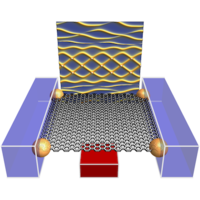
    <description>Author(s): D. Subramaniam, F. Libisch, Y. Li, C. Pauly, V. Geringer, R. Reiter, T. Mashoff, M. Liebmann, J. Burgdörfer, C. Busse, T. Michely, R. Mazzarello, M. Pratzer, and M. Morgenstern&lt;br/&gt;&lt;p&gt;Using low-temperature scanning tunneling spectroscopy, we map the local density of states of graphene quantum dots supported on Ir(111). Because of a band gap in the projected Ir band structure around the graphene &lt;span&gt;&lt;span style="font-style: italic;"&gt;K&lt;/span&gt;&lt;/span&gt; point, the electronic properties of the QDs are dominantly graphenelike. Indeed, we ...&lt;/p&gt;&lt;br/&gt;[Phys. Rev. Lett. 108, 046801] Published Mon Jan 23, 2012</description>
    <content:encoded><![CDATA[<p>Author(s): D. Subramaniam, F. Libisch, Y. Li, C. Pauly, V. Geringer, R. Reiter, T. Mashoff, M. Liebmann, J. Burgdörfer, C. Busse, T. Michely, R. Mazzarello, M. Pratzer, and M. Morgenstern</p><p> Using low-temperature scanning tunneling spectroscopy, we map the local density of states of graphene quantum dots supported on Ir(111). Because of a band gap in the projected Ir band structure around the graphene <span><span style="font-style: italic;">K</span></span> point, the electronic properties of the QDs are dominantly graphenelike. Indeed, we ...</p><p>[Phys. Rev. Lett. 108, 046801] Published Mon Jan 23, 2012</p>]]></content:encoded>
    <dc:title>Wave-Function Mapping of Graphene Quantum Dots with Soft Confinement</dc:title>
    <dc:creator>D. Subramaniam, F. Libisch, Y. Li, C. Pauly, V. Geringer, R. Reiter, T. Mashoff, M. Liebmann, J. Burgdörfer, C. Busse, T. Michely, R. Mazzarello, M. Pratzer, and M. Morgenstern</dc:creator>
    <dc:date>2012-01-23T10:00:00-05:00</dc:date>
    <dc:rights>Personal use only, all commercial or other reuse prohibited</dc:rights>
    <dc:identifier>doi:10.1103/PhysRevLett.108.046801</dc:identifier>
    <dc:source>Phys. Rev. Lett. 108, 046801 (2012)</dc:source>
    <dc:type>article</dc:type>
    <prism:publicationName>Physical Review Letters</prism:publicationName>
    <prism:volume>108</prism:volume>
    <prism:number>4</prism:number>
    <prism:publicationDate>2012-01-23T10:00:00-05:00</prism:publicationDate>
    <prism:doi>10.1103/PhysRevLett.108.046801</prism:doi>
    <prism:url>http://link.aps.org/doi/10.1103/PhysRevLett.108.046801</prism:url>
    <prism:startingPage>046801</prism:startingPage>
    <dc:subject>Condensed Matter: Electronic Properties, etc.</dc:subject>
    <prism:section>Condensed Matter: Electronic Properties, etc.</prism:section>
  </item>
  <item rdf:about="http://link.aps.org/doi/10.1103/PhysRevB.85.035436">
    <title>Theory of thermal transport in multilayer hexagonal boron nitride and nanotubes</title>
    <link>http://link.aps.org/doi/10.1103/PhysRevB.85.035436</link>
    <description>Author(s): L. Lindsay and D. A. Broido&lt;br/&gt;&lt;p&gt;We present a theory for the lattice thermal conductivity &lt;span&gt;&lt;span style="font-style: italic;"&gt;κ&lt;/span&gt;&lt;sub&gt;&lt;span style="font-style: italic;"&gt;L&lt;/span&gt;&lt;/sub&gt;&lt;/span&gt; of single-walled boron nitride nanotubes (BNNTs) and multilayer hexagonal boron nitride (MLBN), which is based on an exact numerical solution of the phonon Boltzmann equation. Coupling between layers in MLBN and nanotube curvature in BNNTs ...&lt;/p&gt;&lt;br/&gt;[Phys. Rev. B 85, 035436] Published Mon Jan 23, 2012</description>
    <content:encoded><![CDATA[<p>Author(s): L. Lindsay and D. A. Broido</p><p> We present a theory for the lattice thermal conductivity <span><span style="font-style: italic;">κ</span><sub><span style="font-style: italic;">L</span></sub></span> of single-walled boron nitride nanotubes (BNNTs) and multilayer hexagonal boron nitride (MLBN), which is based on an exact numerical solution of the phonon Boltzmann equation. Coupling between layers in MLBN and nanotube curvature in BNNTs ...</p><p>[Phys. Rev. B 85, 035436] Published Mon Jan 23, 2012</p>]]></content:encoded>
    <dc:title>Theory of thermal transport in multilayer hexagonal boron nitride and nanotubes</dc:title>
    <dc:creator>L. Lindsay and D. A. Broido</dc:creator>
    <dc:date>2012-01-23T10:00:00-05:00</dc:date>
    <dc:rights>Personal use only, all commercial or other reuse prohibited</dc:rights>
    <dc:identifier>doi:10.1103/PhysRevB.85.035436</dc:identifier>
    <dc:source>Phys. Rev. B 85, 035436 (2012)</dc:source>
    <dc:type>article</dc:type>
    <prism:publicationName>Physical Review B</prism:publicationName>
    <prism:volume>85</prism:volume>
    <prism:number>3</prism:number>
    <prism:publicationDate>2012-01-23T10:00:00-05:00</prism:publicationDate>
    <prism:doi>10.1103/PhysRevB.85.035436</prism:doi>
    <prism:url>http://link.aps.org/doi/10.1103/PhysRevB.85.035436</prism:url>
    <prism:startingPage>035436</prism:startingPage>
    <dc:subject>Surface physics, nanoscale physics, low-dimensional systems</dc:subject>
    <prism:section>Surface physics, nanoscale physics, low-dimensional systems</prism:section>
  </item>
  <item rdf:about="http://link.aps.org/doi/10.1103/PhysRevB.85.035433">
    <title>Nonlinear detection mechanism in quantitative atomic force microscopy characterization of high-frequency nanoelectromechanical systems</title>
    <link>http://link.aps.org/doi/10.1103/PhysRevB.85.035433</link>
    <description>Author(s): Marc Serra-García, Francesc Pérez-Murano, and Alvaro San Paulo&lt;br/&gt;&lt;p&gt;We investigate the transduction of motion from a nanomechanical resonator to the cantilever/tip probe of an atomic force microscope. Our results show that amplitude-modulated high-frequency vibrations of nanomechanical resonators can be measured by means of a low-resonance frequency cantilever as a ...&lt;/p&gt;&lt;br/&gt;&lt;img src="http://publish.aps.org/images/icons/prbsugg30x30.jpg" alt="PRB Editors' Suggestion"/&gt; &lt;br/&gt;[Phys. Rev. B 85, 035433] Published Fri Jan 20, 2012</description>
    <content:encoded><![CDATA[<p>Author(s): Marc Serra-García, Francesc Pérez-Murano, and Alvaro San Paulo</p><p><img src="http://publish.aps.org/images/icons/prbsugg30x30.jpg" alt="PRB Editors' Suggestion"/>  We investigate the transduction of motion from a nanomechanical resonator to the cantilever/tip probe of an atomic force microscope. Our results show that amplitude-modulated high-frequency vibrations of nanomechanical resonators can be measured by means of a low-resonance frequency cantilever as a ...</p><p>[Phys. Rev. B 85, 035433] Published Fri Jan 20, 2012</p>]]></content:encoded>
    <dc:title>Nonlinear detection mechanism in quantitative atomic force microscopy characterization of high-frequency nanoelectromechanical systems</dc:title>
    <dc:creator>Marc Serra-García, Francesc Pérez-Murano, and Alvaro San Paulo</dc:creator>
    <dc:date>2012-01-20T10:00:00-05:00</dc:date>
    <dc:rights>Personal use only, all commercial or other reuse prohibited</dc:rights>
    <dc:identifier>doi:10.1103/PhysRevB.85.035433</dc:identifier>
    <dc:source>Phys. Rev. B 85, 035433 (2012)</dc:source>
    <dc:type>article</dc:type>
    <prism:publicationName>Physical Review B</prism:publicationName>
    <prism:volume>85</prism:volume>
    <prism:number>3</prism:number>
    <prism:publicationDate>2012-01-20T10:00:00-05:00</prism:publicationDate>
    <prism:doi>10.1103/PhysRevB.85.035433</prism:doi>
    <prism:url>http://link.aps.org/doi/10.1103/PhysRevB.85.035433</prism:url>
    <prism:startingPage>035433</prism:startingPage>
    <dc:subject>Surface physics, nanoscale physics, low-dimensional systems</dc:subject>
    <prism:section>Surface physics, nanoscale physics, low-dimensional systems</prism:section>
  </item>
  <item rdf:about="http://link.aps.org/doi/10.1103/PhysRevB.85.045121">
    <title>Effects of static charging and exfoliation of layered crystals</title>
    <link>http://link.aps.org/doi/10.1103/PhysRevB.85.045121</link>
    <description>Author(s): M. Topsakal and S. Ciraci&lt;br/&gt;&lt;p&gt;Using a first-principle plane-wave method we investigate the effects of static charging on the structural, electronic, and magnetic properties of suspended, single-layer graphene, graphane, fluorographene, BN, and MoS&lt;span&gt;&lt;sub&gt;2&lt;/sub&gt;&lt;/span&gt; in a honeycomb structure. The limitations of periodic boundary conditions in the ...&lt;/p&gt;&lt;br/&gt;[Phys. Rev. B 85, 045121] Published Fri Jan 20, 2012</description>
    <content:encoded><![CDATA[<p>Author(s): M. Topsakal and S. Ciraci</p><p> Using a first-principle plane-wave method we investigate the effects of static charging on the structural, electronic, and magnetic properties of suspended, single-layer graphene, graphane, fluorographene, BN, and MoS<span><sub>2</sub></span> in a honeycomb structure. The limitations of periodic boundary conditions in the ...</p><p>[Phys. Rev. B 85, 045121] Published Fri Jan 20, 2012</p>]]></content:encoded>
    <dc:title>Effects of static charging and exfoliation of layered crystals</dc:title>
    <dc:creator>M. Topsakal and S. Ciraci</dc:creator>
    <dc:date>2012-01-20T10:00:00-05:00</dc:date>
    <dc:rights>Personal use only, all commercial or other reuse prohibited</dc:rights>
    <dc:identifier>doi:10.1103/PhysRevB.85.045121</dc:identifier>
    <dc:source>Phys. Rev. B 85, 045121 (2012)</dc:source>
    <dc:type>article</dc:type>
    <prism:publicationName>Physical Review B</prism:publicationName>
    <prism:volume>85</prism:volume>
    <prism:number>4</prism:number>
    <prism:publicationDate>2012-01-20T10:00:00-05:00</prism:publicationDate>
    <prism:doi>10.1103/PhysRevB.85.045121</prism:doi>
    <prism:url>http://link.aps.org/doi/10.1103/PhysRevB.85.045121</prism:url>
    <prism:startingPage>045121</prism:startingPage>
    <dc:subject>Electronic structure and strongly correlated systems</dc:subject>
    <prism:section>Electronic structure and strongly correlated systems</prism:section>
  </item>
  <item rdf:about="http://link.aps.org/doi/10.1103/PhysRevB.85.035431">
    <title>Raman spectroscopy of substrate-induced compression and substrate doping in thermally cycled graphene</title>
    <link>http://link.aps.org/doi/10.1103/PhysRevB.85.035431</link>
    <description>Author(s): Chun-Chung Chen, Wenzhong Bao, Chia-Chi Chang, Zeng Zhao, Chun Ning Lau, and Stephen B. Cronin&lt;br/&gt;&lt;p&gt;By thermally cycling single layer graphene in air, we observe irreversible upshifts of the Raman &lt;span&gt;&lt;span style="font-style: italic;"&gt;G&lt;/span&gt;&lt;/span&gt; and 2&lt;span&gt;&lt;span style="font-style: italic;"&gt;D&lt;/span&gt;&lt;/span&gt; bands of 24 and 23 cm&lt;span&gt;&lt;sup&gt;−1&lt;/sup&gt;&lt;/span&gt;, respectively. These upshifts are attributed to an in-plane compression of the graphene induced by the mismatch of thermal expansion coefficients between the graphene and...&lt;/p&gt;&lt;br/&gt;[Phys. Rev. B 85, 035431] Published Fri Jan 20, 2012</description>
    <content:encoded><![CDATA[<p>Author(s): Chun-Chung Chen, Wenzhong Bao, Chia-Chi Chang, Zeng Zhao, Chun Ning Lau, and Stephen B. Cronin</p><p> By thermally cycling single layer graphene in air, we observe irreversible upshifts of the Raman <span><span style="font-style: italic;">G</span></span> and 2<span><span style="font-style: italic;">D</span></span> bands of 24 and 23 cm<span><sup>−1</sup></span>, respectively. These upshifts are attributed to an in-plane compression of the graphene induced by the mismatch of thermal expansion coefficients between the graphene and...</p><p>[Phys. Rev. B 85, 035431] Published Fri Jan 20, 2012</p>]]></content:encoded>
    <dc:title>Raman spectroscopy of substrate-induced compression and substrate doping in thermally cycled graphene</dc:title>
    <dc:creator>Chun-Chung Chen, Wenzhong Bao, Chia-Chi Chang, Zeng Zhao, Chun Ning Lau, and Stephen B. Cronin</dc:creator>
    <dc:date>2012-01-20T10:00:00-05:00</dc:date>
    <dc:rights>Personal use only, all commercial or other reuse prohibited</dc:rights>
    <dc:identifier>doi:10.1103/PhysRevB.85.035431</dc:identifier>
    <dc:source>Phys. Rev. B 85, 035431 (2012)</dc:source>
    <dc:type>article</dc:type>
    <prism:publicationName>Physical Review B</prism:publicationName>
    <prism:volume>85</prism:volume>
    <prism:number>3</prism:number>
    <prism:publicationDate>2012-01-20T10:00:00-05:00</prism:publicationDate>
    <prism:doi>10.1103/PhysRevB.85.035431</prism:doi>
    <prism:url>http://link.aps.org/doi/10.1103/PhysRevB.85.035431</prism:url>
    <prism:startingPage>035431</prism:startingPage>
    <dc:subject>Surface physics, nanoscale physics, low-dimensional systems</dc:subject>
    <prism:section>Surface physics, nanoscale physics, low-dimensional systems</prism:section>
  </item>
  <item rdf:about="http://link.aps.org/doi/10.1103/PhysRevX.2.011004">
    <title>Quantum Hall Effect and Semimetallic Behavior of Dual-Gated ABA-Stacked Trilayer Graphene</title>
    <link>http://link.aps.org/doi/10.1103/PhysRevX.2.011004</link>
    <description>Author(s): E. A. Henriksen, D. Nandi, and J. P. Eisenstein&lt;br/&gt;&lt;img src="http://prx.aps.org/files/prx_assets/86b7e9560bfe4617.png"&gt;&lt;br/&gt;&lt;p&gt;Building a high-quality trilayer graphene sheet into a dual-gate field-effect transistor and measuring its electronic properties, three physicists from California Institute of Technology reveal a number of new findings about the trilayer graphene, which includes a sequence of quantum Hall plateaus seen for the first time.&lt;/p&gt;&lt;img src="http://publish.aps.org/images/icons/creativecommons.png" width="30" height="30" alt="Creative Commons"/&gt; &lt;br/&gt;[Phys. Rev. X 2, 011004] Published Thu Jan 19, 2012</description>
    <content:encoded><![CDATA[<p>Author(s): E. A. Henriksen, D. Nandi, and J. P. Eisenstein</p><img src="http://prx.aps.org/files/prx_assets/86b7e9560bfe4617.png"><br/><p><img src="http://publish.aps.org/images/icons/creativecommons.png" width="30" height="30" alt="Creative Commons"/>  Building a high-quality trilayer graphene sheet into a dual-gate field-effect transistor and measuring its electronic properties, three physicists from California Institute of Technology reveal a number of new findings about the trilayer graphene, which includes a sequence of quantum Hall plateaus seen for the first time.</p><p>[Phys. Rev. X 2, 011004] Published Thu Jan 19, 2012</p>]]></content:encoded>
    <dc:title>Quantum Hall Effect and Semimetallic Behavior of Dual-Gated ABA-Stacked Trilayer Graphene</dc:title>
    <dc:creator>E. A. Henriksen, D. Nandi, and J. P. Eisenstein</dc:creator>
    <dc:date>2012-01-19T10:00:00-05:00</dc:date>
    <dc:rights>Personal use only, all commercial or other reuse prohibited</dc:rights>
    <dc:identifier>doi:10.1103/PhysRevX.2.011004</dc:identifier>
    <dc:source>Phys. Rev. X 2, 011004 (2012)</dc:source>
    <dc:type>article</dc:type>
    <prism:publicationName>Physical Review X</prism:publicationName>
    <prism:volume>2</prism:volume>
    <prism:number>1</prism:number>
    <prism:publicationDate>2012-01-19T10:00:00-05:00</prism:publicationDate>
    <prism:doi>10.1103/PhysRevX.2.011004</prism:doi>
    <prism:url>http://link.aps.org/doi/10.1103/PhysRevX.2.011004</prism:url>
    <prism:startingPage>011004</prism:startingPage>
    <dc:subject>Research Articles</dc:subject>
    <prism:section>Research Articles</prism:section>
  </item>
  <item rdf:about="http://link.aps.org/doi/10.1103/PhysRevB.85.035429">
    <title>Dirac donor states controlled by magnetic field in gapless and gapped graphene</title>
    <link>http://link.aps.org/doi/10.1103/PhysRevB.85.035429</link>
    <description>Author(s): Jia-Lin Zhu, Songyang Sun, and Ning Yang&lt;br/&gt;&lt;p&gt;In this paper, the exact solutions of Dirac electronic states of graphene in Coulomb and magnetic fields are acquired. The Coulomb field not only causes the splitting of Landau levels in gapless graphene but also leads to the variation of the energy level ordering in gapped graphene. The dependence ...&lt;/p&gt;&lt;br/&gt;[Phys. Rev. B 85, 035429] Published Thu Jan 19, 2012</description>
    <content:encoded><![CDATA[<p>Author(s): Jia-Lin Zhu, Songyang Sun, and Ning Yang</p><p> In this paper, the exact solutions of Dirac electronic states of graphene in Coulomb and magnetic fields are acquired. The Coulomb field not only causes the splitting of Landau levels in gapless graphene but also leads to the variation of the energy level ordering in gapped graphene. The dependence ...</p><p>[Phys. Rev. B 85, 035429] Published Thu Jan 19, 2012</p>]]></content:encoded>
    <dc:title>Dirac donor states controlled by magnetic field in gapless and gapped graphene</dc:title>
    <dc:creator>Jia-Lin Zhu, Songyang Sun, and Ning Yang</dc:creator>
    <dc:date>2012-01-19T10:00:00-05:00</dc:date>
    <dc:rights>Personal use only, all commercial or other reuse prohibited</dc:rights>
    <dc:identifier>doi:10.1103/PhysRevB.85.035429</dc:identifier>
    <dc:source>Phys. Rev. B 85, 035429 (2012)</dc:source>
    <dc:type>article</dc:type>
    <prism:publicationName>Physical Review B</prism:publicationName>
    <prism:volume>85</prism:volume>
    <prism:number>3</prism:number>
    <prism:publicationDate>2012-01-19T10:00:00-05:00</prism:publicationDate>
    <prism:doi>10.1103/PhysRevB.85.035429</prism:doi>
    <prism:url>http://link.aps.org/doi/10.1103/PhysRevB.85.035429</prism:url>
    <prism:startingPage>035429</prism:startingPage>
    <dc:subject>Surface physics, nanoscale physics, low-dimensional systems</dc:subject>
    <prism:section>Surface physics, nanoscale physics, low-dimensional systems</prism:section>
  </item>
  <item rdf:about="http://link.aps.org/doi/10.1103/PhysRevX.2.011003">
    <title>Ordered Semiconducting Nitrogen-Graphene Alloys</title>
    <link>http://link.aps.org/doi/10.1103/PhysRevX.2.011003</link>
    <description>Author(s): H. J. Xiang, B. Huang, Z. Y. Li, S.-H. Wei, J. L. Yang, and X. G. Gong&lt;br/&gt;&lt;img src="http://prx.aps.org/files/prx_assets/ac3e695a510a890c.png"&gt;&lt;br/&gt;&lt;p&gt;Being a semimetal, pure monolayer graphene cannot be used directly in devices which rely on controlled and reliable transistor operations. Substitutional doping of graphene by nitrogen at macroscopic concentrations is predicted to create two monolayer compounds that are both stable and semiconducting with sizable band gaps.&lt;/p&gt;&lt;img src="http://publish.aps.org/images/icons/creativecommons.png" width="30" height="30" alt="Creative Commons"/&gt; &lt;br/&gt;[Phys. Rev. X 2, 011003] Published Wed Jan 18, 2012</description>
    <content:encoded><![CDATA[<p>Author(s): H. J. Xiang, B. Huang, Z. Y. Li, S.-H. Wei, J. L. Yang, and X. G. Gong</p><img src="http://prx.aps.org/files/prx_assets/ac3e695a510a890c.png"><br/><p><img src="http://publish.aps.org/images/icons/creativecommons.png" width="30" height="30" alt="Creative Commons"/>  Being a semimetal, pure monolayer graphene cannot be used directly in devices which rely on controlled and reliable transistor operations. Substitutional doping of graphene by nitrogen at macroscopic concentrations is predicted to create two monolayer compounds that are both stable and semiconducting with sizable band gaps.</p><p>[Phys. Rev. X 2, 011003] Published Wed Jan 18, 2012</p>]]></content:encoded>
    <dc:title>Ordered Semiconducting Nitrogen-Graphene Alloys</dc:title>
    <dc:creator>H. J. Xiang, B. Huang, Z. Y. Li, S.-H. Wei, J. L. Yang, and X. G. Gong</dc:creator>
    <dc:date>2012-01-18T10:00:00-05:00</dc:date>
    <dc:rights>Personal use only, all commercial or other reuse prohibited</dc:rights>
    <dc:identifier>doi:10.1103/PhysRevX.2.011003</dc:identifier>
    <dc:source>Phys. Rev. X 2, 011003 (2012)</dc:source>
    <dc:type>article</dc:type>
    <prism:publicationName>Physical Review X</prism:publicationName>
    <prism:volume>2</prism:volume>
    <prism:number>1</prism:number>
    <prism:publicationDate>2012-01-18T10:00:00-05:00</prism:publicationDate>
    <prism:doi>10.1103/PhysRevX.2.011003</prism:doi>
    <prism:url>http://link.aps.org/doi/10.1103/PhysRevX.2.011003</prism:url>
    <prism:startingPage>011003</prism:startingPage>
    <dc:subject>Research Articles</dc:subject>
    <prism:section>Research Articles</prism:section>
  </item>
  <item rdf:about="http://link.aps.org/doi/10.1103/PhysRevB.85.045426">
    <title>Role of structure of C-terminated 4H-SiC(0001[over ¯]) surface in growth of graphene layers: Transmission electron microscopy and density functional theory studies</title>
    <link>http://link.aps.org/doi/10.1103/PhysRevB.85.045426</link>
    <description>Author(s): J. Borysiuk, J. Sołtys, R. Bożek, J. Piechota, S. Krukowski, W. Strupiński, J. M. Baranowski, and R. Stępniewski&lt;br/&gt;&lt;p&gt;The principal structural defects in graphene layers, synthesized on a carbon-terminated face, i.e., the SiC(000&lt;span&gt;1̅        &lt;/span&gt;) face of a &lt;span&gt;4&lt;span style="font-style: italic;"&gt;H&lt;/span&gt;&lt;/span&gt;-SiC substrate, are investigated using microscopic methods. Results of high-resolution transmission electron microscopy (HRTEM) reveal their atomic arrangement. The ...&lt;/p&gt;&lt;br/&gt;[Phys. Rev. B 85, 045426] Published Wed Jan 18, 2012</description>
    <content:encoded><![CDATA[<p>Author(s): J. Borysiuk, J. Sołtys, R. Bożek, J. Piechota, S. Krukowski, W. Strupiński, J. M. Baranowski, and R. Stępniewski</p><p> The principal structural defects in graphene layers, synthesized on a carbon-terminated face, i.e., the SiC(000<span>1̅        </span>) face of a <span>4<span style="font-style: italic;">H</span></span>-SiC substrate, are investigated using microscopic methods. Results of high-resolution transmission electron microscopy (HRTEM) reveal their atomic arrangement. The ...</p><p>[Phys. Rev. B 85, 045426] Published Wed Jan 18, 2012</p>]]></content:encoded>
    <dc:title>Role of structure of C-terminated 4H-SiC(0001[over ¯]) surface in growth of graphene layers: Transmission electron microscopy and density functional theory studies</dc:title>
    <dc:creator>J. Borysiuk, J. Sołtys, R. Bożek, J. Piechota, S. Krukowski, W. Strupiński, J. M. Baranowski, and R. Stępniewski</dc:creator>
    <dc:date>2012-01-18T10:00:00-05:00</dc:date>
    <dc:rights>Personal use only, all commercial or other reuse prohibited</dc:rights>
    <dc:identifier>doi:10.1103/PhysRevB.85.045426</dc:identifier>
    <dc:source>Phys. Rev. B 85, 045426 (2012)</dc:source>
    <dc:type>article</dc:type>
    <prism:publicationName>Physical Review B</prism:publicationName>
    <prism:volume>85</prism:volume>
    <prism:number>4</prism:number>
    <prism:publicationDate>2012-01-18T10:00:00-05:00</prism:publicationDate>
    <prism:doi>10.1103/PhysRevB.85.045426</prism:doi>
    <prism:url>http://link.aps.org/doi/10.1103/PhysRevB.85.045426</prism:url>
    <prism:startingPage>045426</prism:startingPage>
    <dc:subject>Surface physics, nanoscale physics, low-dimensional systems</dc:subject>
    <prism:section>Surface physics, nanoscale physics, low-dimensional systems</prism:section>
  </item>
  <item rdf:about="http://link.aps.org/doi/10.1103/PhysRevX.2.011002">
    <title>Rectification at Graphene-Semiconductor Interfaces: Zero-Gap Semiconductor-Based Diodes</title>
    <link>http://link.aps.org/doi/10.1103/PhysRevX.2.011002</link>
    <description>Author(s): S. Tongay, M. Lemaitre, X. Miao, B. Gila, B. R. Appleton, and A. F. Hebard&lt;br/&gt;&lt;img src="http://prx.aps.org/files/prx_assets/31d42934bbd6cfdf.png"&gt;&lt;br/&gt;&lt;p&gt;Diodes based on metal-semiconductor interfaces are common place in semiconductor electronics. What happens when the normal metal is replaced by monolayer graphene? A group of physicists at University of Florida experimentally demonstrate that graphene-semiconductor interfaces make interesting diodes for a surprisingly wide variety of semiconductors.&lt;/p&gt;&lt;img src="http://publish.aps.org/images/icons/creativecommons.png" width="30" height="30" alt="Creative Commons"/&gt; &lt;br/&gt;[Phys. Rev. X 2, 011002] Published Tue Jan 17, 2012</description>
    <content:encoded><![CDATA[<p>Author(s): S. Tongay, M. Lemaitre, X. Miao, B. Gila, B. R. Appleton, and A. F. Hebard</p><img src="http://prx.aps.org/files/prx_assets/31d42934bbd6cfdf.png"><br/><p><img src="http://publish.aps.org/images/icons/creativecommons.png" width="30" height="30" alt="Creative Commons"/>  Diodes based on metal-semiconductor interfaces are common place in semiconductor electronics. What happens when the normal metal is replaced by monolayer graphene? A group of physicists at University of Florida experimentally demonstrate that graphene-semiconductor interfaces make interesting diodes for a surprisingly wide variety of semiconductors.</p><p>[Phys. Rev. X 2, 011002] Published Tue Jan 17, 2012</p>]]></content:encoded>
    <dc:title>Rectification at Graphene-Semiconductor Interfaces: Zero-Gap Semiconductor-Based Diodes</dc:title>
    <dc:creator>S. Tongay, M. Lemaitre, X. Miao, B. Gila, B. R. Appleton, and A. F. Hebard</dc:creator>
    <dc:date>2012-01-17T10:00:00-05:00</dc:date>
    <dc:rights>Personal use only, all commercial or other reuse prohibited</dc:rights>
    <dc:identifier>doi:10.1103/PhysRevX.2.011002</dc:identifier>
    <dc:source>Phys. Rev. X 2, 011002 (2012)</dc:source>
    <dc:type>article</dc:type>
    <prism:publicationName>Physical Review X</prism:publicationName>
    <prism:volume>2</prism:volume>
    <prism:number>1</prism:number>
    <prism:publicationDate>2012-01-17T10:00:00-05:00</prism:publicationDate>
    <prism:doi>10.1103/PhysRevX.2.011002</prism:doi>
    <prism:url>http://link.aps.org/doi/10.1103/PhysRevX.2.011002</prism:url>
    <prism:startingPage>011002</prism:startingPage>
    <dc:subject>Research Articles</dc:subject>
    <prism:section>Research Articles</prism:section>
  </item>
  <item rdf:about="http://link.aps.org/doi/10.1103/PhysRevB.85.045422">
    <title>Native defects in hybrid C/BN nanostructures by density functional theory calculations</title>
    <link>http://link.aps.org/doi/10.1103/PhysRevB.85.045422</link>
    <description>Author(s): J. M. Pruneda&lt;br/&gt;&lt;p&gt;First-principles calculations of substitutional defects and vacancies are performed for zigzag-edged hybrid C/BN nanosheets and nanotubes which recently have been proposed to exhibit half-metallic properties. The formation energies show that defects form preferentially at the interfaces between grap...&lt;/p&gt;&lt;br/&gt;[Phys. Rev. B 85, 045422] Published Tue Jan 17, 2012</description>
    <content:encoded><![CDATA[<p>Author(s): J. M. Pruneda</p><p> First-principles calculations of substitutional defects and vacancies are performed for zigzag-edged hybrid C/BN nanosheets and nanotubes which recently have been proposed to exhibit half-metallic properties. The formation energies show that defects form preferentially at the interfaces between grap...</p><p>[Phys. Rev. B 85, 045422] Published Tue Jan 17, 2012</p>]]></content:encoded>
    <dc:title>Native defects in hybrid C/BN nanostructures by density functional theory calculations</dc:title>
    <dc:creator>J. M. Pruneda</dc:creator>
    <dc:date>2012-01-17T10:00:00-05:00</dc:date>
    <dc:rights>Personal use only, all commercial or other reuse prohibited</dc:rights>
    <dc:identifier>doi:10.1103/PhysRevB.85.045422</dc:identifier>
    <dc:source>Phys. Rev. B 85, 045422 (2012)</dc:source>
    <dc:type>article</dc:type>
    <prism:publicationName>Physical Review B</prism:publicationName>
    <prism:volume>85</prism:volume>
    <prism:number>4</prism:number>
    <prism:publicationDate>2012-01-17T10:00:00-05:00</prism:publicationDate>
    <prism:doi>10.1103/PhysRevB.85.045422</prism:doi>
    <prism:url>http://link.aps.org/doi/10.1103/PhysRevB.85.045422</prism:url>
    <prism:startingPage>045422</prism:startingPage>
    <dc:subject>Surface physics, nanoscale physics, low-dimensional systems</dc:subject>
    <prism:section>Surface physics, nanoscale physics, low-dimensional systems</prism:section>
  </item>
  <item rdf:about="http://link.aps.org/doi/10.1103/PhysRevB.85.035422">
    <title>Observation of Landau-level-like quantization at 77 K along a strained-induced graphene ridge</title>
    <link>http://link.aps.org/doi/10.1103/PhysRevB.85.035422</link>
    <description>Author(s): Hui Yan, Yi Sun, Lin He, Jia-Cai Nie, and Moses H. W. Chan&lt;br/&gt;&lt;p&gt;Recent studies show that the electronic structures of graphene can be modified by strain, and it was predicted that strain in graphene can induce peaks in the local density of states (LDOS), mimicking Landau levels (LLs) generated in the presence of a large magnetic field. Here we report the scannin...&lt;/p&gt;&lt;br/&gt;[Phys. Rev. B 85, 035422] Published Tue Jan 17, 2012</description>
    <content:encoded><![CDATA[<p>Author(s): Hui Yan, Yi Sun, Lin He, Jia-Cai Nie, and Moses H. W. Chan</p><p> Recent studies show that the electronic structures of graphene can be modified by strain, and it was predicted that strain in graphene can induce peaks in the local density of states (LDOS), mimicking Landau levels (LLs) generated in the presence of a large magnetic field. Here we report the scannin...</p><p>[Phys. Rev. B 85, 035422] Published Tue Jan 17, 2012</p>]]></content:encoded>
    <dc:title>Observation of Landau-level-like quantization at 77 K along a strained-induced graphene ridge</dc:title>
    <dc:creator>Hui Yan, Yi Sun, Lin He, Jia-Cai Nie, and Moses H. W. Chan</dc:creator>
    <dc:date>2012-01-17T10:00:00-05:00</dc:date>
    <dc:rights>Personal use only, all commercial or other reuse prohibited</dc:rights>
    <dc:identifier>doi:10.1103/PhysRevB.85.035422</dc:identifier>
    <dc:source>Phys. Rev. B 85, 035422 (2012)</dc:source>
    <dc:type>article</dc:type>
    <prism:publicationName>Physical Review B</prism:publicationName>
    <prism:volume>85</prism:volume>
    <prism:number>3</prism:number>
    <prism:publicationDate>2012-01-17T10:00:00-05:00</prism:publicationDate>
    <prism:doi>10.1103/PhysRevB.85.035422</prism:doi>
    <prism:url>http://link.aps.org/doi/10.1103/PhysRevB.85.035422</prism:url>
    <prism:startingPage>035422</prism:startingPage>
    <dc:subject>Surface physics, nanoscale physics, low-dimensional systems</dc:subject>
    <prism:section>Surface physics, nanoscale physics, low-dimensional systems</prism:section>
  </item>
  <item rdf:about="http://link.aps.org/doi/10.1103/PhysRevB.85.033405">
    <title>Implantation of keV-energy argon clusters and radiation damage in diamond</title>
    <link>http://link.aps.org/doi/10.1103/PhysRevB.85.033405</link>
    <description>Author(s): V. N. Popok, J. Samela, K. Nordlund, and V. P. Popov&lt;br/&gt;&lt;p&gt;We show that for impacting argon clusters, both mean projected ranges of the constituents and depths of radiation damage in diamond scale linearly with momentum. The same dependence was earlier found for keV-energy cluster implantation in graphite, thus suggesting the universality of this scaling la...&lt;/p&gt;&lt;br/&gt;[Phys. Rev. B 85, 033405] Published Tue Jan 17, 2012</description>
    <content:encoded><![CDATA[<p>Author(s): V. N. Popok, J. Samela, K. Nordlund, and V. P. Popov</p><p> We show that for impacting argon clusters, both mean projected ranges of the constituents and depths of radiation damage in diamond scale linearly with momentum. The same dependence was earlier found for keV-energy cluster implantation in graphite, thus suggesting the universality of this scaling la...</p><p>[Phys. Rev. B 85, 033405] Published Tue Jan 17, 2012</p>]]></content:encoded>
    <dc:title>Implantation of keV-energy argon clusters and radiation damage in diamond</dc:title>
    <dc:creator>V. N. Popok, J. Samela, K. Nordlund, and V. P. Popov</dc:creator>
    <dc:date>2012-01-17T10:00:00-05:00</dc:date>
    <dc:rights>Personal use only, all commercial or other reuse prohibited</dc:rights>
    <dc:identifier>doi:10.1103/PhysRevB.85.033405</dc:identifier>
    <dc:source>Phys. Rev. B 85, 033405 (2012)</dc:source>
    <dc:type>article</dc:type>
    <prism:publicationName>Physical Review B</prism:publicationName>
    <prism:volume>85</prism:volume>
    <prism:number>3</prism:number>
    <prism:publicationDate>2012-01-17T10:00:00-05:00</prism:publicationDate>
    <prism:doi>10.1103/PhysRevB.85.033405</prism:doi>
    <prism:url>http://link.aps.org/doi/10.1103/PhysRevB.85.033405</prism:url>
    <prism:startingPage>033405</prism:startingPage>
    <dc:subject>Surface physics, nanoscale physics, low-dimensional systems</dc:subject>
    <prism:section>Surface physics, nanoscale physics, low-dimensional systems</prism:section>
  </item>
  <item rdf:about="http://link.aps.org/doi/10.1103/PhysRevB.85.033402">
    <title>Graphene production by laser shot on graphene oxide: An ab initio prediction</title>
    <link>http://link.aps.org/doi/10.1103/PhysRevB.85.033402</link>
    <description>Author(s): Hong Zhang and Yoshiyuki Miyamoto&lt;br/&gt;&lt;p&gt;By performing the first-principles simulation of electron-ion dynamics based on the time-dependent density-functional theory, we propose a way to produce graphene from graphene oxides by means of the laser-induced reduction without using chemical species. Epoxy and hydroxyl groups on graphene sheets...&lt;/p&gt;&lt;br/&gt;[Phys. Rev. B 85, 033402] Published Tue Jan 17, 2012</description>
    <content:encoded><![CDATA[<p>Author(s): Hong Zhang and Yoshiyuki Miyamoto</p><p> By performing the first-principles simulation of electron-ion dynamics based on the time-dependent density-functional theory, we propose a way to produce graphene from graphene oxides by means of the laser-induced reduction without using chemical species. Epoxy and hydroxyl groups on graphene sheets...</p><p>[Phys. Rev. B 85, 033402] Published Tue Jan 17, 2012</p>]]></content:encoded>
    <dc:title>Graphene production by laser shot on graphene oxide: An ab initio prediction</dc:title>
    <dc:creator>Hong Zhang and Yoshiyuki Miyamoto</dc:creator>
    <dc:date>2012-01-17T10:00:00-05:00</dc:date>
    <dc:rights>Personal use only, all commercial or other reuse prohibited</dc:rights>
    <dc:identifier>doi:10.1103/PhysRevB.85.033402</dc:identifier>
    <dc:source>Phys. Rev. B 85, 033402 (2012)</dc:source>
    <dc:type>article</dc:type>
    <prism:publicationName>Physical Review B</prism:publicationName>
    <prism:volume>85</prism:volume>
    <prism:number>3</prism:number>
    <prism:publicationDate>2012-01-17T10:00:00-05:00</prism:publicationDate>
    <prism:doi>10.1103/PhysRevB.85.033402</prism:doi>
    <prism:url>http://link.aps.org/doi/10.1103/PhysRevB.85.033402</prism:url>
    <prism:startingPage>033402</prism:startingPage>
    <dc:subject>Surface physics, nanoscale physics, low-dimensional systems</dc:subject>
    <prism:section>Surface physics, nanoscale physics, low-dimensional systems</prism:section>
  </item>
  <item rdf:about="http://link.aps.org/doi/10.1103/PhysRevB.85.041404">
    <title>Interface structure of graphene on SiC(0001[over ¯])</title>
    <link>http://link.aps.org/doi/10.1103/PhysRevB.85.041404</link>
    <description>Author(s): N. Srivastava, Guowei He, Luxmi, and R. M. Feenstra&lt;br/&gt;&lt;p&gt;Graphene films prepared by heating the SiC(&lt;span&gt;0001̅        &lt;/span&gt;) surface (the C-face of the &lt;span&gt;{0001}&lt;/span&gt; surfaces) in a vacuum or in a Si-rich environment are compared. It is found that different interface structures occur for the two situations. The former yields a well known 3 &lt;span&gt;×&lt;/span&gt; 3 reconstructed interface, wher...&lt;/p&gt;&lt;br/&gt;&lt;img src="http://publish.aps.org/images/icons/rapid30x30.gif" width="30" height="30" alt="Rapid Communication"/&gt; &lt;br/&gt;[Phys. Rev. B 85, 041404] Published Fri Jan 13, 2012</description>
    <content:encoded><![CDATA[<p>Author(s): N. Srivastava, Guowei He, Luxmi, and R. M. Feenstra</p><p><img src="http://publish.aps.org/images/icons/rapid30x30.gif" width="30" height="30" alt="Rapid Communication"/>  Graphene films prepared by heating the SiC(<span>0001̅        </span>) surface (the C-face of the <span>{0001}</span> surfaces) in a vacuum or in a Si-rich environment are compared. It is found that different interface structures occur for the two situations. The former yields a well known 3 <span>×</span> 3 reconstructed interface, wher...</p><p>[Phys. Rev. B 85, 041404] Published Fri Jan 13, 2012</p>]]></content:encoded>
    <dc:title>Interface structure of graphene on SiC(0001[over ¯])</dc:title>
    <dc:creator>N. Srivastava, Guowei He, Luxmi, and R. M. Feenstra</dc:creator>
    <dc:date>2012-01-13T10:00:00-05:00</dc:date>
    <dc:rights>Personal use only, all commercial or other reuse prohibited</dc:rights>
    <dc:identifier>doi:10.1103/PhysRevB.85.041404</dc:identifier>
    <dc:source>Phys. Rev. B 85, 041404 (2012)</dc:source>
    <dc:type>article</dc:type>
    <prism:publicationName>Physical Review B</prism:publicationName>
    <prism:volume>85</prism:volume>
    <prism:number>4</prism:number>
    <prism:publicationDate>2012-01-13T10:00:00-05:00</prism:publicationDate>
    <prism:doi>10.1103/PhysRevB.85.041404</prism:doi>
    <prism:url>http://link.aps.org/doi/10.1103/PhysRevB.85.041404</prism:url>
    <prism:startingPage>041404</prism:startingPage>
    <dc:subject>Surface physics, nanoscale physics, low-dimensional systems</dc:subject>
    <prism:section>Surface physics, nanoscale physics, low-dimensional systems</prism:section>
  </item>
</rdf:RDF>