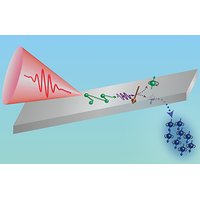
<?xml version="1.0" encoding="UTF-8"?>
<rdf:RDF xmlns:rdf="http://www.w3.org/1999/02/22-rdf-syntax-ns#" xmlns:prism="http://prismstandard.org/namespaces/basic/2.0/" xmlns:dc="http://purl.org/dc/elements/1.1/" xmlns:syn="http://purl.org/rss/1.0/modules/syndication/" xmlns:content="http://purl.org/rss/1.0/modules/content/" xmlns="http://purl.org/rss/1.0/">
  <channel rdf:about="http://prl.aps.org/">
    <title>PRL: Plasma and Beam Physics</title>
    <link>http://prl.aps.org/</link>
    <description>Recently published articles in Phys. Rev. Lett. in the Table of Content section "Plasma and Beam Physics"</description>
    <syn:updatePeriod>hourly</syn:updatePeriod>
    <syn:updateFrequency>1</syn:updateFrequency>
    <syn:updateBase>2012-05-16T17:05:48-04:00</syn:updateBase>
    <dc:creator>rss@aps.org</dc:creator>
    <dc:publisher>assocpub@aps.org</dc:publisher>
    <dc:date>2012-05-16T17:05:48-04:00</dc:date>
    <dc:language>en</dc:language>
    <dc:rights>Copyright © 2012 the American Physical Society. Personal use only, all commercial or other reuse prohibited</dc:rights>
    <prism:copyright>Copyright © 2012 the American Physical Society</prism:copyright>
    <prism:rightsAgent>assocpub@aps.org</prism:rightsAgent>
    <items>
      <rdf:Seq>
        <rdf:li rdf:resource="http://link.aps.org/doi/10.1103/PhysRevLett.108.205001"/>
        <rdf:li rdf:resource="http://link.aps.org/doi/10.1103/PhysRevLett.108.205001"/>
        <rdf:li rdf:resource="http://link.aps.org/doi/10.1103/PhysRevLett.108.195004"/>
        <rdf:li rdf:resource="http://link.aps.org/doi/10.1103/PhysRevLett.108.194801"/>
        <rdf:li rdf:resource="http://link.aps.org/doi/10.1103/PhysRevLett.108.195001"/>
        <rdf:li rdf:resource="http://link.aps.org/doi/10.1103/PhysRevLett.108.195003"/>
        <rdf:li rdf:resource="http://link.aps.org/doi/10.1103/PhysRevLett.108.195003"/>
        <rdf:li rdf:resource="http://link.aps.org/doi/10.1103/PhysRevLett.108.195002"/>
        <rdf:li rdf:resource="http://link.aps.org/doi/10.1103/PhysRevLett.108.195002"/>
        <rdf:li rdf:resource="http://link.aps.org/doi/10.1103/PhysRevLett.108.185001"/>
        <rdf:li rdf:resource="http://link.aps.org/doi/10.1103/PhysRevLett.108.185001"/>
        <rdf:li rdf:resource="http://link.aps.org/doi/10.1103/PhysRevLett.108.184802"/>
        <rdf:li rdf:resource="http://link.aps.org/doi/10.1103/PhysRevLett.108.184802"/>
        <rdf:li rdf:resource="http://link.aps.org/doi/10.1103/PhysRevLett.108.184801"/>
        <rdf:li rdf:resource="http://link.aps.org/doi/10.1103/PhysRevLett.108.184801"/>
        <rdf:li rdf:resource="http://link.aps.org/doi/10.1103/PhysRevLett.108.175006"/>
        <rdf:li rdf:resource="http://link.aps.org/doi/10.1103/PhysRevLett.108.175005"/>
        <rdf:li rdf:resource="http://link.aps.org/doi/10.1103/PhysRevLett.108.175007"/>
        <rdf:li rdf:resource="http://link.aps.org/doi/10.1103/PhysRevLett.108.175004"/>
        <rdf:li rdf:resource="http://link.aps.org/doi/10.1103/PhysRevLett.108.175003"/>
        <rdf:li rdf:resource="http://link.aps.org/doi/10.1103/PhysRevLett.108.175002"/>
        <rdf:li rdf:resource="http://link.aps.org/doi/10.1103/PhysRevLett.108.175001"/>
        <rdf:li rdf:resource="http://link.aps.org/doi/10.1103/PhysRevLett.108.165007"/>
        <rdf:li rdf:resource="http://link.aps.org/doi/10.1103/PhysRevLett.108.165005"/>
        <rdf:li rdf:resource="http://link.aps.org/doi/10.1103/PhysRevLett.108.165004"/>
        <rdf:li rdf:resource="http://link.aps.org/doi/10.1103/PhysRevLett.108.165006"/>
        <rdf:li rdf:resource="http://link.aps.org/doi/10.1103/PhysRevLett.108.164801"/>
        <rdf:li rdf:resource="http://link.aps.org/doi/10.1103/PhysRevLett.108.165003"/>
        <rdf:li rdf:resource="http://link.aps.org/doi/10.1103/PhysRevLett.108.165002"/>
        <rdf:li rdf:resource="http://link.aps.org/doi/10.1103/PhysRevLett.108.165001"/>
      </rdf:Seq>
    </items>
  </channel>
  <item rdf:about="http://link.aps.org/doi/10.1103/PhysRevLett.108.205001">
    <title>Electrostatic Response of a Two-Component Plasma with Coulomb Collisions</title>
    <link>http://link.aps.org/doi/10.1103/PhysRevLett.108.205001</link>
    <description>Author(s): A. V. Brantov, V. Yu. Bychenkov, and W. Rozmus&lt;br/&gt;&lt;p&gt;A rigorous procedure is proposed for finding a solution to kinetic equations with the Landau electron-electron, electron-ion, ion-electron, and ion-ion collision integrals in fully ionized plasma. The linear plasma response to the perturbation in the electrostatic field is described in terms of plas...&lt;/p&gt;&lt;br/&gt;[Phys. Rev. Lett. 108, 205001] Published Mon May 14, 2012</description>
    <content:encoded><![CDATA[<p>Author(s): A. V. Brantov, V. Yu. Bychenkov, and W. Rozmus</p><p> A rigorous procedure is proposed for finding a solution to kinetic equations with the Landau electron-electron, electron-ion, ion-electron, and ion-ion collision integrals in fully ionized plasma. The linear plasma response to the perturbation in the electrostatic field is described in terms of plas...</p><p>[Phys. Rev. Lett. 108, 205001] Published Mon May 14, 2012</p>]]></content:encoded>
    <dc:title>Electrostatic Response of a Two-Component Plasma with Coulomb Collisions</dc:title>
    <dc:creator>A. V. Brantov, V. Yu. Bychenkov, and W. Rozmus</dc:creator>
    <dc:date>2012-05-14T10:00:00-04:00</dc:date>
    <dc:rights>Personal use only, all commercial or other reuse prohibited</dc:rights>
    <dc:identifier>doi:10.1103/PhysRevLett.108.205001</dc:identifier>
    <dc:source>Phys. Rev. Lett. 108, 205001 (2012)</dc:source>
    <dc:type>article</dc:type>
    <prism:publicationName>Physical Review Letters</prism:publicationName>
    <prism:volume>108</prism:volume>
    <prism:number>20</prism:number>
    <prism:publicationDate>2012-05-14T10:00:00-04:00</prism:publicationDate>
    <prism:doi>10.1103/PhysRevLett.108.205001</prism:doi>
    <prism:url>http://link.aps.org/doi/10.1103/PhysRevLett.108.205001</prism:url>
    <prism:startingPage>205001</prism:startingPage>
    <dc:subject>Plasma and Beam Physics</dc:subject>
    <prism:section>Plasma and Beam Physics</prism:section>
  </item>
  <item rdf:about="http://link.aps.org/doi/10.1103/PhysRevLett.108.205001">
    <title>Electrostatic Response of a Two-Component Plasma with Coulomb Collisions</title>
    <link>http://link.aps.org/doi/10.1103/PhysRevLett.108.205001</link>
    <description>Author(s): A. V. Brantov, V. Yu. Bychenkov, and W. Rozmus&lt;br/&gt;&lt;p&gt;A rigorous procedure is proposed for finding a solution to kinetic equations with the Landau electron-electron, electron-ion, ion-electron, and ion-ion collision integrals in fully ionized plasma. The linear plasma response to the perturbation in the electrostatic field is described in terms of plas...&lt;/p&gt;&lt;br/&gt;[Phys. Rev. Lett. 108, 205001] Published Mon May 14, 2012</description>
    <content:encoded><![CDATA[<p>Author(s): A. V. Brantov, V. Yu. Bychenkov, and W. Rozmus</p><p> A rigorous procedure is proposed for finding a solution to kinetic equations with the Landau electron-electron, electron-ion, ion-electron, and ion-ion collision integrals in fully ionized plasma. The linear plasma response to the perturbation in the electrostatic field is described in terms of plas...</p><p>[Phys. Rev. Lett. 108, 205001] Published Mon May 14, 2012</p>]]></content:encoded>
    <dc:title>Electrostatic Response of a Two-Component Plasma with Coulomb Collisions</dc:title>
    <dc:creator>A. V. Brantov, V. Yu. Bychenkov, and W. Rozmus</dc:creator>
    <dc:date>2012-05-14T10:00:00-04:00</dc:date>
    <dc:rights>Personal use only, all commercial or other reuse prohibited</dc:rights>
    <dc:identifier>doi:10.1103/PhysRevLett.108.205001</dc:identifier>
    <dc:source>Phys. Rev. Lett. 108, 205001 (2012)</dc:source>
    <dc:type>article</dc:type>
    <prism:publicationName>Physical Review Letters</prism:publicationName>
    <prism:volume>108</prism:volume>
    <prism:number>20</prism:number>
    <prism:publicationDate>2012-05-14T10:00:00-04:00</prism:publicationDate>
    <prism:doi>10.1103/PhysRevLett.108.205001</prism:doi>
    <prism:url>http://link.aps.org/doi/10.1103/PhysRevLett.108.205001</prism:url>
    <prism:startingPage>205001</prism:startingPage>
    <dc:subject>Plasma and Beam Physics</dc:subject>
    <prism:section>Plasma and Beam Physics</prism:section>
  </item>
  <item rdf:about="http://link.aps.org/doi/10.1103/PhysRevLett.108.195004">
    <title>Kelvin-Helmholtz Turbulence Associated with Collisionless Shocks in Laser Produced Plasmas</title>
    <link>http://link.aps.org/doi/10.1103/PhysRevLett.108.195004</link>
    <description>Author(s): Y. Kuramitsu, Y. Sakawa, S. Dono, C. D. Gregory, S. A. Pikuz, B. Loupias, M. Koenig, J. N. Waugh, N. Woolsey, T. Morita, T. Moritaka, T. Sano, Y. Matsumoto, A. Mizuta, N. Ohnishi, and H. Takabe&lt;br/&gt;&lt;p&gt;We report the experimental results of a turbulent electric field driven by Kelvin-Helmholtz instability associated with laser produced collisionless shock waves. By irradiating an aluminum double plane target with a high-power laser, counterstreaming plasma flows are generated. As the consequence of...&lt;/p&gt;&lt;br/&gt;[Phys. Rev. Lett. 108, 195004] Published Fri May 11, 2012</description>
    <content:encoded><![CDATA[<p>Author(s): Y. Kuramitsu, Y. Sakawa, S. Dono, C. D. Gregory, S. A. Pikuz, B. Loupias, M. Koenig, J. N. Waugh, N. Woolsey, T. Morita, T. Moritaka, T. Sano, Y. Matsumoto, A. Mizuta, N. Ohnishi, and H. Takabe</p><p> We report the experimental results of a turbulent electric field driven by Kelvin-Helmholtz instability associated with laser produced collisionless shock waves. By irradiating an aluminum double plane target with a high-power laser, counterstreaming plasma flows are generated. As the consequence of...</p><p>[Phys. Rev. Lett. 108, 195004] Published Fri May 11, 2012</p>]]></content:encoded>
    <dc:title>Kelvin-Helmholtz Turbulence Associated with Collisionless Shocks in Laser Produced Plasmas</dc:title>
    <dc:creator>Y. Kuramitsu, Y. Sakawa, S. Dono, C. D. Gregory, S. A. Pikuz, B. Loupias, M. Koenig, J. N. Waugh, N. Woolsey, T. Morita, T. Moritaka, T. Sano, Y. Matsumoto, A. Mizuta, N. Ohnishi, and H. Takabe</dc:creator>
    <dc:date>2012-05-11T10:00:00-04:00</dc:date>
    <dc:rights>Personal use only, all commercial or other reuse prohibited</dc:rights>
    <dc:identifier>doi:10.1103/PhysRevLett.108.195004</dc:identifier>
    <dc:source>Phys. Rev. Lett. 108, 195004 (2012)</dc:source>
    <dc:type>article</dc:type>
    <prism:publicationName>Physical Review Letters</prism:publicationName>
    <prism:volume>108</prism:volume>
    <prism:number>19</prism:number>
    <prism:publicationDate>2012-05-11T10:00:00-04:00</prism:publicationDate>
    <prism:doi>10.1103/PhysRevLett.108.195004</prism:doi>
    <prism:url>http://link.aps.org/doi/10.1103/PhysRevLett.108.195004</prism:url>
    <prism:startingPage>195004</prism:startingPage>
    <dc:subject>Plasma and Beam Physics</dc:subject>
    <prism:section>Plasma and Beam Physics</prism:section>
  </item>
  <item rdf:about="http://link.aps.org/doi/10.1103/PhysRevLett.108.194801">
    <title>Large Charge Extraction from Metallic Multifilamentary Nb_{3}Sn Photocathode</title>
    <link>http://link.aps.org/doi/10.1103/PhysRevLett.108.194801</link>
    <description>Author(s): A. Anghel, F. Ardana-Lamas, F. Le Pimpec, and C. P. Hauri&lt;br/&gt;&lt;p&gt;The current density limit for photoemission from metals was measured in an rf photogun to be below &lt;span&gt;10&lt;sup&gt;9&lt;/sup&gt;  A/m&lt;sup&gt;2&lt;/sup&gt;&lt;/span&gt;. We have achieved &lt;span&gt;1.6×10&lt;sup&gt;11&lt;/sup&gt;  A/m&lt;sup&gt;2&lt;/sup&gt;&lt;/span&gt; by photofield emission from a new type of photocathode made from a metallic-composite, multifilamentary &lt;span&gt;Nb&lt;sub&gt;3&lt;/sub&gt;Sn&lt;/span&gt; wire driven by a 266 nm picosecond laser pulse a...&lt;/p&gt;&lt;br/&gt;[Phys. Rev. Lett. 108, 194801] Published Fri May 11, 2012</description>
    <content:encoded><![CDATA[<p>Author(s): A. Anghel, F. Ardana-Lamas, F. Le Pimpec, and C. P. Hauri</p><p> The current density limit for photoemission from metals was measured in an rf photogun to be below <span>10<sup>9</sup>  A/m<sup>2</sup></span>. We have achieved <span>1.6×10<sup>11</sup>  A/m<sup>2</sup></span> by photofield emission from a new type of photocathode made from a metallic-composite, multifilamentary <span>Nb<sub>3</sub>Sn</span> wire driven by a 266 nm picosecond laser pulse a...</p><p>[Phys. Rev. Lett. 108, 194801] Published Fri May 11, 2012</p>]]></content:encoded>
    <dc:title>Large Charge Extraction from Metallic Multifilamentary Nb_{3}Sn Photocathode</dc:title>
    <dc:creator>A. Anghel, F. Ardana-Lamas, F. Le Pimpec, and C. P. Hauri</dc:creator>
    <dc:date>2012-05-11T10:00:00-04:00</dc:date>
    <dc:rights>Personal use only, all commercial or other reuse prohibited</dc:rights>
    <dc:identifier>doi:10.1103/PhysRevLett.108.194801</dc:identifier>
    <dc:source>Phys. Rev. Lett. 108, 194801 (2012)</dc:source>
    <dc:type>article</dc:type>
    <prism:publicationName>Physical Review Letters</prism:publicationName>
    <prism:volume>108</prism:volume>
    <prism:number>19</prism:number>
    <prism:publicationDate>2012-05-11T10:00:00-04:00</prism:publicationDate>
    <prism:doi>10.1103/PhysRevLett.108.194801</prism:doi>
    <prism:url>http://link.aps.org/doi/10.1103/PhysRevLett.108.194801</prism:url>
    <prism:startingPage>194801</prism:startingPage>
    <dc:subject>Plasma and Beam Physics</dc:subject>
    <prism:section>Plasma and Beam Physics</prism:section>
  </item>
  <item rdf:about="http://link.aps.org/doi/10.1103/PhysRevLett.108.195001">
    <title>High-Power γ-Ray Flash Generation in Ultraintense Laser-Plasma Interactions</title>
    <link>http://link.aps.org/doi/10.1103/PhysRevLett.108.195001</link>
    <description>Author(s): Tatsufumi Nakamura, James K. Koga, Timur Zh. Esirkepov, Masaki Kando, Georg Korn, and Sergei V. Bulanov&lt;br/&gt;&lt;p&gt;When high-intensity laser interaction with matter enters the regime of dominated radiation reaction, the radiation losses open the way for producing short pulse high-power &lt;span&gt;&lt;span style="font-style: italic;"&gt;γ&lt;/span&gt;&lt;/span&gt;-ray flashes. The &lt;span&gt;&lt;span style="font-style: italic;"&gt;γ&lt;/span&gt;&lt;/span&gt;-ray pulse duration and divergence are determined by the laser pulse amplitude and by the plasma target dens...&lt;/p&gt;&lt;br/&gt;[Phys. Rev. Lett. 108, 195001] Published Wed May 09, 2012</description>
    <content:encoded><![CDATA[<p>Author(s): Tatsufumi Nakamura, James K. Koga, Timur Zh. Esirkepov, Masaki Kando, Georg Korn, and Sergei V. Bulanov</p><p> When high-intensity laser interaction with matter enters the regime of dominated radiation reaction, the radiation losses open the way for producing short pulse high-power <span><span style="font-style: italic;">γ</span></span>-ray flashes. The <span><span style="font-style: italic;">γ</span></span>-ray pulse duration and divergence are determined by the laser pulse amplitude and by the plasma target dens...</p><p>[Phys. Rev. Lett. 108, 195001] Published Wed May 09, 2012</p>]]></content:encoded>
    <dc:title>High-Power γ-Ray Flash Generation in Ultraintense Laser-Plasma Interactions</dc:title>
    <dc:creator>Tatsufumi Nakamura, James K. Koga, Timur Zh. Esirkepov, Masaki Kando, Georg Korn, and Sergei V. Bulanov</dc:creator>
    <dc:date>2012-05-09T10:00:00-04:00</dc:date>
    <dc:rights>Personal use only, all commercial or other reuse prohibited</dc:rights>
    <dc:identifier>doi:10.1103/PhysRevLett.108.195001</dc:identifier>
    <dc:source>Phys. Rev. Lett. 108, 195001 (2012)</dc:source>
    <dc:type>article</dc:type>
    <prism:publicationName>Physical Review Letters</prism:publicationName>
    <prism:volume>108</prism:volume>
    <prism:number>19</prism:number>
    <prism:publicationDate>2012-05-09T10:00:00-04:00</prism:publicationDate>
    <prism:doi>10.1103/PhysRevLett.108.195001</prism:doi>
    <prism:url>http://link.aps.org/doi/10.1103/PhysRevLett.108.195001</prism:url>
    <prism:startingPage>195001</prism:startingPage>
    <dc:subject>Plasma and Beam Physics</dc:subject>
    <prism:section>Plasma and Beam Physics</prism:section>
  </item>
  <item rdf:about="http://link.aps.org/doi/10.1103/PhysRevLett.108.195003">
    <title>Mitigating Laser Imprint in Direct-Drive Inertial Confinement Fusion Implosions with High-Z Dopants</title>
    <link>http://link.aps.org/doi/10.1103/PhysRevLett.108.195003</link>
    <description>Author(s): S. X. Hu (胡素兴), G. Fiksel, V. N. Goncharov, S. Skupsky, D. D. Meyerhofer, and V. A. Smalyuk&lt;br/&gt;&lt;p&gt;Nonuniformities seeded by both long- and short-wavelength laser perturbations can grow via Rayleigh-Taylor (RT) instability in direct-drive inertial confinement fusion, leading to performance reduction in low-adiabat implosions. To mitigate the effect of laser imprinting on target performance, spher...&lt;/p&gt;&lt;br/&gt;[Phys. Rev. Lett. 108, 195003] Published Tue May 08, 2012</description>
    <content:encoded><![CDATA[<p>Author(s): S. X. Hu (胡素兴), G. Fiksel, V. N. Goncharov, S. Skupsky, D. D. Meyerhofer, and V. A. Smalyuk</p><p> Nonuniformities seeded by both long- and short-wavelength laser perturbations can grow via Rayleigh-Taylor (RT) instability in direct-drive inertial confinement fusion, leading to performance reduction in low-adiabat implosions. To mitigate the effect of laser imprinting on target performance, spher...</p><p>[Phys. Rev. Lett. 108, 195003] Published Tue May 08, 2012</p>]]></content:encoded>
    <dc:title>Mitigating Laser Imprint in Direct-Drive Inertial Confinement Fusion Implosions with High-Z Dopants</dc:title>
    <dc:creator>S. X. Hu (胡素兴), G. Fiksel, V. N. Goncharov, S. Skupsky, D. D. Meyerhofer, and V. A. Smalyuk</dc:creator>
    <dc:date>2012-05-08T10:00:00-04:00</dc:date>
    <dc:rights>Personal use only, all commercial or other reuse prohibited</dc:rights>
    <dc:identifier>doi:10.1103/PhysRevLett.108.195003</dc:identifier>
    <dc:source>Phys. Rev. Lett. 108, 195003 (2012)</dc:source>
    <dc:type>article</dc:type>
    <prism:publicationName>Physical Review Letters</prism:publicationName>
    <prism:volume>108</prism:volume>
    <prism:number>19</prism:number>
    <prism:publicationDate>2012-05-08T10:00:00-04:00</prism:publicationDate>
    <prism:doi>10.1103/PhysRevLett.108.195003</prism:doi>
    <prism:url>http://link.aps.org/doi/10.1103/PhysRevLett.108.195003</prism:url>
    <prism:startingPage>195003</prism:startingPage>
    <dc:subject>Plasma and Beam Physics</dc:subject>
    <prism:section>Plasma and Beam Physics</prism:section>
  </item>
  <item rdf:about="http://link.aps.org/doi/10.1103/PhysRevLett.108.195003">
    <title>Mitigating Laser Imprint in Direct-Drive Inertial Confinement Fusion Implosions with High-Z Dopants</title>
    <link>http://link.aps.org/doi/10.1103/PhysRevLett.108.195003</link>
    <description>Author(s): S. X. Hu (胡素兴), G. Fiksel, V. N. Goncharov, S. Skupsky, D. D. Meyerhofer, and V. A. Smalyuk&lt;br/&gt;&lt;p&gt;Nonuniformities seeded by both long- and short-wavelength laser perturbations can grow via Rayleigh-Taylor (RT) instability in direct-drive inertial confinement fusion, leading to performance reduction in low-adiabat implosions. To mitigate the effect of laser imprinting on target performance, spher...&lt;/p&gt;&lt;br/&gt;[Phys. Rev. Lett. 108, 195003] Published Tue May 08, 2012</description>
    <content:encoded><![CDATA[<p>Author(s): S. X. Hu (胡素兴), G. Fiksel, V. N. Goncharov, S. Skupsky, D. D. Meyerhofer, and V. A. Smalyuk</p><p> Nonuniformities seeded by both long- and short-wavelength laser perturbations can grow via Rayleigh-Taylor (RT) instability in direct-drive inertial confinement fusion, leading to performance reduction in low-adiabat implosions. To mitigate the effect of laser imprinting on target performance, spher...</p><p>[Phys. Rev. Lett. 108, 195003] Published Tue May 08, 2012</p>]]></content:encoded>
    <dc:title>Mitigating Laser Imprint in Direct-Drive Inertial Confinement Fusion Implosions with High-Z Dopants</dc:title>
    <dc:creator>S. X. Hu (胡素兴), G. Fiksel, V. N. Goncharov, S. Skupsky, D. D. Meyerhofer, and V. A. Smalyuk</dc:creator>
    <dc:date>2012-05-08T10:00:00-04:00</dc:date>
    <dc:rights>Personal use only, all commercial or other reuse prohibited</dc:rights>
    <dc:identifier>doi:10.1103/PhysRevLett.108.195003</dc:identifier>
    <dc:source>Phys. Rev. Lett. 108, 195003 (2012)</dc:source>
    <dc:type>article</dc:type>
    <prism:publicationName>Physical Review Letters</prism:publicationName>
    <prism:volume>108</prism:volume>
    <prism:number>19</prism:number>
    <prism:publicationDate>2012-05-08T10:00:00-04:00</prism:publicationDate>
    <prism:doi>10.1103/PhysRevLett.108.195003</prism:doi>
    <prism:url>http://link.aps.org/doi/10.1103/PhysRevLett.108.195003</prism:url>
    <prism:startingPage>195003</prism:startingPage>
    <dc:subject>Plasma and Beam Physics</dc:subject>
    <prism:section>Plasma and Beam Physics</prism:section>
  </item>
  <item rdf:about="http://link.aps.org/doi/10.1103/PhysRevLett.108.195002">
    <title>Experiment in Planar Geometry for Shock Ignition Studies</title>
    <link>http://link.aps.org/doi/10.1103/PhysRevLett.108.195002</link>
    <description>Author(s): S. D. Baton, M. Koenig, E. Brambrink, H. P. Schlenvoigt, C. Rousseaux, G. Debras, S. Laffite, P. Loiseau, F. Philippe, X. Ribeyre, and G. Schurtz&lt;br/&gt;&lt;p&gt;The capacity to launch a strong shock wave in a compressed target in the presence of large preplasma has been investigated experimentally and numerically in a planar geometry. The experiment was performed on the LULI 2000 laser facility using one laser beam to compress the target and a second to lau...&lt;/p&gt;&lt;br/&gt;[Phys. Rev. Lett. 108, 195002] Published Tue May 08, 2012</description>
    <content:encoded><![CDATA[<p>Author(s): S. D. Baton, M. Koenig, E. Brambrink, H. P. Schlenvoigt, C. Rousseaux, G. Debras, S. Laffite, P. Loiseau, F. Philippe, X. Ribeyre, and G. Schurtz</p><p> The capacity to launch a strong shock wave in a compressed target in the presence of large preplasma has been investigated experimentally and numerically in a planar geometry. The experiment was performed on the LULI 2000 laser facility using one laser beam to compress the target and a second to lau...</p><p>[Phys. Rev. Lett. 108, 195002] Published Tue May 08, 2012</p>]]></content:encoded>
    <dc:title>Experiment in Planar Geometry for Shock Ignition Studies</dc:title>
    <dc:creator>S. D. Baton, M. Koenig, E. Brambrink, H. P. Schlenvoigt, C. Rousseaux, G. Debras, S. Laffite, P. Loiseau, F. Philippe, X. Ribeyre, and G. Schurtz</dc:creator>
    <dc:date>2012-05-08T10:00:00-04:00</dc:date>
    <dc:rights>Personal use only, all commercial or other reuse prohibited</dc:rights>
    <dc:identifier>doi:10.1103/PhysRevLett.108.195002</dc:identifier>
    <dc:source>Phys. Rev. Lett. 108, 195002 (2012)</dc:source>
    <dc:type>article</dc:type>
    <prism:publicationName>Physical Review Letters</prism:publicationName>
    <prism:volume>108</prism:volume>
    <prism:number>19</prism:number>
    <prism:publicationDate>2012-05-08T10:00:00-04:00</prism:publicationDate>
    <prism:doi>10.1103/PhysRevLett.108.195002</prism:doi>
    <prism:url>http://link.aps.org/doi/10.1103/PhysRevLett.108.195002</prism:url>
    <prism:startingPage>195002</prism:startingPage>
    <dc:subject>Plasma and Beam Physics</dc:subject>
    <prism:section>Plasma and Beam Physics</prism:section>
  </item>
  <item rdf:about="http://link.aps.org/doi/10.1103/PhysRevLett.108.195002">
    <title>Experiment in Planar Geometry for Shock Ignition Studies</title>
    <link>http://link.aps.org/doi/10.1103/PhysRevLett.108.195002</link>
    <description>Author(s): S. D. Baton, M. Koenig, E. Brambrink, H. P. Schlenvoigt, C. Rousseaux, G. Debras, S. Laffite, P. Loiseau, F. Philippe, X. Ribeyre, and G. Schurtz&lt;br/&gt;&lt;p&gt;The capacity to launch a strong shock wave in a compressed target in the presence of large preplasma has been investigated experimentally and numerically in a planar geometry. The experiment was performed on the LULI 2000 laser facility using one laser beam to compress the target and a second to lau...&lt;/p&gt;&lt;br/&gt;[Phys. Rev. Lett. 108, 195002] Published Tue May 08, 2012</description>
    <content:encoded><![CDATA[<p>Author(s): S. D. Baton, M. Koenig, E. Brambrink, H. P. Schlenvoigt, C. Rousseaux, G. Debras, S. Laffite, P. Loiseau, F. Philippe, X. Ribeyre, and G. Schurtz</p><p> The capacity to launch a strong shock wave in a compressed target in the presence of large preplasma has been investigated experimentally and numerically in a planar geometry. The experiment was performed on the LULI 2000 laser facility using one laser beam to compress the target and a second to lau...</p><p>[Phys. Rev. Lett. 108, 195002] Published Tue May 08, 2012</p>]]></content:encoded>
    <dc:title>Experiment in Planar Geometry for Shock Ignition Studies</dc:title>
    <dc:creator>S. D. Baton, M. Koenig, E. Brambrink, H. P. Schlenvoigt, C. Rousseaux, G. Debras, S. Laffite, P. Loiseau, F. Philippe, X. Ribeyre, and G. Schurtz</dc:creator>
    <dc:date>2012-05-08T10:00:00-04:00</dc:date>
    <dc:rights>Personal use only, all commercial or other reuse prohibited</dc:rights>
    <dc:identifier>doi:10.1103/PhysRevLett.108.195002</dc:identifier>
    <dc:source>Phys. Rev. Lett. 108, 195002 (2012)</dc:source>
    <dc:type>article</dc:type>
    <prism:publicationName>Physical Review Letters</prism:publicationName>
    <prism:volume>108</prism:volume>
    <prism:number>19</prism:number>
    <prism:publicationDate>2012-05-08T10:00:00-04:00</prism:publicationDate>
    <prism:doi>10.1103/PhysRevLett.108.195002</prism:doi>
    <prism:url>http://link.aps.org/doi/10.1103/PhysRevLett.108.195002</prism:url>
    <prism:startingPage>195002</prism:startingPage>
    <dc:subject>Plasma and Beam Physics</dc:subject>
    <prism:section>Plasma and Beam Physics</prism:section>
  </item>
  <item rdf:about="http://link.aps.org/doi/10.1103/PhysRevLett.108.185001">
    <title>Influence of the Lower-Hybrid Drift Instability on Magnetic Reconnection in Asymmetric Configurations</title>
    <link>http://link.aps.org/doi/10.1103/PhysRevLett.108.185001</link>
    <description>Author(s): V. Roytershteyn, W. Daughton, H. Karimabadi, and F. S. Mozer&lt;br/&gt;&lt;p&gt;Using fully kinetic 3D simulations of magnetic reconnection in asymmetric antiparallel configurations, we demonstrate that an electromagnetic lower-hybrid drift instability (LHDI) localized near the &lt;span&gt;&lt;span style="font-style: italic;"&gt;X&lt;/span&gt;&lt;/span&gt; line can substantially modify the reconnection mechanism in the regimes with large asymmetry, a mod...&lt;/p&gt;&lt;br/&gt;[Phys. Rev. Lett. 108, 185001] Published Tue May 01, 2012</description>
    <content:encoded><![CDATA[<p>Author(s): V. Roytershteyn, W. Daughton, H. Karimabadi, and F. S. Mozer</p><p> Using fully kinetic 3D simulations of magnetic reconnection in asymmetric antiparallel configurations, we demonstrate that an electromagnetic lower-hybrid drift instability (LHDI) localized near the <span><span style="font-style: italic;">X</span></span> line can substantially modify the reconnection mechanism in the regimes with large asymmetry, a mod...</p><p>[Phys. Rev. Lett. 108, 185001] Published Tue May 01, 2012</p>]]></content:encoded>
    <dc:title>Influence of the Lower-Hybrid Drift Instability on Magnetic Reconnection in Asymmetric Configurations</dc:title>
    <dc:creator>V. Roytershteyn, W. Daughton, H. Karimabadi, and F. S. Mozer</dc:creator>
    <dc:date>2012-05-01T10:00:00-04:00</dc:date>
    <dc:rights>Personal use only, all commercial or other reuse prohibited</dc:rights>
    <dc:identifier>doi:10.1103/PhysRevLett.108.185001</dc:identifier>
    <dc:source>Phys. Rev. Lett. 108, 185001 (2012)</dc:source>
    <dc:type>article</dc:type>
    <prism:publicationName>Physical Review Letters</prism:publicationName>
    <prism:volume>108</prism:volume>
    <prism:number>18</prism:number>
    <prism:publicationDate>2012-05-01T10:00:00-04:00</prism:publicationDate>
    <prism:doi>10.1103/PhysRevLett.108.185001</prism:doi>
    <prism:url>http://link.aps.org/doi/10.1103/PhysRevLett.108.185001</prism:url>
    <prism:startingPage>185001</prism:startingPage>
    <dc:subject>Plasma and Beam Physics</dc:subject>
    <prism:section>Plasma and Beam Physics</prism:section>
  </item>
  <item rdf:about="http://link.aps.org/doi/10.1103/PhysRevLett.108.185001">
    <title>Influence of the Lower-Hybrid Drift Instability on Magnetic Reconnection in Asymmetric Configurations</title>
    <link>http://link.aps.org/doi/10.1103/PhysRevLett.108.185001</link>
    <description>Author(s): V. Roytershteyn, W. Daughton, H. Karimabadi, and F. S. Mozer&lt;br/&gt;&lt;p&gt;Using fully kinetic 3D simulations of magnetic reconnection in asymmetric antiparallel configurations, we demonstrate that an electromagnetic lower-hybrid drift instability (LHDI) localized near the &lt;span&gt;&lt;span style="font-style: italic;"&gt;X&lt;/span&gt;&lt;/span&gt; line can substantially modify the reconnection mechanism in the regimes with large asymmetry, a mod...&lt;/p&gt;&lt;br/&gt;[Phys. Rev. Lett. 108, 185001] Published Tue May 01, 2012</description>
    <content:encoded><![CDATA[<p>Author(s): V. Roytershteyn, W. Daughton, H. Karimabadi, and F. S. Mozer</p><p> Using fully kinetic 3D simulations of magnetic reconnection in asymmetric antiparallel configurations, we demonstrate that an electromagnetic lower-hybrid drift instability (LHDI) localized near the <span><span style="font-style: italic;">X</span></span> line can substantially modify the reconnection mechanism in the regimes with large asymmetry, a mod...</p><p>[Phys. Rev. Lett. 108, 185001] Published Tue May 01, 2012</p>]]></content:encoded>
    <dc:title>Influence of the Lower-Hybrid Drift Instability on Magnetic Reconnection in Asymmetric Configurations</dc:title>
    <dc:creator>V. Roytershteyn, W. Daughton, H. Karimabadi, and F. S. Mozer</dc:creator>
    <dc:date>2012-05-01T10:00:00-04:00</dc:date>
    <dc:rights>Personal use only, all commercial or other reuse prohibited</dc:rights>
    <dc:identifier>doi:10.1103/PhysRevLett.108.185001</dc:identifier>
    <dc:source>Phys. Rev. Lett. 108, 185001 (2012)</dc:source>
    <dc:type>article</dc:type>
    <prism:publicationName>Physical Review Letters</prism:publicationName>
    <prism:volume>108</prism:volume>
    <prism:number>18</prism:number>
    <prism:publicationDate>2012-05-01T10:00:00-04:00</prism:publicationDate>
    <prism:doi>10.1103/PhysRevLett.108.185001</prism:doi>
    <prism:url>http://link.aps.org/doi/10.1103/PhysRevLett.108.185001</prism:url>
    <prism:startingPage>185001</prism:startingPage>
    <dc:subject>Plasma and Beam Physics</dc:subject>
    <prism:section>Plasma and Beam Physics</prism:section>
  </item>
  <item rdf:about="http://link.aps.org/doi/10.1103/PhysRevLett.108.184802">
    <title>Refractive Index of Silicon at γ Ray Energies</title>
    <link>http://link.aps.org/doi/10.1103/PhysRevLett.108.184802</link>
    <description>Author(s): D. Habs, M. M. Günther, M. Jentschel, and W. Urban&lt;br/&gt;&lt;p&gt;For x rays the real part of the refractive index, dominated by Rayleigh scattering, is negative and converges to zero for higher energies. For &lt;span&gt;&lt;span style="font-style: italic;"&gt;γ&lt;/span&gt;&lt;/span&gt; rays a positive component, related to Delbrück scattering, increases with energy and becomes dominating. The deflection of a monochromatic &lt;span&gt;&lt;span style="font-style: italic;"&gt;γ&lt;/span&gt;&lt;/span&gt; beam due to re...&lt;/p&gt;&lt;br/&gt;[Phys. Rev. Lett. 108, 184802] Published Tue May 01, 2012</description>
    <content:encoded><![CDATA[<p>Author(s): D. Habs, M. M. Günther, M. Jentschel, and W. Urban</p><p> For x rays the real part of the refractive index, dominated by Rayleigh scattering, is negative and converges to zero for higher energies. For <span><span style="font-style: italic;">γ</span></span> rays a positive component, related to Delbrück scattering, increases with energy and becomes dominating. The deflection of a monochromatic <span><span style="font-style: italic;">γ</span></span> beam due to re...</p><p>[Phys. Rev. Lett. 108, 184802] Published Tue May 01, 2012</p>]]></content:encoded>
    <dc:title>Refractive Index of Silicon at γ Ray Energies</dc:title>
    <dc:creator>D. Habs, M. M. Günther, M. Jentschel, and W. Urban</dc:creator>
    <dc:date>2012-05-01T10:00:00-04:00</dc:date>
    <dc:rights>Personal use only, all commercial or other reuse prohibited</dc:rights>
    <dc:identifier>doi:10.1103/PhysRevLett.108.184802</dc:identifier>
    <dc:source>Phys. Rev. Lett. 108, 184802 (2012)</dc:source>
    <dc:type>article</dc:type>
    <prism:publicationName>Physical Review Letters</prism:publicationName>
    <prism:volume>108</prism:volume>
    <prism:number>18</prism:number>
    <prism:publicationDate>2012-05-01T10:00:00-04:00</prism:publicationDate>
    <prism:doi>10.1103/PhysRevLett.108.184802</prism:doi>
    <prism:url>http://link.aps.org/doi/10.1103/PhysRevLett.108.184802</prism:url>
    <prism:startingPage>184802</prism:startingPage>
    <dc:subject>Plasma and Beam Physics</dc:subject>
    <prism:section>Plasma and Beam Physics</prism:section>
  </item>
  <item rdf:about="http://link.aps.org/doi/10.1103/PhysRevLett.108.184802">
    <title>Refractive Index of Silicon at γ Ray Energies</title>
    <link>http://link.aps.org/doi/10.1103/PhysRevLett.108.184802</link>
    <description>Author(s): D. Habs, M. M. Günther, M. Jentschel, and W. Urban&lt;br/&gt;&lt;p&gt;For x rays the real part of the refractive index, dominated by Rayleigh scattering, is negative and converges to zero for higher energies. For &lt;span&gt;&lt;span style="font-style: italic;"&gt;γ&lt;/span&gt;&lt;/span&gt; rays a positive component, related to Delbrück scattering, increases with energy and becomes dominating. The deflection of a monochromatic &lt;span&gt;&lt;span style="font-style: italic;"&gt;γ&lt;/span&gt;&lt;/span&gt; beam due to re...&lt;/p&gt;&lt;br/&gt;[Phys. Rev. Lett. 108, 184802] Published Tue May 01, 2012</description>
    <content:encoded><![CDATA[<p>Author(s): D. Habs, M. M. Günther, M. Jentschel, and W. Urban</p><p> For x rays the real part of the refractive index, dominated by Rayleigh scattering, is negative and converges to zero for higher energies. For <span><span style="font-style: italic;">γ</span></span> rays a positive component, related to Delbrück scattering, increases with energy and becomes dominating. The deflection of a monochromatic <span><span style="font-style: italic;">γ</span></span> beam due to re...</p><p>[Phys. Rev. Lett. 108, 184802] Published Tue May 01, 2012</p>]]></content:encoded>
    <dc:title>Refractive Index of Silicon at γ Ray Energies</dc:title>
    <dc:creator>D. Habs, M. M. Günther, M. Jentschel, and W. Urban</dc:creator>
    <dc:date>2012-05-01T10:00:00-04:00</dc:date>
    <dc:rights>Personal use only, all commercial or other reuse prohibited</dc:rights>
    <dc:identifier>doi:10.1103/PhysRevLett.108.184802</dc:identifier>
    <dc:source>Phys. Rev. Lett. 108, 184802 (2012)</dc:source>
    <dc:type>article</dc:type>
    <prism:publicationName>Physical Review Letters</prism:publicationName>
    <prism:volume>108</prism:volume>
    <prism:number>18</prism:number>
    <prism:publicationDate>2012-05-01T10:00:00-04:00</prism:publicationDate>
    <prism:doi>10.1103/PhysRevLett.108.184802</prism:doi>
    <prism:url>http://link.aps.org/doi/10.1103/PhysRevLett.108.184802</prism:url>
    <prism:startingPage>184802</prism:startingPage>
    <dc:subject>Plasma and Beam Physics</dc:subject>
    <prism:section>Plasma and Beam Physics</prism:section>
  </item>
  <item rdf:about="http://link.aps.org/doi/10.1103/PhysRevLett.108.184801">
    <title>Nondivergent Cherenkov Radiation in a Wire Metamaterial</title>
    <link>http://link.aps.org/doi/10.1103/PhysRevLett.108.184801</link>
    <description>Author(s): Viktor V. Vorobev and Andrey V. Tyukhtin&lt;br/&gt;&lt;p&gt;The electromagnetic radiation of a charge moving in an infinite 3D structure made of parallel wires is considered. The periods of the structure are assumed to be small; therefore, it can be described by an effective permittivity tensor. The charge velocity is perpendicular to the wires. Analytical a...&lt;/p&gt;&lt;br/&gt;[Phys. Rev. Lett. 108, 184801] Published Tue May 01, 2012</description>
    <content:encoded><![CDATA[<p>Author(s): Viktor V. Vorobev and Andrey V. Tyukhtin</p><p> The electromagnetic radiation of a charge moving in an infinite 3D structure made of parallel wires is considered. The periods of the structure are assumed to be small; therefore, it can be described by an effective permittivity tensor. The charge velocity is perpendicular to the wires. Analytical a...</p><p>[Phys. Rev. Lett. 108, 184801] Published Tue May 01, 2012</p>]]></content:encoded>
    <dc:title>Nondivergent Cherenkov Radiation in a Wire Metamaterial</dc:title>
    <dc:creator>Viktor V. Vorobev and Andrey V. Tyukhtin</dc:creator>
    <dc:date>2012-05-01T10:00:00-04:00</dc:date>
    <dc:rights>Personal use only, all commercial or other reuse prohibited</dc:rights>
    <dc:identifier>doi:10.1103/PhysRevLett.108.184801</dc:identifier>
    <dc:source>Phys. Rev. Lett. 108, 184801 (2012)</dc:source>
    <dc:type>article</dc:type>
    <prism:publicationName>Physical Review Letters</prism:publicationName>
    <prism:volume>108</prism:volume>
    <prism:number>18</prism:number>
    <prism:publicationDate>2012-05-01T10:00:00-04:00</prism:publicationDate>
    <prism:doi>10.1103/PhysRevLett.108.184801</prism:doi>
    <prism:url>http://link.aps.org/doi/10.1103/PhysRevLett.108.184801</prism:url>
    <prism:startingPage>184801</prism:startingPage>
    <dc:subject>Plasma and Beam Physics</dc:subject>
    <prism:section>Plasma and Beam Physics</prism:section>
  </item>
  <item rdf:about="http://link.aps.org/doi/10.1103/PhysRevLett.108.184801">
    <title>Nondivergent Cherenkov Radiation in a Wire Metamaterial</title>
    <link>http://link.aps.org/doi/10.1103/PhysRevLett.108.184801</link>
    <description>Author(s): Viktor V. Vorobev and Andrey V. Tyukhtin&lt;br/&gt;&lt;p&gt;The electromagnetic radiation of a charge moving in an infinite 3D structure made of parallel wires is considered. The periods of the structure are assumed to be small; therefore, it can be described by an effective permittivity tensor. The charge velocity is perpendicular to the wires. Analytical a...&lt;/p&gt;&lt;br/&gt;[Phys. Rev. Lett. 108, 184801] Published Tue May 01, 2012</description>
    <content:encoded><![CDATA[<p>Author(s): Viktor V. Vorobev and Andrey V. Tyukhtin</p><p> The electromagnetic radiation of a charge moving in an infinite 3D structure made of parallel wires is considered. The periods of the structure are assumed to be small; therefore, it can be described by an effective permittivity tensor. The charge velocity is perpendicular to the wires. Analytical a...</p><p>[Phys. Rev. Lett. 108, 184801] Published Tue May 01, 2012</p>]]></content:encoded>
    <dc:title>Nondivergent Cherenkov Radiation in a Wire Metamaterial</dc:title>
    <dc:creator>Viktor V. Vorobev and Andrey V. Tyukhtin</dc:creator>
    <dc:date>2012-05-01T10:00:00-04:00</dc:date>
    <dc:rights>Personal use only, all commercial or other reuse prohibited</dc:rights>
    <dc:identifier>doi:10.1103/PhysRevLett.108.184801</dc:identifier>
    <dc:source>Phys. Rev. Lett. 108, 184801 (2012)</dc:source>
    <dc:type>article</dc:type>
    <prism:publicationName>Physical Review Letters</prism:publicationName>
    <prism:volume>108</prism:volume>
    <prism:number>18</prism:number>
    <prism:publicationDate>2012-05-01T10:00:00-04:00</prism:publicationDate>
    <prism:doi>10.1103/PhysRevLett.108.184801</prism:doi>
    <prism:url>http://link.aps.org/doi/10.1103/PhysRevLett.108.184801</prism:url>
    <prism:startingPage>184801</prism:startingPage>
    <dc:subject>Plasma and Beam Physics</dc:subject>
    <prism:section>Plasma and Beam Physics</prism:section>
  </item>
  <item rdf:about="http://link.aps.org/doi/10.1103/PhysRevLett.108.175006">
    <title>Measurement of the Adiabatic Index in Be Compressed by Counterpropagating Shocks</title>
    <link>http://link.aps.org/doi/10.1103/PhysRevLett.108.175006</link>
    <description>Author(s): C. Fortmann, H. J. Lee, T. Döppner, R. W. Falcone, A. L. Kritcher, O. L. Landen, and S. H. Glenzer&lt;br/&gt;&lt;p&gt;We report on the first direct measurement of the adiabatic index &lt;span&gt;&lt;span style="font-style: italic;"&gt;γ&lt;/span&gt;&lt;/span&gt; through x-ray Thomson scattering from shock-compressed beryllium. 9 keV x-ray photons probe the bulk properties of matter during the collision of two counterpropagating shocks. This novel experimental technique determines &lt;span&gt;&lt;span style="font-style: italic;"&gt;γ&lt;/span&gt;&lt;/span&gt; by using ...&lt;/p&gt;&lt;br/&gt;[Phys. Rev. Lett. 108, 175006] Published Wed Apr 25, 2012</description>
    <content:encoded><![CDATA[<p>Author(s): C. Fortmann, H. J. Lee, T. Döppner, R. W. Falcone, A. L. Kritcher, O. L. Landen, and S. H. Glenzer</p><p> We report on the first direct measurement of the adiabatic index <span><span style="font-style: italic;">γ</span></span> through x-ray Thomson scattering from shock-compressed beryllium. 9 keV x-ray photons probe the bulk properties of matter during the collision of two counterpropagating shocks. This novel experimental technique determines <span><span style="font-style: italic;">γ</span></span> by using ...</p><p>[Phys. Rev. Lett. 108, 175006] Published Wed Apr 25, 2012</p>]]></content:encoded>
    <dc:title>Measurement of the Adiabatic Index in Be Compressed by Counterpropagating Shocks</dc:title>
    <dc:creator>C. Fortmann, H. J. Lee, T. Döppner, R. W. Falcone, A. L. Kritcher, O. L. Landen, and S. H. Glenzer</dc:creator>
    <dc:date>2012-04-25T10:00:00-04:00</dc:date>
    <dc:rights>Personal use only, all commercial or other reuse prohibited</dc:rights>
    <dc:identifier>doi:10.1103/PhysRevLett.108.175006</dc:identifier>
    <dc:source>Phys. Rev. Lett. 108, 175006 (2012)</dc:source>
    <dc:type>article</dc:type>
    <prism:publicationName>Physical Review Letters</prism:publicationName>
    <prism:volume>108</prism:volume>
    <prism:number>17</prism:number>
    <prism:publicationDate>2012-04-25T10:00:00-04:00</prism:publicationDate>
    <prism:doi>10.1103/PhysRevLett.108.175006</prism:doi>
    <prism:url>http://link.aps.org/doi/10.1103/PhysRevLett.108.175006</prism:url>
    <prism:startingPage>175006</prism:startingPage>
    <dc:subject>Plasma and Beam Physics</dc:subject>
    <prism:section>Plasma and Beam Physics</prism:section>
  </item>
  <item rdf:about="http://link.aps.org/doi/10.1103/PhysRevLett.108.175005">
    <title>Finite Spot Effects on Radiation Pressure Acceleration from Intense High-Contrast Laser Interactions with Thin Targets</title>
    <link>http://link.aps.org/doi/10.1103/PhysRevLett.108.175005</link>
    <description>Author(s): F. Dollar, C. Zulick, A. G. R. Thomas, V. Chvykov, J. Davis, G. Kalinchenko, T. Matsuoka, C. McGuffey, G. M. Petrov, L. Willingale, V. Yanovsky, A. Maksimchuk, and K. Krushelnick&lt;br/&gt;&lt;p&gt;Short pulse laser interactions at intensities of &lt;span&gt;2×10&lt;sup&gt;21&lt;/sup&gt;  W cm&lt;sup&gt;-2&lt;/sup&gt;&lt;/span&gt; with ultrahigh contrast (&lt;span&gt;10&lt;sup&gt;-15&lt;/sup&gt;&lt;/span&gt;) on submicrometer silicon nitride foils were studied experimentally by using linear and circular polarizations at normal incidence. It was observed that, as the target decreases in thickness, electron heat...&lt;/p&gt;&lt;br/&gt;[Phys. Rev. Lett. 108, 175005] Published Wed Apr 25, 2012</description>
    <content:encoded><![CDATA[<p>Author(s): F. Dollar, C. Zulick, A. G. R. Thomas, V. Chvykov, J. Davis, G. Kalinchenko, T. Matsuoka, C. McGuffey, G. M. Petrov, L. Willingale, V. Yanovsky, A. Maksimchuk, and K. Krushelnick</p><p> Short pulse laser interactions at intensities of <span>2×10<sup>21</sup>  W cm<sup>-2</sup></span> with ultrahigh contrast (<span>10<sup>-15</sup></span>) on submicrometer silicon nitride foils were studied experimentally by using linear and circular polarizations at normal incidence. It was observed that, as the target decreases in thickness, electron heat...</p><p>[Phys. Rev. Lett. 108, 175005] Published Wed Apr 25, 2012</p>]]></content:encoded>
    <dc:title>Finite Spot Effects on Radiation Pressure Acceleration from Intense High-Contrast Laser Interactions with Thin Targets</dc:title>
    <dc:creator>F. Dollar, C. Zulick, A. G. R. Thomas, V. Chvykov, J. Davis, G. Kalinchenko, T. Matsuoka, C. McGuffey, G. M. Petrov, L. Willingale, V. Yanovsky, A. Maksimchuk, and K. Krushelnick</dc:creator>
    <dc:date>2012-04-25T10:00:00-04:00</dc:date>
    <dc:rights>Personal use only, all commercial or other reuse prohibited</dc:rights>
    <dc:identifier>doi:10.1103/PhysRevLett.108.175005</dc:identifier>
    <dc:source>Phys. Rev. Lett. 108, 175005 (2012)</dc:source>
    <dc:type>article</dc:type>
    <prism:publicationName>Physical Review Letters</prism:publicationName>
    <prism:volume>108</prism:volume>
    <prism:number>17</prism:number>
    <prism:publicationDate>2012-04-25T10:00:00-04:00</prism:publicationDate>
    <prism:doi>10.1103/PhysRevLett.108.175005</prism:doi>
    <prism:url>http://link.aps.org/doi/10.1103/PhysRevLett.108.175005</prism:url>
    <prism:startingPage>175005</prism:startingPage>
    <dc:subject>Plasma and Beam Physics</dc:subject>
    <prism:section>Plasma and Beam Physics</prism:section>
  </item>
  <item rdf:about="http://link.aps.org/doi/10.1103/PhysRevLett.108.175007">
    <title>Attosecond Plasma Wave Dynamics in Laser-Driven Cluster Nanoplasmas</title>
    <link>http://link.aps.org/doi/10.1103/PhysRevLett.108.175007</link>
    <description>Author(s): Charles Varin, Christian Peltz, Thomas Brabec, and Thomas Fennel&lt;br/&gt;&lt;p&gt;We introduce a microscopic particle-in-cell approach that allows bridging the microscopic and macroscopic realms of laser-driven plasma physics. As a first application, resonantly driven cluster nanoplasmas are investigated. Our analysis reveals an attosecond plasma-wave dynamics in clusters with ra...&lt;/p&gt;&lt;br/&gt;[Phys. Rev. Lett. 108, 175007] Published Tue Apr 24, 2012</description>
    <content:encoded><![CDATA[<p>Author(s): Charles Varin, Christian Peltz, Thomas Brabec, and Thomas Fennel</p><p> We introduce a microscopic particle-in-cell approach that allows bridging the microscopic and macroscopic realms of laser-driven plasma physics. As a first application, resonantly driven cluster nanoplasmas are investigated. Our analysis reveals an attosecond plasma-wave dynamics in clusters with ra...</p><p>[Phys. Rev. Lett. 108, 175007] Published Tue Apr 24, 2012</p>]]></content:encoded>
    <dc:title>Attosecond Plasma Wave Dynamics in Laser-Driven Cluster Nanoplasmas</dc:title>
    <dc:creator>Charles Varin, Christian Peltz, Thomas Brabec, and Thomas Fennel</dc:creator>
    <dc:date>2012-04-24T10:00:00-04:00</dc:date>
    <dc:rights>Personal use only, all commercial or other reuse prohibited</dc:rights>
    <dc:identifier>doi:10.1103/PhysRevLett.108.175007</dc:identifier>
    <dc:source>Phys. Rev. Lett. 108, 175007 (2012)</dc:source>
    <dc:type>article</dc:type>
    <prism:publicationName>Physical Review Letters</prism:publicationName>
    <prism:volume>108</prism:volume>
    <prism:number>17</prism:number>
    <prism:publicationDate>2012-04-24T10:00:00-04:00</prism:publicationDate>
    <prism:doi>10.1103/PhysRevLett.108.175007</prism:doi>
    <prism:url>http://link.aps.org/doi/10.1103/PhysRevLett.108.175007</prism:url>
    <prism:startingPage>175007</prism:startingPage>
    <dc:subject>Plasma and Beam Physics</dc:subject>
    <prism:section>Plasma and Beam Physics</prism:section>
  </item>
  <item rdf:about="http://link.aps.org/doi/10.1103/PhysRevLett.108.175004">
    <title>Magnetic Discontinuities in Magnetohydrodynamic Turbulence and in the Solar Wind</title>
    <link>http://link.aps.org/doi/10.1103/PhysRevLett.108.175004</link>
    <description>Author(s): Vladimir Zhdankin, Stanislav Boldyrev, Joanne Mason, and Jean Carlos Perez&lt;br/&gt;&lt;p&gt;Recent measurements of solar wind turbulence report the presence of intermittent, exponentially distributed angular discontinuities in the magnetic field. In this Letter, we study whether such discontinuities can be produced by magnetohydrodynamic (MHD) turbulence. We detect the discontinuities by m...&lt;/p&gt;&lt;br/&gt;[Phys. Rev. Lett. 108, 175004] Published Tue Apr 24, 2012</description>
    <content:encoded><![CDATA[<p>Author(s): Vladimir Zhdankin, Stanislav Boldyrev, Joanne Mason, and Jean Carlos Perez</p><p> Recent measurements of solar wind turbulence report the presence of intermittent, exponentially distributed angular discontinuities in the magnetic field. In this Letter, we study whether such discontinuities can be produced by magnetohydrodynamic (MHD) turbulence. We detect the discontinuities by m...</p><p>[Phys. Rev. Lett. 108, 175004] Published Tue Apr 24, 2012</p>]]></content:encoded>
    <dc:title>Magnetic Discontinuities in Magnetohydrodynamic Turbulence and in the Solar Wind</dc:title>
    <dc:creator>Vladimir Zhdankin, Stanislav Boldyrev, Joanne Mason, and Jean Carlos Perez</dc:creator>
    <dc:date>2012-04-24T10:00:00-04:00</dc:date>
    <dc:rights>Personal use only, all commercial or other reuse prohibited</dc:rights>
    <dc:identifier>doi:10.1103/PhysRevLett.108.175004</dc:identifier>
    <dc:source>Phys. Rev. Lett. 108, 175004 (2012)</dc:source>
    <dc:type>article</dc:type>
    <prism:publicationName>Physical Review Letters</prism:publicationName>
    <prism:volume>108</prism:volume>
    <prism:number>17</prism:number>
    <prism:publicationDate>2012-04-24T10:00:00-04:00</prism:publicationDate>
    <prism:doi>10.1103/PhysRevLett.108.175004</prism:doi>
    <prism:url>http://link.aps.org/doi/10.1103/PhysRevLett.108.175004</prism:url>
    <prism:startingPage>175004</prism:startingPage>
    <dc:subject>Plasma and Beam Physics</dc:subject>
    <prism:section>Plasma and Beam Physics</prism:section>
  </item>
  <item rdf:about="http://link.aps.org/doi/10.1103/PhysRevLett.108.175003">
    <title>Massively Parallel Ionization of Extended Atomic Systems</title>
    <link>http://link.aps.org/doi/10.1103/PhysRevLett.108.175003</link>
    <description>Author(s): Christian Gnodtke, Ulf Saalmann, and Jan-Michael Rost&lt;br/&gt;&lt;p&gt;Massively parallel ionization of many atoms in a cluster or biomolecule is identified as a new phenomenon of light-matter interaction which becomes feasible through short and intense FEL pulses. Almost simultaneously emitted from the illuminated target the photo-electrons can have such a high densit...&lt;/p&gt;&lt;br/&gt;[Phys. Rev. Lett. 108, 175003] Published Tue Apr 24, 2012</description>
    <content:encoded><![CDATA[<p>Author(s): Christian Gnodtke, Ulf Saalmann, and Jan-Michael Rost</p><p> Massively parallel ionization of many atoms in a cluster or biomolecule is identified as a new phenomenon of light-matter interaction which becomes feasible through short and intense FEL pulses. Almost simultaneously emitted from the illuminated target the photo-electrons can have such a high densit...</p><p>[Phys. Rev. Lett. 108, 175003] Published Tue Apr 24, 2012</p>]]></content:encoded>
    <dc:title>Massively Parallel Ionization of Extended Atomic Systems</dc:title>
    <dc:creator>Christian Gnodtke, Ulf Saalmann, and Jan-Michael Rost</dc:creator>
    <dc:date>2012-04-24T10:00:00-04:00</dc:date>
    <dc:rights>Personal use only, all commercial or other reuse prohibited</dc:rights>
    <dc:identifier>doi:10.1103/PhysRevLett.108.175003</dc:identifier>
    <dc:source>Phys. Rev. Lett. 108, 175003 (2012)</dc:source>
    <dc:type>article</dc:type>
    <prism:publicationName>Physical Review Letters</prism:publicationName>
    <prism:volume>108</prism:volume>
    <prism:number>17</prism:number>
    <prism:publicationDate>2012-04-24T10:00:00-04:00</prism:publicationDate>
    <prism:doi>10.1103/PhysRevLett.108.175003</prism:doi>
    <prism:url>http://link.aps.org/doi/10.1103/PhysRevLett.108.175003</prism:url>
    <prism:startingPage>175003</prism:startingPage>
    <dc:subject>Plasma and Beam Physics</dc:subject>
    <prism:section>Plasma and Beam Physics</prism:section>
  </item>
  <item rdf:about="http://link.aps.org/doi/10.1103/PhysRevLett.108.175002">
    <title>Generating energetic electrons through staged acceleration in the two-plasmon-decay instability in inertial confinement fusion</title>
    <link>http://link.aps.org/doi/10.1103/PhysRevLett.108.175002</link>
    <description>Author(s): R. Yan, C. Ren, J. Li, A. V. Maximov, W. B. Mori, Z.-M. Sheng, and F. S. Tsung&lt;br/&gt;&lt;p&gt;A new hot-electron generation mechanism in two-plasmon-decay instabilities is described based on a series of 2D, long-term (&lt;span&gt;∼10  ps&lt;/span&gt;) particle-in-cell and fluid simulations under parameters relevant to inertial confinement fusion. The simulations show that significant laser absorption and hot-electro...&lt;/p&gt;&lt;br/&gt;[Phys. Rev. Lett. 108, 175002] Published Tue Apr 24, 2012</description>
    <content:encoded><![CDATA[<p>Author(s): R. Yan, C. Ren, J. Li, A. V. Maximov, W. B. Mori, Z.-M. Sheng, and F. S. Tsung</p><p> A new hot-electron generation mechanism in two-plasmon-decay instabilities is described based on a series of 2D, long-term (<span>∼10  ps</span>) particle-in-cell and fluid simulations under parameters relevant to inertial confinement fusion. The simulations show that significant laser absorption and hot-electro...</p><p>[Phys. Rev. Lett. 108, 175002] Published Tue Apr 24, 2012</p>]]></content:encoded>
    <dc:title>Generating energetic electrons through staged acceleration in the two-plasmon-decay instability in inertial confinement fusion</dc:title>
    <dc:creator>R. Yan, C. Ren, J. Li, A. V. Maximov, W. B. Mori, Z.-M. Sheng, and F. S. Tsung</dc:creator>
    <dc:date>2012-04-24T10:00:00-04:00</dc:date>
    <dc:rights>Personal use only, all commercial or other reuse prohibited</dc:rights>
    <dc:identifier>doi:10.1103/PhysRevLett.108.175002</dc:identifier>
    <dc:source>Phys. Rev. Lett. 108, 175002 (2012)</dc:source>
    <dc:type>article</dc:type>
    <prism:publicationName>Physical Review Letters</prism:publicationName>
    <prism:volume>108</prism:volume>
    <prism:number>17</prism:number>
    <prism:publicationDate>2012-04-24T10:00:00-04:00</prism:publicationDate>
    <prism:doi>10.1103/PhysRevLett.108.175002</prism:doi>
    <prism:url>http://link.aps.org/doi/10.1103/PhysRevLett.108.175002</prism:url>
    <prism:startingPage>175002</prism:startingPage>
    <dc:subject>Plasma and Beam Physics</dc:subject>
    <prism:section>Plasma and Beam Physics</prism:section>
  </item>
  <item rdf:about="http://link.aps.org/doi/10.1103/PhysRevLett.108.175001">
    <title>Role of Nonlinear Coupling and Density Fluctuations in Magnetic-Fluctuation-Induced Particle Transport</title>
    <link>http://link.aps.org/doi/10.1103/PhysRevLett.108.175001</link>
    <description>Author(s): L. Lin, W. X. Ding, D. L. Brower, W. F. Bergerson, T. A. Carter, T. F. Yates, A. F. Almagri, B. E. Chapman, and J. S. Sarff&lt;br/&gt;&lt;p&gt;Three-wave nonlinear coupling among spatial Fourier modes of density and magnetic fluctuations is directly measured in a magnetically confined toroidal plasma. Density fluctuations are observed to gain (lose) energy from (to) either equilibrium or fluctuating fields depending on the mode number. Exp...&lt;/p&gt;&lt;br/&gt;[Phys. Rev. Lett. 108, 175001] Published Mon Apr 23, 2012</description>
    <content:encoded><![CDATA[<p>Author(s): L. Lin, W. X. Ding, D. L. Brower, W. F. Bergerson, T. A. Carter, T. F. Yates, A. F. Almagri, B. E. Chapman, and J. S. Sarff</p><p> Three-wave nonlinear coupling among spatial Fourier modes of density and magnetic fluctuations is directly measured in a magnetically confined toroidal plasma. Density fluctuations are observed to gain (lose) energy from (to) either equilibrium or fluctuating fields depending on the mode number. Exp...</p><p>[Phys. Rev. Lett. 108, 175001] Published Mon Apr 23, 2012</p>]]></content:encoded>
    <dc:title>Role of Nonlinear Coupling and Density Fluctuations in Magnetic-Fluctuation-Induced Particle Transport</dc:title>
    <dc:creator>L. Lin, W. X. Ding, D. L. Brower, W. F. Bergerson, T. A. Carter, T. F. Yates, A. F. Almagri, B. E. Chapman, and J. S. Sarff</dc:creator>
    <dc:date>2012-04-23T10:00:00-04:00</dc:date>
    <dc:rights>Personal use only, all commercial or other reuse prohibited</dc:rights>
    <dc:identifier>doi:10.1103/PhysRevLett.108.175001</dc:identifier>
    <dc:source>Phys. Rev. Lett. 108, 175001 (2012)</dc:source>
    <dc:type>article</dc:type>
    <prism:publicationName>Physical Review Letters</prism:publicationName>
    <prism:volume>108</prism:volume>
    <prism:number>17</prism:number>
    <prism:publicationDate>2012-04-23T10:00:00-04:00</prism:publicationDate>
    <prism:doi>10.1103/PhysRevLett.108.175001</prism:doi>
    <prism:url>http://link.aps.org/doi/10.1103/PhysRevLett.108.175001</prism:url>
    <prism:startingPage>175001</prism:startingPage>
    <dc:subject>Plasma and Beam Physics</dc:subject>
    <prism:section>Plasma and Beam Physics</prism:section>
  </item>
  <item rdf:about="http://link.aps.org/doi/10.1103/PhysRevLett.108.165007">
    <title>Novel Attractive Force between Ions in Quantum Plasmas</title>
    <link>http://link.aps.org/doi/10.1103/PhysRevLett.108.165007</link>
    <description>Author(s): P. K. Shukla and B. Eliasson&lt;br/&gt;&lt;p&gt;We report a new attractive force between ions that are shielded by degenerate electrons in quantum plasmas. Specifically, we show that the electric potential around an isolated ion has a hard core negative part that resembles the Lennard-Jones–type potential. Physically, the new electric potential i...&lt;/p&gt;&lt;br/&gt;[Phys. Rev. Lett. 108, 165007] Published Fri Apr 20, 2012</description>
    <content:encoded><![CDATA[<p>Author(s): P. K. Shukla and B. Eliasson</p><p> We report a new attractive force between ions that are shielded by degenerate electrons in quantum plasmas. Specifically, we show that the electric potential around an isolated ion has a hard core negative part that resembles the Lennard-Jones–type potential. Physically, the new electric potential i...</p><p>[Phys. Rev. Lett. 108, 165007] Published Fri Apr 20, 2012</p>]]></content:encoded>
    <dc:title>Novel Attractive Force between Ions in Quantum Plasmas</dc:title>
    <dc:creator>P. K. Shukla and B. Eliasson</dc:creator>
    <dc:date>2012-04-20T10:00:00-04:00</dc:date>
    <dc:rights>Personal use only, all commercial or other reuse prohibited</dc:rights>
    <dc:identifier>doi:10.1103/PhysRevLett.108.165007</dc:identifier>
    <dc:source>Phys. Rev. Lett. 108, 165007 (2012)</dc:source>
    <dc:type>article</dc:type>
    <prism:publicationName>Physical Review Letters</prism:publicationName>
    <prism:volume>108</prism:volume>
    <prism:number>16</prism:number>
    <prism:publicationDate>2012-04-20T10:00:00-04:00</prism:publicationDate>
    <prism:doi>10.1103/PhysRevLett.108.165007</prism:doi>
    <prism:url>http://link.aps.org/doi/10.1103/PhysRevLett.108.165007</prism:url>
    <prism:startingPage>165007</prism:startingPage>
    <dc:subject>Plasma and Beam Physics</dc:subject>
    <prism:section>Plasma and Beam Physics</prism:section>
  </item>
  <item rdf:about="http://link.aps.org/doi/10.1103/PhysRevLett.108.165005">
    <title>Parallel Heat Flux from Low to High Parallel Temperature along a Magnetic Field Line</title>
    <link>http://link.aps.org/doi/10.1103/PhysRevLett.108.165005</link>
    <description>Author(s): Zehua Guo and Xian-Zhu Tang&lt;br/&gt;&lt;p&gt;In a long mean-free-path plasma where temperature anisotropy can be sustained, the parallel heat flux has two components with one associated with the parallel thermal energy and the other with the perpendicular thermal energy. In a kinetic simulation with magnetic flux expansion toward an absorbing ...&lt;/p&gt;&lt;br/&gt;[Phys. Rev. Lett. 108, 165005] Published Fri Apr 20, 2012</description>
    <content:encoded><![CDATA[<p>Author(s): Zehua Guo and Xian-Zhu Tang</p><p> In a long mean-free-path plasma where temperature anisotropy can be sustained, the parallel heat flux has two components with one associated with the parallel thermal energy and the other with the perpendicular thermal energy. In a kinetic simulation with magnetic flux expansion toward an absorbing ...</p><p>[Phys. Rev. Lett. 108, 165005] Published Fri Apr 20, 2012</p>]]></content:encoded>
    <dc:title>Parallel Heat Flux from Low to High Parallel Temperature along a Magnetic Field Line</dc:title>
    <dc:creator>Zehua Guo and Xian-Zhu Tang</dc:creator>
    <dc:date>2012-04-20T10:00:00-04:00</dc:date>
    <dc:rights>Personal use only, all commercial or other reuse prohibited</dc:rights>
    <dc:identifier>doi:10.1103/PhysRevLett.108.165005</dc:identifier>
    <dc:source>Phys. Rev. Lett. 108, 165005 (2012)</dc:source>
    <dc:type>article</dc:type>
    <prism:publicationName>Physical Review Letters</prism:publicationName>
    <prism:volume>108</prism:volume>
    <prism:number>16</prism:number>
    <prism:publicationDate>2012-04-20T10:00:00-04:00</prism:publicationDate>
    <prism:doi>10.1103/PhysRevLett.108.165005</prism:doi>
    <prism:url>http://link.aps.org/doi/10.1103/PhysRevLett.108.165005</prism:url>
    <prism:startingPage>165005</prism:startingPage>
    <dc:subject>Plasma and Beam Physics</dc:subject>
    <prism:section>Plasma and Beam Physics</prism:section>
  </item>
  <item rdf:about="http://link.aps.org/doi/10.1103/PhysRevLett.108.165004">
    <title>Origin of Tokamak Density Limit Scalings</title>
    <link>http://link.aps.org/doi/10.1103/PhysRevLett.108.165004</link>
    <description>Author(s): D. A. Gates and L. Delgado-Aparicio&lt;br/&gt;&lt;p&gt;The onset criterion for radiation driven islands [P. H. Rebut and M. Hugon, Plasma Physics and Controlled Nuclear Fusion Research 1984: Proc. 10th Int. Conf. London, 1984, (IAEA, Vienna, 1985), Vol. &lt;span style="font-weight: bold;"&gt;2&lt;/span&gt;] in combination with a simple cylindrical model of tokamak current channel behavior is consistent w...&lt;/p&gt;&lt;br/&gt;[Phys. Rev. Lett. 108, 165004] Published Fri Apr 20, 2012</description>
    <content:encoded><![CDATA[<p>Author(s): D. A. Gates and L. Delgado-Aparicio</p><p> The onset criterion for radiation driven islands [P. H. Rebut and M. Hugon, Plasma Physics and Controlled Nuclear Fusion Research 1984: Proc. 10th Int. Conf. London, 1984, (IAEA, Vienna, 1985), Vol. <span style="font-weight: bold;">2</span>] in combination with a simple cylindrical model of tokamak current channel behavior is consistent w...</p><p>[Phys. Rev. Lett. 108, 165004] Published Fri Apr 20, 2012</p>]]></content:encoded>
    <dc:title>Origin of Tokamak Density Limit Scalings</dc:title>
    <dc:creator>D. A. Gates and L. Delgado-Aparicio</dc:creator>
    <dc:date>2012-04-20T10:00:00-04:00</dc:date>
    <dc:rights>Personal use only, all commercial or other reuse prohibited</dc:rights>
    <dc:identifier>doi:10.1103/PhysRevLett.108.165004</dc:identifier>
    <dc:source>Phys. Rev. Lett. 108, 165004 (2012)</dc:source>
    <dc:type>article</dc:type>
    <prism:publicationName>Physical Review Letters</prism:publicationName>
    <prism:volume>108</prism:volume>
    <prism:number>16</prism:number>
    <prism:publicationDate>2012-04-20T10:00:00-04:00</prism:publicationDate>
    <prism:doi>10.1103/PhysRevLett.108.165004</prism:doi>
    <prism:url>http://link.aps.org/doi/10.1103/PhysRevLett.108.165004</prism:url>
    <prism:startingPage>165004</prism:startingPage>
    <dc:subject>Plasma and Beam Physics</dc:subject>
    <prism:section>Plasma and Beam Physics</prism:section>
  </item>
  <item rdf:about="http://link.aps.org/doi/10.1103/PhysRevLett.108.165006">
    <title>Dense Electron-Positron Plasmas and Ultraintense γ rays from Laser-Irradiated Solids</title>
    <link>http://link.aps.org/doi/10.1103/PhysRevLett.108.165006</link>
    <description>Author(s): C. P. Ridgers, C. S. Brady, R. Duclous, J. G. Kirk, K. Bennett, T. D. Arber, A. P. L. Robinson, and A. R. Bell&lt;br/&gt;&lt;p&gt;In simulations of a 10 PW laser striking a solid, we demonstrate the possibility of producing a pure electron-positron plasma by the same processes as those thought to operate in high-energy astrophysical environments. A maximum positron density of &lt;span&gt;10&lt;sup&gt;26&lt;/sup&gt;  m&lt;sup&gt;-3&lt;/sup&gt;&lt;/span&gt; can be achieved, 7 orders of magnitude gr...&lt;/p&gt;&lt;br/&gt;&lt;img src="http://publish.aps.org/images/icons/physics_viewpoint.gif" alt="Selected for a Synopsis in Physics"/&gt; &lt;br/&gt;[Phys. Rev. Lett. 108, 165006] Published Thu Apr 19, 2012</description>
    <content:encoded><![CDATA[<p>Author(s): C. P. Ridgers, C. S. Brady, R. Duclous, J. G. Kirk, K. Bennett, T. D. Arber, A. P. L. Robinson, and A. R. Bell</p><p><img src="http://publish.aps.org/images/icons/physics_viewpoint.gif" alt="Selected for a Synopsis in Physics"/>  In simulations of a 10 PW laser striking a solid, we demonstrate the possibility of producing a pure electron-positron plasma by the same processes as those thought to operate in high-energy astrophysical environments. A maximum positron density of <span>10<sup>26</sup>  m<sup>-3</sup></span> can be achieved, 7 orders of magnitude gr...</p><p>[Phys. Rev. Lett. 108, 165006] Published Thu Apr 19, 2012</p>]]></content:encoded>
    <dc:title>Dense Electron-Positron Plasmas and Ultraintense γ rays from Laser-Irradiated Solids</dc:title>
    <dc:creator>C. P. Ridgers, C. S. Brady, R. Duclous, J. G. Kirk, K. Bennett, T. D. Arber, A. P. L. Robinson, and A. R. Bell</dc:creator>
    <dc:date>2012-04-19T10:00:00-04:00</dc:date>
    <dc:rights>Personal use only, all commercial or other reuse prohibited</dc:rights>
    <dc:identifier>doi:10.1103/PhysRevLett.108.165006</dc:identifier>
    <dc:source>Phys. Rev. Lett. 108, 165006 (2012)</dc:source>
    <dc:type>article</dc:type>
    <prism:publicationName>Physical Review Letters</prism:publicationName>
    <prism:volume>108</prism:volume>
    <prism:number>16</prism:number>
    <prism:publicationDate>2012-04-19T10:00:00-04:00</prism:publicationDate>
    <prism:doi>10.1103/PhysRevLett.108.165006</prism:doi>
    <prism:url>http://link.aps.org/doi/10.1103/PhysRevLett.108.165006</prism:url>
    <prism:startingPage>165006</prism:startingPage>
    <dc:subject>Plasma and Beam Physics</dc:subject>
    <prism:section>Plasma and Beam Physics</prism:section>
  </item>
  <item rdf:about="http://link.aps.org/doi/10.1103/PhysRevLett.108.164801">
    <title>High-Order-Harmonic Generation and Superradiance in a Seeded Free-Electron Laser</title>
    <link>http://link.aps.org/doi/10.1103/PhysRevLett.108.164801</link>
    <description>Author(s): L. Giannessi et al.&lt;br/&gt;&lt;p&gt;Higher order harmonic generation in a free-electron laser amplifier operating in the superradiant regime [ R. H. Dicke &lt;a href="http://dx.doi.org/10.1103/PhysRev.93.99"&gt; Phys. Rev. &lt;span style="font-weight: bold;"&gt;93&lt;/span&gt; 99 (1954)&lt;/a&gt;] has been observed. Superradiance has been induced by seeding a single-pass amplifier with the second harmonic of a Ti:sapphire laser, generated in a &lt;span&gt;&lt;span style="font-style: italic;"&gt;β&lt;/span&gt;&lt;/span&gt;-Bari...&lt;/p&gt;&lt;br/&gt;[Phys. Rev. Lett. 108, 164801] Published Thu Apr 19, 2012</description>
    <content:encoded><![CDATA[<p>Author(s): L. Giannessi et al.</p><p> Higher order harmonic generation in a free-electron laser amplifier operating in the superradiant regime [ R. H. Dicke <a href="http://dx.doi.org/10.1103/PhysRev.93.99"> Phys. Rev. <span style="font-weight: bold;">93</span> 99 (1954)</a>] has been observed. Superradiance has been induced by seeding a single-pass amplifier with the second harmonic of a Ti:sapphire laser, generated in a <span><span style="font-style: italic;">β</span></span>-Bari...</p><p>[Phys. Rev. Lett. 108, 164801] Published Thu Apr 19, 2012</p>]]></content:encoded>
    <dc:title>High-Order-Harmonic Generation and Superradiance in a Seeded Free-Electron Laser</dc:title>
    <dc:creator>L. Giannessi et al.</dc:creator>
    <dc:date>2012-04-19T10:00:00-04:00</dc:date>
    <dc:rights>Personal use only, all commercial or other reuse prohibited</dc:rights>
    <dc:identifier>doi:10.1103/PhysRevLett.108.164801</dc:identifier>
    <dc:source>Phys. Rev. Lett. 108, 164801 (2012)</dc:source>
    <dc:type>article</dc:type>
    <prism:publicationName>Physical Review Letters</prism:publicationName>
    <prism:volume>108</prism:volume>
    <prism:number>16</prism:number>
    <prism:publicationDate>2012-04-19T10:00:00-04:00</prism:publicationDate>
    <prism:doi>10.1103/PhysRevLett.108.164801</prism:doi>
    <prism:url>http://link.aps.org/doi/10.1103/PhysRevLett.108.164801</prism:url>
    <prism:startingPage>164801</prism:startingPage>
    <dc:subject>Plasma and Beam Physics</dc:subject>
    <prism:section>Plasma and Beam Physics</prism:section>
  </item>
  <item rdf:about="http://link.aps.org/doi/10.1103/PhysRevLett.108.165003">
    <title>Saturation of the Two-Plasmon Decay Instability in Long-Scale-Length Plasmas Relevant to Direct-Drive Inertial Confinement Fusion</title>
    <link>http://link.aps.org/doi/10.1103/PhysRevLett.108.165003</link>
    <description>Author(s): D. H. Froula, B. Yaakobi, S. X. Hu, P-Y. Chang, R. S. Craxton, D. H. Edgell, R. Follett, D. T. Michel, J. F. Myatt, W. Seka, R. W. Short, A. Solodov, and C. Stoeckl&lt;br/&gt;&lt;p&gt;Measurements of the hot-electron generation by the two-plasmon-decay instability are made in plasmas relevant to direct-drive inertial confinement fusion. Density-scale lengths of &lt;span&gt;400  &lt;span style="font-style: italic;"&gt;μ&lt;/span&gt;m&lt;/span&gt; at &lt;span&gt;&lt;span style="font-style: italic;"&gt;n&lt;/span&gt;&lt;sub&gt;cr&lt;/sub&gt;/4&lt;/span&gt; in planar CH targets allowed the two-plasmon-decay instability to be driven to saturation for vacuum in...&lt;/p&gt;&lt;br/&gt;[Phys. Rev. Lett. 108, 165003] Published Wed Apr 18, 2012</description>
    <content:encoded><![CDATA[<p>Author(s): D. H. Froula, B. Yaakobi, S. X. Hu, P-Y. Chang, R. S. Craxton, D. H. Edgell, R. Follett, D. T. Michel, J. F. Myatt, W. Seka, R. W. Short, A. Solodov, and C. Stoeckl</p><p> Measurements of the hot-electron generation by the two-plasmon-decay instability are made in plasmas relevant to direct-drive inertial confinement fusion. Density-scale lengths of <span>400  <span style="font-style: italic;">μ</span>m</span> at <span><span style="font-style: italic;">n</span><sub>cr</sub>/4</span> in planar CH targets allowed the two-plasmon-decay instability to be driven to saturation for vacuum in...</p><p>[Phys. Rev. Lett. 108, 165003] Published Wed Apr 18, 2012</p>]]></content:encoded>
    <dc:title>Saturation of the Two-Plasmon Decay Instability in Long-Scale-Length Plasmas Relevant to Direct-Drive Inertial Confinement Fusion</dc:title>
    <dc:creator>D. H. Froula, B. Yaakobi, S. X. Hu, P-Y. Chang, R. S. Craxton, D. H. Edgell, R. Follett, D. T. Michel, J. F. Myatt, W. Seka, R. W. Short, A. Solodov, and C. Stoeckl</dc:creator>
    <dc:date>2012-04-18T10:00:00-04:00</dc:date>
    <dc:rights>Personal use only, all commercial or other reuse prohibited</dc:rights>
    <dc:identifier>doi:10.1103/PhysRevLett.108.165003</dc:identifier>
    <dc:source>Phys. Rev. Lett. 108, 165003 (2012)</dc:source>
    <dc:type>article</dc:type>
    <prism:publicationName>Physical Review Letters</prism:publicationName>
    <prism:volume>108</prism:volume>
    <prism:number>16</prism:number>
    <prism:publicationDate>2012-04-18T10:00:00-04:00</prism:publicationDate>
    <prism:doi>10.1103/PhysRevLett.108.165003</prism:doi>
    <prism:url>http://link.aps.org/doi/10.1103/PhysRevLett.108.165003</prism:url>
    <prism:startingPage>165003</prism:startingPage>
    <dc:subject>Plasma and Beam Physics</dc:subject>
    <prism:section>Plasma and Beam Physics</prism:section>
  </item>
  <item rdf:about="http://link.aps.org/doi/10.1103/PhysRevLett.108.165002">
    <title>Magnetic field generation in Rayleigh-Taylor unstable inertial confinement fusion plasmas</title>
    <link>http://link.aps.org/doi/10.1103/PhysRevLett.108.165002</link>
    <description>Author(s): Bhuvana Srinivasan, Guy Dimonte, and Xian-Zhu Tang&lt;br/&gt;&lt;p&gt;Rayleigh-Taylor instabilities (RTI) in inertial confinement fusion implosions are expected to generate magnetic fields. A Hall-MHD model is used to study the field generation by 2D single-mode and multimode RTI in a stratified two-fluid plasma. Self-generated magnetic fields are predicted and these ...&lt;/p&gt;&lt;br/&gt;[Phys. Rev. Lett. 108, 165002] Published Wed Apr 18, 2012</description>
    <content:encoded><![CDATA[<p>Author(s): Bhuvana Srinivasan, Guy Dimonte, and Xian-Zhu Tang</p><p> Rayleigh-Taylor instabilities (RTI) in inertial confinement fusion implosions are expected to generate magnetic fields. A Hall-MHD model is used to study the field generation by 2D single-mode and multimode RTI in a stratified two-fluid plasma. Self-generated magnetic fields are predicted and these ...</p><p>[Phys. Rev. Lett. 108, 165002] Published Wed Apr 18, 2012</p>]]></content:encoded>
    <dc:title>Magnetic field generation in Rayleigh-Taylor unstable inertial confinement fusion plasmas</dc:title>
    <dc:creator>Bhuvana Srinivasan, Guy Dimonte, and Xian-Zhu Tang</dc:creator>
    <dc:date>2012-04-18T10:00:00-04:00</dc:date>
    <dc:rights>Personal use only, all commercial or other reuse prohibited</dc:rights>
    <dc:identifier>doi:10.1103/PhysRevLett.108.165002</dc:identifier>
    <dc:source>Phys. Rev. Lett. 108, 165002 (2012)</dc:source>
    <dc:type>article</dc:type>
    <prism:publicationName>Physical Review Letters</prism:publicationName>
    <prism:volume>108</prism:volume>
    <prism:number>16</prism:number>
    <prism:publicationDate>2012-04-18T10:00:00-04:00</prism:publicationDate>
    <prism:doi>10.1103/PhysRevLett.108.165002</prism:doi>
    <prism:url>http://link.aps.org/doi/10.1103/PhysRevLett.108.165002</prism:url>
    <prism:startingPage>165002</prism:startingPage>
    <dc:subject>Plasma and Beam Physics</dc:subject>
    <prism:section>Plasma and Beam Physics</prism:section>
  </item>
  <item rdf:about="http://link.aps.org/doi/10.1103/PhysRevLett.108.165001">
    <title>Flux-Limited Nonequilibrium Electron Energy Transport in Warm Dense Gold</title>
    <link>http://link.aps.org/doi/10.1103/PhysRevLett.108.165001</link>
    <description>Author(s): Z. Chen, V. Sametoglu, Y. Y. Tsui, T. Ao, and A. Ng&lt;br/&gt;&lt;p&gt;An abrupt change in energy transport has been observed in femtosecond laser heated gold when the absorbed laser flux exceeds &lt;span&gt;∼7×10&lt;sup&gt;12&lt;/sup&gt;  W/cm&lt;sup&gt;2&lt;/sup&gt;&lt;/span&gt;. Below this value, the absorbed flux is carried by ballistic motion of nonthermal electrons produced in interband excitation. Above this value energy transport ...&lt;/p&gt;&lt;br/&gt;[Phys. Rev. Lett. 108, 165001] Published Mon Apr 16, 2012</description>
    <content:encoded><![CDATA[<p>Author(s): Z. Chen, V. Sametoglu, Y. Y. Tsui, T. Ao, and A. Ng</p><p> An abrupt change in energy transport has been observed in femtosecond laser heated gold when the absorbed laser flux exceeds <span>∼7×10<sup>12</sup>  W/cm<sup>2</sup></span>. Below this value, the absorbed flux is carried by ballistic motion of nonthermal electrons produced in interband excitation. Above this value energy transport ...</p><p>[Phys. Rev. Lett. 108, 165001] Published Mon Apr 16, 2012</p>]]></content:encoded>
    <dc:title>Flux-Limited Nonequilibrium Electron Energy Transport in Warm Dense Gold</dc:title>
    <dc:creator>Z. Chen, V. Sametoglu, Y. Y. Tsui, T. Ao, and A. Ng</dc:creator>
    <dc:date>2012-04-16T10:00:00-04:00</dc:date>
    <dc:rights>Personal use only, all commercial or other reuse prohibited</dc:rights>
    <dc:identifier>doi:10.1103/PhysRevLett.108.165001</dc:identifier>
    <dc:source>Phys. Rev. Lett. 108, 165001 (2012)</dc:source>
    <dc:type>article</dc:type>
    <prism:publicationName>Physical Review Letters</prism:publicationName>
    <prism:volume>108</prism:volume>
    <prism:number>16</prism:number>
    <prism:publicationDate>2012-04-16T10:00:00-04:00</prism:publicationDate>
    <prism:doi>10.1103/PhysRevLett.108.165001</prism:doi>
    <prism:url>http://link.aps.org/doi/10.1103/PhysRevLett.108.165001</prism:url>
    <prism:startingPage>165001</prism:startingPage>
    <dc:subject>Plasma and Beam Physics</dc:subject>
    <prism:section>Plasma and Beam Physics</prism:section>
  </item>
</rdf:RDF>