<?xml version="1.0" encoding="UTF-8"?>
<rdf:RDF xmlns:taxo="http://purl.org/rss/1.0/modules/taxonomy/" xmlns:syn="http://purl.org/rss/1.0/modules/syndication/" xmlns:rdf="http://www.w3.org/1999/02/22-rdf-syntax-ns#" xmlns:admin="http://webns.net/mvcb/" xmlns:prism="http://prismstandard.org/namespaces/1.2/basic/" xmlns:dc="http://purl.org/dc/elements/1.1/" xmlns="http://purl.org/rss/1.0/">
  <channel rdf:about="http://prc.aps.org/">
    <title>PRC: Nuclear Structure</title>
    <link>http://prc.aps.org/</link>
    <description>Recently published articles in Phys. Rev. C in the Table of Content section "Nuclear Structure"</description>
    <dc:language>en-us</dc:language>
    <dc:rights>Copyright (c) 2008 The American Physical Society</dc:rights>
    <dc:date>2008-05-07T08:05:19-04:00</dc:date>
    <dc:publisher>assocpub@aps.org</dc:publisher>
    <dc:creator>rss@aps.org</dc:creator>
    <syn:updatePeriod>hourly</syn:updatePeriod>
    <syn:updateFrequency>4</syn:updateFrequency>
    <syn:updateBase>2008-05-07T08:05:19-04:00</syn:updateBase>
    <prism:rightsAgent>rss@aps.org</prism:rightsAgent>
    <items>
      <rdf:Seq>
        <rdf:li rdf:resource="http://link.aps.org/doi/10.1103/PhysRevC.77.054305"/>
        <rdf:li rdf:resource="http://link.aps.org/doi/10.1103/PhysRevC.77.054304"/>
        <rdf:li rdf:resource="http://link.aps.org/doi/10.1103/PhysRevC.77.054303"/>
        <rdf:li rdf:resource="http://link.aps.org/doi/10.1103/PhysRevC.77.054302"/>
        <rdf:li rdf:resource="http://link.aps.org/doi/10.1103/PhysRevC.77.054301"/>
        <rdf:li rdf:resource="http://link.aps.org/doi/10.1103/PhysRevC.77.044315"/>
        <rdf:li rdf:resource="http://link.aps.org/doi/10.1103/PhysRevC.77.047305"/>
        <rdf:li rdf:resource="http://link.aps.org/doi/10.1103/PhysRevC.77.044314"/>
        <rdf:li rdf:resource="http://link.aps.org/doi/10.1103/PhysRevC.77.041304"/>
        <rdf:li rdf:resource="http://link.aps.org/doi/10.1103/PhysRevC.77.044313"/>
        <rdf:li rdf:resource="http://link.aps.org/doi/10.1103/PhysRevC.77.041303"/>
        <rdf:li rdf:resource="http://link.aps.org/doi/10.1103/PhysRevC.77.047304"/>
        <rdf:li rdf:resource="http://link.aps.org/doi/10.1103/PhysRevC.77.044312"/>
        <rdf:li rdf:resource="http://link.aps.org/doi/10.1103/PhysRevC.77.047303"/>
        <rdf:li rdf:resource="http://link.aps.org/doi/10.1103/PhysRevC.77.047302"/>
        <rdf:li rdf:resource="http://link.aps.org/doi/10.1103/PhysRevC.77.044311"/>
        <rdf:li rdf:resource="http://link.aps.org/doi/10.1103/PhysRevC.77.041302"/>
        <rdf:li rdf:resource="http://link.aps.org/doi/10.1103/PhysRevC.77.047301"/>
        <rdf:li rdf:resource="http://link.aps.org/doi/10.1103/PhysRevC.77.044310"/>
        <rdf:li rdf:resource="http://link.aps.org/doi/10.1103/PhysRevC.77.044309"/>
        <rdf:li rdf:resource="http://link.aps.org/doi/10.1103/PhysRevC.77.044308"/>
        <rdf:li rdf:resource="http://link.aps.org/doi/10.1103/PhysRevC.77.044307"/>
        <rdf:li rdf:resource="http://link.aps.org/doi/10.1103/PhysRevC.77.041301"/>
        <rdf:li rdf:resource="http://link.aps.org/doi/10.1103/PhysRevC.77.044306"/>
        <rdf:li rdf:resource="http://link.aps.org/doi/10.1103/PhysRevC.77.044305"/>
        <rdf:li rdf:resource="http://link.aps.org/doi/10.1103/PhysRevC.77.044304"/>
        <rdf:li rdf:resource="http://link.aps.org/doi/10.1103/PhysRevC.77.044303"/>
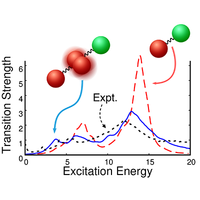
        <rdf:li rdf:resource="http://link.aps.org/doi/10.1103/PhysRevC.77.044302"/>
        <rdf:li rdf:resource="http://link.aps.org/doi/10.1103/PhysRevC.77.044301"/>
        <rdf:li rdf:resource="http://link.aps.org/doi/10.1103/PhysRevC.77.034318"/>
      </rdf:Seq>
    </items>
  </channel>
  <item rdf:about="http://link.aps.org/doi/10.1103/PhysRevC.77.054305">
    <title>Nuclear structure of  ^{18} N and the neighboring N=11 isotones</title>
    <link>http://link.aps.org/doi/10.1103/PhysRevC.77.054305</link>
    <description>Author(s): M. Wiedeking, P. Fallon, A. O. Macchiavelli, L. A. Bernstein, J. Gibelin, L. Phair, J. T. Burke, D. L. Bleuel, R. M. Clark, M-A. Deleplanque, S. Gros, R. Hatarik, H. B. Jeppesen, I-Y. Lee, B. F. Lyles, M. A. McMahan, L. G. Moretto, J. Pavan, E. Rodriguez-Vieitez, and A. Volya&lt;br/&gt;The fusion-evaporation reaction ^{9} Be( ^{11} B,2p) was used to populate excited states in ^{18} N. New gamma-ray transitions were added to the ^{18} N level scheme. The mean lifetime of the first excited state was measured to be 582(165) ps and its transition rate to the ground state was determine...&lt;br/&gt;[Phys. Rev. C 77, 054305] Published Mon May 05, 2008</description>
    <dc:creator>M. Wiedeking, P. Fallon, A. O. Macchiavelli, L. A. Bernstein, J. Gibelin, L. Phair, J. T. Burke, D. L. Bleuel, R. M. Clark, M-A. Deleplanque, S. Gros, R. Hatarik, H. B. Jeppesen, I-Y. Lee, B. F. Lyles, M. A. McMahan, L. G. Moretto, J. Pavan, E. Rodriguez-Vieitez, and A. Volya</dc:creator>
    <dc:date>2008-05-05T00:00:00-04:00</dc:date>
    <dc:rights>Personal use only, all commercial or other reuse prohibited</dc:rights>
    <dc:identifier>10.1103/PhysRevC.77.054305</dc:identifier>
    <dc:source>Phys. Rev. C 77, 054305</dc:source>
    <dc:format>text/html</dc:format>
    <dc:type>article</dc:type>
    <prism:publicationName>Physical Review C</prism:publicationName>
    <prism:volume>77</prism:volume>
    <prism:issueIdentifier>5</prism:issueIdentifier>
    <prism:publicationDate>2008-05-05T00:00:00-04:00</prism:publicationDate>
    <prism:startingPage>054305</prism:startingPage>
    <dc:subject>Nuclear Structure</dc:subject>
    <prism:section>Nuclear Structure</prism:section>
  </item>
  <item rdf:about="http://link.aps.org/doi/10.1103/PhysRevC.77.054304">
    <title>Enhanced mixing of intrinsic states in deformed Hf nuclei</title>
    <link>http://link.aps.org/doi/10.1103/PhysRevC.77.054304</link>
    <description>Author(s): E. A. McCutchan et al.&lt;br/&gt;Excited low-spin, nonyrast states in ^{170,172,174} Hf were populated in &#946;^{+} /&#949; decay and studied through off-beam &#947;-ray spectroscopy. New coincidence data allowed for a substantial revision of the level schemes of ^{170,172} Hf and a confirmation of the level scheme of ^{174} Hf. The Hf isotop...&lt;br/&gt;[Phys. Rev. C 77, 054304] Published Fri May 02, 2008</description>
    <dc:creator>E. A. McCutchan et al.</dc:creator>
    <dc:date>2008-05-02T00:00:00-04:00</dc:date>
    <dc:rights>Personal use only, all commercial or other reuse prohibited</dc:rights>
    <dc:identifier>10.1103/PhysRevC.77.054304</dc:identifier>
    <dc:source>Phys. Rev. C 77, 054304</dc:source>
    <dc:format>text/html</dc:format>
    <dc:type>article</dc:type>
    <prism:publicationName>Physical Review C</prism:publicationName>
    <prism:volume>77</prism:volume>
    <prism:issueIdentifier>5</prism:issueIdentifier>
    <prism:publicationDate>2008-05-02T00:00:00-04:00</prism:publicationDate>
    <prism:startingPage>054304</prism:startingPage>
    <dc:subject>Nuclear Structure</dc:subject>
    <prism:section>Nuclear Structure</prism:section>
  </item>
  <item rdf:about="http://link.aps.org/doi/10.1103/PhysRevC.77.054303">
    <title>Excited states in the neutron-deficient nuclei  ^{197,199,201} Rn</title>
    <link>http://link.aps.org/doi/10.1103/PhysRevC.77.054303</link>
    <description>Author(s): K. Andgren et al.&lt;br/&gt;Excited states of the extremely neutron-deficient radon isotopes with N=111,113,115 have been studied for the first time in a series of in-beam experiments performed at the Accelerator Laboratory of the University of Jyv&#228;skyl&#228;. The reactions used were: ^{118} Sn( ^{82} Kr, 3n) ^{197} Rn, ^{120} Sn...&lt;br/&gt;[Phys. Rev. C 77, 054303] Published Fri May 02, 2008</description>
    <dc:creator>K. Andgren et al.</dc:creator>
    <dc:date>2008-05-02T00:00:00-04:00</dc:date>
    <dc:rights>Personal use only, all commercial or other reuse prohibited</dc:rights>
    <dc:identifier>10.1103/PhysRevC.77.054303</dc:identifier>
    <dc:source>Phys. Rev. C 77, 054303</dc:source>
    <dc:format>text/html</dc:format>
    <dc:type>article</dc:type>
    <prism:publicationName>Physical Review C</prism:publicationName>
    <prism:volume>77</prism:volume>
    <prism:issueIdentifier>5</prism:issueIdentifier>
    <prism:publicationDate>2008-05-02T00:00:00-04:00</prism:publicationDate>
    <prism:startingPage>054303</prism:startingPage>
    <dc:subject>Nuclear Structure</dc:subject>
    <prism:section>Nuclear Structure</prism:section>
  </item>
  <item rdf:about="http://link.aps.org/doi/10.1103/PhysRevC.77.054302">
    <title>Two-quasiparticle states in  ^{250} Bk studied by decay scheme and transfer reaction spectroscopy</title>
    <link>http://link.aps.org/doi/10.1103/PhysRevC.77.054302</link>
    <description>Author(s): I. Ahmad, F. G. Kondev, Z. M. Koenig, Wm. C. McHarris, and S. W. Yates&lt;br/&gt;Two-quasiparticle states in ^{250} Bk were investigated with decay scheme studies and the single-neutron transfer reaction ^{249} Bk(d,p) ^{250} Bk. Mass-separated sources of ^{254} Es were used for &#945; singles and &#945;-&#947; coincidence measurements. These studies, plus previous studies of ^{254} Es^{m} ...&lt;br/&gt;[Phys. Rev. C 77, 054302] Published Fri May 02, 2008</description>
    <dc:creator>I. Ahmad, F. G. Kondev, Z. M. Koenig, Wm. C. McHarris, and S. W. Yates</dc:creator>
    <dc:date>2008-05-02T00:00:00-04:00</dc:date>
    <dc:rights>Personal use only, all commercial or other reuse prohibited</dc:rights>
    <dc:identifier>10.1103/PhysRevC.77.054302</dc:identifier>
    <dc:source>Phys. Rev. C 77, 054302</dc:source>
    <dc:format>text/html</dc:format>
    <dc:type>article</dc:type>
    <prism:publicationName>Physical Review C</prism:publicationName>
    <prism:volume>77</prism:volume>
    <prism:issueIdentifier>5</prism:issueIdentifier>
    <prism:publicationDate>2008-05-02T00:00:00-04:00</prism:publicationDate>
    <prism:startingPage>054302</prism:startingPage>
    <dc:subject>Nuclear Structure</dc:subject>
    <prism:section>Nuclear Structure</prism:section>
  </item>
  <item rdf:about="http://link.aps.org/doi/10.1103/PhysRevC.77.054301">
    <title>New efficient method for performing Hartree-Fock-Bogoliubov calculations for weakly bound nuclei</title>
    <link>http://link.aps.org/doi/10.1103/PhysRevC.77.054301</link>
    <description>Author(s): M. Stoitsov, N. Michel, and K. Matsuyanagi&lt;br/&gt;We propose a new method to solve the Hartree-Fock-Bogoliubov equations for weakly bound nuclei, which works for both spherical and axially deformed cases. In this approach, the quasiparticle wave functions are expanded in a complete set of analytical P&#246;schl-Teller-Ginocchio and Bessel/Coulomb wave ...&lt;br/&gt;[Phys. Rev. C 77, 054301] Published Thu May 01, 2008</description>
    <dc:creator>M. Stoitsov, N. Michel, and K. Matsuyanagi</dc:creator>
    <dc:date>2008-05-01T00:00:00-04:00</dc:date>
    <dc:rights>Personal use only, all commercial or other reuse prohibited</dc:rights>
    <dc:identifier>10.1103/PhysRevC.77.054301</dc:identifier>
    <dc:source>Phys. Rev. C 77, 054301</dc:source>
    <dc:format>text/html</dc:format>
    <dc:type>article</dc:type>
    <prism:publicationName>Physical Review C</prism:publicationName>
    <prism:volume>77</prism:volume>
    <prism:issueIdentifier>5</prism:issueIdentifier>
    <prism:publicationDate>2008-05-01T00:00:00-04:00</prism:publicationDate>
    <prism:startingPage>054301</prism:startingPage>
    <dc:subject>Nuclear Structure</dc:subject>
    <prism:section>Nuclear Structure</prism:section>
  </item>
  <item rdf:about="http://link.aps.org/doi/10.1103/PhysRevC.77.044315">
    <title>Survey of  ^{17} O excited states selectively populated by five-particle transfer reactions</title>
    <link>http://link.aps.org/doi/10.1103/PhysRevC.77.044315</link>
    <description>Author(s): A. M. Crisp, B. T. Roeder, O. A. Momotyuk, N. Keeley, K. W. Kemper, F. Mar&#233;chal, K. Rusek, W. Weintraub, and M. Wiedeking&lt;br/&gt;The highly selective reactions ^{12} C( ^{7} Li,d) ^{17} O and ^{12} C( ^{6} Li,p) ^{17} O have been used to populate high-lying excited states in ^{17} O up to 16 MeV in excitation. Several of the states are newly observed, and the existence of others in a previous study of ^{12} C( ^{6} Li,p) ^{17...&lt;br/&gt;[Phys. Rev. C 77, 044315] Published Wed Apr 30, 2008</description>
    <dc:creator>A. M. Crisp, B. T. Roeder, O. A. Momotyuk, N. Keeley, K. W. Kemper, F. Mar&#233;chal, K. Rusek, W. Weintraub, and M. Wiedeking</dc:creator>
    <dc:date>2008-04-30T00:00:00-04:00</dc:date>
    <dc:rights>Personal use only, all commercial or other reuse prohibited</dc:rights>
    <dc:identifier>10.1103/PhysRevC.77.044315</dc:identifier>
    <dc:source>Phys. Rev. C 77, 044315</dc:source>
    <dc:format>text/html</dc:format>
    <dc:type>article</dc:type>
    <prism:publicationName>Physical Review C</prism:publicationName>
    <prism:volume>77</prism:volume>
    <prism:issueIdentifier>4</prism:issueIdentifier>
    <prism:publicationDate>2008-04-30T00:00:00-04:00</prism:publicationDate>
    <prism:startingPage>044315</prism:startingPage>
    <dc:subject>Nuclear Structure</dc:subject>
    <prism:section>Nuclear Structure</prism:section>
  </item>
  <item rdf:about="http://link.aps.org/doi/10.1103/PhysRevC.77.047305">
    <title>Half-life and excitation energy of the I^{&#960;} =13/2^{+}  isomer in  ^{209} Ra</title>
    <link>http://link.aps.org/doi/10.1103/PhysRevC.77.047305</link>
    <description>Author(s): K. Hauschild et al.&lt;br/&gt;An isomeric state in ^{209} Ra has been observed for the first time, using the GABRIELA setup at the focal plane of VASSILISSA, to decay to the ground state of ^{209} Ra via a cascade of 238-keV (M2) and 644-keV transitions. The half-life of the isomer has been measured to be 117(5)&#8195;&#956;s and from s...&lt;br/&gt;[Phys. Rev. C 77, 047305] Published Tue Apr 29, 2008</description>
    <dc:creator>K. Hauschild et al.</dc:creator>
    <dc:date>2008-04-29T00:00:00-04:00</dc:date>
    <dc:rights>Personal use only, all commercial or other reuse prohibited</dc:rights>
    <dc:identifier>10.1103/PhysRevC.77.047305</dc:identifier>
    <dc:source>Phys. Rev. C 77, 047305</dc:source>
    <dc:format>text/html</dc:format>
    <dc:type>article</dc:type>
    <prism:publicationName>Physical Review C</prism:publicationName>
    <prism:volume>77</prism:volume>
    <prism:issueIdentifier>4</prism:issueIdentifier>
    <prism:publicationDate>2008-04-29T00:00:00-04:00</prism:publicationDate>
    <prism:startingPage>047305</prism:startingPage>
    <dc:subject>Nuclear Structure</dc:subject>
    <prism:section>Nuclear Structure</prism:section>
  </item>
  <item rdf:about="http://link.aps.org/doi/10.1103/PhysRevC.77.044314">
    <title>Rotation-aligned coupling in  ^{61} Fe</title>
    <link>http://link.aps.org/doi/10.1103/PhysRevC.77.044314</link>
    <description>Author(s): N. Hoteling, W. B. Walters, R. V. Janssens, R. Broda, M. P. Carpenter, B. Fornal, A. A. Hecht, M. Hjorth-Jensen, W. Kr&#243;las, T. Lauritsen, T. Paw&#322;at, D. Seweryniak, J. R. Stone, X. Wang, A. W&#246;hr, J. Wrzesi&#324;ski, and S. Zhu&lt;br/&gt;New levels have been established above the 861-keV, 9/2^{+} isomeric state in ^{61} Fe. The observations can be reproduced satisfactorily by shell model calculations, but only after a significant lowering of the &#957;g_{9/2} single-particle energy with respect to the value determined empirically from l...&lt;br/&gt;[Phys. Rev. C 77, 044314] Published Tue Apr 29, 2008</description>
    <dc:creator>N. Hoteling, W. B. Walters, R. V. Janssens, R. Broda, M. P. Carpenter, B. Fornal, A. A. Hecht, M. Hjorth-Jensen, W. Kr&#243;las, T. Lauritsen, T. Paw&#322;at, D. Seweryniak, J. R. Stone, X. Wang, A. W&#246;hr, J. Wrzesi&#324;ski, and S. Zhu</dc:creator>
    <dc:date>2008-04-29T00:00:00-04:00</dc:date>
    <dc:rights>Personal use only, all commercial or other reuse prohibited</dc:rights>
    <dc:identifier>10.1103/PhysRevC.77.044314</dc:identifier>
    <dc:source>Phys. Rev. C 77, 044314</dc:source>
    <dc:format>text/html</dc:format>
    <dc:type>article</dc:type>
    <prism:publicationName>Physical Review C</prism:publicationName>
    <prism:volume>77</prism:volume>
    <prism:issueIdentifier>4</prism:issueIdentifier>
    <prism:publicationDate>2008-04-29T00:00:00-04:00</prism:publicationDate>
    <prism:startingPage>044314</prism:startingPage>
    <dc:subject>Nuclear Structure</dc:subject>
    <prism:section>Nuclear Structure</prism:section>
  </item>
  <item rdf:about="http://link.aps.org/doi/10.1103/PhysRevC.77.041304">
    <title>Garvey-Kelson relations and the new nuclear mass tables</title>
    <link>http://link.aps.org/doi/10.1103/PhysRevC.77.041304</link>
    <description>Author(s): J. Barea, A. Frank, J. G. Hirsch, P. Van Isacker, S. Pittel, and V. Vel&#225;zquez&lt;br/&gt;We discuss the Garvey-Kelson mass relations in an extended formalism and show how they can be used to test and improve the consistency of the most commonly used mass formulas to achieve more accurate predictions.&lt;br/&gt;&lt;img src="http://prola.aps.org/graphics/rapid30x30.gif" width="30" height="30" alt="Rapid Communication"/&gt;&lt;br/&gt;[Phys. Rev. C 77, 041304] Published Tue Apr 29, 2008</description>
    <dc:creator>J. Barea, A. Frank, J. G. Hirsch, P. Van Isacker, S. Pittel, and V. Vel&#225;zquez</dc:creator>
    <dc:date>2008-04-29T00:00:00-04:00</dc:date>
    <dc:rights>Personal use only, all commercial or other reuse prohibited</dc:rights>
    <dc:identifier>10.1103/PhysRevC.77.041304</dc:identifier>
    <dc:source>Phys. Rev. C 77, 041304</dc:source>
    <dc:format>text/html</dc:format>
    <dc:type>article</dc:type>
    <prism:publicationName>Physical Review C</prism:publicationName>
    <prism:volume>77</prism:volume>
    <prism:issueIdentifier>4</prism:issueIdentifier>
    <prism:publicationDate>2008-04-29T00:00:00-04:00</prism:publicationDate>
    <prism:startingPage>041304</prism:startingPage>
    <dc:subject>Nuclear Structure</dc:subject>
    <prism:section>Nuclear Structure</prism:section>
  </item>
  <item rdf:about="http://link.aps.org/doi/10.1103/PhysRevC.77.044313">
    <title>Role of deformation on giant resonances within the quasiparticle random-phase approximation and the Gogny force</title>
    <link>http://link.aps.org/doi/10.1103/PhysRevC.77.044313</link>
    <description>Author(s): S. P&#233;ru and H. Goutte&lt;br/&gt;Fully consistent axially-symmetric-deformed quasiparticle random phase approximation (QRPA) calculations have been performed, in which the same Gogny D1S effective force has been used for both the Hartree-Fock-Bogolyubov mean field and the QRPA approaches. Giant resonances calculated in deformed ^{2...&lt;br/&gt;[Phys. Rev. C 77, 044313] Published Mon Apr 28, 2008</description>
    <dc:creator>S. P&#233;ru and H. Goutte</dc:creator>
    <dc:date>2008-04-28T00:00:00-04:00</dc:date>
    <dc:rights>Personal use only, all commercial or other reuse prohibited</dc:rights>
    <dc:identifier>10.1103/PhysRevC.77.044313</dc:identifier>
    <dc:source>Phys. Rev. C 77, 044313</dc:source>
    <dc:format>text/html</dc:format>
    <dc:type>article</dc:type>
    <prism:publicationName>Physical Review C</prism:publicationName>
    <prism:volume>77</prism:volume>
    <prism:issueIdentifier>4</prism:issueIdentifier>
    <prism:publicationDate>2008-04-28T00:00:00-04:00</prism:publicationDate>
    <prism:startingPage>044313</prism:startingPage>
    <dc:subject>Nuclear Structure</dc:subject>
    <prism:section>Nuclear Structure</prism:section>
  </item>
  <item rdf:about="http://link.aps.org/doi/10.1103/PhysRevC.77.041303">
    <title>Evidence for higher nodal band states with  ^{3} He cluster structure in  ^{19} Ne and prerainbows in  ^{3} He+ ^{16} O scattering</title>
    <link>http://link.aps.org/doi/10.1103/PhysRevC.77.041303</link>
    <description>Author(s): S. Ohkubo and Y. Hirabayashi&lt;br/&gt;The existence of a higher nodal band state with a ^{3} He cluster structure, i.e., a vibrational mode in which the intercluster relative motion is excited in ^{19} Ne in addition to those with the &#945; cluster structure in ^{20} Ne and the ^{16} O cluster structure in ^{32} S, is suggested, which rein...&lt;br/&gt;&lt;img src="http://prola.aps.org/graphics/rapid30x30.gif" width="30" height="30" alt="Rapid Communication"/&gt;&lt;br/&gt;[Phys. Rev. C 77, 041303] Published Mon Apr 28, 2008</description>
    <dc:creator>S. Ohkubo and Y. Hirabayashi</dc:creator>
    <dc:date>2008-04-28T00:00:00-04:00</dc:date>
    <dc:rights>Personal use only, all commercial or other reuse prohibited</dc:rights>
    <dc:identifier>10.1103/PhysRevC.77.041303</dc:identifier>
    <dc:source>Phys. Rev. C 77, 041303</dc:source>
    <dc:format>text/html</dc:format>
    <dc:type>article</dc:type>
    <prism:publicationName>Physical Review C</prism:publicationName>
    <prism:volume>77</prism:volume>
    <prism:issueIdentifier>4</prism:issueIdentifier>
    <prism:publicationDate>2008-04-28T00:00:00-04:00</prism:publicationDate>
    <prism:startingPage>041303</prism:startingPage>
    <dc:subject>Nuclear Structure</dc:subject>
    <prism:section>Nuclear Structure</prism:section>
  </item>
  <item rdf:about="http://link.aps.org/doi/10.1103/PhysRevC.77.047304">
    <title>SD-pair shell model study for  ^{126} Xe and  ^{128} Ba</title>
    <link>http://link.aps.org/doi/10.1103/PhysRevC.77.047304</link>
    <description>Author(s): Xiang-fei Meng, Fu-rong Wang, Yan-an Luo, Feng Pan, and Jerry P. Draayer&lt;br/&gt;The SD-pair shell model is employed to study ^{126} Xe and ^{128} Ba. The results show that the spectra and electromagnetic transition strengths can be nicely described in terms of a three-parameter Hamiltonian. In our previous paper, we got a conclusion that the SD-pair approximation improves with ...&lt;br/&gt;[Phys. Rev. C 77, 047304] Published Fri Apr 25, 2008</description>
    <dc:creator>Xiang-fei Meng, Fu-rong Wang, Yan-an Luo, Feng Pan, and Jerry P. Draayer</dc:creator>
    <dc:date>2008-04-25T00:00:00-04:00</dc:date>
    <dc:rights>Personal use only, all commercial or other reuse prohibited</dc:rights>
    <dc:identifier>10.1103/PhysRevC.77.047304</dc:identifier>
    <dc:source>Phys. Rev. C 77, 047304</dc:source>
    <dc:format>text/html</dc:format>
    <dc:type>article</dc:type>
    <prism:publicationName>Physical Review C</prism:publicationName>
    <prism:volume>77</prism:volume>
    <prism:issueIdentifier>4</prism:issueIdentifier>
    <prism:publicationDate>2008-04-25T00:00:00-04:00</prism:publicationDate>
    <prism:startingPage>047304</prism:startingPage>
    <dc:subject>Nuclear Structure</dc:subject>
    <prism:section>Nuclear Structure</prism:section>
  </item>
  <item rdf:about="http://link.aps.org/doi/10.1103/PhysRevC.77.044312">
    <title>Low-frequency K^{&#960;} =0^{+}  modes in deformed neutron-rich nuclei: Pairing- and &#946;-vibrational modes of neutrons</title>
    <link>http://link.aps.org/doi/10.1103/PhysRevC.77.044312</link>
    <description>Author(s): Kenichi Yoshida and Masayuki Yamagami&lt;br/&gt;Low-frequency K^{&#960;} =0^{+} states in deformed neutron-rich nuclei are investigated by means of the quasiparticle-random-phase approximation based on the Hartree-Fock-Bogoliubov formalism in the coordinate space. We have obtained the very strongly collective K^{&#960;} =0^{+} modes not only in neutron-r...&lt;br/&gt;[Phys. Rev. C 77, 044312] Published Fri Apr 25, 2008</description>
    <dc:creator>Kenichi Yoshida and Masayuki Yamagami</dc:creator>
    <dc:date>2008-04-25T00:00:00-04:00</dc:date>
    <dc:rights>Personal use only, all commercial or other reuse prohibited</dc:rights>
    <dc:identifier>10.1103/PhysRevC.77.044312</dc:identifier>
    <dc:source>Phys. Rev. C 77, 044312</dc:source>
    <dc:format>text/html</dc:format>
    <dc:type>article</dc:type>
    <prism:publicationName>Physical Review C</prism:publicationName>
    <prism:volume>77</prism:volume>
    <prism:issueIdentifier>4</prism:issueIdentifier>
    <prism:publicationDate>2008-04-25T00:00:00-04:00</prism:publicationDate>
    <prism:startingPage>044312</prism:startingPage>
    <dc:subject>Nuclear Structure</dc:subject>
    <prism:section>Nuclear Structure</prism:section>
  </item>
  <item rdf:about="http://link.aps.org/doi/10.1103/PhysRevC.77.047303">
    <title>One-quasiparticle bands in neutron-rich  ^{187} W</title>
    <link>http://link.aps.org/doi/10.1103/PhysRevC.77.047303</link>
    <description>Author(s): T. Shizuma (&#38745;&#38291;&#20426;&#34892;), T. Ishii (&#30707;&#20117;&#21746;&#26391;), H. Makii (&#29287;&#20117;&#23439;&#20043;), T. Hayakawa (&#26089;&#24029;&#23731;&#20154;), M. Matsuda (&#26494;&#30000;&#35488;), S. Shigematsu (&#37325;&#26494;&#23447;&#19968;&#37070;), E. Ideguchi (&#20117;&#25163;&#21475;&#26628;&#27835;), Y. Zheng (&#37165;&#21191;), M. Liu (&#26611;&#25935;&#33391;), T. Morikawa (&#26862;&#24029;&#24658;&#23433;), and M. Oi (&#22823;&#20117;&#19975;&#32000;&#20154;)&lt;br/&gt;Modest spin states in neutron-rich ^{187} W have been populated by using a ^{186} W( ^{18} O, ^{17} O) one-neutron transfer reaction. Negative-parity bands previously known are extended to higher spin, and two positive-parity bands are newly identified. Configurations based on &#957; i_{13/2} orbitals a...&lt;br/&gt;[Phys. Rev. C 77, 047303] Published Thu Apr 24, 2008</description>
    <dc:creator>T. Shizuma (&#38745;&#38291;&#20426;&#34892;), T. Ishii (&#30707;&#20117;&#21746;&#26391;), H. Makii (&#29287;&#20117;&#23439;&#20043;), T. Hayakawa (&#26089;&#24029;&#23731;&#20154;), M. Matsuda (&#26494;&#30000;&#35488;), S. Shigematsu (&#37325;&#26494;&#23447;&#19968;&#37070;), E. Ideguchi (&#20117;&#25163;&#21475;&#26628;&#27835;), Y. Zheng (&#37165;&#21191;), M. Liu (&#26611;&#25935;&#33391;), T. Morikawa (&#26862;&#24029;&#24658;&#23433;), and M. Oi (&#22823;&#20117;&#19975;&#32000;&#20154;)</dc:creator>
    <dc:date>2008-04-24T00:00:00-04:00</dc:date>
    <dc:rights>Personal use only, all commercial or other reuse prohibited</dc:rights>
    <dc:identifier>10.1103/PhysRevC.77.047303</dc:identifier>
    <dc:source>Phys. Rev. C 77, 047303</dc:source>
    <dc:format>text/html</dc:format>
    <dc:type>article</dc:type>
    <prism:publicationName>Physical Review C</prism:publicationName>
    <prism:volume>77</prism:volume>
    <prism:issueIdentifier>4</prism:issueIdentifier>
    <prism:publicationDate>2008-04-24T00:00:00-04:00</prism:publicationDate>
    <prism:startingPage>047303</prism:startingPage>
    <dc:subject>Nuclear Structure</dc:subject>
    <prism:section>Nuclear Structure</prism:section>
  </item>
  <item rdf:about="http://link.aps.org/doi/10.1103/PhysRevC.77.047302">
    <title>&#945;-decay lifetime in superheavy nuclei with A&gt;282</title>
    <link>http://link.aps.org/doi/10.1103/PhysRevC.77.047302</link>
    <description>Author(s): Madhubrata Bhattacharya and G. Gangopadhyay&lt;br/&gt;Nuclei with A&gt;282 have been studied in the relativistic mean field approach using the force FSU Gold and a zero range pairing interaction. The Euler-Lagrange equations have been solved in the coordinate space. The &#945;-nucleus potential has been constructed with the density-dependent M3Y interaction (D...&lt;br/&gt;[Phys. Rev. C 77, 047302] Published Tue Apr 22, 2008</description>
    <dc:creator>Madhubrata Bhattacharya and G. Gangopadhyay</dc:creator>
    <dc:date>2008-04-22T00:00:00-04:00</dc:date>
    <dc:rights>Personal use only, all commercial or other reuse prohibited</dc:rights>
    <dc:identifier>10.1103/PhysRevC.77.047302</dc:identifier>
    <dc:source>Phys. Rev. C 77, 047302</dc:source>
    <dc:format>text/html</dc:format>
    <dc:type>article</dc:type>
    <prism:publicationName>Physical Review C</prism:publicationName>
    <prism:volume>77</prism:volume>
    <prism:issueIdentifier>4</prism:issueIdentifier>
    <prism:publicationDate>2008-04-22T00:00:00-04:00</prism:publicationDate>
    <prism:startingPage>047302</prism:startingPage>
    <dc:subject>Nuclear Structure</dc:subject>
    <prism:section>Nuclear Structure</prism:section>
  </item>
  <item rdf:about="http://link.aps.org/doi/10.1103/PhysRevC.77.044311">
    <title>Construction of spectral functions for medium-mass nuclei</title>
    <link>http://link.aps.org/doi/10.1103/PhysRevC.77.044311</link>
    <description>Author(s): Artur M. Ankowski and Jan T. Sobczyk&lt;br/&gt;This article is aimed at improving the description of lepton-nucleus interactions in the sub-GeV energy range. Approximate spectral functions for oxygen, calcium, and argon are constructed and used to obtain the electron cross sections in a given scattering angle. Comparison with a sample of availab...&lt;br/&gt;[Phys. Rev. C 77, 044311] Published Tue Apr 22, 2008</description>
    <dc:creator>Artur M. Ankowski and Jan T. Sobczyk</dc:creator>
    <dc:date>2008-04-22T00:00:00-04:00</dc:date>
    <dc:rights>Personal use only, all commercial or other reuse prohibited</dc:rights>
    <dc:identifier>10.1103/PhysRevC.77.044311</dc:identifier>
    <dc:source>Phys. Rev. C 77, 044311</dc:source>
    <dc:format>text/html</dc:format>
    <dc:type>article</dc:type>
    <prism:publicationName>Physical Review C</prism:publicationName>
    <prism:volume>77</prism:volume>
    <prism:issueIdentifier>4</prism:issueIdentifier>
    <prism:publicationDate>2008-04-22T00:00:00-04:00</prism:publicationDate>
    <prism:startingPage>044311</prism:startingPage>
    <dc:subject>Nuclear Structure</dc:subject>
    <prism:section>Nuclear Structure</prism:section>
  </item>
  <item rdf:about="http://link.aps.org/doi/10.1103/PhysRevC.77.041302">
    <title>Precise root-mean-square radius of  ^{4} He</title>
    <link>http://link.aps.org/doi/10.1103/PhysRevC.77.041302</link>
    <description>Author(s): Ingo Sick&lt;br/&gt;We study the world data on elastic electron-helium scattering to determine the ^{4} He charge root-mean-square radius. A precise value for this radius is needed as a reference for a number of ongoing studies in nuclear and atomic physics.&lt;br/&gt;&lt;img src="http://prola.aps.org/graphics/rapid30x30.gif" width="30" height="30" alt="Rapid Communication"/&gt;&lt;br/&gt;[Phys. Rev. C 77, 041302] Published Tue Apr 22, 2008</description>
    <dc:creator>Ingo Sick</dc:creator>
    <dc:date>2008-04-22T00:00:00-04:00</dc:date>
    <dc:rights>Personal use only, all commercial or other reuse prohibited</dc:rights>
    <dc:identifier>10.1103/PhysRevC.77.041302</dc:identifier>
    <dc:source>Phys. Rev. C 77, 041302</dc:source>
    <dc:format>text/html</dc:format>
    <dc:type>article</dc:type>
    <prism:publicationName>Physical Review C</prism:publicationName>
    <prism:volume>77</prism:volume>
    <prism:issueIdentifier>4</prism:issueIdentifier>
    <prism:publicationDate>2008-04-22T00:00:00-04:00</prism:publicationDate>
    <prism:startingPage>041302</prism:startingPage>
    <dc:subject>Nuclear Structure</dc:subject>
    <prism:section>Nuclear Structure</prism:section>
  </item>
  <item rdf:about="http://link.aps.org/doi/10.1103/PhysRevC.77.047301">
    <title>Mean free path of protons and neutrons in isospin-asymmetric nuclear matter</title>
    <link>http://link.aps.org/doi/10.1103/PhysRevC.77.047301</link>
    <description>Author(s): F. Sammarruca&lt;br/&gt;We calculate the mean free path of neutrons and protons in symmetric and asymmetric nuclear matter, based on microscopic in-medium nucleon-nucleon cross sections. The latter are obtained from calculations of the G matrix including relativistic &#8220;Dirac&#8221; effects. The dependence of the mean free pat...&lt;br/&gt;[Phys. Rev. C 77, 047301] Published Tue Apr 15, 2008</description>
    <dc:creator>F. Sammarruca</dc:creator>
    <dc:date>2008-04-15T00:00:00-04:00</dc:date>
    <dc:rights>Personal use only, all commercial or other reuse prohibited</dc:rights>
    <dc:identifier>10.1103/PhysRevC.77.047301</dc:identifier>
    <dc:source>Phys. Rev. C 77, 047301</dc:source>
    <dc:format>text/html</dc:format>
    <dc:type>article</dc:type>
    <prism:publicationName>Physical Review C</prism:publicationName>
    <prism:volume>77</prism:volume>
    <prism:issueIdentifier>4</prism:issueIdentifier>
    <prism:publicationDate>2008-04-15T00:00:00-04:00</prism:publicationDate>
    <prism:startingPage>047301</prism:startingPage>
    <dc:subject>Nuclear Structure</dc:subject>
    <prism:section>Nuclear Structure</prism:section>
  </item>
  <item rdf:about="http://link.aps.org/doi/10.1103/PhysRevC.77.044310">
    <title>Fine structure of proton-neutron mixed symmetry states in some N=80 isotones</title>
    <link>http://link.aps.org/doi/10.1103/PhysRevC.77.044310</link>
    <description>Author(s): N. Lo Iudice, Ch. Stoyanov, and D. Tarpanov&lt;br/&gt;A microscopic multiphonon approach is adopted to investigate the structure of some low-lying states observed experimentally in the N=80 isotones ^{134} Xe, ^{136} Ba, and ^{138} Ce. The calculation yields levels and electromagnetic transition strengths in good agreement with experiments and relates ...&lt;br/&gt;[Phys. Rev. C 77, 044310] Published Tue Apr 15, 2008</description>
    <dc:creator>N. Lo Iudice, Ch. Stoyanov, and D. Tarpanov</dc:creator>
    <dc:date>2008-04-15T00:00:00-04:00</dc:date>
    <dc:rights>Personal use only, all commercial or other reuse prohibited</dc:rights>
    <dc:identifier>10.1103/PhysRevC.77.044310</dc:identifier>
    <dc:source>Phys. Rev. C 77, 044310</dc:source>
    <dc:format>text/html</dc:format>
    <dc:type>article</dc:type>
    <prism:publicationName>Physical Review C</prism:publicationName>
    <prism:volume>77</prism:volume>
    <prism:issueIdentifier>4</prism:issueIdentifier>
    <prism:publicationDate>2008-04-15T00:00:00-04:00</prism:publicationDate>
    <prism:startingPage>044310</prism:startingPage>
    <dc:subject>Nuclear Structure</dc:subject>
    <prism:section>Nuclear Structure</prism:section>
  </item>
  <item rdf:about="http://link.aps.org/doi/10.1103/PhysRevC.77.044309">
    <title>Two-quasiparticle isomer, E1 hindrances and residual interactions in  ^{172} Tm</title>
    <link>http://link.aps.org/doi/10.1103/PhysRevC.77.044309</link>
    <description>Author(s): R. O. Hughes, G. J. Lane, G. D. Dracoulis, T. Kib&#233;di, P. Nieminen, and H. Watanabe&lt;br/&gt;The structure of the neutron-rich nucleus ^{172} Tm has been studied using incomplete fusion of ^{7} Li on an ^{170} Er target at 30 MeV. A 190-&#956;s isomer at an excitation energy of 476 keV was identified using chopped beams and &#947;-ray spectroscopy. The isomer decays with very inhibited E1 transitio...&lt;br/&gt;[Phys. Rev. C 77, 044309] Published Mon Apr 14, 2008</description>
    <dc:creator>R. O. Hughes, G. J. Lane, G. D. Dracoulis, T. Kib&#233;di, P. Nieminen, and H. Watanabe</dc:creator>
    <dc:date>2008-04-14T00:00:00-04:00</dc:date>
    <dc:rights>Personal use only, all commercial or other reuse prohibited</dc:rights>
    <dc:identifier>10.1103/PhysRevC.77.044309</dc:identifier>
    <dc:source>Phys. Rev. C 77, 044309</dc:source>
    <dc:format>text/html</dc:format>
    <dc:type>article</dc:type>
    <prism:publicationName>Physical Review C</prism:publicationName>
    <prism:volume>77</prism:volume>
    <prism:issueIdentifier>4</prism:issueIdentifier>
    <prism:publicationDate>2008-04-14T00:00:00-04:00</prism:publicationDate>
    <prism:startingPage>044309</prism:startingPage>
    <dc:subject>Nuclear Structure</dc:subject>
    <prism:section>Nuclear Structure</prism:section>
  </item>
  <item rdf:about="http://link.aps.org/doi/10.1103/PhysRevC.77.044308">
    <title>Fission barriers in the neutron-proton isospin plane for heavy neutron-rich nuclei</title>
    <link>http://link.aps.org/doi/10.1103/PhysRevC.77.044308</link>
    <description>Author(s): F. Minato and K. Hagino&lt;br/&gt;We discuss the sensitivity of fission barrier for heavy neutron-rich nuclei to fission paths in the two-dimensional neutron-proton quadrupole plane. To this end, we use the constrained Skyrme-Hartree-Fock + BCS method, and examine the difference of fission barriers obtained with three constraining o...&lt;br/&gt;[Phys. Rev. C 77, 044308] Published Mon Apr 14, 2008</description>
    <dc:creator>F. Minato and K. Hagino</dc:creator>
    <dc:date>2008-04-14T00:00:00-04:00</dc:date>
    <dc:rights>Personal use only, all commercial or other reuse prohibited</dc:rights>
    <dc:identifier>10.1103/PhysRevC.77.044308</dc:identifier>
    <dc:source>Phys. Rev. C 77, 044308</dc:source>
    <dc:format>text/html</dc:format>
    <dc:type>article</dc:type>
    <prism:publicationName>Physical Review C</prism:publicationName>
    <prism:volume>77</prism:volume>
    <prism:issueIdentifier>4</prism:issueIdentifier>
    <prism:publicationDate>2008-04-14T00:00:00-04:00</prism:publicationDate>
    <prism:startingPage>044308</prism:startingPage>
    <dc:subject>Nuclear Structure</dc:subject>
    <prism:section>Nuclear Structure</prism:section>
  </item>
  <item rdf:about="http://link.aps.org/doi/10.1103/PhysRevC.77.044307">
    <title>&#947;-vibrational states in superheavy nuclei</title>
    <link>http://link.aps.org/doi/10.1103/PhysRevC.77.044307</link>
    <description>Author(s): Yang Sun, Gui-Lu Long, Falih Al-Khudair, and Javid A. Sheikh&lt;br/&gt;Recent experimental advances have made it possible to study excited structure in superheavy nuclei. The observed states have often been interpreted as quasiparticle excitations. We show that in superheavy nuclei collective vibrations systematically appear as low-energy excitation modes. By using the...&lt;br/&gt;[Phys. Rev. C 77, 044307] Published Fri Apr 11, 2008</description>
    <dc:creator>Yang Sun, Gui-Lu Long, Falih Al-Khudair, and Javid A. Sheikh</dc:creator>
    <dc:date>2008-04-11T00:00:00-04:00</dc:date>
    <dc:rights>Personal use only, all commercial or other reuse prohibited</dc:rights>
    <dc:identifier>10.1103/PhysRevC.77.044307</dc:identifier>
    <dc:source>Phys. Rev. C 77, 044307</dc:source>
    <dc:format>text/html</dc:format>
    <dc:type>article</dc:type>
    <prism:publicationName>Physical Review C</prism:publicationName>
    <prism:volume>77</prism:volume>
    <prism:issueIdentifier>4</prism:issueIdentifier>
    <prism:publicationDate>2008-04-11T00:00:00-04:00</prism:publicationDate>
    <prism:startingPage>044307</prism:startingPage>
    <dc:subject>Nuclear Structure</dc:subject>
    <prism:section>Nuclear Structure</prism:section>
  </item>
  <item rdf:about="http://link.aps.org/doi/10.1103/PhysRevC.77.041301">
    <title>Conservation properties in the time-dependent Hartree Fock theory</title>
    <link>http://link.aps.org/doi/10.1103/PhysRevC.77.041301</link>
    <description>Author(s): Lu Guo, J. A. Maruhn, P.-G. Reinhard, and Y. Hashimoto&lt;br/&gt;We discuss the conservation of angular momentum in nuclear time-dependent Hartree-Fock calculations for a numerical representation of wave functions and potentials on a three-dimensional Cartesian grid. Free rotation of a deformed nucleus performs extremely well even for relatively coarse spatial gr...&lt;br/&gt;&lt;img src="http://prola.aps.org/graphics/rapid30x30.gif" width="30" height="30" alt="Rapid Communication"/&gt;&lt;br/&gt;[Phys. Rev. C 77, 041301] Published Fri Apr 11, 2008</description>
    <dc:creator>Lu Guo, J. A. Maruhn, P.-G. Reinhard, and Y. Hashimoto</dc:creator>
    <dc:date>2008-04-11T00:00:00-04:00</dc:date>
    <dc:rights>Personal use only, all commercial or other reuse prohibited</dc:rights>
    <dc:identifier>10.1103/PhysRevC.77.041301</dc:identifier>
    <dc:source>Phys. Rev. C 77, 041301</dc:source>
    <dc:format>text/html</dc:format>
    <dc:type>article</dc:type>
    <prism:publicationName>Physical Review C</prism:publicationName>
    <prism:volume>77</prism:volume>
    <prism:issueIdentifier>4</prism:issueIdentifier>
    <prism:publicationDate>2008-04-11T00:00:00-04:00</prism:publicationDate>
    <prism:startingPage>041301</prism:startingPage>
    <dc:subject>Nuclear Structure</dc:subject>
    <prism:section>Nuclear Structure</prism:section>
  </item>
  <item rdf:about="http://link.aps.org/doi/10.1103/PhysRevC.77.044306">
    <title>Reduction of spectroscopic strength: Weakly-bound and strongly-bound single-particle states studied using one-nucleon knockout reactions</title>
    <link>http://link.aps.org/doi/10.1103/PhysRevC.77.044306</link>
    <description>Author(s): A. Gade, P. Adrich, D. Bazin, M. D. Bowen, B. A. Brown, C. M. Campbell, J. M. Cook, T. Glasmacher, P. G. Hansen, K. Hosier, S. McDaniel, D. McGlinchery, A. Obertelli, K. Siwek, L. A. Riley, J. A. Tostevin, and D. Weisshaar&lt;br/&gt;Both one-proton and one-neutron knockout reactions were performed with fast beams of two asymmetric, neutron-deficient rare isotopes produced by projectile fragmentation. The reactions are used to probe the nucleon spectroscopic strengths at both the weakly and strongly bound nucleon Fermi surfaces....&lt;br/&gt;[Phys. Rev. C 77, 044306] Published Thu Apr 10, 2008</description>
    <dc:creator>A. Gade, P. Adrich, D. Bazin, M. D. Bowen, B. A. Brown, C. M. Campbell, J. M. Cook, T. Glasmacher, P. G. Hansen, K. Hosier, S. McDaniel, D. McGlinchery, A. Obertelli, K. Siwek, L. A. Riley, J. A. Tostevin, and D. Weisshaar</dc:creator>
    <dc:date>2008-04-10T00:00:00-04:00</dc:date>
    <dc:rights>Personal use only, all commercial or other reuse prohibited</dc:rights>
    <dc:identifier>10.1103/PhysRevC.77.044306</dc:identifier>
    <dc:source>Phys. Rev. C 77, 044306</dc:source>
    <dc:format>text/html</dc:format>
    <dc:type>article</dc:type>
    <prism:publicationName>Physical Review C</prism:publicationName>
    <prism:volume>77</prism:volume>
    <prism:issueIdentifier>4</prism:issueIdentifier>
    <prism:publicationDate>2008-04-10T00:00:00-04:00</prism:publicationDate>
    <prism:startingPage>044306</prism:startingPage>
    <dc:subject>Nuclear Structure</dc:subject>
    <prism:section>Nuclear Structure</prism:section>
  </item>
  <item rdf:about="http://link.aps.org/doi/10.1103/PhysRevC.77.044305">
    <title>Nonlinear classical model for the decay widths of isoscalar giant monopole resonances</title>
    <link>http://link.aps.org/doi/10.1103/PhysRevC.77.044305</link>
    <description>Author(s): P. K. Papachristou, E. Mavrommatis, V. Constantoudis, F. K. Diakonos, and J. Wambach&lt;br/&gt;The decay of the isoscalar giant monopole resonance (ISGMR) in nuclei is studied by means of a nonlinear classical model consisting of several noninteracting nucleons (particles) moving in a potential well with an oscillating nuclear surface (wall). The motion of the nuclear surface is described by ...&lt;br/&gt;[Phys. Rev. C 77, 044305] Published Thu Apr 10, 2008</description>
    <dc:creator>P. K. Papachristou, E. Mavrommatis, V. Constantoudis, F. K. Diakonos, and J. Wambach</dc:creator>
    <dc:date>2008-04-10T00:00:00-04:00</dc:date>
    <dc:rights>Personal use only, all commercial or other reuse prohibited</dc:rights>
    <dc:identifier>10.1103/PhysRevC.77.044305</dc:identifier>
    <dc:source>Phys. Rev. C 77, 044305</dc:source>
    <dc:format>text/html</dc:format>
    <dc:type>article</dc:type>
    <prism:publicationName>Physical Review C</prism:publicationName>
    <prism:volume>77</prism:volume>
    <prism:issueIdentifier>4</prism:issueIdentifier>
    <prism:publicationDate>2008-04-10T00:00:00-04:00</prism:publicationDate>
    <prism:startingPage>044305</prism:startingPage>
    <dc:subject>Nuclear Structure</dc:subject>
    <prism:section>Nuclear Structure</prism:section>
  </item>
  <item rdf:about="http://link.aps.org/doi/10.1103/PhysRevC.77.044304">
    <title>^{13} N+p elastic resonance scattering via a thick-target method</title>
    <link>http://link.aps.org/doi/10.1103/PhysRevC.77.044304</link>
    <description>Author(s): Y. B. Wang, B. X. Wang, X. Qin, X. X. Bai, B. Guo, C. Jiang, Y. J. Li, Z. H. Li, G. Lian, J. Su, S. Zeng, and W. P. Liu&lt;br/&gt;The ^{13} N+p elastic resonance scattering has been studied in inverse kinematics via a thick-target method. A ^{13} N secondary beam of 47.8&#177;1.5 MeV produced by the ^{2} H( ^{12} C, ^{13} N)n reaction was used to bombard a 9.33 mg/cm^{2} (CH_{2} )_{n} target. The recoil protons were detected by a ...&lt;br/&gt;[Phys. Rev. C 77, 044304] Published Thu Apr 10, 2008</description>
    <dc:creator>Y. B. Wang, B. X. Wang, X. Qin, X. X. Bai, B. Guo, C. Jiang, Y. J. Li, Z. H. Li, G. Lian, J. Su, S. Zeng, and W. P. Liu</dc:creator>
    <dc:date>2008-04-10T00:00:00-04:00</dc:date>
    <dc:rights>Personal use only, all commercial or other reuse prohibited</dc:rights>
    <dc:identifier>10.1103/PhysRevC.77.044304</dc:identifier>
    <dc:source>Phys. Rev. C 77, 044304</dc:source>
    <dc:format>text/html</dc:format>
    <dc:type>article</dc:type>
    <prism:publicationName>Physical Review C</prism:publicationName>
    <prism:volume>77</prism:volume>
    <prism:issueIdentifier>4</prism:issueIdentifier>
    <prism:publicationDate>2008-04-10T00:00:00-04:00</prism:publicationDate>
    <prism:startingPage>044304</prism:startingPage>
    <dc:subject>Nuclear Structure</dc:subject>
    <prism:section>Nuclear Structure</prism:section>
  </item>
  <item rdf:about="http://link.aps.org/doi/10.1103/PhysRevC.77.044303">
    <title>In-beam &#947;-ray spectroscopy of the neutron-rich nitrogen isotopes  ^{19-22} N</title>
    <link>http://link.aps.org/doi/10.1103/PhysRevC.77.044303</link>
    <description>Author(s): D. Sohler et al.&lt;br/&gt;The structure of ^{19-22} N nuclei was investigated by means of in-beam &#947;-ray spectroscopic technique using fragmentation reactions of both stable and radioactive beams. Based on particle-&#947; and particle-&#947;&#947; coincidence data, level schemes are constructed for the neutron-rich nitrogen nuclei. The ...&lt;br/&gt;[Phys. Rev. C 77, 044303] Published Wed Apr 09, 2008</description>
    <dc:creator>D. Sohler et al.</dc:creator>
    <dc:date>2008-04-09T00:00:00-04:00</dc:date>
    <dc:rights>Personal use only, all commercial or other reuse prohibited</dc:rights>
    <dc:identifier>10.1103/PhysRevC.77.044303</dc:identifier>
    <dc:source>Phys. Rev. C 77, 044303</dc:source>
    <dc:format>text/html</dc:format>
    <dc:type>article</dc:type>
    <prism:publicationName>Physical Review C</prism:publicationName>
    <prism:volume>77</prism:volume>
    <prism:issueIdentifier>4</prism:issueIdentifier>
    <prism:publicationDate>2008-04-09T00:00:00-04:00</prism:publicationDate>
    <prism:startingPage>044303</prism:startingPage>
    <dc:subject>Nuclear Structure</dc:subject>
    <prism:section>Nuclear Structure</prism:section>
  </item>
  <item rdf:about="http://link.aps.org/doi/10.1103/PhysRevC.77.044302">
    <title>Analytical solutions of the Bohr Hamiltonian with the Morse potential</title>
    <link>http://link.aps.org/doi/10.1103/PhysRevC.77.044302</link>
    <description>Author(s): I. Boztosun, D. Bonatsos, and I. Inci&lt;br/&gt;Analytical solutions of the Bohr Hamiltonian are obtained in the &#947;-unstable case, as well as in an exactly separable rotational case with &#947;&#8776;0, called the exactly separable Morse (ES-M) solution. Closed expressions for the energy eigenvalues are obtained through the asymptotic iteration method (A...&lt;br/&gt;[Phys. Rev. C 77, 044302] Published Tue Apr 08, 2008</description>
    <dc:creator>I. Boztosun, D. Bonatsos, and I. Inci</dc:creator>
    <dc:date>2008-04-08T00:00:00-04:00</dc:date>
    <dc:rights>Personal use only, all commercial or other reuse prohibited</dc:rights>
    <dc:identifier>10.1103/PhysRevC.77.044302</dc:identifier>
    <dc:source>Phys. Rev. C 77, 044302</dc:source>
    <dc:format>text/html</dc:format>
    <dc:type>article</dc:type>
    <prism:publicationName>Physical Review C</prism:publicationName>
    <prism:volume>77</prism:volume>
    <prism:issueIdentifier>4</prism:issueIdentifier>
    <prism:publicationDate>2008-04-08T00:00:00-04:00</prism:publicationDate>
    <prism:startingPage>044302</prism:startingPage>
    <dc:subject>Nuclear Structure</dc:subject>
    <prism:section>Nuclear Structure</prism:section>
  </item>
  <item rdf:about="http://link.aps.org/doi/10.1103/PhysRevC.77.044301">
    <title>Enhancement of neutron quadrupole motion beyond N=8</title>
    <link>http://link.aps.org/doi/10.1103/PhysRevC.77.044301</link>
    <description>Author(s): A. Umeya, G. Kaneko, T. Haneda, and K. Muto&lt;br/&gt;For Be and C isotopes with N&gt;8, the shell-model study with 2&#8463;&#969; basis states shows the enhancement of neutron quadrupole matrix elements. The neutron-rich nuclei such as ^{14} Be and ^{16} C have a few neutrons in the 1s_{1/2} and 0d_{5/2} orbits, and the neutrons in these orbits give the large neu...&lt;br/&gt;[Phys. Rev. C 77, 044301] Published Mon Apr 07, 2008</description>
    <dc:creator>A. Umeya, G. Kaneko, T. Haneda, and K. Muto</dc:creator>
    <dc:date>2008-04-07T00:00:00-04:00</dc:date>
    <dc:rights>Personal use only, all commercial or other reuse prohibited</dc:rights>
    <dc:identifier>10.1103/PhysRevC.77.044301</dc:identifier>
    <dc:source>Phys. Rev. C 77, 044301</dc:source>
    <dc:format>text/html</dc:format>
    <dc:type>article</dc:type>
    <prism:publicationName>Physical Review C</prism:publicationName>
    <prism:volume>77</prism:volume>
    <prism:issueIdentifier>4</prism:issueIdentifier>
    <prism:publicationDate>2008-04-07T00:00:00-04:00</prism:publicationDate>
    <prism:startingPage>044301</prism:startingPage>
    <dc:subject>Nuclear Structure</dc:subject>
    <prism:section>Nuclear Structure</prism:section>
  </item>
  <item rdf:about="http://link.aps.org/doi/10.1103/PhysRevC.77.034318">
    <title>Monopole and quadrupole interactions in binding energies of sd-shell nuclei</title>
    <link>http://link.aps.org/doi/10.1103/PhysRevC.77.034318</link>
    <description>Author(s): A. Umeya, S. Nagai, G. Kaneko, and K. Muto&lt;br/&gt;It is demonstrated by shell-model calculations of sd-shell nuclei that the binding energies are dominated by the monopole part of nucleon-nucleon interaction. The monopole component, which comes mainly from the two-body interaction in triplet-even channel, can be renormalized into one-body single-pa...&lt;br/&gt;[Phys. Rev. C 77, 034318] Published Mon Mar 31, 2008</description>
    <dc:creator>A. Umeya, S. Nagai, G. Kaneko, and K. Muto</dc:creator>
    <dc:date>2008-03-31T00:00:00-04:00</dc:date>
    <dc:rights>Personal use only, all commercial or other reuse prohibited</dc:rights>
    <dc:identifier>10.1103/PhysRevC.77.034318</dc:identifier>
    <dc:source>Phys. Rev. C 77, 034318</dc:source>
    <dc:format>text/html</dc:format>
    <dc:type>article</dc:type>
    <prism:publicationName>Physical Review C</prism:publicationName>
    <prism:volume>77</prism:volume>
    <prism:issueIdentifier>3</prism:issueIdentifier>
    <prism:publicationDate>2008-03-31T00:00:00-04:00</prism:publicationDate>
    <prism:startingPage>034318</prism:startingPage>
    <dc:subject>Nuclear Structure</dc:subject>
    <prism:section>Nuclear Structure</prism:section>
  </item>
</rdf:RDF>