<?xml version="1.0" encoding="UTF-8"?>
<rdf:RDF xmlns:taxo="http://purl.org/rss/1.0/modules/taxonomy/" xmlns:syn="http://purl.org/rss/1.0/modules/syndication/" xmlns:rdf="http://www.w3.org/1999/02/22-rdf-syntax-ns#" xmlns:admin="http://webns.net/mvcb/" xmlns:prism="http://prismstandard.org/namespaces/1.2/basic/" xmlns:dc="http://purl.org/dc/elements/1.1/" xmlns="http://purl.org/rss/1.0/">
  <channel rdf:about="http://prc.aps.org/">
    <title>PRC: Electroweak Interaction, Symmetries</title>
    <link>http://prc.aps.org/</link>
    <description>Recently published articles in Phys. Rev. C in the Table of Content section "Electroweak Interaction, Symmetries"</description>
    <dc:language>en-us</dc:language>
    <dc:rights>Copyright (c) 2008 The American Physical Society</dc:rights>
    <dc:date>2008-05-07T08:04:57-04:00</dc:date>
    <dc:publisher>assocpub@aps.org</dc:publisher>
    <dc:creator>rss@aps.org</dc:creator>
    <syn:updatePeriod>hourly</syn:updatePeriod>
    <syn:updateFrequency>4</syn:updateFrequency>
    <syn:updateBase>2008-05-07T08:04:57-04:00</syn:updateBase>
    <prism:rightsAgent>rss@aps.org</prism:rightsAgent>
    <items>
      <rdf:Seq>
        <rdf:li rdf:resource="http://link.aps.org/doi/10.1103/PhysRevC.77.045503"/>
        <rdf:li rdf:resource="http://link.aps.org/doi/10.1103/PhysRevC.77.045502"/>
        <rdf:li rdf:resource="http://link.aps.org/doi/10.1103/PhysRevC.77.045501"/>
        <rdf:li rdf:resource="http://link.aps.org/doi/10.1103/PhysRevC.77.035502"/>
        <rdf:li rdf:resource="http://link.aps.org/doi/10.1103/PhysRevC.77.035501"/>
        <rdf:li rdf:resource="http://link.aps.org/doi/10.1103/PhysRevC.77.025502"/>
        <rdf:li rdf:resource="http://link.aps.org/doi/10.1103/PhysRevC.77.025501"/>
        <rdf:li rdf:resource="http://link.aps.org/doi/10.1103/PhysRevC.77.015501"/>
        <rdf:li rdf:resource="http://link.aps.org/doi/10.1103/PhysRevC.76.068501"/>
        <rdf:li rdf:resource="http://link.aps.org/doi/10.1103/PhysRevC.76.055502"/>
        <rdf:li rdf:resource="http://link.aps.org/doi/10.1103/PhysRevC.76.055501"/>
        <rdf:li rdf:resource="http://link.aps.org/doi/10.1103/PhysRevC.76.045504"/>
        <rdf:li rdf:resource="http://link.aps.org/doi/10.1103/PhysRevC.76.045503"/>
        <rdf:li rdf:resource="http://link.aps.org/doi/10.1103/PhysRevC.76.045502"/>
        <rdf:li rdf:resource="http://link.aps.org/doi/10.1103/PhysRevC.76.045501"/>
        <rdf:li rdf:resource="http://link.aps.org/doi/10.1103/PhysRevC.76.035504"/>
        <rdf:li rdf:resource="http://link.aps.org/doi/10.1103/PhysRevC.76.035503"/>
        <rdf:li rdf:resource="http://link.aps.org/doi/10.1103/PhysRevC.76.035502"/>
        <rdf:li rdf:resource="http://link.aps.org/doi/10.1103/PhysRevC.76.035501"/>
        <rdf:li rdf:resource="http://link.aps.org/doi/10.1103/PhysRevC.76.028501"/>
        <rdf:li rdf:resource="http://link.aps.org/doi/10.1103/PhysRevC.76.025504"/>
        <rdf:li rdf:resource="http://link.aps.org/doi/10.1103/PhysRevC.76.025503"/>
        <rdf:li rdf:resource="http://link.aps.org/doi/10.1103/PhysRevC.76.025502"/>
        <rdf:li rdf:resource="http://link.aps.org/doi/10.1103/PhysRevC.76.025501"/>
        <rdf:li rdf:resource="http://link.aps.org/doi/10.1103/PhysRevC.76.018501"/>
        <rdf:li rdf:resource="http://link.aps.org/doi/10.1103/PhysRevC.75.065502"/>
        <rdf:li rdf:resource="http://link.aps.org/doi/10.1103/PhysRevC.75.065501"/>
        <rdf:li rdf:resource="http://link.aps.org/doi/10.1103/PhysRevC.75.055503"/>
        <rdf:li rdf:resource="http://link.aps.org/doi/10.1103/PhysRevC.75.055502"/>
        <rdf:li rdf:resource="http://link.aps.org/doi/10.1103/PhysRevC.75.055501"/>
      </rdf:Seq>
    </items>
  </channel>
  <item rdf:about="http://link.aps.org/doi/10.1103/PhysRevC.77.045503">
    <title>Anatomy of the 0&#957;&#946;&#946; nuclear matrix elements</title>
    <link>http://link.aps.org/doi/10.1103/PhysRevC.77.045503</link>
    <description>Author(s): Fedor &#352;imkovic, Amand Faessler, Vadim Rodin, Petr Vogel, and Jonathan Engel&lt;br/&gt;We show that, within the quasiparticle random phase approximation (QRPA) and the renormalized QRPA (RQRPA) based on the Bonn-CD nucleon-nucleon interaction, the competition between the pairing and the neutron-proton particle-particle and particle-hole interactions causes contributions to the neutrin...&lt;br/&gt;[Phys. Rev. C 77, 045503] Published Wed Apr 16, 2008</description>
    <dc:creator>Fedor &#352;imkovic, Amand Faessler, Vadim Rodin, Petr Vogel, and Jonathan Engel</dc:creator>
    <dc:date>2008-04-16T00:00:00-04:00</dc:date>
    <dc:rights>Personal use only, all commercial or other reuse prohibited</dc:rights>
    <dc:identifier>10.1103/PhysRevC.77.045503</dc:identifier>
    <dc:source>Phys. Rev. C 77, 045503</dc:source>
    <dc:format>text/html</dc:format>
    <dc:type>article</dc:type>
    <prism:publicationName>Physical Review C</prism:publicationName>
    <prism:volume>77</prism:volume>
    <prism:issueIdentifier>4</prism:issueIdentifier>
    <prism:publicationDate>2008-04-16T00:00:00-04:00</prism:publicationDate>
    <prism:startingPage>045503</prism:startingPage>
    <dc:subject>Electroweak Interaction, Symmetries</dc:subject>
    <prism:section>Electroweak Interaction, Symmetries</prism:section>
  </item>
  <item rdf:about="http://link.aps.org/doi/10.1103/PhysRevC.77.045502">
    <title>Asymmetry of recoil protons in neutron &#946; decay</title>
    <link>http://link.aps.org/doi/10.1103/PhysRevC.77.045502</link>
    <description>Author(s): V. Gudkov&lt;br/&gt;A complete analysis of proton recoil asymmetry in neutron decay in the first order of radiative and recoil corrections is presented. The possible contributions from new physics are calculated in terms of low energy coupling constants, and the sensitivity of the measured asymmetry to models beyond th...&lt;br/&gt;[Phys. Rev. C 77, 045502] Published Tue Apr 15, 2008</description>
    <dc:creator>V. Gudkov</dc:creator>
    <dc:date>2008-04-15T00:00:00-04:00</dc:date>
    <dc:rights>Personal use only, all commercial or other reuse prohibited</dc:rights>
    <dc:identifier>10.1103/PhysRevC.77.045502</dc:identifier>
    <dc:source>Phys. Rev. C 77, 045502</dc:source>
    <dc:format>text/html</dc:format>
    <dc:type>article</dc:type>
    <prism:publicationName>Physical Review C</prism:publicationName>
    <prism:volume>77</prism:volume>
    <prism:issueIdentifier>4</prism:issueIdentifier>
    <prism:publicationDate>2008-04-15T00:00:00-04:00</prism:publicationDate>
    <prism:startingPage>045502</prism:startingPage>
    <dc:subject>Electroweak Interaction, Symmetries</dc:subject>
    <prism:section>Electroweak Interaction, Symmetries</prism:section>
  </item>
  <item rdf:about="http://link.aps.org/doi/10.1103/PhysRevC.77.045501">
    <title>Precise half-life measurement of the superallowed &#946;^{+}  emitter  ^{10} C</title>
    <link>http://link.aps.org/doi/10.1103/PhysRevC.77.045501</link>
    <description>Author(s): V. E. Iacob, J. C. Hardy, V. Golovko, J. Goodwin, N. Nica, H. I. Park, L. Trache, and R. E. Tribble&lt;br/&gt;The half-life of ^{10} C has been measured to be 19.310(4) s, a result with 0.02% precision, which is a factor of three improvement over the best previous result. Since ^{10} C is the lightest superallowed 0^{+} &#8594;0^{+} &#946;^{+} emitter, its ft value has the greatest weight in setting an upper limit ...&lt;br/&gt;[Phys. Rev. C 77, 045501] Published Tue Apr 08, 2008</description>
    <dc:creator>V. E. Iacob, J. C. Hardy, V. Golovko, J. Goodwin, N. Nica, H. I. Park, L. Trache, and R. E. Tribble</dc:creator>
    <dc:date>2008-04-08T00:00:00-04:00</dc:date>
    <dc:rights>Personal use only, all commercial or other reuse prohibited</dc:rights>
    <dc:identifier>10.1103/PhysRevC.77.045501</dc:identifier>
    <dc:source>Phys. Rev. C 77, 045501</dc:source>
    <dc:format>text/html</dc:format>
    <dc:type>article</dc:type>
    <prism:publicationName>Physical Review C</prism:publicationName>
    <prism:volume>77</prism:volume>
    <prism:issueIdentifier>4</prism:issueIdentifier>
    <prism:publicationDate>2008-04-08T00:00:00-04:00</prism:publicationDate>
    <prism:startingPage>045501</prism:startingPage>
    <dc:subject>Electroweak Interaction, Symmetries</dc:subject>
    <prism:section>Electroweak Interaction, Symmetries</prism:section>
  </item>
  <item rdf:about="http://link.aps.org/doi/10.1103/PhysRevC.77.035502">
    <title>Measurement of the &#946;-&#957; correlation of  ^{21} Na using shakeoff electrons</title>
    <link>http://link.aps.org/doi/10.1103/PhysRevC.77.035502</link>
    <description>Author(s): P. A. Vetter, J. R. Abo-Shaeer, S. J. Freedman, and R. Maruyama&lt;br/&gt;The &#946;-&#957; correlation coefficient, a_{&#946;&#957;} , is measured in ^{21} Na by detecting the time of flight of the recoil nucleus detected in coincidence with the atomic electrons shaken off in &#946; decay. The sample of ^{21} Na is confined in a magneto-optic trap. High detection efficiency allows low trap ...&lt;br/&gt;[Phys. Rev. C 77, 035502] Published Wed Mar 26, 2008</description>
    <dc:creator>P. A. Vetter, J. R. Abo-Shaeer, S. J. Freedman, and R. Maruyama</dc:creator>
    <dc:date>2008-03-26T00:00:00-04:00</dc:date>
    <dc:rights>Personal use only, all commercial or other reuse prohibited</dc:rights>
    <dc:identifier>10.1103/PhysRevC.77.035502</dc:identifier>
    <dc:source>Phys. Rev. C 77, 035502</dc:source>
    <dc:format>text/html</dc:format>
    <dc:type>article</dc:type>
    <prism:publicationName>Physical Review C</prism:publicationName>
    <prism:volume>77</prism:volume>
    <prism:issueIdentifier>3</prism:issueIdentifier>
    <prism:publicationDate>2008-03-26T00:00:00-04:00</prism:publicationDate>
    <prism:startingPage>035502</prism:startingPage>
    <dc:subject>Electroweak Interaction, Symmetries</dc:subject>
    <prism:section>Electroweak Interaction, Symmetries</prism:section>
  </item>
  <item rdf:about="http://link.aps.org/doi/10.1103/PhysRevC.77.035501">
    <title>Measurement of the parity-violating triton emission asymmetry in the reaction  ^{6} Li(n,&#945;) ^{3} H with polarized cold neutrons</title>
    <link>http://link.aps.org/doi/10.1103/PhysRevC.77.035501</link>
    <description>Author(s): V. A. Vesna, Yu. M. Gledenov, V. V. Nesvizhevsky, A. K. Petoukhov, P. V. Sedyshev, T. Soldner, O. Zimmer, and E. V. Shulgina&lt;br/&gt;We describe measurements of the parity-violating (P-odd) triton emission asymmetry coefficient a_{P-odd} in the ^{6} Li(n,&#945;) ^{3} H reaction with polarized cold neutrons. Experiments were carried out at the Petersburg Nuclear Physics Institute (Gatchina, Russia) and at the Institut Laue-Langevin (G...&lt;br/&gt;[Phys. Rev. C 77, 035501] Published Mon Mar 03, 2008</description>
    <dc:creator>V. A. Vesna, Yu. M. Gledenov, V. V. Nesvizhevsky, A. K. Petoukhov, P. V. Sedyshev, T. Soldner, O. Zimmer, and E. V. Shulgina</dc:creator>
    <dc:date>2008-03-03T00:00:00-05:00</dc:date>
    <dc:rights>Personal use only, all commercial or other reuse prohibited</dc:rights>
    <dc:identifier>10.1103/PhysRevC.77.035501</dc:identifier>
    <dc:source>Phys. Rev. C 77, 035501</dc:source>
    <dc:format>text/html</dc:format>
    <dc:type>article</dc:type>
    <prism:publicationName>Physical Review C</prism:publicationName>
    <prism:volume>77</prism:volume>
    <prism:issueIdentifier>3</prism:issueIdentifier>
    <prism:publicationDate>2008-03-03T00:00:00-05:00</prism:publicationDate>
    <prism:startingPage>035501</prism:startingPage>
    <dc:subject>Electroweak Interaction, Symmetries</dc:subject>
    <prism:section>Electroweak Interaction, Symmetries</prism:section>
  </item>
  <item rdf:about="http://link.aps.org/doi/10.1103/PhysRevC.77.025502">
    <title>Description of double &#946; decay within the continuum quasiparticle random-phase approximation</title>
    <link>http://link.aps.org/doi/10.1103/PhysRevC.77.025502</link>
    <description>Author(s): Vadim Rodin and Amand Faessler&lt;br/&gt;A method to calculate the nuclear double beta decay (2&#957;&#946;&#946; and 0&#957;&#946;&#946;) amplitudes within the continuum quasiparticle random phase approximation (cQRPA) is formulated. Calculations of the &#946;&#946; transition amplitudes within the cQRPA are performed for ^{76} Ge, ^{100} Mo, and ^{130} Te. A rather sim...&lt;br/&gt;[Phys. Rev. C 77, 025502] Published Fri Feb 29, 2008</description>
    <dc:creator>Vadim Rodin and Amand Faessler</dc:creator>
    <dc:date>2008-02-29T00:00:00-05:00</dc:date>
    <dc:rights>Personal use only, all commercial or other reuse prohibited</dc:rights>
    <dc:identifier>10.1103/PhysRevC.77.025502</dc:identifier>
    <dc:source>Phys. Rev. C 77, 025502</dc:source>
    <dc:format>text/html</dc:format>
    <dc:type>article</dc:type>
    <prism:publicationName>Physical Review C</prism:publicationName>
    <prism:volume>77</prism:volume>
    <prism:issueIdentifier>2</prism:issueIdentifier>
    <prism:publicationDate>2008-02-29T00:00:00-05:00</prism:publicationDate>
    <prism:startingPage>025502</prism:startingPage>
    <dc:subject>Electroweak Interaction, Symmetries</dc:subject>
    <prism:section>Electroweak Interaction, Symmetries</prism:section>
  </item>
  <item rdf:about="http://link.aps.org/doi/10.1103/PhysRevC.77.025501">
    <title>Improved calculation of the isospin-symmetry-breaking corrections to superallowed Fermi &#946; decay</title>
    <link>http://link.aps.org/doi/10.1103/PhysRevC.77.025501</link>
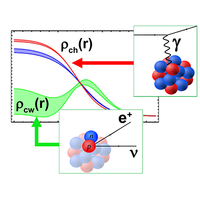
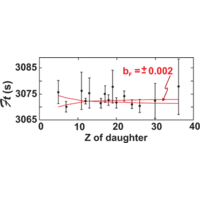
    <description>Author(s): I. S. Towner and J. C. Hardy&lt;br/&gt;We report new shell-model calculations of the isospin-symmetry-breaking correction &#948;_{C} to superallowed 0^{+} &#8594;0^{+} nuclear &#946; decay. The most important improvement is the inclusion of core orbitals, which are demonstrated to have a significant impact on the mismatch in the radial wave function...&lt;br/&gt;[Phys. Rev. C 77, 025501] Published Thu Feb 07, 2008</description>
    <dc:creator>I. S. Towner and J. C. Hardy</dc:creator>
    <dc:date>2008-02-07T00:00:00-05:00</dc:date>
    <dc:rights>Personal use only, all commercial or other reuse prohibited</dc:rights>
    <dc:identifier>10.1103/PhysRevC.77.025501</dc:identifier>
    <dc:source>Phys. Rev. C 77, 025501</dc:source>
    <dc:format>text/html</dc:format>
    <dc:type>article</dc:type>
    <prism:publicationName>Physical Review C</prism:publicationName>
    <prism:volume>77</prism:volume>
    <prism:issueIdentifier>2</prism:issueIdentifier>
    <prism:publicationDate>2008-02-07T00:00:00-05:00</prism:publicationDate>
    <prism:startingPage>025501</prism:startingPage>
    <dc:subject>Electroweak Interaction, Symmetries</dc:subject>
    <prism:section>Electroweak Interaction, Symmetries</prism:section>
  </item>
  <item rdf:about="http://link.aps.org/doi/10.1103/PhysRevC.77.015501">
    <title>High-precision half-life determination for the superallowed &#946;^{+}  emitter  ^{62} Ga</title>
    <link>http://link.aps.org/doi/10.1103/PhysRevC.77.015501</link>
    <description>Author(s): G. F. Grinyer, P. Finlay, C. E. Svensson, G. C. Ball, J. R. Leslie, R. A. Austin, D. Bandyopadhyay, A. Chaffey, R. S. Chakrawarthy, P. E. Garrett, G. Hackman, B. Hyland, R. Kanungo, K. G. Leach, C. M. Mattoon, A. C. Morton, C. J. Pearson, A. A. Phillips, J. J. Ressler, F. Sarazin, H. Savajols, M. A. Schumaker, and J. Wong&lt;br/&gt;The half-life of the superallowed &#946;^{+} emitter ^{62} Ga has been measured at TRIUMF's Isotope Separator and Accelerator facility using a fast-tape-transport system and 4&#960; continuous-flow gas proportional counter to detect the positrons from the decay of ^{62} Ga to the daughter ^{62} Zn. The resu...&lt;br/&gt;[Phys. Rev. C 77, 015501] Published Tue Jan 29, 2008</description>
    <dc:creator>G. F. Grinyer, P. Finlay, C. E. Svensson, G. C. Ball, J. R. Leslie, R. A. Austin, D. Bandyopadhyay, A. Chaffey, R. S. Chakrawarthy, P. E. Garrett, G. Hackman, B. Hyland, R. Kanungo, K. G. Leach, C. M. Mattoon, A. C. Morton, C. J. Pearson, A. A. Phillips, J. J. Ressler, F. Sarazin, H. Savajols, M. A. Schumaker, and J. Wong</dc:creator>
    <dc:date>2008-01-29T00:00:00-05:00</dc:date>
    <dc:rights>Personal use only, all commercial or other reuse prohibited</dc:rights>
    <dc:identifier>10.1103/PhysRevC.77.015501</dc:identifier>
    <dc:source>Phys. Rev. C 77, 015501</dc:source>
    <dc:format>text/html</dc:format>
    <dc:type>article</dc:type>
    <prism:publicationName>Physical Review C</prism:publicationName>
    <prism:volume>77</prism:volume>
    <prism:issueIdentifier>1</prism:issueIdentifier>
    <prism:publicationDate>2008-01-29T00:00:00-05:00</prism:publicationDate>
    <prism:startingPage>015501</prism:startingPage>
    <dc:subject>Electroweak Interaction, Symmetries</dc:subject>
    <prism:section>Electroweak Interaction, Symmetries</prism:section>
  </item>
  <item rdf:about="http://link.aps.org/doi/10.1103/PhysRevC.76.068501">
    <title>Neutral current coherent pion production</title>
    <link>http://link.aps.org/doi/10.1103/PhysRevC.76.068501</link>
    <description>Author(s): L. Alvarez-Ruso, L. S. Geng, and M. J. Vacas&lt;br/&gt;We investigate the neutrino induced coherent pion production reaction at low and intermediate energies. The model includes pion, nucleon, and &#916;(1232) as the relevant hadronic degrees of freedom. Nuclear medium effects on the production mechanisms and pion distortion are taken into account. We find ...&lt;br/&gt;[Phys. Rev. C 76, 068501] Published Wed Dec 19, 2007</description>
    <dc:creator>L. Alvarez-Ruso, L. S. Geng, and M. J. Vacas</dc:creator>
    <dc:date>2007-12-19T00:00:00-05:00</dc:date>
    <dc:rights>Personal use only, all commercial or other reuse prohibited</dc:rights>
    <dc:identifier>10.1103/PhysRevC.76.068501</dc:identifier>
    <dc:source>Phys. Rev. C 76, 068501</dc:source>
    <dc:format>text/html</dc:format>
    <dc:type>article</dc:type>
    <prism:publicationName>Physical Review C</prism:publicationName>
    <prism:volume>76</prism:volume>
    <prism:issueIdentifier>6</prism:issueIdentifier>
    <prism:publicationDate>2007-12-19T00:00:00-05:00</prism:publicationDate>
    <prism:startingPage>068501</prism:startingPage>
    <dc:subject>Electroweak Interaction, Symmetries</dc:subject>
    <prism:section>Electroweak Interaction, Symmetries</prism:section>
  </item>
  <item rdf:about="http://link.aps.org/doi/10.1103/PhysRevC.76.055502">
    <title>Detecting CP violation in a single neutrino oscillation channel at very long baselines</title>
    <link>http://link.aps.org/doi/10.1103/PhysRevC.76.055502</link>
    <description>Author(s): D. C. Latimer, J. Escamilla, and D. J. Ernst&lt;br/&gt;We propose a way of detecting CP violation in a single neutrino oscillation channel at very long baselines (on the order of several thousands of kilometers), given precise knowledge of the smallest mass-squared difference. It is shown that CP violation can be characterized by a shift in L/E of the p...&lt;br/&gt;[Phys. Rev. C 76, 055502] Published Wed Nov 21, 2007</description>
    <dc:creator>D. C. Latimer, J. Escamilla, and D. J. Ernst</dc:creator>
    <dc:date>2007-11-21T00:00:00-05:00</dc:date>
    <dc:rights>Personal use only, all commercial or other reuse prohibited</dc:rights>
    <dc:identifier>10.1103/PhysRevC.76.055502</dc:identifier>
    <dc:source>Phys. Rev. C 76, 055502</dc:source>
    <dc:format>text/html</dc:format>
    <dc:type>article</dc:type>
    <prism:publicationName>Physical Review C</prism:publicationName>
    <prism:volume>76</prism:volume>
    <prism:issueIdentifier>5</prism:issueIdentifier>
    <prism:publicationDate>2007-11-21T00:00:00-05:00</prism:publicationDate>
    <prism:startingPage>055502</prism:startingPage>
    <dc:subject>Electroweak Interaction, Symmetries</dc:subject>
    <prism:section>Electroweak Interaction, Symmetries</prism:section>
  </item>
  <item rdf:about="http://link.aps.org/doi/10.1103/PhysRevC.76.055501">
    <title>Strangeness content of the nucleon in quasielastic neutrino-nucleus reactions</title>
    <link>http://link.aps.org/doi/10.1103/PhysRevC.76.055501</link>
    <description>Author(s): N. Jachowicz, P. Vancraeyveld, P. Lava, C. Praet, and J. Ryckebusch&lt;br/&gt;We present a systematic study of the sensitivity of quasielastic neutrino-nucleus cross sections at intermediate energies to the strange quark sea of the nucleon. To this end, we investigate the impact of the weak strangeness form factors on the ratio of proton-to-neutron knockout, the ratio of neut...&lt;br/&gt;[Phys. Rev. C 76, 055501] Published Thu Nov 08, 2007</description>
    <dc:creator>N. Jachowicz, P. Vancraeyveld, P. Lava, C. Praet, and J. Ryckebusch</dc:creator>
    <dc:date>2007-11-08T00:00:00-05:00</dc:date>
    <dc:rights>Personal use only, all commercial or other reuse prohibited</dc:rights>
    <dc:identifier>10.1103/PhysRevC.76.055501</dc:identifier>
    <dc:source>Phys. Rev. C 76, 055501</dc:source>
    <dc:format>text/html</dc:format>
    <dc:type>article</dc:type>
    <prism:publicationName>Physical Review C</prism:publicationName>
    <prism:volume>76</prism:volume>
    <prism:issueIdentifier>5</prism:issueIdentifier>
    <prism:publicationDate>2007-11-08T00:00:00-05:00</prism:publicationDate>
    <prism:startingPage>055501</prism:startingPage>
    <dc:subject>Electroweak Interaction, Symmetries</dc:subject>
    <prism:section>Electroweak Interaction, Symmetries</prism:section>
  </item>
  <item rdf:about="http://link.aps.org/doi/10.1103/PhysRevC.76.045504">
    <title>High-precision masses of neutron-deficient rubidium isotopes using a Penning trap mass spectrometer</title>
    <link>http://link.aps.org/doi/10.1103/PhysRevC.76.045504</link>
    <description>Author(s): A. Kellerbauer, G. Audi, D. Beck, K. Blaum, G. Bollen, C. Gu&#233;naut, F. Herfurth, A. Herlert, H.-J. Kluge, D. Lunney, S. Schwarz, L. Schweikhard, C. Weber, and C. Yazidjian&lt;br/&gt;The atomic masses of the neutron-deficient radioactive rubidium isotopes ^{74-77,79,80,83} Rb have been measured with the Penning trap mass spectrometer ISOLTRAP. Using the time-of-flight cyclotron resonance technique, relative mass uncertainties ranging from 1.6&#215;10^{-8} to 5.6&#215;10^{-8} were achiev...&lt;br/&gt;[Phys. Rev. C 76, 045504] Published Tue Oct 30, 2007</description>
    <dc:creator>A. Kellerbauer, G. Audi, D. Beck, K. Blaum, G. Bollen, C. Gu&#233;naut, F. Herfurth, A. Herlert, H.-J. Kluge, D. Lunney, S. Schwarz, L. Schweikhard, C. Weber, and C. Yazidjian</dc:creator>
    <dc:date>2007-10-30T00:00:00-04:00</dc:date>
    <dc:rights>Personal use only, all commercial or other reuse prohibited</dc:rights>
    <dc:identifier>10.1103/PhysRevC.76.045504</dc:identifier>
    <dc:source>Phys. Rev. C 76, 045504</dc:source>
    <dc:format>text/html</dc:format>
    <dc:type>article</dc:type>
    <prism:publicationName>Physical Review C</prism:publicationName>
    <prism:volume>76</prism:volume>
    <prism:issueIdentifier>4</prism:issueIdentifier>
    <prism:publicationDate>2007-10-30T00:00:00-04:00</prism:publicationDate>
    <prism:startingPage>045504</prism:startingPage>
    <dc:subject>Electroweak Interaction, Symmetries</dc:subject>
    <prism:section>Electroweak Interaction, Symmetries</prism:section>
  </item>
  <item rdf:about="http://link.aps.org/doi/10.1103/PhysRevC.76.045503">
    <title>M&#246;ssbauer test of T invariance in  ^{171} Yb</title>
    <link>http://link.aps.org/doi/10.1103/PhysRevC.76.045503</link>
    <description>Author(s): V. G. Tsinoev, A. V. Tsvyashchenko, A. E. Ugrovatov, and S. N. Vostrikov&lt;br/&gt;An experiment on testing the time-reversal symmetry in the emission of a mixed E2-M1 M&#246;ssbauer &#947;-transition in ^{171} Yb has been carried out. The imaginary part of the ratio of a reduced multipole matrix element has been measured by observing the appearance of the additional linear polarization o...&lt;br/&gt;[Phys. Rev. C 76, 045503] Published Mon Oct 29, 2007</description>
    <dc:creator>V. G. Tsinoev, A. V. Tsvyashchenko, A. E. Ugrovatov, and S. N. Vostrikov</dc:creator>
    <dc:date>2007-10-29T00:00:00-04:00</dc:date>
    <dc:rights>Personal use only, all commercial or other reuse prohibited</dc:rights>
    <dc:identifier>10.1103/PhysRevC.76.045503</dc:identifier>
    <dc:source>Phys. Rev. C 76, 045503</dc:source>
    <dc:format>text/html</dc:format>
    <dc:type>article</dc:type>
    <prism:publicationName>Physical Review C</prism:publicationName>
    <prism:volume>76</prism:volume>
    <prism:issueIdentifier>4</prism:issueIdentifier>
    <prism:publicationDate>2007-10-29T00:00:00-04:00</prism:publicationDate>
    <prism:startingPage>045503</prism:startingPage>
    <dc:subject>Electroweak Interaction, Symmetries</dc:subject>
    <prism:section>Electroweak Interaction, Symmetries</prism:section>
  </item>
  <item rdf:about="http://link.aps.org/doi/10.1103/PhysRevC.76.045502">
    <title>Quasi-elastic neutrino charged-current scattering cross sections on oxygen</title>
    <link>http://link.aps.org/doi/10.1103/PhysRevC.76.045502</link>
    <description>Author(s): A. V. Butkevich and S. A. Kulagin&lt;br/&gt;The charged-current quasi-elastic scattering of muon neutrinos on an oxygen target is computed for neutrino energies between 200 MeV and 2.5 GeV using the relativistic distorted-wave impulse approximation with relativistic optical potential, which was earlier successfully applied to describe electro...&lt;br/&gt;[Phys. Rev. C 76, 045502] Published Fri Oct 26, 2007</description>
    <dc:creator>A. V. Butkevich and S. A. Kulagin</dc:creator>
    <dc:date>2007-10-26T00:00:00-04:00</dc:date>
    <dc:rights>Personal use only, all commercial or other reuse prohibited</dc:rights>
    <dc:identifier>10.1103/PhysRevC.76.045502</dc:identifier>
    <dc:source>Phys. Rev. C 76, 045502</dc:source>
    <dc:format>text/html</dc:format>
    <dc:type>article</dc:type>
    <prism:publicationName>Physical Review C</prism:publicationName>
    <prism:volume>76</prism:volume>
    <prism:issueIdentifier>4</prism:issueIdentifier>
    <prism:publicationDate>2007-10-26T00:00:00-04:00</prism:publicationDate>
    <prism:startingPage>045502</prism:startingPage>
    <dc:subject>Electroweak Interaction, Symmetries</dc:subject>
    <prism:section>Electroweak Interaction, Symmetries</prism:section>
  </item>
  <item rdf:about="http://link.aps.org/doi/10.1103/PhysRevC.76.045501">
    <title>Exact relativistic &#946; decay endpoint spectrum</title>
    <link>http://link.aps.org/doi/10.1103/PhysRevC.76.045501</link>
    <description>Author(s): S. S. Masood, S. Nasri, J. Schechter, M. A. T&#243;rtola, J. W. Valle, and C. Weinheimer&lt;br/&gt;The exact relativistic form for the &#946; decay endpoint spectrum is derived and presented in a simple factorized form. We show that our exact formula can be well approximated to yield the endpoint form used in the fit method of the KATRIN Collaboration. We also discuss the three-neutrino case and how ...&lt;br/&gt;[Phys. Rev. C 76, 045501] Published Fri Oct 05, 2007</description>
    <dc:creator>S. S. Masood, S. Nasri, J. Schechter, M. A. T&#243;rtola, J. W. Valle, and C. Weinheimer</dc:creator>
    <dc:date>2007-10-05T00:00:00-04:00</dc:date>
    <dc:rights>Personal use only, all commercial or other reuse prohibited</dc:rights>
    <dc:identifier>10.1103/PhysRevC.76.045501</dc:identifier>
    <dc:source>Phys. Rev. C 76, 045501</dc:source>
    <dc:format>text/html</dc:format>
    <dc:type>article</dc:type>
    <prism:publicationName>Physical Review C</prism:publicationName>
    <prism:volume>76</prism:volume>
    <prism:issueIdentifier>4</prism:issueIdentifier>
    <prism:publicationDate>2007-10-05T00:00:00-04:00</prism:publicationDate>
    <prism:startingPage>045501</prism:startingPage>
    <dc:subject>Electroweak Interaction, Symmetries</dc:subject>
    <prism:section>Electroweak Interaction, Symmetries</prism:section>
  </item>
  <item rdf:about="http://link.aps.org/doi/10.1103/PhysRevC.76.035504">
    <title>&#947; rays from muon capture in  ^{27} Al and natural Si</title>
    <link>http://link.aps.org/doi/10.1103/PhysRevC.76.035504</link>
    <description>Author(s): David F. Measday, Trevor J. Stocki, Belal A. Moftah, and Heywood Tam&lt;br/&gt;Muon capture &#947; rays have been observed for the first time in ^{27} Al, and a significant improvement has been made in the identification of &#947;-rays from muon capture in natural Si. The (&#956;^{-} ,&#957;&#947;) reaction was clearly observed in both nuclei and, for ^{28} Si, compares well with calculations. Th...&lt;br/&gt;[Phys. Rev. C 76, 035504] Published Thu Sep 27, 2007</description>
    <dc:creator>David F. Measday, Trevor J. Stocki, Belal A. Moftah, and Heywood Tam</dc:creator>
    <dc:date>2007-09-27T00:00:00-04:00</dc:date>
    <dc:rights>Personal use only, all commercial or other reuse prohibited</dc:rights>
    <dc:identifier>10.1103/PhysRevC.76.035504</dc:identifier>
    <dc:source>Phys. Rev. C 76, 035504</dc:source>
    <dc:format>text/html</dc:format>
    <dc:type>article</dc:type>
    <prism:publicationName>Physical Review C</prism:publicationName>
    <prism:volume>76</prism:volume>
    <prism:issueIdentifier>3</prism:issueIdentifier>
    <prism:publicationDate>2007-09-27T00:00:00-04:00</prism:publicationDate>
    <prism:startingPage>035504</prism:startingPage>
    <dc:subject>Electroweak Interaction, Symmetries</dc:subject>
    <prism:section>Electroweak Interaction, Symmetries</prism:section>
  </item>
  <item rdf:about="http://link.aps.org/doi/10.1103/PhysRevC.76.035503">
    <title>Atomic electric dipole moments: The Schiff theorem and its corrections</title>
    <link>http://link.aps.org/doi/10.1103/PhysRevC.76.035503</link>
    <description>Author(s): C.-P. Liu, M. J. Ramsey-Musolf, W. C. Haxton, R. G. Timmermans, and A. E. Dieperink&lt;br/&gt;Searches for the permanent electric dipole moments (EDMs) of diamagnetic atoms provide powerful probes of CP-violating hadronic and semileptonic interactions. The theoretical interpretation of such experiments, however, requires careful implementation of a well-known theorem by Schiff that implies a...&lt;br/&gt;[Phys. Rev. C 76, 035503] Published Mon Sep 24, 2007</description>
    <dc:creator>C.-P. Liu, M. J. Ramsey-Musolf, W. C. Haxton, R. G. Timmermans, and A. E. Dieperink</dc:creator>
    <dc:date>2007-09-24T00:00:00-04:00</dc:date>
    <dc:rights>Personal use only, all commercial or other reuse prohibited</dc:rights>
    <dc:identifier>10.1103/PhysRevC.76.035503</dc:identifier>
    <dc:source>Phys. Rev. C 76, 035503</dc:source>
    <dc:format>text/html</dc:format>
    <dc:type>article</dc:type>
    <prism:publicationName>Physical Review C</prism:publicationName>
    <prism:volume>76</prism:volume>
    <prism:issueIdentifier>3</prism:issueIdentifier>
    <prism:publicationDate>2007-09-24T00:00:00-04:00</prism:publicationDate>
    <prism:startingPage>035503</prism:startingPage>
    <dc:subject>Electroweak Interaction, Symmetries</dc:subject>
    <prism:section>Electroweak Interaction, Symmetries</prism:section>
  </item>
  <item rdf:about="http://link.aps.org/doi/10.1103/PhysRevC.76.035502">
    <title>Influence of the nuclear medium on inclusive electron and neutrino scattering off nuclei</title>
    <link>http://link.aps.org/doi/10.1103/PhysRevC.76.035502</link>
    <description>Author(s): O. Buss, T. Leitner, U. Mosel, and L. Alvarez-Ruso&lt;br/&gt;We present a model for inclusive electron and neutrino scattering off nuclei paying special attention to the influence of in-medium effects on the quasielastic scattering and pion-production mechanisms. Our results for electron scattering off ^{16} O are compared to experimental data at beam energie...&lt;br/&gt;[Phys. Rev. C 76, 035502] Published Thu Sep 20, 2007</description>
    <dc:creator>O. Buss, T. Leitner, U. Mosel, and L. Alvarez-Ruso</dc:creator>
    <dc:date>2007-09-20T00:00:00-04:00</dc:date>
    <dc:rights>Personal use only, all commercial or other reuse prohibited</dc:rights>
    <dc:identifier>10.1103/PhysRevC.76.035502</dc:identifier>
    <dc:source>Phys. Rev. C 76, 035502</dc:source>
    <dc:format>text/html</dc:format>
    <dc:type>article</dc:type>
    <prism:publicationName>Physical Review C</prism:publicationName>
    <prism:volume>76</prism:volume>
    <prism:issueIdentifier>3</prism:issueIdentifier>
    <prism:publicationDate>2007-09-20T00:00:00-04:00</prism:publicationDate>
    <prism:startingPage>035502</prism:startingPage>
    <dc:subject>Electroweak Interaction, Symmetries</dc:subject>
    <prism:section>Electroweak Interaction, Symmetries</prism:section>
  </item>
  <item rdf:about="http://link.aps.org/doi/10.1103/PhysRevC.76.035501">
    <title>Weak decays of _{&#923;}^{4} He</title>
    <link>http://link.aps.org/doi/10.1103/PhysRevC.76.035501</link>
    <description>Author(s): J. D. Parker, M. J. Athanas, P. D. Barnes, S. Bart, B. Bassalleck, R. Chrien, G. Diebold, G. B. Franklin, K. Johnston, P. Pile, B. Quinn, F. Rozon, R. Sawafta, R. A. Schumacher, R. Stearns, I. Sukaton, R. Sutter, J. J. Szymanski, and V. J. Zeps&lt;br/&gt;We measured the lifetime and the mesonic and nonmesonic decay rates of the _{&#923;}^{4} He hypernucleus. The hypernuclei were created using a 750 MeV/c momentum K^{-} beam on a liquid ^{4} He target by the reaction ^{4} He (K^{-} ,&#960;^{-} )_{&#923;}^{4} He. The _{&#923;}^{4} He lifetime was directly measured us...&lt;br/&gt;[Phys. Rev. C 76, 035501] Published Tue Sep 04, 2007</description>
    <dc:creator>J. D. Parker, M. J. Athanas, P. D. Barnes, S. Bart, B. Bassalleck, R. Chrien, G. Diebold, G. B. Franklin, K. Johnston, P. Pile, B. Quinn, F. Rozon, R. Sawafta, R. A. Schumacher, R. Stearns, I. Sukaton, R. Sutter, J. J. Szymanski, and V. J. Zeps</dc:creator>
    <dc:date>2007-09-04T00:00:00-04:00</dc:date>
    <dc:rights>Personal use only, all commercial or other reuse prohibited</dc:rights>
    <dc:identifier>10.1103/PhysRevC.76.035501</dc:identifier>
    <dc:source>Phys. Rev. C 76, 035501</dc:source>
    <dc:format>text/html</dc:format>
    <dc:type>article</dc:type>
    <prism:publicationName>Physical Review C</prism:publicationName>
    <prism:volume>76</prism:volume>
    <prism:issueIdentifier>3</prism:issueIdentifier>
    <prism:publicationDate>2007-09-04T00:00:00-04:00</prism:publicationDate>
    <prism:startingPage>035501</prism:startingPage>
    <dc:subject>Electroweak Interaction, Symmetries</dc:subject>
    <prism:section>Electroweak Interaction, Symmetries</prism:section>
  </item>
  <item rdf:about="http://link.aps.org/doi/10.1103/PhysRevC.76.028501">
    <title>Schiff screening of relativistic nucleon electric-dipole moments by electrons</title>
    <link>http://link.aps.org/doi/10.1103/PhysRevC.76.028501</link>
    <description>Author(s): C.-P. Liu and J. Engel&lt;br/&gt;We show, at leading-order in the multipole expansion of the electron-nucleus interaction, that nucleon electric-dipole moments are completely shielded by electrons so that they contribute nothing to atomic electric-dipole moments, even when relativity in the nucleus is taken into account. It is well...&lt;br/&gt;[Phys. Rev. C 76, 028501] Published Wed Aug 29, 2007</description>
    <dc:creator>C.-P. Liu and J. Engel</dc:creator>
    <dc:date>2007-08-29T00:00:00-04:00</dc:date>
    <dc:rights>Personal use only, all commercial or other reuse prohibited</dc:rights>
    <dc:identifier>10.1103/PhysRevC.76.028501</dc:identifier>
    <dc:source>Phys. Rev. C 76, 028501</dc:source>
    <dc:format>text/html</dc:format>
    <dc:type>article</dc:type>
    <prism:publicationName>Physical Review C</prism:publicationName>
    <prism:volume>76</prism:volume>
    <prism:issueIdentifier>2</prism:issueIdentifier>
    <prism:publicationDate>2007-08-29T00:00:00-04:00</prism:publicationDate>
    <prism:startingPage>028501</prism:startingPage>
    <dc:subject>Electroweak Interaction, Symmetries</dc:subject>
    <prism:section>Electroweak Interaction, Symmetries</prism:section>
  </item>
  <item rdf:about="http://link.aps.org/doi/10.1103/PhysRevC.76.025504">
    <title>Conversion of electron spectrum associated with fission into the antineutrino spectrum</title>
    <link>http://link.aps.org/doi/10.1103/PhysRevC.76.025504</link>
    <description>Author(s): Petr Vogel&lt;br/&gt;The accuracy of the procedure that converts the experimentally determined electron spectrum associated with fission of the nuclear fuels ^{235} U, ^{239} Pu, ^{241} Pu, and ^{238} U into the antineutrino &#957; [over &#175;] _{e} spectrum is examined. By using calculated sets of mutually consistent spectra,...&lt;br/&gt;[Phys. Rev. C 76, 025504] Published Tue Aug 28, 2007</description>
    <dc:creator>Petr Vogel</dc:creator>
    <dc:date>2007-08-28T00:00:00-04:00</dc:date>
    <dc:rights>Personal use only, all commercial or other reuse prohibited</dc:rights>
    <dc:identifier>10.1103/PhysRevC.76.025504</dc:identifier>
    <dc:source>Phys. Rev. C 76, 025504</dc:source>
    <dc:format>text/html</dc:format>
    <dc:type>article</dc:type>
    <prism:publicationName>Physical Review C</prism:publicationName>
    <prism:volume>76</prism:volume>
    <prism:issueIdentifier>2</prism:issueIdentifier>
    <prism:publicationDate>2007-08-28T00:00:00-04:00</prism:publicationDate>
    <prism:startingPage>025504</prism:startingPage>
    <dc:subject>Electroweak Interaction, Symmetries</dc:subject>
    <prism:section>Electroweak Interaction, Symmetries</prism:section>
  </item>
  <item rdf:about="http://link.aps.org/doi/10.1103/PhysRevC.76.025503">
    <title>Half-life of the superallowed &#946;^{+}  emitter  ^{18} Ne</title>
    <link>http://link.aps.org/doi/10.1103/PhysRevC.76.025503</link>
    <description>Author(s): G. F. Grinyer, M. B. Smith, C. Andreoiu, A. N. Andreyev, G. C. Ball, P. Bricault, R. S. Chakrawarthy, J. J. Daoud, P. Finlay, P. E. Garrett, G. Hackman, B. Hyland, J. R. Leslie, A. C. Morton, C. J. Pearson, A. A. Phillips, M. A. Schumaker, C. E. Svensson, J. J. Valiente-Dob&#243;n, S. J. Williams, and E. F. Zganjar&lt;br/&gt;The half-life of ^{18} Ne has been determined by detecting 1042-keV &#947; rays in the daughter ^{18} F following the superallowed-Fermi &#946;^{+} decay of samples implanted at the center of the 8&#960;&#947;-ray spectrometer, a spherical array of 20 HPGe detectors. Radioactive ^{18} Ne beams were produced on-line...&lt;br/&gt;[Phys. Rev. C 76, 025503] Published Fri Aug 17, 2007</description>
    <dc:creator>G. F. Grinyer, M. B. Smith, C. Andreoiu, A. N. Andreyev, G. C. Ball, P. Bricault, R. S. Chakrawarthy, J. J. Daoud, P. Finlay, P. E. Garrett, G. Hackman, B. Hyland, J. R. Leslie, A. C. Morton, C. J. Pearson, A. A. Phillips, M. A. Schumaker, C. E. Svensson, J. J. Valiente-Dob&#243;n, S. J. Williams, and E. F. Zganjar</dc:creator>
    <dc:date>2007-08-17T00:00:00-04:00</dc:date>
    <dc:rights>Personal use only, all commercial or other reuse prohibited</dc:rights>
    <dc:identifier>10.1103/PhysRevC.76.025503</dc:identifier>
    <dc:source>Phys. Rev. C 76, 025503</dc:source>
    <dc:format>text/html</dc:format>
    <dc:type>article</dc:type>
    <prism:publicationName>Physical Review C</prism:publicationName>
    <prism:volume>76</prism:volume>
    <prism:issueIdentifier>2</prism:issueIdentifier>
    <prism:publicationDate>2007-08-17T00:00:00-04:00</prism:publicationDate>
    <prism:startingPage>025503</prism:startingPage>
    <dc:subject>Electroweak Interaction, Symmetries</dc:subject>
    <prism:section>Electroweak Interaction, Symmetries</prism:section>
  </item>
  <item rdf:about="http://link.aps.org/doi/10.1103/PhysRevC.76.025502">
    <title>Confirmation of parity violation in the &#947; decay of ^{180} Hf^{m}</title>
    <link>http://link.aps.org/doi/10.1103/PhysRevC.76.025502</link>
    <description>Author(s): J. R. Stone, G. Goldring, N. J. Stone, N. Severijns, M. Hass, D. Zakoucky, T. Giles, U. K&#246;ster, I. S. Kraev, S. Lakshmi, M. Lindroos, and F. Wauters&lt;br/&gt;This paper reports measurements made using the technique of online nuclear orientation which reexamine the &#947; decay of isomeric ^{180} Hf^{m} and specifically the 501 keV 8^{-} &#8211;6^{+} transition. The irregular admixture of E2 to M2/E3 multipolarity in this transition, deduced from the forward-back...&lt;br/&gt;[Phys. Rev. C 76, 025502] Published Wed Aug 08, 2007</description>
    <dc:creator>J. R. Stone, G. Goldring, N. J. Stone, N. Severijns, M. Hass, D. Zakoucky, T. Giles, U. K&#246;ster, I. S. Kraev, S. Lakshmi, M. Lindroos, and F. Wauters</dc:creator>
    <dc:date>2007-08-08T00:00:00-04:00</dc:date>
    <dc:rights>Personal use only, all commercial or other reuse prohibited</dc:rights>
    <dc:identifier>10.1103/PhysRevC.76.025502</dc:identifier>
    <dc:source>Phys. Rev. C 76, 025502</dc:source>
    <dc:format>text/html</dc:format>
    <dc:type>article</dc:type>
    <prism:publicationName>Physical Review C</prism:publicationName>
    <prism:volume>76</prism:volume>
    <prism:issueIdentifier>2</prism:issueIdentifier>
    <prism:publicationDate>2007-08-08T00:00:00-04:00</prism:publicationDate>
    <prism:startingPage>025502</prism:startingPage>
    <dc:subject>Electroweak Interaction, Symmetries</dc:subject>
    <prism:section>Electroweak Interaction, Symmetries</prism:section>
  </item>
  <item rdf:about="http://link.aps.org/doi/10.1103/PhysRevC.76.025501">
    <title>First results on double &#946;-decay modes of Cd, Te, and Zn Isotopes</title>
    <link>http://link.aps.org/doi/10.1103/PhysRevC.76.025501</link>
    <description>Author(s): T. Bloxham, A. Boston, J. Dawson, D. Dobos, S. P. Fox, M. Freer, B. R. Fulton, C. G&#246;&#223;ling, P. F. Harrison, M. Junker, H. Kiel, J. McGrath, B. Morgan, D. M&#252;nstermann, P. Nolan, S. Oehl, Y. Ramachers, C. Reeve, D. Stewart, R. Wadsworth, J. R. Wilson, and K. Zuber&lt;br/&gt;Four 1-cm^{3} CdZnTe semiconductor detectors were operated in the Gran Sasso National Laboratory to explore the feasibility of such devices for double &#946;-decay searches as proposed for the COBRA experiment. The research involved background studies accompanied by measurements of energy resolution per...&lt;br/&gt;[Phys. Rev. C 76, 025501] Published Fri Aug 03, 2007</description>
    <dc:creator>T. Bloxham, A. Boston, J. Dawson, D. Dobos, S. P. Fox, M. Freer, B. R. Fulton, C. G&#246;&#223;ling, P. F. Harrison, M. Junker, H. Kiel, J. McGrath, B. Morgan, D. M&#252;nstermann, P. Nolan, S. Oehl, Y. Ramachers, C. Reeve, D. Stewart, R. Wadsworth, J. R. Wilson, and K. Zuber</dc:creator>
    <dc:date>2007-08-03T00:00:00-04:00</dc:date>
    <dc:rights>Personal use only, all commercial or other reuse prohibited</dc:rights>
    <dc:identifier>10.1103/PhysRevC.76.025501</dc:identifier>
    <dc:source>Phys. Rev. C 76, 025501</dc:source>
    <dc:format>text/html</dc:format>
    <dc:type>article</dc:type>
    <prism:publicationName>Physical Review C</prism:publicationName>
    <prism:volume>76</prism:volume>
    <prism:issueIdentifier>2</prism:issueIdentifier>
    <prism:publicationDate>2007-08-03T00:00:00-04:00</prism:publicationDate>
    <prism:startingPage>025501</prism:startingPage>
    <dc:subject>Electroweak Interaction, Symmetries</dc:subject>
    <prism:section>Electroweak Interaction, Symmetries</prism:section>
  </item>
  <item rdf:about="http://link.aps.org/doi/10.1103/PhysRevC.76.018501">
    <title>Upper limits on the first-forbidden rank-one &#946; decay of  ^{20} F</title>
    <link>http://link.aps.org/doi/10.1103/PhysRevC.76.018501</link>
    <description>Author(s): E. L. Wilds, Jr., R. H. France III, J. E. McDonald, Z. Zhao, and M. Gai&lt;br/&gt;We used our (perviously described) system for high sensitivity measurements of &#946;-delayed &#945;-particle emission of light nuclei to measure upper limits of the branching ratios of the first-forbidden rank-one &#946; decay of the 2^{+} ground state of ^{20} F to the 3^{-} ,5.62 MeV, and 1^{-} ,5.79 MeV exc...&lt;br/&gt;[Phys. Rev. C 76, 018501] Published Thu Jul 19, 2007</description>
    <dc:creator>E. L. Wilds, Jr., R. H. France III, J. E. McDonald, Z. Zhao, and M. Gai</dc:creator>
    <dc:date>2007-07-19T00:00:00-04:00</dc:date>
    <dc:rights>Personal use only, all commercial or other reuse prohibited</dc:rights>
    <dc:identifier>10.1103/PhysRevC.76.018501</dc:identifier>
    <dc:source>Phys. Rev. C 76, 018501</dc:source>
    <dc:format>text/html</dc:format>
    <dc:type>article</dc:type>
    <prism:publicationName>Physical Review C</prism:publicationName>
    <prism:volume>76</prism:volume>
    <prism:issueIdentifier>1</prism:issueIdentifier>
    <prism:publicationDate>2007-07-19T00:00:00-04:00</prism:publicationDate>
    <prism:startingPage>018501</prism:startingPage>
    <dc:subject>Electroweak Interaction, Symmetries</dc:subject>
    <prism:section>Electroweak Interaction, Symmetries</prism:section>
  </item>
  <item rdf:about="http://link.aps.org/doi/10.1103/PhysRevC.75.065502">
    <title>Manipulating a neutrino spectrum to maximize the physics potential from a low-energy &#946; beam</title>
    <link>http://link.aps.org/doi/10.1103/PhysRevC.75.065502</link>
    <description>Author(s): Philip S. Amanik and Gail C. McLaughlin&lt;br/&gt;Proposed low-energy &#946;-beam facilities would be capable of producing intense beams of neutrinos (antineutrinos) with well-defined spectra. We present analytic expressions and numerical results that accurately show how the total neutrino flux reaching the detector depends on the geometry of the sourc...&lt;br/&gt;[Phys. Rev. C 75, 065502] Published Tue Jun 12, 2007</description>
    <dc:creator>Philip S. Amanik and Gail C. McLaughlin</dc:creator>
    <dc:date>2007-06-12T00:00:00-04:00</dc:date>
    <dc:rights>Personal use only, all commercial or other reuse prohibited</dc:rights>
    <dc:identifier>10.1103/PhysRevC.75.065502</dc:identifier>
    <dc:source>Phys. Rev. C 75, 065502</dc:source>
    <dc:format>text/html</dc:format>
    <dc:type>article</dc:type>
    <prism:publicationName>Physical Review C</prism:publicationName>
    <prism:volume>75</prism:volume>
    <prism:issueIdentifier>6</prism:issueIdentifier>
    <prism:publicationDate>2007-06-12T00:00:00-04:00</prism:publicationDate>
    <prism:startingPage>065502</prism:startingPage>
    <dc:subject>Electroweak Interaction, Symmetries</dc:subject>
    <prism:section>Electroweak Interaction, Symmetries</prism:section>
  </item>
  <item rdf:about="http://link.aps.org/doi/10.1103/PhysRevC.75.065501">
    <title>Parity-violating observables of two-nucleon systems in effective field theory</title>
    <link>http://link.aps.org/doi/10.1103/PhysRevC.75.065501</link>
    <description>Author(s): C.-P. Liu&lt;br/&gt;A newly-proposed parity-violating nucleon-nucleon interaction based on effective field theory is studied in this work. Using the hybrid effective field theory treatment, it is found that the parity-violating phenomena at low energy, where S-P transitions dominate, can be well specified by a set of s...&lt;br/&gt;[Phys. Rev. C 75, 065501] Published Wed Jun 06, 2007</description>
    <dc:creator>C.-P. Liu</dc:creator>
    <dc:date>2007-06-06T00:00:00-04:00</dc:date>
    <dc:rights>Personal use only, all commercial or other reuse prohibited</dc:rights>
    <dc:identifier>10.1103/PhysRevC.75.065501</dc:identifier>
    <dc:source>Phys. Rev. C 75, 065501</dc:source>
    <dc:format>text/html</dc:format>
    <dc:type>article</dc:type>
    <prism:publicationName>Physical Review C</prism:publicationName>
    <prism:volume>75</prism:volume>
    <prism:issueIdentifier>6</prism:issueIdentifier>
    <prism:publicationDate>2007-06-06T00:00:00-04:00</prism:publicationDate>
    <prism:startingPage>065501</prism:startingPage>
    <dc:subject>Electroweak Interaction, Symmetries</dc:subject>
    <prism:section>Electroweak Interaction, Symmetries</prism:section>
  </item>
  <item rdf:about="http://link.aps.org/doi/10.1103/PhysRevC.75.055503">
    <title>High-precision Penning trap mass measurements of  ^{37,38} Ca and their contributions to conserved vector current and isobaric mass multiplet equation</title>
    <link>http://link.aps.org/doi/10.1103/PhysRevC.75.055503</link>
    <description>Author(s): R. Ringle, T. Sun, G. Bollen, D. Davies, M. Facina, J. Huikari, E. Kwan, D. J. Morrissey, A. Prinke, J. Savory, P. Schury, S. Schwarz, and C. S. Sumithrarachchi&lt;br/&gt;Penning trap mass measurements of the super-allowed &#946; emitter ^{38} Ca and of ^{37} Ca have been performed using the low-energy beam and ion trap facility at the coupled cyclotron facility of the National Superconducting Cyclotron Laboratory. Both isotopes were produced by fast-beam fragmentation a...&lt;br/&gt;[Phys. Rev. C 75, 055503] Published Fri May 25, 2007</description>
    <dc:creator>R. Ringle, T. Sun, G. Bollen, D. Davies, M. Facina, J. Huikari, E. Kwan, D. J. Morrissey, A. Prinke, J. Savory, P. Schury, S. Schwarz, and C. S. Sumithrarachchi</dc:creator>
    <dc:date>2007-05-25T00:00:00-04:00</dc:date>
    <dc:rights>Personal use only, all commercial or other reuse prohibited</dc:rights>
    <dc:identifier>10.1103/PhysRevC.75.055503</dc:identifier>
    <dc:source>Phys. Rev. C 75, 055503</dc:source>
    <dc:format>text/html</dc:format>
    <dc:type>article</dc:type>
    <prism:publicationName>Physical Review C</prism:publicationName>
    <prism:volume>75</prism:volume>
    <prism:issueIdentifier>5</prism:issueIdentifier>
    <prism:publicationDate>2007-05-25T00:00:00-04:00</prism:publicationDate>
    <prism:startingPage>055503</prism:startingPage>
    <dc:subject>Electroweak Interaction, Symmetries</dc:subject>
    <prism:section>Electroweak Interaction, Symmetries</prism:section>
  </item>
  <item rdf:about="http://link.aps.org/doi/10.1103/PhysRevC.75.055502">
    <title>Radiative orbital electron capture by the atomic nucleus</title>
    <link>http://link.aps.org/doi/10.1103/PhysRevC.75.055502</link>
    <description>Author(s): K. Pachucki, U. D. Jentschura, and M. Pf&#252;tzner&lt;br/&gt;The rate for the photon emission accompanying orbital 1S electron capture by the atomic nucleus is recalculated. While a photon can be emitted by the electron or by the nucleus, the use of the length gauge significantly suppresses the nuclear contribution. Our calculations resolve the long standing ...&lt;br/&gt;[Phys. Rev. C 75, 055502] Published Fri May 18, 2007</description>
    <dc:creator>K. Pachucki, U. D. Jentschura, and M. Pf&#252;tzner</dc:creator>
    <dc:date>2007-05-18T00:00:00-04:00</dc:date>
    <dc:rights>Personal use only, all commercial or other reuse prohibited</dc:rights>
    <dc:identifier>10.1103/PhysRevC.75.055502</dc:identifier>
    <dc:source>Phys. Rev. C 75, 055502</dc:source>
    <dc:format>text/html</dc:format>
    <dc:type>article</dc:type>
    <prism:publicationName>Physical Review C</prism:publicationName>
    <prism:volume>75</prism:volume>
    <prism:issueIdentifier>5</prism:issueIdentifier>
    <prism:publicationDate>2007-05-18T00:00:00-04:00</prism:publicationDate>
    <prism:startingPage>055502</prism:startingPage>
    <dc:subject>Electroweak Interaction, Symmetries</dc:subject>
    <prism:section>Electroweak Interaction, Symmetries</prism:section>
  </item>
  <item rdf:about="http://link.aps.org/doi/10.1103/PhysRevC.75.055501">
    <title>Charged current neutrino-induced coherent pion production</title>
    <link>http://link.aps.org/doi/10.1103/PhysRevC.75.055501</link>
    <description>Author(s): L. Alvarez-Ruso, L. S. Geng, S. Hirenzaki, and M. J. Vacas&lt;br/&gt;We analyze the neutrino induced charged current coherent pion production at the energies of interest for recent experiments like K2K and MiniBooNE. Medium effects in the production mechanism and the distortion of the pion wave function, obtained solving the Klein Gordon equation with a microscopic o...&lt;br/&gt;[Phys. Rev. C 75, 055501] Published Fri May 18, 2007</description>
    <dc:creator>L. Alvarez-Ruso, L. S. Geng, S. Hirenzaki, and M. J. Vacas</dc:creator>
    <dc:date>2007-05-18T00:00:00-04:00</dc:date>
    <dc:rights>Personal use only, all commercial or other reuse prohibited</dc:rights>
    <dc:identifier>10.1103/PhysRevC.75.055501</dc:identifier>
    <dc:source>Phys. Rev. C 75, 055501</dc:source>
    <dc:format>text/html</dc:format>
    <dc:type>article</dc:type>
    <prism:publicationName>Physical Review C</prism:publicationName>
    <prism:volume>75</prism:volume>
    <prism:issueIdentifier>5</prism:issueIdentifier>
    <prism:publicationDate>2007-05-18T00:00:00-04:00</prism:publicationDate>
    <prism:startingPage>055501</prism:startingPage>
    <dc:subject>Electroweak Interaction, Symmetries</dc:subject>
    <prism:section>Electroweak Interaction, Symmetries</prism:section>
  </item>
</rdf:RDF>