<?xml version="1.0" encoding="UTF-8"?>
<rdf:RDF xmlns:rdf="http://www.w3.org/1999/02/22-rdf-syntax-ns#" xmlns:prism="http://prismstandard.org/namespaces/basic/2.0/" xmlns:dc="http://purl.org/dc/elements/1.1/" xmlns:syn="http://purl.org/rss/1.0/modules/syndication/" xmlns:content="http://purl.org/rss/1.0/modules/content/" xmlns="http://purl.org/rss/1.0/">
  <channel rdf:about="http://prl.aps.org/">
    <title>PRL Editors' Suggestions</title>
    <link>http://prl.aps.org/</link>
    <description>Physical Review Letters Editors' Suggestions (by suggesting a few manuscripts each week, we hope to promote reading across fields of physics)</description>
    <syn:updatePeriod>hourly</syn:updatePeriod>
    <syn:updateFrequency>1</syn:updateFrequency>
    <syn:updateBase>2013-06-19T21:06:23-04:00</syn:updateBase>
    <dc:creator>rss@aps.org</dc:creator>
    <dc:publisher>assocpub@aps.org</dc:publisher>
    <dc:date>2013-06-19T21:06:23-04:00</dc:date>
    <dc:language>en</dc:language>
    <dc:rights>Copyright © 2013 the American Physical Society. Personal use only, all commercial or other reuse prohibited</dc:rights>
    <prism:copyright>Copyright © 2013 the American Physical Society</prism:copyright>
    <prism:rightsAgent>assocpub@aps.org</prism:rightsAgent>
    <items>
      <rdf:Seq>
        <rdf:li rdf:resource="http://link.aps.org/doi/10.1103/PhysRevLett.110.258101"/>
        <rdf:li rdf:resource="http://link.aps.org/doi/10.1103/PhysRevLett.110.252002"/>
        <rdf:li rdf:resource="http://link.aps.org/doi/10.1103/PhysRevLett.110.252001"/>
        <rdf:li rdf:resource="http://link.aps.org/doi/10.1103/PhysRevLett.110.250501"/>
        <rdf:li rdf:resource="http://link.aps.org/doi/10.1103/PhysRevLett.110.248106"/>
        <rdf:li rdf:resource="http://link.aps.org/doi/10.1103/PhysRevLett.110.248104"/>
        <rdf:li rdf:resource="http://link.aps.org/doi/10.1103/PhysRevLett.110.244302"/>
        <rdf:li rdf:resource="http://link.aps.org/doi/10.1103/PhysRevLett.110.241305"/>
        <rdf:li rdf:resource="http://link.aps.org/doi/10.1103/PhysRevLett.110.240402"/>
        <rdf:li rdf:resource="http://link.aps.org/doi/10.1103/PhysRevLett.110.241101"/>
        <rdf:li rdf:resource="http://link.aps.org/doi/10.1103/PhysRevLett.110.245702"/>
        <rdf:li rdf:resource="http://link.aps.org/doi/10.1103/PhysRevLett.110.247401"/>
        <rdf:li rdf:resource="http://link.aps.org/doi/10.1103/PhysRevLett.110.246601"/>
        <rdf:li rdf:resource="http://link.aps.org/doi/10.1103/PhysRevLett.110.241301"/>
        <rdf:li rdf:resource="http://link.aps.org/doi/10.1103/PhysRevLett.110.238103"/>
        <rdf:li rdf:resource="http://link.aps.org/doi/10.1103/PhysRevLett.110.230602"/>
        <rdf:li rdf:resource="http://link.aps.org/doi/10.1103/PhysRevLett.110.230601"/>
        <rdf:li rdf:resource="http://link.aps.org/doi/10.1103/PhysRevLett.110.233902"/>
        <rdf:li rdf:resource="http://link.aps.org/doi/10.1103/PhysRevLett.110.230501"/>
        <rdf:li rdf:resource="http://link.aps.org/doi/10.1103/PhysRevLett.110.236802"/>
        <rdf:li rdf:resource="http://link.aps.org/doi/10.1103/PhysRevLett.110.235301"/>
        <rdf:li rdf:resource="http://link.aps.org/doi/10.1103/PhysRevLett.110.231801"/>
        <rdf:li rdf:resource="http://link.aps.org/doi/10.1103/PhysRevLett.110.236601"/>
        <rdf:li rdf:resource="http://link.aps.org/doi/10.1103/PhysRevLett.110.228104"/>
        <rdf:li rdf:resource="http://link.aps.org/doi/10.1103/PhysRevLett.110.223003"/>
        <rdf:li rdf:resource="http://link.aps.org/doi/10.1103/PhysRevLett.110.221601"/>
        <rdf:li rdf:resource="http://link.aps.org/doi/10.1103/PhysRevLett.110.221102"/>
        <rdf:li rdf:resource="http://link.aps.org/doi/10.1103/PhysRevLett.110.220603"/>
        <rdf:li rdf:resource="http://link.aps.org/doi/10.1103/PhysRevLett.110.228701"/>
        <rdf:li rdf:resource="http://link.aps.org/doi/10.1103/PhysRevLett.110.228102"/>
      </rdf:Seq>
    </items>
  </channel>
  <item rdf:about="http://link.aps.org/doi/10.1103/PhysRevLett.110.258101">
    <title>Clustering Determines Who Survives for Competing Brownian and Lévy Walkers</title>
    <link>http://link.aps.org/doi/10.1103/PhysRevLett.110.258101</link>
    <description>Author(s): Els Heinsalu, Emilio Hernández-Garcia, and Cristóbal López&lt;br/&gt;&lt;p&gt;The competition between two ecologically similar species that use the same resources and differ from each other only in the type of spatial motion they undergo is studied. The latter is assumed to be described either by Brownian motion or Lévy flights. Competition is taken into account by assuming t...&lt;/p&gt;&lt;br/&gt;[Phys. Rev. Lett. 110, 258101] Published Tue Jun 18, 2013</description>
    <content:encoded><![CDATA[<p>Author(s): Els Heinsalu, Emilio Hernández-Garcia, and Cristóbal López</p><p> The competition between two ecologically similar species that use the same resources and differ from each other only in the type of spatial motion they undergo is studied. The latter is assumed to be described either by Brownian motion or Lévy flights. Competition is taken into account by assuming t...</p><p>[Phys. Rev. Lett. 110, 258101] Published Tue Jun 18, 2013</p>]]></content:encoded>
    <dc:title>Clustering Determines Who Survives for Competing Brownian and Lévy Walkers</dc:title>
    <dc:creator>Els Heinsalu, Emilio Hernández-Garcia, and Cristóbal López</dc:creator>
    <dc:date>2013-06-18T10:00:00-04:00</dc:date>
    <dc:rights>Personal use only, all commercial or other reuse prohibited</dc:rights>
    <dc:identifier>doi:10.1103/PhysRevLett.110.258101</dc:identifier>
    <dc:source>Phys. Rev. Lett. 110, 258101 (2013)</dc:source>
    <dc:type>article</dc:type>
    <prism:publicationName>Physical Review Letters</prism:publicationName>
    <prism:volume>110</prism:volume>
    <prism:number>25</prism:number>
    <prism:publicationDate>2013-06-18T10:00:00-04:00</prism:publicationDate>
    <prism:doi>10.1103/PhysRevLett.110.258101</prism:doi>
    <prism:url>http://link.aps.org/doi/10.1103/PhysRevLett.110.258101</prism:url>
    <prism:startingPage>258101</prism:startingPage>
    <dc:subject>Soft Matter, Biological, and Interdisciplinary Physics</dc:subject>
    <prism:section>Soft Matter, Biological, and Interdisciplinary Physics</prism:section>
  </item>
  <item rdf:about="http://link.aps.org/doi/10.1103/PhysRevLett.110.252002">
    <title>Study of e^{+}e^{-}→π^{+}π^{-}J/ψ and Observation of a Charged Charmoniumlike State at Belle</title>
    <link>http://link.aps.org/doi/10.1103/PhysRevLett.110.252002</link>
    <description>Author(s): Z. Q. Liu et al. (Belle Collaboration)&lt;br/&gt;&lt;p&gt;The cross section for &lt;span style="font-style: italic;"&gt;e&lt;/span&gt;&lt;sup&gt;+&lt;/sup&gt;&lt;span style="font-style: italic;"&gt;e&lt;/span&gt;&lt;sup&gt;-&lt;/sup&gt;→&lt;span style="font-style: italic;"&gt;π&lt;/span&gt;&lt;sup&gt;+&lt;/sup&gt;&lt;span style="font-style: italic;"&gt;π&lt;/span&gt;&lt;sup&gt;-&lt;/sup&gt;&lt;span style="font-style: italic;"&gt;J&lt;/span&gt;/&lt;span style="font-style: italic;"&gt;ψ&lt;/span&gt; between 3.8 and 5.5 GeV is measured with a 967  fb&lt;sup&gt;-1&lt;/sup&gt; data sample collected by the Belle detector at or near the &lt;span style="font-style: italic;"&gt;Υ&lt;/span&gt;(&lt;span style="font-style: italic;"&gt;n&lt;/span&gt;&lt;span style="font-style: italic;"&gt;S&lt;/span&gt;) (&lt;span style="font-style: italic;"&gt;n&lt;/span&gt;=1,2,…,5) resonances. The &lt;span style="font-style: italic;"&gt;Y&lt;/span&gt;(4260) state is observed, and its resonance parameters are determined. In addition, an excess of &lt;span style="font-style: italic;"&gt;π&lt;/span&gt;&lt;sup&gt;+&lt;/sup&gt;&lt;span style="font-style: italic;"&gt;π&lt;/span&gt;&lt;sup&gt;-&lt;/sup&gt;&lt;span style="font-style: italic;"&gt;J&lt;/span&gt;/&lt;span style="font-style: italic;"&gt;ψ&lt;/span&gt; production ar...&lt;/p&gt;&lt;br/&gt;&lt;img src="http://publish.aps.org/images/icons/physics_viewpoint.gif" alt="Selected for a Viewpoint in Physics"/&gt; &lt;br/&gt;[Phys. Rev. Lett. 110, 252002] Published Mon Jun 17, 2013</description>
    <content:encoded><![CDATA[<p>Author(s): Z. Q. Liu et al. (Belle Collaboration)</p><p><img src="http://publish.aps.org/images/icons/physics_viewpoint.gif" alt="Selected for a Viewpoint in Physics"/>  The cross section for <span style="font-style: italic;">e</span><sup>+</sup><span style="font-style: italic;">e</span><sup>-</sup>→<span style="font-style: italic;">π</span><sup>+</sup><span style="font-style: italic;">π</span><sup>-</sup><span style="font-style: italic;">J</span>/<span style="font-style: italic;">ψ</span> between 3.8 and 5.5 GeV is measured with a 967  fb<sup>-1</sup> data sample collected by the Belle detector at or near the <span style="font-style: italic;">Υ</span>(<span style="font-style: italic;">n</span><span style="font-style: italic;">S</span>) (<span style="font-style: italic;">n</span>=1,2,…,5) resonances. The <span style="font-style: italic;">Y</span>(4260) state is observed, and its resonance parameters are determined. In addition, an excess of <span style="font-style: italic;">π</span><sup>+</sup><span style="font-style: italic;">π</span><sup>-</sup><span style="font-style: italic;">J</span>/<span style="font-style: italic;">ψ</span> production ar...</p><p>[Phys. Rev. Lett. 110, 252002] Published Mon Jun 17, 2013</p>]]></content:encoded>
    <dc:title>Study of e^{+}e^{-}→π^{+}π^{-}J/ψ and Observation of a Charged Charmoniumlike State at Belle</dc:title>
    <dc:creator>Z. Q. Liu et al. (Belle Collaboration)</dc:creator>
    <dc:date>2013-06-17T10:00:00-04:00</dc:date>
    <dc:rights>Personal use only, all commercial or other reuse prohibited</dc:rights>
    <dc:identifier>doi:10.1103/PhysRevLett.110.252002</dc:identifier>
    <dc:source>Phys. Rev. Lett. 110, 252002 (2013)</dc:source>
    <dc:type>article</dc:type>
    <prism:publicationName>Physical Review Letters</prism:publicationName>
    <prism:volume>110</prism:volume>
    <prism:number>25</prism:number>
    <prism:publicationDate>2013-06-17T10:00:00-04:00</prism:publicationDate>
    <prism:doi>10.1103/PhysRevLett.110.252002</prism:doi>
    <prism:url>http://link.aps.org/doi/10.1103/PhysRevLett.110.252002</prism:url>
    <prism:startingPage>252002</prism:startingPage>
    <dc:subject>Elementary Particles and Fields</dc:subject>
    <prism:section>Elementary Particles and Fields</prism:section>
  </item>
  <item rdf:about="http://link.aps.org/doi/10.1103/PhysRevLett.110.252001">
    <title>Observation of a Charged Charmoniumlike Structure in e^{+}e^{-}→π^{+}π^{-}J/ψ at sqrt[s]=4.26  GeV</title>
    <link>http://link.aps.org/doi/10.1103/PhysRevLett.110.252001</link>
    <description>Author(s): M. Ablikim et al. (BESIII Collaboration)&lt;br/&gt;&lt;p&gt;We study the process &lt;span style="font-style: italic;"&gt;e&lt;/span&gt;&lt;sup&gt;+&lt;/sup&gt;&lt;span style="font-style: italic;"&gt;e&lt;/span&gt;&lt;sup&gt;-&lt;/sup&gt;→&lt;span style="font-style: italic;"&gt;π&lt;/span&gt;&lt;sup&gt;+&lt;/sup&gt;&lt;span style="font-style: italic;"&gt;π&lt;/span&gt;&lt;sup&gt;-&lt;/sup&gt;&lt;span style="font-style: italic;"&gt;J&lt;/span&gt;/&lt;span style="font-style: italic;"&gt;ψ&lt;/span&gt; at a center-of-mass energy of 4.260 GeV using a 525  pb&lt;sup&gt;-1&lt;/sup&gt; data sample collected with the BESIII detector operating at the Beijing Electron Positron Collider. The Born cross section is measured to be (62.9±1.9±3.7)  pb, consistent with the production of the &lt;span style="font-style: italic;"&gt;Y&lt;/span&gt;(4260). ...&lt;/p&gt;&lt;br/&gt;&lt;img src="http://publish.aps.org/images/icons/physics_viewpoint.gif" alt="Selected for a Viewpoint in Physics"/&gt; &lt;br/&gt;[Phys. Rev. Lett. 110, 252001] Published Mon Jun 17, 2013</description>
    <content:encoded><![CDATA[<p>Author(s): M. Ablikim et al. (BESIII Collaboration)</p><p><img src="http://publish.aps.org/images/icons/physics_viewpoint.gif" alt="Selected for a Viewpoint in Physics"/>  We study the process <span style="font-style: italic;">e</span><sup>+</sup><span style="font-style: italic;">e</span><sup>-</sup>→<span style="font-style: italic;">π</span><sup>+</sup><span style="font-style: italic;">π</span><sup>-</sup><span style="font-style: italic;">J</span>/<span style="font-style: italic;">ψ</span> at a center-of-mass energy of 4.260 GeV using a 525  pb<sup>-1</sup> data sample collected with the BESIII detector operating at the Beijing Electron Positron Collider. The Born cross section is measured to be (62.9±1.9±3.7)  pb, consistent with the production of the <span style="font-style: italic;">Y</span>(4260). ...</p><p>[Phys. Rev. Lett. 110, 252001] Published Mon Jun 17, 2013</p>]]></content:encoded>
    <dc:title>Observation of a Charged Charmoniumlike Structure in e^{+}e^{-}→π^{+}π^{-}J/ψ at sqrt[s]=4.26  GeV</dc:title>
    <dc:creator>M. Ablikim et al. (BESIII Collaboration)</dc:creator>
    <dc:date>2013-06-17T10:00:00-04:00</dc:date>
    <dc:rights>Personal use only, all commercial or other reuse prohibited</dc:rights>
    <dc:identifier>doi:10.1103/PhysRevLett.110.252001</dc:identifier>
    <dc:source>Phys. Rev. Lett. 110, 252001 (2013)</dc:source>
    <dc:type>article</dc:type>
    <prism:publicationName>Physical Review Letters</prism:publicationName>
    <prism:volume>110</prism:volume>
    <prism:number>25</prism:number>
    <prism:publicationDate>2013-06-17T10:00:00-04:00</prism:publicationDate>
    <prism:doi>10.1103/PhysRevLett.110.252001</prism:doi>
    <prism:url>http://link.aps.org/doi/10.1103/PhysRevLett.110.252001</prism:url>
    <prism:startingPage>252001</prism:startingPage>
    <dc:subject>Elementary Particles and Fields</dc:subject>
    <prism:section>Elementary Particles and Fields</prism:section>
  </item>
  <item rdf:about="http://link.aps.org/doi/10.1103/PhysRevLett.110.250501">
    <title>Entangling Quantum-Logic Gate Operated with an Ultrabright Semiconductor Single-Photon Source</title>
    <link>http://link.aps.org/doi/10.1103/PhysRevLett.110.250501</link>
    <description>Author(s): O. Gazzano, M. P. Almeida, A. K. Nowak, S. L. Portalupi, A. Lemaître, I. Sagnes, A. G. White, and P. Senellart&lt;br/&gt;&lt;p&gt;We demonstrate the unambiguous entangling operation of a photonic quantum-logic gate driven by an ultrabright solid-state single-photon source. Indistinguishable single photons emitted by a single semiconductor quantum dot in a micropillar optical cavity are used as target and control qubits. For a ...&lt;/p&gt;&lt;br/&gt;[Phys. Rev. Lett. 110, 250501] Published Mon Jun 17, 2013</description>
    <content:encoded><![CDATA[<p>Author(s): O. Gazzano, M. P. Almeida, A. K. Nowak, S. L. Portalupi, A. Lemaître, I. Sagnes, A. G. White, and P. Senellart</p><p> We demonstrate the unambiguous entangling operation of a photonic quantum-logic gate driven by an ultrabright solid-state single-photon source. Indistinguishable single photons emitted by a single semiconductor quantum dot in a micropillar optical cavity are used as target and control qubits. For a ...</p><p>[Phys. Rev. Lett. 110, 250501] Published Mon Jun 17, 2013</p>]]></content:encoded>
    <dc:title>Entangling Quantum-Logic Gate Operated with an Ultrabright Semiconductor Single-Photon Source</dc:title>
    <dc:creator>O. Gazzano, M. P. Almeida, A. K. Nowak, S. L. Portalupi, A. Lemaître, I. Sagnes, A. G. White, and P. Senellart</dc:creator>
    <dc:date>2013-06-17T10:00:00-04:00</dc:date>
    <dc:rights>Personal use only, all commercial or other reuse prohibited</dc:rights>
    <dc:identifier>doi:10.1103/PhysRevLett.110.250501</dc:identifier>
    <dc:source>Phys. Rev. Lett. 110, 250501 (2013)</dc:source>
    <dc:type>article</dc:type>
    <prism:publicationName>Physical Review Letters</prism:publicationName>
    <prism:volume>110</prism:volume>
    <prism:number>25</prism:number>
    <prism:publicationDate>2013-06-17T10:00:00-04:00</prism:publicationDate>
    <prism:doi>10.1103/PhysRevLett.110.250501</prism:doi>
    <prism:url>http://link.aps.org/doi/10.1103/PhysRevLett.110.250501</prism:url>
    <prism:startingPage>250501</prism:startingPage>
    <dc:subject>General Physics: Statistical and Quantum Mechanics, Quantum Information, etc.</dc:subject>
    <prism:section>General Physics: Statistical and Quantum Mechanics, Quantum Information, etc.</prism:section>
  </item>
  <item rdf:about="http://link.aps.org/doi/10.1103/PhysRevLett.110.248106">
    <title>Optimizing the Search for Resources by Sharing Information: Mongolian Gazelles as a Case Study</title>
    <link>http://link.aps.org/doi/10.1103/PhysRevLett.110.248106</link>
    <description>Author(s): Ricardo Martínez-García, Justin M. Calabrese, Thomas Mueller, Kirk A. Olson, and Cristóbal López&lt;br/&gt;&lt;p&gt;We investigate the relationship between communication and search efficiency in a biological context by proposing a model of Brownian searchers with long-range pairwise interactions. After a general study of the properties of the model, we show an application to the particular case of acoustic commun...&lt;/p&gt;&lt;br/&gt;&lt;img src="http://publish.aps.org/images/icons/physics_viewpoint.gif" alt="Selected for a Focus in Physics"/&gt; &lt;br/&gt;[Phys. Rev. Lett. 110, 248106] Published Fri Jun 14, 2013</description>
    <content:encoded><![CDATA[<p>Author(s): Ricardo Martínez-García, Justin M. Calabrese, Thomas Mueller, Kirk A. Olson, and Cristóbal López</p><p><img src="http://publish.aps.org/images/icons/physics_viewpoint.gif" alt="Selected for a Focus in Physics"/>  We investigate the relationship between communication and search efficiency in a biological context by proposing a model of Brownian searchers with long-range pairwise interactions. After a general study of the properties of the model, we show an application to the particular case of acoustic commun...</p><p>[Phys. Rev. Lett. 110, 248106] Published Fri Jun 14, 2013</p>]]></content:encoded>
    <dc:title>Optimizing the Search for Resources by Sharing Information: Mongolian Gazelles as a Case Study</dc:title>
    <dc:creator>Ricardo Martínez-García, Justin M. Calabrese, Thomas Mueller, Kirk A. Olson, and Cristóbal López</dc:creator>
    <dc:date>2013-06-14T10:00:00-04:00</dc:date>
    <dc:rights>Personal use only, all commercial or other reuse prohibited</dc:rights>
    <dc:identifier>doi:10.1103/PhysRevLett.110.248106</dc:identifier>
    <dc:source>Phys. Rev. Lett. 110, 248106 (2013)</dc:source>
    <dc:type>article</dc:type>
    <prism:publicationName>Physical Review Letters</prism:publicationName>
    <prism:volume>110</prism:volume>
    <prism:number>24</prism:number>
    <prism:publicationDate>2013-06-14T10:00:00-04:00</prism:publicationDate>
    <prism:doi>10.1103/PhysRevLett.110.248106</prism:doi>
    <prism:url>http://link.aps.org/doi/10.1103/PhysRevLett.110.248106</prism:url>
    <prism:startingPage>248106</prism:startingPage>
    <dc:subject>Soft Matter, Biological, and Interdisciplinary Physics</dc:subject>
    <prism:section>Soft Matter, Biological, and Interdisciplinary Physics</prism:section>
  </item>
  <item rdf:about="http://link.aps.org/doi/10.1103/PhysRevLett.110.248104">
    <title>Phyllotaxis, Pushed Pattern-Forming Fronts, and Optimal Packing</title>
    <link>http://link.aps.org/doi/10.1103/PhysRevLett.110.248104</link>
    <description>Author(s): Matthew Pennybacker and Alan C. Newell&lt;br/&gt;&lt;p&gt;We demonstrate that the pattern forming partial differential equation derived from the auxin distribution model proposed by Meyerowitz, Traas, and others gives rise to all spiral phyllotaxis properties observed on plants. We show how the advancing pushed pattern front chooses spiral families enumera...&lt;/p&gt;&lt;br/&gt;&lt;img src="http://publish.aps.org/images/icons/physics_viewpoint.gif" alt="Selected for a Synopsis in Physics"/&gt; &lt;br/&gt;[Phys. Rev. Lett. 110, 248104] Published Thu Jun 13, 2013</description>
    <content:encoded><![CDATA[<p>Author(s): Matthew Pennybacker and Alan C. Newell</p><p><img src="http://publish.aps.org/images/icons/physics_viewpoint.gif" alt="Selected for a Synopsis in Physics"/>  We demonstrate that the pattern forming partial differential equation derived from the auxin distribution model proposed by Meyerowitz, Traas, and others gives rise to all spiral phyllotaxis properties observed on plants. We show how the advancing pushed pattern front chooses spiral families enumera...</p><p>[Phys. Rev. Lett. 110, 248104] Published Thu Jun 13, 2013</p>]]></content:encoded>
    <dc:title>Phyllotaxis, Pushed Pattern-Forming Fronts, and Optimal Packing</dc:title>
    <dc:creator>Matthew Pennybacker and Alan C. Newell</dc:creator>
    <dc:date>2013-06-13T10:00:00-04:00</dc:date>
    <dc:rights>Personal use only, all commercial or other reuse prohibited</dc:rights>
    <dc:identifier>doi:10.1103/PhysRevLett.110.248104</dc:identifier>
    <dc:source>Phys. Rev. Lett. 110, 248104 (2013)</dc:source>
    <dc:type>article</dc:type>
    <prism:publicationName>Physical Review Letters</prism:publicationName>
    <prism:volume>110</prism:volume>
    <prism:number>24</prism:number>
    <prism:publicationDate>2013-06-13T10:00:00-04:00</prism:publicationDate>
    <prism:doi>10.1103/PhysRevLett.110.248104</prism:doi>
    <prism:url>http://link.aps.org/doi/10.1103/PhysRevLett.110.248104</prism:url>
    <prism:startingPage>248104</prism:startingPage>
    <dc:subject>Soft Matter, Biological, and Interdisciplinary Physics</dc:subject>
    <prism:section>Soft Matter, Biological, and Interdisciplinary Physics</prism:section>
  </item>
  <item rdf:about="http://link.aps.org/doi/10.1103/PhysRevLett.110.244302">
    <title>Giant Acoustic Concentration by Extraordinary Transmission in Zero-Mass Metamaterials</title>
    <link>http://link.aps.org/doi/10.1103/PhysRevLett.110.244302</link>
    <description>Author(s): Jong Jin Park, K. J. B. Lee, Oliver B. Wright, Myoung Ki Jung, and Sam H. Lee&lt;br/&gt;&lt;p&gt;We demonstrate 97%, 89%, and 76% transmission of sound amplitude in air through walls perforated with subwavelength holes of areal coverage fractions 0.10, 0.03, and 0.01, respectively, producing 94-, 950-, and 5700-fold intensity enhancements therein. This remarkable level of extraordinary acoustic...&lt;/p&gt;&lt;br/&gt;&lt;img src="http://publish.aps.org/images/icons/physics_viewpoint.gif" alt="Selected for a Synopsis in Physics"/&gt; &lt;br/&gt;[Phys. Rev. Lett. 110, 244302] Published Thu Jun 13, 2013</description>
    <content:encoded><![CDATA[<p>Author(s): Jong Jin Park, K. J. B. Lee, Oliver B. Wright, Myoung Ki Jung, and Sam H. Lee</p><p><img src="http://publish.aps.org/images/icons/physics_viewpoint.gif" alt="Selected for a Synopsis in Physics"/>  We demonstrate 97%, 89%, and 76% transmission of sound amplitude in air through walls perforated with subwavelength holes of areal coverage fractions 0.10, 0.03, and 0.01, respectively, producing 94-, 950-, and 5700-fold intensity enhancements therein. This remarkable level of extraordinary acoustic...</p><p>[Phys. Rev. Lett. 110, 244302] Published Thu Jun 13, 2013</p>]]></content:encoded>
    <dc:title>Giant Acoustic Concentration by Extraordinary Transmission in Zero-Mass Metamaterials</dc:title>
    <dc:creator>Jong Jin Park, K. J. B. Lee, Oliver B. Wright, Myoung Ki Jung, and Sam H. Lee</dc:creator>
    <dc:date>2013-06-13T10:00:00-04:00</dc:date>
    <dc:rights>Personal use only, all commercial or other reuse prohibited</dc:rights>
    <dc:identifier>doi:10.1103/PhysRevLett.110.244302</dc:identifier>
    <dc:source>Phys. Rev. Lett. 110, 244302 (2013)</dc:source>
    <dc:type>article</dc:type>
    <prism:publicationName>Physical Review Letters</prism:publicationName>
    <prism:volume>110</prism:volume>
    <prism:number>24</prism:number>
    <prism:publicationDate>2013-06-13T10:00:00-04:00</prism:publicationDate>
    <prism:doi>10.1103/PhysRevLett.110.244302</prism:doi>
    <prism:url>http://link.aps.org/doi/10.1103/PhysRevLett.110.244302</prism:url>
    <prism:startingPage>244302</prism:startingPage>
    <dc:subject>Nonlinear Dynamics, Fluid Dynamics, Classical Optics, etc.</dc:subject>
    <prism:section>Nonlinear Dynamics, Fluid Dynamics, Classical Optics, etc.</prism:section>
  </item>
  <item rdf:about="http://link.aps.org/doi/10.1103/PhysRevLett.110.241305">
    <title>Cosmic Variance and the Measurement of the Local Hubble Parameter</title>
    <link>http://link.aps.org/doi/10.1103/PhysRevLett.110.241305</link>
    <description>Author(s): Valerio Marra, Luca Amendola, Ignacy Sawicki, and Wessel Valkenburg&lt;br/&gt;&lt;p&gt;There is an approximately 9% discrepancy, corresponding to 2.4&lt;span style="font-style: italic;"&gt;σ&lt;/span&gt;, between two independent constraints on the expansion rate of the Universe: one indirectly arising from the cosmic microwave background and baryon acoustic oscillations and one more directly obtained from local measurements of the relat...&lt;/p&gt;&lt;br/&gt;&lt;img src="http://publish.aps.org/images/icons/physics_viewpoint.gif" alt="Selected for a Synopsis in Physics"/&gt; &lt;br/&gt;[Phys. Rev. Lett. 110, 241305] Published Thu Jun 13, 2013</description>
    <content:encoded><![CDATA[<p>Author(s): Valerio Marra, Luca Amendola, Ignacy Sawicki, and Wessel Valkenburg</p><p><img src="http://publish.aps.org/images/icons/physics_viewpoint.gif" alt="Selected for a Synopsis in Physics"/>  There is an approximately 9% discrepancy, corresponding to 2.4<span style="font-style: italic;">σ</span>, between two independent constraints on the expansion rate of the Universe: one indirectly arising from the cosmic microwave background and baryon acoustic oscillations and one more directly obtained from local measurements of the relat...</p><p>[Phys. Rev. Lett. 110, 241305] Published Thu Jun 13, 2013</p>]]></content:encoded>
    <dc:title>Cosmic Variance and the Measurement of the Local Hubble Parameter</dc:title>
    <dc:creator>Valerio Marra, Luca Amendola, Ignacy Sawicki, and Wessel Valkenburg</dc:creator>
    <dc:date>2013-06-13T10:00:00-04:00</dc:date>
    <dc:rights>Personal use only, all commercial or other reuse prohibited</dc:rights>
    <dc:identifier>doi:10.1103/PhysRevLett.110.241305</dc:identifier>
    <dc:source>Phys. Rev. Lett. 110, 241305 (2013)</dc:source>
    <dc:type>article</dc:type>
    <prism:publicationName>Physical Review Letters</prism:publicationName>
    <prism:volume>110</prism:volume>
    <prism:number>24</prism:number>
    <prism:publicationDate>2013-06-13T10:00:00-04:00</prism:publicationDate>
    <prism:doi>10.1103/PhysRevLett.110.241305</prism:doi>
    <prism:url>http://link.aps.org/doi/10.1103/PhysRevLett.110.241305</prism:url>
    <prism:startingPage>241305</prism:startingPage>
    <dc:subject>Gravitation and Astrophysics</dc:subject>
    <prism:section>Gravitation and Astrophysics</prism:section>
  </item>
  <item rdf:about="http://link.aps.org/doi/10.1103/PhysRevLett.110.240402">
    <title>Characterizing Nonclassical Correlations via Local Quantum Uncertainty</title>
    <link>http://link.aps.org/doi/10.1103/PhysRevLett.110.240402</link>
    <description>Author(s): Davide Girolami, Tommaso Tufarelli, and Gerardo Adesso&lt;br/&gt;&lt;p&gt;Quantum mechanics predicts that measurements of incompatible observables carry a minimum uncertainty which is independent of technical deficiencies of the measurement apparatus or incomplete knowledge of the state of the system. Nothing yet seems to prevent a single physical quantity, such as one sp...&lt;/p&gt;&lt;br/&gt;[Phys. Rev. Lett. 110, 240402] Published Thu Jun 13, 2013</description>
    <content:encoded><![CDATA[<p>Author(s): Davide Girolami, Tommaso Tufarelli, and Gerardo Adesso</p><p> Quantum mechanics predicts that measurements of incompatible observables carry a minimum uncertainty which is independent of technical deficiencies of the measurement apparatus or incomplete knowledge of the state of the system. Nothing yet seems to prevent a single physical quantity, such as one sp...</p><p>[Phys. Rev. Lett. 110, 240402] Published Thu Jun 13, 2013</p>]]></content:encoded>
    <dc:title>Characterizing Nonclassical Correlations via Local Quantum Uncertainty</dc:title>
    <dc:creator>Davide Girolami, Tommaso Tufarelli, and Gerardo Adesso</dc:creator>
    <dc:date>2013-06-13T10:00:00-04:00</dc:date>
    <dc:rights>Personal use only, all commercial or other reuse prohibited</dc:rights>
    <dc:identifier>doi:10.1103/PhysRevLett.110.240402</dc:identifier>
    <dc:source>Phys. Rev. Lett. 110, 240402 (2013)</dc:source>
    <dc:type>article</dc:type>
    <prism:publicationName>Physical Review Letters</prism:publicationName>
    <prism:volume>110</prism:volume>
    <prism:number>24</prism:number>
    <prism:publicationDate>2013-06-13T10:00:00-04:00</prism:publicationDate>
    <prism:doi>10.1103/PhysRevLett.110.240402</prism:doi>
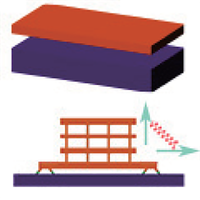
    <prism:url>http://link.aps.org/doi/10.1103/PhysRevLett.110.240402</prism:url>
    <prism:startingPage>240402</prism:startingPage>
    <dc:subject>General Physics: Statistical and Quantum Mechanics, Quantum Information, etc.</dc:subject>
    <prism:section>General Physics: Statistical and Quantum Mechanics, Quantum Information, etc.</prism:section>
  </item>
  <item rdf:about="http://link.aps.org/doi/10.1103/PhysRevLett.110.241101">
    <title>Detection Prospects for GeV Neutrinos from Collisionally Heated Gamma-ray Bursts with IceCube/DeepCore</title>
    <link>http://link.aps.org/doi/10.1103/PhysRevLett.110.241101</link>
    <description>Author(s): I. Bartos, A. M. Beloborodov, K. Hurley, and S. Márka&lt;br/&gt;&lt;p&gt;Jet reheating via nuclear collisions has recently been proposed as the main mechanism for gamma-ray burst (GRB) emission. In addition to producing the observed gamma rays, collisional heating must generate 10–100 GeV neutrinos, implying a close relation between the neutrino and gamma-ray luminositie...&lt;/p&gt;&lt;br/&gt;[Phys. Rev. Lett. 110, 241101] Published Wed Jun 12, 2013</description>
    <content:encoded><![CDATA[<p>Author(s): I. Bartos, A. M. Beloborodov, K. Hurley, and S. Márka</p><p> Jet reheating via nuclear collisions has recently been proposed as the main mechanism for gamma-ray burst (GRB) emission. In addition to producing the observed gamma rays, collisional heating must generate 10–100 GeV neutrinos, implying a close relation between the neutrino and gamma-ray luminositie...</p><p>[Phys. Rev. Lett. 110, 241101] Published Wed Jun 12, 2013</p>]]></content:encoded>
    <dc:title>Detection Prospects for GeV Neutrinos from Collisionally Heated Gamma-ray Bursts with IceCube/DeepCore</dc:title>
    <dc:creator>I. Bartos, A. M. Beloborodov, K. Hurley, and S. Márka</dc:creator>
    <dc:date>2013-06-12T10:00:00-04:00</dc:date>
    <dc:rights>Personal use only, all commercial or other reuse prohibited</dc:rights>
    <dc:identifier>doi:10.1103/PhysRevLett.110.241101</dc:identifier>
    <dc:source>Phys. Rev. Lett. 110, 241101 (2013)</dc:source>
    <dc:type>article</dc:type>
    <prism:publicationName>Physical Review Letters</prism:publicationName>
    <prism:volume>110</prism:volume>
    <prism:number>24</prism:number>
    <prism:publicationDate>2013-06-12T10:00:00-04:00</prism:publicationDate>
    <prism:doi>10.1103/PhysRevLett.110.241101</prism:doi>
    <prism:url>http://link.aps.org/doi/10.1103/PhysRevLett.110.241101</prism:url>
    <prism:startingPage>241101</prism:startingPage>
    <dc:subject>Gravitation and Astrophysics</dc:subject>
    <prism:section>Gravitation and Astrophysics</prism:section>
  </item>
  <item rdf:about="http://link.aps.org/doi/10.1103/PhysRevLett.110.245702">
    <title>Probing a Liquid to Glass Transition in Equilibrium</title>
    <link>http://link.aps.org/doi/10.1103/PhysRevLett.110.245702</link>
    <description>Author(s): Walter Kob and Ludovic Berthier&lt;br/&gt;&lt;p&gt;We use computer simulations to investigate the static properties of a simple glass-forming fluid in which the positions of a finite fraction of the particles have been frozen. By probing the equilibrium statistics of the overlap between independent configurations of the liquid, we find strong eviden...&lt;/p&gt;&lt;br/&gt;[Phys. Rev. Lett. 110, 245702] Published Tue Jun 11, 2013</description>
    <content:encoded><![CDATA[<p>Author(s): Walter Kob and Ludovic Berthier</p><p> We use computer simulations to investigate the static properties of a simple glass-forming fluid in which the positions of a finite fraction of the particles have been frozen. By probing the equilibrium statistics of the overlap between independent configurations of the liquid, we find strong eviden...</p><p>[Phys. Rev. Lett. 110, 245702] Published Tue Jun 11, 2013</p>]]></content:encoded>
    <dc:title>Probing a Liquid to Glass Transition in Equilibrium</dc:title>
    <dc:creator>Walter Kob and Ludovic Berthier</dc:creator>
    <dc:date>2013-06-11T10:00:00-04:00</dc:date>
    <dc:rights>Personal use only, all commercial or other reuse prohibited</dc:rights>
    <dc:identifier>doi:10.1103/PhysRevLett.110.245702</dc:identifier>
    <dc:source>Phys. Rev. Lett. 110, 245702 (2013)</dc:source>
    <dc:type>article</dc:type>
    <prism:publicationName>Physical Review Letters</prism:publicationName>
    <prism:volume>110</prism:volume>
    <prism:number>24</prism:number>
    <prism:publicationDate>2013-06-11T10:00:00-04:00</prism:publicationDate>
    <prism:doi>10.1103/PhysRevLett.110.245702</prism:doi>
    <prism:url>http://link.aps.org/doi/10.1103/PhysRevLett.110.245702</prism:url>
    <prism:startingPage>245702</prism:startingPage>
    <dc:subject>Condensed Matter: Structure, etc.</dc:subject>
    <prism:section>Condensed Matter: Structure, etc.</prism:section>
  </item>
  <item rdf:about="http://link.aps.org/doi/10.1103/PhysRevLett.110.247401">
    <title>Organic Luminescent Molecule with Energetically Equivalent Singlet and Triplet Excited States for Organic Light-Emitting Diodes</title>
    <link>http://link.aps.org/doi/10.1103/PhysRevLett.110.247401</link>
    <description>Author(s): Keigo Sato, Katsuyuki Shizu, Kazuaki Yoshimura, Atsushi Kawada, Hiroshi Miyazaki, and Chihaya Adachi&lt;br/&gt;&lt;p&gt;We demonstrate an organic molecule with an energy gap between its singlet and triplet excited states of almost zero (&lt;span style="font-style: italic;"&gt;Δ&lt;/span&gt;&lt;span style="font-style: italic;"&gt;E&lt;/span&gt;&lt;sub&gt;ST&lt;/sub&gt;∼0  eV). Such separation was realized through proper combination of an electron-donating indolocarbazole group and a diphenyltriazine electron-accepting moiety. Calculated and mea...&lt;/p&gt;&lt;br/&gt;&lt;img src="http://publish.aps.org/images/icons/physics_viewpoint.gif" alt="Selected for a Focus in Physics"/&gt; &lt;br/&gt;[Phys. Rev. Lett. 110, 247401] Published Mon Jun 10, 2013</description>
    <content:encoded><![CDATA[<p>Author(s): Keigo Sato, Katsuyuki Shizu, Kazuaki Yoshimura, Atsushi Kawada, Hiroshi Miyazaki, and Chihaya Adachi</p><p><img src="http://publish.aps.org/images/icons/physics_viewpoint.gif" alt="Selected for a Focus in Physics"/>  We demonstrate an organic molecule with an energy gap between its singlet and triplet excited states of almost zero (<span style="font-style: italic;">Δ</span><span style="font-style: italic;">E</span><sub>ST</sub>∼0  eV). Such separation was realized through proper combination of an electron-donating indolocarbazole group and a diphenyltriazine electron-accepting moiety. Calculated and mea...</p><p>[Phys. Rev. Lett. 110, 247401] Published Mon Jun 10, 2013</p>]]></content:encoded>
    <dc:title>Organic Luminescent Molecule with Energetically Equivalent Singlet and Triplet Excited States for Organic Light-Emitting Diodes</dc:title>
    <dc:creator>Keigo Sato, Katsuyuki Shizu, Kazuaki Yoshimura, Atsushi Kawada, Hiroshi Miyazaki, and Chihaya Adachi</dc:creator>
    <dc:date>2013-06-10T10:00:00-04:00</dc:date>
    <dc:rights>Personal use only, all commercial or other reuse prohibited</dc:rights>
    <dc:identifier>doi:10.1103/PhysRevLett.110.247401</dc:identifier>
    <dc:source>Phys. Rev. Lett. 110, 247401 (2013)</dc:source>
    <dc:type>article</dc:type>
    <prism:publicationName>Physical Review Letters</prism:publicationName>
    <prism:volume>110</prism:volume>
    <prism:number>24</prism:number>
    <prism:publicationDate>2013-06-10T10:00:00-04:00</prism:publicationDate>
    <prism:doi>10.1103/PhysRevLett.110.247401</prism:doi>
    <prism:url>http://link.aps.org/doi/10.1103/PhysRevLett.110.247401</prism:url>
    <prism:startingPage>247401</prism:startingPage>
    <dc:subject>Condensed Matter: Electronic Properties, etc.</dc:subject>
    <prism:section>Condensed Matter: Electronic Properties, etc.</prism:section>
  </item>
  <item rdf:about="http://link.aps.org/doi/10.1103/PhysRevLett.110.246601">
    <title>Z_{2} Peak of Noise Correlations in a Quantum Spin Hall Insulator</title>
    <link>http://link.aps.org/doi/10.1103/PhysRevLett.110.246601</link>
    <description>Author(s): Jonathan M. Edge, Jian Li, Pierre Delplace, and Markus Büttiker&lt;br/&gt;&lt;p&gt;We investigate the current noise correlations at a quantum point contact in a quantum spin Hall structure, focusing on the effect of a weak magnetic field in the presence of disorder. For the case of two equally biased terminals we discover a robust peak: the noise correlations vanish at &lt;span style="font-style: italic;"&gt;B&lt;/span&gt;=0 and are...&lt;/p&gt;&lt;br/&gt;[Phys. Rev. Lett. 110, 246601] Published Mon Jun 10, 2013</description>
    <content:encoded><![CDATA[<p>Author(s): Jonathan M. Edge, Jian Li, Pierre Delplace, and Markus Büttiker</p><p> We investigate the current noise correlations at a quantum point contact in a quantum spin Hall structure, focusing on the effect of a weak magnetic field in the presence of disorder. For the case of two equally biased terminals we discover a robust peak: the noise correlations vanish at <span style="font-style: italic;">B</span>=0 and are...</p><p>[Phys. Rev. Lett. 110, 246601] Published Mon Jun 10, 2013</p>]]></content:encoded>
    <dc:title>Z_{2} Peak of Noise Correlations in a Quantum Spin Hall Insulator</dc:title>
    <dc:creator>Jonathan M. Edge, Jian Li, Pierre Delplace, and Markus Büttiker</dc:creator>
    <dc:date>2013-06-10T10:00:00-04:00</dc:date>
    <dc:rights>Personal use only, all commercial or other reuse prohibited</dc:rights>
    <dc:identifier>doi:10.1103/PhysRevLett.110.246601</dc:identifier>
    <dc:source>Phys. Rev. Lett. 110, 246601 (2013)</dc:source>
    <dc:type>article</dc:type>
    <prism:publicationName>Physical Review Letters</prism:publicationName>
    <prism:volume>110</prism:volume>
    <prism:number>24</prism:number>
    <prism:publicationDate>2013-06-10T10:00:00-04:00</prism:publicationDate>
    <prism:doi>10.1103/PhysRevLett.110.246601</prism:doi>
    <prism:url>http://link.aps.org/doi/10.1103/PhysRevLett.110.246601</prism:url>
    <prism:startingPage>246601</prism:startingPage>
    <dc:subject>Condensed Matter: Electronic Properties, etc.</dc:subject>
    <prism:section>Condensed Matter: Electronic Properties, etc.</prism:section>
  </item>
  <item rdf:about="http://link.aps.org/doi/10.1103/PhysRevLett.110.241301">
    <title>Goldstone Bosons as Fractional Cosmic Neutrinos</title>
    <link>http://link.aps.org/doi/10.1103/PhysRevLett.110.241301</link>
    <description>Author(s): Steven Weinberg&lt;br/&gt;&lt;p&gt;It is suggested that Goldstone bosons may be masquerading as fractional cosmic neutrinos, contributing about 0.39 to what is reported as the effective number of neutrino types in the era before recombination. The broken symmetry associated with these Goldstone bosons is further speculated to be the ...&lt;/p&gt;&lt;br/&gt;[Phys. Rev. Lett. 110, 241301] Published Mon Jun 10, 2013</description>
    <content:encoded><![CDATA[<p>Author(s): Steven Weinberg</p><p> It is suggested that Goldstone bosons may be masquerading as fractional cosmic neutrinos, contributing about 0.39 to what is reported as the effective number of neutrino types in the era before recombination. The broken symmetry associated with these Goldstone bosons is further speculated to be the ...</p><p>[Phys. Rev. Lett. 110, 241301] Published Mon Jun 10, 2013</p>]]></content:encoded>
    <dc:title>Goldstone Bosons as Fractional Cosmic Neutrinos</dc:title>
    <dc:creator>Steven Weinberg</dc:creator>
    <dc:date>2013-06-10T10:00:00-04:00</dc:date>
    <dc:rights>Personal use only, all commercial or other reuse prohibited</dc:rights>
    <dc:identifier>doi:10.1103/PhysRevLett.110.241301</dc:identifier>
    <dc:source>Phys. Rev. Lett. 110, 241301 (2013)</dc:source>
    <dc:type>article</dc:type>
    <prism:publicationName>Physical Review Letters</prism:publicationName>
    <prism:volume>110</prism:volume>
    <prism:number>24</prism:number>
    <prism:publicationDate>2013-06-10T10:00:00-04:00</prism:publicationDate>
    <prism:doi>10.1103/PhysRevLett.110.241301</prism:doi>
    <prism:url>http://link.aps.org/doi/10.1103/PhysRevLett.110.241301</prism:url>
    <prism:startingPage>241301</prism:startingPage>
    <dc:subject>Gravitation and Astrophysics</dc:subject>
    <prism:section>Gravitation and Astrophysics</prism:section>
  </item>
  <item rdf:about="http://link.aps.org/doi/10.1103/PhysRevLett.110.238103">
    <title>Noisy Nonlinear Dynamics of Vesicles in Flow</title>
    <link>http://link.aps.org/doi/10.1103/PhysRevLett.110.238103</link>
    <description>Author(s): David Abreu and Udo Seifert&lt;br/&gt;&lt;p&gt;We present a model for the dynamics of fluid vesicles in linear flow which consistently includes thermal fluctuations and nonlinear coupling between different modes. At the transition between tank treading and tumbling, we predict a trembling motion which is at odds with the known deterministic moti...&lt;/p&gt;&lt;br/&gt;[Phys. Rev. Lett. 110, 238103] Published Fri Jun 07, 2013</description>
    <content:encoded><![CDATA[<p>Author(s): David Abreu and Udo Seifert</p><p> We present a model for the dynamics of fluid vesicles in linear flow which consistently includes thermal fluctuations and nonlinear coupling between different modes. At the transition between tank treading and tumbling, we predict a trembling motion which is at odds with the known deterministic moti...</p><p>[Phys. Rev. Lett. 110, 238103] Published Fri Jun 07, 2013</p>]]></content:encoded>
    <dc:title>Noisy Nonlinear Dynamics of Vesicles in Flow</dc:title>
    <dc:creator>David Abreu and Udo Seifert</dc:creator>
    <dc:date>2013-06-07T10:00:00-04:00</dc:date>
    <dc:rights>Personal use only, all commercial or other reuse prohibited</dc:rights>
    <dc:identifier>doi:10.1103/PhysRevLett.110.238103</dc:identifier>
    <dc:source>Phys. Rev. Lett. 110, 238103 (2013)</dc:source>
    <dc:type>article</dc:type>
    <prism:publicationName>Physical Review Letters</prism:publicationName>
    <prism:volume>110</prism:volume>
    <prism:number>23</prism:number>
    <prism:publicationDate>2013-06-07T10:00:00-04:00</prism:publicationDate>
    <prism:doi>10.1103/PhysRevLett.110.238103</prism:doi>
    <prism:url>http://link.aps.org/doi/10.1103/PhysRevLett.110.238103</prism:url>
    <prism:startingPage>238103</prism:startingPage>
    <dc:subject>Soft Matter, Biological, and Interdisciplinary Physics</dc:subject>
    <prism:section>Soft Matter, Biological, and Interdisciplinary Physics</prism:section>
  </item>
  <item rdf:about="http://link.aps.org/doi/10.1103/PhysRevLett.110.230602">
    <title>Measuring the Characteristic Function of the Work Distribution</title>
    <link>http://link.aps.org/doi/10.1103/PhysRevLett.110.230602</link>
    <description>Author(s): L. Mazzola, G. De Chiara, and M. Paternostro&lt;br/&gt;&lt;p&gt;We propose an interferometric setting for the ancilla-assisted measurement of the characteristic function of the work distribution following a time-dependent process experienced by a quantum system. We identify how the configuration of the effective interferometer is linked to the symmetries enjoyed...&lt;/p&gt;&lt;br/&gt;[Phys. Rev. Lett. 110, 230602] Published Fri Jun 07, 2013</description>
    <content:encoded><![CDATA[<p>Author(s): L. Mazzola, G. De Chiara, and M. Paternostro</p><p> We propose an interferometric setting for the ancilla-assisted measurement of the characteristic function of the work distribution following a time-dependent process experienced by a quantum system. We identify how the configuration of the effective interferometer is linked to the symmetries enjoyed...</p><p>[Phys. Rev. Lett. 110, 230602] Published Fri Jun 07, 2013</p>]]></content:encoded>
    <dc:title>Measuring the Characteristic Function of the Work Distribution</dc:title>
    <dc:creator>L. Mazzola, G. De Chiara, and M. Paternostro</dc:creator>
    <dc:date>2013-06-07T10:00:00-04:00</dc:date>
    <dc:rights>Personal use only, all commercial or other reuse prohibited</dc:rights>
    <dc:identifier>doi:10.1103/PhysRevLett.110.230602</dc:identifier>
    <dc:source>Phys. Rev. Lett. 110, 230602 (2013)</dc:source>
    <dc:type>article</dc:type>
    <prism:publicationName>Physical Review Letters</prism:publicationName>
    <prism:volume>110</prism:volume>
    <prism:number>23</prism:number>
    <prism:publicationDate>2013-06-07T10:00:00-04:00</prism:publicationDate>
    <prism:doi>10.1103/PhysRevLett.110.230602</prism:doi>
    <prism:url>http://link.aps.org/doi/10.1103/PhysRevLett.110.230602</prism:url>
    <prism:startingPage>230602</prism:startingPage>
    <dc:subject>General Physics: Statistical and Quantum Mechanics, Quantum Information, etc.</dc:subject>
    <prism:section>General Physics: Statistical and Quantum Mechanics, Quantum Information, etc.</prism:section>
  </item>
  <item rdf:about="http://link.aps.org/doi/10.1103/PhysRevLett.110.230601">
    <title>Extracting Quantum Work Statistics and Fluctuation Theorems by Single-Qubit Interferometry</title>
    <link>http://link.aps.org/doi/10.1103/PhysRevLett.110.230601</link>
    <description>Author(s): R. Dorner, S. R. Clark, L. Heaney, R. Fazio, J. Goold, and V. Vedral&lt;br/&gt;&lt;p&gt;We propose an experimental scheme to verify the quantum nonequilibrium fluctuation relations using current technology. Specifically, we show that the characteristic function of the work distribution for a nonequilibrium quench of a general quantum system can be extracted by Ramsey interferometry of ...&lt;/p&gt;&lt;br/&gt;[Phys. Rev. Lett. 110, 230601] Published Fri Jun 07, 2013</description>
    <content:encoded><![CDATA[<p>Author(s): R. Dorner, S. R. Clark, L. Heaney, R. Fazio, J. Goold, and V. Vedral</p><p> We propose an experimental scheme to verify the quantum nonequilibrium fluctuation relations using current technology. Specifically, we show that the characteristic function of the work distribution for a nonequilibrium quench of a general quantum system can be extracted by Ramsey interferometry of ...</p><p>[Phys. Rev. Lett. 110, 230601] Published Fri Jun 07, 2013</p>]]></content:encoded>
    <dc:title>Extracting Quantum Work Statistics and Fluctuation Theorems by Single-Qubit Interferometry</dc:title>
    <dc:creator>R. Dorner, S. R. Clark, L. Heaney, R. Fazio, J. Goold, and V. Vedral</dc:creator>
    <dc:date>2013-06-07T10:00:00-04:00</dc:date>
    <dc:rights>Personal use only, all commercial or other reuse prohibited</dc:rights>
    <dc:identifier>doi:10.1103/PhysRevLett.110.230601</dc:identifier>
    <dc:source>Phys. Rev. Lett. 110, 230601 (2013)</dc:source>
    <dc:type>article</dc:type>
    <prism:publicationName>Physical Review Letters</prism:publicationName>
    <prism:volume>110</prism:volume>
    <prism:number>23</prism:number>
    <prism:publicationDate>2013-06-07T10:00:00-04:00</prism:publicationDate>
    <prism:doi>10.1103/PhysRevLett.110.230601</prism:doi>
    <prism:url>http://link.aps.org/doi/10.1103/PhysRevLett.110.230601</prism:url>
    <prism:startingPage>230601</prism:startingPage>
    <dc:subject>General Physics: Statistical and Quantum Mechanics, Quantum Information, etc.</dc:subject>
    <prism:section>General Physics: Statistical and Quantum Mechanics, Quantum Information, etc.</prism:section>
  </item>
  <item rdf:about="http://link.aps.org/doi/10.1103/PhysRevLett.110.233902">
    <title>Supersymmetric Optical Structures</title>
    <link>http://link.aps.org/doi/10.1103/PhysRevLett.110.233902</link>
    <description>Author(s): Mohammad-Ali Miri, Matthias Heinrich, Ramy El-Ganainy, and Demetrios N. Christodoulides&lt;br/&gt;&lt;p&gt;We show that supersymmetry can provide a versatile platform in synthesizing a new class of optical structures with desired properties and functionalities. By exploiting the intimate relationship between superpatners, one can systematically construct index potentials capable of exhibiting the same sc...&lt;/p&gt;&lt;br/&gt;&lt;img src="http://publish.aps.org/images/icons/physics_viewpoint.gif" alt="Selected for a Synopsis in Physics"/&gt; &lt;br/&gt;[Phys. Rev. Lett. 110, 233902] Published Thu Jun 06, 2013</description>
    <content:encoded><![CDATA[<p>Author(s): Mohammad-Ali Miri, Matthias Heinrich, Ramy El-Ganainy, and Demetrios N. Christodoulides</p><p><img src="http://publish.aps.org/images/icons/physics_viewpoint.gif" alt="Selected for a Synopsis in Physics"/>  We show that supersymmetry can provide a versatile platform in synthesizing a new class of optical structures with desired properties and functionalities. By exploiting the intimate relationship between superpatners, one can systematically construct index potentials capable of exhibiting the same sc...</p><p>[Phys. Rev. Lett. 110, 233902] Published Thu Jun 06, 2013</p>]]></content:encoded>
    <dc:title>Supersymmetric Optical Structures</dc:title>
    <dc:creator>Mohammad-Ali Miri, Matthias Heinrich, Ramy El-Ganainy, and Demetrios N. Christodoulides</dc:creator>
    <dc:date>2013-06-06T10:00:00-04:00</dc:date>
    <dc:rights>Personal use only, all commercial or other reuse prohibited</dc:rights>
    <dc:identifier>doi:10.1103/PhysRevLett.110.233902</dc:identifier>
    <dc:source>Phys. Rev. Lett. 110, 233902 (2013)</dc:source>
    <dc:type>article</dc:type>
    <prism:publicationName>Physical Review Letters</prism:publicationName>
    <prism:volume>110</prism:volume>
    <prism:number>23</prism:number>
    <prism:publicationDate>2013-06-06T10:00:00-04:00</prism:publicationDate>
    <prism:doi>10.1103/PhysRevLett.110.233902</prism:doi>
    <prism:url>http://link.aps.org/doi/10.1103/PhysRevLett.110.233902</prism:url>
    <prism:startingPage>233902</prism:startingPage>
    <dc:subject>Nonlinear Dynamics, Fluid Dynamics, Classical Optics, etc.</dc:subject>
    <prism:section>Nonlinear Dynamics, Fluid Dynamics, Classical Optics, etc.</prism:section>
  </item>
  <item rdf:about="http://link.aps.org/doi/10.1103/PhysRevLett.110.230501">
    <title>Experimental Quantum Computing to Solve Systems of Linear Equations</title>
    <link>http://link.aps.org/doi/10.1103/PhysRevLett.110.230501</link>
    <description>Author(s): X.-D. Cai, C. Weedbrook, Z.-E. Su, M.-C. Chen, Mile Gu, M.-J. Zhu, Li Li, Nai-Le Liu, Chao-Yang Lu, and Jian-Wei Pan&lt;br/&gt;&lt;p&gt;Solving linear systems of equations is ubiquitous in all areas of science and engineering. With rapidly growing data sets, such a task can be intractable for classical computers, as the best known classical algorithms require a time proportional to the number of variables &lt;span style="font-style: italic;"&gt;N&lt;/span&gt;. A recently proposed quan...&lt;/p&gt;&lt;br/&gt;&lt;img src="http://publish.aps.org/images/icons/physics_viewpoint.gif" alt="Selected for a Synopsis in Physics"/&gt; &lt;br/&gt;[Phys. Rev. Lett. 110, 230501] Published Thu Jun 06, 2013</description>
    <content:encoded><![CDATA[<p>Author(s): X.-D. Cai, C. Weedbrook, Z.-E. Su, M.-C. Chen, Mile Gu, M.-J. Zhu, Li Li, Nai-Le Liu, Chao-Yang Lu, and Jian-Wei Pan</p><p><img src="http://publish.aps.org/images/icons/physics_viewpoint.gif" alt="Selected for a Synopsis in Physics"/>  Solving linear systems of equations is ubiquitous in all areas of science and engineering. With rapidly growing data sets, such a task can be intractable for classical computers, as the best known classical algorithms require a time proportional to the number of variables <span style="font-style: italic;">N</span>. A recently proposed quan...</p><p>[Phys. Rev. Lett. 110, 230501] Published Thu Jun 06, 2013</p>]]></content:encoded>
    <dc:title>Experimental Quantum Computing to Solve Systems of Linear Equations</dc:title>
    <dc:creator>X.-D. Cai, C. Weedbrook, Z.-E. Su, M.-C. Chen, Mile Gu, M.-J. Zhu, Li Li, Nai-Le Liu, Chao-Yang Lu, and Jian-Wei Pan</dc:creator>
    <dc:date>2013-06-06T10:00:00-04:00</dc:date>
    <dc:rights>Personal use only, all commercial or other reuse prohibited</dc:rights>
    <dc:identifier>doi:10.1103/PhysRevLett.110.230501</dc:identifier>
    <dc:source>Phys. Rev. Lett. 110, 230501 (2013)</dc:source>
    <dc:type>article</dc:type>
    <prism:publicationName>Physical Review Letters</prism:publicationName>
    <prism:volume>110</prism:volume>
    <prism:number>23</prism:number>
    <prism:publicationDate>2013-06-06T10:00:00-04:00</prism:publicationDate>
    <prism:doi>10.1103/PhysRevLett.110.230501</prism:doi>
    <prism:url>http://link.aps.org/doi/10.1103/PhysRevLett.110.230501</prism:url>
    <prism:startingPage>230501</prism:startingPage>
    <dc:subject>General Physics: Statistical and Quantum Mechanics, Quantum Information, etc.</dc:subject>
    <prism:section>General Physics: Statistical and Quantum Mechanics, Quantum Information, etc.</prism:section>
  </item>
  <item rdf:about="http://link.aps.org/doi/10.1103/PhysRevLett.110.236802">
    <title>Local Transport Measurements at Mesoscopic Length Scales Using Scanning Tunneling Potentiometry</title>
    <link>http://link.aps.org/doi/10.1103/PhysRevLett.110.236802</link>
    <description>Author(s): Weigang Wang (王魏刚), Ko Munakata, Michael Rozler, and Malcolm R. Beasley&lt;br/&gt;&lt;p&gt;Under mesoscopic conditions, the transport potential on a thin film carrying a current is theoretically expected to bear spatial variation due to quantum interference. Scanning tunneling potentiometry is the ideal tool to investigate such variation, by virtue of its high spatial resolution. We repor...&lt;/p&gt;&lt;br/&gt;[Phys. Rev. Lett. 110, 236802] Published Tue Jun 04, 2013</description>
    <content:encoded><![CDATA[<p>Author(s): Weigang Wang (王魏刚), Ko Munakata, Michael Rozler, and Malcolm R. Beasley</p><p> Under mesoscopic conditions, the transport potential on a thin film carrying a current is theoretically expected to bear spatial variation due to quantum interference. Scanning tunneling potentiometry is the ideal tool to investigate such variation, by virtue of its high spatial resolution. We repor...</p><p>[Phys. Rev. Lett. 110, 236802] Published Tue Jun 04, 2013</p>]]></content:encoded>
    <dc:title>Local Transport Measurements at Mesoscopic Length Scales Using Scanning Tunneling Potentiometry</dc:title>
    <dc:creator>Weigang Wang (王魏刚), Ko Munakata, Michael Rozler, and Malcolm R. Beasley</dc:creator>
    <dc:date>2013-06-04T10:00:00-04:00</dc:date>
    <dc:rights>Personal use only, all commercial or other reuse prohibited</dc:rights>
    <dc:identifier>doi:10.1103/PhysRevLett.110.236802</dc:identifier>
    <dc:source>Phys. Rev. Lett. 110, 236802 (2013)</dc:source>
    <dc:type>article</dc:type>
    <prism:publicationName>Physical Review Letters</prism:publicationName>
    <prism:volume>110</prism:volume>
    <prism:number>23</prism:number>
    <prism:publicationDate>2013-06-04T10:00:00-04:00</prism:publicationDate>
    <prism:doi>10.1103/PhysRevLett.110.236802</prism:doi>
    <prism:url>http://link.aps.org/doi/10.1103/PhysRevLett.110.236802</prism:url>
    <prism:startingPage>236802</prism:startingPage>
    <dc:subject>Condensed Matter: Electronic Properties, etc.</dc:subject>
    <prism:section>Condensed Matter: Electronic Properties, etc.</prism:section>
  </item>
  <item rdf:about="http://link.aps.org/doi/10.1103/PhysRevLett.110.235301">
    <title>Super Efimov Effect of Resonantly Interacting Fermions in Two Dimensions</title>
    <link>http://link.aps.org/doi/10.1103/PhysRevLett.110.235301</link>
    <description>Author(s): Yusuke Nishida, Sergej Moroz, and Dam Thanh Son&lt;br/&gt;&lt;p&gt;We study a system of spinless fermions in two dimensions with a short-range interaction fine-tuned to a &lt;span style="font-style: italic;"&gt;p&lt;/span&gt;-wave resonance. We show that three such fermions form an infinite tower of bound states of orbital angular momentum &lt;span style="font-style: italic;"&gt;ℓ&lt;/span&gt;=±1 and their binding energies obey a universal doubly exponential scaling &lt;span style="font-style: italic;"&gt;E&lt;/span&gt;&lt;sub&gt;3&lt;/sub&gt;&lt;sup&gt;...&lt;/sup&gt;&lt;/p&gt;&lt;br/&gt;[Phys. Rev. Lett. 110, 235301] Published Tue Jun 04, 2013</description>
    <content:encoded><![CDATA[<p>Author(s): Yusuke Nishida, Sergej Moroz, and Dam Thanh Son</p><p> We study a system of spinless fermions in two dimensions with a short-range interaction fine-tuned to a <span style="font-style: italic;">p</span>-wave resonance. We show that three such fermions form an infinite tower of bound states of orbital angular momentum <span style="font-style: italic;">ℓ</span>=±1 and their binding energies obey a universal doubly exponential scaling <span style="font-style: italic;">E</span><sub>3</sub><sup>...</sup></p><p>[Phys. Rev. Lett. 110, 235301] Published Tue Jun 04, 2013</p>]]></content:encoded>
    <dc:title>Super Efimov Effect of Resonantly Interacting Fermions in Two Dimensions</dc:title>
    <dc:creator>Yusuke Nishida, Sergej Moroz, and Dam Thanh Son</dc:creator>
    <dc:date>2013-06-04T10:00:00-04:00</dc:date>
    <dc:rights>Personal use only, all commercial or other reuse prohibited</dc:rights>
    <dc:identifier>doi:10.1103/PhysRevLett.110.235301</dc:identifier>
    <dc:source>Phys. Rev. Lett. 110, 235301 (2013)</dc:source>
    <dc:type>article</dc:type>
    <prism:publicationName>Physical Review Letters</prism:publicationName>
    <prism:volume>110</prism:volume>
    <prism:number>23</prism:number>
    <prism:publicationDate>2013-06-04T10:00:00-04:00</prism:publicationDate>
    <prism:doi>10.1103/PhysRevLett.110.235301</prism:doi>
    <prism:url>http://link.aps.org/doi/10.1103/PhysRevLett.110.235301</prism:url>
    <prism:startingPage>235301</prism:startingPage>
    <dc:subject>Condensed Matter: Structure, etc.</dc:subject>
    <prism:section>Condensed Matter: Structure, etc.</prism:section>
  </item>
  <item rdf:about="http://link.aps.org/doi/10.1103/PhysRevLett.110.231801">
    <title>Gauge Theory for Baryon and Lepton Numbers with Leptoquarks</title>
    <link>http://link.aps.org/doi/10.1103/PhysRevLett.110.231801</link>
    <description>Author(s): Michael Duerr, Pavel Fileviez Pérez, and Mark B. Wise&lt;br/&gt;&lt;p&gt;Models where the baryon (&lt;span style="font-style: italic;"&gt;B&lt;/span&gt;) and lepton (&lt;span style="font-style: italic;"&gt;L&lt;/span&gt;) numbers are local gauge symmetries that are spontaneously broken at a low scale are revisited. We find new extensions of the standard model which predict the existence of fermions that carry both baryon and lepton numbers (i.e., leptoquarks). The local bary...&lt;/p&gt;&lt;br/&gt;[Phys. Rev. Lett. 110, 231801] Published Tue Jun 04, 2013</description>
    <content:encoded><![CDATA[<p>Author(s): Michael Duerr, Pavel Fileviez Pérez, and Mark B. Wise</p><p> Models where the baryon (<span style="font-style: italic;">B</span>) and lepton (<span style="font-style: italic;">L</span>) numbers are local gauge symmetries that are spontaneously broken at a low scale are revisited. We find new extensions of the standard model which predict the existence of fermions that carry both baryon and lepton numbers (i.e., leptoquarks). The local bary...</p><p>[Phys. Rev. Lett. 110, 231801] Published Tue Jun 04, 2013</p>]]></content:encoded>
    <dc:title>Gauge Theory for Baryon and Lepton Numbers with Leptoquarks</dc:title>
    <dc:creator>Michael Duerr, Pavel Fileviez Pérez, and Mark B. Wise</dc:creator>
    <dc:date>2013-06-04T10:00:00-04:00</dc:date>
    <dc:rights>Personal use only, all commercial or other reuse prohibited</dc:rights>
    <dc:identifier>doi:10.1103/PhysRevLett.110.231801</dc:identifier>
    <dc:source>Phys. Rev. Lett. 110, 231801 (2013)</dc:source>
    <dc:type>article</dc:type>
    <prism:publicationName>Physical Review Letters</prism:publicationName>
    <prism:volume>110</prism:volume>
    <prism:number>23</prism:number>
    <prism:publicationDate>2013-06-04T10:00:00-04:00</prism:publicationDate>
    <prism:doi>10.1103/PhysRevLett.110.231801</prism:doi>
    <prism:url>http://link.aps.org/doi/10.1103/PhysRevLett.110.231801</prism:url>
    <prism:startingPage>231801</prism:startingPage>
    <dc:subject>Elementary Particles and Fields</dc:subject>
    <prism:section>Elementary Particles and Fields</prism:section>
  </item>
  <item rdf:about="http://link.aps.org/doi/10.1103/PhysRevLett.110.236601">
    <title>Realization of a Double-Barrier Resonant Tunneling Diode for Cavity Polaritons</title>
    <link>http://link.aps.org/doi/10.1103/PhysRevLett.110.236601</link>
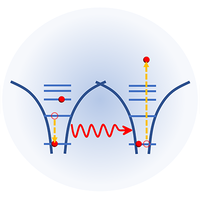
    <description>Author(s): H. S. Nguyen, D. Vishnevsky, C. Sturm, D. Tanese, D. Solnyshkov, E. Galopin, A. Lemaître, I. Sagnes, A. Amo, G. Malpuech, and J. Bloch&lt;br/&gt;&lt;p&gt;We report on the realization of a double-barrier resonant tunneling diode for cavity polaritons, by lateral patterning of a one-dimensional cavity. Sharp transmission resonances are demonstrated when sending a polariton flow onto the device. We show that a nonresonant beam can be used as an optical ...&lt;/p&gt;&lt;br/&gt;&lt;img src="http://publish.aps.org/images/icons/physics_viewpoint.gif" alt="Selected for a Viewpoint in Physics"/&gt; &lt;br/&gt;[Phys. Rev. Lett. 110, 236601] Published Mon Jun 03, 2013</description>
    <content:encoded><![CDATA[<p>Author(s): H. S. Nguyen, D. Vishnevsky, C. Sturm, D. Tanese, D. Solnyshkov, E. Galopin, A. Lemaître, I. Sagnes, A. Amo, G. Malpuech, and J. Bloch</p><p><img src="http://publish.aps.org/images/icons/physics_viewpoint.gif" alt="Selected for a Viewpoint in Physics"/>  We report on the realization of a double-barrier resonant tunneling diode for cavity polaritons, by lateral patterning of a one-dimensional cavity. Sharp transmission resonances are demonstrated when sending a polariton flow onto the device. We show that a nonresonant beam can be used as an optical ...</p><p>[Phys. Rev. Lett. 110, 236601] Published Mon Jun 03, 2013</p>]]></content:encoded>
    <dc:title>Realization of a Double-Barrier Resonant Tunneling Diode for Cavity Polaritons</dc:title>
    <dc:creator>H. S. Nguyen, D. Vishnevsky, C. Sturm, D. Tanese, D. Solnyshkov, E. Galopin, A. Lemaître, I. Sagnes, A. Amo, G. Malpuech, and J. Bloch</dc:creator>
    <dc:date>2013-06-03T10:00:00-04:00</dc:date>
    <dc:rights>Personal use only, all commercial or other reuse prohibited</dc:rights>
    <dc:identifier>doi:10.1103/PhysRevLett.110.236601</dc:identifier>
    <dc:source>Phys. Rev. Lett. 110, 236601 (2013)</dc:source>
    <dc:type>article</dc:type>
    <prism:publicationName>Physical Review Letters</prism:publicationName>
    <prism:volume>110</prism:volume>
    <prism:number>23</prism:number>
    <prism:publicationDate>2013-06-03T10:00:00-04:00</prism:publicationDate>
    <prism:doi>10.1103/PhysRevLett.110.236601</prism:doi>
    <prism:url>http://link.aps.org/doi/10.1103/PhysRevLett.110.236601</prism:url>
    <prism:startingPage>236601</prism:startingPage>
    <dc:subject>Condensed Matter: Electronic Properties, etc.</dc:subject>
    <prism:section>Condensed Matter: Electronic Properties, etc.</prism:section>
  </item>
  <item rdf:about="http://link.aps.org/doi/10.1103/PhysRevLett.110.228104">
    <title>Cooperatively Generated Stresslet Flows Supply Fresh Fluid to Multicellular Choanoflagellate Colonies</title>
    <link>http://link.aps.org/doi/10.1103/PhysRevLett.110.228104</link>
    <description>Author(s): Marcus Roper, Mark J. Dayel, Rachel E. Pepper, and M. A. R. Koehl&lt;br/&gt;&lt;p&gt;The flagellated protozoan &lt;span style="font-style: italic;"&gt;Salpingoeca rosetta&lt;/span&gt; is one of the closest relatives of multicellular animals. Unicellular &lt;span style="font-style: italic;"&gt;S. rosetta&lt;/span&gt; can be induced to form multicellular colonies, but colonies swim more slowly than individual cells so the advantages conferred by colony formation are uncertain. Here we use...&lt;/p&gt;&lt;br/&gt;[Phys. Rev. Lett. 110, 228104] Published Fri May 31, 2013</description>
    <content:encoded><![CDATA[<p>Author(s): Marcus Roper, Mark J. Dayel, Rachel E. Pepper, and M. A. R. Koehl</p><p> The flagellated protozoan <span style="font-style: italic;">Salpingoeca rosetta</span> is one of the closest relatives of multicellular animals. Unicellular <span style="font-style: italic;">S. rosetta</span> can be induced to form multicellular colonies, but colonies swim more slowly than individual cells so the advantages conferred by colony formation are uncertain. Here we use...</p><p>[Phys. Rev. Lett. 110, 228104] Published Fri May 31, 2013</p>]]></content:encoded>
    <dc:title>Cooperatively Generated Stresslet Flows Supply Fresh Fluid to Multicellular Choanoflagellate Colonies</dc:title>
    <dc:creator>Marcus Roper, Mark J. Dayel, Rachel E. Pepper, and M. A. R. Koehl</dc:creator>
    <dc:date>2013-05-31T10:00:00-04:00</dc:date>
    <dc:rights>Personal use only, all commercial or other reuse prohibited</dc:rights>
    <dc:identifier>doi:10.1103/PhysRevLett.110.228104</dc:identifier>
    <dc:source>Phys. Rev. Lett. 110, 228104 (2013)</dc:source>
    <dc:type>article</dc:type>
    <prism:publicationName>Physical Review Letters</prism:publicationName>
    <prism:volume>110</prism:volume>
    <prism:number>22</prism:number>
    <prism:publicationDate>2013-05-31T10:00:00-04:00</prism:publicationDate>
    <prism:doi>10.1103/PhysRevLett.110.228104</prism:doi>
    <prism:url>http://link.aps.org/doi/10.1103/PhysRevLett.110.228104</prism:url>
    <prism:startingPage>228104</prism:startingPage>
    <dc:subject>Soft Matter, Biological, and Interdisciplinary Physics</dc:subject>
    <prism:section>Soft Matter, Biological, and Interdisciplinary Physics</prism:section>
  </item>
  <item rdf:about="http://link.aps.org/doi/10.1103/PhysRevLett.110.223003">
    <title>Ground-State Cooling of a Single Atom at the Center of an Optical Cavity</title>
    <link>http://link.aps.org/doi/10.1103/PhysRevLett.110.223003</link>
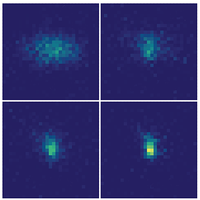
    <description>Author(s): Andreas Reiserer, Christian Nölleke, Stephan Ritter, and Gerhard Rempe&lt;br/&gt;&lt;p&gt;A single neutral atom is trapped in a three-dimensional optical lattice at the center of a high-finesse optical resonator. Using fluorescence imaging and a shiftable standing-wave trap, the atom is deterministically loaded into the maximum of the intracavity field where the atom-cavity coupling is s...&lt;/p&gt;&lt;br/&gt;&lt;img src="http://publish.aps.org/images/icons/physics_viewpoint.gif" alt="Selected for a Synopsis in Physics"/&gt; &lt;br/&gt;[Phys. Rev. Lett. 110, 223003] Published Thu May 30, 2013</description>
    <content:encoded><![CDATA[<p>Author(s): Andreas Reiserer, Christian Nölleke, Stephan Ritter, and Gerhard Rempe</p><p><img src="http://publish.aps.org/images/icons/physics_viewpoint.gif" alt="Selected for a Synopsis in Physics"/>  A single neutral atom is trapped in a three-dimensional optical lattice at the center of a high-finesse optical resonator. Using fluorescence imaging and a shiftable standing-wave trap, the atom is deterministically loaded into the maximum of the intracavity field where the atom-cavity coupling is s...</p><p>[Phys. Rev. Lett. 110, 223003] Published Thu May 30, 2013</p>]]></content:encoded>
    <dc:title>Ground-State Cooling of a Single Atom at the Center of an Optical Cavity</dc:title>
    <dc:creator>Andreas Reiserer, Christian Nölleke, Stephan Ritter, and Gerhard Rempe</dc:creator>
    <dc:date>2013-05-30T10:00:00-04:00</dc:date>
    <dc:rights>Personal use only, all commercial or other reuse prohibited</dc:rights>
    <dc:identifier>doi:10.1103/PhysRevLett.110.223003</dc:identifier>
    <dc:source>Phys. Rev. Lett. 110, 223003 (2013)</dc:source>
    <dc:type>article</dc:type>
    <prism:publicationName>Physical Review Letters</prism:publicationName>
    <prism:volume>110</prism:volume>
    <prism:number>22</prism:number>
    <prism:publicationDate>2013-05-30T10:00:00-04:00</prism:publicationDate>
    <prism:doi>10.1103/PhysRevLett.110.223003</prism:doi>
    <prism:url>http://link.aps.org/doi/10.1103/PhysRevLett.110.223003</prism:url>
    <prism:startingPage>223003</prism:startingPage>
    <dc:subject>Atomic, Molecular, and Optical Physics</dc:subject>
    <prism:section>Atomic, Molecular, and Optical Physics</prism:section>
  </item>
  <item rdf:about="http://link.aps.org/doi/10.1103/PhysRevLett.110.221601">
    <title>First Observation of CP Violation in the Decays of B_{s}^{0} Mesons</title>
    <link>http://link.aps.org/doi/10.1103/PhysRevLett.110.221601</link>
    <description>Author(s): R. Aaij et al. (LHCb Collaboration)&lt;br/&gt;&lt;p&gt;Using &lt;span style="font-style: italic;"&gt;p&lt;/span&gt;&lt;span style="font-style: italic;"&gt;p&lt;/span&gt; collision data corresponding to an integrated luminosity of 1.0  fb&lt;sup&gt;-1&lt;/sup&gt; and collected by LHCb in 2011 at a center-of-mass energy of 7 TeV, we report the measurement of direct &lt;span style="font-style: italic;"&gt;C&lt;/span&gt;&lt;span style="font-style: italic;"&gt;P&lt;/span&gt; violation in &lt;span style="font-style: italic;"&gt;B&lt;/span&gt;&lt;sub&gt;&lt;span style="font-style: italic;"&gt;s&lt;/span&gt;&lt;/sub&gt;&lt;sup&gt;0&lt;/sup&gt;→&lt;span style="font-style: italic;"&gt;K&lt;/span&gt;&lt;sup&gt;-&lt;/sup&gt;&lt;span style="font-style: italic;"&gt;π&lt;/span&gt;&lt;sup&gt;+&lt;/sup&gt; decays, &lt;span style="font-style: italic;"&gt;A&lt;/span&gt;&lt;sub&gt;&lt;span style="font-style: italic;"&gt;C&lt;/span&gt;&lt;span style="font-style: italic;"&gt;P&lt;/span&gt;&lt;/sub&gt;(&lt;span style="font-style: italic;"&gt;B&lt;/span&gt;&lt;sub&gt;&lt;span style="font-style: italic;"&gt;s&lt;/span&gt;&lt;/sub&gt;&lt;sup&gt;0&lt;/sup&gt;→&lt;span style="font-style: italic;"&gt;K&lt;/span&gt;&lt;sup&gt;-&lt;/sup&gt;&lt;span style="font-style: italic;"&gt;π&lt;/span&gt;&lt;sup&gt;+&lt;/sup&gt;)=0.27±0.04 (stat)±0.01 (syst), with significance exceeding 5 standard de...&lt;/p&gt;&lt;br/&gt;&lt;img src="http://publish.aps.org/images/icons/physics_viewpoint.gif" alt="Selected for a Synopsis in Physics"/&gt; &lt;img src="http://publish.aps.org/images/icons/creativecommons.png" width="30" height="30" alt="Creative Commons"/&gt; &lt;br/&gt;[Phys. Rev. Lett. 110, 221601] Published Thu May 30, 2013</description>
    <content:encoded><![CDATA[<p>Author(s): R. Aaij et al. (LHCb Collaboration)</p><p><img src="http://publish.aps.org/images/icons/physics_viewpoint.gif" alt="Selected for a Synopsis in Physics"/> <img src="http://publish.aps.org/images/icons/creativecommons.png" width="30" height="30" alt="Creative Commons"/>  Using <span style="font-style: italic;">p</span><span style="font-style: italic;">p</span> collision data corresponding to an integrated luminosity of 1.0  fb<sup>-1</sup> and collected by LHCb in 2011 at a center-of-mass energy of 7 TeV, we report the measurement of direct <span style="font-style: italic;">C</span><span style="font-style: italic;">P</span> violation in <span style="font-style: italic;">B</span><sub><span style="font-style: italic;">s</span></sub><sup>0</sup>→<span style="font-style: italic;">K</span><sup>-</sup><span style="font-style: italic;">π</span><sup>+</sup> decays, <span style="font-style: italic;">A</span><sub><span style="font-style: italic;">C</span><span style="font-style: italic;">P</span></sub>(<span style="font-style: italic;">B</span><sub><span style="font-style: italic;">s</span></sub><sup>0</sup>→<span style="font-style: italic;">K</span><sup>-</sup><span style="font-style: italic;">π</span><sup>+</sup>)=0.27±0.04 (stat)±0.01 (syst), with significance exceeding 5 standard de...</p><p>[Phys. Rev. Lett. 110, 221601] Published Thu May 30, 2013</p>]]></content:encoded>
    <dc:title>First Observation of CP Violation in the Decays of B_{s}^{0} Mesons</dc:title>
    <dc:creator>R. Aaij et al. (LHCb Collaboration)</dc:creator>
    <dc:date>2013-05-30T10:00:00-04:00</dc:date>
    <dc:rights>Personal use only, all commercial or other reuse prohibited</dc:rights>
    <dc:identifier>doi:10.1103/PhysRevLett.110.221601</dc:identifier>
    <dc:source>Phys. Rev. Lett. 110, 221601 (2013)</dc:source>
    <dc:type>article</dc:type>
    <prism:publicationName>Physical Review Letters</prism:publicationName>
    <prism:volume>110</prism:volume>
    <prism:number>22</prism:number>
    <prism:publicationDate>2013-05-30T10:00:00-04:00</prism:publicationDate>
    <prism:doi>10.1103/PhysRevLett.110.221601</prism:doi>
    <prism:url>http://link.aps.org/doi/10.1103/PhysRevLett.110.221601</prism:url>
    <prism:startingPage>221601</prism:startingPage>
    <dc:subject>Elementary Particles and Fields</dc:subject>
    <prism:section>Elementary Particles and Fields</prism:section>
  </item>
  <item rdf:about="http://link.aps.org/doi/10.1103/PhysRevLett.110.221102">
    <title>Gas Cloud G2 Can Illuminate the Black Hole Population Near the Galactic Center</title>
    <link>http://link.aps.org/doi/10.1103/PhysRevLett.110.221102</link>
    <description>Author(s): Imre Bartos, Zoltán Haiman, Bence Kocsis, and Szabolcs Márka&lt;br/&gt;&lt;p&gt;Galactic nuclei are expected to be densely populated with stellar- and intermediate-mass black holes. Exploring this population will have important consequences for the observation prospects of gravitational waves as well as understanding galactic evolution. The gas cloud G2 currently approaching Sg...&lt;/p&gt;&lt;br/&gt;&lt;img src="http://publish.aps.org/images/icons/physics_viewpoint.gif" alt="Selected for a Synopsis in Physics"/&gt; &lt;br/&gt;[Phys. Rev. Lett. 110, 221102] Published Thu May 30, 2013</description>
    <content:encoded><![CDATA[<p>Author(s): Imre Bartos, Zoltán Haiman, Bence Kocsis, and Szabolcs Márka</p><p><img src="http://publish.aps.org/images/icons/physics_viewpoint.gif" alt="Selected for a Synopsis in Physics"/>  Galactic nuclei are expected to be densely populated with stellar- and intermediate-mass black holes. Exploring this population will have important consequences for the observation prospects of gravitational waves as well as understanding galactic evolution. The gas cloud G2 currently approaching Sg...</p><p>[Phys. Rev. Lett. 110, 221102] Published Thu May 30, 2013</p>]]></content:encoded>
    <dc:title>Gas Cloud G2 Can Illuminate the Black Hole Population Near the Galactic Center</dc:title>
    <dc:creator>Imre Bartos, Zoltán Haiman, Bence Kocsis, and Szabolcs Márka</dc:creator>
    <dc:date>2013-05-30T10:00:00-04:00</dc:date>
    <dc:rights>Personal use only, all commercial or other reuse prohibited</dc:rights>
    <dc:identifier>doi:10.1103/PhysRevLett.110.221102</dc:identifier>
    <dc:source>Phys. Rev. Lett. 110, 221102 (2013)</dc:source>
    <dc:type>article</dc:type>
    <prism:publicationName>Physical Review Letters</prism:publicationName>
    <prism:volume>110</prism:volume>
    <prism:number>22</prism:number>
    <prism:publicationDate>2013-05-30T10:00:00-04:00</prism:publicationDate>
    <prism:doi>10.1103/PhysRevLett.110.221102</prism:doi>
    <prism:url>http://link.aps.org/doi/10.1103/PhysRevLett.110.221102</prism:url>
    <prism:startingPage>221102</prism:startingPage>
    <dc:subject>Gravitation and Astrophysics</dc:subject>
    <prism:section>Gravitation and Astrophysics</prism:section>
  </item>
  <item rdf:about="http://link.aps.org/doi/10.1103/PhysRevLett.110.220603">
    <title>Exploration and Trapping of Mortal Random Walkers</title>
    <link>http://link.aps.org/doi/10.1103/PhysRevLett.110.220603</link>
    <description>Author(s): S. B. Yuste, E. Abad, and Katja Lindenberg&lt;br/&gt;&lt;p&gt;Exploration and trapping properties of random walkers that may evanesce at any time as they walk have seen very little treatment in the literature, and yet a finite lifetime is a frequent occurrence, and its effects on a number of random walk properties may be profound. For instance, whereas the ave...&lt;/p&gt;&lt;br/&gt;[Phys. Rev. Lett. 110, 220603] Published Thu May 30, 2013</description>
    <content:encoded><![CDATA[<p>Author(s): S. B. Yuste, E. Abad, and Katja Lindenberg</p><p> Exploration and trapping properties of random walkers that may evanesce at any time as they walk have seen very little treatment in the literature, and yet a finite lifetime is a frequent occurrence, and its effects on a number of random walk properties may be profound. For instance, whereas the ave...</p><p>[Phys. Rev. Lett. 110, 220603] Published Thu May 30, 2013</p>]]></content:encoded>
    <dc:title>Exploration and Trapping of Mortal Random Walkers</dc:title>
    <dc:creator>S. B. Yuste, E. Abad, and Katja Lindenberg</dc:creator>
    <dc:date>2013-05-30T10:00:00-04:00</dc:date>
    <dc:rights>Personal use only, all commercial or other reuse prohibited</dc:rights>
    <dc:identifier>doi:10.1103/PhysRevLett.110.220603</dc:identifier>
    <dc:source>Phys. Rev. Lett. 110, 220603 (2013)</dc:source>
    <dc:type>article</dc:type>
    <prism:publicationName>Physical Review Letters</prism:publicationName>
    <prism:volume>110</prism:volume>
    <prism:number>22</prism:number>
    <prism:publicationDate>2013-05-30T10:00:00-04:00</prism:publicationDate>
    <prism:doi>10.1103/PhysRevLett.110.220603</prism:doi>
    <prism:url>http://link.aps.org/doi/10.1103/PhysRevLett.110.220603</prism:url>
    <prism:startingPage>220603</prism:startingPage>
    <dc:subject>General Physics: Statistical and Quantum Mechanics, Quantum Information, etc.</dc:subject>
    <prism:section>General Physics: Statistical and Quantum Mechanics, Quantum Information, etc.</prism:section>
  </item>
  <item rdf:about="http://link.aps.org/doi/10.1103/PhysRevLett.110.228701">
    <title>Collective Motion of Humans in Mosh and Circle Pits at Heavy Metal Concerts</title>
    <link>http://link.aps.org/doi/10.1103/PhysRevLett.110.228701</link>
    <description>Author(s): Jesse L. Silverberg, Matthew Bierbaum, James P. Sethna, and Itai Cohen&lt;br/&gt;&lt;p&gt;Human collective behavior can vary from calm to panicked depending on social context. Using videos publicly available online, we study the highly energized collective motion of attendees at heavy metal concerts. We find these extreme social gatherings generate similarly extreme behaviors: a disorder...&lt;/p&gt;&lt;br/&gt;[Phys. Rev. Lett. 110, 228701] Published Wed May 29, 2013</description>
    <content:encoded><![CDATA[<p>Author(s): Jesse L. Silverberg, Matthew Bierbaum, James P. Sethna, and Itai Cohen</p><p> Human collective behavior can vary from calm to panicked depending on social context. Using videos publicly available online, we study the highly energized collective motion of attendees at heavy metal concerts. We find these extreme social gatherings generate similarly extreme behaviors: a disorder...</p><p>[Phys. Rev. Lett. 110, 228701] Published Wed May 29, 2013</p>]]></content:encoded>
    <dc:title>Collective Motion of Humans in Mosh and Circle Pits at Heavy Metal Concerts</dc:title>
    <dc:creator>Jesse L. Silverberg, Matthew Bierbaum, James P. Sethna, and Itai Cohen</dc:creator>
    <dc:date>2013-05-29T10:00:00-04:00</dc:date>
    <dc:rights>Personal use only, all commercial or other reuse prohibited</dc:rights>
    <dc:identifier>doi:10.1103/PhysRevLett.110.228701</dc:identifier>
    <dc:source>Phys. Rev. Lett. 110, 228701 (2013)</dc:source>
    <dc:type>article</dc:type>
    <prism:publicationName>Physical Review Letters</prism:publicationName>
    <prism:volume>110</prism:volume>
    <prism:number>22</prism:number>
    <prism:publicationDate>2013-05-29T10:00:00-04:00</prism:publicationDate>
    <prism:doi>10.1103/PhysRevLett.110.228701</prism:doi>
    <prism:url>http://link.aps.org/doi/10.1103/PhysRevLett.110.228701</prism:url>
    <prism:startingPage>228701</prism:startingPage>
    <dc:subject>Soft Matter, Biological, and Interdisciplinary Physics</dc:subject>
    <prism:section>Soft Matter, Biological, and Interdisciplinary Physics</prism:section>
  </item>
  <item rdf:about="http://link.aps.org/doi/10.1103/PhysRevLett.110.228102">
    <title>Fluid Dynamics of Bacterial Turbulence</title>
    <link>http://link.aps.org/doi/10.1103/PhysRevLett.110.228102</link>
    <description>Author(s): Jörn Dunkel, Sebastian Heidenreich, Knut Drescher, Henricus H. Wensink, Markus Bär, and Raymond E. Goldstein&lt;br/&gt;&lt;p&gt;Self-sustained turbulent structures have been observed in a wide range of living fluids, yet no quantitative theory exists to explain their properties. We report experiments on active turbulence in highly concentrated 3D suspensions of &lt;span style="font-style: italic;"&gt;Bacillus subtilis&lt;/span&gt; and compare them with a minimal fourth-order v...&lt;/p&gt;&lt;br/&gt;&lt;img src="http://publish.aps.org/images/icons/physics_viewpoint.gif" alt="Selected for a Viewpoint in Physics"/&gt; &lt;img src="http://publish.aps.org/images/icons/creativecommons.png" width="30" height="30" alt="Creative Commons"/&gt; &lt;br/&gt;[Phys. Rev. Lett. 110, 228102] Published Tue May 28, 2013</description>
    <content:encoded><![CDATA[<p>Author(s): Jörn Dunkel, Sebastian Heidenreich, Knut Drescher, Henricus H. Wensink, Markus Bär, and Raymond E. Goldstein</p><p><img src="http://publish.aps.org/images/icons/physics_viewpoint.gif" alt="Selected for a Viewpoint in Physics"/> <img src="http://publish.aps.org/images/icons/creativecommons.png" width="30" height="30" alt="Creative Commons"/>  Self-sustained turbulent structures have been observed in a wide range of living fluids, yet no quantitative theory exists to explain their properties. We report experiments on active turbulence in highly concentrated 3D suspensions of <span style="font-style: italic;">Bacillus subtilis</span> and compare them with a minimal fourth-order v...</p><p>[Phys. Rev. Lett. 110, 228102] Published Tue May 28, 2013</p>]]></content:encoded>
    <dc:title>Fluid Dynamics of Bacterial Turbulence</dc:title>
    <dc:creator>Jörn Dunkel, Sebastian Heidenreich, Knut Drescher, Henricus H. Wensink, Markus Bär, and Raymond E. Goldstein</dc:creator>
    <dc:date>2013-05-28T10:00:00-04:00</dc:date>
    <dc:rights>Personal use only, all commercial or other reuse prohibited</dc:rights>
    <dc:identifier>doi:10.1103/PhysRevLett.110.228102</dc:identifier>
    <dc:source>Phys. Rev. Lett. 110, 228102 (2013)</dc:source>
    <dc:type>article</dc:type>
    <prism:publicationName>Physical Review Letters</prism:publicationName>
    <prism:volume>110</prism:volume>
    <prism:number>22</prism:number>
    <prism:publicationDate>2013-05-28T10:00:00-04:00</prism:publicationDate>
    <prism:doi>10.1103/PhysRevLett.110.228102</prism:doi>
    <prism:url>http://link.aps.org/doi/10.1103/PhysRevLett.110.228102</prism:url>
    <prism:startingPage>228102</prism:startingPage>
    <dc:subject>Soft Matter, Biological, and Interdisciplinary Physics</dc:subject>
    <prism:section>Soft Matter, Biological, and Interdisciplinary Physics</prism:section>
  </item>
</rdf:RDF>