<?xml version="1.0" encoding="UTF-8"?>
<rdf:RDF xmlns:taxo="http://purl.org/rss/1.0/modules/taxonomy/" xmlns:syn="http://purl.org/rss/1.0/modules/syndication/" xmlns:rdf="http://www.w3.org/1999/02/22-rdf-syntax-ns#" xmlns:admin="http://webns.net/mvcb/" xmlns:prism="http://prismstandard.org/namespaces/1.2/basic/" xmlns:dc="http://purl.org/dc/elements/1.1/" xmlns="http://purl.org/rss/1.0/">
  <channel rdf:about="http://prb.aps.org/">
    <title>PRB Editors' Suggestions</title>
    <link>http://prb.aps.org/</link>
    <description>PRB Editors' Suggestions (the editors and referees of PRB find these papers to be of particular interest, importance, or clarity)</description>
    <dc:language>en-us</dc:language>
    <dc:rights>Copyright (c) 2009 The American Physical Society</dc:rights>
    <dc:date>2009-11-03T21:00:10-05:00</dc:date>
    <dc:publisher>assocpub@aps.org</dc:publisher>
    <dc:creator>rss@aps.org</dc:creator>
    <syn:updatePeriod>hourly</syn:updatePeriod>
    <syn:updateFrequency>4</syn:updateFrequency>
    <syn:updateBase>2009-11-03T21:00:10-05:00</syn:updateBase>
    <prism:rightsAgent>rss@aps.org</prism:rightsAgent>
    <items>
      <rdf:Seq>
        <rdf:li rdf:resource="http://link.aps.org/doi/10.1103/PhysRevB.80.180502"/>
        <rdf:li rdf:resource="http://link.aps.org/doi/10.1103/PhysRevB.80.180501"/>
        <rdf:li rdf:resource="http://link.aps.org/doi/10.1103/PhysRevB.80.161207"/>
        <rdf:li rdf:resource="http://link.aps.org/doi/10.1103/PhysRevB.80.155331"/>
        <rdf:li rdf:resource="http://link.aps.org/doi/10.1103/PhysRevB.80.140515"/>
        <rdf:li rdf:resource="http://link.aps.org/doi/10.1103/PhysRevB.80.161206"/>
        <rdf:li rdf:resource="http://link.aps.org/doi/10.1103/PhysRevB.80.161105"/>
        <rdf:li rdf:resource="http://link.aps.org/doi/10.1103/PhysRevB.80.155135"/>
        <rdf:li rdf:resource="http://link.aps.org/doi/10.1103/PhysRevB.80.140414"/>
        <rdf:li rdf:resource="http://link.aps.org/doi/10.1103/PhysRevB.80.155328"/>
        <rdf:li rdf:resource="http://link.aps.org/doi/10.1103/PhysRevB.80.155131"/>
        <rdf:li rdf:resource="http://link.aps.org/doi/10.1103/PhysRevB.80.144422"/>
        <rdf:li rdf:resource="http://link.aps.org/doi/10.1103/PhysRevB.80.140513"/>
        <rdf:li rdf:resource="http://link.aps.org/doi/10.1103/PhysRevB.80.140512"/>
        <rdf:li rdf:resource="http://link.aps.org/doi/10.1103/PhysRevB.80.140511"/>
        <rdf:li rdf:resource="http://link.aps.org/doi/10.1103/PhysRevB.80.155322"/>
        <rdf:li rdf:resource="http://link.aps.org/doi/10.1103/PhysRevB.80.165421"/>
        <rdf:li rdf:resource="http://link.aps.org/doi/10.1103/PhysRevB.80.165124"/>
        <rdf:li rdf:resource="http://link.aps.org/doi/10.1103/PhysRevB.80.161307"/>
        <rdf:li rdf:resource="http://link.aps.org/doi/10.1103/PhysRevB.80.165122"/>
        <rdf:li rdf:resource="http://link.aps.org/doi/10.1103/PhysRevB.80.161408"/>
        <rdf:li rdf:resource="http://link.aps.org/doi/10.1103/PhysRevB.80.144417"/>
        <rdf:li rdf:resource="http://link.aps.org/doi/10.1103/PhysRevB.80.161306"/>
        <rdf:li rdf:resource="http://link.aps.org/doi/10.1103/PhysRevB.80.155435"/>
        <rdf:li rdf:resource="http://link.aps.org/doi/10.1103/PhysRevB.80.155433"/>
        <rdf:li rdf:resource="http://link.aps.org/doi/10.1103/PhysRevB.80.155123"/>
        <rdf:li rdf:resource="http://link.aps.org/doi/10.1103/PhysRevB.80.144410"/>
        <rdf:li rdf:resource="http://link.aps.org/doi/10.1103/PhysRevB.80.134511"/>
        <rdf:li rdf:resource="http://link.aps.org/doi/10.1103/PhysRevB.80.165116"/>
        <rdf:li rdf:resource="http://link.aps.org/doi/10.1103/PhysRevB.80.155425"/>
      </rdf:Seq>
    </items>
  </channel>
  <item rdf:about="http://link.aps.org/doi/10.1103/PhysRevB.80.180502">
    <title>Infrared phonon anomaly in  BaFe_{2} As_{2}</title>
    <link>http://link.aps.org/doi/10.1103/PhysRevB.80.180502</link>
    <description>Author(s): A. Akrap, J. J. Tu, L. J. Li, G. H. Cao, Z. A. Xu, and C. C. Homes&lt;br/&gt;The detailed optical properties of BaFe_{2} As_{2} have been determined over a wide frequency range above and below the structural and magnetic transition at T_{N} &#8771;138&#8194;K . A prominent in-plane infrared-active mode is observed at 253&#8194;cm^{&#8722;1} (31.4 meV) at 295 K. The frequency of this vibrati...&lt;br/&gt;&lt;img src="http://prb.aps.org/files/SuggestionPRB30x30.jpg" alt="PRB Editors' Suggestion"/&gt;&lt;br/&gt; &lt;img src="http://prola.aps.org/graphics/rapid30x30.gif" width="30" height="30" alt="Rapid Communication"/&gt;&lt;br/&gt;[Phys. Rev. B 80, 180502] Published Mon Nov 02, 2009</description>
    <dc:creator>A. Akrap, J. J. Tu, L. J. Li, G. H. Cao, Z. A. Xu, and C. C. Homes</dc:creator>
    <dc:date>2009-11-02T00:00:00-05:00</dc:date>
    <dc:rights>Personal use only, all commercial or other reuse prohibited</dc:rights>
    <dc:identifier>10.1103/PhysRevB.80.180502</dc:identifier>
    <dc:source>Phys. Rev. B 80, 180502</dc:source>
    <dc:format>text/html</dc:format>
    <dc:type>article</dc:type>
    <prism:publicationName>Physical Review B</prism:publicationName>
    <prism:volume>80</prism:volume>
    <prism:issueIdentifier>18</prism:issueIdentifier>
    <prism:publicationDate>2009-11-02T00:00:00-05:00</prism:publicationDate>
    <prism:startingPage>180502</prism:startingPage>
    <dc:subject>Superfluidity and superconductivity</dc:subject>
    <prism:section>Superfluidity and superconductivity</prism:section>
  </item>
  <item rdf:about="http://link.aps.org/doi/10.1103/PhysRevB.80.180501">
    <title>Spontaneous fluxoid formation in superconducting loops</title>
    <link>http://link.aps.org/doi/10.1103/PhysRevB.80.180501</link>
    <description>Author(s): R. Monaco, J. Mygind, R. J. Rivers, and V. P. Koshelets&lt;br/&gt;We report on the experimental verification of the Zurek-Kibble scenario in an isolated superconducting ring over a wide parameter range. The probability of creating a single flux quantum spontaneously during the fast normal-superconducting phase transition of a wide Nb loop clearly follows a scaling...&lt;br/&gt;&lt;img src="http://prb.aps.org/files/SuggestionPRB30x30.jpg" alt="PRB Editors' Suggestion"/&gt;&lt;br/&gt; &lt;img src="http://prola.aps.org/graphics/rapid30x30.gif" width="30" height="30" alt="Rapid Communication"/&gt;&lt;br/&gt;[Phys. Rev. B 80, 180501] Published Mon Nov 02, 2009</description>
    <dc:creator>R. Monaco, J. Mygind, R. J. Rivers, and V. P. Koshelets</dc:creator>
    <dc:date>2009-11-02T00:00:00-05:00</dc:date>
    <dc:rights>Personal use only, all commercial or other reuse prohibited</dc:rights>
    <dc:identifier>10.1103/PhysRevB.80.180501</dc:identifier>
    <dc:source>Phys. Rev. B 80, 180501</dc:source>
    <dc:format>text/html</dc:format>
    <dc:type>article</dc:type>
    <prism:publicationName>Physical Review B</prism:publicationName>
    <prism:volume>80</prism:volume>
    <prism:issueIdentifier>18</prism:issueIdentifier>
    <prism:publicationDate>2009-11-02T00:00:00-05:00</prism:publicationDate>
    <prism:startingPage>180501</prism:startingPage>
    <dc:subject>Superfluidity and superconductivity</dc:subject>
    <prism:section>Superfluidity and superconductivity</prism:section>
  </item>
  <item rdf:about="http://link.aps.org/doi/10.1103/PhysRevB.80.161207">
    <title>Ultrafast photoinduced structure phase transition in antimony single crystals</title>
    <link>http://link.aps.org/doi/10.1103/PhysRevB.80.161207</link>
    <description>Author(s): Daniele Fausti, Oleg V. Misochko, and Paul H. M. van Loosdrecht&lt;br/&gt;Picosecond Raman scattering is used to study the photoinduced ultrafast dynamics in Peierls distorted antimony. We find evidence for an ultrafast nonthermal reversible structural phase transition. Most surprisingly, we find evidence that this transition evolves toward a lower symmetry in contrast to...&lt;br/&gt;&lt;img src="http://prb.aps.org/files/SuggestionPRB30x30.jpg" alt="PRB Editors' Suggestion"/&gt;&lt;br/&gt; &lt;img src="http://prola.aps.org/graphics/rapid30x30.gif" width="30" height="30" alt="Rapid Communication"/&gt;&lt;br/&gt;[Phys. Rev. B 80, 161207] Published Fri Oct 30, 2009</description>
    <dc:creator>Daniele Fausti, Oleg V. Misochko, and Paul H. M. van Loosdrecht</dc:creator>
    <dc:date>2009-10-30T00:00:00-04:00</dc:date>
    <dc:rights>Personal use only, all commercial or other reuse prohibited</dc:rights>
    <dc:identifier>10.1103/PhysRevB.80.161207</dc:identifier>
    <dc:source>Phys. Rev. B 80, 161207</dc:source>
    <dc:format>text/html</dc:format>
    <dc:type>article</dc:type>
    <prism:publicationName>Physical Review B</prism:publicationName>
    <prism:volume>80</prism:volume>
    <prism:issueIdentifier>16</prism:issueIdentifier>
    <prism:publicationDate>2009-10-30T00:00:00-04:00</prism:publicationDate>
    <prism:startingPage>161207</prism:startingPage>
    <dc:subject>Semiconductors I: bulk</dc:subject>
    <prism:section>Semiconductors I: bulk</prism:section>
  </item>
  <item rdf:about="http://link.aps.org/doi/10.1103/PhysRevB.80.155331">
    <title>Kinetics of the inner ring in the exciton emission pattern in coupled GaAs quantum wells</title>
    <link>http://link.aps.org/doi/10.1103/PhysRevB.80.155331</link>
    <description>Author(s): A. T. Hammack, L. V. Butov, J. Wilkes, L. Mouchliadis, E. A. Muljarov, A. L. Ivanov, and A. C. Gossard&lt;br/&gt;We report on the kinetics of the inner ring in the exciton emission pattern. The formation time of the inner ring following the onset of the laser excitation is found to be about 30 ns. The inner ring is also found to disappear within 4 ns after the laser termination. The latter process is accompani...&lt;br/&gt;&lt;img src="http://prb.aps.org/files/SuggestionPRB30x30.jpg" alt="PRB Editors' Suggestion"/&gt;&lt;br/&gt; [Phys. Rev. B 80, 155331] Published Thu Oct 29, 2009</description>
    <dc:creator>A. T. Hammack, L. V. Butov, J. Wilkes, L. Mouchliadis, E. A. Muljarov, A. L. Ivanov, and A. C. Gossard</dc:creator>
    <dc:date>2009-10-29T00:00:00-04:00</dc:date>
    <dc:rights>Personal use only, all commercial or other reuse prohibited</dc:rights>
    <dc:identifier>10.1103/PhysRevB.80.155331</dc:identifier>
    <dc:source>Phys. Rev. B 80, 155331</dc:source>
    <dc:format>text/html</dc:format>
    <dc:type>article</dc:type>
    <prism:publicationName>Physical Review B</prism:publicationName>
    <prism:volume>80</prism:volume>
    <prism:issueIdentifier>15</prism:issueIdentifier>
    <prism:publicationDate>2009-10-29T00:00:00-04:00</prism:publicationDate>
    <prism:startingPage>155331</prism:startingPage>
    <dc:subject>Semiconductors II: surfaces, interfaces, microstructures, and related topics</dc:subject>
    <prism:section>Semiconductors II: surfaces, interfaces, microstructures, and related topics</prism:section>
  </item>
  <item rdf:about="http://link.aps.org/doi/10.1103/PhysRevB.80.140515">
    <title>Momentum dependence and nodes of the superconducting gap in the iron pnictides</title>
    <link>http://link.aps.org/doi/10.1103/PhysRevB.80.140515</link>
    <description>Author(s): A. V. Chubukov, M. G. Vavilov, and A. B. Vorontsov&lt;br/&gt;Using general symmetry arguments and model calculations we analyze the superconducting gap in materials with multiple Fermi-surface pockets, with applications to iron pnictides. We show that the gap in the pnictides has an extended s -wave symmetry but is either nodeless or has nodes, depending on t...&lt;br/&gt;&lt;img src="http://prb.aps.org/files/SuggestionPRB30x30.jpg" alt="PRB Editors' Suggestion"/&gt;&lt;br/&gt; &lt;img src="http://prola.aps.org/graphics/rapid30x30.gif" width="30" height="30" alt="Rapid Communication"/&gt;&lt;br/&gt;[Phys. Rev. B 80, 140515] Published Thu Oct 29, 2009</description>
    <dc:creator>A. V. Chubukov, M. G. Vavilov, and A. B. Vorontsov</dc:creator>
    <dc:date>2009-10-29T00:00:00-04:00</dc:date>
    <dc:rights>Personal use only, all commercial or other reuse prohibited</dc:rights>
    <dc:identifier>10.1103/PhysRevB.80.140515</dc:identifier>
    <dc:source>Phys. Rev. B 80, 140515</dc:source>
    <dc:format>text/html</dc:format>
    <dc:type>article</dc:type>
    <prism:publicationName>Physical Review B</prism:publicationName>
    <prism:volume>80</prism:volume>
    <prism:issueIdentifier>14</prism:issueIdentifier>
    <prism:publicationDate>2009-10-29T00:00:00-04:00</prism:publicationDate>
    <prism:startingPage>140515</prism:startingPage>
    <dc:subject>Superfluidity and superconductivity</dc:subject>
    <prism:section>Superfluidity and superconductivity</prism:section>
  </item>
  <item rdf:about="http://link.aps.org/doi/10.1103/PhysRevB.80.161206">
    <title>Hyperfine interactions and spin transport in ferromagnet-semiconductor heterostructures</title>
    <link>http://link.aps.org/doi/10.1103/PhysRevB.80.161206</link>
    <description>Author(s): M. K. Chan, Q. O. Hu, J. Zhang, T. Kondo, C. J. Palmstr&#248;m, and P. A. Crowell&lt;br/&gt;Measurements and modeling of electron-spin transport and dynamics are used to characterize hyperfine interactions in Fe/GaAs devices with n-GaAs channels. Ga and As nuclei are polarized by electrically injected electron spins, and the nuclear polarization is detected indirectly through the depolariz...&lt;br/&gt;&lt;img src="http://prb.aps.org/files/SuggestionPRB30x30.jpg" alt="PRB Editors' Suggestion"/&gt;&lt;br/&gt; &lt;img src="http://prola.aps.org/graphics/rapid30x30.gif" width="30" height="30" alt="Rapid Communication"/&gt;&lt;br/&gt;[Phys. Rev. B 80, 161206] Published Wed Oct 28, 2009</description>
    <dc:creator>M. K. Chan, Q. O. Hu, J. Zhang, T. Kondo, C. J. Palmstr&#248;m, and P. A. Crowell</dc:creator>
    <dc:date>2009-10-28T00:00:00-04:00</dc:date>
    <dc:rights>Personal use only, all commercial or other reuse prohibited</dc:rights>
    <dc:identifier>10.1103/PhysRevB.80.161206</dc:identifier>
    <dc:source>Phys. Rev. B 80, 161206</dc:source>
    <dc:format>text/html</dc:format>
    <dc:type>article</dc:type>
    <prism:publicationName>Physical Review B</prism:publicationName>
    <prism:volume>80</prism:volume>
    <prism:issueIdentifier>16</prism:issueIdentifier>
    <prism:publicationDate>2009-10-28T00:00:00-04:00</prism:publicationDate>
    <prism:startingPage>161206</prism:startingPage>
    <dc:subject>Semiconductors I: bulk</dc:subject>
    <prism:section>Semiconductors I: bulk</prism:section>
  </item>
  <item rdf:about="http://link.aps.org/doi/10.1103/PhysRevB.80.161105">
    <title>Optical conductivity from cluster dynamical mean-field theory: Formalism and application to high-temperature superconductors</title>
    <link>http://link.aps.org/doi/10.1103/PhysRevB.80.161105</link>
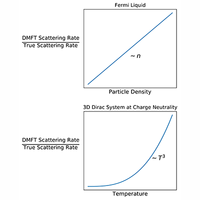
    <description>Author(s): Nan Lin, Emanuel Gull, and A. J. Millis&lt;br/&gt;The optical conductivity of the one-band Hubbard model is calculated using the &#8220;dynamical cluster approximation&#8221; implementation of dynamical mean-field theory for parameters appropriate to high-temperature copper-oxide superconductors. The calculation includes vertex corrections and the result d...&lt;br/&gt;&lt;img src="http://prb.aps.org/files/SuggestionPRB30x30.jpg" alt="PRB Editors' Suggestion"/&gt;&lt;br/&gt; &lt;img src="http://prola.aps.org/graphics/rapid30x30.gif" width="30" height="30" alt="Rapid Communication"/&gt;&lt;br/&gt;[Phys. Rev. B 80, 161105] Published Wed Oct 28, 2009</description>
    <dc:creator>Nan Lin, Emanuel Gull, and A. J. Millis</dc:creator>
    <dc:date>2009-10-28T00:00:00-04:00</dc:date>
    <dc:rights>Personal use only, all commercial or other reuse prohibited</dc:rights>
    <dc:identifier>10.1103/PhysRevB.80.161105</dc:identifier>
    <dc:source>Phys. Rev. B 80, 161105</dc:source>
    <dc:format>text/html</dc:format>
    <dc:type>article</dc:type>
    <prism:publicationName>Physical Review B</prism:publicationName>
    <prism:volume>80</prism:volume>
    <prism:issueIdentifier>16</prism:issueIdentifier>
    <prism:publicationDate>2009-10-28T00:00:00-04:00</prism:publicationDate>
    <prism:startingPage>161105</prism:startingPage>
    <dc:subject>Electronic structure: wide-band, narrow-band, and strongly correlated systems</dc:subject>
    <prism:section>Electronic structure: wide-band, narrow-band, and strongly correlated systems</prism:section>
  </item>
  <item rdf:about="http://link.aps.org/doi/10.1103/PhysRevB.80.155135">
    <title>Universal features of coherent photonic thermal conductance in multilayer photonic band gap structures</title>
    <link>http://link.aps.org/doi/10.1103/PhysRevB.80.155135</link>
    <description>Author(s): Wah Tung Lau (&#30041;&#33775;&#26481;), Jung-Tsung Shen (&#27784;&#27054;&#32880;), and Shanhui Fan (&#33539;&#27733;&#27908;)&lt;br/&gt;We show that at the high-temperature limit, the coherent photonic thermal conductance of a multilayer photonic crystal can be significantly below the corresponding thermal conductance of vacuum. Moreover, the thermal conductance at this limit is independent of the thicknesses of the layers but depen...&lt;br/&gt;&lt;img src="http://prb.aps.org/files/SuggestionPRB30x30.jpg" alt="PRB Editors' Suggestion"/&gt;&lt;br/&gt; [Phys. Rev. B 80, 155135] Published Wed Oct 28, 2009</description>
    <dc:creator>Wah Tung Lau (&#30041;&#33775;&#26481;), Jung-Tsung Shen (&#27784;&#27054;&#32880;), and Shanhui Fan (&#33539;&#27733;&#27908;)</dc:creator>
    <dc:date>2009-10-28T00:00:00-04:00</dc:date>
    <dc:rights>Personal use only, all commercial or other reuse prohibited</dc:rights>
    <dc:identifier>10.1103/PhysRevB.80.155135</dc:identifier>
    <dc:source>Phys. Rev. B 80, 155135</dc:source>
    <dc:format>text/html</dc:format>
    <dc:type>article</dc:type>
    <prism:publicationName>Physical Review B</prism:publicationName>
    <prism:volume>80</prism:volume>
    <prism:issueIdentifier>15</prism:issueIdentifier>
    <prism:publicationDate>2009-10-28T00:00:00-04:00</prism:publicationDate>
    <prism:startingPage>155135</prism:startingPage>
    <dc:subject>Electronic structure: wide-band, narrow-band, and strongly correlated systems</dc:subject>
    <prism:section>Electronic structure: wide-band, narrow-band, and strongly correlated systems</prism:section>
  </item>
  <item rdf:about="http://link.aps.org/doi/10.1103/PhysRevB.80.140414">
    <title>Element-specific probe of Ru magnetism and local structure in  RuSr_{2} Eu_{1.5} Ce_{0.5} Cu_{2} O_{10}</title>
    <link>http://link.aps.org/doi/10.1103/PhysRevB.80.140414</link>
    <description>Author(s): N. M. Souza-Neto, D. Haskel, J. C. Lang, O. Chmaissem, B. Dabrowski, and I. Felner&lt;br/&gt;Element-specific x-ray magnetic circular dichroism measurements at the Ru&#8201;L_{3} absorption edge are used to search for the presence of a net Ru ferromagnetic moment in the superconducting state of RuSr_{2} Eu_{1.5} Ce_{0.5} Cu_{2} O_{10} . A net moment of 0.21&#956;_{B} /Ru is observed in zero applied...&lt;br/&gt;&lt;img src="http://prb.aps.org/files/SuggestionPRB30x30.jpg" alt="PRB Editors' Suggestion"/&gt;&lt;br/&gt; &lt;img src="http://prola.aps.org/graphics/rapid30x30.gif" width="30" height="30" alt="Rapid Communication"/&gt;&lt;br/&gt;[Phys. Rev. B 80, 140414] Published Wed Oct 28, 2009</description>
    <dc:creator>N. M. Souza-Neto, D. Haskel, J. C. Lang, O. Chmaissem, B. Dabrowski, and I. Felner</dc:creator>
    <dc:date>2009-10-28T00:00:00-04:00</dc:date>
    <dc:rights>Personal use only, all commercial or other reuse prohibited</dc:rights>
    <dc:identifier>10.1103/PhysRevB.80.140414</dc:identifier>
    <dc:source>Phys. Rev. B 80, 140414</dc:source>
    <dc:format>text/html</dc:format>
    <dc:type>article</dc:type>
    <prism:publicationName>Physical Review B</prism:publicationName>
    <prism:volume>80</prism:volume>
    <prism:issueIdentifier>14</prism:issueIdentifier>
    <prism:publicationDate>2009-10-28T00:00:00-04:00</prism:publicationDate>
    <prism:startingPage>140414</prism:startingPage>
    <dc:subject>Magnetism</dc:subject>
    <prism:section>Magnetism</prism:section>
  </item>
  <item rdf:about="http://link.aps.org/doi/10.1103/PhysRevB.80.155328">
    <title>Kinetics of the evolution of InAs/GaAs quantum dots to quantum rings: A combined x-ray, atomic force microscopy, and photoluminescence study</title>
    <link>http://link.aps.org/doi/10.1103/PhysRevB.80.155328</link>
    <description>Author(s): Vikas Baranwal, Giorgio Biasiol, Stefan Heun, Andrea Locatelli, Tevfik Onur Mentes, Miguel Ni&#241;o Orti, and Lucia Sorba&lt;br/&gt;We present an experimental study of the evolution of InAs/GaAs quantum dots partially capped with GaAs, as an annealing process transforms them first into quantum rings and later into holes penetrating the whole cap layer. Shape, composition, and optical emission were monitored as a function of anne...&lt;br/&gt;&lt;img src="http://prb.aps.org/files/SuggestionPRB30x30.jpg" alt="PRB Editors' Suggestion"/&gt;&lt;br/&gt; [Phys. Rev. B 80, 155328] Published Tue Oct 27, 2009</description>
    <dc:creator>Vikas Baranwal, Giorgio Biasiol, Stefan Heun, Andrea Locatelli, Tevfik Onur Mentes, Miguel Ni&#241;o Orti, and Lucia Sorba</dc:creator>
    <dc:date>2009-10-27T00:00:00-04:00</dc:date>
    <dc:rights>Personal use only, all commercial or other reuse prohibited</dc:rights>
    <dc:identifier>10.1103/PhysRevB.80.155328</dc:identifier>
    <dc:source>Phys. Rev. B 80, 155328</dc:source>
    <dc:format>text/html</dc:format>
    <dc:type>article</dc:type>
    <prism:publicationName>Physical Review B</prism:publicationName>
    <prism:volume>80</prism:volume>
    <prism:issueIdentifier>15</prism:issueIdentifier>
    <prism:publicationDate>2009-10-27T00:00:00-04:00</prism:publicationDate>
    <prism:startingPage>155328</prism:startingPage>
    <dc:subject>Semiconductors II: surfaces, interfaces, microstructures, and related topics</dc:subject>
    <prism:section>Semiconductors II: surfaces, interfaces, microstructures, and related topics</prism:section>
  </item>
  <item rdf:about="http://link.aps.org/doi/10.1103/PhysRevB.80.155131">
    <title>Tensor-entanglement-filtering renormalization approach and symmetry-protected topological order</title>
    <link>http://link.aps.org/doi/10.1103/PhysRevB.80.155131</link>
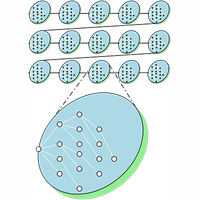
    <description>Author(s): Zheng-Cheng Gu and Xiao-Gang Wen&lt;br/&gt;We study the renormalization group flow of the Lagrangian for statistical and quantum systems by representing their path integral in terms of a tensor network. Using a tensor-entanglement-filtering renormalization approach that removes local entanglement and produces a coarse-grained lattice, we sho...&lt;br/&gt;&lt;img src="http://prb.aps.org/files/SuggestionPRB30x30.jpg" alt="PRB Editors' Suggestion"/&gt;&lt;br/&gt; [Phys. Rev. B 80, 155131] Published Mon Oct 26, 2009</description>
    <dc:creator>Zheng-Cheng Gu and Xiao-Gang Wen</dc:creator>
    <dc:date>2009-10-26T00:00:00-04:00</dc:date>
    <dc:rights>Personal use only, all commercial or other reuse prohibited</dc:rights>
    <dc:identifier>10.1103/PhysRevB.80.155131</dc:identifier>
    <dc:source>Phys. Rev. B 80, 155131</dc:source>
    <dc:format>text/html</dc:format>
    <dc:type>article</dc:type>
    <prism:publicationName>Physical Review B</prism:publicationName>
    <prism:volume>80</prism:volume>
    <prism:issueIdentifier>15</prism:issueIdentifier>
    <prism:publicationDate>2009-10-26T00:00:00-04:00</prism:publicationDate>
    <prism:startingPage>155131</prism:startingPage>
    <dc:subject>Electronic structure: wide-band, narrow-band, and strongly correlated systems</dc:subject>
    <prism:section>Electronic structure: wide-band, narrow-band, and strongly correlated systems</prism:section>
  </item>
  <item rdf:about="http://link.aps.org/doi/10.1103/PhysRevB.80.144422">
    <title>Intrinsic exchange bias in  Zn_{x} Mn_{3&#8722;x} O_{4}    (x&#8804;1)  solid solutions</title>
    <link>http://link.aps.org/doi/10.1103/PhysRevB.80.144422</link>
    <description>Author(s): Daniel P. Shoemaker, Efrain E. Rodriguez, Ram Seshadri, Ivana Sabaj Abumohor, and Thomas Proffen&lt;br/&gt;Bulk specimens of the het&#230;rolite solid solution Zn_{x} Mn_{3&#8722;x} O_{4} with x=0 , 0.25, 0.5, 0.75, and 1 have been prepared as homogeneous, phase-pure polycrystalline samples as ascertained by neutron-diffraction measurements. Samples with x=0.25 , 0.5, and 0.75 exhibit shifted magnetic hysteresis...&lt;br/&gt;&lt;img src="http://prb.aps.org/files/SuggestionPRB30x30.jpg" alt="PRB Editors' Suggestion"/&gt;&lt;br/&gt; [Phys. Rev. B 80, 144422] Published Mon Oct 26, 2009</description>
    <dc:creator>Daniel P. Shoemaker, Efrain E. Rodriguez, Ram Seshadri, Ivana Sabaj Abumohor, and Thomas Proffen</dc:creator>
    <dc:date>2009-10-26T00:00:00-04:00</dc:date>
    <dc:rights>Personal use only, all commercial or other reuse prohibited</dc:rights>
    <dc:identifier>10.1103/PhysRevB.80.144422</dc:identifier>
    <dc:source>Phys. Rev. B 80, 144422</dc:source>
    <dc:format>text/html</dc:format>
    <dc:type>article</dc:type>
    <prism:publicationName>Physical Review B</prism:publicationName>
    <prism:volume>80</prism:volume>
    <prism:issueIdentifier>14</prism:issueIdentifier>
    <prism:publicationDate>2009-10-26T00:00:00-04:00</prism:publicationDate>
    <prism:startingPage>144422</prism:startingPage>
    <dc:subject>Magnetism</dc:subject>
    <prism:section>Magnetism</prism:section>
  </item>
  <item rdf:about="http://link.aps.org/doi/10.1103/PhysRevB.80.140513">
    <title>Pressure-induced change of the pairing symmetry in superconducting  CeCu_{2} Si_{2}</title>
    <link>http://link.aps.org/doi/10.1103/PhysRevB.80.140513</link>
    <description>Author(s): E. Lengyel, M. Nicklas, H. S. Jeevan, G. Sparn, C. Geibel, F. Steglich, Y. Yoshioka, and K. Miyake&lt;br/&gt;Low-temperature (T) heat-capacity measurements under hydrostatic pressure of up to p&#8776;2.1&#8194;GPa have been performed on single-crystalline CeCu_{2} Si_{2} . A broad superconducting (SC) region exists in the T-p phase diagram. In the low-pressure region antiferromagnetic spin fluctuations and in the ...&lt;br/&gt;&lt;img src="http://prb.aps.org/files/SuggestionPRB30x30.jpg" alt="PRB Editors' Suggestion"/&gt;&lt;br/&gt; &lt;img src="http://prola.aps.org/graphics/rapid30x30.gif" width="30" height="30" alt="Rapid Communication"/&gt;&lt;br/&gt;[Phys. Rev. B 80, 140513] Published Mon Oct 26, 2009</description>
    <dc:creator>E. Lengyel, M. Nicklas, H. S. Jeevan, G. Sparn, C. Geibel, F. Steglich, Y. Yoshioka, and K. Miyake</dc:creator>
    <dc:date>2009-10-26T00:00:00-04:00</dc:date>
    <dc:rights>Personal use only, all commercial or other reuse prohibited</dc:rights>
    <dc:identifier>10.1103/PhysRevB.80.140513</dc:identifier>
    <dc:source>Phys. Rev. B 80, 140513</dc:source>
    <dc:format>text/html</dc:format>
    <dc:type>article</dc:type>
    <prism:publicationName>Physical Review B</prism:publicationName>
    <prism:volume>80</prism:volume>
    <prism:issueIdentifier>14</prism:issueIdentifier>
    <prism:publicationDate>2009-10-26T00:00:00-04:00</prism:publicationDate>
    <prism:startingPage>140513</prism:startingPage>
    <dc:subject>Superfluidity and superconductivity</dc:subject>
    <prism:section>Superfluidity and superconductivity</prism:section>
  </item>
  <item rdf:about="http://link.aps.org/doi/10.1103/PhysRevB.80.140512">
    <title>Collective  d -wave exciton modes in the calculated Raman spectrum of Fe-based superconductors</title>
    <link>http://link.aps.org/doi/10.1103/PhysRevB.80.140512</link>
    <description>Author(s): D. J. Scalapino and T. P. Devereaux&lt;br/&gt;Calculations of the pairing interaction in multiband models of the Fe superconductors show that it is attractive in both the A_{1g} ( s -wave) and B_{1g} ( d -wave) channels. This raises the possibility that these materials may have collective excitonic modes. Here, assuming an s -wave ground state,...&lt;br/&gt;&lt;img src="http://prb.aps.org/files/SuggestionPRB30x30.jpg" alt="PRB Editors' Suggestion"/&gt;&lt;br/&gt; &lt;img src="http://prola.aps.org/graphics/rapid30x30.gif" width="30" height="30" alt="Rapid Communication"/&gt;&lt;br/&gt;[Phys. Rev. B 80, 140512] Published Mon Oct 26, 2009</description>
    <dc:creator>D. J. Scalapino and T. P. Devereaux</dc:creator>
    <dc:date>2009-10-26T00:00:00-04:00</dc:date>
    <dc:rights>Personal use only, all commercial or other reuse prohibited</dc:rights>
    <dc:identifier>10.1103/PhysRevB.80.140512</dc:identifier>
    <dc:source>Phys. Rev. B 80, 140512</dc:source>
    <dc:format>text/html</dc:format>
    <dc:type>article</dc:type>
    <prism:publicationName>Physical Review B</prism:publicationName>
    <prism:volume>80</prism:volume>
    <prism:issueIdentifier>14</prism:issueIdentifier>
    <prism:publicationDate>2009-10-26T00:00:00-04:00</prism:publicationDate>
    <prism:startingPage>140512</prism:startingPage>
    <dc:subject>Superfluidity and superconductivity</dc:subject>
    <prism:section>Superfluidity and superconductivity</prism:section>
  </item>
  <item rdf:about="http://link.aps.org/doi/10.1103/PhysRevB.80.140511">
    <title>Coexistence of incommensurate magnetism and superconductivity in  Fe_{1+y} Se_{x} Te_{1&#8722;x}</title>
    <link>http://link.aps.org/doi/10.1103/PhysRevB.80.140511</link>
    <description>Author(s): R. Khasanov, M. Bendele, A. Amato, P. Babkevich, A. T. Boothroyd, A. Cervellino, K. Conder, S. N. Gvasaliya, H. Keller, H.-H. Klauss, H. Luetkens, V. Pomjakushin, E. Pomjakushina, and B. Roessli&lt;br/&gt;We have studied the superconducting and magnetic properties of Fe_{1+y} Se_{x} Te_{1&#8722;x} single crystals (0&#8804;x&#8804;0.5) by magnetic susceptibility, muon-spin rotation, and neutron diffraction. We find three regimes of behavior: (i) commensurate magnetic order for x&#8818;0.1 , (ii) bulk superconductivit...&lt;br/&gt;&lt;img src="http://prb.aps.org/files/SuggestionPRB30x30.jpg" alt="PRB Editors' Suggestion"/&gt;&lt;br/&gt; &lt;img src="http://prola.aps.org/graphics/rapid30x30.gif" width="30" height="30" alt="Rapid Communication"/&gt;&lt;br/&gt;[Phys. Rev. B 80, 140511] Published Mon Oct 26, 2009</description>
    <dc:creator>R. Khasanov, M. Bendele, A. Amato, P. Babkevich, A. T. Boothroyd, A. Cervellino, K. Conder, S. N. Gvasaliya, H. Keller, H.-H. Klauss, H. Luetkens, V. Pomjakushin, E. Pomjakushina, and B. Roessli</dc:creator>
    <dc:date>2009-10-26T00:00:00-04:00</dc:date>
    <dc:rights>Personal use only, all commercial or other reuse prohibited</dc:rights>
    <dc:identifier>10.1103/PhysRevB.80.140511</dc:identifier>
    <dc:source>Phys. Rev. B 80, 140511</dc:source>
    <dc:format>text/html</dc:format>
    <dc:type>article</dc:type>
    <prism:publicationName>Physical Review B</prism:publicationName>
    <prism:volume>80</prism:volume>
    <prism:issueIdentifier>14</prism:issueIdentifier>
    <prism:publicationDate>2009-10-26T00:00:00-04:00</prism:publicationDate>
    <prism:startingPage>140511</prism:startingPage>
    <dc:subject>Superfluidity and superconductivity</dc:subject>
    <prism:section>Superfluidity and superconductivity</prism:section>
  </item>
  <item rdf:about="http://link.aps.org/doi/10.1103/PhysRevB.80.155322">
    <title>Theory of nonequilibrium transport in the  SU(N)  Kondo regime</title>
    <link>http://link.aps.org/doi/10.1103/PhysRevB.80.155322</link>
    <description>Author(s): Christophe Mora, Pavel Vitushinsky, Xavier Leyronas, Aashish A. Clerk, and Karyn Le Hur&lt;br/&gt;Using a Fermi-liquid approach, we provide a comprehensive treatment of the current and current noise through a quantum dot whose low-energy behavior corresponds to an SU(N) Kondo model, focusing on the case N=4 relevant to carbon nanotube dots. We show that for general N , one needs to consider the ...&lt;br/&gt;&lt;img src="http://prb.aps.org/files/SuggestionPRB30x30.jpg" alt="PRB Editors' Suggestion"/&gt;&lt;br/&gt; [Phys. Rev. B 80, 155322] Published Fri Oct 23, 2009</description>
    <dc:creator>Christophe Mora, Pavel Vitushinsky, Xavier Leyronas, Aashish A. Clerk, and Karyn Le Hur</dc:creator>
    <dc:date>2009-10-23T00:00:00-04:00</dc:date>
    <dc:rights>Personal use only, all commercial or other reuse prohibited</dc:rights>
    <dc:identifier>10.1103/PhysRevB.80.155322</dc:identifier>
    <dc:source>Phys. Rev. B 80, 155322</dc:source>
    <dc:format>text/html</dc:format>
    <dc:type>article</dc:type>
    <prism:publicationName>Physical Review B</prism:publicationName>
    <prism:volume>80</prism:volume>
    <prism:issueIdentifier>15</prism:issueIdentifier>
    <prism:publicationDate>2009-10-23T00:00:00-04:00</prism:publicationDate>
    <prism:startingPage>155322</prism:startingPage>
    <dc:subject>Semiconductors II: surfaces, interfaces, microstructures, and related topics</dc:subject>
    <prism:section>Semiconductors II: surfaces, interfaces, microstructures, and related topics</prism:section>
  </item>
  <item rdf:about="http://link.aps.org/doi/10.1103/PhysRevB.80.165421">
    <title>Sequential vortex hopping in an array of artificial pinning centers</title>
    <link>http://link.aps.org/doi/10.1103/PhysRevB.80.165421</link>
    <description>Author(s): J. C. Keay, P. R. Larson, K. L. Hobbs, M. B. Johnson, J. R. Kirtley, O. M. Auslaender, and K. A. Moler&lt;br/&gt;We use low-temperature magnetic force microscopy (MFM) to study the hopping motion of vortices in an array of artificial pinning centers (APCs). The array consists of nanoscale holes etched in a niobium thin film by Ar-ion sputtering through an anodic aluminum-oxide template. Variable-temperature ma...&lt;br/&gt;&lt;img src="http://prb.aps.org/files/SuggestionPRB30x30.jpg" alt="PRB Editors' Suggestion"/&gt;&lt;br/&gt; [Phys. Rev. B 80, 165421] Published Thu Oct 22, 2009</description>
    <dc:creator>J. C. Keay, P. R. Larson, K. L. Hobbs, M. B. Johnson, J. R. Kirtley, O. M. Auslaender, and K. A. Moler</dc:creator>
    <dc:date>2009-10-22T00:00:00-04:00</dc:date>
    <dc:rights>Personal use only, all commercial or other reuse prohibited</dc:rights>
    <dc:identifier>10.1103/PhysRevB.80.165421</dc:identifier>
    <dc:source>Phys. Rev. B 80, 165421</dc:source>
    <dc:format>text/html</dc:format>
    <dc:type>article</dc:type>
    <prism:publicationName>Physical Review B</prism:publicationName>
    <prism:volume>80</prism:volume>
    <prism:issueIdentifier>16</prism:issueIdentifier>
    <prism:publicationDate>2009-10-22T00:00:00-04:00</prism:publicationDate>
    <prism:startingPage>165421</prism:startingPage>
    <dc:subject>Surface physics, nanoscale physics, low-dimensional systems</dc:subject>
    <prism:section>Surface physics, nanoscale physics, low-dimensional systems</prism:section>
  </item>
  <item rdf:about="http://link.aps.org/doi/10.1103/PhysRevB.80.165124">
    <title>Exact ground states and correlation functions of chain and ladder models of interacting hardcore bosons or spinless fermions</title>
    <link>http://link.aps.org/doi/10.1103/PhysRevB.80.165124</link>
    <description>Author(s): Siew-Ann Cheong and Christopher L. Henley&lt;br/&gt;By removing one empty site between two occupied sites, we map the ground states of chains of hardcore bosons and spinless fermions with infinite nearest-neighbor repulsion to ground states of chains of hardcore bosons and spinless fermions without nearest-neighbor repulsion, respectively, and ultima...&lt;br/&gt;&lt;img src="http://prb.aps.org/files/SuggestionPRB30x30.jpg" alt="PRB Editors' Suggestion"/&gt;&lt;br/&gt; [Phys. Rev. B 80, 165124] Published Wed Oct 21, 2009</description>
    <dc:creator>Siew-Ann Cheong and Christopher L. Henley</dc:creator>
    <dc:date>2009-10-21T00:00:00-04:00</dc:date>
    <dc:rights>Personal use only, all commercial or other reuse prohibited</dc:rights>
    <dc:identifier>10.1103/PhysRevB.80.165124</dc:identifier>
    <dc:source>Phys. Rev. B 80, 165124</dc:source>
    <dc:format>text/html</dc:format>
    <dc:type>article</dc:type>
    <prism:publicationName>Physical Review B</prism:publicationName>
    <prism:volume>80</prism:volume>
    <prism:issueIdentifier>16</prism:issueIdentifier>
    <prism:publicationDate>2009-10-21T00:00:00-04:00</prism:publicationDate>
    <prism:startingPage>165124</prism:startingPage>
    <dc:subject>Electronic structure: wide-band, narrow-band, and strongly correlated systems</dc:subject>
    <prism:section>Electronic structure: wide-band, narrow-band, and strongly correlated systems</prism:section>
  </item>
  <item rdf:about="http://link.aps.org/doi/10.1103/PhysRevB.80.161307">
    <title>In(Ga)As/GaAs quantum dots grown on a (111) surface as ideal sources of entangled photon pairs</title>
    <link>http://link.aps.org/doi/10.1103/PhysRevB.80.161307</link>
    <description>Author(s): Andrei Schliwa, Momme Winkelnkemper, Anatol Lochmann, Erik Stock, and Dieter Bimberg&lt;br/&gt;Self-organized In(Ga)As/GaAs quantum dots (QDs) grown on (111) substrate are proposed as ideal sources for the generation of entangled photon pairs. Due to the threefold rotational symmetry of the (111) surface, QDs with C_{3v} symmetry or higher are expected to develop during growth. In contrast to...&lt;br/&gt;&lt;img src="http://prb.aps.org/files/SuggestionPRB30x30.jpg" alt="PRB Editors' Suggestion"/&gt;&lt;br/&gt; &lt;img src="http://prola.aps.org/graphics/rapid30x30.gif" width="30" height="30" alt="Rapid Communication"/&gt;&lt;br/&gt;[Phys. Rev. B 80, 161307] Published Wed Oct 21, 2009</description>
    <dc:creator>Andrei Schliwa, Momme Winkelnkemper, Anatol Lochmann, Erik Stock, and Dieter Bimberg</dc:creator>
    <dc:date>2009-10-21T00:00:00-04:00</dc:date>
    <dc:rights>Personal use only, all commercial or other reuse prohibited</dc:rights>
    <dc:identifier>10.1103/PhysRevB.80.161307</dc:identifier>
    <dc:source>Phys. Rev. B 80, 161307</dc:source>
    <dc:format>text/html</dc:format>
    <dc:type>article</dc:type>
    <prism:publicationName>Physical Review B</prism:publicationName>
    <prism:volume>80</prism:volume>
    <prism:issueIdentifier>16</prism:issueIdentifier>
    <prism:publicationDate>2009-10-21T00:00:00-04:00</prism:publicationDate>
    <prism:startingPage>161307</prism:startingPage>
    <dc:subject>Semiconductors II: surfaces, interfaces, microstructures, and related topics</dc:subject>
    <prism:section>Semiconductors II: surfaces, interfaces, microstructures, and related topics</prism:section>
  </item>
  <item rdf:about="http://link.aps.org/doi/10.1103/PhysRevB.80.165122">
    <title>Cluster expansion method for multicomponent systems based on optimal selection of structures for density-functional theory calculations</title>
    <link>http://link.aps.org/doi/10.1103/PhysRevB.80.165122</link>
    <description>Author(s): Atsuto Seko, Yukinori Koyama, and Isao Tanaka&lt;br/&gt;The cluster expansion (CE) method has been used to evaluate configurational properties in multicomponent systems based on the density-functional theory (DFT) calculations. Appropriate selections of not only clusters but also structures for DFT calculations (DFT structures) are crucial for the accura...&lt;br/&gt;&lt;img src="http://prb.aps.org/files/SuggestionPRB30x30.jpg" alt="PRB Editors' Suggestion"/&gt;&lt;br/&gt; [Phys. Rev. B 80, 165122] Published Tue Oct 20, 2009</description>
    <dc:creator>Atsuto Seko, Yukinori Koyama, and Isao Tanaka</dc:creator>
    <dc:date>2009-10-20T00:00:00-04:00</dc:date>
    <dc:rights>Personal use only, all commercial or other reuse prohibited</dc:rights>
    <dc:identifier>10.1103/PhysRevB.80.165122</dc:identifier>
    <dc:source>Phys. Rev. B 80, 165122</dc:source>
    <dc:format>text/html</dc:format>
    <dc:type>article</dc:type>
    <prism:publicationName>Physical Review B</prism:publicationName>
    <prism:volume>80</prism:volume>
    <prism:issueIdentifier>16</prism:issueIdentifier>
    <prism:publicationDate>2009-10-20T00:00:00-04:00</prism:publicationDate>
    <prism:startingPage>165122</prism:startingPage>
    <dc:subject>Electronic structure: wide-band, narrow-band, and strongly correlated systems</dc:subject>
    <prism:section>Electronic structure: wide-band, narrow-band, and strongly correlated systems</prism:section>
  </item>
  <item rdf:about="http://link.aps.org/doi/10.1103/PhysRevB.80.161408">
    <title>Non-Fermi-liquid behavior in neutral bilayer graphene</title>
    <link>http://link.aps.org/doi/10.1103/PhysRevB.80.161408</link>
    <description>Author(s): Yafis Barlas and Kun Yang&lt;br/&gt;We calculate the density-density response function and electron self-energy for undoped bilayer graphene within the random phase approximation. We show that the quasiparticle decay rate scales linearly with the quasiparticle energy, and quasiparticle weight vanishes logarithmically in the low-energy...&lt;br/&gt;&lt;img src="http://prb.aps.org/files/SuggestionPRB30x30.jpg" alt="PRB Editors' Suggestion"/&gt;&lt;br/&gt; &lt;img src="http://prola.aps.org/graphics/rapid30x30.gif" width="30" height="30" alt="Rapid Communication"/&gt;&lt;br/&gt;[Phys. Rev. B 80, 161408] Published Tue Oct 20, 2009</description>
    <dc:creator>Yafis Barlas and Kun Yang</dc:creator>
    <dc:date>2009-10-20T00:00:00-04:00</dc:date>
    <dc:rights>Personal use only, all commercial or other reuse prohibited</dc:rights>
    <dc:identifier>10.1103/PhysRevB.80.161408</dc:identifier>
    <dc:source>Phys. Rev. B 80, 161408</dc:source>
    <dc:format>text/html</dc:format>
    <dc:type>article</dc:type>
    <prism:publicationName>Physical Review B</prism:publicationName>
    <prism:volume>80</prism:volume>
    <prism:issueIdentifier>16</prism:issueIdentifier>
    <prism:publicationDate>2009-10-20T00:00:00-04:00</prism:publicationDate>
    <prism:startingPage>161408</prism:startingPage>
    <dc:subject>Surface physics, nanoscale physics, low-dimensional systems</dc:subject>
    <prism:section>Surface physics, nanoscale physics, low-dimensional systems</prism:section>
  </item>
  <item rdf:about="http://link.aps.org/doi/10.1103/PhysRevB.80.144417">
    <title>Phase diagram of an anisotropic frustrated ferromagnetic spin-  1/2   chain in a magnetic field: A density matrix renormalization group study</title>
    <link>http://link.aps.org/doi/10.1103/PhysRevB.80.144417</link>
    <description>Author(s): F. Heidrich-Meisner, I. P. McCulloch, and A. K. Kolezhuk&lt;br/&gt;We study the phase diagram of a frustrated spin- 1/2 ferromagnetic chain with anisotropic exchange interactions in an external magnetic field using the density matrix renormalization group method. We show that an easy-axis anisotropy enhances the tendency toward multimagnon bound states while an eas...&lt;br/&gt;&lt;img src="http://prb.aps.org/files/SuggestionPRB30x30.jpg" alt="PRB Editors' Suggestion"/&gt;&lt;br/&gt; [Phys. Rev. B 80, 144417] Published Tue Oct 20, 2009</description>
    <dc:creator>F. Heidrich-Meisner, I. P. McCulloch, and A. K. Kolezhuk</dc:creator>
    <dc:date>2009-10-20T00:00:00-04:00</dc:date>
    <dc:rights>Personal use only, all commercial or other reuse prohibited</dc:rights>
    <dc:identifier>10.1103/PhysRevB.80.144417</dc:identifier>
    <dc:source>Phys. Rev. B 80, 144417</dc:source>
    <dc:format>text/html</dc:format>
    <dc:type>article</dc:type>
    <prism:publicationName>Physical Review B</prism:publicationName>
    <prism:volume>80</prism:volume>
    <prism:issueIdentifier>14</prism:issueIdentifier>
    <prism:publicationDate>2009-10-20T00:00:00-04:00</prism:publicationDate>
    <prism:startingPage>144417</prism:startingPage>
    <dc:subject>Magnetism</dc:subject>
    <prism:section>Magnetism</prism:section>
  </item>
  <item rdf:about="http://link.aps.org/doi/10.1103/PhysRevB.80.161306">
    <title>Exactly solved model for an electronic Mach-Zehnder interferometer</title>
    <link>http://link.aps.org/doi/10.1103/PhysRevB.80.161306</link>
    <description>Author(s): D. L. Kovrizhin and J. T. Chalker&lt;br/&gt;We study nonequilibrium properties of an electronic Mach-Zehnder interferometer built from integer quantum Hall edge states at filling fraction &#957;=1 . For a model in which electrons interact only when they are inside the interferometer, we calculate exactly the visibility and phase of Aharonov-Bohm ...&lt;br/&gt;&lt;img src="http://prb.aps.org/files/SuggestionPRB30x30.jpg" alt="PRB Editors' Suggestion"/&gt;&lt;br/&gt; &lt;img src="http://prola.aps.org/graphics/rapid30x30.gif" width="30" height="30" alt="Rapid Communication"/&gt;&lt;br/&gt;[Phys. Rev. B 80, 161306] Published Mon Oct 19, 2009</description>
    <dc:creator>D. L. Kovrizhin and J. T. Chalker</dc:creator>
    <dc:date>2009-10-19T00:00:00-04:00</dc:date>
    <dc:rights>Personal use only, all commercial or other reuse prohibited</dc:rights>
    <dc:identifier>10.1103/PhysRevB.80.161306</dc:identifier>
    <dc:source>Phys. Rev. B 80, 161306</dc:source>
    <dc:format>text/html</dc:format>
    <dc:type>article</dc:type>
    <prism:publicationName>Physical Review B</prism:publicationName>
    <prism:volume>80</prism:volume>
    <prism:issueIdentifier>16</prism:issueIdentifier>
    <prism:publicationDate>2009-10-19T00:00:00-04:00</prism:publicationDate>
    <prism:startingPage>161306</prism:startingPage>
    <dc:subject>Semiconductors II: surfaces, interfaces, microstructures, and related topics</dc:subject>
    <prism:section>Semiconductors II: surfaces, interfaces, microstructures, and related topics</prism:section>
  </item>
  <item rdf:about="http://link.aps.org/doi/10.1103/PhysRevB.80.155435">
    <title>Numerical studies of variable-range hopping in one-dimensional systems</title>
    <link>http://link.aps.org/doi/10.1103/PhysRevB.80.155435</link>
    <description>Author(s): A. S. Rodin and M. M. Fogler&lt;br/&gt;Hopping transport in a one-dimensional system is studied numerically. A fast algorithm is devised to find the lowest-resistance path at arbitrary electric field. Probability distribution functions of individual resistances on the path and the net resistance are calculated and fitted to compact analy...&lt;br/&gt;&lt;img src="http://prb.aps.org/files/SuggestionPRB30x30.jpg" alt="PRB Editors' Suggestion"/&gt;&lt;br/&gt; [Phys. Rev. B 80, 155435] Published Thu Oct 15, 2009</description>
    <dc:creator>A. S. Rodin and M. M. Fogler</dc:creator>
    <dc:date>2009-10-15T00:00:00-04:00</dc:date>
    <dc:rights>Personal use only, all commercial or other reuse prohibited</dc:rights>
    <dc:identifier>10.1103/PhysRevB.80.155435</dc:identifier>
    <dc:source>Phys. Rev. B 80, 155435</dc:source>
    <dc:format>text/html</dc:format>
    <dc:type>article</dc:type>
    <prism:publicationName>Physical Review B</prism:publicationName>
    <prism:volume>80</prism:volume>
    <prism:issueIdentifier>15</prism:issueIdentifier>
    <prism:publicationDate>2009-10-15T00:00:00-04:00</prism:publicationDate>
    <prism:startingPage>155435</prism:startingPage>
    <dc:subject>Surface physics, nanoscale physics, low-dimensional systems</dc:subject>
    <prism:section>Surface physics, nanoscale physics, low-dimensional systems</prism:section>
  </item>
  <item rdf:about="http://link.aps.org/doi/10.1103/PhysRevB.80.155433">
    <title>Oscillator strength of the peptide bond  &#960;^{&#8727;}   resonances at all relevant x-ray absorption edges</title>
    <link>http://link.aps.org/doi/10.1103/PhysRevB.80.155433</link>
    <description>Author(s): K. Kummer, V. N. Sivkov, D. V. Vyalikh, V. V. Maslyuk, A. Bl&#252;her, S. V. Nekipelov, T. Bredow, I. Mertig, M. Mertig, and S. L. Molodtsov&lt;br/&gt;Absolute x-ray absorption cross sections of a regular bacterial surface-layer protein deposited on a naturally oxidized silicon substrate were determined experimentally. Upon separation of the partial cross sections of the three relevant 1s absorption edges, the oscillator strengths of the 1s&#8594;&#960;^{...&lt;br/&gt;&lt;img src="http://prb.aps.org/files/SuggestionPRB30x30.jpg" alt="PRB Editors' Suggestion"/&gt;&lt;br/&gt; [Phys. Rev. B 80, 155433] Published Thu Oct 15, 2009</description>
    <dc:creator>K. Kummer, V. N. Sivkov, D. V. Vyalikh, V. V. Maslyuk, A. Bl&#252;her, S. V. Nekipelov, T. Bredow, I. Mertig, M. Mertig, and S. L. Molodtsov</dc:creator>
    <dc:date>2009-10-15T00:00:00-04:00</dc:date>
    <dc:rights>Personal use only, all commercial or other reuse prohibited</dc:rights>
    <dc:identifier>10.1103/PhysRevB.80.155433</dc:identifier>
    <dc:source>Phys. Rev. B 80, 155433</dc:source>
    <dc:format>text/html</dc:format>
    <dc:type>article</dc:type>
    <prism:publicationName>Physical Review B</prism:publicationName>
    <prism:volume>80</prism:volume>
    <prism:issueIdentifier>15</prism:issueIdentifier>
    <prism:publicationDate>2009-10-15T00:00:00-04:00</prism:publicationDate>
    <prism:startingPage>155433</prism:startingPage>
    <dc:subject>Surface physics, nanoscale physics, low-dimensional systems</dc:subject>
    <prism:section>Surface physics, nanoscale physics, low-dimensional systems</prism:section>
  </item>
  <item rdf:about="http://link.aps.org/doi/10.1103/PhysRevB.80.155123">
    <title>Probing the  d_{x^{2} &#8722;y^{2} }  -wave Pomeranchuk instability by ultrasound</title>
    <link>http://link.aps.org/doi/10.1103/PhysRevB.80.155123</link>
    <description>Author(s): Hiroto Adachi and Manfred Sigrist&lt;br/&gt;Selection rules of ultrasound attenuation and sound-velocity renormalization are analyzed in view of their potential application to identify Pomeranchuk instabilities (electronic nematic phase). It is shown that the transverse sound attenuation along [110] direction is enhanced by the Fermi-surface ...&lt;br/&gt;&lt;img src="http://prb.aps.org/files/SuggestionPRB30x30.jpg" alt="PRB Editors' Suggestion"/&gt;&lt;br/&gt; [Phys. Rev. B 80, 155123] Published Thu Oct 15, 2009</description>
    <dc:creator>Hiroto Adachi and Manfred Sigrist</dc:creator>
    <dc:date>2009-10-15T00:00:00-04:00</dc:date>
    <dc:rights>Personal use only, all commercial or other reuse prohibited</dc:rights>
    <dc:identifier>10.1103/PhysRevB.80.155123</dc:identifier>
    <dc:source>Phys. Rev. B 80, 155123</dc:source>
    <dc:format>text/html</dc:format>
    <dc:type>article</dc:type>
    <prism:publicationName>Physical Review B</prism:publicationName>
    <prism:volume>80</prism:volume>
    <prism:issueIdentifier>15</prism:issueIdentifier>
    <prism:publicationDate>2009-10-15T00:00:00-04:00</prism:publicationDate>
    <prism:startingPage>155123</prism:startingPage>
    <dc:subject>Electronic structure: wide-band, narrow-band, and strongly correlated systems</dc:subject>
    <prism:section>Electronic structure: wide-band, narrow-band, and strongly correlated systems</prism:section>
  </item>
  <item rdf:about="http://link.aps.org/doi/10.1103/PhysRevB.80.144410">
    <title>Tunneling magnetoresistance in phase-separated manganite nanobridges</title>
    <link>http://link.aps.org/doi/10.1103/PhysRevB.80.144410</link>
    <description>Author(s): G. Singh-Bhalla, A. Biswas, and A. F. Hebard&lt;br/&gt;The manganite (La,Pr,Ca)MnO_{3} is well known for its micrometer-scale phase separation into coexisting ferromagnetic metallic (FMM) and insulating regions. Fabrication of bridges with widths smaller than the phase-separation length scale has allowed us to probe the magnetic properties of individual...&lt;br/&gt;&lt;img src="http://prb.aps.org/files/SuggestionPRB30x30.jpg" alt="PRB Editors' Suggestion"/&gt;&lt;br/&gt; [Phys. Rev. B 80, 144410] Published Thu Oct 15, 2009</description>
    <dc:creator>G. Singh-Bhalla, A. Biswas, and A. F. Hebard</dc:creator>
    <dc:date>2009-10-15T00:00:00-04:00</dc:date>
    <dc:rights>Personal use only, all commercial or other reuse prohibited</dc:rights>
    <dc:identifier>10.1103/PhysRevB.80.144410</dc:identifier>
    <dc:source>Phys. Rev. B 80, 144410</dc:source>
    <dc:format>text/html</dc:format>
    <dc:type>article</dc:type>
    <prism:publicationName>Physical Review B</prism:publicationName>
    <prism:volume>80</prism:volume>
    <prism:issueIdentifier>14</prism:issueIdentifier>
    <prism:publicationDate>2009-10-15T00:00:00-04:00</prism:publicationDate>
    <prism:startingPage>144410</prism:startingPage>
    <dc:subject>Magnetism</dc:subject>
    <prism:section>Magnetism</prism:section>
  </item>
  <item rdf:about="http://link.aps.org/doi/10.1103/PhysRevB.80.134511">
    <title>Scattering problem in nonequilibrium quasiclassical theory of metals and superconductors: General boundary conditions and applications</title>
    <link>http://link.aps.org/doi/10.1103/PhysRevB.80.134511</link>
    <description>Author(s): Matthias Eschrig&lt;br/&gt;I derive a general set of boundary conditions for quasiclassical transport theory of metals and superconductors that is valid for equilibrium and nonequilibrium situations and includes multiband systems, weakly and strongly spin-polarized systems, and disordered systems. The formulation is in terms ...&lt;br/&gt;&lt;img src="http://prb.aps.org/files/SuggestionPRB30x30.jpg" alt="PRB Editors' Suggestion"/&gt;&lt;br/&gt; [Phys. Rev. B 80, 134511] Published Thu Oct 15, 2009</description>
    <dc:creator>Matthias Eschrig</dc:creator>
    <dc:date>2009-10-15T00:00:00-04:00</dc:date>
    <dc:rights>Personal use only, all commercial or other reuse prohibited</dc:rights>
    <dc:identifier>10.1103/PhysRevB.80.134511</dc:identifier>
    <dc:source>Phys. Rev. B 80, 134511</dc:source>
    <dc:format>text/html</dc:format>
    <dc:type>article</dc:type>
    <prism:publicationName>Physical Review B</prism:publicationName>
    <prism:volume>80</prism:volume>
    <prism:issueIdentifier>13</prism:issueIdentifier>
    <prism:publicationDate>2009-10-15T00:00:00-04:00</prism:publicationDate>
    <prism:startingPage>134511</prism:startingPage>
    <dc:subject>Superfluidity and superconductivity</dc:subject>
    <prism:section>Superfluidity and superconductivity</prism:section>
  </item>
  <item rdf:about="http://link.aps.org/doi/10.1103/PhysRevB.80.165116">
    <title>Multiscale quantum criticality: Pomeranchuk instability in isotropic metals</title>
    <link>http://link.aps.org/doi/10.1103/PhysRevB.80.165116</link>
    <description>Author(s): Mario Zacharias, Peter W&#246;lfle, and Markus Garst&lt;br/&gt;As a paradigmatic example of multiscale quantum criticality, we consider the Pomeranchuk instability of an isotropic Fermi liquid in two spatial dimensions, d=2 . The corresponding Ginzburg-Landau theory for the quadrupolar fluctuations of the Fermi surface consists of two coupled modes, critical at...&lt;br/&gt;&lt;img src="http://prb.aps.org/files/SuggestionPRB30x30.jpg" alt="PRB Editors' Suggestion"/&gt;&lt;br/&gt; [Phys. Rev. B 80, 165116] Published Mon Oct 12, 2009</description>
    <dc:creator>Mario Zacharias, Peter W&#246;lfle, and Markus Garst</dc:creator>
    <dc:date>2009-10-12T00:00:00-04:00</dc:date>
    <dc:rights>Personal use only, all commercial or other reuse prohibited</dc:rights>
    <dc:identifier>10.1103/PhysRevB.80.165116</dc:identifier>
    <dc:source>Phys. Rev. B 80, 165116</dc:source>
    <dc:format>text/html</dc:format>
    <dc:type>article</dc:type>
    <prism:publicationName>Physical Review B</prism:publicationName>
    <prism:volume>80</prism:volume>
    <prism:issueIdentifier>16</prism:issueIdentifier>
    <prism:publicationDate>2009-10-12T00:00:00-04:00</prism:publicationDate>
    <prism:startingPage>165116</prism:startingPage>
    <dc:subject>Electronic structure: wide-band, narrow-band, and strongly correlated systems</dc:subject>
    <prism:section>Electronic structure: wide-band, narrow-band, and strongly correlated systems</prism:section>
  </item>
  <item rdf:about="http://link.aps.org/doi/10.1103/PhysRevB.80.155425">
    <title>Atomically thin hexagonal boron nitride probed by ultrahigh-resolution transmission electron microscopy</title>
    <link>http://link.aps.org/doi/10.1103/PhysRevB.80.155425</link>
    <description>Author(s): Nasim Alem, Rolf Erni, Christian Kisielowski, Marta D. Rossell, Will Gannett, and A. Zettl&lt;br/&gt;We present a method to prepare monolayer and multilayer suspended sheets of hexagonal boron nitride (h-BN), using a combination of mechanical exfoliation and reactive ion etching. Ultrahigh-resolution transmission electron microscope imaging is employed to resolve the atoms, and intensity profiles f...&lt;br/&gt;&lt;img src="http://prb.aps.org/files/SuggestionPRB30x30.jpg" alt="PRB Editors' Suggestion"/&gt;&lt;br/&gt; [Phys. Rev. B 80, 155425] Published Mon Oct 12, 2009</description>
    <dc:creator>Nasim Alem, Rolf Erni, Christian Kisielowski, Marta D. Rossell, Will Gannett, and A. Zettl</dc:creator>
    <dc:date>2009-10-12T00:00:00-04:00</dc:date>
    <dc:rights>Personal use only, all commercial or other reuse prohibited</dc:rights>
    <dc:identifier>10.1103/PhysRevB.80.155425</dc:identifier>
    <dc:source>Phys. Rev. B 80, 155425</dc:source>
    <dc:format>text/html</dc:format>
    <dc:type>article</dc:type>
    <prism:publicationName>Physical Review B</prism:publicationName>
    <prism:volume>80</prism:volume>
    <prism:issueIdentifier>15</prism:issueIdentifier>
    <prism:publicationDate>2009-10-12T00:00:00-04:00</prism:publicationDate>
    <prism:startingPage>155425</prism:startingPage>
    <dc:subject>Surface physics, nanoscale physics, low-dimensional systems</dc:subject>
    <prism:section>Surface physics, nanoscale physics, low-dimensional systems</prism:section>
  </item>
</rdf:RDF>